Brautigan > References
This node of the American Dust website (formerly Brautigan Bibliography and Archive) provides comprehensive information about reference sources focusing on Richard Brautigan. Different reference sources are available. Information is provided below, with annotations and links to additional information. Use the menu tabs below to learn more.
Background
References and resources about Richard Brautigan's life and writing are spread around the world. Many are ephemeral, hard to access. This node of American Dust collects them in one place. Abstracts and often, full text, of references are provided.
SELECT the "Bibliographies" menu tab for references organizing and/or accounting for Brautigan's writing. SELECT the "Biographies" menu tab for references about Brautigan's life. SELECT the "Studies" menu tab for references that examine Brautigan's writing within the context of American literature. SELECT the "Literary" menu tab for literature resources that include Brautigan. SELECT the "Critiques" menu tab for rigorous assessments of Brautigan's writing.
Bibliographies
By default all items are presented in ascending order. Use the checkboxes above to present the items in alphabetical and/or reverse order.
Wanless, James and Christine Kolodziej. "Richard Brautigan: A Working Checklist." Critique: Studies in Modern Fiction, vol. 16, no. 1, 1974, pp. 41-52.
Compiles secondary material on Brautigan through 1973. Lists novels (including their serial form), poetry, short stories, and uncollected pieces, as well as reviews and critical commentary on individual works.
Available online (with subscription) at: Taylor & Francis website
Includes a Brautigan working checklist by James Wanless and Christine Kolodziej, reviews of Trout Fishing in America by Thomas Hearron and David L. Vanderwerken, and reviews of In Watermelon Sugar by Patricia Hernlund and Harvey Leavitt.

Jones, Stephen R. "Richard Brautigan: A Bibliography." Bulletin of Bibliography, vol. 33, no. 1, Jan. 1976, pp. 53-59.
Feedback from Stephen Jones
"Wow, what a wonderful archive you have built. Reading your collected
tributes to Richard Brautigan, I'm taken right back to Washington State
University, where I wrote my little bibliography for Herr Professor
Benzeler in 1976. He gave me a "B" for my work—not understanding or
appreciating Brautigan in the least. Was fun the next term to bring in
the publication acceptance notice—he had held Bulletin of Bibliography up as "the prime location" for a bibliographer to appear. Was sweet.
In Eugene, Oregon, I introduced myself to Brautigan as his bibliographer and shook his hand after his reading. He raised an eyebrow at me and smiled. He spent a great bit there sharing weird articles from the National Enquirer during his reading.
"Thank you for all your amazing work."
— Stephen Jones. Email to John F. Barber, 27 August 2007.

Lepper, Gary M. A Bibliographical Introduction to Seventy-Five Modern American Authors. Serendipity Books, 1976, pp. 81-85.
ISBN 10: 0815001630ISBN 13: 9780815001638
Hardcover: 428 pages

Barber, John F. Richard Brautigan: An Annotated Bibliography. McFarland, 1990.
236 pagesISBN 10: 0899595252
ISBN 13: 9780899595251
Issued without a dustjacket, in green cloth boards with white lettering. Contents include: Prologue, Introduction, Critical/Biographical Overview, Chronology, Keys to Abbreviations and Short Titles, Works by Brautigan (Poetry, Novels, Short Stories, Collections, Essays and Articles, Letters/Papers, Recordings), General Commentary about Brautigan (Book-Length Studies, Bibliographies, Theses and Dissertations, Parodies, Censorship Litigation, and Teaching Experiences), Criticism of Brautigan (General and International), Reviews of Works by Brautigan (Poetry, Novels, Short Stories, Collections), Mysterious And Erroneous Citations, Obituaries and Eulogies, Sources, and Index.
Reviews
American Reference Books Association 92.
"Barber deserves praise for locating much of Brautigan's early work,
which was often published only in broadside form and given away or
printed in unindexed underground newspapers. . . . Will be welcomed by
researchers interested in Brautigan and 1960s fiction and poetry."
Asheville Citizen-Times, 16 Dec. 1990.
"Meant for scholarly research rather than casual readers, but Barber
does offer a poignant forward that touches on his troubled friendship
with the writer."
Gargan, H. M. Choice, Mar. 1991, p. 1091.
Both a primary and a secondary bibliography.
Moore, Steven. Review of Contemporary Fiction, Summer 1991, p. 259.
"Barber has uncovered an enormous amount of material on Brautigan and
annotated it intelligently, making this an essential purchase for
academic libraries as well as for Brautigan collectors and scholars."
North Carolina Literary Review, Summer 1992.
"[T]he first (nearly) complete bibliography of primary and secondary
Brautigan sources . . . Barber . . . has managed a noble task well."
Reference & Research Book News, April 1991.
"Covering 1956-June 1989, includes the American writer's novels, poetry,
and short stories; translations of his work; and as much of his early
work as can be retrieved from broadsides and uncollected underground
newspapers. The secondary bibliography includes reviews and criticism in
the popular and scholarly press, and book-length bibliographies."
Sandall, Simon. "Dr. John Barber Talks about Richard Brautigan." ReadersVoice.com, Feb. 2004.
An interview with Barber. Read online at the
ReadersVoice website.
Biographies
By default all items are presented in ascending order. Use the checkboxes above to present the items in alphabetical and/or reverse order.
Biography Index. Vol. 9. Sept. 1970-Aug. 1973. Edited by Rita Volmer Louis. H.W. Wilson Co., 1974, p. 84.
A cumulative index to biographical material appearing in books and magazines during this time period.
Biography Index. Vol. 10. Sept. 1973-Aug. 1976. Edited by Rita Volmer Louis. H.W. Wilson Co., 1977, p. 86.
A cumulative index to biographical material appearing in books and magazines during this time period.

Dictionary of Literary Biography Yearbook: 1981. Edited by Karen L. Rood, Jean W. Ross, and Richard Ziegfeld. Gale Research, 1982, p. 311.
ISBN 10: 9997782607ISBN 13: 9789997782601
Notes that information about Brautigan appears in the 1980 Yearbook.
Biography Index. Vol. 12. Sept. 1979-Aug. 1982. Edited by Walter Webb. H.W. Wilson Co., 1983, p. 93.
A cumulative index to biographical material appearing in books and magazines during this time period.
Biography Index. Vol. 14. Sept. 1984-Aug. 1986. Edited by Charles R. Cornell. H.W. Wilson Co., 1986, p. 81.
A cumulative index to biographical material appearing in books and magazines during this time period.
Biography Almanac. Third Edition. Vol. I. Ed. Susan L. Stetler. Gale Research Co., 1987, p. 230.
"American, Author, Poet. Became campus hero, 1960s with whimsical novel Trout Fishing in America. b. Jan. 30, 1935 in Tacoma, Washington. d. Oct. 25, 1984 in Bolinas, California."
Biography Index. Vol. 16. Sept. 1988-Aug. 1990. Edited by Charles R. Cornell. H.W. Wilson Co., 1990, p. 91.
A cumulative index to biographical material appearing in books and magazines during this time period.
Bishoff, Don. "Eugene Had Its Day as Sin City." The Register-Guard 16 Feb. 1991, p. 1B.
Brief mention of Brautigan during his high school days in Eugene, Oregon
and Hjortsberg's quest to find information for his biography of
Brautigan. Article includes Brautigan's high school yearbook photograph.
Excerpts from this article pertaining to Brautigan and Hjortsberg
include the following.
"Were you a student at the old Eugene High School 10 years later—in
1953? If so, you had a famous-writer-to-be for a classmate. And another
writer would like to talk to you about him.
"Richard Brautigan, a flamboyant 'honorary hippie' who rose to literary fame about the same time as Springfield's Ken Kesey, was a 1953 grad of the school. He became a literary cult hero with such books as Trout Fishing in America and A Confederate General from Big Sur.
"But his popularity waned and he committed suicide in 1984 in Bolinas, Calif. Now a former neighbor from Montana, author William Hjortsberg, is writing Brautigan's biography.
"'He told friends he only went through the sixth grade,' Hjortsberg said by phone last week. 'But when they found his body in the bedroom where he shot himself, his diploma from Eugene High School was sitting propped up on a table.'
"And when Hjortsberg called South Eugene High Principal Don Jackson this week, Jackson found Brautigan's picture in the '53 yearbook. 'I had to say I'd never heard of the guy,' said Jackson, who became principal years later. Jackson's also never read him, although South's library has a copy of Trout Fishing in America.
"Jackson and librarian Joan Banfield couldn't find a yearbook clue that Brautigan belonged to school teams or clubs. That's where old grads come in.
"That year, 1953, was the last one the school was at 17th and Charnelton. If you remember anything about Brautigan there, Hjortsberg wants to hear from you. His address is Main Boulder Route, McLeod, Mont., 59052. His phone number is 406-932-6101.
"'I'm looking for anyone who would be willing to talk to me,' he said. 'I'm trying to write a fairly anecdotal book, with reminiscences about the time he stole hubcaps or burned down the goal posts.'
"'Even somebody like Richard must have been a teen-ager once.'"
Biography Index. Vol. 17. Sept. 1990-Aug. 1992. Edited by Charles R. Cornell. H.W. Wilson Co., 1992, p. 89.
A cumulative index to biographical material appearing in books and magazines during this time period.

The Cambridge Dictionary of American Biography. Edited by John S. Borman. Cambridge University Press, 1995, p. 85.
ISBN 10: 0521402581ISBN 13: 9780521402583
"Brautigan, Richard
(?1935-84) writer; born in Tacoma, Wash. He became a cult figure in the
1960s as one of the San Francisco poets and embodiment of the 1960s
counterculture. He wrote surrealistically random novels and poems about
alienation. His books include the novel, Trout Fishing in America (1967), and the collection of poems, The Pill versus The Springhill Mine Disaster (1968). Disheartened by public indifference to his later works, he committed suicide in 1984." (85)
Biography Index. Vol. 24 Sept. 1998-Aug. 1999. Edited by Charles R. Cornell. The H. W. Wilson Company, 1999, p. 54.
A cumulative index to biographical material appearing in books and magazines during this time period.
Biography Index. Vol. 25 Sept. 1999-Aug. 2000. Edited by Charles R. Cornell. The H. W. Wilson Company, 2000, p. 50.
A cumulative index to biographical material appearing in books and magazines during this time period.

Appelo, Tim. "Slum Sparrow Millionaire." City Arts Tacoma, Apr. 2009, pp. 16-21.
Cover and article illustrations by Chandler O'Leary.
"Our most famous poet, Richard Brautigan, started dirt poor, made
millions, charmed the Beatles and innumerable hippie chicks, then took
his own life. How Tacoma hurt him into genius, with an exclusive excerpt
from a forthcoming biography." Features an excerpt from the forthcoming
Brautigan biography by William Hjortsberg.
The excerpt, "Brautigan's
Tacoma Moonshiner Grandmother," focuses on Elizabeth "Bessie" Cordelia
Ashlock (Keho) (Dixon). See Biography > Family > Maternal grandparents.

Reprinted: City Arts Seattle, May 2009: 22-26.
Avaialable online at:
https://www.cityartsmagazine.com/issues-seattle-2009-05-slum-sparrow-millionaire/

Hjortsberg, William. Jubiliee Hitchhiker: The Life and Times of Richard Brautigan. Counterpoint, 2012.
896 pages
ISBN 10: 1582437904
ISBN 13: 9781582437903
Writer William R. Hjortsberg is known for his novel Falling Angel, the basis for the movie Angel Heart (1987). Three excerpted essays were published in
Big Sky Journal (see
Obituaries-Memoirs-Tributes > Memoirs > Hjortsberg) and Richard Brautigan: Essays on the Writings and Life
(John Barber 2007; See
"Studies" menu tab > Barber. Another
excerpt, "Brautigan's Tacoma Moonshiner Grandmother," focusing on
Elizabeth "Bessie" Cordelia Ashlock (Keho) (Dixon) was included in
Slum Sparrow Millionaire (Tim Appelo, Tacoma City Arts May 2009).
e/p>
An extensive review/essay about this book was published as:
Wes Enzinna, "Man Underwater: The democratic fiction of Richard Brautigan", Harper's Magazine, December 2012
Read this essay.
Anonymous. "Brautigan, Richard." Britannica Biography Collection ***?***.
born Jan. 30, 1933, Tacoma, Wash., U.S.
died , before Oct. 25, 1984, Bolinas, Calif.
"American writer of pastoral, whimsical, often surreal works popular among readers in the counterculture of the 1960s and '70s.
"Brautigan's humorous first novel, A Confederate General from Big Sur, was published in 1964. His second novel, Trout Fishing in America (1967), a commentary on the state of nature in contemporary America, sold two million copies, and its title was adopted as the name of several American communes.
"Brautigan's novels are usually short and feature passive protagonists whose innocence shields them from the moral consequences of their actions. His later novels include In Watermelon Sugar (1968), The Abortion: An Historical Romance, 1966 (1971), The Hawkline Monster: A Gothic Western (1974), Dreaming of Babylon: A Private Eye Novel, 1942 (1977), and The Tokyo-Montana Express (1979). Brautigan also published a short-story collection, Revenge of the Lawn: Stories, 1962-1970 (1971), and several poetry collections. His death was an apparent suicide."
Anonymous. "Richard Gary Brautigan (1935-1984)." Hutchinson's Biography Database ***?***.
"U.S. novelist. He lived in San Francisco, the setting for many of his playfully inventive and humorous short fictions, often written as deadpan parodies. He became a cult figure in the late 1960s with such works as A Confederate General from Big Sur 1964, his best-seller Trout Fishing in America 1967, and In Watermelon Sugar 1968. His last novels, before committing suicide, were The Tokyo-Montana Express 1980 and So The Wind Won't Blow It All Away 1982."
Studies
By default all items are presented in ascending order. Use the checkboxes above to present the items in alphabetical and/or reverse order.

Stickney, John. "Gentle Poet of the Young: A Cult Grows around Richard Brautigan." Life, vol. 69, no. 7, 14 Aug. 1970, pp. 49-52, 54.
Biographical information, several photographs, and some of Brautigan's thoughts on his work. Of Brautigan's writing, Stickney says, "Thoughtful hedonism, it might be called: celebrate the pleasures of life and love on the midway, he advises, because tragedy lurks just outside the gates." Illustrated with three photographs of Brautigan by Vernon Merritt III and one by Steve Hansen. READ this essay. See Biography 1970s.

Meltzer, David. The San Francisco Poets. Ballantine Books, 1971.
339 pages
ISBN 10: 0345022199
Paperback, with printed, pictorial wrappers. No hard cover edition.
Interviews conducted by David Meltzer with six poets associated with the San Francisco Literary Rennaissance of the 1950s-1960s and the Beats of the 1950s. The poets talk about their lives and work. Also featured chronologies of the poets, bibliographies of their works, bookstores that might carry that work, a list of poetry printers, and a list of poetry classes.
The poets interviewed were William Everson (Brother Antoninus), Lawrence Ferlinghetti, Michael McClure, Kenneth Rexroth, Lew Welch, and Richard Brautigan.
Instead of being formally interviewed, Brautigan was allowed to write his own "self-interview," titled "Old Lady," in which he described his relationship with poetry. See Non-Fiction > Essays.
In an interview with John Barber (2005), Meltzer offered interesting reasons for incorporating Brautigan's unusual "interview" in this book. READ this essay.
The section devoted to Brautigan (pages 293-297) also featured six poems from Rommel Drives On Deep into Egypt: "Jules Verne Zucchini," "Propelled by Portals Whose Only Shame," "Donner Party," "In Her Sweetness Where She Folds My Wounds," "The Elbow of a Dead Duck," and "As the Bruises Fade, the Lightning Aches". Additionally, Brautigan provides a self-prepared checklist of his works on pages 304-305.
Reprinted
Golden Gate: Interviews with 5 San Francisco Poets. Wingbow Press, 1976.
256 pages
ISBN 10: 0914728113; part of the Redtail reprint series
Revision and retitling of The San Francisco Poets. All
references to Brautigan were omitted in this revised edition. This may
be because Brautigan dispossessed Meltzer, his wife Christina, and their
children when, in 1970, he purchased the Bolinas, California house
where they lived. See Biography 1970s.
Reprinted
San Francisco Beat: Talking with the Poets. City Lights Books, 2001.
Revision and retitling of
The San Francisco Poets. Conversations conducted by
David Meltzer with
Diane di Prima,
William Everson (Brother Antoninus),
Lawrence Ferlinghetti,
Jock Hirschman,
Joanne Kyger,
Philip Lamantia,
Michael McClure,
David Meltzer,
Jack Micheline,
Kenneth Rexroth,
Gary Snyder,
Lew Welch,
and Philip Whalen.
Includes photographs by Larry Keenan.
The interviews with Rexroth, McClure, Ferlinghetti, Everson, and Welch
are reprinted from Meltzer's
San Francisco Poets.
The Brautigan contribution to the original volume was not included here.
Feedback from David Meltzer
Got onto the site and it's admirable.
— David Meltzer. Email to John F. Barber, 3 February 2004.

Malley, Terence. Richard Brautigan. Warner Paperback Library, 1972.
206 pages
ISBN 10: 0446689424
ISBN 13: 9780446689427
First printing Oct. 1972.
Volume 2 of the Writers for the Seventies series, critical examinations
of influential authors popular during the 1960s, including Kurt
Vonnegut, Hermann Hesse, J.R.R. Tolkien, and Brautigan. The first
thorough critical survey of Brautigan's work through 1971. Includes plot
summaries and critical evaluations.
Slipcase cover
The back cover blurb reads, in part,
"The imagination of Richard Brautigan conjures up for us a ragged flock
of naked, hungover geese . . . a pastoral landscape of gentle fields and
forests separated by rivers spanned by bridges made of watermelon sugar
. . . a comic 20th-century secessionist from American society trying to
maintain his independence at Big Sur . . ..
"Avoiding both condescension and uncritical adulation, Terence Malley looks at the works of this young writer who has been described as a "cult hero," and locates Brautigan in relation to both the contemporary American scene and the enduring traditions in American literature. For, as Professor Malley brings out in this book, Brautigan belongs very much 'in the American Grain.'"
Excerpted
Contemporary Literary Criticism. Vol. 3.
Edited by Carolyn Riley. Gale Research Company, 1975, pp. 86-90.

Chénetier, Marc. Richard Brautigan. Methuen [Paris: Bourgois]. 1983.
ISBN 10: 0416329608ISBN 13: 9780416329605
First edition in English
Argues that Brautigan's dismissal by American critics has less to do
with the quality of writing than with the nature of the scholarship
applied to it. Argues that the metafictional quality of Brautigan's work
may not make a "homogenous reading" the proper approach. Says
Brautigan's work falls outside the scope of traditional American
scholarship and that it seeks to liberate fiction from the premises on
which traditional mythology is based. Attempts to provide a formula for a
unified reading of Brautigan's works.
Says, "Brautigan has been identified as a "minor" writer. . . . An apparent thematic thinness has alienated philosophically inclined critics, while his very popularity has repelled many serious critical analysts. More classical critics have been disturbed by the gradual disappearance from his work both of predictable content and traditionally dominant features of the novel (plot, character, setting); while his lack of explicit theoretical assertion has not won him the interest of those concerned with innovative developments in American fiction. [He is] oddly placed, then, on the margins of 'metafiction' and 'postmodernism'. . . . For me, Brautigan, if a 'minor' writer, is a far more important miner than many recognized writers. . . . Mapping out a territory is as important as settling it, and one may prefer census-taking to sense-making: the actual weighing of the nuggets will be left to others." (19-20)
Reviews
Balitas, Vincent D. "Chénetier, Marc. Richard Brautigan." College Literature, vol. 11, no. 3, 1984, pp. 301-303.
Reviews several volumes in the Methuen Contemporary Writers series,
including Chénetier's work on Brautigan. Says, "Of the writers treated
in this series, it is hard to think of one other than Brautigan whose
claim to a major reputation could create dissenters. Chénetier must do
all he can to reclaim Brautigan from those who consider him nothing more
than a pop-culture phenomenon. However, even Chénetier, who reveals his
enthusiasm for Brautigan, fails to advance his status. Whereas
Klinkowitz asumes Vonnegut's secure reputation, Chénetier strains to
prove, for example, that Brautigan's recent fictions represent advances
in art and craft rather than, as others contend, their failure."
Couturier, Maurice. "Marc Chénetier—Richard Brautigan." Revue Française D'Études Américaines, no. 19, 1984, [. 149.
Says this book is both a chronological study of Brautigan's work and a
reconstruction of his personal intinerary, with emphasis on his
rhetorical techniques, experiments, and systematic confrontation of
poetry and fiction. In this sense, Chénetier's work is a perfect tool
with which to study Brautigan and postmodern literature.
Hunt, Tim. "Richard Brautigan." Western American Literature, vol. 19, no. 2, Aug. 1984, pp. 166-167.
Says, [Chénetier establishes two major points for further consideration
of Brautigan's work:] Brautigan's radical sense of linguistic play
requires us to reread and re-evaluate Brautigan's earlier and better
known work. Second, this same perspective allows Chénetier to
demonstrate the essential continuity between Brautigan's earlier work
and his later work, even though the latter work is usually viewed as a
departure from the earlier and dismissed by those critics who praise the
earlier work.
Malibeaux, Sophie and Thierry Guichard. "Richard Brautigan: autant en emporte le mythe." Le Matricule des Anges, 2 (Jan./Feb.) 1993.
An interview with Marc Chénetier.
Mason, Michael. "Reviews." Journal of American Studies, vol. 19, no. 1, Apr. 1985, pp. 124-125.
Reviews both Richard Brautigan by Marc Chénetier and Richard Brautigan
by Edward Halsey Foster. Says, "Both these books seek to dislodge
Richard Brautigan from what their authors take to be his usual
pigeonhole in the public mind: as a novelist of sixties, hippy, People's
Park, flower-power, acid, etcetera whimsy. Edward Foster, partly by a
simple appeal to biographical and bibliographical fact, wants to attach
Brautigan to an earlier West Coast literary wave, the Beats . . .. Marc
Chénetier tries to claim Brautigan for a sensibility that will prove
very much more transient and peculiar that that of the Beats, though is
is not so perceived in his book. Chénetier offers a Brautigan who is the
author of 'metafictions.' Or rather, that is one of several ways in
which he states the matter, ways which cohere weakly in logic, but
strongly as pieces of fashionable jargon."
Miles, Peter. "Richard Brautigan by Marc Chénetier." Notes Queries, vol. 32, no. 4, Dec. 1985, pp. 547-548.
Says problems of tone and proportion arise in Chénetier's "fundamentally
valid exploration of Brautigan's deconstruction of narrative
fundamentals and inspiration of the signifier. . . . [Brautigan's
narrative] constitutes a site for the mutual recognition of Brautigan
and his reader. . . . If one need persuading, Chénetier persuades that
Brautigan may be read alongside such as Barthe, Barthelme, and
Coover—but at the price of other dimensions of reader pleasure."
(547-548)
Riese, Utz. "Marc Chénetier: Richard Brautigan." Zeittschrift für Anglistik und Amerikanstik, vol. 33, no. 2, 1985, pp. 183-185.
Riese expresses some concern with the way Chénetier presents Brautigan,
but most of this "review" seems more a discussion of the publisher's
attitude mixed with Riese's own statements about how this book, written
in French, reviews the work of an American author, and is being reviewed
by a German (himself).
First edition in French
Brautigan sauvé du vent. Trans. Nathalie Mège. L'Incertain, 1992.
Republished in French translation
Cover illustration by Maxime Rebière
ISBN 10: 2906843245
Revised and updated by Chénetier
Includes an extra chapter, the last, titled "Irrespect littéraire: Boris
Vian et Richard Brautigan" ("Literary Disrespect: Boris Vian and
Richard Brautigan") not included in the English edition in which
Chénetier makes a comparison between French writer Boris Vian
(1920-1959) and Brautigan.
Also includes an appendix with Chénetier's preface to his translation of Dreaming of Babylon and afterword to his translation of So the Wind Won't Blow It All Away.
Reviews
Grimal, Claude. "Sur L'Auteur De La "Pêche A La Truite" [From the Author of "Trout Fishing"]. Quinzaine Littéraire, no. 620, 16 Mar. 1993, p. 21.
More a study of Brautigan's work than a review of this novel. Says Marc
Chénetier, in his introductory materials, places Brautigan on par with
the French writer Boris Vian, rather than considering him a minor writer
as do many critics. Also notes that Chénetier discusses Brautigan's use
of theme and imagery.
Le Pellec, Yves. "Marc Chénetier—Brautigan Sauvés du Vent." [Brautigan Rescued from the Wind]. Revue Française d'Etudes Améicaines, no. 58, Nov. 1993, p. 422.
Notes the introductory materials written by Marc Chénetier, saying
Chénetier writes about Brautigan's originality and narrative style. Also
notes material on "disrespect," a trait Chénetier finds common to both
Brautigan and Boris Vian.
Interview with Chénetier
Franceschi, Walter. "Interview with Marc Chénetier." Change, no. 2 Fall 2006, p. 2.
President of the European Association for American Studies and author of the book Richard Brautigan
(London: Methuen, 1983), French writer, editor, and critic Marc
Chénetier also translated several of Brautigan's books, including An Unfortunate Woman, first published in France in 1996. In this interview with Walter Franceschi, Chénetier talks about Brautigan and his work.
What problems did you encounter translating Brautigan's
novels for French-speaking readers?
I translated Dreaming of Babylon, So the Wind Won't Blow It All Away and did a re-translation of Trout Fishing, In Watermelon Sugar and A Confederate General,
later on, in one volume that was supposed to be the first of an entire
re-translation of his works, being much dissatisfied with the existing
translations. I also retranslated The Tokyo-Montana Express, but that never came out. My translation of An Unfortunate Woman
into French came out before the original version was published in the
United States. Roughly at the same time, I wrote my little Methuen book
on Brautigan. This was translated into French, with an additional
chapter on Brautigan and Vian (after an article I had published in the Stanford French Review),
but both are out of print. Translating Richard presented difficulties
commensurate with the particular economy of his writing. The temptation
to overdo it had been succumbed to before. Being made out of very tiny
things, his work does not bear overtranslation because it easily
collapses if one is missing a mere match-stick in the construction of
each sentence. The acceptable "loss" one has to face and accept when
translating more syntactically and lexically complex prose is one that
would destroy his sentences. So, keeping every tiny element and making
sure nothing is overblown make for a narrow path to follow. A very
delicate balance must be respected if the whole effect is not to be
jeopardized.
Do you have a favorite Brautigan book?
I still like Trout Fishing in America the best, even though The Tokyo-Montana Express and An Unfortunate Woman
come close. These books is where, to my mind, his literary talents show
best. The rest is also dear to me, however, for different reasons.
Why did you choose to write about Brautigan?
It was the imagery in Brautigan's work that struck me as poetically
interesting, that and the way in which it encapsulated and generated the
metafictional reflex in the books. His closeness to Boris Vian also
interested me. I was tired of the fan-club reactions to the "hippie"
image and chummy critical send-ups and wanted to place him as an
important writer for literary reasons, doing away with the sentimental,
period reactions. Brautigan was much read in France, shortly after he
rose to fame in the United States, but for obviously dissimilar reasons.
You were friends with Brautigan in his last years. His books were
not selling. He had trouble finding a publisher. How was he as a friend?
Difficult. His drinking problem was massive and brought out his violent
sides. He would call me in the middle of the night and talk for
hours—literally.
The Greek Anthologies and Euripides were in your
conversations with Brautigan. Was his knowledge of these works apparent?
And, did you ever talk about more daily-life topics?
Richard was much better read than has been surmised. But most of our
conversations had to do with other things, daily things, the contents of
garbage cans in the "Jardins du Luxembourg" for example. Movies also,
and childhood memories.
Have you a memorable story regarding Brautigan?
I organized, at his request, a dinner with French movie-maker Jean-Jacques Beneix (author of Diva,
which Richard greatly admired), who was kind enough to share dinner at
my home with Richard and a few other friends. The evening turned out to
be catastrophic, even though most interesting, as Richard,mhaving, as
usual, drunk too much, became abusive to everyone. He had to be
literally carried back to his hotel by my hosts. Many other such
memories are in my introduction to the three-novel volume in French I
mentioned earlier.
How do you view Brautigan, as an American author, all these years after his death?
I think he is not a mere "period piece," but a writer whose work had a
profound impact on American literary creation in the 1960s and 1970s. He
has also influenced writers elsewhere (Philippe Djian in France, in
particular). I still teach his work and re-read everything with great
enthusiasm.
Excerpted in
Contemporary Literary Criticism. Vol. 42.
Edited by Daniel G. Marowski and Roger Matuz. Gale Research Company, 1987, pp. 48-66.

Foster, Edward Halsey. Richard Brautigan. Twayne, 1983.
142 pages; ISBN 10: 0805773789
Reconstructs the social and cultural circumstances surrounding
Brautigan's rise to popularity and discusses and analyizes his work
through 1980. Says that Brautigan's writing offers a bridge between the
Beats and the next generation of American writers.
Says, "It may be . . . helpful to see [Brautigan] specifically as a writer of the Beat generation, sharing their techniques and literary theories, as it is to see him in relation to the literature of the Northwest, Eastern mysticism, and the nineteenth-century American tradition represented by [Ralph Waldo] Emerson, [Walt] Whitman, and [Henry David] Thoreau." (19)
The first chapter concerns Brautigan's reception and reputation in the counterculture and suggest his association with Zen may have shaped the perspectives of his various narrators. It also contains a reprint of Brautigan's poem The Nature Poem.
A chapter each is devoted to Trout Fishing in America, In Watermelon Sugar, and A Confederate General from Big Sur, especially with regard to how the perspectives of the various narrators alter reader's conventional attitudes toward history and society.
Two chapters are devoted to Brautigan's later work, noting that Brautigan has become solipsistic or self-indulgent.
The last chapter is devoted to The Tokyo-Montana Express, which, Foster says, represents a return to the excellence of Brautigan's early novels, and especially his interest in Eastern thought.
Excerpted
"Richard Brautigan." American National Biography. Vol. 3. Edited by John A. Garraty and Mark C. Carnes. Oxford University Press, 1999. 441-442.
"Brautigan's achievement lies in his exquisitely crafted sentences and
metaphors and the comic sensibility that runs through them. That comic
sensibility was essentially compensation for a darker nature: all of his
better-known works concern loss—the loss of friends, affection, and
ideals."
Contemporary Literary Criticism. Vol. 42. Edited by Daniel G. Marowski and Roger Matuz. Gale Research Company, 1987, pp. 48-66.
Reviews
Mason, Michael. "Reviews." Journal of American Studies, vol. 19, no. 1, Apr. 1985:, pp.124-125.
Reviews both Richard Brautigan by Marc Chénetier and Richard Brautigan
by Edward Halsey Foster. Says, "Both these books seek to dislodge
Richard Brautigan from what their authors take to be his usual
pigeonhole in the public mind: as a novelist of sixties, hippy, People's
Park, flower-power, acid, etcetera whimsy. Edward Foster, partly by a
simple appeal to biographical and bibliographical fact, wants to attach
Brautigan to an earlier West Coast literary wave, the Beats . . .. Marc
Chénetier tries to claim Brautigan for a sensibility that will prove
very much more transient and peculiar that that of the Beats, though is
is not so perceived in his book. Chénetier offers a Brautigan who is the
author of 'metafictions.' Or rather, that is one of several ways in
which he states the matter, ways which cohere weakly in logic, but
strongly as pieces of fashionable jargon."

Grossmann, Claudia. Richard Brautigan: Pounding at the Gates of American Literature. Untersuchungen zu seiner Lyrik und Prosa. [Studies on His Prose and Poetry]. Carl Winter Universitätsverlag, 1986.
Paperback: 262 pagesISBN 10: 3533037576
ISBN 13: 8783533037576
Review of Brautigan's poetry and prose from a German prospective.
Reviews
Mayer, Kurt Albert. "Claudia Grossman, Richard Brautigan, Pounding at the Gates of American Literature." Arbeiten aus Anglistik un Amerikanstik, vol. 15, no. 1, 1990, pp. 80-83.
Journal published by the Institut fur Anglistik, Universitat Graz, Graz,
Austria. Mayer reviews Grossman's study of Brautigan and his place in
American literature. He says during his lifetime Brautigan was called an
"old time hippy" and a "cult author of the Woodstock generation" and
that his death neither changed the attitude of literary critics nor led
to new editions of his works. Because of this lack of attention to
Brautigan, Grossman's book is a "long overdue work" even though it
offers no news of Brautigan but rather situates itself as a survey of
previous interpretary efforts by other authors. Although he does not
consider this arrangement helpful, Mayer praises Grossman's work because
it displays critical distance in evaluating Brautigan's texts.

Boyer, Jay. Richard Brautigan. Boise State University Press, 1987.
ISBN 10: 0884300781ISBN 13: 9780884300786
50 pages; 5.5" x 8.5"
Paperback, with stiff printed wrappers.
Part of the Boise State University Western Writers Collection, produced through the English Department.
Of the series, a back cover blurb says, "This continuing series,
primarily regional in nature, provides brief but authoritative
introductions to the lives and works of authors who have written
significant literature about the American West. These attractive,
uniform pamphlets, none of them longer than fifty pages, will be useful
to the general reader as well as to high school and college students."
Provides an overview of Brautigan as a Western writer and interpretation of his novels. Says that as either a Western writer or a post-modern writer, Brautigan's contribution seems slight. "But Brautigan's work may give us cause to rethink assumptions about the disparity between the two sensibilities. Looking toward who we are and who we might like once again to become, Brautigan's novels suggest cultural myths and personal realities that can inform one another, if they're given a chance. America is often "only a place in the mind" he wrote in Trout Fishing in America, and that expresses about as well as anyone might the key to the connection between post-modern and traditional Western views. For what Brautigan's novels do is to bring the territorial impulse of the Western, with all that suggests, to the experiential dilemmas of twentieth-century life. . . . Brautigan's greatest contribution to American letters may lie neither in post-modernism nor in Westernism, in other words, but rather in pointing us toward a juncture where the two might yet meet." (49-50)
Reviews
Burrows, Russell. "Richard Brautigan." Western American Literature, vol. 23, no. 2, Aug. 1988, pp. 156-158.
Reviews Gerald Haslam by Gerald Locklin, Helen Hunt Jackson by Rosemary Whitaker, Ole Edvart Rölvaag by Ann Moseley, Lanford Wilson by Mark Busby, and Richard Brautigan
by Jay Boyer—all part of the Boise State University Western Writers
Series. Says "these pamphlets provide useful introductions to five
western writers." The one paragraph of this review devoted to Boyer's
book on Brautigan reads, "Jay Boyer's opening note makes us think that
he'll take a sympathetic view of Richard Brautigan, whose 'star had
fallen.' But Boyer doesn't evoke our feelings for Brautigan. Instead,
his subject quickly emerges as an egomaniac, and the wonder is that one
of his wives or friends didn't shoot him before he shot himself. The
dark shades of Brautigan's personal life contrast sharply, therefore,
with the value that Boyer willingly grants to Brautigan's work. Boyer
writes that contrary to popular opinion, Brautigan "was not an author
who knew what he was doing for a novel or two and then lost sight of
it." But the proof of that claim is hard to see, since by Boyer's own
admission, Brautigan began as a post-modernist, and then as his career
went into eclipse took up traditional forms. Where the tendency of those
who contribute to this series is to focus on the writers' themes, Boyer
is more concerned with Brautigan's unusual style. And indeed, the best
parts of this pamphlet are Boyer's explications of Brautigan's poetry
and prose. These few very close readings, more than Boyer's general
commentary, effectively argue that Brautigan was more than a fling that a
generation of college students had with one who briefly spoke to them."
(157)
Etulain, Richard W. "Richard Brautigan by Jay Boyer." Oregon Historical Quarterly, vol. 90, no. 2, Summer 1989, pp. 206-208.
Reviews Gerald Haslam by Gerald Locklin, Helen Hunt Jackson by Rosemary Whitaker, Ole Edvart Rölvaag by Ann Moseley, Lanford Wilson by Mark Busby, and Richard Brautigan
by Jay Boyer—all part of the Boise State University Western Writers
Series. Says "these pamphlets provide useful introductions to five
western writers." The one paragraph of this review devoted to Boyer's
book on Brautigan reads, "In the third work under review Jay Boyer takes
seriously the writings of Richard Brautigan, who has often been
dismissed as part of the 'happiness-is-a-warm-hippie' school of writing.
Instead, Boyer calls attention to Brautigan's emphasis on tone,
perspective, isolation, and individualism. He further concludes that in
his best-known works Brautigan centers on imaginative transitions taking
place in a writer's mind. At the same time, Boyer does not overlook
Brautigan's unattractive characteristics and implies through his
repeated use of the phrase "seems to" that his readings are tentative
and suggestive rather than authoritative and final. A concluding section
provocatively argues that a union of postmodernist ideas and American
western traditions will clarify the life and writings of Brautigan."
(207-208)

Horatschek, Annegreth. Erkenntnis und Realität: Sprachreflexion und Sprachexperiment in den Romanen von Richard Brautigan [Knowledge and Reality: Language Reflection and Language Experiment in the Novels of Richard Brautigan]. Gunter Narr Verlag, 1989.
Paperback: 326 pagesISBN 10: 3878084927
ISBN 13: 9783878084921
A doctoral dissertation turned into book-length study. Allocates a chapter to each of Brautigan's ten novels and proposes to explain their epistemological dimension as well as the concept and use of language underlying Brautigan's prose.
Reviews
Mayer, Kurt Albert. "Knowledge and Reality: Language Reflection and Language Experiment in the Novels of Richard Brautigan." Archiv fur das Studium der neueren Sprachen und Literaturen, vol. 277, no. 2, 1990, pp. 423-424.
Says, "Of three doctoral dissertations grown to book-length studies of
[Brautigan's] writings and published in the last five years, [this] is
the most penetrating and ambitious. . . . The explications offered are
on the whole persuasive, although some contradictions inherent in
Brautigan's career and writings are not resolved satisfactorily. . . .
[This book] is first of all a close analysis of Richard Brautigan's
minor novels. An admirably perceptive study, it suffers the limitations
of the works it sets out to examine, for it, too, is unable to bridge
the dichotomies at the bottom of Brautigan's failure. That it is
carelessly proofread and edited is another matter . . . but that need
not be held too strongly against the book" (423-424). READ this essay.

Séchan, Thierry. Richard Brautigan. L'incertain, 1995.
148 pages
Paperback: 148 pagesISBN 10: 2906843474
ISBN 13: 9782906843479
First edition.
Features a drawing of a young Brautigan by Daniel Pasquereau as the frontispiece.

Agosto, Marie-Christian. Richard Brautigan: Les Fleurs de Néant [The Flowers of Nothingness]. Belin, 1999.
127 pages
ISBN 10: 2701124999
First printing December 1998
Title borrowed from Brautigan's An Unfortunate Woman, published earlier, and first, in France, in 1994.

藤本 和子 (Fujimoto, Kasuko). リチャード・ブローティガン (Richard Brautigan). 新潮社 (Shinchosha), 2002, pp. 224-229.
Fujimoto translated several Brautigan works into Japanese. Kasuko Fujimoto Goodman website.

Séchan, Thierry. A la Recherche de Richard Brautigan. Le Castor Astral, 2003.
112 pages
ISBN 10: 2859205233
Reprint of earlier edition; First printing April 2003.
Draws, in the first part of the book, parallels between Brautigan's
writings and his life, comparing excerpts from novels, short stories,
and poems with biographical information taken mainly from Abbott's
memoir, Downstream from Trout Fishing in America (See Obituaries-Memoirs-Tributes
> Memoirs > Abbott). The second part is a diary, written during
Séchan's visit to the United States in 1993, trying to learn whether
Brautigan was still present in American literary life.

Barber, John F., editor. Richard Brautigan: Essays on the Writings and Life. Jefferson, North Carolina: McFarland, 2006.
292 pages
ISBN 13: 9780786425259 (Hardback)
ISBN 10: 0786425253 (Softcover)
Front cover illustration by Kenn Davis.
A collection of thirty-two essays, many written for this volume, by
friends and scholars that provide a forum for reflections about
Brautigan and his contributions.
Contributors include Keith Abbott, Amy Arenson, Pierre Autin-Grenier, John F. Barber, Kevin Berger, Mark Bernheim, David Biasotti, Robert Creeley, Kenn Davis, Helen Donlon, Brad Donovan, Edward Dorn, Jennifer Dunbar Dorn, Joan Harvey, Gerald Haslam, Claude Hayward, Steve Heilig, William Hjortsberg, Greg Keeler, Joanne Kyger, Todd Lockwood, Eric Lorberer, Michael McClure, Steven Moore, Kevin Ring, Neil Schiller, Michael Sexson, Craig V. Showalter, Veronica Stapleton, Barnard Turner, Erik Weber, and F. N. Wright.
Includes previously unpublished photographs of Brautigan by Erik Weber and paintings and sketches of Brautigan by artist Kenn Davis. See full text of essays in this volume, below.
Reviews
McLennan, Rob. Rob McLennan's Blog, 5 Dec. 2006. READ this essay.
Reynolds, Sean. "Barber Brings Back Brautigan." Entertainment Today, 22-28 Sep. 2006, p. 6. READ this essay.
Abbott, Keith. "In the Riffles with Richard: A Profile of Richard Brautigan" (38-55)
One consistent theme in Richard Brautigan's life was fishing. By his own
account he fished for trout in the streams around Tacoma, Washington,
as a young boy. His best-known novel, Trout Fishing in America, although not about fishing, uses trout fishing as a many-leveled metaphor. He appeared in Tarpon,
a film by Guy de la Valdéne, fishing for tarpon with fly-fishing
equipment with Jimmy Buffett, Tom McGuane, and Jim Harrison in Key West,
Florida. Kenn Davis sketched Brautigan fishing in the North Fork of the
Yuba River, in the Sierra Nevada Mountains of California. Russell
Chatham ("Dust to Dust," in Dark Waters. Livingston, MT: Clark City Press, 1988. 28-34), Pierre Delattre ("Brautigan Done For," in Episodes [St. Paul, MN: Graywolf Press, 1993. 53-54], and Rip Torn's "Blunder Brothers: A Memoir," in Seasons of the Angler: A Fisherman's Anthology
(New York: Weidenfeld & Nicholson, 1988. 127-139) all wrote about
Brautigan as a fisherman. Abbott's essay, "In the Riffles with Richard,"
first published in California Fly Fisher (Mar./Apr. 1998, pp. 44-45, 47, 69), also profiles Brautigan from a fishing perspective. READ this essay.
Abbott, Keith, Amy Arneson, Veronica Stapleton, Mark Bernheim, Joan Harvey. "Richard Brautigan and the Final Chapters in A Confederate General from Big Sur"
Abbott, Keith. "Introduction" (26-27)
Arneson, Amy. "Perceptual Rhythms: Realities and Truths in A Confederate General from Big Sur" (28-290)
Stapleton, Veronica. "Characters and Cycles in A Confederate General from Big Sur" (29-31)
Bernheim, Mark. "The Union Sergeant of Santa Cruz" (31-32)
Harvey, Joan. "Ah, fuck it. Where are the alligators?" (32-34)
"This essay is a unique collaborative effort between Amy Arenson,
Veronica Stapleton, Mark Bernheim, Joan Harvey, and Keith Abbott.
Arenson, Stapleton, Bernheim, and Harvey are students at the Naropa
Institute in Boulder, Colorado. Keith Abbott is their teacher. Together,
they explore the narrative techniques Richard Brautigan employed in the
final chapters of his novel A Confederate General from Big Sur.
Their evaluations and critiques are presented here as a symposium of
different perspectives. The result is a multi-faceted view of Richard
Brautigan and his writing. As academic scholarship, this work, along
with that of Neil Schiller and Barnard Turner, both included in this
anthology, represents the continued interest in Brautigan and his work
by scholars seeking to understand Brautigan's unique narrative style and
his place in American literature. This essay was written for this
anthology." READ this essay.
Autin-Grenier, Pierre. "A Drop of Pouilly-Fuissé into The Pacific Ocean" (77-79)
"Brautigan's imagination and metaphorical flights of creativity,
especially in his small, tight little stories, are what make his writing
unique. Pierre Autin-Grenier's essay describes the futility of trying
to write a story like Brautigan complete with the slight twist that
turns the narrative away from the initial story and into an exploration
unique and all its own. First published: Je ne suis pas un Heros [I'm Not A Hero] (Paris: Gallimard, 2002. 98-101). Translated from the original French by Éric Dejaeger." READ this essay.
Barber, John F. "She's Gone. It's Done" (80-87)
"By all accounts, and from my own observation, Richard Brautigan was a
private person. He rarely allowed others into his private life. This
shared experience was completely unexpected and even now, all these
years later, I still feel honored. After the fact I wrote the evening's
events in my journal. I showed it to Richard later and he said, 'If you
ever show this to anyone before I die I will haunt you forever.' Well, I
did and he does. After all these years, I do not think he would mind if
I share this experience one more time. This memoir is excerpted from my
prologue to Richard Brautigan: An Annotated Bibliography (McFarland, 1990, pp. 1-6)." READ this essay.
Berger, Kevin. "The Secrets of Fiction: Where Have You Gone Richard Brautigan?" (88-91)
"Even now, more than two decades after his death, Richard Brautigan is
noted as an inspiration by artists, scholars, and writers, not to
mention everyday readers. This memoir by Kevin Berger tells of the
respite reading Brautigan's Trout Fishing in America gave his father
from the inescapable news that he was dying of cancer. Berger's essay
was first published San Francisco Magazine (September 1999: 50)." READ this essay.
Biasotti, David. "Just Like a Poem: Richard Brautigan and Mad River" (92-116)
"Listening to Richard Brautigan, a record album of
Brautigan reading some of his work and conducting his life, is well
known to fans and collectors. In another essay, F. N. Wright writes
about his connection to this record album. Less known is the recording
of Brautigan reading his poem "Love's Not the Way to Treat a Friend,"
which appeared on the second album, Paradise Bar and Grill, released by a San Francisco band named Mad River. The band's first album, Mad River,
was dedicated to Brautigan, and rumors have long circulated about the
connection between Brautigan and Mad River. In this essay, the first to
explore this connection and provide a definitive history of the band Mad
River, David Biasotti provides some interesting insights into how
Brautigan and the members of the band helped each other pursue their
dreams of being writers and musicians. This essay was written for this
anthology." READ this essay.
Creeley, Robert. "The Gentle on the Mind Number" (117-121)
"Robert Creeley and Richard Brautigan were long-time friends and admired
each other's writing. Creeley wrote a promotional blurb for Brautigan's
Loading Mercury with a Pitchfork ("Weirdly delicious bullets of irresistible wisdom. Pop a few!"). Brautigan wrote a poem, first published inThe Octopus Frontier, titled "Sit Comma and Creeley Comma." Creeley's eulogy to Brautigan, "The Gentle on the Mind Number," was first published in Rolling Stock (9 1985: 4) and later reprinted in The Collected Essays of Robert Creeley (Berkeley: University of California Press, 1989)." READ this essay.
Davis, Kenn. "Sketches of Richard Brautigan" (122-131)
"Kenn Davis and Richard Brautigan were good friends during the late
1950s and early 1960s. Davis drew the covers for Brautigan's poetry
collections The Galilee Hitch-Hiker and Lay the Marble Tea.
He also painted an original portrait of Brautigan and several non-posed
pen and ink sketches that provide rare insights into the personal
Brautigan, the man behind the author whose photograph appears on the
front cover of his early books. In this essay Davis tells about his
friendship with Brautigan and the background for his sketches. This
essay was written for this anthology." READ this essay.
Donlon, Helen. "Shooting Up the Countryside" (132-145)
"At the time Helen Donlon wrote this essay, in 1988, four years after
his death, little was known of Richard Brautigan's life. As a result,
her essay can be read as a collection of information, observations,
speculations, and extrapolations current at that time. It is also
interesting as one of the first to attempt an overview and summation of
Brautigan's life, his work, and his place in American literature.
Donlon's essay was first published in Beat Scene (3 Autumn 1988: 1-9), a literary journal based in the United Kingdom, but has remained relatively unknown." READ this essay.
Donovan, Brad. "Foodstamps for the Stars" (146-153)
"Accounts of parties at Brautigan's Pine Creek, Montana, home are
legendary: movie stars, gun practice off the back porch, drinking, lots
of drinking, wild conversations, and spaghetti. Brad Donovan, a fishing
friend of Brautigan's, tells a story of one party in this essay.
Although tongue-in-cheek, Donovan's essay captures the wide-open spirit
associated with a Brautigan party. Donovan's essay was first published
in The Firestarter (June 1996: 4-5), a magazine 'celebrating the natural and cultural diversity of Southwest Montana.'" READ this essay.
Donovan, Brad. "Brautigan and the Eagles" (154-159)
"Brad Donovan and Richard Brautigan first met in Boulder, Colorado, in
the kitchen of Edward and Jennifer Dorn. Brautigan invited Donovan to
Montana to fish. Shortly afterwards, Donovan and his wife moved to
Bozeman, Montana, where they lived in a small trailer park along the
banks of the Gallatin River. Here, Donovan and Brautigan wrote a
screenplay together, entitled Trailer. Donovan's memoir, "Brautigan and the Eagles" was first published in Rolling Stock (9 1985: 4, 6)." READ this essay.
Dorn, Edward. "In Memoriam: Richard Brautigan" (160-165)
"Brautigan visited with writers Edward and Jennifer Dorn for several
weeks during the Summer of 1980. Dorn's memoir was first published in Empire Magazine (the magazine of The Denver Post) May 19, 1985: 22-23, 25, 27, and was later reprinted as "Richard Brautigan: Free Market Euthanasia" in Exquisite Corpse (4(1) January-February 1986: 13. Edited by Andrei Codrescu) and later in Dorn's Way West: Stories, Essays & Verse Accounts: 1963-1993
(Santa Rosa, California: Black Sparrow Press, 1993). It was accompanied
in both publications by a companion piece written by Dorn's wife,
Jennifer, titled "The Perfect American," which also appears in this
anthology." READ this essay.
Dorn, Jennifer Dunbar. "The Perfect American" (166-169)
"First published in Empire Magazine (the magazine of The Denver Post), May 19, 1985: 23, 31. Reprinted in Edward Dorn's Way West: Stories, Essays & Verse Accounts: 1963-1993 (Santa Rosa, California: Black Sparrow Press, 1993)." READ this essay.
Haslam, Gerald. "A Last Letter to Richard Brautigan" (170-175)
"Many tributes and memorials were written for Richard Brautigan
following his death in 1984. A few of the better ones, including this
one by Gerald Haslam, are collected in this anthology. In their own way,
each tribute attempts to reach some final pronouncements about
Brautigan's life, and death. The success of Haslam's tribute centers
around his ability to write so personally, as if conversing directly
with Brautigan, but in the end focus on us, Brautigan's readers.
Haslam's tribute to Brautigan was first published in Western American Literature (21(1) May 1986: 48-50)." READ this essay.
Hayward, Claude. "Glimpses of Richard Brautigan in the Haight-Ashbury" (176-189)
"Claude Hayward was one of the founders of the Communication Company,
the street press serving San Francisco's Haight-Ashbury District during
the 1960s. The Communication Company, or ComCo, printed several of
Richard Brautigan's early poems as broadsides which were then given away
on the streets of San Francisco. In his essay, written for this
anthology, Hayward recounts meeting Brautigan, printing his poems, and
his early poetry collection, All Watched Over by Machines of Loving Grace. His account gives us an interesting insight into Brautigan's early career as a writer in San Francisco." READ this essay.
Heilig, Steve. "Dreaming Brautigan: An Appreciation" (190-195)
"Every day, somewhere in the world, someone discovers the writing of
Richard Brautigan and feels that somehow, in some unique, often
indefinable way, Brautigan's writing provides a touchstone or
perspective that is intensely personal. Brautigan becomes one of their
favorite writers. Heilig's essay, written for this anthology, describes
the magic and inspiration he found in Brautigan's writing." READ this essay.
Hjortsberg, William. "Lit Crit," "Over Easy," and "R. I. P.: Three Vignettes" (196-206)
"William Hjortsberg is a well-known novelist. His Falling Angel (1978) was the basis for the film Angel Heart.
Less known about Hjortsberg is that he and Richard Brautigan were
neighbors for a number of years in Montana. As a result, Hjortsberg came
to know Brautigan quite well. He is currently compiling that knowledge
into a biography of Richard Brautigan. These three vignettes were first
published in Big Sky Journal (Arts Issue 2002: 72-78)." READ this essay.
Keeler, Greg. "Dreaming Richard Brautigan" (207-214)
"Greg Keeler teaches English literature and creative writing at Montana
State University in Bozeman, Montana. It was there, in 1978, that he
first met Richard Brautigan. Keeler and Brautigan shared many
experiences together until Brautigan's death in 1984. Keeler's memoir, Waltzing with the Captain: Remembering Richard Brautigan
(2004) recounts many of these adventures. Keeler's accounts of
Brautigan are deeply personal and provide us one of the very few images
of the man behind the author. This essay was first published in Gargoyle 50 (May 2005: 5-9) aptly illustrates Keeler's point." READ this essay.
Keeler, Greg. "Richard's Miraculous Mistakes" (215-218)
"'Here's the main thing I feel about Richard's work,' says Keeler. 'It's
strictly between the reader and the work. Anyone who dares get in the
way and interpret it is playing with fire. That's why his work finds new
fans all the time. It's like nothing else, no one can pin it down. It's
very private in its relationship with the reader—just like Richard was
with his friends. People REALLY resent being told anything ABOUT his
work. It's just them and the work. I'm finding that out. There are as
many stories in Richard's work as there are readers. Each of his wild
similes is a story in itself. The fourteen-year-old girl next door just
read In Watermelon Sugar and she got a little feisty when I
suggested we might discuss it. It's her story now. What do I know?'
This essay was written for this anthology." READ this essay.
Kyger, Joanne. "I Remember Richard Brautigan" (219-226)
"Joanne Kyger is a renowned West Coast poet who came to prominence just
as the Beat movement was waning in the early 1960s. She was
well-connected to the other poets and writers in San Francisco at that
time, including Richard Brautigan. Her memories of Brautigan are quite
insightful. Written specifically for this anthology, each paragraph of
Kyger's essay recounts a memory of Brautigan, almost as if Kyger is
winding back through the archival tapes of their times and experiences
shared together. This essay was written for this anthology." READ this essay.
Lockwood, Todd. "The Brautigan Library: A Noble Experiment" (227-229)
"Long a fan of Brautigan, Todd Lockwood founded The Brautigan Library in
Burlington, Vermont, in April 1990. Modeled after the library Brautigan
portrayed in The Abortion, The Brautigan Library was
designed as a repository for unpublished books by unknown authors. When
it closed in January 1996, most of the manuscripts donated to the
Brautigan Library were moved to the Fletcher Free Library, also in
Burlington, where they were displayed, along with Brautigan's glasses
and typewriter. Lockwood's essay, "The Brautigan Library: A Noble
Experiment," was written to mark the occasion." READ this essay.
Lockwood, Todd. "The Brautigan Library Founder's Message" (230-243)
"During its Vermont tenure, The Brautigan Library issued a quarterly newsletter titled The 23
that ran for seventeen issues from December 1990 (vol. 1, no. 1) to
winter/spring 1995 (vol. 5, no. 1-2). "The 23" is the title of a chapter
in The Abortion and describes the unpublished works of
twenty-three unknown American writers. This essay by Lockwood is
excerpted from his regular column in issues of The 23. The
essay provides not only a unique history of the Brautigan Library, but
also a unique perspective on the inspiration that comes from Richard
Brautigan and his writing." READ this essay.
Lorberer, Eric. "Richard Brautigan: A Millennium Paper Airplane" (244-257)
"In this essay Eric Lorberer, editor of Rain Taxi Review of Books, tries
for double duty: homage to Brautigan, his writing, and his place in
American literature; and notice of then new Brautiganiana. Lorberer's
essay first appeared in Rain Taxi Review of Books (5(3) Fall 2000: 16-18)." READ this essay.
McClure, Michael. "Ninety-One Things about Richard Brautigan" (258-303)
"Michael McClure was an important figure in the San Francisco literary scene. His controversial plays, including The Beard and Josephine: The Mouse Singer,
were among the major theatre events of the 1960s and 1970s. He also
knew and was friends with Richard Brautigan. In May 1985, he published,
with Peter Manso, an article in Vanity Fair entitled
"Brautigan's Wake," a re-evaluation of Brautigan, after his death, by
his friend and peers. In preparation for the essay, McClure wrote a
series of ninety-one notes about Brautigan. These notes were not
included in the Vanity Fair article, but were first published, later, in Lighting the Corners: On Art, Nature, and the Visionary
(Albuquerque, New Mexico: American Poetry, 1993, 36-68). At that time,
McClure included the following note with this essay: ACKNOWLEDGMENT: Vanity Fair
asked me to write an article about Richard Brautigan and his recent
suicide in 1985. These are notes written at typing speed as I reread all
of Richard's writings. The article appeared in Vanity Fair and these notes, none of which appear in the magazine, are published for the first time." READ this essay.
Moore, Steven. "Paper Flowers: Richard Brautigan's Poetry" (304-335)
"In his own words, Steven Moore explains the genesis of this essay. 'I
discovered Brautigan's work in 1971 when I spotted a paperback copy of The Abortion
in a department store. I was struck by the photographic cover because
it was like looking in a mirror: back then I had the same long blond
hair, glasses, and hippie clothes. ('Threads,' we called them.) I loved The Abortion
and quickly devoured his earlier works, then read each new book as it
was published in the 1970s and '80s. After his death in 1984, I waited
for the customary Collected Poems to appear, but years went by: nada. So
in August 2001 I proposed such a book to John Martin of Black Sparrow
Press; he liked the idea and contacted the Brautigan Estate, which also
liked the idea, and over the next two months I prepared the manuscript.
But in the spring of 2002, Martin decided to close shop and cancelled
all future publications. Not wanting to see the work go to waste, I sent
the manuscript to Houghton Mifflin, Brautigan's old publisher. An
editor there said they might want to publish it, so I directed him to
the Estate for the necessary permission. I never heard back from anyone
after that, and the manuscript is gathering dust on my shelf. The
following essay is the introduction I wrote for the doomed volume.'" READ this essay.
Ring, Kevin. "West Coast Dreamer: The Lonely Death of Richard Brautigan" (336-347)
"Even at the height of his fame as a writer, and certainly during the
two decades following his death, much of Richard Brautigan's life was a
mystery. Brief comments from Brautigan, often formulated for their
highest promotional value, unofficial biographical accounts by critics
and raconteurs, as well as personal memoirs from friends and fans have
filled the information gap regarding Brautigan, his life, his work, his
death, and his place in American literature. Often such accounts
unsupported claims and misrepresentations. These problems
notwithstanding [but clarified here], Ring's essay attempted to address
the constant desire from readers around the world for more information
about their favorite author. Ring's essay was first published in Beat Scene (31 n. d. 1998: 12-16)." READ this essay.
Schiller, Neil. "The Historical Present: Notions of History, Time and
Cultural Lineage in the Writing of Richard Brautigan" (348-370)
"Neil Schiller is one of a new generation of scholars interested in
writers on the fringes of the Beat Movement, The Sixties, or later
writers they influenced—authors such as Charles Bukowski, Ken Kesey,
John Weiners, and Richard Brautigan. Schiller is currently working on a
Ph.D. thesis in the United Kingdom comparing Brautigan's work to that of
Kurt Vonnegut, Jr., especially Brautigan's impact on popular culture
and postmodernism. This essay is taken from his evolving dissertation
and provides an interesting look at current scholarship devoted to
Brautigan and his work." READ this essay.
Sexson, Michael. "Brer Brautigan: Trickster Dead and Well in Montana" (371-373)
"Richard Brautigan maintained a 40-acre ranch in Paradise Valley,
Montana, where he lived, off and on, for many years. He had many friends
there as well as in nearby Bozeman, where he taught a course in
Creative Writing at Montana State University during the spring of 1982.
Michael Sexson, a member of the English department, and Brautigan were
friends. Sexson wrote this tribute to his friend especially for this
anthology." READ this essay.
Showalter, Craig V. "Notes from a Brautigan Collector" (374-380)
"Richard Brautigan and his writing have inspired countless people. Many
respond to this inspiration through their own work, and there are many
examples of writing, graphic or performing arts, scholarship, and music
inspired in one way or another by Brautigan. An interesting response to
Brautigan is to collect examples of his writing, or other items
associated with his life. Craig Showalter has for years acquired and
maintained one of the major collections of Brautiganiana. His essay
details how he started and pursued this interesting avocation. He also
provides important background information regarding Brautigan from his
years of research. This essay is excerpted from Showalter's Collecting Richard Brautigan: A Bibliocatalog (Pine Island, MN: Kumquat Pressworks, 2001)." READ this essay.
Turner, Barnard. "Richard Brautigan, Flânerie, and Japan: Some International Perspectives on his Work" (381-459)
"Barnard Turner is one of a new generation of scholars focusing on
Richard Brautigan, his work, and his place in American literature.
Oftentimes, the point of view of these scholars is international in
context and perspective. Turner, academic convenor for European studies
at the National University of Singapore, contends that Brautigan updates
the established literary genre of the Nineteenth Century Parisian
flâneur, the roaming observer, who, although easily distracted, is
purposeful in attention to the idiosyncrasies, fashions, and nuances of a
place. In this light, Turner says, Brautigan's writings move well
beyond their facile categorization in America as "Beat" or "hippie" to
take on international dimensions as engaged intercultural exchanges
between Brautigan's narrator, the other, and the unknown. Turner's essay
was written for this anthology." READ this essay.
Weber, Erik. "Visit to the 'Confederate General from Big Sur' 31 May 1965" (460-462)
Photographs by Weber of Brautigan.
Wright, F. N. "Talking with Richard Brautigan" (463-471)
"In 1970, a record album titled Listening to Richard Brautigan appeared in stores across the country. The record featured Brautigan reading thirty poems from his The Pill Versus the Springhill Mine Disaster, as well as selections from three of his novels: A Confederate General from Big Sur, Trout Fishing in America, and In Watermelon Sugar.
The record album also featured Brautigan telling anecdotes, talking on
the telephone, brushing his teeth, and removing his clothing. The
intended effect was to present an alternative view of Richard Brautigan.
The album cover featured two photographs, of Richard and Valerie Estes,
each holding telephones. Brautigan is shown standing in his Geary
Street apartment, holding his telephone and looking frustrated. Estes,
in her apartment, also holds a telephone, but looks at the ceiling,
smiling. Over the top of these two photographs was a short blurb about
Brautigan that ended, 'His telephone number is 567-3389.' According to
Ianthe Brautigan, in her book, You Can't Catch Death, so
many people called Brautigan using the telephone number printed on the
record cover that he was forced to request a new one. F. N. Wright was
one of those who called, and he recounts his conversation with Brautigan
in this memoir written for this anthology." READ this essay.

Chénetier, Marc. Portrait en Pin, en Sucre de Pastèque et en Pierres de Richard Brautigan [Portrait in Pinewood, Watermelon Sugar and Stones of Richard Brautigan]. Éditions Les Rêveurs, collection "pas vu pas pris." 2008.
38 pages
ISBN 10: 2912747406
Illustrations by Philippe Squarzoni
Short reflections by Chénetier about Brautigan's life and writings

Tanner, John. Landscapes of Language: the Achievement and Context of Richard Brautigan's Fiction. Humanities-Ebooks, 2013.
Paperback, 122 pages
ISBN 10: 1847602436
ISBN 13: 9781847602435
229mm x 152mm
Penrith, United Kingdom: September 6, 2013
The back cover blurb reads, in part,
"This is the first book-length study of Brautigan in English for 30 years. Its
purpose is to reclaim Brautigan's reputation. Dr. John Tanner analyses
Brautigan's fiction against the background of the cultural and literary
upheavals from which it emerged and demonstrates that Brautigan is no mere
Sixties curio but an innovative and vibrant American voice ignored for far too
long."
Wills, David S. "Allen Ginsgurg and Richard Brautigan" Beatdom, submitted Essay, 7 Jun. 2022
An essay comparing the careers, work, and relationship of the two poets. Regarding Brautigan, Wills writers, "He lacked that Beat peer group and he lacked the ability to market himself and his work. Shy, sensitive, and prone to bouts of depression, he was perhaps more like Kerouac than Ginsberg – and equally as doomed. Both of them were misunderstood and ill-equipped to deal with fame, forced into the position of being a reluctant spokesperson for a generation. Whilst Kerouac drank himself to death annoyed by critics and fans alike, Brautigan was simply forgotten as the world moved on.
READ this essay.
Also available on-line at:
https://www.beatdom.com/ginsberg-brautigan/
Literary References
By default all items are presented in ascending order. Use the checkboxes above to present the items in alphabetical and/or reverse order.
1962

Burke, William Jeremiah and Will David Howe, editors. American Authors and Books: 1640 to the Present Day. Third Revised Edition. Revised by Irving Weiss and Anne Weiss. Crown Publishers, Inc., 1962, p. 75.
1966
Cumulative Book Index. H.W. Wilson Company. 1970-1988. Vol. 1, 1965-1966, p. 406; 1969, p. 262; 1970, p. 243; 1971, p. 240; 1972,p. 280; 1973, p. 209; 1974, p. 244; 1974, p. 286; 1976, p. 259; 1977, p. 280; 1978, p. 297; 1979, p. 306; 1980, p. 316; 1981, p. 312; 1984, p. 346.
Provides publication information for Brautigan's works.
1970

Murphy, Rosalie and James Vinson, editors. Contemporary Poets of the English Language. St. Martin's Press, 1970, p.131.
Hardcover: 1243 pagesLists bibliographical information for poetry through The Pill versus The Springhill Mine Disaster and novels through Trout Fishing in America.
1971

Baird, Newton D. and Robert Greenwood, editors. An Annotated Bibliography of California Fiction, 1664-1970. Talisman Literary Research, 1971, p. 55.
Notes Brautigan's A Confederate General from Big Sur as a representative of California fiction in that it features a California setting. The full text of this entry reads, "Story of a 'beat character' who, together with a few like-minded friends, wander around San Francisco and Big Sur, collectively believing in, among other things, an apparently mythical ancestor and marijuana.'"

McCullough, Frances Monson, editor. Earth, Air, Fire, & Water. Coward, McCann, & Geoghegan, 1971, pp. 27, 130, 142, 173.
ISBN 10: 0698200373ISBN 13: 9780698200371
"Richard Brautigan was born in 1935 in the Pacific Northwest and has lived there for a long time. He has published three novels and has just recently emerged publicly after acquiring a strong underground reputation." Reprints three poems by Brautigan: "To England," "The Pill versus The Springhill Mine Disaster," and "The Day They Busted the Grateful Dead."

Mottram, Eric. "Brautigan, Richard." The Penguin Companion to American Literature. Edited by Malcolm Bradbury, Eric Mottram, and Jean Franco. McGraw-Hill Co., 1971, p. 41.
ISBN 10: 0070492778ISBN 13: 9780070492776
"He is above all a writer of the place in which he lives: the landscape and cities of the Pacific coast. His novels and stories are funny, quirkily original, and resist any categorization, just as his heroes are those whose freedom is anarchistic."
1972

Acton, Jay, Alan le Mond, and Parker Hodges, editors. Mugshots: Who's Who in The New Earth. World Publishing, 1972, p. 26.
ISBN 10: 0529045133ISBN 13: 9780529045133
Photographs and short biographies of over 200 individuals considered as serious models for an alternate lifestyle. "They are groupies, poets, revolutionaries, writers, cartoonists, educators, freaks. And they tell over 200 stories of their view of a changing America." Of Brautigan, they say, "Brautigan is constructive. He is optimistic and life-affirming. And in that sense, it is easy to see and understand his prominence in the youth culture" (26). READ this essay.

The Best American Short Stories 1972. Edited by Martha Foley. Houghton Mifflin Co., 1972, p. 393.
ISBN 10: 0345031563ISBN 13: 9780345031563
"Richard Brautigan was born in the Pacific Northwest in 1935. He is the
author of Trout Fishing in America, The Pill versus The Springhill Mine
Disaster, and In Watermelon Sugar published in one volume by Delacorte
Press/Seymour Lawrence. The books were first published by Four Seasons
Foundation in San Francisco. His verse includes The Galilee Hitch-Hiker,
Lay the Marble Tea, The Octopus Frontier, All Watched Over by Machines
of Loving Grace, and Please Plant This Book."
Reprints Brautigan's story
"The World War I Los Angeles Airplane".
Vogler, Thomas A. "Brautigan, Richard." Contemporary Novelists. Edited by James Vinson. St. Martin's Press, 1972, pp. 172-174.
ISBN 10: 0900997125ISBN 13: 9780900997129
Deals with Brautigan's theme of rebirth of the American Dream and the metamorphosis of language and attitude in Brautigan's work.
1973

Celebrity Register. "Brautigan, Richard." Third Edition. Earl Blackwell, editor. Simon and Schuster, 1973, p. 61.
ISBN 10: 0671215248ISBN 13: 9780671215248
Includes a photograph of Brautigan by Edmund Shea. The full text of this entry reads, "'The author was tall and blond and had a long yellow mustache that gave him an anachronistic appearance. He looked as if he would be more at home in another era.'" That's how author Richard Brautigan describes the appearance of author Richard Brautigan in his novel The Abortion: An Historical Romance 1966. It also says a lot about the author's books, both prose and poetry, all of which have a gentle air of being 'more at home in another era.' Brautigan's is the slightly wistful voice of 'the Woodstock generation,' longing for a time that never was in a place that might have been. He is the J.D. Salinger of the 1970s.
"Born in 1935 in Tacoma, Brautigan has done most of his writing in a roomy but cluttered apartment in San Francisco. In the heyday of the hippies in Haight-Ashbury, he used to print his poems as broadsides and pass them out free to passersby. Ecology-minded youngsters were enraptured in particular by a volume entitled Please Plant This Book, a collection of eight packets of real seeds, each printed with a poem and planting instructions. The writer moved into cult-hero class with his second novel, Trout Fishing in America. Now his short stories appear regularly in the likes of Vogue, his books have shelves all their own in college bookstores, and he's in great demand for live performances of his works everywhere from high school graduations to San Quentin prison.
"Fame hasn't made much of a dent in Brautigan's relaxed life style. His droopy mustache still gives him a look of belonging to another time. He still writes in the same cluttered apartment and he still hitchhikes when he goes to the country to see his young daughter, who live with his former wife. But becoming a celebrity has made a slight mark on his psyche. He summed it up in a short story this way: 'It's really something to have fame put its feathery crowbar under your rock, and then upward to the light release you, along with seven grubs and a sow bug.'"

Contemporary Literary Criticism. Vol. 1. Edited by Carolyn Riley. Gale Research Company, 1973, pp. 44-45.
Excerpts from previously published reviews of Brautigan's Rommel Drives On Deep into Egypt by Carey Horwitz, Trout Fishing in America by Stephen Schneck and Kenneth Seib, Revenge of the Lawn by Josephine Hendin, and Brautigan's collection of Trout Fishing in America, The Pill Versus the Springhill Mine Disaster, In Watermelon Sugar by Thomas McGuane.

Henderson, Jeanne J. and Brenda G. Piggins, editors. Literary and Library Prizes. Eighth Edition. R. R. Bowker Company, 1973, p. 146.
ISBN 10: 0835206459ISBN 13: 9780835206457
Cites the award of a National Endowment for the Arts grant to Brautigan in 1968-1969.
1974
A Directory of American Fiction Writers. 1975 Edition. Poets & Writers, Inc., 1974, p. 3.
ISBN 10: 0913734055ISBN 13: 9780913734056
Lists Brautigan's address as: 2546 Geary Street, San Francisco, CA.

A Directory of American Poets. 1975 Edition. Poets & Writers, Inc., 1974, p. 4.
ISBN 10: 0913734020ISBN 13: 9780913734025
Provides names and addresses of contemporary poets and fiction writers whose work was published in the United States. Lists Brautigan's address as: 2546 Geary Street, San Francisco, CA.

International Who's Who in Poetry 1974-75, Fourth Edition. Edited by Ernest Kay. Melrose Press, 1974, p. 62.
ISBN 10: 0900332298ISBN 13: 9780900332296
Lists published works through Trout Fishing in America and gives address as San Francisco.

Justus, James H. "Fiction: The 1930s to the Present." American Literary Scholarship: An Annual 1972. Edited by Albert Robbins. Duke University Press, 1974, pp. 269, 307-08.
Critiques a general review by George Wickes (See "General" > Wickes), a review of A Confederate General from Big Sur by J. R. Killinger, and a review of Trout Fishing in America by Stephen Schneck.

Tuck, Donald H., compiler. "Brautigan, Richard." The Encyclopedia of Science Fiction and Fantasy Through 1968. 3 vols. Advent Publishers, 1974. Vol. 3, p. 628.
ISBN 10: 0911682201ISBN 13: 9780911682205
Cites the paperback publication of In Watermelon Sugar by Dell in 1968.
Who's Who in America. 38th Edition. 1974-1975. Vol. 1. Marquis Who's Who, Inc., 1974, p. 357.
ISBN 10: 0837901383ISBN 13: 9780837901381
Lists works through Revenge of the Lawn and gives address as c/o Sterling Lord Agency, 660 Madison Ave., New York, NY.
1975
Contemporary Authors Vols. 53-56. Edited by Clare D. Kinsman. Gale Research Company, 1975, pp. 63-64.
A bio-bibliographical guide to current writers in fiction, general nonfiction, poetry, journalism, drama, motion pictures, television, and other fields. Provides biographical (says Brautigan, in 1961, stated he "was married , and had an infant daughter") and bibliographical (lists all books published through 1971; first collection in 1969; co-editorship of Change in 1963) information for Brautigan. Quotes from a review of Trout Fishing in America by Stephen Schneck.

Contemporary Literary Criticism. Vol. 3. Edited by Carolyn Riley. Gale Research Company, 1975, pp. 86-90.
Excerpts from previous reviews of Terence Malley's Richard Brautigan, general reviews of Brautigan's fiction by Arlen J. Hansen, and Neil Schmitz, previously published reviews of The Pill versus The Springhill Mine Disaster and In Watermelon Sugar by Lewis Warsh, Rommel Drives On Deep into Egypt by Jonathan Williams, The Abortion by John Skow, and The Abortion by an anonymous reviewer

Davis, Lloyd and Robert Irwin. Contemporary American Poetry: A Checklist. Scarecrow Press, 1975, p 14.
ISBN 10: 0810808323ISBN 13: 9780810808324
Publication information regarding Return of the Rivers, The Galilee Hitch-Hiker, Lay the Marble Tea, The Octopus Frontier, The Pill Versus the Sprinhill Mine Disaster, and Rommel Drives On Deep into Egypt.

A Directory of American Fiction Writers. 1976 Edition. Poets & Writers, 1975, p. 3.
ISBN 10: 0913734047ISBN 13: 9780913734049
Lists Brautigan's address as: 2546 Geary Street, San Francisco, CA.

Hewitt, Geof. "Brautigan, Richard." Contemporary Poets. Second Edition. Edited by James Vinson. St. Martin's Press, 1975, pp. 167-169.
ISBN 10: 0900997206ISBN 13: 9780900997204
Reviews of The Pill versus The Springhill Mine Disaster and Rommel Drives On Deep into Egypt and some biographical and bibliographical information.

Justus, James H. "Fiction: The 1930s to the Present." American Literary Scholarship: An Annual 1973. Edited by James Woodress. Duke University Press, 1975, pp. 259, 265, 299.
Reviews Richard Brautigan by Jay Boyer, critiques a review of long fiction by David Hamilton, a brief mention of Brautigan by James Hart, an examination of the pastoral myth as portrayed in Brautigan's work by Neil Schmitz, and Brautigan's new fiction by Philip Stevick.
1976

Blue Book: Leaders of the English Speaking World. 1976 Edition. St. Martin's Press, 1976, p. 192.
ISBN 10: 090099732XISBN 13: 9780900997327
Lists novels through Willard and His Bowling Trophies, poetry through Rommel Drives On Deep into Egypt, and Revenge of the Lawn. Gives address as: "c/o Simon and Schuster Inc., 630 Fifth Ave., New York, NY 10020, USA."

Contemporary Literary Criticism. Vol. 5. Edited by Carolyn Riley. Gale Research Company, 1976, p. 67-72.
Excerpts from previously published reviews of Trout Fishing in America by Kent Bales, Thomas Hearron, and David L. Vanderwerken, In Watermelon Sugar by Harvey Leavitt and Patricia Hernlund, and The Hawkline Monster by Peter Ackroyd, Julian Barnes, Peter S. Prescott, and John Yohalem.

International Authors and Writers Who's Who 1976. Seventh Edition. Edited by Ernest Kay. Melrose Press, 1976. 69.
ISBN 10: 0900332344ISBN 13: 9780900332340

Kherdian, David, editor. Poems Here and Now. Greenwillow Books, 1976, p. 59.
ISBN 10: 0688800246ISBN 13: 9780688800246
"Richard Brautigan (b. 1935) was proclaimed as the first hippie poet, but he is perhaps better known for his novels and short stories. Among them are: A Confederate General from Big Sur (1964) and Trout Fishing in America (1967). The Pill versus The Springhill Mine Disaster (1968) is his major book of poems." Reprints two poems by Brautigan: "The Chinese Checker Players" and "The Horse That Had A Flat Tire."

Modern American Literature. Fourth Edition. Vol. 4, edited by Dorothy Kyren, Maurice Kramer, and Elaine Fialka Kramer. Frederick Ungar Publishing Co., 1976, pp. 64-69.
ISBN 10: 0804430500ISBN 13: 9780804430500
Excerpts from the The Beat Generation by Bruce Cook, a general review by Ihab Hassan, a review of Trout Fishing in America, The Pill Versus the Springhill Mine Disaster, In Watermelon Sugar by J. D. O'Hara, reviews of A Confederate General from Big Sur by Arthur Gold, Malcom Muggeridge, and Auberon Waugh, Trout Fishing in America by John Clayton, and Kenneth Seib, In Watermelon Sugar by Patricia Hernlund and Harvey Leavitt, The Abortion by Jonathon Yardley, The Hawkline Monster by Peter Prescott and Revenge of the Lawn by Sara Blackburn and Lita Hornick.
Reprinted
Modern American Literature Fifth Edition. Vol 1. Edited by Joann Cerrito. Detroit: St. James Press, 1999, pp. 143-146.
(ISBN 13: 9781558623798)

Rabkin, Eric S. The Fantastic in Literature. Princeton University Press, 1976, pp. 152-53.
ISBN 10: 069106301XISBN 13: 9780691063010
"Richard Brautigan has already absorbed the world in which . . . nature is now metaphorized by technology."
The Supplement. Winter 1976. Poets & Writers, Inc. 1976, p. 3.
Lists Brautigan's address as 314 Union Street, San Francisco, CA.
The Supplement. Summer 1976. Poets & Writers, Inc. 1976, p. 3.
Lists Brautigan's address as c/o Helen Brann, Literary Agent, 14 Sutton Place South, New York, NY.

Vogler, Thomas A. "Brautigan, Richard." Contemporary Novelists. Edited by James Vinson. Second Edition. St. Martin's Press, 1976, pp. 179-180.
ISBN 10: 0900997281

Who's Who in America 1976-1977: Bicentennial Edition. 39th Edition. Vol. 1. Marquis Who's Who, Inc., 1976, p. 372.
ISBN 10: 0837901391ISBN 13: 9780837901398
Lists works through The Hawkline Monster and gives address as c/o Sterling Lord Agency.
The Writers Directory 1976-78. Third Edition. St. James Press, 1976, p. 121.
ISBN 10: 0900997303ISBN 13: 9780900997303
Lists works through Willard and His Bowling Trophies and gives address as c/o Simon and Schuster, Inc., 630 Fourth Ave., New York, NY.
1977

International Authors and Writers Who's Who. Eighth Edition. Edited by Adrian Gaster. Melrose Press, 1977, p. 122.
ISBN 13: 9780900332456Lists works; gives address as c/o Simon and Schuster, Inc., 630 Fifth Ave., New York, NY
International Who's Who in Poetry. Fifth Edition. Edited by Ernest Kay. International Biographical Centre, 1977, p. 66.
ISBN 13: 9780900332425Lists Brautigan's birthdate (30 Jan. 1935), published works (through The Pill versus The Springhill Mine Disaster in poetry and Trout Fishing in America in novels), and address (San Francisco).
1978

Who's Who in America. 40th Edition. 1978-1979. Vol. 1. Marquis Who's Who, Inc., 1978, p. 387.
ISBN 10: 0837901405ISBN 13: 9780837901404
Lists works through Willard and His Bowling Trophies and gives address as c/o Simon and Schuster, Inc., 630 Fifth Ave., New York, NY.

Contemporary Literary Criticism. Vol. 9. Edited by Dedria Bryfonski. Gale Research Company, 1978, pp. 123-25.
ISBN 10: 0810301164ISBN 13: 9780810301160
Excerpts from previously published reviews of Brautigan's fiction by Charles Russell, Willard and His Bowling Trophies by Julian Barnes, Sombrero Fallout by Robert Christgau, and Dreaming of Babylon by Rick Davis, Joe Flaherty, and George Steiner.

Hart, James David. A Companion to California. Oxford University Press, 1978, p. 50.
ISBN 10: 0520055445ISBN 13: 9780520055445
Brautigan is an "author associated with the San Francisco Beat movement, whose whimsical, amusing, and atmospheric sketches have been collected in short books called "novels" including A Confederate General from Big Sur (1964), Trout Fishing in America (1967), and The Abortion (1970). He has also gathered brief poems in The Pill versus The Springhill Mine Disaster (1968), Rommel Drives On Deep into Egypt (1970), and other works."

Myers, Robin, compiler and editor. A Dictionary of Literature in the English Language from 1940 to 1970. Pergamon Press, 1978, p. 41.
ISBN 10: 0080180507ISBN 13: 9780080180502

Novak, Robert. "Richard Gary Brautigan." Dictionary of Literary Biography. Vol. 2: American Novelists Since World War II. Edited by Jeffrey Helterman and Richard Layman. Gale Research Company, 1978, pp. 65-70.
ISBN 10: 0810309149ISBN 13: 9780810309142
Deals with A Confederate General from Big Sur, Trout Fishing in America, In Watermelon Sugar, The Abortion, Revenge of the Lawn, The Hawkline Monster, Willard and His Bowling Trophies, Sombrero Fallout, and Dreaming of Babylon. Also provides some biographical and bibliographical information. READ this essay.
1979

Reginald, Robert, compiler. Science Fiction and Fantasy Literature. 2 vols. Gale Research Co., 1979. Vol. 1, p. 68.
Lists publication information regarding The Hawkline Monster, In Watermelon Sugar, and the collection of Trout Fishing in America, The Pill versus The Springhill Mine Disaster, In Watermelon Sugar.

Roberts, Peter. The Encyclopedia of Science Fiction: An Illustrated A to Z. Edited by Peter Nicholls. Granada Publishing, 1979, p. 87.
ISBN 10: 0246110201ISBN 13: 9780246110206
Simultaneously published in the United States (Doubleday and Co., 1979, p. 87). Says, "American writer and poet, known primarily for his work outside the sf [science fiction] field. Most of his fiction is whimsical and on the borderline of fantasy. The Hawkline Monster, described as a 'Gothic Western,' is sf, however, and plays with the Frankenstein theme, while In Watermelon Sugar, a fantasy in an indeterminate setting, echoes the post-holocaust novels of conventional sf."

Roberts, Peter, and John Robert Colombo. "Brautigan, Richard." The Encyclopedia of Science Fiction. Edited by John Clute and Peter Nicholls. St. Martins Press. 1979
ISBN 10: 031213486XISBN 13: 9780312134860
Brautigan is "known primarily for his work outside the sf [science fiction] field. Most of his whimsically surreal fiction lies on the borderline of fantasy. The Hawkline Monster, which is sf, plays amusingly with the Frankenstein theme. In Watermelon Sugar, set in an indeterminate, hippie-pastoral setting, echoes the post-holocaust novels of conventional sf."

The Writers Directory 1980-1982. Fourth Edition. St. Martin's Press, 1979, p. 143.
ISBN 10: 0333234162ISBN 13: 9780333234167
Lists works through Willard and His Bowling Trophies and gives address as c/o Simon and Schuster, Inc., 630 Fourth Ave., New York, NY.
1980

Bokinsky, Caroline J. "Richard Brautigan." Dictionary of Literary Biography. Vol. 5: American Poets Since World War II. Edited by Donald J. Greiner. Gale Research Company, 1980, pp. 96-99.
ISBN 10: 0810309246ISBN 13: 9780810309241
Critical comments on The Return of the Rivers, The Galilee Hitch-Hiker, Lay the Marble Tea, The Octopus Frontier, All Watched Over by Machines of Loving Grace, The Pill versus The Springhill Mine Disaster, Rommel Drives on Deep into Egypt, Loading Mercury with a Pitchfork, and June 30th, June 30th. Also provides some biographical and bibliographical information. Says The Return of the Rivers "is an observation of the external world as a surreal, romanticized setting in which the cycle of life is exemplified in the river, sea, rain, and ocean." READ this essay.

Contemporary Literary Criticism. Vol. 12. Edited by Dedria Bryfonski. Gale Research Company, 1980, pp. 57-74.
ISBN 10: 0810301229ISBN 13: 9780810301221
Excerpts from previously published reviews of Brautigan's fiction by Robert Adams, John Ditsky, Robert Kern, Ron Loewinsohn, J. D. O'Hara, Cheryl Walker, The Galilee Hitch-Hiker by Gilbert Sorrentino, The Pill versus The Springhill Mine Disaster by Hugo Williams, Rommel Drives On Deep into Egypt by Kate Rose, June 30th, June 30th by Dennis Petticoffer, and Arian Schuster, A Confederate General from Big Sur by Gerald Locklin and Charles Stetler, and Phillip Rahv, Trout Fishing in America by John Clayton, Brad Hayden, Pamela Ritterman, and Tony Tanner, The Abortion by Joseph Butwin, Thomas Lask, and Mason Smith, The Hawkline Monster by Valentine Cunningham, and Roger Sale, Willard and His Bowling Trophies by L. J. Davis, Duncan Fallowell, and Michael Rogers, Sombrero Fallout by Thomas Edwards, Dreaming of Babylon by Mary Hope, Revenge of the Lawn by Gurney Norman and Ed McClanahan, and the collection of Trout Fishing in America, The Pill Versus The Springhill Mine Disaster, In Watermelon Sugar by Guy Davenport, Albert Norman, Micheal Feld.

A Directory of American Poets and Fiction Writers. 1980-1981 Edition. Poets & Writers, Inc., 1980, p. 110.
ISBN 10: 0913734128ISBN 13: 9780913734124
Provides names and addresses of contemporary poets and fiction writers whose work was published in the United States. Lists Brautigan's address as: c/o Helen Brann, Literary Agent, 14 Sutton Place South, New York, NY.

Hewitt, Geof. "Brautigan, Richard." Contemporary Poets. Third Edition. Edited by James Vinson. St. Martin's Press, 1980, pp. 163-164.
ISBN 10: 0312168365ISBN 13: 9780312168360
Excerpts from entry in third edition. Says "Brautigan's poems, like epitaphs, tell more about what's under them than about the man who carved the words."
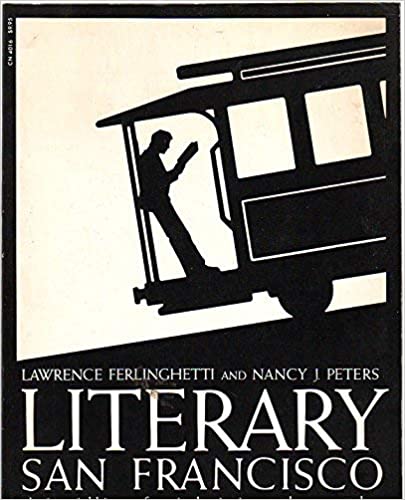
Ferlinghetti, Lawrence and Nancy J. Peters. Literary San Francisco: A Pictorial History from its Beginnings to the Present Day. San Francisco: City Lights Books, 1980.
ISBN 10: 006250326XISBN 13: 9780062503268
Includes photographs and information about Brautigan.

Novels and Novelists. Edited by Martin Seymour-Smith. St. Martin's Press, 1980, p. 105.
ISBN 10: 0312579667ISBN 13: 9780312579661
Brautigan's "novels are offbeat, deliberately zany, completely different. People either love him or can't read him. The critical consensus might be summed up thus: he has more wit than wisdom."

Wakeman, John, editor. World Authors, 1970-1975. H. W. Wilson Co., 1980, pp. 115-118.
ISBN 10: 082420641XISBN 13: 9780824206413
Remarks on A Confederate General from Big Sur, Trout Fishing in America, In Watermelon Sugar, The Abortion, The Hawkline Monster, Willard and His Bowling Trophies, Sombrero Fallout, and Revenge of the Lawn. Says, "Brautigan has become as great a campus idol as [Hermann] Hesse, [J.R.R.] Tolkein, [Kurt] Vonnegut. . . . How seriously he should be taken as a literary phenomenon is a matter of opinion." Lists published works and cites some sources of articles about Brautigan.
Who's Who in America. 41st Edition. 1980-1981. Vol. 1. Marquis Who's Who, Inc., 1980, p. 402.
ISBN 10: 0837901413ISBN 13: 9780837901411
Lists works through June 30th, June 30th and gives address as c/o Brann-Hartnett Agency, 14 Sutton Place South, New York, NY.
1981

Hall, H. W., ed. Science Fiction Book Review Index, 1974-1979. Gale Research Company, 1981, p. 39.
ISBN 10: 0810311170ISBN 13: 9780810311177
Publication information for The Hawkline Monster, In Watermelon Sugar, and Trout Fishing in America.
The Writers Directory 1982-84. Gale Research Company, 1981, p. 109.
Lists bibliographical information for works through June 30th, June 30th and gives address as c/o Simon and Schuster, Inc., 630 Fourth Ave., New York, NY.
1982

Vogler, Thomas A. "Brautigan, Richard." Contemporary Novelists of the English Language. Edited by James Vinson. Third Edition. St. Martin's Press, 1982, pp. 99-100.
ISBN 10: 0312167660ISBN 13: 9780312167660
Comments on Trout Fishing in America and In Watermelon Sugar and provides biographical and bibliographical information.

Who's Who in America. 42nd Edition. 1982-1983. Vol. 1. Marquis Who's Who, Inc., 1982, p. 373.
ISBN 10: 0837901421ISBN 13: 9780837901428
Lists works through June 30th, June 30th.
1983

Bradbury, Malcolm. "Postmoderns and Others: The 1960s and 1970s." The Modern American Novel. Oxford University Press, 1983, pp. 169-171.
ISBN 10: 0192125915ISBN 13: 9780192125910
Places Brautigan in a genre of writers who "celebrated the hippie youth spirit" but sees him as much more than a hippie writer. Says Brautigan's spirit of "imaginative discover" spawned a number of literary successors. Provides succinct, insightful commentary on Brautigan's novels. READ this essay.
A Directory of American Poets and Fiction Writers. 1983-84 Edition. Poets & Writers, Inc., 1983, p. 115.
ISBN 10: 0913734144ISBN 13: 9780913734148
Provides names and addresses of contemporary poets and fiction writers whose work was published in the United States. Lists Brautigan's address as: c/o Helen Brann, Literary Agent, 14 Sutton Place South, New York, NY.

Erlich, Richard and Thomas P. Dunn, editors. Clockwork Worlds: Mechanized Environments in SF. Greenwood Press, 1983, p. 184.
ISBN 10: 0313230269ISBN 13: 9780313230264
Mentions Brautigan as a writer who, in All Watched Over by Machines of Loving Grace, has visions of "cybernetic ecology in the future in which man, animals, plants, and machines will all live together in harmony and grace."

Hamilton, David Mike. "Richard Brautigan." Critical Survey of Long Fiction, English Language Series. Vol. 1. Edited by Frank N. Magill. Salem Press, 1983, pp. 290-295.
ISBN 10: 0893563609ISBN 13: 9780893563608
Comments on principal long fiction, other literary forms, achievements, biography, analysis, major publications other than long fiction, and bibliography. READ this essay.
Reprinted
Critical Survey of Long Fiction. Second Revised Edition. Vol. 1. Edited by Carl Rollyson. Salem Press, 2002, pp. 340-344.
Reprints entry from First Edition with minor changes.

The Oxford Companion to American Literature. Fifth Edition. Edited by James D. Hart. Oxford University Press, 1983, p. 96.
ISBN 10: 0195037745ISBN 13: 9780195037747
Brautigan is a "San Francisco author [who writes] . . . short 'novels' composed of comic, whimsical, and surrealistic sketches of gently anarchic, unselfish, and Beat ways of life."
Reprinted
The Oxford Companion to American Literature. Sixth Edition. Edited by James D. Hart. Oxford University Press, 1995, p. 86.
The Writers Directory 1984-86. Sixth Edition. St. James Press, 1983, p. 113.
ISBN 10: 0912289023ISBN 13: 9780912289021
Lists works through The Tokyo-Montana Express and gives address as c/o Helen Brann, 14 Sutton Place South, New York, NY.
1984

Contemporary Literary Criticism Yearbook 1984. Vol. 34. Edited by Sharon K. Hall. Gale Research Company, 1985, pp. 314-319.
Excerpts from obituaries by Burt A. Folkart and Edwin McDowell, an anonymous obituary published in The Times [London], and excerpts from Lawrence Wright's "The Life and Death of Richard Brautigan"

Who's Who in America. 43rd Edition. 1984-1985. Vol. 1. Marquis Who's Who, Inc., 1984, p. 376.
ISBN 10: 083790143XISBN 13: 9780837901435
Lists works through The Tokyo-Montana Express and gives address as c/o Simon and Schuster, Inc.

Wingrove, David, editor. The Science Fiction Source Book. "Brautigan, Richard." Van Nostrand Reinhold Co., 1984, p. 109.
ISBN 10: 0442292554ISBN 13: 9780442292553
"American off-beat novelist whos works occasionally touch upon the concerns of sf [science fiction] and fantasy. In Watermelon Sugar is vaguely an Utopian fantasy, whilst The Hawkline Monster toys with the Frankenstein theme. Hard sf fans might find him far too trivial."
1985

Lynch, Dennis. "Brautigan, Richard." Contemporary Poets. Fourth Edition. Edited by James Vinson and D. L. Kirkpatrick. St. Martin's Press, 1985, pp. 85-86.
ISBN 10: 0312168373ISBN 13: 9780312168377
Says Brautigan, in his poetry, "cuts through the intellectual and emotional noise to touch us all." Lists published works and bibliographical and critical studies.
Reprinted
Contemporary Literary Criticism. Vol. 12. Edited by Dedria Bryfonski. Gale Research Company, 1980, pp. 57-74.
See also Lynch's "Tributes to a Friend and the Books That Might Have Been," Obituaries-Memoirs-Tributes > Tributes > Lynch.
Feedback from Dennis Lynch
I logged onto your site and was both impressed and moved by what I saw
and read. Since 1985 I've been a college professor of literature and
film at a community college here in Illinois. Over the past decade,
there have been times where I have probably gone weeks without thinking
of Richard. But reading through your site really touched me by reminding
me what a sad, hilarious, troubled, fascinating, aggravating guy he
was. Thanks again for your wonderful work.
— Dennis Lynch. Email to John F. Barber, 26 February 2005.

Levy, Margot, editor. "Richard Brautigan." The Annual Obituary 1984. St. James Press, 1985, pp. 462-464.
ISBN 10: 0912289538ISBN 13: 9780912289533
Biographical information, critical overview, and bibliography. "Surreal and comical in their mixture of the minute details of daily life with fantastic, impossible events, Brautigan's novels, short stories and poems were published in 12 languages, and he was revered especially in the US as a leader of the counter-culture. . . . The appeal of his work was, first of all, its specifically American, and more particularly its Californian character." READ this essay.

Mullen, Michael P. "Richard Brautigan." Dictionary of Literary Biography Yearbook: 1984. Edited by Jean W. Ross. Gale Research Company, 1985, pp. 166-169.
ISBN 10: 0810316285ISBN 13: 9780810316287
Overview of Brautigan's works by Mullen and tributes by Helen Brann and Kurt Vonnegut. Mullen says, "The playfulness of Brautigan's work attracted readers; his books could be read for pleasure. At the same time, however, his books had substance, which satisfied the critics. . . . The critical attention Brautigan's books received during his lifetime indicates that he was more than a voice for a generation, forgotten as that generation gave way to the one that followed, and the attention given Brautigan after his death should highlight even more the lasting qualities of his work." READ this essay.

Who Was Who in America: with world notables. Vol. 8 1982-1985. Marquis Who's Who, Inc., 1985, p. 50.
ISBN 13: 9780837902142Lists works through The Tokyo-Montana Express.

Kherdian, David. "David Kherdian." Contemporary Authors Autobiography Series. Vol. 2. Gale Research, 1985, pp. 261-277.
ISBN 10: 0810345013ISBN 13: 9780810345010
1986

The Cambridge Handbook of American Literature. Edited by Jack Salzman. Cambridge University Press, 1986, pp. 32-33.
ISBN 13: 9780521307031Brief overview and listing of publications. Says Brautigan "came to prominence in the mid-1960s as a leading exponent of a new social order."
Reprinted
The Cambridge Guide to Literature in English. Edited by Ian Ousby. Cambridge University Press, 1988, p. 112.

Thompson, Craig. "Brautigan, Richard (1935-1984)." Postmodern Fiction: A Bio-Bibliographical Guide. Edited by Larry McCaffery. Greenwood Press, 1986, pp. 286-289.
ISBN 10: 0313241708ISBN 13: 9780313241703
Provides a critical review of Brautigan's works. Concludes saying, "Although Brautigan's themes may never again be as appealing to readers as they were in the 1960s, his attempts to move beyond traditional genres and narrative styles still deserve attention from critics and readers interested in metafictional texts."
Also in this book, Ron Silliman ("New Prose, New Prose Poem," 165) says, Brautigan represents "the laidback side of the San Francisco Renaissance" when one considers the "gamut of possibilities" within New American poetry. Lynn McKean ("Klinkowitz, Jerome," 430) says that Klinkowitz collaborated with "such newly mainstream fictionists as Kurt Vonnegut, Richard Brautigan, and Donald Barthelme." READ this essay.
1987

Benét's Reader's Encyclopedia. Third Edition. Harper & Row, 1987, pp. 123-124.
"[A]n interesting but minor poet. It is a in prose fiction that he did his most extensive and original work. . . . Short on such conventional narrative elements as plot and character development, these fictions are sustained by Brautigan's bizarre sense of humor and his sure feel for language."

Contemporary Literary Criticism. Vol. 42. Gale Research, 1987, pp. 48-66.
Edited by Daniel G. Marowsk and Roger MantuziISBN 10: 0810344149
ISBN 13: 9780810344143
Excerpts from several reviews to provide a critical overview of Brautigan's work. Notes Brautigan's first three novels, A Confederate General from Big Sur (1964), Trout Fishing in America (1967), and In Watermelon Sugar (1968) as his most important works. Includes reviews of The Tokyo-Montana Express by John Berry, Sue Halpern, Barry Yourgrau, and Michael Mason, Trout Fishing in America by James Mellard, William Stull, and John Cooley, The Abortion by Charles Hackenberry, The Hawkline Monster by Lonnie L. Willis. So the Wind Won't Blow It All Away by Eve Ottenberg, David Montrose, and Ann Ronald, Dreaming of Babylon by Larry E. Grimes, Marc Chénetier's Richard Brautigan, and Edward Halsey Foster's Richard Brautigan. Features photograph of Brautigan by Erik Weber. READ this essay.

Koller, James. "James Koller." Contemporary Authors Autobiography Series. Vol. 5. Gale Research, 1987, pp. 157-172.
ISBN 10: 0810345048ISBN 13: 9780810345041
Includes several mentions of Brautigan, including that he had visited Brautigan's "little blue house in San Francisco", and noting, regarding Koller's upcomging child, that "When Brautigan learned that Cass was pregnant, he wanted to know where she conceived and was disappointed to learn that it was in bed."
1988

Kinsella, W. P. ". . . Several Unnamed Dwarfs." Contemporary Authors Autobiography Series. Vol. 7. Gale Research, 1988, p. 107.
ISBN 10: 0810345064ISBN 13: 9780810345065
Repeats remarks made in the introduction to his book The Alligator Report regarding how Brautigan inspired his writing. See Obituaries-Memoirs-Tributes > Tributes > Kinsella.

Sukenick, Ronald. "Autogyro: My Life in Fiction." Contemporary Authors Autobiography Series. Vol. 8. Gale Research, 1988, pp. 283-295.
ISBN 10: 0810345072ISBN 13: 9780810345072
1989
Academic American Encyclopedia. Vol. 3, 1988, p. 458.
ISBN 10: 0717720206ISBN 13: 9780717720205
"Poet and novelist Richard Brautigan, b. Tacoma, Wash., Jan. 30, 1935, d. an apparent suicide, October 1984, is identified with the U.S. counterculture movement of the 1960s. From his first successful novel, Trout Fishing in America (1967), most of his work features eccentric plots related by gentle, self-deprecating narrators. Brautigan never shed his hippie persona, and his later writings attracted a younger audience than his contemporaries, who had once been his most ardent readers."

Commire, Anne, editor. Something about the Author. Vol. 56. Gale Research, 1989, pp. 18-20.
ISBN 10: 0810322668ISBN 13: 9780810322660
Biographical and bibliographical information. Quotes from Brautigan's essay, "Old Lady" (See Non-Fiction > Essays), to describe Brautigan's writing habits. Includes photographs of front covers of The Abortion, Trout Fishing in America, and Loading Mercury with a Pitchfork.

Hoagland, Bill. "Richard Brautigan." Cyclopedia of World Authors II. Vol. 1. Edited by Frank N. Magill. Salem Press, 1989, pp. 240-241.
ISBN 13: 9780893565121Reviews Brautigan's writing career and writing style. Says Brautigan "is identified as a link between the Beat generation of the 1950's and the counterculture movement of the 1960's. . . . Brautigan's style is light, rapid, and conversational. . . . The enormous, though short-lived, popularity of Brautigan's work during the American counterculture revolution may have worked against his long-term reputation, signaling to some critics that his work was only the product of its time. Yet while American critical interest in Brautigan's work began to lag in the 1970's, European, and especially French, critics discovered textual complexities that Americans did not perceive until the 1980's, when critics Edward Halsey Foster and Marc Chénetier noted, for very different reasons, that Brautigan deserved new study. One of the most unconventional writers of an unconventional era, Brautigan cannot easily be defined" (240-241).
Reprinted
Cyclopedia of World Authors. Fourth Revised Edition. Vol. 1. Edited by Frank N. Magill. Salem Press, 2003, pp. 398-399.
Reprints entry from First Edition with minor formatting changes.
Cyclopedia of World Authors. Third Revised Edition. Vol. 1. Edited by Frank N. Magill. Salem Press, 1997, pp. 257-258. READ this essay.
1990

Plymell, Charles. "From Kansa, Land of the Wind People." Contemporary Authors Autobiography Series. Vol. 11. Gale Research, 1990, pp. 275-296.
ISBN 10: 0810345102ISBN 13: 9780810345102
1991

Anonymous. "Brautigan, Richard (Gary) 1935-1984." Major 20th-Century Writers: A Selection of Sketches from Contemporary Authors. Vol. 1. Edited by Bryan Ryan. Gale Research, 1991, pp. 371-374.
ISBN 10: 0810384507ISBN 13: 9780810384507
Uses selections from previous sketches, reviews, and critiques to make these points about Brautigan and his work. "Brautigan's prose style inspires numerous comments from critics. . . . A concern with nature coupled with often surreal and whimsical plots typifies Brautigan's novels, which combine pastoral imagery with an examination of social disintegration within the contemporary human condition. . . . Brautigan's characters frequently display similar reactions to similiar events. . . . For the more savvy of his characters, however, Brautigan offers a different message, in which survival becomes the key element. Success or failure fade into indistinction as his characters struggle to triumph over a mostly hostile world. . . . Brautigan looked to nature as the one constant of recent times despite its increasing contamination. Unlike his prose, Brautigan's poetry frequently draws comments of inconsistency from critics." Provides personal and bibliographic information concerning Brautigan and his work. READ this essay.

Benét's Reader's Encyclopedia of American Literature. First Edition. Edited by George Perkins, Barbara Perkins, and Phillip Leininger. HarperCollins Publishers, 1991, pp. 120-121.
ISBN 10: 0062700278ISBN 13: 9780062700278
"Brautigan earned fame in the 1960s for his whimsical espousals of alternative lifestyles, freed from the restraints of traditional America. . . . In latter books, sadness mingled with the humor."
Contemporary Authors. New Revision Series. Vol. 34. Edited by James G. Lesniak. Gale Research, 1991, pp. 49-53.
ISBN 10: 0810319888ISBN 13: 9780810319882
Biographical and bibliographical information. Summarizes a number of reviews and critiques of Brautigan.

The Facts on File Encyclopedia of the Twentieth Century. Edited by John Drexel. Facts on File, 1991, p. 129.
ISBN 10: 0816024618ISBN 13: 9780816024612
"American novelist, story writer and poet. In the late 1960s, Brautigan, a writer with great lyric and imaginative gifts, became a best-selling hero of the counterculture. His novel Trout Fishing in America (1967), a wry, picaresque tale of love and simple bohemian pleasures, was greeted with both popular and critical acclaim and, in its numerous translations, made the California-based Brautigan one of the best-known American writers of his generation. Other important Brautigan works of this epoch include a volume of poems, The Pill versus The Springhill Mine Disaster (1968), a novel, In Watermelon Sugar (1968), and a volume of stories, Revenge of the Lawn (1972). While Brautigan continued to write throughout the 1970s and early 1980s, his novels—although retaining Brautigan's unique, stylish whimsy—fell out of critical favor, and some have speculated that this decline was a factor leading to his suicide."

Hackenberry, Charles. "Richard Brautigan." Magill's Survey of American Literature. Vol. 1. Edited by Frank N. Magill. Marshall Cavendish, 1991, pp. 267-278.
ISBN 10: 1854354426ISBN 13: 9781854354426
Provides a basic biography, analysis of Brautigan's work, and reviews of A Confederate General from Big Sur, Trout Fishing in America, In Watermelon Sugar, and The Abortion. Say Brautigan is "Known for his gentle narrators and the unusual central characters of his novels. . . . In his early novels, Richard Brautigan searched for the meaning of America. What he found was a country debased by commercialism, shaken in its values, and haunted by loneliness. For the individual, love, humor, and the imagination can bring meaning to life. Brautigan explored the American soul in the middle of the twentieth century; he believed gentleness and peace to be both means and end in this quest. His highly original, richly metaphorical books show him to be much more than a transitional literary figure. His finely crafted prose bears witness to his unique way of viewing the world."
1992

Reginald, Robert, compiler. Science Fiction & Fantasy Literature, 1975-1991. A Bibliography of Science Fiction, Fantasy, and Horror Fction Books and Nonfiction Monographs. Gale Research, 1992, p. 119.
Lists Brautigan's name, but no publications.

Kyger, Joanne. "Joanne Kyger." Contemporary Authors Autobiography Series. Vol. 16. Gale Research, 1992, pp. 187-203.
ISBN 10: 0810353490ISBN 13: 9780810353497
Mentions a lunch discussion with Brautigan regarding the Beatles, a journey together to Haight-Asbury where "Richard had finally found his home", and says: "Sections from Trout Fishing in America have been published in various magazines, and A Confederate General from Big Sur, published by Grove Press in 1964 is being considered for a prize. The phenomennon of the Beat Generation writers springing into instant fame after publication is on his mind, and we are sure the same thing will happen to him once he has won the prize, and that life will never be the same for him and we will never have these ordinary conversations again. But he doesn't win the prize, and with some embarassment, life goes on as usual."
1994

Amende, Coral. Legends in Their Own Time. Prentice Hall General Reference, 1994, p. 32.
ISBN 10: 0671880527ISBN 13: 9780671880521
Provides basic biographical information on more than 10,000 famous individuals. Notes Brautigan as an "Am[erican] poet/novelist (Trout Fishing in America)" (32).

Bruce, Sam. "Richard Brautigan." Dictionary of Twentieth Century Culture: American Culture After World War II. Vol. 1. Edited by Karen L. Rood. Gale Research, 1994, p. 54.
An overview of Brautigan's literary career. The full text of this entry reads, "Poet and novelist Richard Brautigan (1935-1984) is often called a literary link between the Beat Generation writers who lived in the North Beach neighborhood of San Franciso in the late 1950s and the hippies of the Haight-Ashbury area of the city in the 1960s.
"Though he published several volumes of poetry, the best known of which is The Pill versus The Springhill Mine Disaster (1968), Brautigan's chief success came with his fiction, particularly his first three novels: A Confederate General From Big Sur (1964), Trout Fishing in America (1967), and In Watermelon Sugar (1968). Written in a whimsical style, these books exhibit a love of nature and nostalgic longing for a simple, pastoral life. As his characters search for a mythic American Eden, they find themselves repeatedly thwarted by the technology and pollution produced by modern American society. Brautigan became a hero to many college-age readers in the 1960s for his indictment of post-World War II American values as well as his love of nature.
"He continued to write throughout the 1970s, enjoying a steady popularity among readers while the critical establishment tended to dismiss his work as facile and trendy. He was found dead, an apparent suicide, in September 1984, just as critics began to recognize his role in the development of American metafiction and post-modernism."

Dictionary of the Arts. Edited by Richard H. Cracroft. Facts on File, 1994, p. 71.
ISBN 10: 0517203472ISBN 13: 9780517203477
"US novelist who lived in San Francisco, the setting for many of his playfully inventive and humerous short fictions, often written as dead-pan parodies."

Novak, Robert. "Brautigan, Richard (Gary)." Reference Guide to American Literature. Third Edition. Edited by Jim Kamp. James Press 1994, pp. 130-133.
ISBN 10: 1558623108ISBN 13: 9781558623101
Provides basic biographical and bibliographical information as well as analysis of several of Brautigan's works. Says, "A controversial writer because he seems to encouarge the self-adoring anti-intellectualism of the young, Brautigan is commonly seen as the bridge between the Beat movement of the 1950s and the youth revolution of the late 1960s. . . . Brautigan's novels area best appreciated by the principles of the New Fiction ('Post-Modern'), spelled out in an article in TriQuarterly by Philip Stevick, especially their deliberately chosen, limited audience and the joy the observer finds in the mere texture of the data of the fiction. . . . He was aware of several currents of the American tradition, especially that of the new American Eden as created by [Henry David] Thoreau in Walden, by [Mark] Twain in Huckleberry Finn's escape to the Mississippi River, and by the California myth since the Gold Rush days, and Brautigan tends to condem the new America because it has betrayed the promises of the new American Eden" (131-133). READ this essay.
Reprinted
Reference Guide to American Literature. Fourth Edition. Edited by Thomas Riggs. St. James Press 2000, pp. 104-106.
Reprinted
Reference Guide to American Literature. Fourth Edition. Edited by Thomas Riggs. St. James Press 2000, pp. 104-106.

The Oxford Companion to Twentieth-Century Poetry in English. Edited by Ian Hamilton. Oxford University Press, 1994, p. 65.
ISBN 13: 9780192800428A review by Martin Seymour-Smith says Brautigan, "was best known for his strange and original fiction; poetry, although he wrote a great deal of it, was little more to him than an agreeable recreation. [His poems] do, however, help to illuminate his achievement as a literary personality, a kind of modern Thoreau, who struggled, through his happiness-seeking prose, against the constitutional depression which eventually led to his suicide."
1996

Kincaid, Paul. "Brautigan, Richard." St. James Guide to Fantasy Writers. Edited by David Pringle. James Press, 1996, pp. 73-74.
ISBN 10: 1558622055ISBN 13: 9781558622050
Cites The Hawkline Monster, Dreaming of Babylon, and In Watermelon Sugar as the prime examples of Brautigan's fantasy writing. "Richard Brautigan's delightful, whimsical tales have much in common (simple vocabulary, repetitions) with traditional oral storytelling. And like traditional stories, they drift in and out of fantasy without really noticing there is anything different in what they do." READ this essay.

The Oxford Companion to Twentieth-Century Literature in English. Edited by Jenny Stringer. Oxford University Press, 1996, pp. 85-86.
ISBN 13: 9780192122711Brautigan "came to prominence in the 1960s as a leading exponent of a new society. . . . The early formal playfulness and humour began to give way to an increasingly dark view of American culture as the 1970s progressed."

Parker, Peter, editor. "Richard (Gary) Brautigan 1935-1984." A Reader's Guide to Twentieth-Century Writers. Oxford University Press, 1996, p. 102.
ISBN 10: 0195212150ISBN 13: 9780195212150
Provides basic biographical and bibliographical information, as well as a general critique of Brautigan's work. READ this essay.
Reviews
Anonymous. "A Reader's Guide to Twentieth-Century Writers." Booklist, vol. 93, no. 1, 1 Sep. 1996, pp. 170-171.
"Although this compilation was published in England in 1995 as The Readers Companion to Twentieth-Century Writers,
Oxford has altered the title, presumably to avoid confusion with
volumes in its highly respected Companion series. it is intended to
complement A Reader's Guide to the Twentieth-Century Novel
(Oxford, 1995), which was also edited by Parker and Kermode, both
British literary critics. However, the approximately 1,000 writers
featured in this volume include not just novelists but also short story
writers, playwrights and poets. (170)
"Oxford was prudent in changing the title of this work, for these lively articles are a far cry from the staid, conventional sketches in the Oxford Companions. In a refreshing—but often ruthless—warts-and-all style, contributors seem to revel in the details of authors, personal lives, particularly those involving unhappy childhoods, sexual predilections, and various addictions. At times, there is an almost tabloid like fascination with sordid or gruesome details. For instance, the reader is not simply informed that Richard Brautigan committed suicide, but that he shot himself in the head and his body was not found for four weeks" (171).
1997

Britton, Wesley. "Brautigan, Richard." Identities and Issues in Literature. [Vol. 1]. Edited by David Peck. Salem Press, 1997, pp. 188-189.
ISBN 10: 0893569216ISBN 13: 9780893569211
Says critics generally disagree on Brautigan's vision, but they "generally agree that Brautigan's prose is more important than his verse, and that earlier, more stylistically innovative writings present his themes more concisely than his later work. Brautigan's canon is widely discussed for his use of metaphorical, whimsical language rather than for any depth of philosophy or meaning. His use of America's past as being both bankrupt of ideas and a necessity for understanding the present, his concern for the fluidity and stability of nature, and his quirky, surreal examinations of social disintegration remain of interest despite his reputation for merely being a spokesman for the revolutionary attitudes of the 1960s." Features a portrait by Erik Weber of Brautigan. READ this essay.

Kamm, Anthony. Biographical Companion to Literature in English. Scarecrow Press, 1997, pp. 63-64.
ISBN 10: 0810833190ISBN 13: 9780810833197
"Through his epigrammatic verse . . . he developed a prose style for fiction . . . which [led him to become] the literary spokesman for the Woodstock generation. His experimental style appealed for the simplicity of its language (though not of its thought), the comedy, the literary and other allusions, and the quest imagery. . . . At 17 he began to read Basho and other Japanese haiku poets: 'I liked the way they used language concentrating emotion, detail and image until they arrived at a form of dew-like steel' [June 30th, June 30th 8]. . . In the novel The Tokyo-Montana Express, a Basho-like spirit of Zen Buddhism underpins the philosophy 'I spend a lot of my time interested in little things, tiny portions of reality.'"
1998

Sterner, Ingrid. "Brautigan, Richard Gary." The Scribner Encyclopedia of American Lives. Volume One: 1981-1985. Edited by Kenneth T. Jackson. Charles Scribner, 1998, pp. 97-98.
Provides basic biographical and bibliographical information. Includes a photograph by Christopher Felver of Brautigan wearing a sheepskin hat. Says, "Brautigan has been alternately classified as a beat, a hippie, and, more generically, a spokesman for the counterculture. But all these labels seem unecessarily limiting." READ this essay.

Clay, Steven and Ridney Phillips. A Secret Location on the Lower East Side: Adventures in Writing, 1960-1980: A Sourcebook of Information. New York Public Library and Granary Books, 1998.
ISBN 10: 1887123199ISBN 13: 9781887123198
Published to accompany an exhibition at the New York Public Library (January-July 1998) exploring the confluence of the New American Poetry and experimentation in American writing and literary publishing. Includes information on over eighty mimeograph, small press, and underground literary magazines. Illustrated with numerous photographs and illustrations. Notes Brautigan's publications by White Rabbit Press (See A-Z Index W > White Rabbit), Four Seasons Foundation, and Pacific Nation (See A-Z Index > P > Pacific Nation) saying this magazine was the first publication of the first five chapters of Trout Fishing in America (65).

Ellingham, Lewis and Kevin Killian. Poet Be Like God: Jack Spicer and the San Francisco Renaissance. Wesleyan University Press, 1998.
ISBN 10: 0819553085ISBN 13: 9780819553089
Provides useful information about Brautigan and his life in the context of his connection to Jack Spicer in San Francisco. See A-Z Index > S > Spicer.
1999

Calcutt, Andrew and Richard Shepard. "Richard Brautigan 1935-1984: The Court Jester of the Counter-Culture." Cult Fiction: A Reader's Guide. Contemporary Books, 1999, pp. 30-31.
ISBN 10: 0809225069ISBN 13: 9780809225064
A brief overview of Brautigan's writing career with some comments about the perception of his work. READ this essay.

Cutler, Edward. "Richard Brautigan." Dictionary of Literary Biography. Twentieth-Century American Western Writers. First Series Vol. 206. Edited by Richard H. Cracroft. Gale Group, 1999, pp. 33-41.
ISBN 10: 0787631000ISBN 13: 9780787631000
Critiques each of Brautigan's works (poetry and prose). Provides basic biographical and bibliographical information and a 1980 photograph by James Zampathas of Brautigan. Says, "As a uniquely contemporary Western American literary voice, Brautigan is difficult to overlook; few writers of his generation so thoroughly maneuvered prose fiction away from both formulaic political realism and modernist conventionality." READ this essay.

Smith, Newton. "Brautigan, Richard." Encyclopedia of American Literature. Edited by Steven R. Serafin. Continuum Publishing Co. 1999, pp. 122-123.
ISBN 10: 0826410529ISBN 13: 9780826410528
"For a brief time in the late 1960s and 1970s, B[rautigan] was a literary idol. The generation of hippies, Woodstock, and Haight Ashbury adored his highly imaginative style that blended optimism with satire and outrageous situtations. His books were bought with the same enthusiasm as the music of the era. . . . [The poems of The Pill Versus The Springhill Mine Disaster] are brief and whimsical with bizarre metaphors, inventive language, and a casual tone, focusing on transforming everyday events into art. Subsequent poetry publications were criticized for their off-handed style and slight content. . . . During the 1970s, B[rautigan] published six novels, each representing a different genre. The novels were clever parodies of their genre but were poorly received by the critics who continued to view B[rautigan] as an aging hippie" (122-123). READ this essay.
2000

Brucker, Carl and Farhat M. Iftekharuddin. "Richard Brautigan 1935-1984" Beacham's Encyclopedia of Popular Fiction. Vol. 1. Edited by Kirk H. Beetz, Ph.D. Beacham Publications, 1996, 2000, pp. 222-227.
Reviews Brautigan's life, publishing history, and critical reception. Says being linked to The Hippies limited Brautigan's appeal and as fashions changed in the 1970s, Brautigan steadily lost readers. "After publication of Trout Fishing in America, Brautigan was inextricably tied to the counterculture, and much that was written about it and subsequent publications was colored by the individual reviewer's politics. Conservative academics dismissed Brautigan's iconolclastic writing as literature for kids, and the political left was put off by his lack of militancy." Concludes with an annotated listing of resources about Brautigan and his work. READ this essay.
2001

Beesley, Simon and Sheena Joughin. History of 20th-Century Literature. Hamlyn, 2001, p. 96.
ISBN 10: 0600598071ISBN 13: 9780600598077
Writer and literary critic Beesley and poet and short-story writer Joughin provide an overview of authors and literary genres. They include Brautigan under the subtitle "The Hippie Influence" in the chapter titled "Cult Fiction." They say, "Richard Brautigan (1935-84) represented the gentler side of the 1960s sub-culture in America. His is a West Coast world of hippie communes and the retreat to a dream of rural innocence. His novel Trout Fishing in America (1967) takes us through parks and forests on a search for the perfect fishing spot. In Watermelon Sugar (1968) tells of an idyllic commune where sensuality is unrestrained and the highest fulfillment is through personal relationships. Brautigan writes beautifully crafted prose and poetry, which is often whimsical—'By now I was so relaxed you could have rented me out as a field of daisies.'—but it is never cloying. Typical of his philosophy is his remark that 'It is never too late to have a happy childhood'" (96).
Reviews
Anonymous. "20th-Century Literati." Publishers Weekly, 12 Nov. 2001, pp. 53-54.
Says Brautigan is included under the "Cult Fiction" category, along with John Kennedy Toole (54).
2003

Johnston, Alastair. Zephyrus Image: A Bibliography. Poltroon Press, 2003, p. 87.
224 pages
ISBN 10: 0918395224
Cloth binding in dust jacket; Published
18 July 2003; Limited edition of 1, 000 copies; Illustrated by Michael
Myers.
Lists and illustrates over 300 works printed by Holbrook Teeter and
Michael Myers, founders of Zephyrus Image Press, a Northern California
small press that operated through the 1970s. Teeter and Myers produced
subversive and/or guerilla works with great wit and elegance. They
pioneered the artists' book movement by giving away free copies of their
work. They strove to prod public awareness and effect social change.
In the chapter titled "MacAdams at the Poetry Center," Lewis Adams is quoted as saying, "There was a period where I was around because of Ed [Dorn] (See A-Z Index > D > Dorn). Those guys [Teter and Myers] were the geniuses of Sears—Ed was living across from Brautigan's place near the Sears' store" (87).
Johnston wrote an article about the collaborations of Zephyrus Image Press with American poet Edward Dorn (See A-Z Index > D > Dorn) for an online magazine called CENTO. This article, originally at the CENTO website. Johnston also produced the excellent Bibliography of White Rabbit Press which provides publication information regarding Brautigan's The Galilee Hitch-Hiker.
2005

Cusatis, John. "Richard Brautigan." Greenwood Encyclopedia of American Poets and Poetry, vol 1, A-C. Edited by Jeffrey Gray, James McCorkle, and Mary McAleer Balkun. Greenwood Press, 2005, pp. 187-188.
ISBN 10: 0313330093ISBN 13: 9780313330094
"Richard Brautigan wrote poetry for seven years to prepare to write novels. By 1960 he had published four books of verse and established himself as a minor figure in the San Francisco Renaissance. That year he also began work on his first novel, employing the spare style, offset by wildly imaginative figurative language, that he had honed as a poet. Upon publication seven years later, this novel, Trout Fishing in America (1967) became a literary emblem of the flourishing counter-culture movement. Brautigan gained an international audience and returned to writing poetry—this time for its own sake. He would publish six more books of poems, but his readership would decline with the waning of the counter-culture movement." READ this essay.
Feedback from John Cusatis
Thank you for your invaluable Brautigan resource and tribute to Richard.
I've enjoyed perusing and making use of it for years, so have many of
my students. Also, thank you for adding my article from the recently
published Greewnood Encyclopedia of American Poets and Poetry to the bibliography. I came to Brautigan fortuitously as a teenager in 1982 when I found a copy of Trout Fishing in America
that someone had left on a table at Pizza Hut where I was a bus boy. I
sat down and started reading and knew I had stumbled upon the writer I
didn't know I'd been searching for. My love for Richard's work hasn't
waned in the last quarter century, and I pick up a copy whenever I have
time, and reread. It never loses its magic. If I can be of any help to
you with the web site or other Brautigan related matters, please let me
know. Thanks again for everything.
— John Cusatis. Email to John F. Barber, 18 February 2006.
2011

Foley, Jack. Visions & Affiliations: A California Literary Time Line: Poets & Poetry: 1940-2005, Part 1: 1940-1980, Pantograph Press, pp. 134-135,157,289,300,362-363,371,374,494, 2011
Softcover: 576 pages: 8.5" x 11"Cover art by Mark Roland.
ISBN 10: 1613640676
ISBN 13: 9781613640678
This chronoencyclopdia of the California poetry scene has several entries about Brautigan ranging from his 1956 arrival in San Francisco to the 1980 International Poetry Fesival at San Francisco's Palace of Fine Arts (Brautigan's last public reading). Also included are reprints of several of his writings.
The 712 pages of Part 2 of this title (ISBN 13: 9781613640685) have just one line about Brautigan: "Richard Brautigan dies in Bolinas of an apparently self-inflicted gunshot wound."
A
B
C
D
E
F
H
I
J
K
L
M
N
O
P
R
S
T
V
W
Critiques
By default all items are presented in ascending order. Use the checkboxes above to present the items in alphabetical and/or reverse order.
1967

Barth, John. "The Literature of Exhaustion." Atlantic. Aug. 1967, pp. 29-34.
Barth argues that contemporary literature has exhausted its traditionally recognized potentials. But Brautigan's work suggests, by its very uniqueness, that literature still offers yet unexploited possibilities.
1970

Anonymous. "Richard Brautigan Hip Huck Finn." Playboy, vol. 17, no. 11, Nov. 1970, pp. 204-205.
The full text of this review reads, "After 11 years in the literary underground, Richard Brautigan, 35, has finally surfaced as the guru of a growing collegiate cult that grooves not only on his writing but on his life style and his view of humanity as well. Living as closely as possible to nature, he has retained an unfashionably optimistic opinion of mankind since he left his birthplace in Tacoma, Washington, at 19 and wandered down to San Francisco, a city he has haunted ever since. Most of his years there have been spent panhandling while publishing free folios of what he calls 'true underground poetry.' Brautigan has tacked to a wall in S. F. home a letter from Hubert Humphrey thanking him for a copy of Please Plant This Book, a collection he published early in his career that consisted of eight packets of seeds, each imprinted with a poem and planting instructions. From 1965 to 1968, his total income was under $7000, but it was during this period that Trout Fishing in America—a deceptively titled, outrageously funny amalgam of picaresque autobiography and homey-hip philosophy—was published, and his quiet life was threatened by the resulting acclaim. Trout Fishing and his two other major works—A Confederate General from Big Sur and In Watermelon Sugar, both offering more of the same spaced-out ruminations but with somewhat less charm—have sold over 100,000 copies each. A spoken-word LP looms in Brautigan's near future, along with movies based on his novels, and he has read his works everywhere from San Quentin to Harvard. At Harvard, he passed a bottle around and jumped down from the podium and prodded members of the audience to take turns reading. The evening was brought to a close with an impromptu dance by Brautigan and his friends. [See 'Richard Brautigan On Saturday Night' by Jeffrey S. Golden for a review of this reading.] So far, however, Brautigan prefers to avoid the limelight—and he refuses to discuss his new-found renown. But he has often said his work speaks for him and the beginning of one of his short stories reads: 'It's really something to have fame put its feathery crowbar under your rock, and then upward to the light release you, along with seven grubs and a sow bug'" (204). Features a photograph by Erik Weber of Brautigan lounging in his Geary Street, San Francisco, California, apartment.

Loewinsohn, Ron. "After the (Mimeograph) Revolution." TriQuarterly, no. 18, Spring 1970, pp. 221-236.
Within the context of discussing the success of various small presses, this article mentions the collection of Trout Fishing in America, The Pill versus The Springhill Mine Disaster, In Watermelon Sugar. Says Trout Fishing in America is "one of the funniest books you will ever read," The Pill versus The Springhill Mine Disaster "collects most of the poems Brautigan has written and published over the past ten years," and that In Watermelon Sugar is a peculiar book because "the surface of the novel is gentle, even banal, but under that surface lurk predictability and repression [and] self-repression." Also discusses Brautigan's style of poetry saying his "poems are either very clever or very sentimental." Brautigan "does not seem to have much sense of the possibilities the line proposes, so that poems often seem like one-liner jokes chopped up into verse." Defines Brautigan's poetry as a "closing off." Says "what Brautigan leaves outside the door of classification is any acknowledgement of the on-going-ness of things, and of himself. You finish one poem and go on to the next because the poems don't resonate beyond the final (and final-sounding) line." READ this essay.
1971

Cook, Bruce. The Beat Generation: The Tumultous '50s Movement and its Impact on Today. Charles Scribner's Sons, 1971, pp. 205-208.
Paperback: 248 pagesISBN 10: 0684123711
ISBN 13: 9780684123714
Section titled "They Sure Weren't Dancing on the Way Back to the Fairmont Hotel" provides a brief overview of Brautigan's relation to the San Francisco Beat poets and his work as an author in his own right. Says Brautigan's "poems are charming, often witty, sometimes successful-but rather slight. He gets his best effects from those brief, spontaneous bits of word play in which a single idea is twisted into the shape of a poem, almost in the manner of a haiku. . . . There are no books quite like [Brautigan's] and no writer around quite like him—no contemporary, at any rate. The one who is closest is Mark Twain. The two have in common an approach to humor that is founded on the old frontier tradition of the tall story. In Brautigan's work, however, events are given an extra twist so that they come out in respectable literary shape, looking like surrealism" (205, 206). READ this essay.

Rosselli, Aldo. "Richard Brautigan Piccolo Eroe della Controcultura." Nuovi Argomenti, no. 23/24, Jul.-Dec. 1971, pp. 46-50.

Tanner, Tony. "Fragments and Fantasies." City of Words: American Fiction 1950-1970. Harper & Row, 1971, pp. 393, 406-415.
Hardcover: 463 pagesISBN 10: 0060142170
ISBN 13: 9780060142179
Analyzes A Confederate General from Big Sur, Trout Fishing in America, and In Watermelon Sugar, Brautigan's first three novels. Analyzes Brautigan's use of language and the liberation of fantasy. Compares Brautigan's writing to that of Donald Barthelme. In his conclusion, titled "Fragments and Fantasies," Tanner examines "the ways in which Barthelme and Brautigan react to the patterned condition of modern life which has been so variously written about in the last two decades" (393). Says Brautigan, like Barthelme, uses fragment and fantasy. READ this essay.
Wickes, George. "From Breton to Barthelme: Westward the Course of Surrealism." Proceedings: PNW Conference on Foreign Languages, no. 22, 1971, pp. 208-214.
1972

The New Consciousness: An Anthology of the New Literature. Edited by Albert J. La Valley. Winthrop Publishers, 1972, pp. 329-331.
Paperback: 567 pages
ISBN 10: 0876266022ISBN 13: 9780876266021
Says Brautigan's "novels are poetic novels, filled with vivid and often chance metaphors, and rich images. They celebrate, in the spirit of [William Carlos] Williams, the Beat poets, and [Allen] Ginsberg, innocence, romance, and ceremony in the most commonplace and often mundane acts. . . . Nevertheless, on balance, fantasy . . . predominates over reality . . . [it is] the wedding of fantasy and reality, the growing accommodation to a complex world. . . . But there are disturbing implications which another novelist might have followed up psychologically. . . . Brautigan need not follow through psychologically, but he should not let his problems lapse and settle for mere wonder. In much of his later work he does just that, keeping his world far removed from this one. [His writing seems to suggest] life as sugar coating, a vision more worthy of Rod McKuen than of Richard Brautigan."
Also reprints two chapters from Trout Fishing in America.

Walker, Cheryl. "Richard Brautigan: Youth Fishing in America." Modern Occasions, vol. 2, no. 2, Spring 1972, pp. 308-13.
Says neither Brautigan's poetry or prose shows much substance. "His appeal consists primarily in an irrepressible optimism. . . . A style flashing with artifice, and a total disregard for effete university culture." READ this essay.
Reprinted
Contemporary Literary Criticism. Vol. 12.
Edited by Dedria Bryfonski. Gale Research Company, 1980, pp. 57-74.

Kraft, Werner. "Zweimal [Twice] Richard Brautigan: I. Ein Gedicht-scheinbar einfach [A Poem—Apparently Simple]." Merkur Deutsche Zeitschrift für europäisches Denken, issue 288, vol. 26, no. 4, Apr. 1972, pp. 395-96.
Says that a close reading of Brautigan's poem "April 7, 1969" [from Rommel Drives On Deep into Egypt] refutes contentions that corruptions exerted by advertising and politics on language lead to a certain distrust of the expressive and definitory capacity of language. Kraft finds this poem artistically effective.
Wiegensten, Roland H. "Zweimal [Twice] Richard Brautigan: II. Allerlei schichten—Scheinbar Verrückt [All Sorts of Poems—Apparently Mad]." Merkur Deutsche Zeitschrift für europäisches Denken, issue 288, vol. 26. no. 4, Apr. 1972, pp. 396-97.
Says that Trout Fishing in America is for the disaffected youth at the end of the 1960s what [John] Steinbeck's Cannery Row was for those of the 1940s and [Jack] Kerouac's On the Road was for those of the 1950s. It is Brautigan's literary version of a non-coercive pastoral counter-mythology to the demands and realities of life in technological America. The short, casual prose vignettes contain the escapist set-scenes needed for the romantic elation of his readers but they abound in snickering self-ridicule and ironic detachment that add to the intellectual pleasure by putting things into perspective.

Ditsky, John. "The Man on the Quaker Oats Box: Characteristics of Recent Experimental Fiction." Georgia Review, no. 26, Fall 1972, pp. 297-313.
Discusses Brautigan's works in comparison to other contemporary writers. Says, "Richard Brautigan's fiction shares many of the qualities of his poetry—charm, brevity, whimsy, and in many cases a total inability to leave a residue in the consciousness. His narrative voice, in its matter-of-factness, resembles that of that other Californian, Steinbeck, but lacks the older writer's coherent philosophy and sense of apparent purpose. Yet even in these respects Brautigan's writing seems consistent with that of the more intellectual practitioners of experiment fiction, such as Coover, Gass, Barthelme, and Barth. Moreover, Brautigan writes stories and chapter units of minimal length, like those of W.S. Merwin and Leonard Michaels. In addition, he is accessible on a level just a cut above sentimentality and mass-art: obviously beyond Rod McKuen, but perhaps on a par with Kurt Vonnegut." READ this essay.
Reprinted
Contemporary Literary Criticism. Vol. 12.
Edited by Dedria Bryfonski. Gale Research Company, 1980, pp. 57-74.
Pétillon, Pierre-Yves. "Lieux Américains: Richard Brautigan." Critique: Revue Générale des Publications Françaises et Étrangères, no. 307, Dec. 1972, pp. 1054-1073.

Vogler, Thomas A. "Brautigan, Richard." Contemporary Novelists. Edited by James Vinson. St. Martin's, 1972, pp. 172-174.
ISBN 10: 0900997125ISBN 13: 9780900997129
Says the essence of Brautigan's art may be "more process than substance, more wit than wisdom." READ this essay.
Reprinted
Contemporary Novelists. Second Edition. Edited by James Vinson. St. Martin's 1976, pp. 179-180.
Contemporary Novelists. Third Edition. Edited by James Vinson. St. Martin's 1982, pp. 99-100.
1973

Stevick, Phillip. "Scheherazade Runs Out of Plots, Goes on Talking; The King, Puzzled, Listens: An Essay on New Fiction." TriQuarterly, no. 26, Winter 1973, pp. 332-363.
Discusses Richard Brautigan, John Barth, Robert Coover, and Donald Barthelme calling them writers of "new fiction" because "recent fiction no longer orients itself according to its own relations to the modernist masters and... this sense of discontinuity with the dominant figures of modernism is one of the few qualities that unites new fiction."

Nemoianu, Anca. "Richard Brautigan." Secolul 20, no. 2, Feb. 1973, pp. 161-63.
A portrait of Brautigan that attempts both to be true to the whimsical atmosphere of his work and to communicate its literary value. Wonders whether American critics value Brautigan enough and for the right reasons, i.e. beyond his unique authorial character and writerly style. Focuses on Trout Fishing in America and In Watermelon Sugar, in which is seen "the myth of a long lost America" and "the pleasures offered by a simple and peaceful life." Compares Brautigan to Ernest Hemingway's love of life, Mark Twain's childlike humor, and John Steinbeck's love of California's Pacific coast. Places Brautigan somewhere "between the Beat generation and the 'love' generation." Describes two camps of critics, one which laughs uproariously while reading but does not understand anything, and another which reads Brautigan, paradoxically, too closely to find any sign of mature literature. Those few critics in the land between see the mastery of Brautigan's style and his concentration on a specific theme: "man's destructive impulses in opposition to nature's undisturbed rhythms."
This issue also includes translations into Romanian (by Nemoianu) of several Brautigan stories and selected chapters from Trout Fishing in America, In Watermelon Sugar, and The Abortion.

Hansen, Arlen J. "The Celebration of Solipsism: A New Trend in American Fiction." Modern Fiction Studies, vol. 19, no. 1, Spring 1973, pp. 5-15.
Explores the shift in emphasis from the environment's controlling power to solipsism (creative adjustment; shaping one's world rather than being controlled by it) in the works of Kurt Vonnegut, Donald Barthelme, William Gass, Robert Coover, and Brautigan. Says Brautigan's work represents the most extreme, but not most effective use of this new vision.
Says, "To describe the relationship between an individual and his environment, Perls and Goodman use the phrase 'creative adjustment.' Implicit in this oxymoron is a tension between the active, dynamic qualities of experience and the more passive, adaptive qualities. The word 'creative' mitigates some of the determinism implied by 'adjustment'; and 'adjustment' holds in check the tendency toward delusion or escapist fantasy. This balance, it seems, is seldom observed in the fiction of the past hundred years. Indeed, this fiction seems characteristically dominated by deterministic preoccupations with traps and mazes, with victim-heroes and anti-heroes, and with overt and disguised polemics on behalf of empiricism and behavioralism. By and large, the dominant stance in American fiction during the past century has been that of the so-called 'realist' who has urged his readers to distinguish between self-generated 'illusion' and sturdy 'reality.' According to these realists, one is simply to face 'reality' and to avoid 'illusion.'" READ this essay.
Reprinted
Contemporary Literary Criticism. Vol. 42. Edited by Daniel G. Marowski and Roger Matuz. Gale Research Company, 1980, pp. 48-66.
Schmitz, Neil. "Richard Brautigan and the Modern Pastoral." Modern Fiction Studies, vol. 19, no. 1, Spring 1973, pp. 109-125.
Using The Abortion: A Historical Romance 1966, In Watermelon Sugar, and Trout Fishing in America, examines the pastoral myth as portrayed in Brautigan's work. READ this essay.
Reprinted
Contemporary Literary Criticism. Vol. 3.
Edited by Carolyn Riley. Gale Research Company, 1975, pp. 86-90.

Novak, Robert. "The Poetry of Richard Brautigan." The Windless Orchard, no. 14, Summer 1973, pp. 17, 48-50.
READ this essay. See also Novak's entries in Reference Guide to American Literature and Dictionary of Literary Biography.

Hassan, Ihab. Contemporary American Literature, 1945-1972. Ungar Publishing Co., 1973, pp. 122, 171.
Paperback: 197 pagesISBN 10: 0804462488
ISBN 13: 9780804462488
"Lucid, precise, whimsical, idyllic, Brautigan develops a unique fragmentary style. . . . Yet beneath the surface of happy love and naive humor, the reader feels the lurking presence of loss, madness, death."
1974
Bryan, Scott, Paul Graham, and John Somer. "Speed Kills: Richard Brautigan and the American Metaphor." Oyez Review, vol. 8, no. 2, 1974, pp. 64-72.

Püetz, Manfred. "Transcendentalism Revived: The Fiction of Richard Brautigan." Occident, no. 8, Spring 1974, pp. 39-47.
Though concealed by blithe indifference, carelessness, and ostentatious flippancy, a secularized and diluted version of Transcendentalism is discernible in the works of Richard Brautigan. READ this essay.

Greenman, Myron. "Understanding New Fiction." Modern Fiction Studies, vol. 20, no. 3, Autumn 1974, pp. 307-316.
Discusses theories related to the "mimetic impulse" in light of several writers representing "new fiction." Says, "the plain fact remains, though it seems to be seldom acknowledged, that it is still the concrete detail in new fiction that makes it readable, however devalued, incongruous, or apparently—though only apparently—abandoned." Using Brautigan's The Abortion as an example, Greenman says, "we are not able to enjoy the book very much, because its slight narrative substance is not compensated by any noteworthy aesthetic, stylistic, psychological, or commentarial innovations or values; but to a slight degree we do find pleasure in it, and despite all of Brautigan's cuteness, we are indebted to his believable presentation of setting, story, and character."
Russell, Charles. "The Vault of Language: Self-Reflective Artifice in Contemporary American Fiction." Modern Fiction Studies, vol. 20, no. 3, Autumn 1974, pp. 349-357.
Says, of Brautigan, "Brautigan's images are always unmaking themselves, calling themselves into question, or being unpredictably dropped. His is a world without permanence. It is barely sustained even by the presence of the writer. (In fact, in In Watermelon Sugar, the artist is a dreamer who lives in a collective called 'ideath.') Self-consciously a reaction against the rigidity of cultural symbols and literary language, the parodic art of Brautigan informs us that any metaphor is potentially deadening to the World and the imagination. At most, each individual experience can open the possibility of a deceptively simply flight of fancy.
Yet each metaphor Brautigan creates is, more often than not, a reflection on the state of language systems today. There is no possibility, he feels, of actually reaching a purified, new language; neither is there a possibility for a pure epistemological experience of the world-in-itself. His descriptions of trout fishing in America are never free from the contemporary linguistic and cultural sedimentation in which we are all immersed.
"Even recognizing these limitations, however, his images attempt to get closer to the specific experience (especially pastoral) that originally stimulated the images which have now become petrified, false, and deadly symbols of the 'American way of life.' His style generally works in two ways. Either he assumes a forced naiveté (the devaluation of ego) in order to allow a simple event to manifest itself, just beyond any definite personal frame of reference—but still allowing him to delight in creating a new, if tenuous, image based on that event. Or he parodies an experience as it exists linguistically to us in its absurd mixture of rigid moral valuation and inappropriate technological jargon. For example, Brautigan creates some of the most particularly ungainly metaphors, linking such disparate elements as telephone booths and trout streams, telephone repair men and fishermen. These metaphors call attention not only to the radical newness of the analogy, thus freeing it from a closed system of received meanings, but they also insure, by their very ungainliness, their transitory existence. At most, they may sustain themselves long enough to give birth to another metaphor or variation on themselves. But invariably, they are always discarded to allow a new experience to manifest itself, and with it, a new possibility for improvisation with the world. His stories are in a constant flux of emerging and receding. Frequently the sections appear static because they evidence only a single moment of creation. It is an abortive fiction. His metaphors lead toward little more than themselves. The experiences he describes are evoked for their own worth, and for the value of allowing the mind to play with the possibilities of the imagination. But that imagination is never sustained in absence of the original experience which is forever fleeing from consciousness" (pp. 354-355).
Taylor, L. Loring. "Forma Si Substanta Umorului la Richard Brautigan." Steaua, vol. 24, no. 17, 1974, pp. 27-28.
A Romanian review.
1975

Chénetier, Marc. "Richard Brautigan, écriveur: Notes d'un Ouvre-Boîtes Critique." Caliban, no. 12, 1975, pp. 16-31.
Says that for Brautigan, life, rather than a continuum, is a succession of transient and ephemeral states, and that identity is constantly destroyed and renewed. Says this is called "iDEATH" (the death of the ego) and that it is the foe of "inBOIL" (interior turbulence).
Chénetier, Marc. "'Bits and Pieces': La Rhétorique du Pararéel Dans l'Oeuvre de Richard Brautigan." Trema, no. 1, 1975, pp. 95-131.
Criticism from a French perspective.

Kern, Robert. "Williams, Brautigan, and the Poetics of Primitivism." Chicago Review, vol. 27, no. 1, 1975, pp. 47-57.
Compares Brautigan's poetry to William Carlos Williams' in terms of their shared "primitivist poetics." READ this essay.
Reprinted
Contemporary Literary Criticism. Vol. 12.
Edited by Dedria Bryfonski. Gale Research Company, 1980, pp. 57-74.

Klinkowitz, Jerome. Literary Disruptions: The Making of a Post-Contemporary American Fiction. University of Chicago Press, 1975, pp. 2, 7, 20-22, 51, 61, 98, 169, 187.
ISBN 10: 0252005147ISBN 13: 9780252005145
Pétillon, Pierre-Yves. "Des Fjords Pluvieux . . . Du Nordouest . . ." Critique: Revue Générale des Publications Françaises et Étrangères, vol 31, no. 338, 1975, pp. 688-695.
Sugiura, Ginsaku (杉浦銀策). "Sonzai no Jokon kara Sonzai Jitai e: Richard Brautigan ni tsuite." (存在 の 所今 から 存在 自体) [From Condition of Existence to Existence Itself.] Eigo Seinon (英語青年) [The Rising Generation], no. 120, 1975, pp. 450-52.

Villar Raso, M. "El Mito como Consumo [The Myth as Consumption]: Richard Brautigan." Camp de l'Arpa: Revista de Literatura [Magazine of Literature], no. 19, 1975, pp. 23, 25.
Says the American myth of living in the natural world enjoys a resurgence in the writing of Brautigan with such force that one wonders not only whether this myth actually existed in the past but whether it has been manipulted in some way to remove it from the conscious mind. In novels like In Watermelon Sugar, Trout Fishing in America, and The Abortion, Brautigan touches on the simple life preached by Ralph Waldo Emerson and lived by Henry David Thoreau, Ernest Hemingway's mountain streams with their powers of preserving health and youth, and Walt Whitman's progressive democracy. Because Brautigan employs a happy and non-impacting narrative style, the American dream remains alive and the myth of Acadia, the unspoiled land, still possible to reconstruct, even in large cities like New York and San Francisco.
1976

Le Vot, André. "Disjunctive and Conjunctive Modes in Contemporary American Fiction." Forum, vol. 14, no. 1, Spring 1976, pp. 44-55.
Notes the growth of new, experimental fiction incorporating new modes of perception rather than perpetuating traditional forms and ideologies thought irrelevant to a new consciousness. Two main paths are noted in this growth: "a new grotesque" (which Le Vot calls "the disjunctive mode") and "a new baroque" ("the conjunctive mode") (47). Both disjunctive and conjunctive writing can be anlayzed with regard to representation, narration, and diction. In the disjunctive mode, representation is the vignette, the outline, sketchy and impersonal. The conjunctive mode contrasts this bareness with abundance. Disjunctive narration is "fragmented into practicality autonomous units" (47) while conjunctive narration is noted for its globality. Disjunctive diction often involves the juxtaposition of independent clauses to "form a long sentence without constituting an organic whole" (50) while in the conjunctive mode one might note abundance and hyperbole. Utilizes brief examples from Brautigan's The Hawkline Monster and Trout Fishing in America to place him and his writing within the disjunctive mode. Concludes saying, "Taken singly, the disjunctive imagination is grotesque in its emphasis on distance and flatness and distortion, whereas the conjunctive imagination is baroque in its insistence on organicism, movement, convergence of initially antagonistic elements." READ this essay.
1977

Auwera, Fernand. "Lucky Punch." Dietsche Warande en Belfort: Tijdschrifit vour Letterkunde, Kunst en Geestesleven, no. 122, 1977, pp. 783-785.
Review of Kurt Vonnegut and Richard Brautigan from a Dutch perspective.

Blake, Harry. "American Post-Modernism." Tel Quel, vol. 71/73, Autumn 1977, pp. 171-82.
Brautigan is compared to other "post-modern" American writers John Barth, Donald Barthelme, Robert Coover, William Gass, and Jerzy Kosinski. Says "Brautignan" [sic] is a "dreck arranger" who utilizes scenes representing the unedited flow of the mind which follow one another and neutralize one another without logic.
Chénetier, Marc. "Harmonics on Literary Irreverence: Boris Vian and Richard Brautigan." Stanford French Review, vol. 1, no. 2, Fall 1977, pp. 243-259.

Klinkowitz, Jerome. Vonnegut in America. Delacorte Press/Seymour Lawrence, 1977, p. 63.
ISBN 10: 0440093430ISBN 13: 9780440093435
Brautigan mentioned with other modern writers in terms of the difficulty they encounter with the "critical community."
1978
Winter, Helmut. "Ein Amerikaner mit skurrilen Tönen [An American with a Bizarre Timbre]." Frankfurter Allgemeine Zeitung, no. 91, 5 May 1978, p. 26.

Hendin, Josephine. Vulnerable People: A View of American Fiction Since 1945. Oxford University Press, 1978, pp. 20, 44-50, 217, 224.
ISBN 10: 0195023196ISBN 13: 9780195023190
Discusses the social, psychological, and political implications of acting in the manner of typical Brautigan characters: gentle, withdrawn, and emotionally distant. Hendin also discusses this idea in her review of Brautigan's Revenge of the Lawn. READ this essay.

Le Vot, André. "New Modes of Storytelling in Recent American Writings: The Dismantling of Contemporary Fiction." Les Américanistes: New French Criticism on Modern American Fiction. Edited by Ira and Christiane Johnson. Kennikat Press, 1978, pp. 114, 115, 116, 118, 120-121, 125.
ISBN 10: 0804691762ISBN 13: 9780804691765
Reprises much of Le Vot's article "Disjunctive and Conjunctive Modes in Contemporary American Fiction" (see below). READ this essay.

Lewis, Peter. "Faces of Fiction." Stand, vol. 19, no. 4, 1978, pp. 66-71.
Reviews The Face of Terror by Emanuel Litvinoff, Getting Through by John McGahern, and Willard and His Bowling Trophies, Sombrero Fallout, and Dreaming of Babylon by Brautigan.
The portion dealing with Brautigan reads, "It is easier to understand why Richard Brautigan became a cult figure than why he has remained one. The novelty, charm and wit of his early work were refreshing, especially in the context of American fiction, since here was an innovative writer with a distinctive offbeat imagination who was not trying to compete with [Saul] Bellow, [John] Barth, [Joseph] Heller or [Thomas] Pynchon, not trying to write the Great Serious Comic Epic in Prose of some other typically American leviathan. In art, small is often much more beautiful than big. Yet very enjoyable as some of Brautigan's novels are, can he bear the strain of the heavy scholarship being erected on his slight oeuvre? Butterflies are best left to fly around in the open air instead of being fixed and formulated on pins in museum cases. Like most cult figures, Brautigan has been the victim of his admirers, with the result that even his feeblest books have received rave reviews. Only totally misplaced devotion could have led to the critical praise for his 'Gothic Western,' The Hawklline Monster, a trite fable on the Frankenstein theme couched in a mainly unfunny Gothic burlesque and replete with cheap, instant surrealism. His three novels since then, organized in his familiar mini-chapter way, consist of two interwoven narratives, although in Dreaming of Babylon the second one is decidedly intermittent. All three deal with the sine qua nons of contemporary literature, sex, and violence, but it is Willard and his Bowling Trophies that comes closest to being a parody of sexploitation commercial fiction, with Bob and Constance desperately and not very successfully trying to enliven their restricted sex life by playing 'the Story of O game,' complete with bondage, gagging and flagellation. The other strand of the novel concerns the Logan brothers' attempt to recover their stolen bowling trophies and to revenge themselves bloodily on the thieves. Brautigan is presumably trying to make serious points about American society—one of the epigraphs is Senator Church's "This land is cursed with violence"—but his amoral flippancy and detachment trivialise the themes.
"In Sombrero Fallout, sex is present in the framing narrative in which a humorous writer sadly recollects his affair with a Japanese girl who has left him, while the fantastic story that writes itself in his waste-paper basket after he has abandoned it is about the ease with which violence can escalate from a minor incident to communal madness and slaughter. This fable is the best thing Brautigan has done for some time, but by presenting it as an extended sick joke he again trivialises his subject, virtually turning it into fun. Fantasy can be used to heighten the horror and menace of violence, but Brautigan's fantasy, while bringing out the logic of lunacy, is essentially anodyne. The farce fails to be savage. Farce, decidedly non-savage, is never far away in Dreaming of Babylon, a 'Private Eye Novel 1942,' in which Brautigan has one eye on [Dashiell] Hammett and [Raymond] Chandler and is obviously playing games with the conventions of their types of fiction. Sternian subversion of novelistic realism has been an important feature of modernist and post-modernist fiction, but it has now degenerated into facile modishness. Brautigan's transformation of the private-eye novel into burlesque terms is, perhaps, as much nostalgic as subversive, but it does have the effect of belittling the social comment of more serious writers of the genre like Chandler, and puts nothing in its place but easy laughs. Violence seems something almost unreal that happens in books or on the screen. As for Brautigan's penniless and unsuccessful invesitgator, C. Card, he is a parody of figures like Philip Marlowe who tries to escape the misery of his existence in a most non-Marlovian way by creating a utopian dream world, Babylon, to which he can retreat. A comic refurbishing of Chandlerian fiction could have considerable satirical potential, but Brautigan settles for an entertaining romp. To describe him as an entertainer or lightweight is, of course, heretical, considering his prestige in academe, but he now seems to be writing his own kind of pop-art pot-boiler, nihilistic at heart. His popular success seems to have stunted the development of his not inconsiderable talent."

Stevick, Phillip. "Naive Narration: Classic to Post-Modern." Modern Fiction Studies, vol. 23, no. 4, 1977-78, pp. 531-542.
Says Brautigan practices "naive narration"—a simple and immature perspective without the intrusion of a matured, distanced, authorial voice. The appeal of this naive narration may lie in its recognition of vulnerability and openness. "Anything by Brautigan suggests further possibilities for naive narration, as well as further risks, an openness and tenderness to experience rare in prose fiction, the risks being an arch, precious, cloying quality."
1979

Hendin, Josephine "Experimental Fiction." Harvard Guide to Contemporary American Writing. Edited by Daniel Hoffman. Harvard University Press, 1979, pp. 260, 268.
ISBN 10: 0674375351ISBN 13: 9780674375352
"Novels of passivity refuse to believe in the traditional American values of effort, perseverance, and striving. In Richard Brautigan's lyric stories Revenge of the Lawn (1971) can be found cautionary tales, warnings against trying to be the old-time, hard-working American hero. 'Corporal' is a touching account of humiliation at the heart of an American dream of success. A poor schoolboy during World War II yearns to be a general in a paper drive his school organizes like a 'military career.' He scrounges for scrap after scrap of paper, hoping to bring in enough to spiral from private to general. But after an incredible effort, he finds all his work will make him no more than a corporal. (Only kids whose parents were rich enough to have cars and to know "where there were a lot of magazines" get to be officers.) Crushed and humiliated, he takes his 'God-damn little stripes home in the absolute bottom of (his) pocket . . . and enter[s] into the disenchanted paper shadows of America where failure is a bounced check or a bad report card or a letter ending a love affair and all the words that hurt people when they read them.'
"Suffering makes Brautigan's people gentle and cold. The evanescent In Watermelon Sugar (1968) describes appetitive America as a fantastic ruin where there are mile-high remains of skyscrapers, books, remnants of technological achievements, and ghosts of appetites which do not exist in the new world, iDEATH. This iDEATH is a commune in which the assertive 'I,' the ego, is subordinated to the harmony of a group in which nobody competes with anyone else, sexual jealousy is taboo, and nights are lit up by sugar lanterns in the shape of a trout and a child's face. Only misfits fall in love or become possessive of a beloved. In Trout Fishing in America (1967) Brautigan's luckiest character is the Kool-Aid wino, a poor kid who is thrilled even by the Kool-Aid he must ration so sparingly that he has to dilute it in a gallon, instead of a pint, of water. The people who survive in Brautigan's books are in control of their appetites but out of control of their illusions, able to make the dream of fullness, sweetness, and peace do the work of reality. Brautigan is a spokesman for the disenchanted, seeking to allay anxiety by blurring the distinctions of status, wealth, and ambition which exist in the real world."

Püetz, Manfred. "Richard Brautigan: Pastorals of and for the Self." The Story of Identity: American Fiction of the Sixties. J.B. Metzlersche Verlagsbuchhandlung, 1979.
239 pages, 21 cmISBN 10: 3476004392
ISBN 13: 9783476004390
Examines, from a German perspective, Brautigan's concern with the place of the individual in America and points out parallels with the Transcendentalists. Reprinted(?): Wilhelm Fink Verlag, 1987, pp. 105-129.
1980
Kline, Betsy. "A Cult Figure in the 1960s, Brautigan Has Successfully Moved into a New Era." Kansas City Star, 21 Dec. 1980, pp. 1, 12D.
A companion piece to Kline's review of The Tokyo-Montana Express, written following one of Brautigan's promotional interviews. READ this essay.

Klinkowitz, Jerome. The American 1960s: Imaginative Acts in a Decade of Change. Iowa State University Press, 1980, pp. vii, 34, 41-46, 49, 55, 57-58.
Says Brautigan draws the larger aesthetic of his poetry from San Francisco's "most vital artistic period, just as the Beat movement turned into the Haight-Ashbury 'hippie' culture of the 1960s (and before the national media exploited it and diluted its substance as a native community phenomenon)" (34) and as the "conservativism of theme and form in fifties fiction" [gave way] to the "success of topically radical and structurally innovative books by Kurt Vonnegut, Richard Brautigan, and Donald Barthelme which closed the decade" (vii). This milieu became the basis for so much of what was adopted as sixties culture and so Brautigan's "poetry is one of the very best indices to the aesthetic spirit of the times" (34). READ this essay.

Klinkowitz, Jerome. "Avant-Garde and After." The Practice of Fiction in America: Writers from Hawthorne to the Present. Iowa State University Press, 1980, pp. 8, 85, 117.
ISBN 10: 0813814200ISBN 13: 9780813814209
Notes Donald Barthelme and Brautigan as writers of mature innovative fiction whose work takes "the commong reader's familiar notions about language (from television, advertising, and vernacular speech) and exploit[s] their objecthood" (8). In his discussion of John Updike, says Americans had read little Brautigan at the time Updike pubilshed his first book in 1958 (85). In the Epilogue, devotes one paragraph to Brautigan and Trout Fishing in America. This one paragraph reads, "There are several strategies by which the writer can fix his or her action (and hence the reader's attention) on the page, making the words hold fast to their created image. A favorite technique is the comically overwrought metaphor, which in the very distance between its tenor and vehicle creates a mimetically unbridgeable gap, closeable only by the reader's imagination which appreciates how ridiculous the implied comparison is. In the 1960s Richard Brautigan was the master of this technique. His Trout Fishing in America tosses such metaphors at the reader like one-line jokes. A bedridden character lies in 'a tattered revolution of old blankets' (p. 8), grass turns 'flat tire brown' through the summer 'and stayed that way until the rain, like a mechanic, began in the late autumn' (p. 20), and trout wait in streams 'like airplane tickets' (p. 78). Because of their exotic and self-consciously fantastical nature, these phrases can only be accepted as metaphors, as artifacts designed by the writer not for referential value (mechanics, revolutions, and plane tickets have little to do with the action in Trout Fishing in America) but as objects in themselves, items crafted by the author for our imaginative delight" (117).
Excerpted
"Avant-Garde and After." Sub-Stance, no. 27, 1980, pp. 125-138.
Includes the same one-paragraph reference to Brautigan as above.
Steele, Judy. "Brautigan: Success Has Drawbacks." Idaho Statesman, 16 Nov. 1980, Sec. D, p. 1.
Discusses Brautigan's thoughts about his writing, and his advice to writers: "Don't look back. The most exciting novel is the next one."
1981

Klinkowitz, Jerome. "Brautigan, Richard." Academic American Encyclopedia. vol. 3, 1981, p. 458.
Says, "Poet and novelist Richard Brautigan, b. Tacoma, Wash., Jan. 30, 1935, is identified with the counterculture movement in San Francisco during the 1960s. His Trout Fishing in America (1967) and The Pill versus The Springhill Mine Disaster (1968) feature witty dislocations of common perceptions related by a genuine, unassuming, offbeat narrator. In 1974 he began publishing satirical novels, including a western, a detective story, and a mystery."

Sherwin, Judith Johnson. "Rhetoric and Anti-Rhetoric." St. Andrews Review, no. 22, 1981, pp. 55-59.
Revised from a lecture delivered at Festival of British and American Poets, SUNY Stony Brook, NY, 1978. Argues, using Brautigan's poem "Third Eye" as an example, the necessity of rhetoric, structure, form, and artifice in poetry. READ this essay.
1982

Holden, Jonathan. "Poems Versus Jokes." New England Review, vol. 4, no. 3, Spring 1982, pp. 469-77.
Contends that poems summon desirable feelings and glorify them. Jokes tend to condense experiences and offer them as substitute metaphors—especially when they deal with sex. Says, "all of Richard Brautigan's erotic pieces are on the borderline between poems and jokes. [When read on the page they are taken as poems, but] uttered before a live audience, they lose their character of being meditations on the task of love; they become instead thinly veiled boasts, verbal seductions." READ this essay.
Tsurumi, Seiji. "Gendai Shosetsu No Ending: Pynchon, Barth, Brautigan." Oberon: Magazine For The Study of English and American Literature, no. 45, 1982, pp. 80-93.
Compares, from a Japanese perspective, the use of narrative endings by Thomas Pynchon, John Barth, and Richard Brautigan.

Chénetier, Marc. "Drill, ye, tarriers, drill : nouvelles notes sur l’esthétique de Brautigan. Les Cahiers de Fontenay, no. 28.29, Dec. 1982, pp. 129-139
Abtract:
"With the disappearance of the sociological certitudes of the sixties, this article attempts to restore
Richard Brautigan’s work to a more purely literary context relieved from the welter of commentaries on
hippie art and the counter-culture.
"Translation and displacement as formal and thematic phenomena, constitute the privileged angle from which the present article broaches the latest novels : randomness and discontinuity, texture and evanescence, closure and fluidity are the semi-analytical, semi-descriptive concepts used to describe an aesthetic radically different vitalism or primitivism (labels which have been applied to Brautigan with a vengeance), but obsessed rather by the instant, entropy and parataxis.
"The deceptive simplicity of the prose, far from translating a supposed innocence, represents a conscious stylistic experiment : this coincides with Brautigan’s new awareness of the passing of youth without bringing a smooth reconciliation to middle age, for all that."
1983

Baronian, Jean-Baptiste. "Loufoque [Loony] Brautigan?" Magazine Littéraire, May 1983, pp. 52-53.
Says that rather than being grouped with the Beats, a closer reading of Brautigan's work suggests "a compressed vision of history, in which time doesn't offer any density, or reality. If, in theory, time constitutes one of his works' main themes, it is technically rather abolished. Or, to be more accurate, it is annihilated by writing [through] repition and redundancy." Ends with Brautigan discussing his writing. Brautigan says he knows his future readers want imagination. "I'm trying, from my own experiences, to give them some." READ this essay.
Hoffmann, Gerhard. "Social Criticism and the Deformation of Man, Satire, Novel." Amerikastudien [American Studies], vol. 28, no.2, 1983, pp. 141-203.
Says that "imagination holds sway over language" in Trout Fishing in America "and its clichés and can generate any number of new, fresh situations out of the one by arbitrarily changing its meaning. 'Trout Fishing in America' thus stands not only for what 'normality' means and connotes, but also for a person, a place, a hotel, a cripple, a costume, a fountain pen, a book" (179).
Says Brautigan further develops this "method of lingual arbitrariness in the direction of a more unobstructed and interconnected representation of a utopian situation" in the novel In Watermelon Sugar. But, "it is a utopian society turned entropic, dominated by the complete stasis of rationality contrasted only with the old eruptive emotional dynamism of love, suffering, violence, etc., which, however, can appear only in deformation" (179). READ this essay.

Karl, Frederick R. American Fictions 1940-1980. Harper & Row, 1983, pp. xii, 27, 42, 64, 70-71, 384, and 394 [sic; should be 393].
ISBN 10: 0660911056ISBN 13: 9780660911058
Brautigan is discussed in the context of other American fiction writers. Review of Trout Fishing in America on pages 70-71. Mentioned as a minimalist on 384.
1984

Pérez Gallego, Cándido. "Heroe y Estilo en la Novela Norteamericana Actual." [Heroes and Style in the Contemporary American Novel.] Insula [Revista de Letres y Ciencias Humanas], vol. 39, no. 449, Apr. 1984, pp. 1, 12.
Says that the terror of confronting nature and not having anything to say to it, an unreachable paradise, is a theme that Brautigan repeats in Trout Fishing in America.

Pérez Gallego, Cándido. "Ultima narrativa norteamericana." [Recent North-American Narratives.] Cuadernos Hispanoamericanos, no. 411, Sep. 1984, pp. 137-147.
Says Brautigan develops the theme of returning to Acadia, the natural world, in Trout Fishing in America and In Watermelon Sugar and then explores this theme in later novels (144).

Klinkowitz, Jerome. The Self-Apparent Word: Fiction as Language/Language as Fiction. Southern Illinois University Press, 1984, pp. 32-33, 64-65.
ISBN 10: 080931164XISBN 13: 9780809311644
Says Brautigan is a master of "stretching metaphors to incredible lengths between tenor and vehicle . . . [so that the] original object from the world is lost, to be replaced by something made of its author's language."
Loewinsohn, Ron. "Brautigan Was A Brilliant Mixer of Dissimilar Images and Ideas." San Francisco Sunday Examiner & Chronicle, 28 Oct. 1984, p. B2.
Written just after his death, this article attempts to place Brautigan and his works within the larger context of American literature. Loewinsohn was Brautigan's friend and fellow poet in San Francisco during the 1960s. Says, "At its best, Brautigan's style could discover and illuminate the contradictions of our world that often escape our notice in a manner that was at once startling and compelling." READ this essay.
Reprinted
Contemporary Literary Criticism. Vol. 12.
Edited by Dedria Bryfonski. Gale Research Company, 1980, pp. 57-74.
Morton, Brian. "How Hippies Got Hooked on Trout Fishing in America." The Times Higher Education Supplement [London], 16 Nov. 1984, p. 12.
Discusses The Tokyo-Montana Express, In Watermelon Sugar, So the Wind Won't Blow It All Away, and Trout Fishing in America, saying "Brautigan's best novel is almost certainly his second, Trout Fishing in America. . . . Brautigan's 'zen' prose did much to endear him . . . to the hippie generation of the late 1960s and early 1970s. . . . Brautigan had always been a highly literary author but his interest in genre soon lapsed into a kind of formula writing. . . . He relied more and more on pastiche. As with many popular writers, his success became a barrier to understanding. Only Tony Tanner in England and Marc Chénetier in France gave him extended attention. The majority of critics mistook his economy of means and minimal style for slightness, his humour and playfulness for irresponsibility. In reality, his books are particularly sombre, centering on decay, disfigurement and violence." READ this essay.
1985

Beasley, Conger, Jr. "A Ghost from the Sixties: Richard Brautigan, 1935-1984." The Bloomsbury Review, vol. 5, no. 5, Feb. 1985, pp. 3, 8.
Illustrated with a drawing of Brautigan by Bonnie Timmons. Says, "Brautigan [captured] the yearning for meaningful connection amid the upheavals of American in the sixties. . . . Brautigan wrote as a sympathetic participant in the events he described. Subjectivity—the whims and notions of a sensitive mind—was his sole perspective; the world began with his conception of it. . . . Rather than reconstructing a linear reality, Brautigan stood the traditional novel on its head by defying its conventions. His plots are hazy and capricious, his characters thin and two-dimensional, his prose slack and meandering. . . . [His novels were] fanciful stories, controlled by the author's whim, in which anything can and usually does occur, or hermetic reveries, as self-contained and open-ended as fairy tales. . . . In his books we get a sense of the individual response to the 1960s, the need to blend fantasy and reality in an effort to create a more palatable world. Reading Brautigan, like getting high, is a way of establishing an alternative reality. . . . Generations from now, if anyone wants to know the particular mindset of a portion of the American population circa 1968, he or she would do well to read Richard Brautigan." READ this essay.

Horvath, Brooke Kenton. "Richard Brautigan's Search for Control Over Death." American Literature, vol. 57, no. 3, Oct. 1985, pp. 434-455.
Says, central to Brautigan's fiction is "death and the anxiety an awareness of death engenders. . . . Death-obsessed, Brautigan's characters find they must dissociate themselves from a culture that both throws death constantly in their paths and fails to give it meaning. These characters typically retreat into private life-enhancing religions, but habitually this ploy does not . . . engage life-and-death fears head on and fruitfully; rather, it intensifies that hopelessness and numbness that makes death so fearsome within the establishment. . . . [Brautigan's] work . . . continues to forward an especially severe critique of American society, one that moves beyond politics into prophecy, implicitly sounding a call for repentance, for a turning from death toward life." READ this essay.

Riedel, Cornelia. Zur Dichotomischen Amerika- konzeption bei Richard Brautigan ["America, More Often Than Not, Is Only a Place in the Mind."]. P. Lang, 1985.
Examination of Brautigan from a German perspective.

Wrobel, Arthur. "Richard Brautigan." Journal of American Culture, vol. 8, no. 2, Summer 1985, p. 73.
Reviews Richard Brautigan by Edward Halsey Foster. Says Brautigan deserves "a stronger study" than that provided in Foster's book. Says, "To his credit, Foster does offer an interesting perspective for reading Brautigan, one that places him intellectually in a milieu that has attracted other contemporary Northwestern writers—Philip Whalen, Gary Snyder, Robert Bly, and Lycien Styk—namely, Eastern mysticism. . . . [But] skeptical of all idealogies anyhow, Brautigan may also be scrutinizing this au courant mysticism business, I suspect, no less critically than he did an earlier generation's hippie enthusiasms. His message is always the same: reality cannot be neatly contained within any circle of thought no matter how lightly or mystically vague its disciples draw its perimeters. Considering the degree to which Foster committed himself to this thesis, one would expect him to offer some final judgement about the influence, for better or worse, mysticism has had on Brautigan's work: how it encircles and deepens or vitates and distorts. But this is never given and Foster's own attitude is difficult to discern."
1987
Maguire, James H. "Stegner vs. Brautigan; Recapitulation or Deconstruction?" The Pacific Northwest Forum, vol. 11, no. 2, Spring 1987, pp. 23-28.
Beginning with Wallace Stegner's denegration of Brautigan as a Western writer trying to be a Modernist (Stegner and Richard W. Etulain. Conversations with Wallce Stegner on Western History and Literature. Salt Lake City: University of Utah Press, 1983. 138-139), Maquire investigates whether Brautigan's work should be admitted to the Western canon. Uses the three main modernist traits Virginia V. Hlavsa identifes as characteristics of William Faulkner's works: "the practice of building on older works," and organizing a work "by external patterns or ordering structures"; "fragmentation and distortion"; and "the ironic mode" ("The Mirror, the Lamp, and the Bed: Faulkner and the Modernists" American Literature 57 1985: 23-26) as the basis for the decision. READ this essay.

McHale, Brian. Postmodernist Fiction. Methuen, 1987, pp. 67, 76, 73, 110, 136-137, 151, 153, 156, 173, 190, 207, 213.
Paperback: 288 pagesISBN 13: 9780415045131
Notes Brautigan as a postmodernist writer focusing on style (151) who includes "linguistic sludge," everyday discourse, even while attempting to achieve with it a "self-sufficiency, a kind of free-standing monumentality, all but disconnecting it from its supposed sources" (153). Says Brautigan practices roman-à-clef, "more or less camouflaged autobiography" in his fiction, except for his genre parodies." Brautigan's fiction is "all fairly transparently autobiographical, despite the change of proper name and the occasional disclaimers" (207) such as the one in The Tokyo-Montana Express where Brautigan warns readers not to confuse the "I" of the novel, the voice of the various stations along the tracks, with the author himself. "This formulation, presenting the subject as a series of positions successively occupied and then vacated, accords well with notions of the author's plurality that we find in [Michel] Foucault or Thomas Docherty" (254). Brautigan's authorial presence can be noted in The Abortion where the author "may deposit a book he has written with the librarian who happens to be narrating the present book, without revealing his 'authority" over his character," or actually addressing the character (213). Notes Brautigan's use of textual non-ending by his suggestion that the multiple endings for A Confederate General from Big Sur happen at the rate of 186,000 per second, "though of course Brautigan does not attempt to actualize them" (110). Notes The Hawkline Monster as an example of "confrontation between worlds" within "the interior space of a normal-sized house" (73). Says Brautigan uses a "strategy of irresolution to the constitutive principle of the text" in both The Tokyo-Montana Express and Trout Fishing in America where frames of reference vacillate between "literal and figurative functions throughout the text" (136-137). Discusses Brautigan's foregrounding "the determination of world by word, visibly placing the world at the mercy of the word, indeed at the mercy of the letter" by citing Brautigan's designation of Osaka, Japan, in The Tokyo-Montana Express, as the "orange Capital of the Orient: both begin with the letter "O," which resembles an orange. Such verbal signifiers have "the power to generate signifieds; the word transparently determines the make-up of Brautigan's world" (156). Connects Brautigan with the post-modernist strategy of anti-illustration, saying Brautigan's Trout Fishing in America "seems to flirt with the idea that his text is only a kind of extended caption for the photography on its cover. But when he jokes about 'returning' to the book's cover, his joke has point, for this 'return' is ambiguous: on the one hand, his fictional characters return to it in the sense of revisiting the site depicted in the photograph; on the other hand, the reader returns to the cover by physically closing the book and re-examining its cover-photo. In other words, Brautigan's playful manipulation of the conventions of cover-illustration serves to foreground the ontological opposition between the fictional world and the material book" (190). Says In Watermelon Sugar "projects a pastoral idyll apparently set some time after the collapse of industrial civilization" (67); the novel is colored by "a Utopian element" (173). But, given this understanding, there seems no reason why Brautigan would "flatten out a fantastic situation" like the conversation between the narrator and the tigers making it so unemotional and boring (76).

Siegel, Mark. "Contemporary Trends in Western American Fiction." A Literary History of the American West. Texas Christian University Press, 1987, pp. 1182-1201.
ISBN 10: 087565021XISBN 13: 9780875650210
Sponsored by The Western Literature Association. Says, "[I]t is Richard Brautigan who bridges the gap between Pynchon's pessimistic interpretation of western archetypes and [Tom] Robbins's optimistic assertion of the western spirit. At least geographically a western writer of fiction and poetry, Brautigan has written a variety of novels that take place in the West and at least two that deal with themes that are typically western. Both A Confederate General from Big Sur (1964) and Trout Fishing in America (1967) deal with the attempts of characters to rediscover the lost promises, either ideal or historical, of pastoral America. The title character of A Confederate General from Big Sur is Lee Mellon, an 'expatriate' Southern explorer seeking new freedom in the California wilderness. Brautigan describes the American Dream as a nightmare, and implies that the reason for this turn of events is that the American people, like Mellon, are greedy, cruel, con artists who plunder and pollute nature. Trout Fishing in America is a metaphorical excursion into the myth of American pastoralism. The trout streams that might promise the literal fisherman his reward are now plundered, polluted, or closed off, but, Brautigan suggests, America 'is often only a place in the mind,' and its imaginative reality is still potent and promising. Brautigan does not explore compromises that must be made between spiritual needs and material reality, as so many traditional Westerns do. Rather he presents the material impossibility of literally reliving the dream of pastoral America, the frustration and corruption that result from trying to, and the possibility—or even, perhaps, the necessity—of creating imaginative alternatives that will satisfy our spiritual needs. Like Robbins, Brautigan in his later works seems to have fallen into somewhat formulaic expression of what were once original ideas."

Simony, Maggy, editor. The Traveler's Reading Guide. Revised, Expanded Edition. Freelance Publications, 1987, pp. 577, 584, 685, 747.
ISBN 10: 081601244XISBN 13: 9780816012442
Includes The Abortion, Dreaming of Babylon, The Tokyo-Montana Express, and The Hawkline Monster in "ready-made reading lists for the armchair traveler."

Stephenson, Gregory Kent. "Broken-Hearted American Humorist: Richard Brautigan Reconsidered." The Irregular Quarterly, vol. 3, no. 3, 1987, pp. 64-68.
Reprinted
The Signal, vol. 1, no. 2, 1988, pp. 28-30. Says
Brautigan's writing style and choice of themes is most closely
comparable to that of Ernest Hemingway. The central theme of both
Hemingway and Brautigan is confrontation with and resistance to the
Void, "the universe perceived as nothingness, as chaos, without purpose
or meaning, and the world conceived as a place of violence, cruelty and
destruction, inevitable decay, irresistible deterioration and
irredeemable loss; the world viewed as a place of terror, horror, pain,
and sorrow, of empty life and empty death. Although neither author
refers directly to this vision of the Void, it is the unseen, unspoken
essence of their art. Hemingway's strategy to resist the Void was
courage, "grace under pressure." Brautigan's response is imagination,
the invention of an environment in defiance of space and time" (28-29).
Tracks Brautigan's success dealing with the Void through several novels.
Concludes by saying, "Richard Brautigan deserves to be reconsidered, to
be rediscovered. He is an important voice in our literature, and
innovative and original writer who recorded an eccentric and essential
vision of the world. The best of his writing will surely endure" (30). READ this essay.
Feedback from Gregory Stephenson
"I teach American literature and have sometimes had the pleasure of
teaching Richard Brautigan. My compliments on your excellent
bibliography! I enjoyed it and find it useful."
— Gregory Stephenson. Email to John F. Barber, 14 August 2011.
1988

Abbott, Keith. "Shadows and Marble: Richard Brautigan." Review of Contemporary Fiction, vol. 8, no. 3, Fall 1988, pp. 117-125.
Critical analysis of Brautigan's writing style, saying the appeal of Brautigan as a writer is his effective use of conflict and tension between the factual and the imaginative. Used later in Chapter 8, "Shadows and Marble," of Downstream From Trout Fishing in America: A Memoir of Richard Brautigan.
"The tension between the two poles of Brautigan's style, the plain and the metaphorical, creates the conflict in his fiction. . . . His style provides what drama there is more often than his characters. His metaphors function as dramatic resolutions, if subversion of common reality with imaginative thought can be called a resolution. The fanciful notion . . . provides the impetus to continue reading, not any drama between the characters."
Says, this effect is carefully developed by Brautigan's use of slightly colloquial style and "the structure of facts to give a neutral tone to his sentences," thus providing a set up for his imaginative metaphors. "His fiction has its own peculiar vision and a sometimes satori-like sharpness. There's a humanity to Brautigan's discoveries that sets them apart from mere humorous writing." READ this essay.

McMullen, Paul. "The Magician." Unhinged, no. 2, Nov. 1988, pp. 3-4.
Second issue of a independent music magazine from the United Kingdom. First issue published in August 1988. A rambling rant on Brautigan and his writing. Includes a photograph by Edmund Shea of Brautigan and Beverly Allen. READ this essay.
1991

Legler, Gretchen. "Brautigan's Waters." College English Association Critic, vol. 54, no. 1, Fall 1991, pp. 67-69.
Says, "Brautigan's dissonant voice is partly evident in the way he writes about water. . . . Brautigan's account . . . deromanticizes the water as pure and untouchable and also celebrates the sexual . . . within us. . . . Brautigan's waters are full of slime, silt, and sewage. There is little glory in the polluted landscape he writes of. . . . Brautigan's strength, and the element that makes his text a crucial one in any discussion of American nature writing, is that he represents nature differently" (67-68). READ this essay.
1992
Flowers, Helen. "Books for Librarians and Libraries." Emergency Librarian, vol. 20, no. 1, Sep./Oct. 1992, p. 20.
Lists fifteen books about librarians and libraries. Number 2 on the list is Brautigan's The Abortion: An Historical Romance 1966.
1994

David, Christophe. "Brautigan hors-champ." Le Matricule des Anges, no. 8, Apr./Jun. 1994.
Pincus, Robert L. "Hooked on Brautigan: 'Trout Fishing in America' Author Ripe for Rediscovery." The San Diego Union-Tribune 24 Apr. 1994, p. E3.
After the first sentence noting Peter Eastman changing his name to Trout Fishing in America, the rest of this article reviews Brautigan's life and works. Concludes saying Brautigan's books "deserve to endure." READ this essay.
Pincus, art critic for The San Diego Union-Tribune, also wrote "Sophisticated Innocence: DeLoss McGraw Reveals Essential Affinities between Joseph Cornell, Lewis Carroll, Richard Brautigan and Himself," the essay for the catalog accompaning an art exhibition by DeLoss McGraw entitled "Innocence: In Response to the Works of Joseph Cornell, Lewis Carroll, and Richard Brautigan."
Feedback from Robert Pincus
"Writing the story was an opportunity to reread all the books by
Brautigan I had read and read others I hadn't. At that time, I also
thoroughly researched the available scholarship—which would have been a
lot easier if I had been able to turn to your website at the time."
— Robert L. Pincus. Email to John F. Barber, 5 December 2007.
1998

Rumaker, Michael. Robert Duncan in San Francisco. San Francisco: Grey Fox Presss, 1996, pp. 37, 61.
ISBN 10: 0912516135ISBN 13: 9780912516134
Originally published by Robert Bertholf in Credences 5/6 Mar.1978. A memoir of poet Robert Duncan in San Francisco in 1957. Says, "poetry was read by Joanne Kyger, Jack Spicer, Ebbe Borregaard, John Weiners, Robert Duncan, Philip Lamantia, Richard Brautigan, George Stanley, Tom Field, Nemi Frost-Hansen, Harold Dulll, etc." (37) at the Clay Street apartment of Joe and Carol Dunn on Sundays. Includes Brautigan [misspelled "Braughtigan"] in the "young folk" of the San Francisco poetry scene in 1958 (61).
Reviews
Collopy, Trisha. "Robert Duncan in San Francisco." Lambda Book Report, vol. 5, no. 7, Jan. 1997, p. 22.
"Rumaker moved to San Francisco in 1956, shortly after his first meeting
with Duncan. He found a lively arts community that supported writers
Allen Ginsberg, Charles Olson, Richard Brautigan and Denise Levertov,
among others."
1999

Ash, Mel. Beat Spirit: An Interactive Workbook. Jeremy P. Tarcher/Putnam, 1997, pp. 277-278.
Paperback: 256 pagesISBN 10: 0874778808
ISBN 13: 9780874778809
"Richard Brautigan was yet another link between the fifties and sixties countercultures, and still another suicidal casualty of alcoholism in the eighties. Often called the last of the beatniks due to his young age in the decade of the fifties, he was a fixture in Haight-Ashbury, providing along with Lew Welch and Lenore Kandel an elder-statesmanlike presence in the new paisley Bohemia of the sixties. Although Brautigan is best known for his Trout Fishing in America, his novels and poems are filled with a dry and surreal whimsy that for a time perfectly captured a moment in the gestalt of America's countercultural youth" (277-278) .
As part of the book's interactivity, Ash asks readers to fill in entry number 4 of Brautigan's poem "Karma Repair Kit: Items-1-4," which, in the poem, is left blank. He concludes saying, "If you can fill out number four, and live out the first three, consider your karma repaired" (278).
Includes Brautigan's collection Trout Fishing in America, The Pill versus The Springhill Mine Disaster, In Watermelon Sugar in "A Selected Prophetsography," a listing or works that are an "important representative selection or the most recent collections by the authors" (288).
Reviews
Anonymous. "Beat Spirit: An Interactive Workbook." Publishers Weekly, vol. 244, no. 44, 27 Oct. 1997, p. 62.
"Ash writes knowledgeably about the Beat legacy that extends through the
work of writers including Richard Brautigan, Tom Robbins and Jim
Carroll to artists and musicians like Patti Smith and Laurie Anderson."

Hume, Kathryn. "Vonnegut's Melancholy." Philological Quarterly, vol. 77, no. 2, Spring 1998, pp. 221-238.
Says Kurt Vonnegut, Jr's. fiction is based primarily on ideas that approach personal or social problems and his stories are permeated with melancholy humor and the friendly relationship Vonnegut builds with his readers. "Of recent writers, perhaps Richard Brautigan comes closest to Vonnegut in terms of a shared melancholy. Their similarities show up most obviously in So the Wind Won't Blow It All Away and Deadeye Dick, both books about boys who shoot someone accidentally and have their lives ruined as a result. Most of Brautigan's characters are wispy and low-key, and he too introduces spacey and fantastic elements. Where Brautigan and Vonnegut part ways is in their humor, and this humor is probably the factor that has made Vonnegut so popular throughout his career" (235-236).
Kušnír, Jaroslav. "Traveling, Displacement and Romantic Identity in Brautigan's Novels 'A Confederate General from Big Sur' 'The Abortion: An Historical Romance 1966' and 'The Tokyo-Montana Express'." Teacher Training Curriculum Innovation Department of English Language and Literature, Presov University, Slovak Republic, 1998, pp. 68-73.

Burns, Grant. Librarians in Fiction: A Critical Bibliography. McFarland, 1998, pp. 19-20.
ISBN 10: 078640499XISBN 13: 9780786404995
A bibliographic listing of 226 novels, 103 short stories, 12 plays, and 30 secondary sources that feature fictional librarians, each with commentary and/or plot synopsis. Brautigan's The Abortion: An Historical Romance 1966 is item twenty on the novels list. Says, "The 31-year-old narrator is the perpetual librarian, 24 hours a day, seven days a week, at a curious San Francisco library where people deposit books they have written. . . . The narrator is quiet, a little shy, and possesses a gentle good humor. . . . The novel is light and slight but is redeemed by the librarian's gentle nature and by Brautigan's gift for the occasional nice phrase" (19-20).
Reviews
Gribben, Alan. "Librarians in Fiction: A Critical Bibliography." Libraries & Culture, vol. 35, no. 12, Spring 2000, p. 381.
Notes that Richard Brautigan is an entry.

Wackwitz, Stephan. "Metaliterature." Merkur Deutsche Zeitschrift fur europäisches Denken., issue 604, vol. 53, no. 8, Aug. 1999, pp. 737-742.
Centers on the relationships that exist between the reader and the author and how a foreign author gains new reality in another language through the act of translation. Says Günter Ohnemus, a not very well-known writer, and his wife Ilse translated Brautigan's works into German. Their translations succeeded not only in reconstructing Brautigan in German as a remarkable equivalent of the orginal English, but also qualitatively improved on the original in certain moments. Because both translators were so deeply familiar with Brautigan's style and aesthetic outlook, they were able to recreate, in certain sentences of their translation, an atmosphere so intense that Brautigan's vision and world view came to shine more visibly in German than in English. As a result of his translations of Brautigan's works, Ohnemus realizes in his own works, and especially in his collection of stories Zähneputzen in Helsinki (Brushing your Teeth in Helsinki), a fictional reality that is both original and also so closely linked to Brautigan that one could actually speak of a kind of "Metaliterature." Thus, it is no longer possible for a German to read Brautigan's novels without being keenly aware of Ohnemus' own literary works, even though these translations provide a new source for works that are enough "like Brautigan" to satisfy readers' desires for "new-Brautigan" writings.

Seinfelt, Mark. "Richard Brautigan (1935-1984)" Final Drafts: Suicides of World-Famous Authors. Prometheus Books, 1999, pp. 393-394.
Hardcover: 456 pagesISBN 10: 1573927414
ISBN 13: 9781573927413
Short discussions of more than fifty authors who committed suicide, often including their final notes or letters. Provides brief background information for Brautigan. READ this essay.
Reviews
Carroll, Mary. "Final Drafts: Suicides of World-Famous Authors." Booklist, vol. 96, no. 1, 1 Sep. 1999, p. 58.
Brautigan is briefly discussed.
2000

Mills, Joseph. "'Debauched by a book' Benjamin Franklin, Richard Brautigan, and The Pleasure of the Text." California History, Spring 2000, pp. 10-17, 82.
Draws from the life and work of Benjamin Franklin and Roland Barthes' Pleasure of the Text to position Brautigan as an author who explores "Americanness." Says Brautigan understands Franklin's real legacy "which ultimately is not an attitude about productivity, but about self-presentation" (12). Argues that Barthes' notion of novels as constructed from fragments is a good lens through which to examine Brautigan's writing. Says that despite a lack of critical acclaim, "a close look at Brautigan's work shows its sophistication . . .. Although "whimsical" is the predominant adjective used by reviewers, and his novels are usually seen as 'gentle' or 'offbeat,' some critics have recognized the astonishing amount of loss, decay, and destruction his works contain (11-12). . . . It is Brautigan's own apparent naiveté that has often removed him from serious critical consideration. His persona, the presentation of himself on each book cover, staring out at the reader from behind wire-rimmed glasses, is one of innocence. . . . The Author is a constructed identity. Brautigan is as unmoving, statuesque, and iconic in the photo on Trout Fishing in America as the metal Franklin behind him" (13). READ this essay.
Mills also wrote a review of Brautigan's Trout Fishing in America. See Trout Fishing in America > Reviews > Mills.

Lorberer, Eric. "Richard Brautigan: A Millennium Paper Airplane." Rain Taxi, vol. 5, no. 3, Fall 2000, pp. 16-18.
Following Brautigan's technique in the story "The World War I Los Angeles Airplane" of listing 33 reasons for thinking about what death means, Lorberer provides a fairly comprehenisve review of Brautigan and his work. His conclusion: "I have been trying to show that Richard Brautigan was a postmodernist of incredible invention, deploying sophisticated rhetorical tropes with innate mastery. . . . Brautigan created unique worlds in his deceptively simple writings." READ this essay.
Fresán Rodrigo. "El hombre que volvió de la muerte: Richard Brautigan publica de nuevo." Radar Libros, 12-17 Sep. 2000.
Turner, Barnard. "Making Silence: Asian/American Literature and the Turnto Japan in Richard Brautigan's 'Tokyo-Montana Express' (1980) and David Mura's 'Turning Japanese' (1991)." Asia and America: Influences and Representations. Chng Huang Hoon and Gilbert Yeoh, editors. University of Singapore, Centre for Advanced Studies Research Papers Series #26. Nov. 2000, pp. 35-60.

Kleinzahler, August. "No Light on in the House." London Review of Books, 14 Dec. 2000, pp. 21-22.
Provides a retrospective examination of Brautigan's work leading up to reviews of Revenge of the Lawn, An Unfortunate Woman, and You Can't Catch Death. Concludes by saying, "With Brautigan, one sees the fissures, the slapdash detail, the failures of nerve and, of course, the steep decline just at the point when it should all have been going the other way. Brautigan was damaged goods, psychologically, from the get-go" (22). READ this essay.

Ring, Kevin. "Richard Brautigan Returns." Beat Scene, no. 35, 2000, pp. 34-36.
Notes a renewed interest in Brautigan's writings with the publication of The Edna Webster Collection of Undiscovered Writings and An Unfortunate Woman. Concludes with general wonderment about the women featured on the front covers of several of Brautigan's early works: who are they, and where are they now?
Also includes a Charles Bukowski interview, an obituary of Paul Bowes, and articles and reviews about Neeli Cherkovski, Leroi Jones, Jack Keroac and more.

Hume, Kathryn. American Dream American Nightmare: Fiction Since 1960.University of Illinois Press, 2000, pp. 5, 37, 42, 50, 59-61, 63, 209-213, 218, 268, 272, 283-285.
ISBN 10: 0252070577ISBN 13: 9780252070570
Explores how estrangement from America has shaped the contemporary fiction of a literary generation Hume calls the Generation of the Lost Dream. Identifies shared core concerns, values, techniques, and differing critiques among nearly one hundred unconnected writers saying they point to a source for recovery that appeals to many of the authors. Makes several mentions of Brautigan and his work as examples, or proof, for her claim. READ this essay.
Reviews
Partridge, Jeffrey F. L. "Extreme Specialization" and the Broad Highway: Approaching Contemporary American Fiction." Studies in the Novel, vol. 33, no. 4, Winter 2001, pp. 459-472.
Reviews American Dream: American Nightmare—Fiction Since 1960 by Kathryn Hume and Assimilating Asians: Gendered Strategies of Authorship in Asian America
by Patricia P. Chu (Durham, NC: Duke University Press, 2000). Says
Richard Brautigan is one of the novelists Hume considers (460).
Kušnír, Jaroslav. "Richard Brautigan's Exiled Worlds (A Confederate General from Big Sur, The Abortion and In Watermelon Sugar)." Studia Philologica, no. 7, 2000, pp. 69-77.
Argues that the protagonists in A Confederate General from Big Sur, The Abortion and In Watermelon Sugar share three common traits: their rejection or neglect of the contemporary society's materialistic values; their alienation, separation and escape from this society; and their establishment of an alternative way of existence and its certain idealization representing an approach to and vision of the world different than the official and institutionalized. Investigates the manifestation of these common features in the three novels, and Brautigan's representation of society and alternative "exiled worlds." Says A Confederate General from Big Sur celebrates physical and mental freedom and independence, The Abortion the marginalized, literary art and creativity, and In Watermelon Sugar imagination and fantasy. Kušnír is a faculty member at the University of Prešov, Slovakia. READ this essay.
Feedback from Jaroslav Kušnír
I highly value your bibliographical work on Brautigan because I still think he is quite a neglected author in the USA.
— Jaroslav Kušnír. Email to John F. Barber, 14 May 2008.
2001

Hume, Kathryn. "Brautigan's Psychomachia." Mosaic, vol. 34, no. 1, Mar. 2001, pp. 75-92.
Argues that Brautigan can be seen as "an aesthetician and writer, as a conscious artist who used Zen principles rather than simply becoming the victim of psychic furies" (76). Views his writing as "a series of narrative experiments in portraying emotions and in working out the philosophical and political dimensions of certain strong feelings that interested him. The emotions that fascinate him naturally stem from his own experience, by my concern is what he constructs from them artistically. The eleven novels (the last one published posthumously) constitute a series of battlefields in which he sets up emotional conflicts and tries to find narrative forms appropriate to his vision. Hence my term psychomania, for in formalized schema he test certain feelings and kinds of narrative much as medieval writers formalized into allegory the temptations besetting a Christian soul" (76). READ this essay.
2002
Jeffryes, Katie. "Time and the Pastoral Lifestyle."
An essay written 30 October 2002 during Jeffryes' junior year at Massachusetts Institute of Technology and available at Jeffryes' website. Compares the search for "the mythological pastoral lifestyle" by the narrators in Henry David Thoreau's Walden and Brautigan's Trout Fishing in America. Concludes that, "because of the time period in which Walden is set, Thoreau is able to achieve his dream to a greater extent than Brautigan. Their views regarding the importance of the past are similar, but the outlook of the future differs in each case. In the end both come to terms with the time in which they live, Thoreau with a message of hope and inspiration, Brautigan with a letter of condolences mourning the 'passing of Mr. Good,' representing the very lifestyle for which he searches. Thoreau finds his ideal pastoral lifestyle, but Brautigan's narrator becomes entangled in the myths of American idealism and regresses to the life he knew before his search." READ this essay.
2003
Murphy, Patrick J. "The Price of Fame: Two Instructive Accounts." Pulse Literary Magazine, 21 Oct. 2003.
An online literary journal. Murphy compares James Gould Cozzens and Brautigan and how each suffered as a result of their fame as writers. READ this essay.

D’Ambrosio, Charles, "Everthing is Estranged: Exhuming Richard Brautigan's Literature of Despair", The Organ: Review of Arts, vol. 1, no. 6, Portland, July-August 2003, p. 4
The Organ was a 2003-2004 bimonthly broadsheet by and for artists founded, published, and edited by Camela Raymond. In his essay here, Raymond writes: "There's a sense throughout Brautigan's work that his metaphors and similes are reaching, that they're trying too hard, grasping after an effect in desparation. often they success, but just as often they fail. What interst me is their staunch physicality ... they're like a landscape that won't give in to writing." READ this essay.
Also available online at:
https://ovaep.wpengine.com/wp-content/uploads/The-Organ_Issue-6.pdf
This essay is reprinted in D'Ambrosio's 2014 book,
Loitering: New and Collected Essays.

Palo, Brenda M. "Melancholia and the Death Motif in Richard Brautigan's Short Fiction." The Postmodern Short Story: Forms and Issues. Edited by Farhat Iftekharrudin, Joseph Boyden, Mary Rohrberger, and Jaie Claudet. Praeger Publishers, 2003, pp. 8-11, 185-202.
ISBN 10: 0313323755ISBN 13: 9780313323751
Stems from Palo's dissertation on melacholia and death in the literature of Franz Kafka, Marie Redonnet, and Richard Brautigan, employing the critical writings of Walter Benjamin and Julia Kristeva. READ this essay.
"Introduction" by Iftekharrudin includes a brief discussion of Brautigan's "fictional innovation" as a short story writer (pages 8-11). READ this essay.
2004
Pettersson, Bo. "The Geography of Time Remembered: Richard Brautigan's Autobiographical Novels." Helsinki English Studies, Volume 3, 2004.
Discusses the spational and chronological coordinates in Brautigan's "autobiographical novels": Trout Fishing in America, So the Wind Won't Blow It All Away, and An Unfortunate Woman.
Concludes "the referential and the metafictional are part of
Brautigan's strategy of meticulously recording his life and writing,
which can ultimately be viewed as his central survival strategy devised
against his own death. . . . [I]t was in part by carefully recording
and reflecting on the spatial and chronological coordinates of his life
that Brautigan . . . was able to survive for so long, despite himself."
READ this essay.
Online Resource
This essay at the Helsinki English Studies website.
2005

Turner, Barnard. "A Western Writer in Germany and Japan: Richard Brautigan." Cultural Tropes of the Contemporary American West. Edwin Mellon Press, 2005, pp. 69-107.
ISBN 10: 0773462198ISBN 13: 9780773462199
Feedback from Barnard Turner
"I have been looking through your very comprehensive Brautigan website
and find it very informative. Very difficult to get this information
these days, and I'm glad to have it online. I'm doing the revisions for a
book about the idea of the American west abroad, and there's a chapter
about Brautigan's Japan books and their reception in Japan and Germany.
"About 10 years ago (ouch!) I corresponded with Gunter Ohnemus,
Brautigan's German translator, about a so-called (by me) 'mistake' in
his translation of 'Memory of a Girl' from Revenge of the Lawn:
the Pocket Books edition he was using had transposed the last sentence
of 'A Study in California Flowers' to the last line of 'Memory.' Ohnemus
wrote in a letter 'for a while the city [Munich] was all green, and
everywhere in the cafes there was chocolate cake.' A great Brautigan
city experience!
— Barnard Turner. Email to John F. Barber, 18 May 2004.
2006

McDermott, James Dishon. "Richard Brautigan's Minimal Style: Gentleness, Emotive Function, and the Problematic of Selfhood." Austere Style in Twentieth-Century Literature: Literary Minimalism. Edwin Mellon Press 2006, pp. 2,12, 57-86.
ISBN 10: 0773458999ISBN 13: 9780773458994
Says, "A shared stylistic practice centering upon absence, commitment to the reform of a "decadent" discourse, and interest in the problematic of foundationalism thread their ways through works by [Ludwig] Wittgenstein, Richard Brautigan, Raymond Carver, and David Mamet, the literary minimalists on whom I focus, transcending some of the obvious differences among them." (2)
"An engagement with the problematic of contingency is ont that Wiggenstein, Brautigan, Carver, and Mamet share. These minimalists adopt an adverserial stance toward a reader how places his faith in a final vocabulary that is inauthentic by virtue of is grandiose functionalism. Rather than merely diverting or reassuring this reader, each writer seeks to create edifying texts that raise doubts about these essentialist platitudes and alert us to the possibility of authentic self-transformation. In challenging a set of foundationalist discursive practices with an austere stylistic method, Wiggenstein addresses metaphysical philosophy and its claims to logocentric Truth; Brautigan, the discourses of Beat writing and Abstract Expressionism and their claims to noncontingent selfhood; Carver, Reaganite propaganda and its claims to esssentialist community; and Mamet, mass-media entertainment and its claims to cultural hegemony. Across these different landscapes, each writer demonstrates a desire both to bring out the inauthenticity of a foundationalist worldview and to discover ways of coping with a centerless world. The results of these literary-philosophical investigations differ. Some of the writers examined in this study encourage us to cultivate a pessimistic attitude toward the absence of foundations, while others voice the provocative notion that in a world in which "the center cannot hold" anything might be possible out on the margins: new truths, new selves, and new communities" (12).
2009

Aguilar, Pablo Molinet. "Lectura de Richard Brautigan [Reading Richard Brautigan]." La Nave, no. 2, Oct.-Dec. 2009, pp. 73-79.
An essay on Brautigan's poetry published in this Mexican literary quarterly. Aguillar deals with the strenghts of Brautigan's poetry: the straightforwardness, the laconism, the surprise and the humor. He also points to the core weakness of Brautigan's poems: that they are mainly devoted to himself.
2013
Beyl, Ernest. "Richard Brautigan: The hippies chosen icon", MarinaTimes, Nov. 2013, p. 20
A brief overview of Brautigan's life with comments on his works and his place in San Francisco cuture. Says "Brautigan was show business personified. He fit right in. He recited his poetry on street corners and attended Blabbermouth Night at the Place on Upper Grant. ... Brautigan bridged the gap between the Beats and the hippies. He was the hippies’ chosen icon but he drank like a Beat." READ this essay.
Also available online at: https://www.marinatimes.com/richard-brautigan-the-hippies-chosen-icon.
2014

D’Ambrosio, Charles, "Doo-Wop Down the Road: Richard Brauitgan", Loitering: New and Collected Essays Tin House Books, Portland, Nov. 11, 2014, pp. 297-305
Reprints the essay "Everything is Estranged: Exhuming Richard Brautigan's Literature of Despair" from The Organ: Review of Arts, vol. 1, no. 6, July-August 2003
Paperback, 368 pages, 5x7.7inches
ISBN 10: 1935639870
ISBN 13: 9781935639879
2016
Максим Немцов. "Кто такой Ричард Бротиган и почему всем нужно читать его книги." Афиша Daily, 28 Nov. 2016
(Maxim Nemtsov. "Who is Richard Brautigan and why everyone should read his books." Afisha Daily)A review of Brautigan's life and works from a Russian perspective. Says "Brautigan's work is one of the most compelling examples in American literature of the penetration of Eastern philosophy and aesthetics into the Western canon; he is the owner of a unique lyrical voice, sounding in the space of European literary minimalism. At the same time, Brautigan remains a truly national American writer." READ this essay.
Also avaialable online at: https://daily.afisha.ru/culture/3721-kto-takoy-richard-brotigan-i-pochemu-vsem-nuzhno-chitat-ego-knigi/
2018
Stivers, Valerie. "Cooking with Richard Brautigan." The Paris Review's Review, 5. Oct 2018
Says "Brautigan plays with the definitions of poems and novels and stories as well. His poems are like conversations. His novels are like poems. His short stories, which incorporate old letters, vintage cookbook material, and eavesdropped conversations, often have such a light and playful touch that it’s difficult to tell why they work as stories, though they do."
Stiver also presents three wonderful "Watermelon Sugar" reipes. READ this essay.
Also available on online at: https://www.theparisreview.org/blog/2018/10/05/cooking-with-richard-brautigan/
2020
Wright, Sophi Gronbech. "Resurgence of an American Absurdist." The Australian, 24 Jul. 2020
Subtitled "Poet, novelist and tortured soul, one-time “hippie author” Richard Brautigan’s musings are reaching out from beyond the grave."
Says "In the towering pantheon of American humorists — from Mark Twain to Phillip Roth — few so successfully skewered the self and Middle America as did Brautigan. His wildly surrealist adventures through an America on the verge of a technological revolution are arguably without parallel." READ this essay.
Also available online at:
https://www.theaustralian.com.au/arts/review/richard-brautigan-the-resurgence-of-an-american-absurdist/news-story/4f742cfe01e157d77277674d002f4349

Sica, Georgio. "La stramba ironia di Richard Brautigan." Sinestesie: Rivista di studi sulle letterature e le arti europee, N. 19 – speciale, 2020, pp. 109-119
(The bizarre irony of Richard Brautigan)"Analyzes the experience of the writer Richard Brautigan, icon of the hippie generation and then, like many protagonists of those excessive years, forgotten during the roaring eighties, despite the fact that he appears to be one of the most original authors of the American 20th century." READ this essay.
2025
Miller, James. "20th Century American poet: Richard Brautigan." nevermorepoems/com, 30 Mar. 2025
This essay provides a review of Brautigan's life and works, and includes a
comparison of Brautigan with his contemporaries poets: the Beat Poets, the
Confessional Poets, and the New York School. It concludes by saying:
"While his work may not always fit neatly within the established categories of American poetry, Richard Brautigan remains an essential voice in the poetic landscape of the 20th century, offering a unique contribution to the ever-evolving tradition of American poetry."
READ this essay.
Available online at:
https://www.nevermorepoem.com/archives/14751
A
B
C
D
F
G
H
J
K
L
M
N
P
R
S
T
V
W
Search
To search for a specified string in item descriptions on this web page and item titles from other Brautigan web site pages, type your string in the text box below and press "Enter". You'll be presented with a set of links to all matching items.
To search on multiple strings, separate them with "&&" (both strings) or "||" (either string). Example: str 1 && 2nd str.
"In the Riffles with Richard: A Profile of Richard Brautigan"
Keith Abbott
Richard Brautigan: Essays on the Writings and Life. Jefferson, North Carolina: McFarland, 2006, pp. 38-55.
NOTE: The following material may be protected under copyright. It is
used here for archival, educational, and research purposes, not for
commercial gain or public distribution. Individuals using this material
should respect the author's rights in any use of this material.
"The creek was made narrow by little green trees that grew too close
together. The creek was like 12,845 telephone booths in a row with high
Victorian ceilings and all the doors taken off and all the backs of the
booths knocked out."
— from Trout Fishing in America
When I first met Richard Brautigan in 1965, he was living in rear flat of a spooky San Francisco Victorian which was a few minor aftershocks away from being a ruin. Surplus parachutes were strung along the long narrow hallway to keep chunks of ceiling plaster from hitting people on the head. His home decoration consisted almost solely of funky folk art and/or funky fish art.
The walls and bookshelves and floors and kitchen tables and window sills held icons of trout or trout fishing. Books on fishing, a quilted fish, book shelves with trout stream pebbles, childish line drawings of fish, and a giant butcher paper poster announcing a Richard Brautigan reading of Trout Fishing in America, which was unknown to me, as the novel was still unpublished. In the useless marble hole of a former fireplace squatted a rusty old pot-bellied camp stove with a thick layer of candle wax blanketing its shoulders. Perched on top of this waxy mound was a U.S. Army manual on Trout Fishing.
That grey manual intrigued me, never imagining that the Army went in for such instruction. I fantasized boot camp: "Awright, grunt, let's see you rollcast twelve of fifteen of these here Pale Morning Duns inside that old Jeep tire."
My first thought was, "Either this guy will read anything or he's a total nut about fish." That turned out to be right on both counts: Richard was a voracious, though eclectic, reader, and he doted on trout.
Talking to Richard for five minutes confirmed that the Army had never trained his mind in the secrets of the U.S. Government Trout Fishing regulations.
When he was a boy in the Northwest, trout fishing had given his days a purpose and had stoked his imagination. He had lived for the moment when a trout took a lure "like an ambulance coming straight at me, red light flashing, and then going away again and then taking to the air and becoming an air raid siren."
That shared pleasure provided a jump-start for our friendship. It turned out that we had many things in common. Richard had been born in Tacoma, Washington, and so had I. Richard had been obsessed with trout fishing as a teenager in the Northwest, and so had I. He was now a penniless poet and struggling novelist in California, and so was I. And although he had published one novel, and I hadn't even written one, we had a mutual friendship with that novel's hero, Price Dunn, who had driven me up from Monterey that day to meet Richard.
After viewing Richard's eccentric collection of trout memorabilia, Price, Richard and I went out on what was to become the first of a long series of adventures in San Francisco. It was fitting that this first afternoon's high point involved the romance and art of fishing.
Richard had cast Price as his hero Lee Mellon in the novel, A Confederate General From Big Sur, and while he retold his adventures with Price, such as silencing a pond full of frogs with two well-placed alligators, my first reaction upon reading the novel was "This is hilarious, but this Richard guy only told a fourth, at best, of the loony tune life of Price."
Here was a guy who ran a moving service called Blue Whale Movers, a guy whose constant need for new phone service (born from a firm belief that utility companies had more than enough money and didn't need his cash) caused his new phones to be listed under William Bonney, Delmer Dibble, Rufus Flywheel, Jesse James, and Commander Ralph G. Gore, and a guy whose first act upon renting a new house was to chainsaw all the interior walls, "because a man needs space to breathe."
An Alabama hedonist who loved good meals, good books and good classical music, Price could also play the role of macho hero with his barroom brawls and amazing seductions. There were unexpected moments when he revealed a startlingly vivid gift for verbal invention and runaway fantasies.
What Richard and I shared the most was an admiration for Price's imagination, which far outstripped both of ours simply by the fact that Price acted on his fantasies. Price not only acted on his, he sometimes inflicted them on the unsuspecting world. Some of his landlords, for example, who had uses for those interior walls.
Of course, Richard's appearance matched his notion of home decorating. In those prehippie days, Richard was already dressing like one: he wore a felt Injun Joe hat, granny glasses, a chambray shirt under a vest decorated with Hells Angels buttons, homemade beads, and faded jeans. On his feet were some gunboat-size black Beatle boots. With unruly blonde hair, a drooping blond mustache, and a stooped, high-hipped, long-legged six-foot-four frame, Richard looked like a cross between Mark Twain and a heron.
That afternoon, when we entered the Steinhardt Aquarium in Golden Gate Park, we were not mistaken for tourists by anyone. We were happily yakking to each other and cruising the fish tanks when Price turned the corner ahead of Richard and me, stopped in amazement, and yelled "Gars! Why we used to land them just as big as that down South!"
All heads turned toward us as Price advanced on the tank. We were surrounded by herds of tour-bus tourists, and Price's shout got their attention. Price pointed at the gigantic, improbable looking gars, with the bodies of monstrous carp and the snouts of alligators.
"Alligator gars!" Price yelled again. "Why, I haven't seen one of them in years. You know how we used to fish for gars down South?"
Behind the gathered assembly, the walls seemed to have exuded schools of Japanese tourists and they were all watching and listening to us. They looked puzzled and interested about this new tour guide.
"Well, first you got to get corn cob, and then a good long bamboo pole. Then you get a nylon line, high-test, because you can see how big those babies are, and then you put a hook on the end and put a corn cob on the hook."
More people were arriving in the space, but no one was moving out because they were all staying for Price's story.
"Then you throw the line out in the river," Price imitated the act with such vigor that he reeled back, pushing the crowd together even closer, "and let that corn cob drift down, and when that old gar comes up for the corn cob, you can see him real clear," Price's voice lowered as he dug deep into his boyhood memories. "Hell, they're as big as a house, anyway."
The crowd involuntarily leaned forward to hear better.
"So, when that old gar's comes up for your corn cob," Price lowered his voice further, crouching to show how the pole was held, his eyes on the huge six foot gars torpidly circling the tank, "and you can see those old gars real clear," Price shouted, "why you drop the pole, pick up your rifle and you shoot it!"
There was a stunned silence and then the crowd jerked back and fled, sure that Price and his two weird henchmen were about to relive those childhood memories by yanking out their Winchesters and blasting the tanks of gar fish in a Sam Peckinpah slow motion, glass-shattering, water-flooding slaughter.
Richard and I looked at each other. We were both Northwest fishermen, raised with a code for catching trout, an almost chivalric set of rules where craft and guile were the only skills allowable. This was most bizarre way to fish that we had ever heard.
You don't shoot fish, you catch them on hand-tied flies with little hooks!
And that was the moment when Richard and I really bonded. That day started our practice of Price as a subject of comic routines between us. From then on, whenever Price would retell one of his adventures, we would check each other out to determine who owned the literary rights to the story.
"Have you got that one?"
"Naw, that's too weird for my work, you take it."
Strangely enough, in the nineteen odd years I knew Richard, I never went fishing with him. I only witnessed Richard preparing to fish, much later on, in Montana in the mid-1970s. He bought a house near Livingston and used to spend his mornings on Pine Creek and other streams nearby.
All the time I was around his decaying flat on Geary Street in the 1960s and early '70s, I never even saw a pole or any fishing gear, certainly never a stuffed and mounted trout. The only representations of trout Richard allowed in his digs were ones that had passed through someone else's imagination.
Money had something to do with it. In his dirt poor days up until 1969, lack of it prohibited him from any fishing trips in California. And after he hit it rich with his writing, the fact that he didn't drive inhibited his travels and opportunities to fish, as did the sleigh ride of pleasure he enjoyed while servicing his growing fame with regular readings and book tours. The harvesting of the young lovelies who flung themselves at him also reduced his stream time.
As I learned more about his childhood in Washington and Oregon, however, I understood why trout fishing occupied such a large chunk of his imagination and functioned the way that it did in his books.
In his impoverished childhood, he lacked money, love, security and most of the normal pleasures of growing up. Novelist Tom McGuane once aptly characterized Richard as being the goofy kid "whose only toy was his brain." And this was true. "Poverty" is a word that doesn't do justice to his experience as a boy.
In Trout Fishing in America, Richard described the equipment for his first fishing trip: "I bent a pin and tied it onto a piece of white string." While written for a work of fiction, this was also probably no exaggeration.
But one of the pleasures of nature was the thrill and satisfaction of good fishing that was available during the '40s and '50s to practically every rural kid who could borrow a pole. For a boy dealing with abusive stepfathers, a wayward mother, daily drunkenness, welfare-motel life and, at times, abandonment, a trout stream's promise of adventure, thrills, and victory was one of the few things capable of sustaining a note of delight.
In Trout Fishing in America Richard wrote: "As a child when did I first hear about trout fishing in America? From whom? I guess it was a stepfather of mine. . . . The old drunk told me about trout fishing. When he could talk, he had a way of describing trout as if they were a precious and intelligent metal."
Richard never lost that idea, that vision. Although he was one of the funniest and most companionable friends I have ever known, he never was a happy man. He was subject to insomnia, melancholia and depression. The solitude and peace fishing provided was a godsend to his childhood, and his reverence for it never diminished. He loved trout fishing because it saved his young life and his sanity, many times, when his days and nights were truly awful.
The peace that trout fishing can bring was well known to me. My father and I fished every weekend he could, from opening day to closing, and together we caught, killed and ate hundreds of trout all over western Washington. On summer vacations we fished in Vancouver B.C. and all around National Parks in the western states.
For my father, fishing a new lake or trout stream was as calming and reviving as prayer might be for others. Saturday or Sunday afternoons as we drove back from a morning of fishing, he felt grateful. He had usually revisited his sense of wonder and his sense of humor at our luck or lack of it.
For Richard, fishing renewed his lyricism, fueled his off-the-wall humor and restored his pleasure in the unexpected bonuses of travel and life. In Trout Fishing in America he describes the end of a productive day: "traveling along the good names—from Stanley to Capehorn to Seafoam to the Rapid River, up Float Creek, past the Greyhound Mine and then to Lake Josephus."
Hear his delight in those names and their histories becomes an infectious catalogue of found poetry shining in the list.
After catching his limit at Hell-diver, he describes his daughter's antics on their return to the shore of Lake Josephus: "She was soon running around with a big cutthroat trout in her hands, carrying it like a harp on her way to a concert—ten minutes late with no bus and no taxi either."
Richard was not a practical man. He learned what he had to learn to get by, but basically he felt he belonged to some other era. This feeling surfaces in his early fiction.
In A Confederate General From Big Sur, the two heroes, Lee Mellon (Price) and Jesse (Richard), are stone broke in outback Big Sur when they catch two teenagers trying to siphon their gas. Lee throws down a rifle on them which, unbeknownst to the kids, is completely out of bullets.
"'Howdy, Jesse,' Lee Mellon said. 'Look what I got here. A couple of smart fuckers, trying to siphon our gas. Guess what, Jesse.'
"'What's up, Lee,' I said.
"Do you see how perfect our names were, how the names lent themselves to this kind of business? Our names were made for us in another century."
His sense that he was out of place also surfaced in his daily habits. Richard always relied heavily on his pals for the right information, whether it was about pots and pans, freezers, or flags. He would detail the friend's pedigree as an expert before reciting the preferred makes and models, as if to reassure himself doubly that he was doing the right thing.
Richard often enlisted my aid before trips, especially for any equipment purchases, not only because I owned a truck, but also because he relied on second opinions to counter his sometimes screwy, over-amped takes on reality. And sometimes that "sometimes" was fairly lengthy. It didn't take much for Richard's imagination to conduct him to La-La Land.
One of our buying trips was to R.L. Winston rod and tackle store in San Francisco to outfit him in new fishing gear. Richard was making his first visit to Montana, going up to visit his new friends, the novelists William Hjortsberg and Tom McGuane, and actors Peter Fonda and Warren Oates. He wanted to outfit himself for the trout streams there, and Tom McGuane had recommended R.L. Winston.
This was around 1974 or so, during the heady period when Richard's books were selling in the hundreds of thousands. Every new release of his was widely reviewed, optioned for movies, and usually the translation rights sold in up to seventeen languages. Richard did not lack for money, and he wanted the best for himself.
So, with this visit to the R.L. Winston store, not only was he buying something he needed, Richard was validating his new savvy friends and, by extension, his new fascinating life as a celebrity. This habit irritated some of his old friends, who thought it mere name-dropping, but I thought he was entitled.
Richard was the quintessential outsider. He was well aware that his grungy early life had largely taken place on the underside of the bottom rungs of society and he recognized that this had damaged him, deprived him of social graces and practical knowledge. Anything that relieved his perpetual insecurities was okay by me.
He prepared me for the store by repeating what McGuane had told him about the excellence of supplies there and detailing what honors Tom had recently reaped as a fisherman. He also assured me that, although Winston's shop was in the grotty wino-strewn part of San Francisco, this was the best.
The milieu was not misrepresented. Broken glass, desolate parking lots, and junked cars surrounded the place. The drunks were largely of the sitting stripe and when they did move, they moved slowly. Most had a sooty fashion look from coatings of asphalt dust and diesel fumes. This patina came from sleeping in the old delivery cellars tucked behind buildings. Very few panhandled, probably because it disturbed their concentration on alcohol.
Third Street was rasty. Richard's imaginary legless wino, Trout Fishing in America Shorty, would have swam with this school of bottom feeders.
The windows of Winston were high, small and barred, set in cement block walls. The sign gave no indication that this was anything more than another faceless supply depot that populated the area.
Richard was bursting with enthusiasm, hot to turn the itemized list in his pocket into reality that day. He also had a wallet full of hundred dollar bills. He never trusted that any shop would accept his checks, largely because he still dressed in chambray shirts, jeans and black Beatle boots. So he came prepared for his purchases with crisp Franklins.
Once inside, we saw that it was indeed a fisherman's paradise. In the workshop in the rear the shopkeeper raised his head when we entered, to check that we weren't winos and then, let Richard and I ricochet around the store. He took his time before he ventured out into the front.
The shopkeeper was completely unimpressed when Richard dropped McGuane's name. His eyes got a faraway look, as if he were mildly put out by any effort to conjure a face to fit that name.
Richard was too impatient about his upcoming buying spree to even notice the guy's reaction—beyond registering that he had failed to nail down Tom's importance.
And Richard pushed the point one step further, saying something about how McGuane had landed a state record for a brook trout recently in Montana, then waiting for a response.
At that point the shopkeeper turned Western.
He looked up at the ceiling, working his lower lip, turned and looked back in the corner where there were stacks of huge bamboo trunks leaning, took that short snorting inhale through his nose that sometimes signifies someone's about to say something—but might not—and then he cocked his head and, well, he ah-hummed.
It wasn't a short ah-hum.
It was long and deep and wide.
Richard felt his momentum falling into that vacuous ah-hum. Richard added that McGuane had sent him.
And the shopkeeper might have added this piece of info to his silent considerations, too, and then again, he might not have.
Richard started to tell something about McGuane's landing something fantastically difficult in Florida, a huge bonefish or a permit, on ridiculously small tackle, and then Richard faltered when he recognized that this story was having no effect at all.
At that point I wanted to take Richard by the arm, lead him outside, and enter all over again. Richard was way up the wrong trail with this guy.
There was a long silence.
Then the shopkeeper regarded the top of the wall behind us, examining it closely but still possibly thinking about that record brookie or whatever up in Montana, and finally, slowly, he nodded.
With that response, Richard almost jumped in with something else, but caught himself.
The shopkeeper's eyes ran the length of the entire wall to the corner and then back again.
"Yeah, Tom's come . . . ," the shopkeeper paused for just the right words, "come a long ways," and then paused for several beats, "in a short time."
His "in a short time" was Western code for "Don't tell me about anyone's fishing skills until they've done it for seven hundred years, and in the snow."
By the time we had bought two very expensive rods and a mountain of related equipment, the shopkeeper was tired of Richard, completely unimpressed by his Franklins, and impatient to get back to whatever it was he was doing in his workshop.
Richard did a final check of his list again and discovered he forgotten waders.
"I never needed or owned them before," Richard said. "When I was kid, my waders were tennis shoes. It rained so much in the Northwest, I was wet all the time anyway, so stepping into a river meant nothing to me."
Once he got to looking at the different types of waders, too many decisions about too many purchases had depleted his common sense. Richard turned instead to his abundant, fertile, and uncontrollable imagination, that other, much larger riot zone of his mind, where the simplest things became complex.
Suddenly he fretted that the waders weren't high enough for Montana trout streams. After all, he was going to be there in the spring.
Torrents of snowmelt deluged his imagination. Glacial runoffs foamed behind his eyes. Richard swept off his rubbery feet to a watery doom.
The shopkeeper looked up at Richard's six-foot-four-inch frame and then at the extra long waders in his hand and an amused interest entered his eyes. The pair of waders Richard was holding would have come up to his armpits, if not over his neck.
Richard's mind shifted to contemplation of a further possibility for disaster. "What happens if these fill with water?" he asked, holding them up and letting them pooch out so he could check the potential in gallons. "I could drown."
"Son, to fill those waders with water," the shopkeeper advised him gently, "you'd have to climb up on a rock and dive headfirst into a stream."
At the end of the 1970s, Richard's life went sour. Alcoholism, a failed marriage, declining sales of his books and his increasing alienation from his friends and admirers all contributed to his suicide in 1984.
During this time he alternated living between houses in Montana and Bolinas, with long visits to Japan. There his work was enjoying fame and success that almost matched his popularity in America ten years earlier. But even this return to the spotlight could no longer sustain him.
His friend, the photographer Erik Weber, said that during this time Richard "went down the list of his friends, knocking them off one by one."
While I never was one of those, I stopped making any effort to see Richard sometime around 1982. He was too angry, too drunk. He would call occasionally, but he was always sodden with booze, monomanically detailing grievances and complaints against other old friends.
His Montana retreats apparently ceased to involve fishing. Actor Rip Torn stopped by his ranch house in Montana to do some fishing, but Richard claimed he was working and refused.
One of the last things Richard did before leaving Livingston was to give his Winston rods to McGuane to store. He had made up his mind to commit suicide by then. He told his Montana friends he was in Bolinas, and he told his Bolinas friends he was in Montana. His body lay undiscovered for several weeks in his house. After his death McGuane opened the package and found his rods wrapped in dried flowers, along with a Japanese funeral urn.
"Richard Brautigan and the Final Chapters in A Confederate General from Big Sur"
Keith Abbott, Amy Arneson, Veronica Stapleton, Mark Bernheim, and Joan Harvey
Richard Brautigan: Essays on the Writings and Life. Edited by John F. Barber. McFarland, 2006, pp. 26-34.
NOTE: The following material may be protected under copyright. It is
used here for archival, educational, and research purposes, not for
commercial gain or public distribution. Individuals using this material
should respect the author's rights in any use of this material.
Introduction
Keith Abbott
Part One
Our Brautigan symposium centered on narrative techniques in the final chapters of Richard Brautigan's A Confederate General from Big Sur. Briefly, to reprise, earlier in the novel Lee Mellon insisted that his great grandfather's family was a Confederate general, Augustus Mellon. However, when Jesse and Lee tried to find his relative in Civil War histories, they failed. This defeat did not stop Jesse from vowing to believe in Lee's Confederate general forefather forever. This vow of faith forms a bond that unites the two protagonists.
Toward the novel's end in the chapter "The Wilderness Alligator Haiku," Brautigan divides some chapters into two paralleled sections; the first section involves the ongoing adventures of Lee Mellon and Jesse in Big Sur, while the second, italicized section jump-cuts into scenes of Civil War battlefield action. Sometimes these scenes include Private Augustus Mellon, performing amidst increasingly desperate and chaotic battlefield situations. For some readers this device seemed a split-screen technique; for others the Civil War segments a television crawl paradoxically updating for us the past.
Our opening questions for the panelists were basic:
What happens to a reader when two stories have to be tracked at once?
What relationships are formed between the regular narrative and the Civil War narrative?
How do the two narratives comment on each other, or do they function in some other way?
Does this device destabilize the novel's narratives, or does the device perform some other narrative services?
How does Brautigan's final metaphor of 186,000 endings per second (the speed of light) function within this novel's ending?
Each symposium participant addressed these questions or concerns of
their own when they presented their papers in our first section.
In Part Two the panelists moved on to respond and discus topics via email. After some exchanges Mark Bernheim wrote a summation. The essays are followed by the participant's exchanges and a summation. The essays are as follows:
1. Amy Arenson: Perceptual Rhythms: Realities and Truths in A Confederate General from Big Sur
2. Veronica Stapleton: Characters and Cycles in A Confederate General from Big Sur
3. Mark Bernheim: The Union Sergeant of Santa Cruz
4. Joan Harvey: "Ah, fuck it. Where are the alligators?"
Amy Arenson
Perceptual Rhythms: Realities and Truths in A Confederate General from Big Sur
The first time the reader encounters Lee Mellon he rants about his great grandfather, "He was a general. A Confederate general and a damn good one, too. I was raised on stories of General Augustus Mellon, CSA" (Confederate 26). Mellon is obviously excited by his family history and is clearly attached to a thread of greatness he sees in the past. It is as if there was once a celebrated Mellon, so there will inevitably be another. The tone of the novel is one of impending illustriousness—as if toothless Mellon will somehow rise to the status of hero because he is related to the Confederate general.
The reader is immediately clued into the truth when Jesse takes Mellon to the library to research the general. They look at the book and find a list of generals. The list works like an annotated bibliography, giving the name of each general and the facts of his life. The detail of the list shows that serious research was conducted, and it becomes apparent that if Mellon's great grandfather were a general he would have been included. But, there is something about Mellon. He is convincing and charming in a toothless, drunkard way. He needs the Confederate general in his past, he needs familial greatness; on top of his personal needs, he requires that people believe in his family history. He begs Jesse, "'Promise me till your dying day, you'll believe that a Mellon was a Confederate general. It's the truth. That Goddamn book lies! There was a Confederate general in my family!'" to which Jesse replies as if it were natural, "'I promise,' I said it and it was a promise that I kept" (Confederate 31). Once Jesse suspends his disbelief the reader has an invisible handshake with the book. The reader continues, knowing subconsciously that Mellon lives a life based on illusion. Subconsciously because the reader chooses to continue, chooses to invest in Mellon, thereby accepting and playing into his fantasy and allowing the imagination to reign free.
Beginning with "The Wilderness Alligator Haiku," A Confederate General from Big Sur begins to deteriorate, and once again Mellon's absurd beliefs take center stage. Up to this point the reader has agreed to accept Mellon's version of reality; the chapters prior to "The Wilderness Alligator Haiku" follow Mellon's reality and work to build it to the point that it becomes Jesse's reality, which in turn makes it the reader's reality. So, the reader is dealing with a many-layered world adrift in illogicality. The chapter brings the reader to a crossroads—the reader is forced to come to grips with the immensity of imaginary events in the novel or to abandon it all together. Once it becomes clear that Mellon's Confederate general was really "Private Augustus Mellon thirty-seven-year-old former slave trader in residence at a famous Southern university ran for his life among the casual but chess-like deaths in the Wilderness. Fear gripped every stitch of his clothing and would have gripped his boots if he'd had a pair," the reader is obligated to confront Mellon's version of his family and the world.
The great grandfather's story brings the reader back to a technically factual realm. According to the novel, the Civil War story is truth that juxtaposes Mellon's fiction. It is not that Mellon's story is false in and of itself—the events he experiences are real, or true to him—but his history, beliefs, and morals are based on a bed of falsehoods. The story is, in essence, a juxtaposition of personal truths and historical facts.
Brautigan compels the reader to deal with the issue of perception. In the end, truth, illusion, and reality are all based on one's point of view, one's imagination. In addition to the split screen technique, the 186,000 endings per second represent the infinite possibilities of interpretation. Each reader's experience with the novel will be different, just as Mellon's sense of history is unique. It doesn't matter that he and Jesse live a life based on imaginary principles; the events are real to them, the experiences are tangible and important. They live an alternative lifestyle, stealing electricity and living in the woods in Big Sur. The split screen and 186,000 endings per second are methods of illustrating that everyone lives an alternate lifestyle according to someone else's interpretation. The novel plays with the reader's perception to show the reader that the possibilities for living a life are infinite.
Veronica Stapleton
Characters and Cycles in A Confederate General from Big Sur
The novel's unifying storyline begins with Brautigan's description of the Civil War Battle of the Wilderness (in Virginia), at the moment at which Hood's old Texas Brigade is assaulting the Union forces. This moment remains suspended while Brautigan uses the ensuing twenty chapters to build a storyline set 100 years later in Big Sur, California, revolving around a descendant of one of the battle's participants. He intertwines direct and indirect references to the Civil War in general, and Lee Mellon's great-grandfather in particular, throughout the book. In the chapter "Augustus Mellon, CSA", Lee and the narrator Jesse search for the ancestor in a book about the Civil War. Several other chapter titles contain military and civil war lingo as well: "Headquarters," "A Daring Cavalry Attack on PG&E," "Campaigning with Lee Mellon at Big Sur (Part Two Title)," "To Gettysburg! To Gettysburg!" "A Short History of America After the War Between the States," and "Awaken to the Drums!" Some of these references imply that Lee Mellon, not Augustus, is the Confederate general in question. The first chapter concludes with the lines "Lee Mellon who is the battle flags and drums of this book. Lee Mellon: a Confederate general in ruins." The link between General Lee (who appears in the first chapter) and Lee Mellon's first name is not coincidental. Furthermore, it turns out that Augustus is not a general at all, but a private (in "He Usually Stays Over by the Garden"), leaving Lee as the only likely candidate for the title.
The escalating crisis in the primary storyline parodies (as well as parallels) the Civil War narrative. Lee's opportunism echoes that of his great-grandfather, and although Augustus is in a more arguably desperate situation, both utilize events in ways that better their chances of preserving their way of life (although Lee botches as many opportunities as he takes advantage of). Augustus has been a slave trader. Lee chains Roy Earl to a log, drinks his whiskey, and has in the past tried to take advantage of the man's insanity to acquire a truck he owns. Augustus steals boots from a dead lieutenant. Lee illegally taps into a PG&E gas line, picks up discarded cigarette butts for tobacco, eats mackerel left for the cats, and terrifies two teenage boys into giving him their money. Augustus plays dead when the union soldiers show up. Lee ignores the plight of a woman he has gotten pregnant.
That the primary narrative takes place 100 years after the Battle of the Wilderness is irrelevant; it's all one story, and Lee and Augustus are—for the book's purposes—the same character. During the first twenty-one chapters, the reader has a semi-conscious awareness of this parallel. In "The Wilderness Alligator Haiku" chapter (number 22), Brautigan separates the two Mellon characters by using distinct narratives of different weights. The Big Sur storyline is deliberately given more space and emphasis, making the Civil War narrative—told in brief, italicized vignettes—act like a television set running in the background. This effectively brings Augustus Mellon into Big Sur. Brautigan has already brought Big Sur to Virginia in the form of the Volunteer Heavy Root Eaters (first chapter). Thus by splitting the screen, Brautigan brings the reader's attention to the twofold nature of the story more directly, and further meshes the storylines while appearing to separate them.
The arrivals of Augustus and Roy Earl in the story are fairly close together. Roy Earl is the Union Army: the element of surprise, destruction, and chaos. The private does what he can to survive the battle. The general (Lee) takes charge of keeping the destructive element at bay.
By the time Augustus Mellon appears in the flesh (in "The Campfires of Big Sur"), the reader has spent twenty-six chapters anticipating him, and in three of those, the question "Where's Augustus Mellon?" has been asked directly. It is significant that he catches up with the reader rather than the reverse. In fact, the reader traverses the landscape before him: Augustus runs past the spring, the horse, the crow, and the two dead soldiers we have already visited in previous episodes. This is the right moment for Augustus to appear because the story is circular. Augustus is present at the moment Brautigan invokes (and then suspends) in the first chapter. He cannot move forward again until the narrative, which drops back (although it appears to jump forward) has brought the storyline up to that moment again. Furthermore, when the narrative finally does come full circle, it has nowhere else to go; the destruction necessary to the story has been accomplished and it's time to conclude.
When the story ends, neither the Battle of the Wilderness nor the war itself is over. The term "186,000 endings per second" invokes a vision of something in rapid motion taking on its own momentum. "Endings per second" echoes "revolutions per minute," which suggests that the motion is cyclical. Brautigan is underscoring the circular nature of the story; now that it has completed one cycle, it will take on its own momentum and continue in an infinity of possible variations.
Mark Bernheim
The Union Sergeant of Santa Cruz
The inclusion of the Civil War narrative within the text of Richard Brautigan's larger story, A Confederate General from Big Sur, creates a commentary in the space between them that questions our presumption of the story's reality. This commentary is a declaration of uncertainty that eventually reaches fruition in the "186,000 endings per second" technique Brautigan uses to end the narrative. Both techniques destruct our certainty as to the legitimacy of the story and construct an awareness of the whisper-down-the-lane inaccuracy of any story told after the fact. We are left with the question of what percentage of what we have been told happened and what proportion is the fancy of the narrator's telling.
The book starts with tables that present statistical information on the Confederate generals of the Civil War and moves into a narrative about the first time General Robert E. Lee meets the volunteer army reporting for the Confederacy from Big Sur. They are the "8th Big Sur Volunteer Heavy Root Eaters," a troop composed of Indians who "didn't wear any clothes . . . didn't have any fire or shelter or culture . . . didn't grow anything . . . didn't bury their dead or give birth to their children . . . lived on roots and limpets and sat pleasantly out in the rain" (Confederate 16-17). We are presented this narrative of their first encounter under the guise that the narrator "can imagine the expression on General Robert E. Lee's face when this gang showed up." (Confederate 16). The story then jumps out of the narrator's imagination with seeming authority and no declared factuality.
Approximately two-thirds through the novel's episodic chapters, "The Wilderness Alligator Haiku" chapter begins a split narrative about this Civil War battle imagined at the beginning of the book. The Civil War narrative functions, we are to assume, as the true story of the character Lee Mellon's ancestor. He is far from a general or a hero, both of which descriptions Lee Mellon had provided in the family folk tale of earlier chapters in the novel (Confederate 26). Instead, we see him as quite the failed soldier. He has lost his boots and his fellow men, and he plays dead when confronted with fthe enemy, quite in contrast with the hero of the Battle of the Wilderness. This Civil War narrative, presented to us in the split-screen chapters of most of the last third of the novel, confirms the earlier suggestion of the library records that there was no General Mellon (Confederate 30). Instead, we readers are left with the impression that this story has taken on a life of its own and reflects instead the desires of the storytellers, Lee Mellon earlier in the book and our narrator after we have reached "The Wilderness Alligator Haiku."
This impression of stories' subjectivity, the storyteller's influence on the story, is affirmed by the 186,000 endings per second. We readers are presented with multiple endings and informed that there are many more (Confederate 157-159). The story has accelerated to as many endings per second as miles per second in the speed of light, and its integrity naturally breaks down. The beginning and ending of the story have broken into the imaginative fragments that fiction really is. This almost allows us to choose our ending, nearly allows us to choose the story from amongst the pieces of this narrative's many flights of fancy, and that is just what the Mellon family has done with their Confederate ancestor, what our narrator has done with his stories of Big Sur.
Through all this, Brautigan allows his readers the option of choosing what they believe and what they dismiss in A Confederate General from Big Sur as much as his characters seem to choose what parts of their reality they believe. We will never know if there is money in Roy Earle's briefcase, where the pot came from, if there really are alligators, or if anyone lives, dies, or falls in love in this story, but we will be able to tell ourselves the story after the fact however we choose to imagine it. This could be Brautigan's point and even his expectation.
Joan Harvey
"Ah, fuck it. Where are the alligators?"
The title of Brautigan's novel, A Confederate General from Big Sur, contains the unlikely yoking of two very different spaces, both chronologically and geographically. This joining is the starting point of a somewhat troubled relationship which begins to show itself most clearly when the text splits in two in "The Wilderness Alligator Haiku" chapter. In this splitting we move out of the illusion of a "Union" (which as we know claimed victory over the Confederacy) and are instead presented with a couple—half consisting of the present time story in Big Sur, while the other half presents an imaginative past of the Civil War. And, as in every couple, there are issues of relationship, kinship, connection. On the one hand we have history pretending to represent the real, the one truth, while in the process camouflaging the fact that it too is made up of pre-selected and arbitrary elements. On the other side we have fiction, unstable, metaphoric, saying one thing in order to tell us something else. With Brautigan's juxtaposition of history with fiction, each text disturbs the illusionary unity of the other. We cannot live in a completely arbitrary present of our own imagining, because there is some kind of history that goes on outside our heads. However, this history is not as solid and stable as it pretends to be. Perhaps, though, this disjunction permits connection. Eros requires an encounter with the Other, so this splitting allows the possibility of play, of relationship across different forms of discourse and time.
One would expect the addition of a text about the Civil War to give A Confederate General from Big Sur more gravity, but Brautigan's method seems instead to unweight the heaviness of history. The war sequence in the novel moves from a list of dead generals to the life of a runaway private; from the "generalized" public of history to the "private" lives of individuals. The split screen technique puts Big Sur into history and history into Big Sur, and both sides of the screen show how the way we describe things creates them. In this story the Confederacy is a romance, a failed gesture, against the more powerful Union (I confess I find it disturbing that nothing in the novel alludes to the fact that the war was fought about slave holding). We are used to reading history in a certain way but here history is undermined, causing us to ask: What is the relation of fiction to history? What is history? What are our histories?
The two halves of "The Wilderness Alligator Haiku" chapter are linked by a metaphor, "the wind roared like the Confederate army through the hole in the kitchen wall" (Confederate 112). A fictional technique moves us into history, while in the second paragraph of the chapter we are reminded in several ways that history is a construction: "Collapsing sideways into memory," . . . "As he lay there sublime in history," . . . "another bullet struck his body, causing it to jerk like a shadow in a motion picture. Perhaps Birth of a Nation" (Confederate 112, author's italics). The Civil War narrative is told in such a way that it casts doubt on all historical telling. And yet because the war was a brutal and defining event in the shaping of our nation, something we cannot help but take seriously, Brautigan's imaginative narrative here regains the weight it has lost through parody and pastiche. The war scenes in the novel are described in unusual detail and particularity which makes us realize that the names in books were not just empty ciphers, now reduced to rows of black type, but rather were people with ants crawling across their hands while they tried to play dead. Ironically, fiction makes history more "real."
The Civil War references also reflect on Jesse and Lee's move outside of history and the law, but Lee's war is against the gas company, and it clearly is not a matter of life and death. For all their poverty these are characters with wealthy connections and with some education; they are not the abject poor. There is the system to fight, but the system is a vague presence that doles them out gifts; nifty shacks on the coast and yummy girlfriends. The gravity of the Civil War causes us to look at their weightlessness in a different light. Perhaps they have moved too far from the law of society, so far out of the real that the ability to play off difference, to find the tension in opposites, is lost. This is shown in the way ultimately Jesse ends up impotent, unable to couple, looking for a lost pomegranate, an ancient symbol of fertility.
The Civil War ended, but America did not; experience in America fragmented and multiplied; people lived all sorts of possible lives. Lee Mellon exemplifies one imaginative possibility. The fragmentation of endings in A Confederate General from Big Sur also indicates a certain fear of stability, as stability equals death. The book begins with death, with many deaths, and Brautigan's evasion of settling on any one ending may have been a way to evade the certain ending we all face. There is no closure; what we are left with is not a "Union," and cannot, like our heavy history textbooks, pretend to one truth. In the myriad endings are multiple possibilities; this story could have been told 186,000 ways.
Part Two
After the initial essays the four participants engaged in some Email
roundtables on Brautigan's novel and the individual essays. The need for
faith or suspension of disbelief came up. Veronica Stapleton responded
to Amy Arenson's analysis with the following selected interlinear notes
(in Bold).
[Lee Mellon] needs the Confederate general in his past, he needs familial greatness; on top of his personal needs, he requires that people believe in his family history. [This is a good insight. Why does he need familial greatness?] He begs Jesse, "'Promise me till your dying day, you'll believe that a Mellon was a Confederate general. It's the truth. That God-damn book lies! There was a Confederate general in my family!'" to which Jesse replies as if it were natural, "'I promise,' I said it and it was a promise that I kept" (Confederate 31). Once Jesse suspends his disbelief the reader has an invisible handshake with the book. The reader continues, knowing subconsciously that Mellon lives a life based on illusion. [This pair of sentences is precisely expressed and seems like the core of your interpretation.] Subconsciously, because the reader chooses to continue, chooses to invest in Mellon, thereby accepting and playing into his fantasy and allowing the imagination to reign free.
Then Stapleton finds that during Arenson's discussion of the split-screen introduction of Brautigan's soi-disant factual Civil War scenes her essay ". . . takes us on a tour from first perceptions to the breakdown of Lee's credibility and the reader's tacit agreement to suspend disbelief to the reintroduction of reality via Augustus' story."
This need for belief Stapleton also finds at the start of Mark Bernheim's essay, only this need functions in a different critical dynamic: what readers require for participating in a work of fiction. Bernheim asserts that in a fictional setting the Civil War commentary functions as a "commentary [that] is a declaration of uncertainty." Bernheim states: "We are left with the question of what percentage of what we have been told happened and what proportion is the fancy of the narrator's telling."
Stapleton remarks that she "likes the ideas you're articulating in this thesis—especially the point about the natural, and possibly desirable (?), inaccuracy in storytelling."
Bernheim's insights on Brautigan's historical and fictional techniques continue, "The story then jumps out of the narrator's imagination with seeming authority and no declared factuality." From that juncture in Bernheim's essay Stapleton then cuts to another point, how fiction may assume the force that histories often assumed, from myths to today's data-driven chronicles: their notion of historical destiny as a player: "It is as if the story were the intelligent being and the players its tools."
Bernheim takes his notion another step further when he comments: Approximately two-thirds through the novel's episodic chapters, "The Wilderness Alligator Haiku" chapter begins a split narrative about this Civil War battle imagined at the beginning of the book. The Civil War narrative functions, we are to assume, as the true story of the character Lee Mellon's ancestor. . .. He is far from a general or a hero, . . . provided in the family folk tale of earlier chapters in the novel Instead, we see him as quite the failed soldier. . . . we readers are left with the impression that this story has taken on a life of its own and reflects instead [of the historical record] the desires of the storytellers.
In Joan Harvey's essay, Stapleton singled out Harvey's distinctions between history and fiction and what their powers create in Brautigan's novel:
On the other side we have fiction, unstable, metaphoric, saying one thing in order to tell us something else. With Brautigan's juxtaposition of history with fiction, each text disturbs the illusionary unity of the other.
These ongoing disruptions via juxtapositions alter the reader's needs for judgment and participation:
And yet because the war was a brutal and defining event in the shaping of our nation, something we can't help but take seriously, Brautigan's imaginative narrative here regains the weight it has lost through parody and pastiche. The war scenes in the novel are described in unusual detail and particularity which makes us realize that the names in books were not just empty ciphers, now reduced to rows of black type, but rather they were people with ants crawling across their hands while they tried to play dead. Ironically fiction makes history more "real."
Part Three
Our writers' essays and further observations on each other's work were capped off by Mark Bernheim's closing remarks on their different issues.
There is much agreement in our views on narrative instability within A Confederate General from Big Sur, and I would like to bring an element Amy asked me about from my essay to table regarding this. Particularly, I would like to focus on the tacit agreement between reader and writer and what it means in terms of fiction.
Both Joan and Amy used the image of interpersonal relationship to describe something that happens within the narrative.
Amy describes the relationship between the story and the reader and parallels it with the narrator's decision to accept a lie as history. She said, "Once Jesse suspends his disbelief the reader has an invisible handshake with the book. The reader continues, knowing subconsciously that Mellon lives a life based on illusion. Subconsciously, because the reader chooses to continue, chooses to invest in Mellon, thereby accepting and playing into his fantasy and allowing the imagination to reign free." Here, the unattributed imagination of her last sentence, I think, is poignant. The narrative is now at the mercy of both Lee Mellon's, the narrator's, and the reader's imaginations, and that is not even mentioning Brautigan's.
Joan likened the union of the two narratives, the Civil War and the Lee Mellon stories, to that of a couple. She says, "In this splitting we move out of the illusion of a "Union" (which as we know claimed victory over the Confederacy) and are instead presented with a couple—half consisting of the present time story in Big Sur, while the other half presents an imaginative past of the Civil War. And, as in every couple, there are issues of relationship, kinship, connection." This made me think immediately of every occurrence in which I have heard couples tell the same story two ways, each remembering it from their own point of view and with different events being significant enough to compose their shared history's retelling. I think she touches on this again with the line, "With Brautigan's juxtaposition of history with fiction, each text disturbs the illusionary unity of the other." This is the subjective nature of memory, for certain, but also narrative. Every writer simply picks the important events to bring together into the story they want to tell.
Further, I think we can see this in Veronica's reading of Lee Mellon's delusion, both regarding himself and his family history. She says, "The escalating crisis in the primary storyline parodies (as well as parallels) the Civil War narrative. Lee's opportunism echoes that of his great-grandfather, and although Augustus is in a more arguably desperate situation, both utilize events in ways that better their chances of preserving their way of life (although Lee botches as many opportunities as he takes advantage of)." We know that neither Mellon is heroic in the least, really, Lee being the bastard-birthing type and his ancestor a coward, but their stories are both told heroically by someone else, and they are remembered later by the stories that are told about them and the listener-reader's memory of the events both "true" and fictional that are selected in their retelling. This becomes their story, is arguably the stuff of story, and as we have pointed out is as inherently false as any account of the past.
What we have arising in all our responses to this unstable narrative and its variably episodic structure is a sense of subjectivity. This is what I sought to tap into in my original essay. I cannot help but feel this was a declaration on Brautigan's part of the readers' generally false trust in a story's reality and desire to immerse themselves in it, whether that story is intentional fiction, history, or family yarn. It is always told with subjectivity and the problem of point of view. Yet, readers want to connect it, believe it, and lose themselves in it as much as Lee Mellon desires to in his family's false history.
To return to Joan's focus on history, the expression "history of the victor" occurs to me when she says "The split screen technique puts Big Sur into history and history into Big Sur, and both sides of the screen show how the way we describe things creates them." The story we take as real, as Joan indicated, is always under the false presumption that the source has authority. Thus putting history into an absurd fiction and vice versa takes from the authority of both and it becomes difficult for us to submit to the authority of the narrative.
This was the "space" that I described between the two narratives, a [Bertolt] Brecht-like insistence that readers be willing to acknowledge that they are engaging with artful non-reality and to think about their reality relative to it. It was that sense of forcible reflection and avoided immersion that was most interesting to me and is most interesting to me regarding writing itself. I think it was only successful due to both the use of circular narrative Veronica points out and the expansive nature of the relationship between narratives and between those narratives and the reader that we all pointed out. In this sense, Brautigan forced me to reflect on my story and myself as I read his story. He thus succeeded at putting me through the sort of conscious experience that I think was the goal of Brecht's dramatic theory and, I would suggest, Brautigan's intention.
"A Drop of Pouilly-Fuissé into The Pacific Ocean"
Pierre Autin-Grenier
Richard Brautigan: Essays on the Writings and Life.. Edited by John F. Barber. McFarland, 2006, pp. 98-101.
NOTE: The following material may be protected under copyright. It is
used here for archival, educational, and research purposes, not for
commercial gain or public distribution. Individuals using this material
should respect the author's rights in any use of this material.
It is this rather odd story Richard relates in a book published in 1981 in which, at the end, he leaves the Pacific Ocean just under a candy bar wrapper on the platform in a railway station, that had been worrying me so much for months and that I had promised myself to visit again on my own account one day, in my own way of writing of course, because I feel concerned by the atmosphere coming out of it, as it is precisely mine, and so I take my seat at my desk before daybreak and here I am, pen in hand, on the watch for a particular ambiance. I think this story is only about fifteen lines long it is the one I prefer in the whole book; I should even say it is the one I prefer in everything Richard has written up to now, novels, poems, short stories, but I am not fool enough to venture to assert this.
And then the hours clear out, in the berbéris bushes around the house I can already hear a blackbird whistling, the silence of the night crumbles second after second, soon the day breaks and I am trampling and wandering round and round without managing to catch the very first word of my narration. It is no use my reading again and again that famous passage where Richard says how the Pacific is engulfing and devouring itself, getting smaller and smaller until concentrating into a single drop weighing trillions of tons, all the words' alchemy has vanished and I stay thousands of miles away from that peculiar climate I was so well prepared for and so familiar with. I say to myself that I am spending a worse moment than if I were questioned for an exam in nuclear physics or recoating the Empire State Building with an aquarellist's brush and really this is the kind of dead-end situation that makes you suddenly aware about how writing can be a failure.
At the beginning, my aim was not transcribing Richard's adventures like a copyist and finding myself, just like him, on a railway platform waiting for a train with already upsetting ocean uproars in my head; I was not going to use up my time making picture transfers, please understand me. No, my care was rather making again exactly the same thing, but at the same time performing a slight shift from the initial story, a kind of rupture that, in my opinion, would have dropped the narration texture into my own bag while maintaining the same atmosphere in both texts. Altogether I wanted to put my steps into Richard's, because we were finally walking with the same boots through that business and so we should have found ourselves more or less like brothers beyond the Pacific Ocean, at least during a few lines, should we not? And I was pleased with this idea.
But, hang it! Impossible to unearth the word that, as a key, would have unlocked a sentence and, on its way, unwedged my brains for my dashing on Richard's tracks and odd story! Time was stagnating as to strangle angels; imperceptibly some anguish had settled down inside myself and was now upsetting all my senses. I was smelling something like a deep scent of tide taking the place over, from the open window huge ground-swells came in and furiously crashed in foam rolls on my white sheet and, in the heart of this impossible deluge, I could see drunk trains going at top speed through barbed-wired stations where colonies of infuriated women were yelling! When suddenly the trillions and trillions of tons of the Pacific Ocean, amassed in a single drop of water, rise up from under the candy bar wrapper and, threatening, prepare to engulf me! That is when the postman arrived, because it was mail time and, I say it that way, it was not too early.
I have uncorked a bottle of pouilly-fuissé; without trying to understand, the postman has agreed to clink glasses at the Pacific, at a certain Richard, at my fiasco, too. Then he has got back on his bicycle and gone.
"She's Gone. It's Done"
John Barber
Richard Brautigan: Essays on the Writings and Life. Edited by John F. Barber. McFarland, 2006, pp. 80-87
NOTE: The following material may be protected under copyright. It is
used here for archival, educational, and research purposes, not for
commercial gain or public distribution. Individuals using this material
should respect the author's rights in any use of this material.
Richard Brautigan had a peculiar relationship with telephones. He burned them in his fireplace. He shot them to pieces with guns. But he would call friends around the world and talk for hours. When they answered he started talking. No introductions. No pleasant inquires about their health. He got right to the point.
One hot afternoon in July 1982 he called me.
"She's gone. It's done. Why don't you come over. Bring a bottle of whiskey. My friend just died."
No introduction. No closing. A quick telephone call. A clear request, one friend to another, something that could not be refused.
The sound of the telephone bell still buzzed like a housefly against a screen door, anxious for release. I held the receiver, stunned by the afternoon heat and the news.
Richard talked about his friend all spring. She was dying of cancer. He was waiting for the telephone call telling of her death. His wait was over.
I arrived an hour later with a bottle of George Dickel Tennessee Sour Mash Whiskey purchased at The Mint Bar in Livingston, Montana. Richard's ranch, he called it "Rancho Brautigan," was a few miles south, in Paradise Valley. The ranch was about 42 acres sloping down from the old valley road to The Yellowstone River. The main house, the barn, and a small cabin were close to the road. Woods followed a creek down to the river.
Richard was in the small cabin, off to one side of the main house. He was in good spirits and with a sweep of his hand showed me the one room building. "This used to be a smokehouse," he said, "and one time, when I had some money, I hired a master carpenter to do the remodeling work you see here. Some day I want to put in a bathroom, a small kitchen, and a hot tub with a roof that slides back exposing the sky. Think what it would be like to soak in a hot tub during a rain storm, or while it is snowing!"
The remodeling already done included a redwood floor, redwood trim around the room, and a triangular, free-standing closet in one corner. A wood stove sat next to one wall, uncoupled from the chimney, now unused, in the center of the room. The bottom of the unused chimney was boxed with wood painted a rich shade of raspberry. Above the stove hung a Russell Chatham painting of the Aspen tree once seen out the window filled in during the remodeling.
A swayback brass bed occupied most of the cabin's sleeping area. Behind the bed, a large plate glass window framed a view of the overgrown yard and decaying chicken coops. A roll-down plastic shade hung in the window. It had a silvery, reflective facing that acted as a one-way mirror. Richard was proud of the shade. "You can lie here in bed with people all around in the backyard and have sex," he said. "No one can see in, no one knows what you're doing."
A funereal mound of sheets and blankets lay on the bed. I thought of his friend. Who was she? I guessed they were lovers from the way Richard spoke of her. Had she shared this cabin with him?
He often talked of her that spring. Never said her name, however. Never talked about his relationship with her. She was always just "my friend." Nothing more. Except that she was dying of cancer.
Richard wrote a novel about his wait for her death that summer. He told me the title, An Unfortunate Woman, but nothing more. I didn't learn anything about his friend until publication of his novel over a decade after his own death in 1984. She died of a heart attack on July 8, 1982, in San Francisco after struggling against cancer. She was Nikki Arai.
In July 1982, in the small cabin at Rancho Brautigan, we sat still and silent like the hot afternoon, not even opening the bottle of whiskey.
At sunset, we left the smokehouse, moving to the back porch of the main house. I sat at a weathered green table in a spindly wooden lawn chair. Richard sat on the porch railing, leaning against a pillar, his long legs stretched out along the railing. Still silent, lost in our own thoughts, we watched the pods on the cottonwood trees explode and release their feathery seeds to snow down and gather on the porch floor where gentle puffs of air swirled them into the corners.
We watched thunderheads trailing veils of virga rain boil up over the mountains. As twilight lengthened deer jumped the fences of the old corral and stood like brown ghosts in the tall grass on the side of the hill by the barn.
Richard broke the silence. "She's gone. It's done."
It was the first time he had mentioned the death of his friend since his telephone call hours earlier. Wanting to make some response, I said, "She's gone, but not forgotten," and immediately felt stupid for having said it.
"I have no pictures of her, none of her letters, nothing. She's gone. It's done."
"But you have memories and you can write them down and preserve them," I chirped hopefully.
"I don't write for therapy, or to eulogize," he retorted. "But, then again . . ."
He stood, stretched, walked across the porch, and into the house. The cottonwood seed fluffs swirled in his wake. He returned with a poem written on a scrap of paper. He read the poem to me, and the deer in the old corral, and the rain storms over the mountains, and his friend, wherever she was.
Rendezvous
Where you are now
I will join you.
"Come inside," Richard said. "Hunger has visited us. Let's eat." He left the poem on the green table, fluttering in the puffs of cottonwood air.
We prepared noodles with smoked oysters, green peas, and chopped fresh onion shoots gathered from the backyard. Richard taught me how to eat the noodles with chopsticks and how to slurp the noodles into my mouth. He said that slurping the noodles helped to cool them and made them taste better. He said that in Japan, it was quite acceptable to make a slurping sound while eating noodles. He taught me to make the correct sound.
"Someday, if we are still friends, I will have Japanese friends over for dinner. I will make noodles, and invite you to join us. They will compliment you on your sound."
Richard's house was sparsely furnished, in Japanese fashion. The walls were bare, as were the bookshelves, save for a few editions of his novels reprinted in European and Asian languages. We ate at the big, dark wood table in the dining room, filling his empty house with the sounds of noodles properly eaten.
After dinner we opened the bottle of whiskey and talked. I kept thinking he would talk about his friend but Richard never mentioned her. He talked of his neighbors, other experiences, but he never mentioned his dead friend. The night grew older and the whiskey died a lingering death. We decided to make the twenty-mile trip into Livingston for another bottle.
We took the new road down the valley. Rather than following the contours of the foothills like the old valley road, the new road followed the Yellowstone River down Paradise Valley. The road was wide open and empty. We could drive at highway speeds even while staring out the windows. The moon was rising and we watched its light play across the river water. Neither of us talked. It wasn't that there was nothing to say. There was, plenty, but neither of us could think of a way to talk about what we were thinking. It was a quiet, thoughtful trip for a bottle of whiskey.
Back at the house, fresh bottle of whiskey half consumed during the return trip, Richard broke the silence. "My friend was Japanese. She was a Buddhist. The Buddhists believe that you can send things to the dead by burning them. I have two books she liked and the poem. I will burn them and you can help if you don't think it's too heavy."
I agreed to help. We gathered the books, the poem, some matches, and lighter fluid. Passing through the kitchen Richard paused in front of a shelf of glassware and said, "She loved to drink white wine from a glass like this." He took a delicate wine glass shaped like a tulip from the shelf. He went to the refrigerator and filled the glass with white wine. "We will burn this also," he said, holding up the glass of wine and walking toward the back door.
We waded through the waist-high grass in the backyard guided by brief flares of matches. We placed the books, the poem, and the tulip glass of white wine on an alter-shaped pile of rocks. Richard picked a handful of white and yellow columbine and placed them on top of the books and the poem.
Richard soaked everything with lighter fluid and lit a match. As the flames erupted he said with a laugh, "She always had great style."
The books, the poem, and wildflowers burned to ashes. The wine glass broke where the delicate stem joined the tulip-shaped bowl.
"She's gone," he said, "It's done."
"The Secrets of Fiction: Where Have You Gone Richard Brautigan?"
Kevin Berger
San Francisco Magazine, Sept. 1999, p. 50.
NOTE: The following material may be protected under copyright. It is
used here for archival, educational, and research purposes, not for
commercial gain or public distribution. Individuals using this material
should respect the author's rights in any use of this material.
Three years before my father died in 1994, he discovered Richard Brautigan. He was looking for family photographs in the attic and came across a box of worn paperbacks; Brautigan's Trout Fishing in America was lying on top. He started reading it because he thought it was about, well, trout fishing in America.
But Dad quickly discovered that the book was not about spinning rods and jigging lures. It was a picaresque novel about an oddly serene narrator drifting through San Francisco's bohemian bars and hotels in the early '60s, recalling his lonely Northwestern childhood, failed fishing trips around the country, and random encounters with an ageless sage named Trout Fishing in America.
Dad was so enchanted by the comic 1967 novel that he spent a week reading the rest of Brautigan's slim, wistful books, including In Watermelon Sugar and The Abortion. He wasn't sure what drew him to the novels; he guessed they were about the commercialization of America. The "bastards and their malls" was how he put it. But above all, he said, they were "surreal, really weird. Like poems." Had I read them? Were they well known?
Yes, I had read them; yes, they were very well known. Initially released with little promotion, Brautigan's novels soared in popularity on a street buzz that American literature had seldom seen. In the late '60s and '70s, they were required reading not in classrooms but in the Haight, Greenwich Village, and every other epicenter of cultural electricity.
Often called the "last of the beats," Brautigan at his best transcended the self-righteousness of his forebears and penned scenes that were tender, funny, and sad at the same time. Dad's idea of great book was The World Rushed In, an epistolary history of the California gold rush, so I cherish the image of him in his den, reading about the poor kid in Trout Fishing who couldn't work on his family's farm because he was "ruptured," and so "stayed home and became a Kool-Aid wino."
But Dad's Brautigan encounter was also a sad reminder that contemporary novels no longer seem like personal treasures, secrets that bind us to our friends and times. Regardless of how Brautigan's novels weather posterity—and some critics file them alongside albums by the Strawberry Alarm Clock—they represent the end of the line for certain ebullience in American fiction, days when it thrived at the heart of our culture. The past two decades have brought us countless novels that illuminate this century's waning days with exceptional grace and force. Yet they exist at the margins of culture, barely subsisting on a shrinking supply of avid readers. Even Thomas Pynchon's brilliant Mason & Dixon, released in 1997, raised little more than a cultural murmur—a far cry from the '70s, when the author of Gravity's Rainbow was widely revered as a titan of American letters.
The problem begins with today's sheer number of good writers. With so many fictional voices, literary culture has become what contemporary novelist Richard Powers calls "a bathtub with the faucet open. Eventually the tub has to overflow. And eventually the sense that literature is a centripetal force that holds culture together is going to be replaced by the notion that it's a force pulling culture into a diversity it will not survive."
Yet that force is fueled by more than a surfeit of writers. Fiction that requires time and thought is trampled in the Information Age, a multimedia marketplace of books, movies, and music designed to entertain us as quickly as wisecracks. Because a few cultural barons now own everything, they demand instant profits to keep their stock prices rising. They cram the shelves of popular culture with titillating products, taunting us to keep up with the output. And the scariest thing of all is that we are: Lord of the Rings, Six Feet Under, Outkast, The Da Vinci Code, Diane Arbus museum exhibits, Barry Bonds home-run displays—we consume them all without pause or discrimination. Nothing is special anymore.
Which only increases the need for novels to arrive on the words of our friends. Outside the entertainment machine, we can settle into the spaces of consciousness, the only place to make sense of the chaotic world. Brautigan, who committed suicide in 1984, seemed to reach out to my father from a different era. He granted Dad a week of solitary pleasure, a respite from the inescapable news that he had cancer. When Dad told me about Trout Fishing in America, how it had puzzled and pleased him, I knew I would always save a piece of this maddening life for the quiet, unending stream of fiction.
"Just Like a Poem: Richard Brautigan and Mad River"
David Biasotti
Richard Brautigan: Essays on the Writings and Life. Edited by John F. Barber. McFarland, 2006, pp. 92-116.
NOTE: The following material may be protected under copyright. It is
used here for archival, educational, and research purposes, not for
commercial gain or public distribution. Individuals using this material
should respect the author's rights in any use of this material.
Though they recorded two albums for Capitol Records, Mad River remains one of the least-documented and enigmatic Bay Area bands of the late Sixties. That so much of their music is strange—emotional, edgy, meticulously orchestrated and quite unlike anything their peers were doing at the time—adds to the air of mystery that has long surrounded them. Their demanding music ensured that Mad River would never rise beyond cult status, but they did have their admirers, some of them well-known and influential. "Big Daddy" Tom Donahue at radio station KMPX championed the band; music critic Ralph J. Gleason liked them as well. Another fan was Richard Brautigan, who, though neither particularly well-known nor influential when Mad River first met him, would soon become both, when Trout Fishing in America hit it big. Brautigan not only befriended the young band, he helped feed them and introduce them to the local scene. As a gesture of thanks, Mad River dedicated their first album to him, and Brautigan would appear on their second album, performing his poem "Love's Not the Way to Treat a Friend." While providing an interesting glimpse of Brautigan's life in those days, the story of his friendship with Mad River also offers, in its way, a reminder of how, in that unique period on the West Coast, poets, musicians, political activists, bikers and freaks all swam together in the same countercultural soup.
Mad River, or the Mad River Blues Band as they first called themselves, came together around the spring of 1966 at the famously progressive Antioch College in Yellow Springs, Ohio. Says Tom Manning, who played bass, then rhythm guitar for the group, "What Antioch did was to have three months on campus to study. The college would get you a job with a company or an organization, and you'd work for three months off campus, come back, and write papers about it. So you were in school all the time, but you were six months on a job during the year, and six months on campus during the year. It was amazing." Guitarists Dave Robinson and Tom Manning, folkies both, were the first to start playing together. Folkies everywhere were succumbing to the allure of electric music, and Robinson and Manning soon decided to start a band of their own. They brought in Greg Druian on guitar and Lawrence Hammond, who, though classically trained and proficient on a number of instruments, initially played blues harp with the band. When a drummer was found, a younger local kid named Greg Dewey, the first lineup was in place.
It was during their off-campus work stint in Washington, D.C. that the band began to truly jell. (Manning had gone west to do his work-study at the University of Washington's Department of Oceanography, so Hammond moved over to bass.) Sharing a flat, they worked at their various day jobs, while non-Antiochian Greg Dewey kicked around town, visiting museums and killing time. In the evenings they would either rehearse or play any club gigs they could scrape up. By the time they returned to Antioch, they had become a very tight band. More than that, they had become serious.
At first, their play list had consisted mostly of blues and R&B covers, though they would occasionally work in an original or two. (One of their first originals was William Blake's "The Fly," for which Lawrence Hammond composed a musical setting.) Increasingly, though, Hammond was coming up with songs, many of them quite dark, and all of them musically demanding. Says Greg Dewey, "Some of the intros took four weeks to figure out. Just the intros! We literally had to memorize every measure. When I think back on it, it was intense, intense work. We would get into enormous arguments and have huge fights."
The Bay Area was where it was happening, and that is where Mad River decided to go. "Putting the move together was an act of faith," says Dave Robinson, "a leap of desperation and a process that bonded us together. Essentially, we all said, 'Hey, we're out of here, and we'll meet in two weeks. Here's the address and the phone number. We're going to go where the action is.'" Tom Manning had rejoined them on rhythm guitar. As Greg Druian had opted out to continue work towards his degree, guitarist and fellow Antiochian Rick Bockner was asked to join the band on this venture, which he happily did. Says Bockner, "Because I'd been out there once and seen the sort of embryonic beginnings of the scene there, I was interested to go back and see it. And we were getting credit for doing it—it was part of our college education, to go to the Bay Area and be a rock band!" And so, in the spring of 1967 they made their various ways to the West Coast and rendezvoused in Berkeley, first at the flat of Greg Dewey's sister. Soon, they got their own place and started finding their way around.
There was an undeniably bucolic side to the Bay Area scene of 1967, but it is sometimes forgotten that it was a dark and scary time as well. The music of Mad River certainly reflected that darker side of things. Says Dave Robinson, "We kind of fled to sunny California and San Francisco, and that beautiful blue sky and that wonderful air and the sunshine, and eight months later there were tanks rolling down the street and people shooting at us. And why? Because we were speaking up against something that we knew to be wrong. People are not aware of the intensity of feeling and the storm clouds that were there. That terrible angst that you lived with from day to day. And, you know, it was more than the war. It was the oppression, the non-acceptance of who we were and the lifestyle we had chosen. It was the Blue Meanies, it was the drug busts, it was being roughed up and told to move along, the traffic stops, the harassment. I've mellowed out a lot, but I used to be a punk, a real wiseass. I don't regret that. There was a community there that you were either true to or not true to."
While no one in the band can recall with exactitude when Richard Brautigan entered their lives, it was sometime in the late summer of that year. Lawrence Hammond remembers this: "There was a guy who lived in our house when we lived in Berkeley. His name was Hal. He'd been with us at Antioch and he always wound up sleeping in the closet with his feet sticking out. Sleeping space was at a premium; there were about thirteen people who crashed there on and off. Hal found himself working at the Free Store, and I think that he ran into Brautigan and brought him home. I'm pretty sure that's the way it happened."
The Diggers were the initial connection. As Rick Bockner remembers it, "We got on to Richard or him on to us through the Diggers, Emmett Grogan and the Diggers. The Free Store in Haight-Ashbury was the first free store I'd ever seen. He was hanging around there." Says Dave Robinson, "Our getting together may have been totally serendipitous. Richard was one of a group of poets and performers that kind of floated around the Diggers. The Diggers and the Hells Angels were very much from the same mold: up the Establishment, and to a large extent, from my experience, very straightforward, practical people. Straight shooters, kind of 'Get it done' attitude, both allied against the Establishment. Meeting Richard could have been as simple as him driving a car down to one of these gigs that we played at. It may have been something as simple as travel arrangements that led to the introduction."
Tom Manning and Greg Dewey are fairly certain that Brautigan had first seen them play at an event in Berkeley's Provo Park. (Though officially named Constitution Park at the time, local counterculturalists had rechristened the tribal gathering spot in honor of Amsterdam's "playful anarchist" Provo movement. It is now called Martin Luther King Jr. Park.) Says Dewey, "He wanted to meet us. He always was a shy guy; the fact that he even ever approached us and talked to us at all was pretty bizarre, actually."
Whatever the circumstances that led to the initial meeting, it is generally acknowledged that, when Brautigan first visited their place, he suggested Mad River play at a free concert that was happening the following day in San Francisco's Panhandle neighborhood. "I think Quicksilver Messenger Service played," says Hammond, "and the Airplane played after them. There may have been three or four groups. I remember we played and Richard standing up on stage. I remember candles being handed around in the crowd and candles all over this flatbed truck. It was a kind of cold and misty night. I remember getting little twinges of shock, 'coz nothing was probably grounded very well!" Dewey adds, "We were getting shocked and it was really cold. That's the coldest I think I've ever tried to play. I remember Lawrence saying, 'Wear gloves!'"
Despite the fact Brautigan was more than ten years older and vastly more experienced in worldly matters than anyone in the band, he and Mad River seemed to click immediately. "He was older," says Dave Robinson. "We were kids. We clung to each other out of necessity. That's how we got fed, that's how we made music, that's how we lived. And here was this very independent older guy, who kind of had it together and knew the San Francisco scene and was connected and knew how to get things done. We were hippies, he was a Digger. He was part Beatnik; we didn't have any Beatnik blood. He was very much into that North Beach intellectual thing. He used to hang a lot at that place where you could sit outside, Enrico's. He would hang there with the literati and the glitterati and hold forth and see and be seen."
Brautigan was fond of all the guys in Mad River, but became especially friendly with Lawrence Hammond. That Hammond was the group's chief lyricist, and one who took his craft seriously, no doubt had something to do with the attraction. "He loved talking to Lawrence," Greg Dewey remembers, "and he was fascinated with Lawrence's writing. Here's this kid writing these wacky songs. Richard's writing from experience, and here's this 20-year-old kid writing these songs that were like heavy stuff." While Brautigan and Hammond dug talking to each other, apparently their conversations were not centered on writing, particularly. Says Hammond, "We didn't talk about art too much, he and I. I don't think he liked to talk about it. If you talked about what you were working on before it was finished, it became very difficult to finish it, for some reason. I seem to remember him commenting on that. I never asked him what he was working on at a particular time."
After the six-month lease on their place in Berkeley expired, the band shifted its base of operations to a flat on Oak Street in the Haight, across the street from the Panhandle. "Once we got to the City," says Greg Dewey, "Richard became a regular visitor, almost daily. He really took care of Mad River. Actually, the Diggers in general, probably because of him, took a liking to Mad River and sheltered us. We were very young and we didn't know what the hell we were doing, and they were guys who were out there and had been around. They were very kind to us, and took care of us. It was a major gift to us, that we had them in our corner, so to speak. Without a doubt, it was Brautigan who put us in that corner."
As Lawrence Hammond remembers, "Brautigan started appearing in our flat there on the Panhandle with Emmett Grogan and Bill Fritsch and Lenore Kandel, who were biker poets, and all involved with the Diggers. Brautigan would come and sort of regale us. When he was really wound up, he would pace back and forth with that funny floppy hat, and his hands behind his back, and just deliver all these lines." Adds Rick Bockner: "He had posture like a question mark, you know. Just this big, curvy, long guy. His head down and his hand on his chin, and his shoulders kind of curled." Hammond continues: "I always thought he'd sit down down and write in the morning, and then he'd try out what he'd written in conversational riffs on whoever happened to be in his line of fire. Anyway, he would do this and we'd all be laughing and wander off into some other room. When we'd come back and open the refrigerator, there'd be all this food in it, and we were starving. That was the Diggers' thing, free food. Well, years later it came out they were hijacking Safeway trucks. We all thought that they'd conned these people into giving away free food!"
Often as not, Brautigan would show up at the Oak Street flat toting a gallon of white wine, Gallo chablis or the like. "It was always a delight when Richard came," says Greg Dewey. "It was like the circus came. Everybody would show up, 'coz we'd get some wine and everybody would sit around and have fun all night, talking and joking around and drinking." Tom Manning: "Richard was a great guy. He was a spacey guy, in the sense that he was the kind of guy who you think is there and he's looking at you and he's seeing you, but he's seeing through you and behind you and above you at the same time. He was always like that. He was the neatest guy, one of the sweetest guys I've ever met in my life."
Brautigan would sometimes come by with poet Bill Fritsch, or "Sweet William" as he was known to some. Rick Bockner: "Fritsch was in the Hells Angels. He was head of the San Francisco chapter at one time. He was real Kerouac material. He had a heart, he had an interesting soul. The Hells Angels kind of went downhill from him, far as I'm concerned." As Lawrence Hammond remembers, "Bill had black hair. Kind of a handsome guy, and he rode with the Angels. I can remember coming home once and walking into the living room, and there were two Hells Angels there. I was kind of intimidated, and Richard and Bill were just sitting there grinning. And these Angels were just riffing about guns and shooting themselves in the feet. I was watching Richard during this whole thing, and I had a feeling that he was taking it all in and getting ready to write it down. I think he liked to do that, put people together and then sit back and watch."
Mad River released their first recording, a three-song EP for the local independent label Wee Records. Lonnie Hewitt, an East Bay jazz musician and aspiring record producer, had heard them in rehearsal, liked them, and booked the session. For one side of the EP they recorded a truncated version of their signature instrumental, the Eastern-flavored "Wind Chimes." Though in performance the piece could go on for thirteen minutes or more, one side of an EP could only accommodate a little over seven minutes in those days, so they were forced to edit it down. Also recorded were two Lawrence Hammond songs, "Amphetamine Gazelle" (titled "A Gazelle" on the EP) and the strange and lovely "Orange Fire," which evokes a napalm attack from a Vietnamese child's point of view. A thousand copies of the record were produced, and in the do-it-yourself spirit of the thing, the band actually glued the album jackets together themselves. Some recall Brautigan pitching in, as well. Rick Bockner: "That was a fun project. Five guys, a chunk of hashish, and some mucilage, gluing the covers together. We glued our own covers, and, to my knowledge, I haven't seen one that's still in one piece!"
The release of the Mad River EP signaled a change in the band's fortunes. Tom Donahue at KMPX, San Francisco's underground FM radio station, dug it, and Mad River's music began circulating on the local airwaves. This led first to some better gigs, and eventually to their recording contract with Capitol Records. Greg Dewey: "The Capitol thing was spurred on by the EP. The EP brought on the record thing, and that was Tom Donahue's influence. The radio play from the EP was what brought on the record companies. Just all of them came." Exactly how much money the band received as an advance from Capitol is something no one seems to recall with certainty, but what money they did see was mostly spent on a new van, better guitars, and better amplifiers.
While some members of Mad River do not recall one way or the other, others remember that a bit of their little financial windfall from Capitol was used to help finance the publication of Brautigan's Please Plant This Book. Rick Bockner thinks Mad River kicked in five hundred dollars or so. "I wouldn't be able to tell you the figure," says Greg Dewey. "I thought we financed it, period." Please Plant This Book was a folder containing eight seed packets—four of flowers, four of vegetables. On the front of each packet was a poem; planting instructions appeared on the back. Some of the members of Mad River helped assemble the folders. Dave Robinson: "Brautigan helped us glue together our EP jacket, and in return we helped him glue together the folder for Please Plant This Book. We would sit there and lick these things, and the glue tasted horrible! Those were two jugs of wine, pot of spaghetti kitchen projects." For his part, Greg Dewey does not remember the folder-gluing project at all, but, as he says, "Anything involved with Brautigan included booze, so I could have been blotto!" Once the books were assembled, Mad River helped distribute them. "We stood around on the corner in Sausalito," Rick Bockner recalls, "passing out these books to people to plant them." Lawrence Hammond: "I remember being given four or five copies to distribute. I think I have several copies. I think I still have the seeds, so I disobeyed the title! I think everybody thought that this was going to be a souvenir, something to have down the line. We did help to glue them together, and I don't think the glue held up!"
During the time Mad River knew Brautigan, whatever was going on in his romantic life seems to have been something of a mystery to them. Says Tom Manning, "I don't remember ever seeing him with a woman." Rick Bockner: "I don't know if he kept them away from us on purpose! I suspect that he wasn't an entirely happy man. I didn't think about that at the time, you know? I could see that there were probably those little quirks in his personality that might make him possessive or guarded in some departments, for sure." Says Dave Robinson, "We were all attracted to the ladies. In that time and in that consciousness and in that spirit, everybody was on the make. That's the reality of it. I always think that he wound up at our place 'coz we generally had these beautiful women around! God bless him, Richard would go after anything that wasn't nailed down, right now! I think that was part of his deal, that was part of his psyche, and very important to him. His love life was central to his consciousness—and I cringe to call it 'love life.' No, I won't do that, it's not at all what it was about. It was something more than that, and it was important to him. It was important to all of us. We didn't see much of the women he was with; he was kind of guarded. He was guarding his and eager to meet ours!"
Occasionally, some of the Mad River guys would visit Brautigan in his flat. "It was right at the corner of Geary and Masonic," says Lawrence Hammond, "and it was this old house that sat all alone. He had the first floor. It was Spartan in the extreme." Rick Bockner: "Not a lot there, but it was really a welcoming space, a very nice space to be in." As Dave Robinson remembers, "It was a hippie flat, one of those wonderful old flats where you walk up the stoop and there's a parlor. You walk up the hall a little bit and on the left there's a water closet. Then off to the right there's a living room and a dining room, then a bedroom, another bedroom, then a kitchen in the back, all down off this long hallway. With those big San Francisco bay windows. Very spacious, full of light."
"At this time," says Hammond, "Trout Fishing in America was just way up the Best Seller list and there was all this money, but Richard just couldn't fathom that, and so he was just living as he'd always lived. I remember going over there and he decided he would scramble us some eggs. He actually at times liked to cook and liked good food, but only one burner on his stove worked. I said, 'Richard, how long has it been like that?' and he said, 'Ever since I've been here. I've become good at one-burner cooking.' There was nothing in his bedroom. He always wore the same clothes. I suppose he went out to a laundromat somewhere." The simplicity of Brautigan's lifestyle extended to transportation, as Greg Dewey recalls. "I remember once when I was walking with him and I said, 'So, Richard, how come you don't have a car?' and he says, 'Well, I don't have a driver's license.' I was astonished he didn't have a driver's license and I said, 'What do you mean, you don't have a driver's license?' He says, 'I don't need a car.' I went, 'What?' He says, 'Well, who needs a car?' I said, 'You've got to have a car to get around' and he said, 'No, I don't. I just put my thumb out, or I could walk, or I could get on a bus.'"
Considering Brautigan's eventual sad end, it is hard to avoid a sense of ominous foreshadowing in the fact he kept guns around his flat. He liked to talk about them at times. "It is kind of creepy in retrospect," says Lawrence Hammond. "I just kind of let him talk about it, because he was such an unviolent guy." One of Brautigan's memorable disquisitions involved a World War II vintage machine gun he had in his place. "I can remember him expounding on why the Japanese lost the war," says Dave Robinson. "He wasn't a gun freak, but he had guns around. He had this Japanese light machine gun. A heavy thing with a tripod, so you can steady the barrel. There's a handle that comes out of the side of the barrel. In the Japanese machine guns, that handle is welded to the barrel, so that the barrel itself, if you take the gun apart, is a 25" tubular affair with a handle sticking out the side of it. That's the main weapon that's used in jungle warfare, a light machine gun. Those go bad very quickly. If you fire a hundred rounds through that, it's ruined. It just gets plugged up with lead, it warps, it gets too hot. So, the logistics of jungle warfare is to get food and medicine and machine gun barrels to your guys. And because of that handle welded onto the side of the barrel, they could only pack I think like six of those guys in a box one man could carry. Which is a very inefficient way of doing it. The guns that were used by the Americans and most of the Australians had a screw on the handle, and you get twenty of those barrels in a crate. So, the geometry of that [Japanese] barrel limited the number of machine guns that could be operable. That was Richard's theory. It takes many a good reefer with this!
"He was a great one for implications. A lot of his wisdom was jumping to the ultimate conclusion. Being able to travel great distances through logic and intuition to the end point of an argument or question, often with great humor."
Brautigan and Mad River often performed at the same events, for it was the nature of the times that poets and musicians shared the same stage. "Remember, this was not only music," says Dave Robinson. "There are bands, there are musical hangers-on, there are poets, there are ranting idiots who take the microphone from time to time, there are political rabble rousers. Those shows were a chance to get to a microphone, so that people whose art flowed through a microphone were attracted to that. There were standup comedians, too. So, anybody that could hold their own for more than a minute or two would show up at these things. I think that's part of it."
As Rick Bockner recalls, "Our neatest gig—I think the most interesting historical gig—we played a gig for poets against the war in Vietnam. It was at the University of Santa Barbara, in '68. It was Kenneth Rexroth, Robert Bly, Lenore Kandel, Tuli Kupferberg and Ed Sanders. It was like the cream of the cream of the crop of that Beat up to Hip era. It was just a real powerful night. That was a neat literary moment, and we were the music for it. Richard was there; it was probably him that made the connection with that group for us. To me, that was some kind of a cultural moment that I didn't truly appreciate at the time. But when I look back at the poster from that, it's just an amazing lineup of the best poets of the Sixties."
Also memorable was a beach party in Santa Barbara which was organized—if that is the word for it—by the Diggers. Says Bockner, "This is one of those California beach parties that are only talked about in legend and song. It was a mixture of Hells Angels and poets and musicians and surfers—it was just a mix. Brautigan was there. I remember cops running around going 'Who's in charge here?!?'—which is the wrong thing to ask at a Digger event! Everybody said, 'You are! What do you want to do? What do you want to see happen? OK, take it away! If you can do it, then you can get it!' It was absolute chaos, and we were playing on the beach there." Dave Robinson: "We actually wound up sleeping right on the beach. Terrible sand fleas."
For their first LP, Mad River were assigned veteran L.A. producer Nik Venet. Venet had worked with countless acts, including the Beach Boys and Bobby Darin, and had recently scored a hit with "Different Drum" by the Stone Poneys, but he had never produced anything remotely like Mad River. Says Tom Manning, "He comes up from L.A. in his Jaguar XKE, trying to figure out what the fuck these longhairs from the Haight-Ashbury are trying to do—it just blew him out of the shop!" Greg Dewey: "I remember us doing mixes where all five of us had hands on the slide pots, and Venet's back there going 'Give me another pill!'" There was also, according to Isaac "Harry" Sobol, Mad River's manager, a bit of romantic intrigue during the sessions. "David Robinson started having an affair with Nik Venet's girlfriend, or secretary, or something like that. How that affected Venet's take on things, I don't know!" As Rick Bockner recalls, "There were a lot of arguments with Nik. We were really prickly, you know. I hate to say it, but we didn't trust anybody. We really took that 'Don't trust anybody over 30' business way too seriously at the time, and we were pretty sure we were gonna get screwed somehow. And we were! It was a self-fulfilling prophesy."
Any joy they experienced the day the carton containing 20 copies of the freshly pressed and packaged Mad River LP arrived was extremely short-lived. It was bad enough that the band members' names did not match up with their pictures, and Rick Bockner's last name was misspelled as "Bochner." The real horror came when they opened one up and put it on the turntable: in post production, Capitol had actually sped up the tracks. "It wasn't a mistake," says Tom Manning. "It was considered at the time that 18 minutes per side was the best high fidelity, and they just sped it up to fit into that." The resulting product did the music, which was often speedy enough already, no favors, and was especially unflattering to Lawrence Hammond's vocals. Greg Dewey: "It was one of the biggest heartbreaks of my life, to have our dream come out and just about everything about it was wrong. Then we get slammed in Rolling Stone of all places, and by someone that we know. [Reviewer Ed Ward was a fellow Antiochian.] That was just about as bad as it could get."
Due in part to the critical shellacking it had received in Rolling Stone, Mad River did not sell, and Capitol did not renew the recording contract. Mad River was, however, able to record a second album, Paradise Bar and Grill. Produced this time by an old friend, Jerry Corbitt of the Youngbloods, the second album, recorded in Berkeley, boasted a much more varied sonic palette, blending acoustic and electric textures in a way the first album had not. The album was this time dedicated to departed bandmates Greg Druian and Tom Manning. (Manning, feeling increasingly outclassed by the formidable musicianship of the other guys, had decided to leave the band.)
Paradise Bar and Grill also featured the recording debut of Richard Brautigan, "Love's Not the Way to Treat a Friend." This performance was actually recorded during the sessions for the first album, but was held over for the second. Says Greg Dewey, "My personal feeling was that we didn't have a concept where that fit. We just wanted to get it on tape." This was, in retrospect, a wise choice, as it sits very nicely indeed on the first side of Paradise Bar and Grill. Recorded live, Brautigan reads his poem to an acoustic guitar duet put together by Robinson and Hammond. Says Rick Bockner, "I thought that was such a great contribution to that album; it made it very special for me. A great moment."
As to how the session came to be, Tom Manning says, "I think Lawrence asked him to read a poem and said we'd put a piece of guitar work behind it." "I think it was sort of a band idea," says Greg Dewey. "I think it was one of those drunk night ideas. Richard was there, and the idea was, 'How about if you read a poem to a guitar?' and he thought, 'Okay, yeah!' But he had really never done anything like that; he had no idea what we really meant. The guys came up with the piece. We got back together at the studio—we didn't practice it. Richard had absolutely no concept of how to read it; he read the whole poem before they even got done with the first verse of the music! He had trouble with the verse concept, waiting around to read his poem. We basically had to direct him. It was rough. The music didn't actually work the way we intended it to, so we cut it in half. We got Richard to slow down and we cut the music in half." Manning adds, "It took a while and probably more than one joint to figure out what the hell was going on, to make it work." Dewey continues: "He was used to just reading his poem the way he felt like it, and in this case he had to wait for the guitars to get done. I think he had considered that songs are a lot like poems, but he had never considered how you have to perform the poem within a song. So, suddenly he was trying to do it and it was harder than he thought. We didn't want him to try and sing it; we just wanted him to be Brautigan."
Asked about his take on the poem, Dewey replies, "It was kind of a startling poem. I don't think I was prepared for it to be that poem. It struck me as, wow, a heavy poem—he's lighter than that, usually. I think that he's talking about a friend that fell in love with him, and that was difficult for him. He probably had a buddy, a fuck friendship with this person, and I think he had a number of those, but suddenly it was turned into a love affair, and it was more complicated than he needed it to be. I think that's what that was about, but I'm guessing, 'coz I didn't talk to him about it."
An unqualified artistic success, Paradise Bar and Grill also fared a bit better commercially than had the first album, and actually managed to chart, albeit at #192. Though there never was a break up—indeed, the members of Mad River remain good friends to this day—things just wound down. For one thing, the draft, a worry that had long dogged most of them, finally caught up with Rick Bockner, who split to British Columbia. And when Greg Dewey was asked to drum for Country Joe and the Fish, then at the height of their success, it was hardly an offer he could turn down.
"After Mad River broke up," Dewey recalls, "Brautigan came over once. He was getting famous. So was I. I was with Country Joe and the Fish. He was busily drinking me under the table, as usual, and he said to me, 'So, what are you planning on doing? Are you going to get rich, or famous, or both?' It didn't occur to me that I had to think about that. I just thought if you got to be famous, you got both, so I said, 'Well, you know, famous.' He said, "You better plan on getting rich.' He was right about that."
Lawrence Hammond and Greg Dewey kept in touch with Brautigan, though over the years they saw increasingly less and less of him. "I'd go over to the Bolinas bar," says Dewey, "and I'd see Richard there, and then I'd go over to Richard's house and we got reacquainted. But I stayed acquainted with him. The way I did was by running into him at Enrico's. I made a point of dropping into Enrico's, 'coz he made a point of being there. If I was going through the City I went there, and if he was there, I stopped. That's just the way it went."
Of the sad trajectory Brautigan's life took in the following years, Rick Bockner says, "It was hard for me when he ended up just kind of sinking into wine and killing himself. It was really a harsh way to go for a guy like that. He was kind of a prince at the time we knew him, you know."
"To tell you the truth," says Lawrence Hammond, "I didn't foresee what happened to him was going to happen. I was apprehensive for him, but at the time the book [Trout Fishing in America] came out, I imagined that this guy was just going to go on and become a literary giant. It didn't work out that way. I just think that the literary world moved on, and he ended up as a novelty, a sort of artifact of the hippie deal. He went on doing what he'd been doing, and suddenly there were a million people doing it and doing it more elaborately, or even better. When he started hanging out with [Tom] McGuane and those guys, I think that—either because of his drinking or other things—they just outpaced him. Tom Robbins, that whole set.
"Like Hemingway, he became an imitation of his own art—continued to try to imitate what had worked before, and wasn't really able to forge ahead. I think that when he was hanging out in Montana with Thomas Berger and those guys, I think that was probably really bad for him—a bunch of flamboyant personalities who were also fairly disciplined artists and fairly disciplined about their drinking. Richard, being an alcoholic, couldn't be disciplined. I'm quite sure he was probably bi-polar, and I think he was bi-polar long before he became an alcoholic.
"That thing with guns. I didn't think too much about it for years, and then I heard that when he was out at Bolinas he would drink and go out and shoot cans for hours. In terms of literary style, he might have denied it, but he borrowed so much stuff from Hemingway's tricks, in terms of brevity. What was supposed to be left unsaid, he'd write it down and then leave it out, which Hemingway did in a lot of his stories. As the years went on I kind of thought of Hemingway's drinking more, prone to depression and carrying the pistol his father had shot himself with around with him. It all just seems kind of creepy to me. It seems as time ran on that Hemingway and Brautigan wound up being afflicted by the same addictive disease, and they became imitations of themselves and had invented a public persona. The inside didn't match the outside. It caused them to suffer a lot. I don't know, maybe I'm dragging the parallels too far, but they both seem kind of bi-polar."
Greg Dewey was in Mill Valley, not far from Bolinas, when Brautigan ended his life, in the fall of 1984. "I started becoming aware that there were these rumors going around about what a jerk Brautigan was, and that he'd been 86'd from the bar in Bolinas. At this time I was trying to confront my own alcoholism problems; I was in trouble myself. I knew Richard wasn't a bad person, I knew that this was one of the kindest people I'd ever met in my entire life. I knew that this guy had the same disease I had, and I wanted to help him personally. At the time I was, oddly enough, what's called 'twelve-stepping' people. I was very effective sending people to AA, and I wanted to talk to Richard."
Though Dewey wanted to contact Brautigan, he was, for whatever reasons, brushed off by the people he spoke to. "He had people around him that were basically groupies," he says. "I was trying to find Richard. I thought he was in Bolinas, but they said he was in Japan. I was in Mill Valley, I was only eight miles away from Richard, and I wanted to talk to him, 'coz I knew that he was just a drunk." When asked why he thinks his attempts to communicate were rebuffed, Dewey says of the people he talked to, "Their basic trip is that it's more important for them to be his friend than to have me be his friend—they wanted to deny my friendship to him. Marty Balin and I called them EV's, which stands for 'energy vampires.' They can get severe. People get between you and them. They think they're protecting him from people. They didn't believe me that I knew him, or they didn't want to let him know that I was there, or whatever—I don't know what the fuck. But, at any rate, they prevented me from finding him and he shot himself. Not that I could have made a difference—I just wish I could have found him. We could have shot each other, or gotten into a fight, or we could have gone to the bar and got drunk together one last time. I don't care what would have happened, I just wanted the opportunity to try. I wanted to find him and tell him that he was a beautiful person, and that he had the same disease I had."
Thinking back on his old friend, Lawrence Hammond says, "A lot of painful memories there, but good ones, too." "He had a lot of complicated things in his head," adds Tom Manning, "but to the people who knew him and loved him, he seemed to be one of the most uncomplicated guys there was."
Greg Dewey recalls a passing moment he shared with Brautigan one afternoon in San Francisco, long ago. "One time he said, 'You know that little breeze, Dewey?' It was in the summer, it was very hot. 'That little breeze was just like a poem.'"
"The Gentle on the Mind Number"
Robert Creeley
Rolling Stock, no. 9, 1985, p. 4.
NOTE: The following material may be protected under copyright. It is
used here for archival, educational, and research purposes, not for
commercial gain or public distribution. Individuals using this material
should respect the author's rights in any use of this material.
The caveat that death makes adamant is significantly ignored by all who keep on breathing. In this case, it is no different nor would Brautigan presumably have wanted it to be if he was at that point in any sense concerned. Despite the meager industrial interests already at work on the bleak legend, i.e., those who will tell us the true story, of what deadened circumstances, etc., the fact is still that Richard took responsibility as ever, and killed himself as factually as he'd do anything, like turn out a light or write a novel. He was not sentimental in that respect, albeit he could cry like a baby if drunk enough and with sufficient drama in the occasion. But he could stop it on a dime, and I can't believe, drunk or sober, that he ever finally looked on the world with other than a cold eye not hostilely but specifically.
What's often forgotten is that he was a remarkably articulate writer, a determined one in its resources. His particular teacher was Jack Spicer and there is no one who more called for, literally demanded, that writing be intelligent, perceptive, conscious recognition and employment of words and the complex system of their event. Brautigan's writing seems so simple, "the lobby is filled with the smell of Lysol."
"The Lysol sits like another guest on the stuffed furniture, reading a copy of the Chronicle, the Sports Section. It is the only furniture I have ever seen in my life that looks like baby food."
It's like an ultimate dominoes, ultimate attachments, endless directions and digressions, but all a surface or a skin of unvarying attention, a wild, patient humor, an absolute case in point.
Trout Fishing in America is dedicated to Jack Spicer and Ron Loewinsohn. There's a great picture of Loewinsohn and Richard they used for the cover of a magazine they edited together in the sixties, Change. Brautigan was in his middle thirties before the big time hit him. He said once his average annual income had been about $950 up till then. His childhood was classically awful, dirt poor, mother, step-father to whom he's given when the two separate and his mother takes his sister. He told a story once of cooling himself in his sister's hair, locked in fever, in some bleak motel they were living in. He hauled himself up from nothing to be the most influential writer of his specific generation, prose or poetry, you name it. You could hear him and you didn't forget it. It was like, think of this, this trout, like this. He was a great pro.
He was a loner and that didn't seem to be easy except for the situation of writing. He loved his daughter very much and tried to be and was a careful, resourceful father. He was very proud of her.
This attempt to say something is a weird and lonely exercise. I hate it that no one was there to say goodbye, or hello—that he could be dead that length of time, almost a month, with no one's coming by. They thought he'd gone to Montana. The people there must have thought he was in Bolinas. I know that he didn't make it easy to get next to him, like they say. Still, that's a distance no one needs.
One time we were leaving some chaos of persons together, in the 60s it must have been, and just as we were at the door, Richard, looking back in at it all, smiles and says, let's leave them with the gentle on the mind number...
"Help Yourself
Sir Richard Comma
three dots for a dime
"drummed into my head
abstract pavement
"as opposed to dirt
no move from the end
"to the middle. Style's
a hug, a friend's
"true pleasure.
To be home
"is to have a friend.
Van Gogh in Amsterdam—
"streets an easy size,
the canal in harvest moon
"moonlight, walking with
David Gascoyne, with
"Michael Hamburger.
Richard's friendship—
"dear Richard met me,
you know what talk's like?
1/8/84"
Now he's dead. You figure it out, i.e., you got something to do you better do it now, friend. Onward.
"Sketches of Richard Brautigan"
Kenn Davis
Richard Brautigan: Essays on the Writings and Life. Edited by John F. Barber. McFarland, 2006, pp. 122-131.
NOTE: The following material may be protected under copyright. It is
used here for archival, educational, and research purposes, not for
commercial gain or public distribution. Individuals using this material
should respect the author's rights in any use of this material.
I met Brautigan in late 1956 or March, April, or May of 1957. I had transferred to the San Francisco Art Institute from San Francisco City College. I had had possibly two one-man shows by that time. I was living in North Beach. One day an artist friend by the name of Mike Nathan called and said, "Hey, I have a new studio." It was a storefront of Green Street, in North Beach. I got there about ten in the morning. Mike was there talking to a man and a woman. The man was tall, lanky, blond, and acted very aloof. The woman was his girlfriend. Mike introduced us. The man was Richard Brautigan. He recognized my name from a painting of mine he had seen somewhere. We started talking about painters and writers and realized we had a lot in common. We spent the rest of the day together, drinking wine and talking, and agreed to meet again the next.
We became good friends and shared many adventures. Somewhere in 1958—although my memory is faulty about this date—I rented a rundown cottage on a hill and decided I wanted a bigger window overlooking the city of San Francisco. A mile or so away was the Cleveland Wrecking Company yard, where all kinds of house salvage was stored. I called Dick [Richard Brautigan] and told him I was going there and [asked] did he want to come along—so we did; he found the place fascinating, and lo and behold he wrote about it in Trout Fishing in America. Poets can find inspiration anywhere. As it was, I bought a large window and we drove it to my shack, where I installed it to my satisfaction.
As for fishing stories, the first time Dick and I went trout fishing, in the Sierras, we caught our limit early in the morning, ate the fish, buried the bones deep, then caught our limit again, which we ate for dinner. We did this for several days, often having to eat trout when we didn't particularly feel hungry. I was never the fisherman that Dick was; he was one of the best I ever saw or met.
Brautigan asked me to do the cover art for The Galilee Hitch-Hiker and Lay the Marble Tea, which I was glad to do. I also helped Dick design the interior of Lay the Marble Tea.
Dick called and said "Ron Loewinsohn wants to put out a chapbook of my poetry" and asked me to work on the cover. That was The Galilee Hitch-Hiker. Dick wanted something funky. I suggested a photograph but he said no. So I read the contents and some of the poems sparked an interest with their mention of a Ferris wheel and a carnival. I drew a quick sketch of a carnival and Ferris wheel. Dick liked it. So did Ron. I wanted to clean it up, make it better but they both said no, they liked the rough look.
White Rabbit Press had no binding capabilities, so the printed contents of The Galilee Hitch-Hiker were delivered to Brautigan. "Dick and Virginia Alder, Brautigan's first wife, and I sat around and needle and threaded the copies together, drinking wine and yakking." Next was the problem of distribution. "City Lights would take a few, but we needed to find other ways to sell the book. One day Dick, Ginny, and I wanted to see the movie Room at the Top with Lawrence Harvey which was playing at the Larkin Theater. Together we had maybe a buck. So I took a handful of the books and started hawking them to tourists on the streets of North Beach. 'Right here,' I'd say, 'this is the genuine thing. Real Beat poetry. Get it right here.' It worked. I sold eight to ten copies including one to a traffic cop who, I think, just wanted to get me off the street. We had enough money for the movie but not transportation. We walked from North Beach, through the North Beach Tunnel, over to Larkin Street and then to the movie theatre. We enjoyed the movie. I mentioned some kind of odd connection between White Rabbit and Harvey the imaginary rabbit of stage and film name; Dick and Ginny liked the surreal idea.
After that Dick preferred to use photography for his covers, starting with The Octopus Frontier. At that time I admit I was a bit disappointed, not to say hurt, but it was his choice. We often discussed the cost of doing covers in color, with me painting an original, but the expense in those days always stopped us.
That whole North Beach scene was more of a literary movement, rather than an artist's movement, but there were many truly gifted artists around. Like me, many, or most of them, never became famous or infamous. Which was fine by me because I could develop without any heavy scrutiny. Richard felt the same way, and often mentioned that life changed once he was published and known.
In many ways I knew then that I was in the midst of many talents, whether they were considered part of the so-called Beat Generation or not.
I drew many pencil drawings of Richard Brautigan, as well as other people I knew in North Beach. However, I sensed at that time that Richard's talent was unique, and I was fortunate in meeting him and being a friend.
Why I drew these sketches is easy to explain: I decided early on that Brautigan was unique, and deserved some pen-and-ink and pencil respect, because I was certain the Richard would stand out from the many poets and prose writers that were around and in North Beach in those Beat Generation years.
I realize that the history behind these sketches is also about me, but my friendship with Richard and Virginia Brautigan was so intertwined for almost 20 years—especially the years 1957 to about 1975—that it is practically impossible to write about them as exclusively of Richard.
"Richard Brautigan: Shooting Up the Countryside"
Helen Donlon
Beat Scene, no. 3, Autumn 1988, pp. 1-9.
NOTE: The following material may be protected under copyright. It is
used here for archival, educational, and research purposes, not for
commercial gain or public distribution. Individuals using this material
should respect the author's rights in any use of this material.
Richard Gary Brautigan was born in Tacoma, Washington on the 30th January 1935. The American post-war years he grew up in were pervaded by a cultural and environmental regeneration where for many like himself, the future seemed somewhat empty of promise, although the new youth were growing up with a renewed optimism. The Great Outdoors flourished as the sons and daughters of the land of Hemingway and Thoreau exploited the fishing and hunting idyll, scouting forest and seeking freshwater stream. Richard Brautigan, raised only by his mother (his father allegedly left her when she was pregnant) was no exception to this rule. What he lacked in academic discipline, he more than made up for in his outdoor pursuits and adventures, early experiences which remained stamped upon the personality of his writing and lifestyle for the rest of his life. An outsider at school, he channeled his energies into the simple pleasures immediately surrounding him, later developing a special penchant for fishing and shooting.
In later years "when fame put its feathery crowbar under his rock", he was always reticent when it came to talking about his deprived childhood, but he retained an unceasing love towards and childhood nostalgia for nature, following closely in the footsteps of Papa Hemingway, not least of all in the way he decided to end his life.
In 1954, Brautigan left his home, his mother and younger sister, Barbara, and headed for the city—arriving in San Francisco. During the late fifties, Lawrence Ferlinghetti had opened the City Lights bookstore at Broadway and Columbus, and Allen Ginsberg was a baggage handler at the Greyhound bus station, although he had already read Howl in public. The poet Ron Loewinsohn recalled meeting Richard at the time, and remembered how Richard had walked up to him and handed him a handwritten poem which was called "A Correction" and it went "Cats walk on little cat feet and fogs walk on little fog feet, Carl". Brautigan was delighted when Loewinsohn found the poem funny and they immediately became friends.
Also around this time Brautigan met Virginia Adler, who became his first wife, and with whom he had a daughter, Ianthe, born in 1960. Within a year he was writing the book that brought him immediate recognition as a cult figure and made him spokesman for a new generation, caused an underground movement named after the book to be formed, brought Life magazine to his doorstep, and even had a college named after it. Trout Fishing in America was translated into 15 languages. It was first published in 1967, the year of the Monterey Pop Festival, of nationwide demonstrations across the USA against the Vietnam War, Norman Mailer and Noam Chomsky and Robert Lowell marched to the Pentagon to 'exorcise' it of the evil within. It was the year that the Haight-Ashbury was the centre of the universe, of love, peace and LSD.
Although Brautigan was in many ways the archetypal hippie, he never took drugs, preferring alcohol, mostly in wild binges. He was involved for a while with the San Francisco Diggers, a self-supporting group without obvious "leaders"... one of whom was Emmett Grogan, author of the cult autobiographical novel Ringolevio. The Diggers organised free events and "happenings", preparing free meals which they would dole out on the street to anyone in need. Peter Berg, one of the founding members of the Diggers remembered Brautigan, "Before he was rich, Richard hung out with The Diggers. But if you asked him about the class system he would reply 'there are no classes in a lake' his point being that nature is grander than classes."
Grove Press had published A Confederate General from Big Sur in 1964, and at the time it had only sold a meagre 743 copies. As a result of this they dropped Trout Fishing in America. Donald Allen first published Trout Fishing In America at the Four Seasons Press and sold 29,000 copies of it before it was bought by Delacorte. Eventually it sold way over 2,000,000 copies, and it was an almost immediate success overseas. That was the year Brautigan got rich. The irony was that he was in the middle of San Francisco, home of the Beat generation, yet suddenly he was more popular and a hell of a lot richer than his more literary peers. This surprised many of the Beat writers as Richard's style of writing had always been considered very naüve and simplistic by the Beats. Ferlinghetti had said that "as a writer I was always waiting for Richard to grow up". The peak moment must have been the day Life magazine did a six-page spread on Brautigan, on the day that students of the Trout Fishing in America college were parading down the streets carrying huge cardboard trout.
Fairly soon, Richard was immersed in writing, churning out novel after novel. During the 1966-67 semester he had been Poet In Residence at California Institute of Technology. In 1968 he was awarded the National Endowment For The Arts. He was living in Bolinas, an old area in Marin County, alongside other contemporary writers and poets, writing In Watermelon Sugar, a novel about a small community of peers living in a utopian landscape, existing day to day on small pleasures, but threatened by a gang of distopians from the neighbouring community of The Forgotten Works. Many have thought that the Watermelon Sugar community, called iDEATH was built on an idealised version of Bolinas—a recent trip to Bolinas made me see why—and The Forgotten Works represented the downtown San Francisco across the bay, which was fast becoming a refuge for disenchanted people who had come to the city with flowers in their hair looking for Scott McKenzie's idyll. The writer Keith Abbott remembered visiting Richard at the house in Bolinas on an evening when Joanne Kyger, Don Allen, Bobbie Louise Hawkins and her husband Robert Creeley had been invited up to dinner. "Just before dinner was served, Richard made a big show of putting on a Grateful Dead record. He said that he had been saving the record as a surprise for Creeley. Bob nodded his thanks. When the first cut started Creeley brought his head up abruptly "This is my favourite cut on that record" he announced. Richard beamed happily. As Creeley listened to the song Richard told a story of all the obstacles that he had encountered during the day in his attempt to find this particular record for Bob. Content that he had made Creeley happy, Richard went back to the kitchen to attend to dinner. When the song was over, Creeley got up, went over to the stereo and, trying to play the cut again, raked the needle across the record, ruining it. "Uh-oh" he said. Then he went back to the couch and resumed his discussion. At the sound of the record's being ruined, Richard came rushing out of the kitchen and stood there, watching the whole "uh-oh" performance by Creeley. Going over to the stereo he brought out a second copy of the album from the stack alongside it. In his own funny, precise way, Richard congratulated himself. "I'm, ready for Bob this time" he boasted. Then he went on to relate how Creeley had wrecked the very same album on a previous visit.
The same year, The Pill versus The Springhill Mine Disaster a small book of poems, was published; followed shortly by Rommel Drives On Deep into Egypt. Many people will remember this as the year that Janis Joplin and Jimi Hendrix died. It was also the year that the American National Guard killed four Vietnam War protesters at Kent State University. In this year Richard told his friend Margot Patterson Doss, the San Francisco Chronicle columnist that he had never had a birthday party, and she said he should throw one at her place. The whole place was decorated with shoals of fish, Kentucky Fried Chicken did the catering and at the time of blowing out the candles on his cake, Richard said "this is the Age of Aquarius. The candles will blow themselves out." It was his thirty-fifth birthday and he was in the presence of many of the prominent artists and poets of the moments including Gregory Corso, Philip Whalen, Allen Ginsberg, Gary Snyder and Robert Duncan. Richard's literary career was soaring as well. Trout Fishing in America, In Watermelon Sugar and The Pill Versus The Springhill Mining Disaster were published in one volume in 1970. The writer Tom McGuane said "He seems crazy with optimism. Like some widely gifted Rotarian who wants you to come to his town, he seems assured and sincere."
In 1971, The Abortion and The Revenge of the Lawn, a book of short stories were published. The latter was a mosaic of snapshot reminiscences, and included two chapters which had apparently been "lost' from Trout Fishing in America. It was around this time that Brautigan made his first trip to the McGuane ranch, later to be immortalised in McGuane's book and movie, Rancho Deluxe, Richard's drinking was becoming increasingly heavy and he would get desperate to be out of San Francisco when he felt he had had enough. He loved Montana, and he had great respect for McGuane with whom he regularly went shooting. McGuane's ranch was in Paradise Valley, and soon the ranch became a hive of social activity, as people were always visiting, often with the result that they would grow so enamoured of the place they would never leave, instead opting to buy land themselves in the area. Richard was one of these people. McGuane says "Although he wasn't the type to handle the practicalities of rugged ranch living, he saw himself as very much of a Westerner. He was always full of himself, mostly in a nice way, and his personal mythography of himself included a sense that west of the Mississippi was his terrain to raid for language and imagery. He had a quirky antiquarian air. He was, in some strange way, hell-bent on the image of himself as a sort of Mark Twain, funky-looking old-timer."
During this time Richard had ceased to deliver lectures or grant interviews, and his drinking got heavier. He had virtually stopped writing too, although he always told friends he was working on something which was nearly finished. The most remarkable book of those years was The Hawkline Monster, a gothic western which cameoed the contrastive adventures of Greer and Cameron as wild cowboys in a standard western setting and then in a Frankenstein-type, almost opium-glazed wilderness at the home of professor Hawkline where the predominant force is that of the "chemicals", a half-finished scientific experiment which comes to life and takes over the minds and perceptions of the characters, rendering them insensible. The next novel, Willard and His Bowling Trophies contained an odd erotic narrative. Like many of his later works, Willard is almost totally devoid of dramatic action, in contrast to his earlier work. There are many instances in the book where the characters suffer moments of iconic arrest and seem to be constantly flitting between being alive and dead. The irony and black humour phase in his writing career had truly arrived, seen even more vividly in Sombrero Fallout, a novel about internal conflict and dissension. The story supposedly takes place in an hour.
Sombrero Fallout and Loading Mercury with a Pitchfork, a return to the poetic spirit of his early work, were written in the year that Richard was first making it big in Japan. During his stay there he was sinking into heavy depression, and alienating all his friends at home by telephoning them long distance during the early hours of the morning. It was during this time that he met a Japanese girl called Aki, who soon became his second wife. He was a great success in Tokyo as the Japanese literati was fascinated with his beautiful and innocent haiku poems. He loved Tokyo and its neon lights of which he said "They remind me of my childhood, when neon meant magic, excitement, romance. The neon lights of Tokyo give me back the eyes of a child."
Although in Japan he was read by intellectuals, avant-garde people who were priding themselves on this new discovery in American literature, at home his popularity as a writer was quickly fading. In 1978 he wrote The Tokyo-Montana Express and June 30th-June 30th. It seemed as though he was in some sort of personal and literary dilemma between the new found joys of the bright lights big city Tokyo scene, and his outdoor life in Livingstone, Montana. Subsequent trips home found him more and more miserable and devoid of friends. He was deserted by many of those close to him because of his drinking, and more, he was becoming financially unstable. His marriage to Aki had turned into a failure. Around the time of Sombrero Fallout, Helen Brann, his agent felt he should put the book aside and told him so. "The next day I received a letter saying "Goodbye". A two-line letter as if her were writing to the bank.
Sometime in October 1985, Richard put the barrel of a .44 magnum in his mouth and pulled the trigger. Later when friends called, worried that he hadn't been seen for some time, they got an answering machine with a message left by Richard, only eventually the batteries wore down and all they got was a warbled voice and the same message. That's when the panic set in.
Peter Fonda recalls "The boys had gotten together to go shooting. Everyone missed him and we began calling San Francisco. As it turned out, those freaks in Bolinas never went in to check what was happening. If it hadn't been for Becky, my wife, I think Richard would still be there. Checks had been returned and even his agent hadn't been able to get hold of him."
Richard is remembered for his sensitivity, generosity and joie de vivre, as well as his wit and surreal visions of life both in and out of his texts. He has been compared to Vonnegut and Pynchon for the way in which he hilariously characterises society and its misfits. And yet the torture of loneliness and desperation in Sombrero Fallout and So the Wind Won't Blow It All Away are just as typical of his style.
"The bookstore was a parking lot for used graveyards. Thousands of graveyards were parked in rows like cars. Most of the books were out of print, and no one wanted to read them any more and the people who had read the books had died or forgotten about them, but through the organic process of music the books had become virgins again, they wore their ancient copyrights like new maidenheads." (Trout Fishing In America)
Richard Brautigan was a veritable sixties figure and perhaps the definitive hippie writer. I think that was a matter of circumstance. Richard will always be an anachronistic figure to me, a writer who moved in Beat circles, yet wrote nothing like they did, did not believe in any of the real Beat ethics and never took drugs. He was as lost in the city sometimes as he was lonely and sad in the country. In his time he received far more criticism than praise, and was only truly accepted by the mass when he was rich, and giving it all away. There are still people out there who will love and remember him for the rest of their days.
"Food Stamps for the Stars"
Brad Donovan
Firestarter, June 1996, pp. 4-5.
NOTE: The following material may be protected under copyright. It is
used here for archival, educational, and research purposes, not for
commercial gain or public distribution. Individuals using this material
should respect the author's rights in any use of this material.
Brautigan took his parties seriously. They were planned like a military campaign, anticipating heavy casualties. But I had yet to "come under fire" on that innocent fall day when Richard called to invite me and the little keeper to a barbecue.
It was the last reel of the Seventies and we had moved here [Bozeman, Montana] because Richard invited us to go fishing. Then I forgot I had a career and joined a group of misfits who drank too much, raised lying to an art form but were good-hearted about it.
It was a fun scene and we were proud to do our bit, like extras in an Eskimo beach movie. So when Richard called back to ask me to bring some food, I agreed. A quick tour of the supermarket brought back a mound of burger and an armload of condiments. Sloppy Joes, the secret recipe kind. Then Richard called back to say that so-and-so was coming to the party, could we get more food. Hearing the famous name made my little helper search for something sexy to wear, and me to search for something interesting to say. She had more luck than I, but that is the reason for our story, to reveal how, at one of Brautigan's parties, we joined the stars in a conspiracy against the Department of Agriculture.
At the IGA we decided we could not feed these special guests mere Sloppy Joes, but needed something sophisticated, continental, like spaghetti. I spent all our cash on Dago Red, then crossed that line when I nonchalantly tossed down the last of our food stamps to pay for a shopping cart load of Ragu.
"We're Mormons. Italian Mormons," I explained.
Now government regulations forbid feeding other poor people with food stamps, let alone the rich and famous, who must eat a lot to satisfy our appetites. But it was a day that felt like a happening, the smoky air thick with meaning.
Richard's house in Pine Creek was western Gothic. A hacienda sort of house with a graceful arched front porch and a wrap-around back porch, and a kitchen that was the center of activity. The place was all trimmed in redwood. It had its own unreal aspect because of the huge weird trees. The grand red barn, the Montana trash garden of old cars, the shooting range in the backyard: all these were normal, and the house was fine and normal. But the place, like its owner, added up to Normal Plus.
For instance, as I began to prepare my secret sauce, Marinara In A Drum, Richard brought up pesto sauce. I did not know that recipe. So he recited the history of pesto, variations on the sauce, which stores in two counties had canned pesto and which aisles of those stores it was in, and the substance of olive oil. There was a narrative counter-melody too. The novels of Don Carpenter, writing a song for his friend Janis Joplin (who called it "Sweet. But not my style."), Immanuel Kant's Critique of Pure Reason . . . no kidding.
Then Richard left for the phone, shoving Dennis into the kitchen to help. I did not trust the guy. He was a recovering English teacher, writing a book, poor bastard. And at the July Fourth rodeo, he had worn an Arab burnoose. Worse yet, during the intermission show, when Buffalo Sam pretends to sleep as his pet buffalo comforts him, the ancient bond between man and beast symbolized by this buffalo bending over Sam in felonious manner, Dennis shatters the sacramental silence by demanding, "Make it good for the buffalo too!" For a moment, human sacrifice was a real option. But he stashed the burnoose, and the crowd wallowed around a bit then settled down to wait for the bull-riding.
Not the sort of guy you'd expect to be handy in the kitchen, but typical of Richard's friends: fun-loving, witty, tactful.
I was chopping onions when Dennis pulled a bookmark from some paperback and said, "Look what I found."
"It's a bookmark. An edible bookmark. Try it." He tore the paper in half and ate one piece. There was a purple dragon on my slip of paper, some sort of Eastern spice, he said. I ate the dragon-spice bookmark but did not taste anything. Richard had published Plant This Book, a collection of poems that included packets of vegetable seeds. I figured the bookmark was another of those medium-is-the-message trips.
I cannot remember when I have had so much fun cooking. Smashing the tomatoes was jolly, chopping onions had me in tears, the sight of Dennis frying burger was a real howler. I stirred in anything that looked like food, emptied Tabasco on it.
"Are you guys alright"? Richard inquired. "Come out here and meet a few people."
Why not? We were done in the kitchen. It looked like a produce truck had crashed into a cattle hauler.
My first star sighting was Clark Gable. I learned fact number one about them: they look like you expect them to look. It is disorienting to see a person for the first time and feel the sense of familiarity, of recognition, we reserve for our friends. Young Clark was gracious, casual, but not as big in person as on the screen where he is a celluloid shadow twelve feet tall.
We were passing the time by blowing holes in stuff with large caliber firearms. A TV set, a Pachinko game no one could figure out, dishes from a teflon party that had been snowed in and driven to cannibalism. Young Clark shouldered a rifle, sighted in on a Tab can, and I saw it meant more if he shot or missed the can, than how I shot because no one would remember my results. A clutch shot and he blew it away along with our tension when he joked, "Did I hit it?" like a guy who frankly did not give a damn.
Then Doris Day walked up to me and we talked recipes. She was that rarity, a beautiful woman who does not make you nervous. She appeared fascinated by what I was saying, or maybe she was curious about what language I was speaking. Anyhow, she made us feel welcome and we still think of her with fondness. Her dancing partner, Fred Astaire, was classy and eloquent, well informed, opinionated. And I realized that I had been judging these strangers as if they were required to measure up to our illusions, which is rule number two: Stars better do it right.
The cooking alarms where chiming that dinner was ready, so I flew into the kitchen. The man sampling the sauce was . . . are you ready . . . Humphrey Bogart!
"What the hell are you looking at, kid?"
"But you're dead," I suggested.
"I know I haven't worked in years. I've signed with a new agency, which doesn't amount to a hill of beans in this world."
Thus I came to rule number three: Stars must be tolerant because we ask them to explain the obvious.
We ate dinner. Most of it found my face. The noodles stopped their twitching but the spicy squid, the smoked whitefish from Japan and the salad from hell made a unique dining experience.
Back in the living room, I met Nixon, or the actor who played him on TV. He removed the false teeth that changed him from a real person into Nixon. Nixon's teeth took on a life of their own, enjoying a free lunch, on the dole. Torn loose from its moorings, the conversation grew like a swarm of fireflies. The actor, and Richard, when younger, had rented a station wagon to go trout fishing in the Sierra Nevada. They blew four tires, sideswiped a tree, modified some big rocks. "How to return the car to the rental agency?" they wondered. The actor put on a Dr. Caligari disguise, along with an émigré accent and raved at the rental clerk about vandals, crime in the streets and that the car was in the ghetto. Is that a problem?
They did not go to jail, which shows one of the uses of the imagination. The rest of the evening was filled with similar stories, a string of ephemeral moments wired together by Brautigan's willpower. All of his books, and all of his days, were marked by the capacity for surprise and the knowledge that life is fleeting. He told the story about Baron von Richtofen, how the Red Baron, after dueling in the skies, would go into the forest at night and hunt wild boar with a knife, to unwind after a tough day of being an ace. He acted it out, and I saw him as some prehistoric hunter wielding an intellect that was not nice.
After another story about Richard's friend Ken Kesey, Dennis rambled on and on about who was hip, who on "on the bus" . . . a topic for nostalgia buffs now perhaps, but this was before the Internet.
Dennis announced that he was on the bus. He had a ticket to go where no culture had gone before. We considered whether this was so. Then Richard drew himself up, acquired a solemn look and explained why the hippies had failed: "A bus ticket is not a license to kill."
We were stunned. We were speechless. Dennis drank a fifth of Calvados brandy and I drank the other one. It was almost dawn and we were still stunned but unfortunately not speechless.
Dennis greeted the fresh day from the roof of the chicken coop shrieking, "I'm a morning person." After that, the fresh day is a bit vague.
The memory is a trip of its own and maybe everything did not happen exactly as is related above. I remember the sunrise was awful loud. While puking in the front yard, there appeared to me a ring of mushrooms, and underneath them, a busload of leprechauns partying down. Recycled spaghetti and a river of booze rained down on their parade. The little people were not surprised by this treatment from a big star like me.
Richard peeked around the corner of the house. He looked like Mark Twain, and in a flash I accepted reincarnation. Like I said, it was a weird yard.
I got over my guilt about misusing my gifts from the Department of Agriculture. I had used official food to propitiate the gods, which is like feeding the homeless.
There would be other parties, equally magical and difficult to recall. Then Richard booked his trip on the choo-choo to nowhere.
What remains of the most original prose writer of his generation is in the books. As for the man, all we should feel is sympathy . . . not for him, but for the party-goers in his next life.
"Brautigan and The Eagles"
Brad Donovan
Rolling Stock, no. 9, 1985, pp. 4, 6.
NOTE: The following material may be protected under copyright. It is
used here for archival, educational, and research purposes, not for
commercial gain or public distribution. Individuals using this material
should respect the author's rights in any use of this material.
He liked Bozeman, so returning from Japan in the spring of '83 he taught a writing class at the agriversity and drank at the Eagle's Club bar on Main Street. He was the only non-member allowed to run a tab, thanks to his friendship with the manager, an expert on guns. "The best bar in Montana" (but he was free with praise), the bar area is narrow, high-ceilinged with a false ceiling over the horseshoe bar proper where sit a stunning variety of drunks. The room is wider towards the alley, accommodates long wooden tables, folding chairs, cheap burgers on Friday nights, and a small frantic dance floor presided over by a band that can wring, bar-rag fashion, four songs from one tune. He drank with precision and enormous capacity, and was usually polite to the gaggle of students, reporters, rednecks, would-be bohemians and curious regulars. Drinks were purchased by the round until midnight or so, when they all stumbled out feeling flash burnt by a goofy UFO.
One evening, a college student came in wearing a baseball cap that sported a plastic Toucan's bill protruding over the visor.
"You're Richard Brautigan, aren't you?" the kid said and gave Richard the hat. A while later, Richard is in the can at the trough. In walks crew cut Lou, one of the regulars, boozily blinking in the fluorescent glare.
"I don't know about this place anymore," Lou says to me, meaning, Who let the college kids in?
Then Lou sidles up to the trough, looks up at the big guy next to him, dressed all in denim, with stringy blonde hair and a damned yellow and range beak growing out of his head. Lou is unshaken. "I don't believe you either."
Critical disbelief, and some jealousy, characterized Brautigan's reception over the past ten years. He once said, "San Francisco will forgive a writer anything, except success. You can screw the mayor's wife on the courthouse steps and nobody cares. But if you're successful, they get mad."
Placed in a hippified niche, then, he turned in his work to an investigation of genres, trying to recombine old forms into new ones. The Hawkline Monster combines gothic and western novels. Willard and His Bowling Trophies, a Sadean diary, depicts Violence overwhelming Love in our time. Dreaming of Babylon is a study in film noir. Sombrero Fallout, The Tokyo-Montana Express and his last, So the Wind Won't Blow It All Away, reflect his long interest in the Japanese "I novel" where the author's mind is admitted as a character in the text. The mind that was Trout Fishing in America grew wiser, more amused, and often sad. On the surface, the books became more clear, until in So the Wind Won't Blow It All Away—his best, he said—narrative Time and Space blend with cinematic ease and sixty-word sentences are easy to read. The French, those dogged America-watchers, are treating his later work with critical respect. Last November, Richard went to Paris where Editions Chretiens was bringing out three novels and a "postmodern structuralist" accounting. Then to a poetry festival in Amsterdam, a radio drama and concurrent release of two books in Munich, back to Amsterdam until February when he flew east to Japan. Once again the promoters had given this "simple guy" a free ride around the world.
Signing books after a lecture in Lincoln, Nebraska, Richard was approached by a young woman with a copy of the latest novel, and asked him to dedicate it to a friend.
"Sure. What's your friend's name?"
"Beef. It's his nickname."
"Let's hope so."
As the book-signing wore on, seven different people brought books belonging to Beef.
"Where's this Beef person?"
"He had to work."
A few months pass and a fan letter from Beef arrives at Richard's Pine Creek, Montana, home. Beef thanks Richard profusely for the autographed books, includes a phone number. It's a slow night on TV. Fantasy Island is over, so Richard calls. Turns out, literary folks in Lincoln are having a party at Beef's apartment. Beef thinks it's a practical joke but is finally convinced that Richard's voice is the genuine article, and asks Richard to talk to others at the party, which he does for an hour on his own dime, portraying Beef as an old friend, Genius, and all round Great Guy.
On another occasion, after the Livingston bars closed, Richard got a ride the fifteen miles back to his house from the local cabbie, who looks like a wino Santa Claus. It's three in the morning, so Richard fixes the old man breakfast.
"Whadya do for a living?"
"I write books," and Richard gives the driver a copy of Tokyo-Montana.
Next time they meet, the driver says, "Ya know, I showed that book to the fellas down at the shop. Ya gotta dozen more of em maybe? I think we can make some money."
The gunplay and whiskey served as recreation, after the work, the writing. One afternoon at the Livingston Bar and Grill following an intense session inventing dumb jokes for our screenplay, Trailer, the feeling was of giddy enthusiasm, like in a Tin Pan Alley movie. Richard was surrounded by eight people he'd just met, treating the table to drinks and stewed mussels. The tab came, written in imaginary numbers. One of us signed the check. The bartender was laughing too hard when he said, "Drive carefully."
Richard sipped from a "go cup" (carryout booze by the drink has a mysterious legal status here). I drove, puking over the door. Back at the ranch, Richard handed me a porcelain bowl the size of a football helmet, and I went to the upstairs bedroom and commenced filling it up. Meanwhile, Richard was on the back porch firing his 30-30 Winchester into the darkness and hoary trees. The bowl was nearly full when Richard ran out of bullets. Through a cold air return, a grill in the floor, I could look downstairs and see him pacing back and forth, like Godzilla reading the National Enquirer.
"In Memoriam: Richard Brautigan"
Edward Dorn
The Denver Post, Empire Magazine, May 19, 1985, pp. 22-23, 25, 27.
NOTE: The following material may be protected under copyright. It is
used here for archival, educational, and research purposes, not for
commercial gain or public distribution. Individuals using this material
should respect the author's rights in any use of this material.
The sensationalism surrounding the death of Richard Brautigan has been odd. It has met all the qualifications of National Enquirer—calculation, decay, disease, drek sexuality, and a fate conveniently beyond explanation. Richard would have enjoyed that part of it because he was drawn to such style of coverage, and, in fact, might have had it in mind, since he arranged for his body to rot for several weeks before the likelihood of discovery.
The first thing to understand about Richard's mind was that he idealized the common intelligence. That's why he was abruptly popular, and why, in the end, he was systematically forgotten: The people who were surprised by him never abandoned their hatred of him, and the ones who loved him, never a large number, never abandoned him. Even toward the end you could meet people who thought So the Wind Won't Blow It All Away was the truest account of growing up ever written. The only trouble with his admiration of the National Enquirer audience was that they never heard of him. He was condemned, and he knew it, to be one of us.
Last fall, when the news of his suicide came through the wire, there was a blizzard of speculation. A lot of the turbulent guesswork was simply the confusion of the strange man's friends. They felt the triumph of an adversary's death. And, in fact, it was a strong coup. Literary personalities overwhelmingly die in the presence of at least one other person. To die as he did, with calculation, with everything working—ights, radio, telephone machine on in a house with a Do Not Disturb sign—was a disturbing afterthought to a public not yet accustomed to free-market euthanasia.
The comparisons with Hemingway are quite erroneous: Brautigan was not a shotgun man. The pronouncements that women drove him to it are equally off the mark. He mostly got along with women better than men: He was more confidential with them and more friendly toward them. The fact that he was disappointed in marriage had to do with his alienation from humanity in general on a constant basis. He looked to men for the kind of respect that the exclusiveness of marriage denied. The aesthetic which led him to prefer Japanese women was at the heart of his essential lack of interest in domestic routines. His views on these matters are very eloquently expressed and recorded in Sombrero Fallout, a deeply lyrical presentation of the contrast of American and Japanese traits.
He was a roamer, always looking for the odd sign and the direct encounter, and he was naturally dubious of explanation and analysis, because he felt the phenomenon itself was complete. And so did his readers, during the early years of his success. He didn't write fiction so much as observation, honed and elevated so as to catch the light emanating from the most presumably insignificant of details. The only respect in which he was a Christian was the interest he shared with Christ in professional women.
He was a true macho in that his challenges were thrown at men. He loved sharp arguments the nastier the better. He craved for verbal contest to reach a point where he was compelled to say "Watch it! You're going too far." Those who knew him well, and who played that game with him, took it as a compliment if that theater of combat was reached. Although his writing is not violent, there was no end to his search for the bounds of violence. To Richard Brautigan, the idea of fate itself was comic. That attitude has always made as many enemies as friends.
He has no history of morbidity. All his writing—the lonely, wry, preoccupied, lapidary miniatures he published as poetry, or the spare boldness of his micro-prose—was devoted to coaxing life to live up to its obvious possibilities. Death was a fact to him, not just another attraction. Richard could be vicious, but he was not sour. He had too much pride for that.
Brautigan saw himself and often referred to himself as a humorist. That's a designation not much used about anyone anymore, since everybody in the whole nation has become a comic. But it has been a rare thing when an artist has identified with any tradition in this century. There is a distant similarity between Brautigan and Twain. It consists almost solely in a natural innocence in regarding the evil disposition of mankind. But whereas Twain's treatment of the condition is streaked with acid intelligence, Brautigan's is amazingly tolerant, if not gleeful, and resembles an anthropologist's understanding more than that of a literary man.
Contrary to what is often claimed, Richard spoke easily of his childhood and its tribulations. He was without recrimination, so his stories were saucy versions of the School of Hard Knocks. His work appealed to those who had decided not to mock their chains but to pick them up and carry them out of the hippie slums of the West Coast back to the Rocky Mountains, much as the disappointed seekers of '49 gradually made their way following silver rather than gold to the East again.
One night in August 1980, Richard delivered a little talk and read from his work at the Chautauqua Auditorium in Boulder (Colorado). There were about a thousand old-timey people from the hills to hear him. He was very impressed that forerunners like Billy Sunday and William Jennings Bryan had spoken there. He liked those old echoes. The audience of freckled, ginghamed women and their freckled, ginghamed children and their homespun fathers obviously loved him, and he openly returned their regard. It was a touching reunion filled with gentle, reflective laughter.
That summer in Boulder was special in a number of ways for Brautigan, and he was fascinated with the town itself. It represented many elements of the new life, the untested but already discernible motion of the '8Os at the brink. He was impressed with the liberal sprinkling of beautiful women in the crowds. He stayed at the Boulderado for about a month and felt at home in the ornate, turn-of-the-century ambience. In 1980 the hotel was still a little rough-edged, although some of the present amenities were in place then. The heyday of the hotel in Richard's terms would have been slightly earlier, in the '7Os, when the clientele was a loose traffic of waywardly successful odd-balls with specific intentions if they could ever "get it together."
It was while he was staying at the hotel that he met Masako one evening at a party in his honor given by Ginger Perry. Perry had apparently managed to find the one Japanese girl in Boulder that summer. Masako was very young and very Japanese. She called him Lichad.
Boulder became even more absurdly intriguing in his estimation. He glowed with possibilities and talked about new writing projects. Fishermen came and went. There was a fair amount of talk about fishing the in-town course of Boulder Creek. And then, eventually, he took Masako off to Montana. They didn't live happily ever after, but they were very happy for a while.
His second wife, Akiko, has related how she saw him inadvertently in North Beach very shortly before his suicide. The sight of him was so affecting she followed him along the street and into Vanessi's, an old and still classy Italian restaurant on Broadway, near the crossroads with Columbus Avenue of San Francisco's bohemian quarter, and haunt of sailors and internationalists, and except for the Spanish Mission and Presidio, the oldest inhabited part of the city.
She stood there by the door, she said, until Richard saw her. He closed his eyes. In this sign she thinks he saw her as a ghost. But as everyone knows, if you're lucky enough to see a ghost, you open your eyes. What Richard actually saw, from the testimony of his own record, was yet another instance of the distortion of the dream he had had. It was the final judgment of the truly poor that everything be perfect.
"The Perfect American"
Jennifer Dunbar Dorn
The Denver Post, Empire Magazine, May 19, 1985, pp. 23, 31.
NOTE: The following material may be protected under copyright. It is
used here for archival, educational, and research purposes, not for
commercial gain or public distribution. Individuals using this material
should respect the author's rights in any use of this material.
The first time we spent any considerable time with Richard Brautigan was in 1969. The occasion was the writers' conference at a private college in San Diego. It was about two weeks following the birth of our son, Kidd, on the D. H. Lawrence Ranch near Taos, New Mexico.
A strange and provocative little gathering typical of those heady days, the company included Richard Brautigan and Ed Dorn, Robert Creeley and his wife (the writer Bobbie Louise Hawkins), the prominent San Francisco renaissance poet Michael McClure, and Jim Morrison.
A few years and many miles later, we lived across the street from Richard in San Francisco—first out on Geary Boulevard and then in North Beach. In the summer of 1976, he invited us up to his small ranch on the Yellowstone River, outside Livingston, Montana.
He was a generous host and an enthusiastic cook. We went trout fishing. We went to Chico Hot Springs, a scruffy, but marvelous local spa. Richard was such a keen student of life that he even turned the pathetic, worn-out cowboy nightlife of Livingston into a tour de force.
The night before we left, we stayed up drinking Dickel with him and arguing about Patty Hearst and Symbionese Liberation Army. Richard did not like the idea of revolutionaries running around killing people. In fact, as a reasonably well-off landowner, he was not about to support a revolution of any kind.
It was when he moved in across the street from us on Kearny in San Francisco that we met Akiko, his quite beautiful second wife. They appeared to be very happy, and Richard was more that ever bowing and tiptoeing around, using quaint Japanese mannerisms. He had Akiko read us Japanese poetry and serve us tea.
Despite his tendency to inspire an almost competitive urge to drink up the night hours, it was a pleasure to see Richard. When he came to stay in Boulder for six weeks in 1980, we saw him almost every day. However obnoxious his behavior might have been the previous evening, it was easy to forgive him. However deep his troubles—and he was going through complicated and painful divorce proceedings at the time—his mischievous or drunken behavior was more like that of a naughty boy than that of a disturbed adult. It was like he hadn't grown up.
He once told us that he grew six inches in his 13th year, all the growth occurring in the area around his knees. The doctors attributed it to a gland, which they proceeded to remove, using a local anesthetic. Watching his gland come out Richard described as one of the "memorable moments" of his life. The four additional inches he grew to become 6-feet-4 were "normal," but he had become a freak of sorts, and he seemed to carry that sense of himself in the slope and stoop of his narrow shoulders, in the strange, giraffe gait to his walk, and above all, in his vivid, almost child-like imagination.
It was as though something of that 12-year-old had always remained with him. In this respect, his last book, So the Wind Won't Blow It All Away, is particularly revealing. It provides biographical detail about Richard's boyhood—the drab, welfare household of females from which he escapes every day to explore the big world and to search for characters who might have been his father. When I asked Richard whether the incident in which the boy narrator kills his best friend was fiction, he laughed and said yes.
When we went to Montana in July 1982, we were thinking of Richard, but we were out of touch. We had driven to Bozeman, to the trailer home of a former student of Ed's, Brad Donovan, who was now living on the bank of the Gallatin River. Although we knew that Brad and his wife, Georgia, saw quite a lot of Richard, we were surprised and delighted to see him sitting on the trailer steps when we pulled up in our station wagon. We were touched that he was there to greet us, to be our host again in Montana.
It was early in the afternoon, and Kidd, just a few days away from his 13th birthday, was anxious to go fishing. Richard had already started on a quart bottle of Dickel. Brad, an experienced Michigan fisherman, invited Kidd to go fishing in the Gallatin. It wasn't long before our daughter, Maya, came running back to tell us Kidd had a line of something big.
As we all stood watching Kidd with his line bowed across the flood water, angling his first fish, Richard looked on like Uncle Trout Fishing in America himself. The moment was caught, along with the trout, in Georgia's snapshot. It was the kind of coincidence Richard considered perfect—where real life mimics fiction.
He was careful, on bringing out his firearms the next day, to make certain the children understood they should never point guns in the direction of people. He then took them down to his target range and set them up for the afternoon shooting beer cans with an air rifle.
He rejoined us on the back porch then, laughing with that high-pitched sequence of hoots and howls of his over some monstrous joke he'd told the kids. Life was a very simple progression for Richard: He was pure American for who Japan was the final frontier, the ultimate Out West.
"A Last Letter to Richard Brautigan"
Gerald Haslam
Western American Literature, vol. 21, no. 1, May 1986, pp. 48-50
NOTE: The following material may be protected under copyright. It is
used here for archival, educational, and research purposes, not for
commercial gain or public distribution. Individuals using this material
should respect the author's rights in any use of this material.
Dear Richard;
They found your final message over on Bolinas Mesa the other day, a soft
bag of bones that reviled the coroner's boys. Little lank was left, and
that stolen mustache was beyond recognition. Maybe you and George
Dickel and your swift lead friend planned it this way; we'll never know,
but we should have heard the shot.
All I heard was the talk that followed; not your voice, of course, but all those others—some pained, some baffled, some just grateful for having known you. Seymour Lawrence said: "I think he is yet another artist who died of what I would call American loneliness."
Your loneliness was personal, not national; Lawrence's easy hyperbole would not have survived one of your second drafts. The mother who had on occasion denied you; the three stepfathers who used you for a punching bag; the father who came forward to acknowledge you only after your death; the two marriages that didn't endure: that's not American loneliness, that's personal tragedy.
Tom McGuane explained with real insight, that you were "very much a person who was self-enclosed, hard to break through. Everyone says if he had only reached out to someone. That's sort of the last thing Richard would do. . . . He was a gentle, troubled, deeply odd guy." You were certainly all those things, and you created a special literary would that was magical, that was humorous, that was telling.
Despite the stereotype your publishers seemed to encourage, you were something other than a hippie, too. Unique, yeah; unconventional, oh yeah; original, a yeah again. I mean, what do you call a guy who never had a driver's license, who shot up his kitchen and framed the bullet holes, and who wrote many a memorable line on cocktail napkins at a bar? "Richard was one of the truly eccentric individuals I have ever met," William Hjortsberg admitted. "He was a genuine Bohemian." That's more like it, don't you think? No flower in your hair, but you damn sure were an original.
But oddness and eccentricity don't develop automatically in each individual, any more than talent such as yours emerges reflexively from a rolled joint, as many of your doper friends speculated. The nagging question is how much the unhappy past that rendered you so vulnerable also contributed to your unique sensitivity, how much pain was part of your bargain? Few in our generation have produced more original pictures of inner America, but at what price? That muffled shot on Bolinas Mesa seems an answer.
In any case, Ron Loewinsohn was mighty close when he observed: "On the surface, Brautigan's America is all Ben Franklin; underneath, it's all Kafka." Don Carpenter said—and I'm sure you'd agree—that he didn't think your work had ever been adequately appreciated: "His ability to compress emotion into such a small space was second to none. He was a great artist." Loewinsohn and Carpenter were your friends, but it wasn't mere friendship talking because you when you were at your best—many of the stories in The Revenge of the Lawn, some of those crazy poems, and Trout Fishing in America—you ere without peer.
Even in those weaker later works flashes of the old magic broke through. That some of those less-than-successful works were the product of your willingness to try new ideas and techniques was to your credit. "Brautigan's integrity as a novelist is clear," Loewinsohn points out, "from his refusal to repeat a successful formula." No doubt you could have sold many rewrites of "The Cleveland Wrecking Yard."
Once Trout Fishing propelled you into the surreal world of American publishing, your hunger for approval converted you into an armless boxer. You didn't understand all the rules. "One minute you're the darling of the fleet," said Becky Fonda, "the next minute they go right over you. Richard was really undone by it."
Even your counter-cultural audience, the one that adopted you after the "hippie" photo appeared on Trout Fishing's cover and liked to pretend your wondrous vision was its own, began to drift away, so Europe and Japan became a focus for your need for approval. Curt Gentry told about walking with a stork like you in Tokyo: "Richard looked particularly strange, out of place. . . . The Japanese would turn and stare at him and kind of laugh as he went by. Richard would say, 'Everyone knows me in Japan. Can't you see that?'"
McGuane blamed the critics for your diminished popularity at home: "Richard became and internationally famous writer without any help from the American literary establishment. When the crest broke, I think they were eager to injure him. I think they tried all the time." While the particulars differ, the pattern is familiar; ask other western mavericks: Jack London, William Saroyan, John Steinbeck. But it's also true that even admiring critics considered much of your later work poor, and I suspect another reason has to be considered.
Once your books were selling well and your publisher was willing to allow you to publish anything, it seems that you did. Without realizing it, you were caught by the bookkeeper mentality of contemporary American publishing, that one that values dead cat books and racks of fake best-sellers in supermarkets rather than literary quality. You became a victim of the very popularity you so deeply needed. Face it, for a time your laundry list would have sold, and your publisher would certainly have marketed it—with a cute photo on the cover. Sometimes it seemed as though he was doing just that.
Ken Kelley has suggested another factor: your venture into the pseudo-macho celebrity set at Paradise Valley. Again, you weren't able to deal with it. "It was the whole mental macho thing in Montana that I think really got to Richard. The books he wrote up there, like The Hawkline Monster, were full of violence—nothing like the earlier hippie novels.
"He would really get whacko up there."
But you were always a writer, a real one. Booze and babes and random beefs aside, you labored at your craft. Remember what you told that audience of freaks at San Francisco State back in the sixties when one kid asked if you just smoked dope and left it flow? "Are you crazy man? Writing's work!" Amen.
So it was and so it is, and for awhile the St. Vitus dance of your prose livened our own strolling lines by extending the possible. When the final assessment of our period is written, your name will not be blown away by the wind because you gave us a special and candid version of ourselves. Once you said, "I have no fear of it [death] at all. I'm interested in life. People wouldn't take life seriously if they didn't know it would it would turn dark on them." You took it seriously and helped us to accept its seriousness with your flashing, your unexpected words.
"I can hear the sound of redwing blackbirds and the wind blowing hard against the cattails," you wrote in So the Wind Won't Blow It All Away. "They rustle in the wind like ghost swords in battle and there is the steady lapping of the pond at the shore's edge, which I belong to with my imagination." I just glanced out the window, and the blackbirds have gone from my small pond, the cattails withered to the color of your scraggly mustache. You reached us, pard', more than you knew, and that is our burden. To the west it's darker, a Pacific storm blowing in toward Sonoma Mountain; the big willow genuflects again and again. There are troughs between gusts—foamy silences—and I am listening for a shot. We all are.
All the best,
Gerry
"Glimpses of Richard Brautigan in the Haight-Ashbury"
Claude Hayward
Richard Brautigan: Essays on the Writings and Life. Edited by John F. Barber. McFarland, 2006, pp. 176-189.
NOTE: The following material may be protected under copyright. It is
used here for archival, educational, and research purposes, not for
commercial gain or public distribution. Individuals using this material
should respect the author's rights in any use of this material.
Because I printed some of Richard's work and got to know him slightly during the year I lived in San Francisco, John Barber asked me to remember what I could about Richard in that context. The following is as disjointed and out of synch as were the times described. I do not remember as much as I thought I did and in it are only glimpses of Richard Brautigan.
I was just a typical American boy: immigrant mother, broken home, bad relationship with a step-father, alienated teenager. I was born in that unique moment in 1945 after the surrender of the Fascists in Europe but before the horror of Hiroshima and Nagasaki. When I escaped my family in 1963, I also escaped a whole future that could have gone down an academic pathway or perhaps some future in the emerging new technologies; one of my high school classmates, I heard, forty years later, learned some computer stuff in the Navy and then hooked up with a guy named Cray who had some project going. Now he and his wife have separate Learjets. My own brief experience in the corporate world had been as an apprentice at the National Cash Register Company, where I was thoroughly schooled in the intricacies of mechanical cash registers, a trade that was obsolete within a few years, as moving electrons replaced moving chunks of metal as compilers of information.
I followed I am not sure quite what, perhaps a quest for some self-view of authenticity. I had read the Beat poets and novelists, and lived for a while in Greenwich Village as a child. My path led to Venice West and the tattered remnants of the Beats still there after the police pogroms drove the core of the Beat scene to San Francisco's North Beach. The Venice West Café was still there, and it became my door into the Underground. The path led through KPFK, the pioneer Pacifica radio station founded by WW2 conscientious objectors, where I was a newsroom volunteer under the tutelage of Vaughn Marlowe, the news director at the time. That led to the LA Free Press in its first two years, when its office (and editor and publisher Art Kunkin's secret crash pad) was located in the basement of Al Mitchell's underage coffeehouse that was called the Fifth Estate, on Sunset across the street from the notorious Chateau Marmont. I was editor's devil and chief dogsbody, rising to "advertising manager" by the time I left to go to San Francisco in late 1966.
Arriving in San Francisco essentially penniless, with a pregnant partner and no job, I found a flea-infested flat on a soon-to-be "Urban Renewed" block near Third and Mission that we could stay in iexchange for fixing it up, a hopeless task if ever there was one, and probably a polite fiction to cover the owner's generosity. I happened across the first issue of the Sunday Ramparts, a rich man's folly perpetrated by Warren Hinkle III, editor of Ramparts magazine, and presented myself at his office, where I managed to talk myself into a job as "advertising manager" of the Sunday Ramparts, that having been my previous experience in the emerging "Underground Press" and cachet enough. I was given an office to share with an up and coming young rock music reviewer named Jann Wenner, a protégé of the mighty Ralph Gleason, music critic for the San Francisco Chronicle. Jann was designated "rock-n-roll editor" for the paper.
Ramparts occupied a heady place in the journalistic world in 1967, a slick magazine blowing the lid off of one scandal after another and helping to push opposition to the Vietnam War into the mainstream of American consciousness. Hinkle III, raised in the old-school Catholic social activist world, acquired a whole stable of counter-culture types on his staff, including Eldridge Cleaver as house Black radical, Wenner as house rock maven, Robert Scheer as house student radical, David Horowitz as house left intellectual, later to become a darling of the Right, Gene Marine as archetypal noir crime and sleaze reporter and many other noteworthy journalists whose names now escape me. I was house hippie, uniquely placed to lead the search for the elusive and enigmatic Diggers and other so called community leaders of the Hippie scene over in the Haight-Ashbury, when Hinkle decided the burgeoning scene over the hill warranted Ramparts magazine's scrutiny.
As "advertising manager" of the Sunday Ramparts, I was essentially worthless, not really having, at age 21, much of a clue as to how to operate in the business world. I did let myself get talked into hiring the San Francisco Mime Troupe for a PR stunt by Harvey Kornspan, their business manager. Harvey's scheme was to dress up a few Troupers in gaudy costumes and go up to the offices of the major ad agencies to sing Christmas carols and pass out promotional literature for the Sunday Ramparts, to attract advertising revenue. Needless to say, it produced little revenue, but some marvelous scenes of gorillas and Santas emerging from high-rise elevators and singing to the bemused office staff while I handed out ad rate cards and promo stuff. Harvey later found a newly-arrived kid from Chicago named Steve Miller and got him to open for Big Brother and the Holding Company at a benefit for the Communication Company on March 5, 1967. Then he got Steve his first gig at the Matrix club over the hill near the Marina District. As Steve's manager, Harvey corralled us into going down and listening to his wunderkind do his stuff. Miller just filled the tiny Matrix with his raw energy and blew down the doors; afterwards he would shyly invite us to his place to smoke some reefer and unwind after the show. We were the only people he knew in that first month or so, but we lost touch in the bubbling ferment of the Haight.
The Mime Troupe was a hotbed of activity and some of its members had secret lives as political and social activists. From this group emerged the Diggers, who challenged the prevailing vision of thousands of young people descending on San Francisco's Haight scene in innocent droves seeking the liberation of peace, love and good vibes. Terminally pragmatic, the Diggers asked such questions as "Where will they sleep?" and "How will they eat?", not to mention where would they shit. The Diggers led by example, anonymously providing cooked meals for any takers in the Panhandle Park that bordered the Haight, organizing food runs to farmers' and produce markets and establishing gleaning rights with various growers and opening a succession of "Free Stores" where clothes and gear were made available. Key to the digger energy was its anonymity and lack of hierarchy. Nobody was the leader and anybody was the leader. People were encouraged to "make it happen", to actualize their own reality.
Around Christmas time, 1966, once I had been working for a while, we escaped the fleabag apartment and rented a flat on Duboce Street. at the south end of Fillmore, ten blocks or so southeast of the Haight-Ashbury epicenter.
Somewhere, in the midst of all that, I encountered Chester Anderson, newly arrived on the scene with a minor literary reputation and some money he had been paid for a paperback novel. My partner at the time, H'lane Resnikoff, recalls that Chester and I connected at Ramparts, and he joined up with us in the flat at Duboce Street. At some point, inspired, I believe, by the hard-hitting broadsides being handed out in the Haight by the Diggers, Chester proposed that we pool resources and acquire some advanced mimeograph equipment and start a street press to serve the community. He led me down to the showrooms of the Gestetner Corporation, a German based firm that was at the leading edge of refined mimeographic copying technology. The heart of the system was the Gestefax, a stencil cutting machine that would reproduce a layout as a stencil for the mimeograph machine. Its pre-digital technology involved a beam of light reading the original as it spun on a revolving drum while burning through the thin rubber paper-backed stencil, rotating simultaneously next to the original, with a spark modulated by the scanning light. It was advanced for its time, and it allowed us to reproduce anything from text to halftones faithfully and rapidly. We were sold. Chester had a few hundred bucks for the down payment, and I had the steady, verifiable job to sign the payment agreement. The Communication Company, ComCo, was born.
The first ComCo sheet laid out our vision: "love is communication," and our noble objectives: provide printing, function as the communication arm of the Diggers, be a more immediate and responsive medium than the hip weeklies, to raise Hell and, last and least, to make our payments on the machinery. We spelled out what we could do and invited participation. No prices, no address, our names and a phone number, which I remember to this very day.
I continued with my job at Ramparts, while Chester and H'lane manned the machinery with the aid of successive young men that wandered in and out. I set up a workroom for the press in the small room over the stairwell, handy to intercept incoming traffic. The machinery was straightforward and fairly foolproof and I quickly trained everybody in the basics. The actual process using the Gestefax involved positioning the camera-ready copy or the original side by side with a fresh stencil on a cylindrical drum and clamping them into place. The drum was set to spinning and the simultaneous scan and burn took from six to eighteen minutes, depending on the sensitivity selected. What emerged was a thin film of rubber on a paper backing, perforated by the spark that, when peeled from the paper and installed on the silk-screen drum of the mimeo, placed ink in a duplication of the original. The actual printing took less time than the preparation and 500 copies could be out the door in less than half an hour.
Sunday Ramparts only lasted a couple of months before Hinkle pulled the plug. Owing to Hinkle's insistence on producing the paper with antique technology, actual Linotype, huge matts and cast lead plates for rotary web presses, the Sunday Ramparts never really made it off the ground, financially. Hinkle's fascination with the minutiae of assembling the pages as actual blocks of type was clear on the several occasions I helped him put the "paper to bed" in the aging pressrooms of one of the City's dailies. He also insisted on the large sheet format, reminiscent of the London Times. The final touch to the ritual was screwdrivers and egg sandwiches at the nearby newsman's bar around the corner as dawn was breaking.
I became full-time operator as ComCo "business" or, more properly, "activity", increased. As the archive shows, a steady stream of broadsides went out, and a steady stream of San Francisco literary figures augmented what came in off the street.
It was not long after ComCo started doing its thing that people started to check us out. Richard Brautigan showed up and started spending time at the Duboce Street location. Sophisticated observers like Richard were quick to pick up on the action. I am not sure if he found us on his own or if he was pointed at us by the Diggers. The Diggers were constantly funneling their various manifestoes through the Gestetner.
Richard was an imposing figure, tall in stature with long, straw-blond hair and a walrus mustache, and always dressed in that heavy range coat, and worn boots that had seen the prairies. He had recently published (I think it was) Trout Fishing in America with the aid of San Francisco Chronicle columnist Margot Patterson Doss, and was a presence in the literary scene. I had seen him at various poetry functions and around in the street. He was friendly and cordial and clearly cut from different cloth than the average hippie. But Richard was an observer, an acute, bemused one with a keen eye for the absurd and surreal. I do not know how long he had already been in the Haight when I got to know him. By that time his book had received critical acclaim in the San Francisco literary world and he was an acknowledged lion on the scene. But he got right out into the streets and felt the full effect, without being swept away by it. I knew he was storing it all away, grist for his fine-grinding poetic mill. Richard was both sardonic observer and willing participant. His poem about taking a leak and gazing down at his penis, knowing it had been inside his lover twice that day, and how that made him feel good always seemed to me to be the perfect metaphor for the innocent romanticism of the free-love hippies.
Richard became a part of the community stream that passed through our door. I know he enjoyed our company, although he sat mostly with H'lane in the kitchen, where she, enormously pregnant with Clane, our first child, held court and kept the coffee going. He and H'lane had many a long caffe-klatsch while the fervor of the ComCo office swirled through the apartment. I would be deviling about, running the press, and Chester might be there or ensconced in his room churning out his latest meth-inspired screed, or prowling the streets in search of good company, news and speed. Richard would never smoke reefer with me, graciously declining, and I do not think he ever did any of the rampant psychedelics that were endemic to the scene, but he was ever-ready for a nip of whiskey if that was about. I never saw him drunk or incapacitated; he was always his seemingly mellow self, usually reeking of patchouli and always wearing the pea coat and the battered, yellow, ten-gallon stetson that was his trademark appearance. He could always be spotted in a crowd, the hat towering above all and his all-seeing gaze not far behind.
His first project for us was the single sheet edition of "All Watched Over by Machines of Loving Grace," of which I printed perhaps 500 copies, which he quickly distributed. He returned shortly for another run, with a slightly different background, which had more copies.
"All Watched Over by Machines of Loving Grace," the poem, caught me with its magical references to benign machines keeping order. The potential of the cybernetic revolution was beginning to dawn on some of the heavy digger thinkers, and I had been hearing a lot of raps explaining how the machines were going to free humankind from the awful soul-killing drudgery of machine-like labor and there would be a great explosion of creative energy as people were freed to realize broader potentials than standing in front of a machine pulling a lever. Silly dreamers; we should have realized that of course the machines would be enslaved by the owners to create wealth rather than liberate workers. Richard's poem, though, at the time fit right in with our optimism over the promise of the computer.
The third-floor flat on Duboce Street at the corner of Fillmore was just far enough from the Haight action that we did not get casual drop-ins off the street, and yet close enough to be there with a brisk walk. The free street communication that we provided amounted to almost a blog of the scene, of sorts, in that it had the stream-of-consciousness spontaneity of a Web log and access to it was free. Moreover, in a scene in which the hot media were increasingly tuned out by the inwardly looking participants, a medium as cold as a piece of paper put in your hand in the street by someone who looked like you (was another hippie) instantly grabbed the attention and involvement of the reader, who most likely showed it to someone else, and they would see it posted around the neighborhood. Remember that this was going on in early 1967, as the scene began to emerge into national consciousness and the Haight became more and more crowded. We gained massive street credibility by being as unrefined and unfiltered and unstructured as we were, which stood in sharp contrast to the conventional media.
Our open-door policy meant that we would put out anything that came in. In those pre-fax, pre-digital days, it all walked in the door and they had to find us, as we did not advertise. So if a disheveled young man walked in with a poem he had written, inspired by a free meal in the Panhandle, I printed it and he published it by walking out the door with one hundred free copies and handed them out. I have no doubt that there were little handouts like that that never made it into anybody's archive. Even Steve Shneck, who claimed to have an archive in his name at Boston University, to whom I often gave copies of the latest runs on my visits with him on my way home from the Ramparts office, did not get them all.
Brautigan became inspired by the simplicity of our process, which contrasted sharply with the methodical and time-consuming processes which went into straight world publishing. All Watched Over by Machines of Loving Grace (the yellow book) happened within a few days of his bringing it in. His text was already typescript so it passed rapidly through the Gestefax. The photo on the cover took a few hours' tinkering to get the right degree of graininess against the bright yellow. I do not remember where the paper and ink came from. Richard provided it, of course, but I do not remember if he brought it to us himself or came with me to buy it from the supplier. There would have had to have been a vehicle involved, because 1,500 copies was four cases of paper. We laid out the book in a format of four pages to a single legal size sheet. I did the printing in an overnight burst of energy. By that point in our operation we had acquired a folder and a stapler, and in a massive collaboration we collated the pages and folded and stapled it all up in a day-long run, Richard helping us with the tedious dance of walk-around-the-table-collating technology, and then he spirited them all away and I began to see the familiar yellow book at bookstores everywhere I went, always priced free. Nowadays, mint examples of that book bring $500 from collectors.
I have been told, although I have no personal knowledge of it, that a later edition of this book, similar in appearance, was rumored to have been printed by someone that commandeered the strike-idled presses at the San Francisco Chronicle. I have never seen an example of this edition, if it exists, although I have handled a mint specimen of the book I printed as recently as June of 2004, and there is no question as to the origin of this original edition. Nancy, the widow of Robert Levy, who worked at City Lights Books for decades, saved it from the original stock that Brautigan delivered to City Lights.
Later, Richard brought us another project, Please Plant This Book, which involved printing on little envelopes to be filled with flower seeds. This was a project I could not do for him, for technical reasons; as best I remember there was a problem with getting the little envelopes through the machine and keeping good registration for the multi-color he wanted. I also had to turn away Robert Crumb, who came to me with his art for the first Zap Comix, which was too large a format for our machine. It had to be standard comic-book size, and besides, Crumb was trying to make some money (rightfully so, considering his talent) and by then we were a digger free service so there would have been an ideological self-conflict. He did later do a poster for our fund-raising concert.
I really caught that free thing bad; four years later I could not sell some Digger land that I had "liberated" with a generous donation from Bill Buck (William Benson Buck III, whose heirs, I believe, founded the Buck Foundation that does so much for Marin County) and I had to find a steward to pass it on to for free who would take on its care. That land is still "liberated", removed from commerce by virtue of legal legerdemain and blessed with an extended family of stewards to this day.
Out of all this ferment in Haight-Ashbury-era San Francisco arose the grand scheme that I know Richard played a part in promoting with his literary reputation. The Invisible Circus grabbed the attention of the literary underground and brought that together with "happening" (as we called it then) artists, performance artists experimenting with the immediacy of now. Richard brought us into it with his vision of the "John Dillinger Computer", an in-your-face gangster of communication, robbing the rich to feed the poor. I, of course, saw very little of it, as I spent most of the weekend in the basement, running the press. A constant flow of paper came in, was duplicated, and left in a rush; a constant on-going commentary on the upstairs scene, with immediate art criticism of the events and random poets flinging poems out to the revelers. Free Wheelin' Frank, the Hells Angel poet, sat in the corner and painstakingly wrote a poem in the midst of the chaos. Somebody went into the bar across the street and sat overhearing a conversation, rushed down to the press room and wrote breathless reportage of the conversation, we printed it up, and then he ran back to the bar to hand the commentary to the still-gabbing drunks. Richard was coming in three times an hour with a poem or another announcement we had to get out.
I doubt that anybody has the complete picture of all that went on during that event, but many descriptions of it, like the blind men in the room with the elephant, have captured the essence of an event that, like the ill-fated Rolling Stones concert at Altamont, has become mythic in its remembrance. Enough has been written of this that I will defer to those who were upstairs to describe, as best they can, just what it was that happened. As concerned Glide Memorial Church deacons surveyed with dismay the wreckage, I myself staggered out of the Glide Church in a pre-dawn Sunday haze, in search of the Gully Jimson Memorial Opera House, but I never found it.
I did find New Mexico, finally, after a few more years in northern California that saw the end of my publishing career and have been here, in sight of the Sangre de Christo Mountains, since 1971.
"Dreaming of Brautigan: An Appreciation"
Steve Heilig
Richard Brautigan: Essays on the Writings and Life. Edited by John F. Barber. McFarland, 2006, pp. 190-195.
NOTE: The following material may be protected under copyright. It is
used here for archival, educational, and research purposes, not for
commercial gain or public distribution. Individuals using this material
should respect the author's rights in any use of this material.
The classroom fell silent before I noticed it and then it was too late; the teacher was standing over me and all the other kids were staring. Some smirking.
"Give me that little book you're reading," she demanded, holding out her craggy hand. My face flushing, I removed it from behind our boring textbook and handed it to her.
"Hmm," she grumbled, looking at it. "Trout Fishing in America." Her disdain was withering. "We do not read about fishing in English class, Steve."
Busted again. She even took the book away. But what could I do? I was addicted to Richard Brautigan's writing.
Growing up in sunny, suburban Southern California in the 1970s was not particularly conducive to much beyond the beach, at least not for many of us. There is no denying we were lucky—what better place to be a teenager than the beach? But when not surfing or exploring various rites of passage to adulthood on the sand, day or night, there were hours to occupy, and I often did so by reading. Even though some of my friends made fun of me for doing so, it likely saved my life, as many of my peers went down hard when their drug or drink or other habits got the better of them. I pursued via books what I thought, and still think, were broader horizons. I read science and politics and travel books and more, sometimes even books assigned by teachers, but mostly I read fiction. You could buy fine paperback novels for 95 cents and they were one of the things I spent my meager allowance on. And Brautigan was one of my touchstones, as he, along with J. R. R. Tolkien and a few others, was among the first writers I discovered on my own after moving on from children's books.
Brautigan's early books, especially A Confederate General from Big Sur, In Watermelon Sugar, The Abortion (I was not sure I understood that one yet), Trout Fishing in America, and the short stories in Revenge of the Lawn, were not only magical in themselves but also opened up new vistas to places and other authors. I went to Big Sur as soon as I was old enough to drive and buy a $400 VW bug. I read Kerouac, Vonnegut, and even Hemingway and Faulkner when I learned that Brautigan loved and was himself influenced by them. I even wrote some horrible stories and poems in bad imitation of him, and maybe he even influenced my taste in cheap wine, for all I recall. I owe him a lot.
And then I became one of the guilty ones. I stopped reading Brautigan in the mid-1970s, around the time of his novel The Hawkline Monster. I kept reading, but not him. But I was not the only one to move on from Brautigan in those years. About the same time, Brautigan's readership began declining with each new book. He went from being a folk hero, mobbed on the streets of San Francisco and featured in LIFE magazine—the biggest thing going then—to gradual obscurity, to the point that by the beginning of the 1980s he even had trouble selling a new book idea to a publisher. Half a dozen more books came out during those years and some of them were good ones. But by late 1984 Brautigan, sunk into alcoholism and bitterness, was dead by his own hand.
I did not know Brautigan; I only met him once, and then just barely. On one of my first visits to Bolinas, where he lived part-time, I happened to be invited to a party and there he was, sunk deep into a couch, clutching a drink. "I wouldn't try to talk to him if I were you", advised a knowing local, and I took that advice. Sometime in the evening we had a brief chat about some trivial news of the day, I think. Within two years it was too late to ever talk with him again.
I do remember when his end came—it was worldwide news. I had been wandering in the Himalayas that autumn and when I returned to Kathmandu, where the outside world penetrated, this sad news was shared on par with other disasters such as the assassination of Indira Gandhi and Reagan's re-election. How could it have happened that a writer who for many symbolized the best, most carefree and even innocent and adventurous spirit of the "sixties" had sunk so low?
There are lots of theories about that, of course. There are probably elements of truth in many of them. Falling from fame to obscurity is hard for anyone; alcohol is a deceptive depressant; divorce is usually a big emotional wallop; and so on. Pop psychology has nominated a "midlife crisis" as a hurdle for everyone, but especially high-achieving men. Brautigan's shadowy childhood seemed, from what little others knew, dark and pain-filled. A legacy of mental illness or suicide in his family tree is another burden Brautigan may have carried (like Hemingway, among many other writers). Some people posited that the entire fading of the counterculture ethos weighed heavily on Brautigan's mythic shoulders, whether he acknowledged it or not. But who really knows? His only daughter, Ianthe, although she has deeply reckoned both privately and publicly (in her own poignant book You Can't Catch Death) with her father's decline and fall, refuses to buy into the tragic view of him and his legacy. She is understandably protective of him, and she is certainly correct that his accomplishment in words lives on in a most positive manner, to be discovered and rediscovered by new and old readers.
But will they? Most of Brautigan's books remain in print in various forms, and a few "new" ones have been published in recent years, after a long lapse. A definitive biography is forthcoming one of these years. But a while back I tried a little experiment. In every bookstore I visited, I asked the clerk if they had any books by Richard Brautigan. All too often, if the clerk was young, the response was, "How do you spell that?" Older booksellers of course knew his name and work, but in chain bookstores, with their cafes and CD listening stations, he too often drew a blank. Shocking or dismaying, maybe, but again, how many young people read or listen to authors or musicians who died—or at least became obscure—before they were born? Supposedly Brautigan is still more appreciated overseas, and online there are Web sites and electric mailing lists devoted to him. Some of the participants on these are evidence that new, young readers do in fact discover and appreciate Brautigan. Whether there will be any kind of Brautigan resurgence, and what his literary legacy will be, is still uncertain.
As another experiment, try writing like him. His work is so deceptively simple, even childlike, but behind it lurks a lot of life and hard work. Some who knew him say he labored and rewrote his work endlessly; others say he worked it all out in his head and then spilled it onto paper in almost-finished form. In any event, his imitators tend to be justly forgotten, if published at all.
Nowadays I often wander past Brautigan's final home, and walk some of the same paths he did for many years. Maybe I feel his presence; I am not so sure. People I know who were his friends and neighbors until he alienated almost everyone seem to hold on to the positive memories of him as a funny, creative creature, however eccentric or difficult. An old pal of mine, who used to summer in Bolinas with her divorced dad when she was a child, tells of going down to the town's one bar at dinnertime to retrieve her famous lawyer father, who was buying drinks for Brautigan and other regulars. Another pal has an IOU from Brautigan stating that he owes about four dollars. Yet another feels that, contrary to some accusations that the townspeople neglected him, Brautigan was fiercely protected against the outside world, and even against local intrusion. Brautigan's house has been remodeled and his ghost, and maybe others, exorcised by light and birth and time. We try to memorialize him in some way in the local paper each year, on his birthday at a minimum. It is a token way of thanking him for all his writing and what it meant to so many.
By the way, I got my little Trout Fishing paperback back at the end of the school year. In fact, I got a whole pile of books from the teacher's box of confiscated items—Tolkien, Kesey, Hemingway, Hesse, Salinger, and a bunch of Brautigans. I guess she was trying to protect me from bad influences. Little did she know. Thanks, Mr. Brautigan.
"Lit Crit, Over Easy, and R. I. P.: Three Vignettes"
William Hjortsberg
Richard Brautigan: Essays on the Writings and Life. Edited by John F. Barber. McFarland, 2006, pp. 196-206.
NOTE: The following material may be protected under copyright. It is
used here for archival, educational, and research purposes, not for
commercial gain or public distribution. Individuals using this material
should respect the author's rights in any use of this material.
Lit Crit
In a lifetime of fishing trips similar details blur, a typical day's catch long forgotten while the big one that got away remains forever framed in memory like a snapshot of eternity. Hardship and bad weather also seem more memorable than perfect halcyon days; sprightly conversation making even disasters endure as cherished good times in the mental scrapbook. Such a trip occurred in the summer of 1972, when Richard Brautigan, Jimmy Buffett, photographer Erik Weber and I set off for Sixteenmile Creek, a legendary Montana fishing spot.
Our directions veered somewhat askew. After finding Sixteenmile on a map, flowing out of the Shields Valley (named for Sgt. Shields, who passed through with Lewis and Clark,) we assumed driving north on US 89 was the best way to go, unaware the fishery was located mainly on the huge CA Ranch across the Meagher County line eighteen miles southwest and that the correct approach was from the Gallatin Valley, via Maudlow. Instead, we found ourselves in Ringling, a ghost town named for the circus family whose huge surrounding ranches once grew all the hay to feed their traveling menageries and the brigades of drafts horses hauling gilded show wagons down Main Street America.
At this point in his career, Buffett had released a failed album and was mainly singing in bars. The songs he wrote over the summer were soon to make him famous. Today's trip resulted in "Ringling, Ringling," a melancholy ditty later gracing Buffett's Living and Dying in 3/4 Time album. Ringling was indeed "a dying little town." All that remained of the bank was the fireproof vault, stark amid the surrounding debris. Only the bar survived more or less intact, a squat log building crouching beneath a towering aluminum Matterhorn of discarded beer cans glittering brighter than neon in the late morning sun. Stopping to ask about access to fish Sixteenmile, the four anglers got the bad news and stayed on for most of the afternoon, adding considerably to the alpine empties pile.
Erik Weber remembered Brautigan sitting alone and aloof at the end of the bar, while the rest of the gang played pinball and horsed around. "He was talking to the person running the place, this older woman. But he wouldn't relax. He wouldn't have any fun."
Later, hoping to rescue what was left of the day, the misinformed quartet headed up through White Sulphur Springs to the Musselshell, a slow-moving river the color of coffee and about as fishable as an irrigation ditch. Before and after encountering the final sad truth of a fruitless fishing trip, conversation in the car volleyed amiably from front seat to back. When Richard grouched about bad reviews from the east-coast literary establishment, I replied that the harshest criticism I had ever received came from Ben Stein, a former state senator who had edited the remarkable journals of Montana pioneer, Andrew Garcia. A Tough Trip Through Paradise was a book I much admired, and when I bumped into Stein and his wife outside Sax & Fryer in Livingston the previous winter, I told him so.
Stein replied that he had recently read my first novel, Alp. The senator further observed that it was the most depraved and disgusting book he had ever encountered, so foul he felt compelled to carry it out back behind the barn and bury it in a manure pile.
"I said I hoped a beautiful rose grew in that spot," I told Richard, who grinned behind a lattice-mask of steepled fingers. "He said the only other books that ever causing such a violent reaction were, '...that Trout Fishing abomination! and Tom McGuane's The Sporting Club,'" both volumes hurled by Stein into his fireplace for burning.
"Hmmmm," Richard pondered, covering his sly grin. "I wonder if he ever thought of drawing and quartering a book?"
Over Easy
One evening in the fall of 1973, Richard Brautigan came into Livingston for a night of serious drinking. He headed straight for the Wrangler, at that time the bar of choice for the Montana Gang. Starting in the nineties, the much-beloved watering hole was replaced by a succession of up-scale restaurants in the on-going yuppification of the West, but back then Livingston was still a true railroad town and boasted twenty-four bars and an equal number of churches. A fellow could tie one on every Saturday night and pray off his hangover each Sunday without ever hitting the same joint twice for six straight months. There was also a brothel operating on the outskirts of town ("Sally's: Where the Customer Always Comes First," read their souvenir ballpoint pens,) the final surviving remnant of a prosperous turn-of-the-century pleasure population once occupying more than fifty houses along B Street.
Two rival drinking establishments stood on Park Street, diagonally across from the Northern Pacific depot. The Wrangler featured rock 'n roll bands and catered to a scruffier long-haired crowd, although in those days these were most likely blue-collar guys, carpenters and auto mechanics, not flower-power hippie weirdos. Next door was the Longbranch, (now sadly transformed into a Chinese restaurant,) a shit-kicker cowboy bar with country music and a frieze of the local ranch brands running around the walls. Most nights, the customers would wander back and forth between the two long narrow rooms. Eventually, an interior door was cut through the dividing wall. Music came mainly on the weekends. The rest of the time, folks shot pool, played the Pong machine, and got slowly and religiously drunk.
Richard spent a lot of time at the Wrangler. Cindy Murphy, a local gal who tended bar for proprietor Bob Burns, remembered him often arriving alone. Brautigan sat by himself drinking all night without saying a word to anyone. Even when acting aloof, Cindy recalled that Richard always tipped well. Once, standing at the bar, he was accosted by a weary salesman in a rumpled plaid polyester suit, wide necktie undone. After a difficult and frustrating day, the fellow radiated truculence and glared red-faced up at Richard. "You hippies certainly have it made," he said, his voice acid with disapproval.
Whisky glass in hand, Richard peered down imperiously though his bifocals at the angry little man. "I am not a hippie, sir," he declared, enunciating each word precisely. "I work for my living."
On another occasion one fall in the early seventies, Richard came into the Wrangler with Tom McGuane and Jim Harrison after a day of grouse hunting. Dick Murphy, Cindy's brother, remembered that it was "a pretty crazy night in there." While McGuane and Harrison elbowed to the bar, shouting out drink orders, Richard had something else on his mind. "Brautigan's got this paper sack," Dick recalled, "like a big grocery bag, and he's got it kind of necked down, funneled down from the top, and I'm watching him and he's got people sticking their hands in there and people would scream. 'Stick your hand in there,' he'd say, 'so you can tell what it is.' The girls especially would all come out screaming."
Murphy himself gave it a try. The bag contained dead grouse, as many as seven or eight recently killed birds. "There were so many in there that they were all still warm, of course, and so all you felt was this kind of plump feathered bodies. It was pretty funny. He was getting a big kick out of it."
Richard was again in an affable mood on the evening in question, never taking off his goofy hat and knocking back round after round of Black Jack and water, no ice, a drink known locally as a "ditch." After the Wrangler closed at 2:00 am, a group of patrons straggled across the street to Martin's, an all-night cafe slinging hash in an Italianate brick building which once served as a dining room (known as "The Beanery") for the N.P. passenger depot. Designed to resemble a Renaissance villa by the St. Paul firm of Reed and Stem, who later took part in the creation of New York's Grand Central Station, the imposing structures went up between 1901 and 1902. Martin's exterior matched that of the baggage room flanking the depot to the west, all three buildings linked together by a curving colonnade along the track platform. Inside, the place was pure 1950s moderne, Formica-topped tables and a color scheme running to pumpkin and aqua. Long-standing Livingston barfly tradition dictated heading to Martin's for a greasy breakfast after closing time.
The crowd from the Wrangler numbered about ten, including Cindy and Richard, an artist named Donna Bone, and a couple of guys who recently moved to Montana from New Jersey. They sat at a long table in the middle of the large, high-ceilinged room. Orders were taken: eggs prepared various ways, hash browns, omelets, short stacks, biscuits and gravy. At some point, Richard, who had not been saying much, got up and walked silently away from the table. No one really paid attention. Richard was quite drunk, yet moved with a certain lurching dignity. Cindy Murphy remembered only a gradual awareness of the displeasure building behind her, a barely perceptible murmuring, an uncomfortable mirthless laughter; the uneasy sound of people wondering if the joke was on them.
As if on cue, the folks at the long central table spun around to see what was going on. They beheld Richard, passing from group to group, deliberately sticking his finger in everyone's food, one plate at a time. He did so with casual indifference, like a royal taster working the house at the king's request. The stunned reaction behind him was not exactly that of a lynch mob, but people were plainly puzzled and patently pissed. The bunch from the Wrangler looked on in helpless bewilderment, having no ready explanation for their companion's peculiar behavior and expecting a massacre at any moment.
Richard wove between the tables, serene as a drunken angel, dipping his finger dispassionately into the cheese omelets and sunny-side-ups on his way to oblivion. There were perhaps thirty people in all, railroad workers and ranch hands, the usual late-night crowd, and nothing like this had ever happened to any of them before. Not looking back, Richard made his way to the cash register by the door. Deadpan, he picked up the tab for everyone in the place. Three dozen free breakfasts anointed by the touch of the poet. Richard Brautigan stepped out into the windy Livingston night where a cab stood waiting to drive him back to his rented cabin in Pine Creek.
R.I.P.
The Old Saloon in Emigrant, Montana, has not changed much since it first opened in 1902. A long narrow single-story brick shoebox of a building, it once stood hard by the railroad depot on the Park Branch of the Northern Pacific. Back then, a train ran down from Livingston to the north entrance to Yellowstone Park at Gardiner. The depot is long-gone and so are the tracks, torn up when the line was abandoned in 1972. After Prohibition, the Old Saloon survived for a time as soda parlor but the management finally threw in the towel and locked the doors in the early 1920s. Forty years later, in 1962 when the new Highway 89 opened to traffic, the owners simply swept the board floors clean and started pouring whisky once again.
Aside from replacing the carbide lights with electricity and the ice chests with refrigeration there were few concessions to modern times. Gold pans from the miners in Emigrant Gulch hung on the walls. A big cast-iron wood stove offered heat, with indoor sport provided by a pool table in the rear. An ancient, goose-necked electric cigar lighter adorned one end of the bar next to the old Superior Quality cigar cutter. The brass cash register dated to 1904. Only a color television set hanging above the entrance to the tiny grill kitchen provided a tenuous concession to the present day.
The poet and songwriter, Greg Keeler remembered an afternoon in the early 'eighties, when he, Marian Hjortsberg and Richard Brautigan paid a visit to the Old Saloon after attending a barbeque party at the Paradise Valley home of former Montana governor, Tom Judge. Richard's sour mood on this occasion stemmed from his dislike of "yuppies," many of whom had been in attendance at the governor's place. As Greg recalled in his exquisite memoir, Waltzing With the Captain: Remembering Richard Brautigan, "the three of us went in, and there was one of the wealthiest, most egotistical people we had seen at the party. He sat at our table, pretty obviously flaunting his acquaintance with Richard. Several cosmic cowboys were at the bar behind us when Richard decided to change the tone of things, took out his Buck pocket knife, opened it, and started stabbing away at our table. He then dropped the knife in Mr. Upwardly Mobile's whisky. The whole bar took a deep breath, and I wished I was back in Richard's kitchen eating beany weenies. But Marian saved the day. She daintily plucked the knife from the whisky glass, licked the blade, folded it up and put the knife down. The general breath was exhaled, unheard applause went around the bar, and things calmed down."
On another afternoon not long afterwards, Lynne Huffman, an aspiring writer whose career as a railroad brakeman had recently been cut short by severe back injury (the result of being dragged sixty yards by a slow-moving train,) sat at the Old Saloon bar with a couple of cowboy pals, sipping drinks and watching a noisy football game on tv when Brautigan came in with Marian and Becky Fonda. They were all three-sheets to the wind and navigated erratically to a small table in the rear. Almost immediately, Richard scowled with displeasure at the loudness attending professional sports events.
Marian did nothing to stop him this second time around when Brautigan got up and approached the bar, disgusted with the raucous tv. "Would you mind turning it down?" he mumbled. "We'd like to play the jukebox." It was difficult to understand what Richard was saying and Lynne Huffman had to translate for the cowboys.
All eyes remained fixed on the screen. A wind-weathered wrangler said, "We're watching the game." Richard returned to his table. Several moments later, he was back. This time, he proposed to buy everyone a round if they would lower the volume. Again, nobody bothered to turn his way. "We've already got drinks," another cowpoke laconically observed.
Richard slumped away without a word. The loud cheering continued with every play. Dropping quarters in the jukebox would have been a waste of money. Brautigan's agitation grew. Finally, he could take it no longer and walked up to the bar once again. Always penny-wise and pound-foolish, he said, "I'll pay you a hundred dollars if you'll just turn it down a bit."
The cowboys swiveled on their bar stools, regarding Brautigan through narrowed eyelids. He towered stork-like above them with his drooping General Custer mustache, long blond hair straggling out from under an absurd Elmer Fudd cap topped by a little woolen fluff-ball. "We're not interested in your damn money." The monotone reply sounded final. Richard nodded, getting the message at last, and rejoined Marian and Becky at their table.
"Who is that guy?" one of the cowboys asked Lynne Huffman. Lynne explained that he was Richard Brautigan, a writer and a poet who lived nearby.
"Well," the ranch hand drawled, his words coming as smooth and easy as a knife blade drawn across an oiled whetstone, "you better tell your friend not to come back to the bar one more time, or he'll be Richard 'Rest-In-Peace' Brautigan."
"Dreaming Richard Brautigan"
Greg Keeler
Richard Brautigan: Essays on the Writings and Life. Edited by John F. Barber. McFarland, 2006, pp. 207-214.
NOTE: The following material may be protected under copyright. It is
used here for archival, educational, and research purposes, not for
commercial gain or public distribution. Individuals using this material
should respect the author's rights in any use of this material.
Many of my memories involving Richard fit easily into narratives, but some are just fragmentary images and unresolved vignettes which, for some reason, have been more likely to show up and resolve themselves in my dreams. While alive, Richard provided the glue for these dream fragments by insinuating subtle, half-joking possibilities for guilt, shame and failure into his letters and conversations. More than once I have awakened from a dream about Richard, first rejoicing that he is still alive, then anxious because I know I have let him down again, then both saddened and relieved when I realize it was just a dream and he is long gone. Even now, when I read a letter like the following, I recall things that I might have done to accommodate him and perhaps even postpone his death a little longer.
Tokyo,
June 7, 1983
Dear,
I hope this letter reaches you before you reach England. Maybe I wrote
to you... maybe I didn't about giving my address to Scoop and Brad.
Please do. And,
also about that money you owe me . . . just kidding.
There's nothing like a good hearty laugh
HO!
HO!
HO!
Love, Richard
The laugh was, of course, that Richard owed ME money, but the guilt comes when I realize that Richard made so many little requests, like the addresses, that I did not respond to most of them. Over the years, those favors and requests have been like tiny vacuum cleaners in my dreams, sucking up the loose imagery into stories that drop me smack dab back in the middle of my old anxieties.
In some of these dreams, I will be looking for Richard, driving up and down the East River Road near his house in Paradise Valley, Montana. Sometimes he will be at home and sometimes he will be at a party or a friend's house, but he will usually be depending on me for a ride, whiskey, money, news from friends, etc. Sometimes our conversations will go as follows:
Greg: I thought you were dead.
Richard: I was, but I got better. Did you bring the whiskey?
Greg: No, I didn't know you were alive.
Richard: I suppose you've hidden the gun?
Greg: No, do you want me to get it?
Richard: Are you kidding? Do you want me to shoot myself again?
The settings and events of the dreams will frequently combine the random yet vivid imagery of actual experiences into wild contexts. Richard used to take pride in showing me his barn, how it still retained equipment from the time it was a working dairy. He even turned on the milking machine once so that the milkers shook and hummed. These showed up in a disturbing dream where Richard and some of his celebrity friends had vanished from a party at his house. I asked a beautiful Asian woman where they were, and she pointed out to the barn. When I opened the door to the milking room, Richard and his friends were all hooked up to the machines by their penises. Richard said, "You're late as usual. Look what you've done," and he pointed to a milk receptacle that was filling with blood.
Another dream incorporates a party my wife, Judy, and I once attended near Richard's house. I dressed up a little too much for it and felt like a clown as I tried to make small talk with Jeff Bridges. I remember falling into some pat conversation about how I admired his work in a short film, "The Girls of Summer," while Richard, dressed in the usual jeans and jean jacket, smirked at my attire and my feeble schmoozing efforts. Judy and I felt so out of place that when Ted Turner and Jane Fonda arrived and were being introduced out front, we made a furtive escape.
In the dream rendition, I am wearing a jean jacket and Richard is wearing a clown suit. Judy tells me that had she known, she would have ironed my clown pants. When Bridges points out that I have forgotten to wear any pants at all, Richard tells him that I am from Oklahoma where pants are optional. I think that one ends up with Judy and Richard as my parents driving off without me while I chase them down the road without any pants.
In describing most of these dreams, I have to work backwards through some of the disparate events which inspired them since the dreams are the only things which relate them. Take for example the following disparate images, events and characters.
Richard told me on several occasions of his fondness and sympathy for Vietnam vets. He said that once during a poetry reading, a vet interrupted him, telling the audience that nobody could possibly relate to what he had been through. Instead of getting mad, Richard went down into the audience, took the man's hand and said that he had a deep respect for his suffering then went back to the stage and continued reading with the vet's rapt attention. In another incident, Richard and I were at a poetry reading with a friend who had a withered arm from childhood polio. The friend did not like to talk about the arm, but before the reading, Richard said "Let's see the ol' paw there," and took his hand and told him he should not be ashamed of it.
In a completely unrelated incident, Richard and I were visiting friends out on the Gallatin River when, on the other bank, we saw a man sending his young boy out into the dangerous current to retrieve a fishing lure he had snagged on a downed tree. Richard leapt to his feet and started screaming at the man, "What kind of father are you! It's just a fucking lure, and you're risking your kid's life."
Subsequently, the man called his child back and they left.
In another episode, Richard, Judy and I were having dinner with our friends Vern and Joann Troxel. Joann taught at the high school here in Bozeman and Vern was a logger who had taught me how to ice fish. Before and during the meal, Vern, who is a WWII vet, talked with Richard about his war experience, and Richard, with his penchant for dark imagery, encouraged Vern to get more and more graphic in his descriptions. By the end of the meal we had pretty much lost our appetites, except for Richard and Vern who seemed to relish the food along with the stories.
Yet another unrelated character named Beef Torey sometimes enters my dreams. When Richard was alive, Beef would occasionally call and help Richard claim payment for work that appeared in foreign magazines. He was a fan and never asked for anything in return, so Richard became quite fond of Beef, though he only knew him from phone conversations. Richard liked to say the word beef just like he enjoyed saying such words as beer, bowling, and burger. After Richard died, I finally met Beef who seemed archetypal and ubiquitous, both in his muscular red-faced rotundity and in his habit of showing up in odd places when least expected.
When I recall the dream, or maybe dreams, which result from these characters and vignettes, I am not sure of the sequence or even of the characters but the following captures the mood.
Vern, Richard and I are fishing on a river, and we see a man gutting a fish on the opposite bank, but when we look closer, the man is actually gutting his son. Then Richard swims or walks across the river and tells the man to let go of his son, which he does, but the boy is a fish again, and it drifts half-gutted away in the swift current. Then Richard takes the man's bloody hand and tells him not to be ashamed of it, and Vern yells across the river that the man should read Richard's poem, "Yes, the Fish Music." At the end of the sequence, I am the man and I am mad at both of them for making me throw the fish away. But Richard calms me by explaining that Beef has made everything all right. Beef will make sure that I get paid for "Yes the Fish Music." Beef will get my fish back.
Probably the saddest of my Richard dreams is the one where he has just slightly gotten better from being dead and wanders around Judy's and my small house, totally ignored and cut off from the living. I sometimes ask him why he is still here, but he avoids the question and wanders into another room.
When he was alive, I sometimes felt that Richard's and my relationship was like that. In spite of his fame and his travels, I think Richard deeply envied domestic situations because he never knew a stable one in his own life. He wanted to live with me and Judy in our house, but Judy did not get along with him at all and our house is tiny, so he lived by himself. During holidays like Thanksgiving and Easter when he was in Montana, he would tell me that such occasions meant nothing to him, that they were just another day, so Judy and I would celebrate with friends and relatives and not include him. But later I would get hints about the pathetic meals he would eat by himself while everyone else was celebrating and rejoicing.
So that is probably why he wanders our house in my dreams. He is looking for the family that never included him.
"Richard's Miraculous Mistakes"
Greg Keeler
Richard Brautigan: Essays on the Writings and Life. Edited by John F. Barber. McFarland, 2006, pp. 215-218.
NOTE: The following material may be protected under copyright. It is
used here for archival, educational, and research purposes, not for
commercial gain or public distribution. Individuals using this material
should respect the author's rights in any use of this material.
I sometimes think that Richard's use of similes and metaphors in his poetry, prose and conversation was less of a literary device than an expression of his longing for the miraculous in everyday experience. In the early pages of Trout Fishing in America when the young protagonist sees a beautiful white waterfall on a hill in the distance and when, on closer observation, he realizes it is not a waterfall at all but a flight of white wooden stairs, a combination of joy, confusion and disappointment comes across in the image. As in many traditional haiku the kicker comes not so much from an intentional comparison but more from a mistaken identity. The stairs were not like a waterfall; he actually thought the stairs were a waterfall.
Later in "The Cleveland Wrecking Yard" chapter, the water and wood, instead of becoming an extended metaphor, become a mistake that extends itself into fact. Streams and waterfalls are sold by the foot like lumber. Instead of the stairs looking like a trout stream, the boundaries disappear and longing has transformed water into a measurable and stackable substance—like wood.
In our conversations, I noticed a similar longing that welded the miraculous to the mundane. Maybe because I knew Richard when he was in an extended period of depression, there was more disappointment than joy in his fusions, but the result was usually a wonderfully dark humor. For example, Richard's mailbox always seemed magic to me. Even before I knew him, I would sometimes drive by his house and wonder why it was painted blue, though I guessed it had something to do with a chunk of water stuck on top of a post. It was not until I had known him for a couple of years that I started hearing him refer to it as the "tsunami." I might have just passed the term off as a whimsical comparison had I not come to know the huge changes that box could bring to his life, whether positive, like royalty checks or letters from friends, or negative, like a turd squashed in one of his books or papers involving lawyers, taxes, and divorce. Richard was not comparing his mailbox to a tidal wave. To him, his mailbox was a tidal wave. I can remember him on several occasions staring out his window, eyes glazed, mumbling "tsunami" as the mailman drove up.
Maybe longing is the wrong word to describe the catalyst behind Richard's verbal fusions. Maybe it is more that he was so stunned and amazed at what life could deal him, he could not accept ordinary explanations, and disconnection in and of itself became the reaction. His poem "Crab Cigar" is one of my favorites in this vein. Richard writes about watching "a lot of crabs", hundreds, eating in the tide pools of the Pacific Ocean. "They eat like cigars," he writes.
The fact of so many crabs in one place would seem to be the focus of this poem—and maybe it is, or at least the shock of the perception. But the explosion at the end, "They eat like cigars," disconnects itself from the preceding logic as if to say, if you want to know how many crabs there were, go figure how they eat like cigars. Damn, that is a lot of crabs!
Once in the middle of a sub-zero Montana winter, Richard told me that a friend had been driving him home when he looked out in a field and saw a bunch of magpies eating a tire. "Can you fucking believe it?" he said. "It was so cold they were eating a fucking tractor tire." He could have said, I was so cold, it looked to me as if they were eating a tire. But he did not. Though the magpies eating the tractor tire had about as much to do with the cold as crabs eating like cigars had to do with their incredible numbers, I just thought, Damn, it must have been cold!
Or maybe Richard just flat out did not like the way poets had spent centuries searching for the perfect word for the perfect comparison. Maybe, he just enjoyed throwing the occasional pie in the face of convention. Where metaphysical poets in the vein of Donne and Marvell like to jar their readers into new perceptions with extreme but accurate comparisons, maybe Richard liked to poke fun at poets by plugging absurdities into the sacred end of a metaphor. In this way, a glass of lemonade is like the eye of a Cyclops, 500 children get stuffed like hornets into a mud nest, and an insane asylum rubs up against Baudelaire's leg like a cat.
One of the similes that Richard used on me still sticks in my mind because it simultaneously parodied my monogamous marriage and my background as a poet and creative writing teacher. Quite simply, he said, "Big Guy, if you ever get divorced, you'll be like an uzi in a balloon factory." I laughed and blushed at the time, thinking it was as much a compliment as anything else. But looking back at this wacky combination of sound and imagery, it seems more like he was saying, "Hey Mr. Literary Family Guy, look this up in your Funk and Wagnals."
Whatever Richard's reasons were for making similes and metaphors into little exploding miracles, they have established a lasting effect on his readers, particularly the younger ones who, every generation, have been told that good writing is an esoteric act which only works through the hands of established professionals. If their sense of wonder has not yet been slapped into line, they'll be willing co-conspirators in Richard's little plots to fill the language with the miraculous possibilities of its own failure.
"I Remember Richard Brautigan"
Joanne Kyger
Richard Brautigan: Essays on the Writings and Life. Edited by John F. Barber. McFarland, 2006, pp. 219-226.
NOTE: The following material may be protected under copyright. It is
used here for archival, educational, and research purposes, not for
commercial gain or public distribution. Individuals using this material
should respect the author's rights in any use of this material.
I remember meeting Richard Brautigan. It is the spring of 1957. I meet Richard and Ron Lowenshon at a gallery opening. They tell me they are poets. They are very young, like 19 or 20. Ron likes Keats and I make fun of him. Keats is so old fashioned! I give Richard my address and he comes by the next night so we can go to dinner, only he does not have much money so it means I take him. He shows me this basement in Chinatown on Washington Street where the dishes cost 49 cents each. We have a modest dinner and then go back to Grant Avenue where we run into Mike Nathan, a very young artist who has painted a picture in City Lights Bookstore's front window of a policeman and a priest standing side by side and looking very similar. Mike wants to show me North Beach, but Richard is not happy with this and spends the rest of the evening lurking up and down upper Grant Avenue a half a block behind us. He maintains this somewhat moody distance during the next two years when I see him from a distance in North Beach. He marries Ginny [Virginia Alder, 1957] (later Ginny Aste) and after a time I recall her sitting with Jack Spicer in The Place and saying, "The hardest thing I had to do was give Richard back my wedding ring." The relationship was over [they separated in 1962; divorced in 1970] but they had a daughter, Ianthe [Ianthe Elizabeth Brautigan; born 1960].
I remember, in the winter of 1964, coming back from Japan, where I had lived for four years, and realizing Richard was almost a different person. He and Ron Loewinsohn had started a magazine, Change, in 1963 and I had sent them some poems to publish. Despite its title it was a very modest typing-paper size stapled publication with a photo on the cover of Richard and Ron looking very solemn. Only one issue came out. Richard meanwhile had a section of Trout Fishing in America published in Evergreen Review, which I thought was hilarious. His writing had really matured beyond the short, surrealist, dada poems he had been writing before. I wrote him and congratulated him and when I arrived in North Beach, February 1964, we started to visit each other in the shifting scenes of North Beach. I saw him every day for a while. He was happy to have approval and acceptance which he had gained from, among others, the poets Jack Spicer and Robin Blaser, who had read his first two novels while they were being written and had given advice and encouragement.
I remember good times, and good fun, with Richard. Like a long dramatic recreation of a samurai movie in someone's pantry with lots of arm movement and sword slashing, and lots of Pecan Punches at Gino and Carlo's Bar in North Beach. We became tremendous Beatles fans, writing them a letter [to Ringo Starr] in March 1964, at Vesuvios Bar, with Jack Spicer: "Bring personal effects, the rest will be provided—ironing boards, axes, canning equipment, one vacuum cleaner, hot running water." At a long party at Bill McNeill's over on Lyon Street, Richard strummed the guitar and made up very long and winding, aimless songs, and Helen Adams said, "Oh, that one was lovely, can you play that one about grasses on the lawn again?" But it was forever gone in the after moment.
I remember March 28, 1964, when Donald Allen rented a car and took Richard and me to the Wine Country. He was Richard's editor and Grove Press editor. I wrote this poem right after Don died in September 2004.
Don Allen
Once he took Richard Brautigan and I north out into the wine country
circa 1964 when it was really empty and spring blossoms were on the
trees
He'd point and Richard and I would run out from the car
and hack away at all the branches we could find and finally
the car was filled up
When he dropped us off in the city
he took just one very shapely branch
and left us on the sidewalk
with this huge mound
of drooping blossoms and greenery
and drove off into the night.
September 14, 2004
I remember dreaming about Richard—"You should keep on writing like 2 billion buddahs"—and writing that down on a little piece of paper and giving it to him. We were not romantic but loved playing off each other.
I remember a publication party for A Confederate General from Big Sur hosted by the publisher, Grove Press (Don Allen arranged it all), on January 22, Friday. It was 1965 and I lived with Jack Boyce over on 2921 Pine Street in San Francisco. The party featured a reading at the California Club, 1750 Clay Street and reception afterwards with an open bar from 10 to 12 PM at the Tape Music Center at 321 Divisidero Street. Tommy Sales, Ariel Parkinson, Dr. John and Margot Doss, Gary Snyder and his girlfriend of the time, Sally Hoyem, etc. were there. A Confederate General from Big Sur was Richard's second book, but was published before Trout Fishing in America. Tom Parkinson of the University of California-Berkeley English department reviewed it for the San Francisco Chronicle. He said the prose had qualities of Gertrude Stein, Sherwood Anderson: "fact and fraud and wild whimsy are all reported with an air of detachment . . . an author with the potentiality of [William] Saroyan, its own tone of bewilderment and amusement that brings American humor a new and disturbing voice." Detached. Disturbed.
I remember the February 1965 issue of McCall's magazine ran a picture and piece on a page called "sight and sound"—"not since Jack Kerouac hit the famous road has there been an eloquent spokesman for the Beat Generation. In fact we thought they had all grown up. But here comes Richard Brautigan, 29, with A Confederate General from Big Sur, a wildly original fictional fantasy . . . somehow telling all about what makes the Beats tick; their bravado, pathos, and especially their laughter. PS: If liberal use of four letter words offends you in a novel, Mr. Brautigan is definitely NOT for your bookshelf."
I remember that Richard stayed out in Bolinas some times on the very empty Mesa, in a house Robert Callegy Jones was building for Mel Wax. Richard camped out in it from time to time and wrote parts of In Watermelon Sugar there. Jack and I took the Greyhound Bus out and spent a few days with him, very eerie and quiet. Smiley's, the only bar in town, was too territorial to enter.
I remember when Four Seasons Foundation brought out Trout Fishing in America (1967) one of Richard's books was nominated for a big important prize. There was a feeling, at least on Richard's part, that he would be catapulted into fame and everything would change for him. Just like what happened to Jack Kerouac, thrown to the media, becoming an instant celebrity. After Richard became famous we would not have the "waiting around" telephone conversations, and there would be no more eying each other over the marked down meat at the local Safeway. Richard lived a few blocks away on 2830 California Street with his new girlfriend Janice but he did not get the prize and after an embarrassed few weeks, we drifted back into the telephone.
I remember that in groups, when Richard was quiet, you could tell he was thinking up his next "mind game," all by himself. He was a loner in this way, kind of parading his thoughts and acts in front of you—not a conversation or collaboration. It was "his" territory. One "played" or listened to him. Riffs on things. I did not know his thoughts about Viet Nam but I did not think of him as political.
I remember Richard reading his newly finished manuscript of In Watermelon Sugar in two parts over at Buzz Gallery on Buchanan Street, Saturday, July 3, and July 10. Tom Parkinson laughed in all the wrong places. The novel was dedicated to Don Allen, Michael McClure, and me. This was during the famous Berkeley Poetry Conference, July 12-24, 1965. It was a great fermenting stew of poets arriving. Richard was not a part of that.
I remember Richard's response when Jack Spicer, our totem North Beach poet guru, died rather suddenly on August 17, 1965. There was a reception and memorial at Robin Blaser's with Jack's mother there—but no one specifically invited Richard. Don Allen called me and I called Richard. He said he had been thinking about life and death and went down in his back yard and picked a perfect rose and asked whether if he brought it over in an envelope would I give it to Mrs. Spicer? I said I could not. "If you want to do this, you have to do it yourself."
I remember Richard and Janice [Meisnner] having a party at their apartment on California Street—a Halloween costume party, with invitations written out in Richard's hand on orange computer cards. There was a lot of grumbling about the horrible color of puke-colored paint Richard had bought, because it was so cheap to paint their apartment. It was a Saturday night and Janice went out into the back yard with one of the Fugs, who were in town performing their crazy music, and almost never came back. Elvin Jones beat Michael McClure's tambourine until he broke it. Nemi Frost lost her pocket book. Allen Ginsberg came as Allen Ginsberg and Don Allen returned from his trip to New Mexico with a book from Robert Creeley for me.
I remember watching television with Richard. Our favorite was Batman, a kind of pop rendition for television. It was a funny big deal. Richard and Janice and Jack and I got together to watch religiously at our place because Richard did not have a television set.
I remember Richard taking me to a Digger event, a mock funeral procession called "The Death of the Hippie" in the Haight Ashbury. That was 1967, when the Summer of Love was all over. Jack Boyce and I married in February 1966. We had the reception at Margot and John Doss's grand house. Janice danced and danced at the wedding—her dress got soaked and so she went downstairs and took it off and put it in the dryer and ironed it and came upstairs and danced some more. Then Jack and I left for Europe. When we came back in 1967 the Summer of Love was all over. I missed the whole Richard Brautigan Hippie Fame Thing in San Francisco.
Still, I remember Richard Brautigan . . .
"The Brautigan Library: A Noble Experiment"
Todd Lockwood
Richard Brautigan: Essays on the Writings and Life. Edited by John F. Barber. McFarland, 2006, pp. 227-229.
NOTE: The following material may be protected under copyright. It is
used here for archival, educational, and research purposes, not for
commercial gain or public distribution. Individuals using this material
should respect the author's rights in any use of this material.
The Brautigan Library was founded in Burlington, Vermont, in 1990 by Todd Lockwood and a group of visionaries from Burlington's arts community. The idea for this library was inspired by a fictional library described by Richard Brautigan in his 1970 novel, The Abortion: An Historical Romance 1966. What made Brautigan's fictional library unusual was the fact that only unpublished books were allowed on its shelves.
From 1990 through 1995 The Brautigan Library lived in a small building on lower College Street. The library accepted unpublished manuscripts from all over North America, and from other parts of the world as well. People from all walks of life sent their novels, poetry and stories to the Brautigan. While some hoped a publisher might see their work at the library, most were happy simply to have a public shelf for the one copy of their work.
True to this spirit, the Brautigan never judged the works it received. Any manuscript that met the physical requirements was accepted. This ideology sometimes put the library at odds with the traditional literary and publishing world. But to unpublished writers, it made perfect sense.
The Brautigan Library supported itself with donations from supporters across America and with fees paid by writers to have their work catalogued and bound. Everyone who worked for The Brautigan worked for free, donating their time and services to the library. Nearly 100 volunteers in the Burlington area served as librarians or board members.
By 1995, time had taken its toll on The Brautigan. Increased expenses and career changes by some key volunteers made it more difficult to keep the library open. In The Abortion, Brautigan's fictional library was secretly supported by a millionaire admirer, but in reality no such person ever materialized.
In late 1995, the Fletcher Free Library in Burlington agreed to take over the Brautigan's collection of 325 books, designating a special area for this purpose. The Fletcher's exhibit serves as testament to the power of an idea and the spirit of volunteerism in Burlington.
While the Fletcher will not be accepting new additions to the Brautigan collection, The Brautigan Library is planning to have a presence on the Internet where readers and writers can exchange ideas and inspiration.
"The Brautigan Library Founder's Message"
Todd Lockwood
Richard Brautigan: Essays on the Writings and Life. Edited by John F. Barber. McFarland, 2006, pp. 230-243.
NOTE: The following material may be protected under copyright. It is
used here for archival, educational, and research purposes, not for
commercial gain or public distribution. Individuals using this material
should respect the author's rights in any use of this material.
Vol. 1, No. 1 December 1990
The Brautigan Library got started, in spirit, about twenty years ago when Richard Brautigan wrote his fourth novel, The Abortion: An Historical Romance 1966. Among other things, this book helped redefine romance for the sixties counterculture—breaking away from simplistic gender roles, and offering up the possibility of relationships founded on mutual respect and communication, not just passion alone. It was a book that tended to have a profound effect on those who read it, evidenced by the "this book will change your life" inscriptions one often finds scrawled in old copies of the novel.
And, of course, Brautigan's book described a library—a weird little library where unknown, unpublished writing could find a home. As Brautigan put it, "This library came into being because of an overwhelming need and desire for such a place. There just simply had to be a library like this." When I first read those words in the mid-seventies, I could not have agreed more. Such a library seemed like a splendid idea. It seemed perfectly plausible to me that someone, somewhere would one day open such a library, using Brautigan's story as a model.
Well, life nearly began imitating art shortly after the novel was released: Brautigan had given his readers an actual library street address in The Abortion, right down to the zip code. As it turned out, the address was indeed the address of a library—the Presidio Branch of the San Francisco Public Library. They were subsequently flooded with inquiries from all across America, wondering if they indeed accepted unpublished manuscripts. Sadly, the answer was "no."
Years ticked by as I pursued a career in photo-portraiture, and in 1980 started a music recording studio in Vermont. The Abortion continued to own a space on my bookshelf, and it got a rereading every year or so. With every reading, I would be reminded of the library idea. By the mid-eighties, I really began thinking of the library as "something I was going to do." It was simply a matter of when.
Brautigan's suicide in 1984 was a terrific blow to thousands of readers whose ideals survived the cynical seventies with the help of Brautigan's insights and humor. Coming to grips with the reality of his troubled life—a life perceived as fun-loving and well-founded—has not been easy. His death made the library idea seem a bit trivial, so it stayed on the back burner for another five years.
In August 1989, I happened to go to the film Field of Dreams with my wife. I had no idea what the movie was about, but before long it became clear that, for me, the movie was about building The Brautigan Library. Somehow, I knew the time had come to get things rolling. The very next day I called Brautigan's literary agent, and off we went.
The Brautigan Library idea has not been greeted with universal praise. A number of published authors have declined invitations to be advisory trustees to the library. In fact, one poet had her lawyer send us a cease and desist letter, to insure that her name would not be associated with the library. The fact is, even when Brautigan was at the peak of his career, his own work was not held in high esteem by the literary community. He was an outsider. Academics thought his writing was trivial, yet his popularity was undeniable. He was writing for readers not for writers.
Perhaps it was Brautigan's unpretentious approach to writing that made him such an inspiration to new writers. Probably no other American author since the sixties has inspired so many people to write down their story for the first time. Brautigan shows us that ideas need not be wrapped in layers of grammar and vocabulary to be relevant; that vision is the seed that makes for a moving piece of writing.
A few months ago, we received a two-page manuscript from a woman who drives a school bus. It was filled with spelling errors and incomplete sentences. While trying to decide whether or not to send it back for corrections, I finally just read it, as it was written. The short story tells of sunlight beaming through a snowstorm "like a diamond patch." So beautiful was this moment that she pulled the school bus off the side of the road so her passengers could enjoy it. I learned something in reading her story: Ideas with vision will usually survive a less-than-perfect presentation. But the most elaborate presentation in the world is no substitute for vision. In an era when technique is the most discernible asset one finds in most art and literature, this is indeed a concept worth pondering.
We already have all kinds of writing in The Brautigan Library, but the vast majority is writing which shares a personal vision. Many of our books are written in first person, which is, to me, a signal that we are already building an archive that will distinguish us from other libraries; that will be of use to historians; that will offer a unique, grass-roots view of America.
Vol. 1, No. 2 March 1991
When considering a library like the Brautigan, most people are inclined to categorize it along with grass-rootsy ventures that harken back to the sixties in one way or another. Yes, it is true that we have mayonnaise jar bookends and deliberately mismatched furniture in our library. We have even been known to serve cider and donuts, and read poetry aloud. But we do not do these things for want of a return to the past—we do them because they work.
Somewhere along the line our culture has gotten a bit confused about such things. We seem bent on making symbols of everything. If the sixties were not so far behind us, I fear that many people would have written off the Brautigan Library as a "hippie" thing—just another symbol of an era gone by.
But one look at The Brautigan Library catalog and you can see that we are anything but a symbol of the past. The library has caught the imagination of thousands of people of all ages, many of whom do not have any recollection of Richard Brautigan, or any other fond memories of the sixties for that matter. For many, the library is just a good idea.
In Brautigan's fictional library in The Abortion, things were done with a casualness appropriate to the times. New books were registered in a massive log book, known as the "Library Contents Ledger." The entries were done by hand, and the writing of these entries was more a symbolic gesture than serving any practical purpose.
At The Brautigan Library—behind the scenes, that is—we operate on a level more appropriate to the nineties. Along with sophisticated machinery for the binding of manuscripts, we utilize a powerful Apple Macintosh II computer to keep track of things [, to organize virtually everything, to print title pages as well as this newsletter, and to create our catalog list]. The intent of this automation is not to remove human interaction, but instead to amplify it.
I think there could be some truth to the notion that The Brautigan Library might not have been able to exist in the sixties—at least not in a practical sense. As an all-volunteer organization with limited resources, we are indeed indebted to nineties technology for making it physically possible to do what we do, and to do it elegantly. The application of technology need not stand in the way of creativity if it is used thoughtfully. The key is in knowing what your mission is before applying it.
Vol. 1. No. 3 June 1991
If one were to plan a commercial venture with the kind of national recognition that the Brautigan Library now enjoys, it would take millions of dollars of advertising to achieve this end—and still, you would have to spend even more to keep it fresh in people's minds. It seems that just about every new idea these days, from politics to religion, has got to have a pile of cash behind it if it is going to become common knowledge.
How is it then, that the humble Brautigan Library has managed to reach twenty-five million Americans in twelve months without spending a dime to promote itself? The answer to this question is so simple, it could elude even the brightest of public relations people.
Over the past year, I have been interviewed by dozens of journalists from places as far away as London. Almost without fail, the interviewer eventually gets around to making the comment. "This makes a great story!" It is as if, in the quest of some rare beast, The Brautigan Library popped out of the woods ready to be stuffed and mounted. The "story" becomes the object of interest, and the library just the means of describing it. In the world of journalism the Brautigan is a classic catch, up there with the best of them, a story of stories.
Perhaps it is our fast-paced lifestyle, the effects of television, or the electric light switch that has reduced our attention to the level of the superficial. Significant issues of the day are presented in neat, bite-sized chunks that more resemble entertainment than information. The Brautigan Library story gets into print because of its entertainment value, but what is this library really about?
Certainly for many people, The Brautigan is but a chirp of whimsy, enjoyed for the moment, then forgotten. But for many others the library is a symbol of hope. I am not talking about the hope of being published. This is a different kind of hope.
We are offering people the realization of the impossible, the notion that good things are still possible in the world we live in, and that one's ideas, no matter how humble, will always find a home on our shelves.
Yes, to a degree, the humor and whimsy of The Brautigan has fueled interest in our library, and to a degree, we are indebted to journalists all over the world for bringing that story to the masses. But if The Brautigan Library did not have more to offer than a few minutes of entertainment, we certainly would not be long for this world. Ours is a song that rings true to the bone, and that is what makes us more than just a great story.
Vol. 1. No. 4 September 1991
I have often wondered if there was a way to make The Brautigan Library simply exist in people's minds, without the encumbrances of a physical plant to bog things down. In a way, I suppose that is what Richard Brautigan did when he wrote The Abortion. His story presented the believable notion that this library really could exist, and he even took into account some of the practical problems that might arise.
The Brautigan Library has thrown some new bridges across the reality gap with the introduction of a fantasy place that actually functions in reality. We really do accept unpublished writings from all over America, and there are readers who visit our library and enjoy its offerings. Indeed, The Brautigan is a very real place. But at the same time, we are no more than a whim of a writer's pen, a fantasy. We are walking a fine line, dancing in the twilight zone.
The key to our library's longevity will be our ability to stay anchored in the real world. (The fantasy side, if treated with respect, will probably last forever.) Our survival is dependent upon two very real ingredients: volunteers and supporting members. Currently, there are over thirty volunteers working to keep the Brautigan's doors open. Supporting members from all over North America have come forward to show their support. It is a sign that we are doing something that people feel is right.
Vol. 2, No. 1 December 1991
It is hard to believe that almost two years have passed since the original Brautigan Library Board of Trustees got together to hammer out the principles of our library. It was on a snowy evening on January 30, 1990 that the ten of us ventured into the unknown. It was a different kind of board. Unlike the typical library board, we were more visionary than literary.
These people, each in their own way, have helped define The Brautigan Library. Though the most exciting part of the job is done, many of these fine people continue to be involved in the Brautigan on a daily basis. Thank you one and all for your heroic efforts.
Vol. 2, No. 4 September 1992
The Brautigan Library continues to sail the high seas of goodwill. At every turn we have found surprises waiting for us: from the invitation to fly the library to Seattle last year, to a front-page in The Wall Street Journal, to the photocopy of Richard Brautigan's birth certificate that arrived the other day. There is just something about the Brautigan that inspires people to step out of the ordinary.
A few years ago, when the library was just a twinkle in the eye of our Board of Trustees, it was hard for us to know just what would happen when we unleashed this dream. Would we see 10,000 manuscripts arriving every month? Or would only 10 arrive in the first year?
As it turned out, our volume of submissions has hovered around two to five books per week. Since our opening in April 1990, we have mailed Brautigan Library information packs to several thousand writers across North America. About 275 of them have responded by sending us their unpublished gems. Many more, perhaps, just enjoyed finding out about the library, and left it at that.
In recent months, we have found that the flow of incoming manuscripts has slowed somewhat, making us wonder if the well is running dry. Surely, there must be tens of thousands of manuscripts hiding in closets and attics that deserve a home here. But how do we get them?
Early on, we experimented with targeted mailings to writer's groups, in hopes that we could get a better rate of response. To our surprise, the response was even less than before. What we learned is that Brautigan Library writers are a special kind of writer, less likely to be part of a group of people who call themselves writers. Our writers just write.
So what if the flow of books runs out? Then what? [H]ow do we maintain and feed [the library]? Who will continue to vacuum the floors and answer the mail, not to mention pay the rent if the well runs dry?
Our membership continues to be our lifeline. We are supported by by people who just like the way we do things, who believe in us. Many of these people have never even been inside our library, though you would probably think they had if you met them. To our members, the Brautigan is a symbol of what is possible in a world where little seems possible.
As long as our members support us, we will continue to keep the fires burning at the Brautigan. The national media continues to show interest in us, and as long as they do, we will be inspiring writers to come out into the light with their ideas.
Vol. 3, No. 2 March 1993
Celebrating Richard Brautigan's birthday [January 30] with the writing of a public book really seems to have struck a chord. I do not think any single event at the library to date has generated such warm enthusiasm and memories for Richard Brautigan.
It is clear that Brautigan's flame has not gone out yet. Many people shared with us personal encounters they had had with Mr. Brautigan. One that sticks out in my mind is the letter we received from a woman who had visited Brautigan's San Francisco apartment with her mother in the late sixties. She was eight years old at the time.
Brautigan excused himself and disappeared into a bedroom in the apartment. After a few minutes he reappeared with an autographed copy of Trout Fishing in America with a trout fly attached to the front cover. That is the kind of impression he left on people.
But the most striking thing about the public writing project was the attitude of the writing we received. People instantly understood what this book was about: that it was not about publishing or careers. Instead, it was about telling one's story, sharing a moment. Writers of all varieties got into the spirit of it. January 30 was a day of giving, not getting. [The writings were collected and bound as The Brautigan Birthday Book.]
The Brautigan Library continues to attract people from around the world who believe in the symbolic importance of what we are doing. If you spend too much time trying to find the practical in the Brautigan, you will miss the real purpose of it. We are fulfilling a need that cannot be explained with numbers.
If you plan to visit New England this summer, I hope you will stop by and see us. There is nothing quite like a summer afternoon in The Brautigan.
Vol. 4, No. 2 Spring 1994
In spite of a particularly long Vermont winter, The [Brautigan] Library has enjoyed a number of exciting events in recent months.
In December, the BBC aired a half-hour special on The Brautigan Library. The program is a collage of observations on the life of the unpublished author.
On January 30th, the library celebrated it National Unpublished Writers Day (and Richard Brautigan's birthday) with an open house and an invitation to writers everywhere to write something for the 1994 Brautigan Birthday Book. Several dozen pieces of work were received from across America, and the 1994 Brautigan Birthday Book is now available for reading in the library.
In April we had an unexpected visit from Mr. Trout Fishing in America himself [formally Peter Eastman, Jr. of Carpinteria, California]. Trout was in the area interviewing at Marlboro College.
Vol. 5, No. 1-2 Winter/Spring 1995
With The Brautigan Library approaching its fifth birthday this spring, those of us who have served on its board can now take a moment to look back on our extraordinary journey. Since 1990, we have watched a glimmer of an idea become transformed into a dream of international proportions.
Literally hundreds of newspapers, magazines and broadcasters have helped plant the Brautigan seed in the minds of millions of individuals around the globe. It is amazing to think that if you walk up to someone on a busy street almost anywhere in North America there is one chance in 10 that they have heard of The Brautigan Library—a humble little place with about 300 volumes and seating for six.
Richard Brautigan must have sensed this potential when he wrote, "There just simply had to be a library like this." Indeed, there does have to be a library like this. The last five years have made that quite clear. The next five years will determine whether the library can live up to the dream.
1995 will mark a new chapter at the Brautigan. [I] will retire from the board as of the first of January. My retirement from the Brautigan has been a gradual, though difficult, step for me. I have always been involved in the board's decision making, and not being involved in that way will take some getting used to.
While my direct involvement in the library will be somewhat limited in years to come, I will not be far away. You can count on me at various Brautigan functions and perhaps even a spot at the librarian's desk now and again. Thank you to everyone who has helped make this an unforgettable five years.
"Richard Brautigan: A Millennium Paper Airplane"
Eric Lorberer
Richard Brautigan: Essays on the Writings and Life. Edited by John F. Barber. McFarland, 2006, pp. 244-257.
NOTE: The following material may be protected under copyright. It is
used here for archival, educational, and research purposes, not for
commercial gain or public distribution. Individuals using this material
should respect the author's rights in any use of this material.
It has been nearly two decades since Richard Brautigan died. When I heard the news I immediately recalled his statement that "You cannot camouflage death with words. Always at the end of words somebody is dead." It appears in a short story called "The World War I Los Angeles Airplane," in which the narrator, trying to tell his wife that her father has died and thinking about "what his death means to all of us," makes a list of 33 thoughts. I think that is a good idea:
1. Richard Brautigan was born in 1935 in Tacoma, Washington, and drifted to San Francisco in the mid-'50s on the winds kicked up by the Beat generation. Legend has it that upon meeting the poet Ron Loewinsohn on a street in North Beach, Brautigan handed him this poem ["A Correction," addressed to Carl Sandburg, saying cats, not fog, walked on cat feet].
The poem adumbrates Brautigan's minimalist attack, quirky humor, concern for detail, and obsession with American letters and values, which even in 1956 he knew needed correcting.
2. Little is known about Brautigan's childhood—he refused to talk about it, though allusions to the poverty he endured are strewn throughout his work—but a glimpse of Brautigan's youth can be gleaned from his recently published juvenalia, The Edna Webster Collection of Undiscovered Writings (Mariner Books). That Brautigan gave everything he wrote to Webster (the mother of a girlfriend) before moving to California, scrawling a note that "they are now her property, and she may do what she wishes with them," is itself a lovely Brautiganesque stroke. Though some of the writing here is typically adolescent, a few of the pieces shed some light on Brautigan's experience in an insane asylum (a stay he earned by throwing rocks at a police station so they would arrest him). One can also see him experimenting, developing his voice. "I Watched the World Glide Effortlessly Bye" tells the story of his incarceration in one-line "chapters"; there are "Three Experimental Dramas"; imitations of his literary heroes from Hemingway to Kenneth Patchen appear frequently; and poems [asking whether it is against the law to eat ice cream in hell] show his peculiar humor and playful sense of form in the crucible.
3. After nearly a decade of handing out poems and publishing a novel that would not make waves until later, Brautigan found an audience with Trout Fishing in America. A book with no identifiable plot, it became one of the era's biggest bestsellers, making Brautigan a counter-culture icon. This immense popularity, however, made serious critical approaches to his work increasingly scarce, and when the '60s ended—around 1973—Brautigan's heroic status ended with them. It probably did not surprise him; like many of his modernist role models, he had prophesied the ephemerality of the national consciousness, telling actor Dennis Hopper, "America would only be remembered for maybe another hundred years and then the idea would be a dream, a word people would repeat like a fantasy, as if it all had been an idealized moment in the past."
4. Trout Fishing in America is a quintessential postmodern text. It rejects linear narrative, providing instead a picaresque of pastoral themes and signifiers that change their referents constantly. The flagrant polysemy of "Trout Fishing in America"—the phrase refers to sport, book, main character, criminal, wino, hotel, and more—encourages the reader to reflect on how "America" is "often only a place in the mind."
5. Neil Schmitz calls the Brautigan of Trout Fishing "an ironist critically examining the myths and language of the pastoral sensibility that reappeared in the sixties." Brooke Horvath calls the book "a witty, dispassionate jeremiad to criticize his country's passionless capitulation to death." John Ciardi wrote that "Brautigan manages effects the English novel has never produced before." As far as I can tell, they are all right.
6. "There are thousands of stories with original beginnings," Brautigan begins a story; "This is not one of them." His disclaimer turns that opening line into what philosophers call a transcendental statement, one that paradoxically corrects itself. This is a typical Brautigan strategy—to use a lie, question, or naive pretense in order to tease some truth from the fiction.
7. Transforming "Trout Fishing in America" into a pen nib, Brautigan writes the novel's conclusion with a defiant gesture of non-closure. In the penultimate chapter, "Prelude to the Mayonnaise Chapter," Brautigan follows heady quotations from athropological texts with this coda: "Expressing a human need, I always wanted to write a book that ended with the word Mayonnaise"—but "The Mayonnaise Chapter" ends "Sorry I forgot to give you the mayonaise." This willful misspelling may frustrate the "human need" for linguistic stability, but it also reaffirms what Roland Barthes has called "the pleasure of the text."
8. In Brautigan's first published novel, A Confederate General from Big Sur, the protagonist Lee Mellon ("a Lee-of-another-color") gets rid of his southern accent by reading the German philosophers as he searches for his mythical military ancestor Augustus, whose story creeps into the text dragging the imagery of death with it: "He ran barefoot through a spring with a shattered branch lying in it, and he saw a horse smoldering in the brush, and a crow covered with spider webs, and his dead soldiers lying next to each other, and he could almost hear his own name, Augustus Mellon, searching for himself." Brautigan's view of military discourse and conventional narrative is so disparaging that the reader of A Confederate General from Big Sur is forced to play a game that admits the futility and circularity of the current text: "Where"s Augustus Mellon? . . . Turn to page 17 for Robert E. Lee. Turn to page 100 for an interesting story about alligators." The structure of the novel emphasizes structure as a narrative principal, as the narrator's reading of Ecclesiastes confirms; counting the punctuation marks as "a kind of study in engineering," he reasons: "Certainly before they build a ship they know how many rivets it takes to hold the ship together, and the various sizes of the rivets. I was curious about the number of rivets and the sizes of those rivets in Ecclesiastes, a dark and beautiful ship sailing on our waters."
9. As with Trout Fishing in America, Brautigan concludes A Confederate General from Big Sur with a powerful gesture of non-closure; the book ends with several different endings, then "more and more endings, faster and faster until this book is having 186,000 endings per second." Opposing narrative's conventional imperative for one "correct" ending, the book offers a plurality of endings whose only limit is set by physics.
10. Trout Fishing in America remains in print in an omnibus edition, along with the poetry volume The Pill versus The Springhill Mine Disaster and In Watermelon Sugar, an extraordinary fantasy in which Brautigan describes a surreal utopia. In 1970 Guy Davenport wrote, "These works show Mr. Brautigan is one of the most gifted innovators in our literature." Right again!
11. A word must be said about Brautigan's book covers, which often featured posed photographs that interacted with the text to great and sometimes crucial effect. (Walter Abish has used the same device; at a reading, I heard him acknowledge the debt to Brautigan.) Sometimes a Brautigan cover provides ironic counterpoint to the subject matter of the text; Rommel Drives on Deep Into Egypt, for instance, depicts a woman playing in a sandbox, an image that should be measured against Rommel"s desert exploits. The cover of Revenge of the Lawn, with a grinning woman sitting before a chocolate cake, more specifically plays into the fiction, for Brautigan effectively offers here the picture of a metaphor: in the volume's title story, he describes his delusional grandfather's imaginary chocolate cake, thus inviting the reader to contrast it with his cover photograph of an actual cake that is only fictional within the fiction. And the cover of Trout Fishing in America is so fully exploited by Brautigan's metafictional techniques that it would take me pages to explain—so I will move on.
12. According to an article in a fashionable literary magazine, "Minimalists are the slaves of Derrida," a statement which puzzles me, since minimalism has been around a lot longer than the French philosopher. Even if one amended the comment to include only recent minimalists, it would still ring false; although Brautigan's writings are as postmodern as they come, he was simply not an intellectual.
13. Though Italo Calvino was an intellectual, he had, as Gore Vidal points out, a way of writing that made both schoolchildren and theoreticians flock to his funeral. The same should have been true for Brautigan. Like Calvino's justly loved If On A Winter's Night A Traveler, Brautigan's novel Sombrero Fallout (which predates Calvino's book) contains two separate tracks. As the novel opens, a writer is writing a novel, gets discouraged, and throws the opening lines in the trash. While one track of the novel chronicles the next hour in the writer's life, the other follows the discarded lines, which "decided to go on without him." The two stories run concurrently and, as in Calvino's novel, are linked only by themes.
14. Brautigan's late masterpiece So the Wind Won't Blow It All Away
is also erected on the unstable ground of time's relationship to the
act of narration. The opening sentence, reminiscent of the famous
beginning of One Hundred Years of Solitude, encapsulates
this idea: "I didn't know that afternoon that the ground was waiting to
become another grave in just a few short days." In a complicated weave,
Brautigan skips through time to piece together his tale, including
scenes from 1979, 1947, memories of events before 1947, and what could
be called "no-time"—i.e., fictional events within the fiction. The
portal into these different time zones is the novel's title; during the
course of the narrative the book shifts chronology by means of the
interpolation, "So the Wind Won't Blow It All Away
Dust . . . American . . . Dust"
The repetition of the title reaffirms as well as reorients the narrative act, and the structure of temporal dislocation allows Brautigan to surround his narrator—not so much a character as the embodiment of death anxiety—with an environment of stories, subtexts which illuminate and eventually resolve the narrator's traumatic memory of a shooting death.
15. Richard Brautigan died in 1984 at his home in California; like Hemingway and Kurt Cobain, he took his life in one of the most violent ways possible.
16. In a sense there are two Richard Brautigans: the one critics adored, who between 1964 and 1971 published works of "comic genius" (Gilbert Sorrentino), "structurally innovative books" (Jerome Klinkowitz) like The Abortion, a work that while "making fun of the conventional novel" (Clarence Major) is also "a testimony to the enduring truth of literary forms" (Charles Hackenberry); and the one critics despised, who between 1974 and 1982, published, if you believe them, mindless drivel—though this period includes the genre-benders Dreaming of Babylon and The Hawkline Monster (the latter a "gothic western" which fuses the two into a grotesque hybrid), and the anecdotal meditation The Toyko-Montana Express. The problem may have been that pop culture was out (and would not be in again until after Brautigan's suicide). Barry Yourgrau's comment about Brautigan in a 1980 New York Times Book Review, "He is now a longhair in his mid-40's," seems indicative of how subject to the tides of fashion criticism can be.
17. In one of my favorite blurbs of all time, Robert Creeley wrote that the poems in Brautigan's Loading Mercury with a Pitchfork are "weirdly delicious bullets of ineffable wisdom" and instructed readers to "pop a few!"
18. Brautigan is a minimalist in his poetry as well as his prose. Some poems are exceedingly brief; the title "1891-1914" is followed by a blank page, which is somewhat akin to Buddy Glass's idea of a gift letter: "A blank sheet of paper enclosed, by way of explanation." But while Salinger was uttering Zen precepts (as any critic will tell you), Brautigan made them into art. "1891-1914" encourages the reader's contemplation of historical events occurring within that time period; in the context of the rest of the collection Rommel Drives On Deep into Egypt, the dates are also invested with military significance; and surely, for a writer obsessed with the death and denial of American values, his authorial silence about these decades carries a blatantly recognizable "message."
19. The longer [poem] "Critical Can Opener" is equally open to play, [asking readers whether they can find what is wrong with the poem].
20. Poets are not spared criticism, as in "Haiku Ambulance" [where Brautigan asks the significance of a single piece of green pepper falling from a salad bowl].
21. Brautigan always tries to make short extracts do large work—the very essence of minimalism—and fragments are often employed to this end. Unclosed parentheses recur in his novels and poems; unfinished sentences appear as titles; mistakes are left standing and then corrected in the text. The novel Willard and His Bowling Trophies is even thematically constructed around fragments of the Greek Anthology, a volume beloved by Brautigan. Nearly everything that "occurs" in this "perverse mystery" generates thematic rather than narrative activity; for example, the ghost of Civil War photographer Matthew Brady takes a picture of the title figures "because it is very important for Willard and his bowling trophies to be a part of everything that has ever happened to this land of America." As in Sombrero Fallout and Trout Fishing, static objects such as statues are precursors to violence, a dominant theme of the novel. Plot questions remain unresolved in this paean to fragments, as reaffirmed by the epilogue: "Q: What about the Logan sisters? A: Forget them."
22. Brautigan's June 30th, June 30th is a volume of poetry with an autobiographical essay; together they form "a kind of diary" detailing the author's love for Japan. Brautigan writes that as a young man he "read Basho and Issa. I liked the way they used language concentrating emotion, detail and image until they arrived at a form of dew-like steel."
23. Roland Barthes has spoken of an art form in which "codes of expression are detached from one another, pulled free from the sticky organicism in which they are held by Western [culture]."
24. Richard Brautigan is read by intellectuals in Japan. Perhaps they are confusing him with Roland Barthes?
25. What most critics seem to hate about Brautigan is his whimsy. As Tony Tanner put it: "A light touch cannot always hope to avoid coyness, false naivety, and sentimentality." True enough, although I want to point out that a light touch does not always give rise to those artistic blunders either. I think of Nietzsche's observation: "A man's maturity consists of having found again the seriousness one had as a child, at play."
26. Apparently Brautigan is also read by intellectuals in France: critic Marc Chénetier postulates, quite correctly I think, that all Brautigan's books "are motivated by one central concern and activated by one central dialectic: they are driven by an obsessive interrogation of the fossilization and fixture of language, and by a counter-desire to free it from stultification and paralysis."
27. There have been excellent reminiscences of Brautigan by those who knew him (including Ed Dorn, Michael McClure, and Keith Abbott), and a full-length biography by William Hjortsberg is in the works, but his daughter has recently published what should be the most intimate of the lot. Ianthe Brautigan's You Can't Catch Death (St. Martin's Press) is a memoir which, like her father's work, wanders imagistically in short passages; occasionally this structure leads her to take on his voice, as when she notes, "Instead of going to an office and working, he went for long walks inside himself using his body as a map." Yet the book is as much about Ianthe's experience as a suicide survivor (her conjectures, self-blame, and attempts to communicate the rocky history to her own daughter) as about her father. Though some readers might wish for more details about Brautigan, her approach also yields beneficial insights, such as "My father had money problems, family problems, and drinking problems, but his biggest problem was that he didn't want to live."
28. Ianthe Brautigan was estranged from her father at the time of his suicide, because he disapproved of her marriage. This topic is aired at some length in An Unfortunate Woman (St. Martin's Press), a work the author completed in notebook form before his suicide and that has now been published. "I don't know what's going to happen between my daughter and me," he writes. "I've searched through the possibilities like an archeologist. These ruins puzzle and haunt me. But I haven't the slightest idea how to catalog them and what museum they will end up in." In typical Brautigan fashion, the unfortunate woman of the title is not necessarily a single character but a theme repeated in the figures of a friend dead from cancer, another from hanging, the sad image of "a brand new woman's shoe lying in the middle of a quiet Honolulu intersection," or—most tellingly concerning the strained father-daughter relations—the book's references to Euripides' Iphigenia.
29. Though billed as a novel, An Unfortunate Women is more journal-like than any of Brautigan's other fiction, and as with any posthumously published book, it's hard to know whether the author considered it ready or not. Where once Brautigan could command prose at 186,000 endings per second, the writing here is slowed to a glacial pace. There are, to be sure, brilliant passages that are vintage Brautigan—"I think that I would find automobiles a little more interesting if they carried their own parking space with them"—and suites of fantasia appear throughout, as when birthday ruminations lead to him imagining the headline "TRAIN HELD HOSTAGE BY MAN CELEBRATING BIRTHDAY." Brautigan's endless fascination with time in narrative is also present; "one of the doomed purposes of this book," he writes, "is an attempt to keep the past and the present functioning simultaneously." Yet An Unfortunate Woman is accurately described by Brautigan himself, late in the book and with a hint of some disappointment, as "an unfinished labyrinth of half-asked questions fastened to partial answers."
30. Brautigan's work continues to inspire young poets around the world. The latest example of this is Canadian Rob McLennan's The Richard Brautigan Ahhhhhhhhhhh (Talon Books), a book of verse and prose poems that pays homage to Brautigan through its metapoetic flourishes, contemporary cultural engagement, humor-filled observation, and a warm first-person speaker. This is street-poetry with flair, probably better heard than read, but a clear indication that Brautigan is gone but not forgotten.
31. Though Brautigan is perennially ignored by the literati, there are occasionally signs that the tide might turn. The latest is Brautigan's presence in the Norton anthology Postmodern American Fiction, which includes him in the list of the first wave of innovators we can credit with "breaking the frame" of narrative form. He is grouped in the book with Pynchon, Burroughs, and Barthelme.
32. I have been trying to show that Richard Brautigan was a postmodernist of incredible invention, deploying sophisticated rhetorical tropes with innate mastery. Like his "Kool-Aid Wino," who "created his own Kool-Aid reality and was able to illuminate himself by it," Brautigan created unique worlds in his deceptively simple writings.
33. "Richard Brautigan died." I made this millennium paper airplane and am tossing it into the air, hoping when it lands it will find someone to unfold it.
"Ninety-one Things about Richard Brautigan"
Michael McClure
Richard Brautigan: Essays on the Writings and Life. Edited by John F. Barber. McFarland, 2006, pp. 258-303.
NOTE: The following material may be protected under copyright. It is
used here for archival, educational, and research purposes, not for
commercial gain or public distribution. Individuals using this material
should respect the author's rights in any use of this material.
ACKNOWLEDGMENT: Vanity Fair asked me to write an article about Richard Brautigan and his recent suicide in 1985. These are notes written at typing speed as I reread all of Richard's writings. The article appeared in Vanity Fair and these notes, none of which appear in the magazine, are published for the first time.
Ninety-One Things about Richard Brautigan
1. For a long period I was probably Richard's closest friend and he was probably mine. He was here visiting two or three nights a week. We talked and drank Gallo white port, sitting on the floor. This was when we did not have any furniture. We were still poor. The first sip of white port hits the mid-chest and brings on sudden intense warmth. The second swallow begins warming the shoulders. After that you slip into a sweet yellow-warm glow and become great storytellers and listeners. Richard had an open face and mobile eyes behind his round glasses—the movements of his mustache emphasized his jokes and stories. As I remember, a pint of port was thirty-seven cents. We bought it at Benedetti's Liquors on Haight Street, where we bought most of our bottles back in the mid-sixties.
2. Richard was a disciple to some extent, or more aptly a pupil, of Jack Spicer. He must have met poet Jo Anne [sic] Kyger through Spicer, and maybe Joe Dunn that way too. (Dunn published Richard's first book in his White Rabbit Press series.) Richard was an aficionado of Gino and Carlo's Bar, Spicer's hangout. When I first met Richard, there was something skittish about his literary background—probably Gino and Carlo's and Jack Spicer. I liked Richard because of his angelic schitzy wit and warmth.
3. I arranged a poetry reading for Richard at CCAC [California College of Arts and Crafts] and I made a poster for it. It was like a boxing poster of the time. I drew it by hand, Richard face-forward with his glasses, hat, and mustache. Across from that I drew his profile, then wrote DIGGER under one and POET under the other. Richard kept that poster up on the wall forever, along with other posters, and good notices. He loved it. Everything got very old on his walls. He would hang new things but he would never take anything away or down. The things about him comforted him and got cobwebby. It was like an old museum of himself.
4. Richard always dressed the same. It was his style and he wanted to change it as little as possible. (I was like that myself at the time. We were all trying to get the exact style of ourselves.) Richard's style was shabby—loose threads at the cuff, black pants faded to gray, an old mismatched vest, a navy pea-jacket, and later something like love beads around the neck. As he began to be successful he was even more fearful of change. When the three-book-in-one edition of Trout Fishing In America, The Springhill Mine Disaster, and In Watermelon Sugar was published, it faithfully reproduced the earlier avant-garde editions of his work—including cover photos, critical comments, and pagination. It was a magic formula and Richard did not want to jiggle it.
5. The planning of each book was a huge strategy and Richard was a Confederate general scheming a campaign. He was the same way about placing a story of his. He could not simply do it and be done with it. He had to go over everything endlessly. He wold phone me half a dozen times each day to talk to me about a cover photograph he was thinking up. How to do it? Who should do it? He probably phoned novelist Don Carpenter that many times a day too. He became even more obsessive about contract details with his Delacorte Press publisher and with Grove Press. It was maddening and painful and dull to go over it all with him. He would laugh about it—but it was obsessive. He would sweat over whether to take an advance of $60,000 or whether to hold out for $65,000; he would torture out details regarding advertising his book. It was endless, and painful for his artist friends who were supporting him emotionally but were in near terminal poverty. You wanted to help, he needed it, but he also needed to hurt with his success. It was awful for everyone.
In his book Marble Tea there is a poem—a prose poem reminiscent of Blake's "Memorable Fancies"—in which Richard describes cutting a worm in half on an April morning. Part of the worm crawled toward the infinite and part towards infinitesimal. Richard's success—to my eyes—cut him in half. Part of him was crawling on to creation and another part was crawling towards destruction of friends and self through booze and the birth of envy. As his writing became more divine, Richard became more sexist and more alcoholic.
6. Richard convinced his agent Helen Brann to represent my short plays Gargoyle Cartoons and my novel The Adept. Richard believed in my work the way I believed in his. His poem "For Michael" is beautiful, and his dedication to me and Don Allen and Jo Anne Kyger in In Watermelon Sugar is lovely. Especially so since it is his most perfect book.
7. The first thing about Richard and guns that I remember is when he was beginning to get goofy with drinking and success and he gave Gary Snyder a broken, vintage Japanese machine gun for his son Kai. "So he won't lose his Japanese heritage," said Richard.
8. As Richard became a kind of monster, his public appearances became sweeter and more like his creative, imaginative, and beautiful person of before. He was a wonderful reader—his voice was smooth as honey and warm and personal, almost sweetly drunken to the ear. And his eyes sparkled with a cross between happiness and the resignation to the ineffability of everything. It was real. He felt it. It is all there in the work and in his earlier person. At a reading he literally loved everyone and they literally loved him back. They were wowed by the beauty of his poems.
9. When my wife of the time bought a Russian wolfhound puppy we named him Brautigan. He was skinny and angular, long-faced and long-nosed, and he looked like he had loose threads on his elbows.
10. Richard and I were always showing up in the newspapers, usually the Chronicle. My play The Beard was a topic of conversation and the play's censorship was still going on, I was writing Hells Angel Freewheelin Frank's autobiography with him, I was doing a video documentary on the Haight Ashbury. Richard had stories and reviews appearing everywhere, and columnist Herb Caen loved to mention us. When either of us had our name in the paper we declared ourselves to be a "Ten Day Baron of Cafe Society." We proclaimed that we were famous for ten days and we rushed off to drink at the sidewalk tables of Enrico's Cafe where we could be admired by mortals. We drank Enrico's stemmed glasses of cold white wine in the afternoon and watched record scouts digging in for the new rock 'n' roll of Frisco, or literary agents, or visiting L.A. stars come to ogle the City of Love. After a couple of glasses Richard began to get owlish and silent with bursts of slightly tipsy talk and I began to get winishly ennobled in my own ways. I contended that nobody—not even Frank Sinatra—could be famous for more than ten days in Frisco. Often Richard and I were simultaneously Ten Day Barons of Cafe Society and sometimes we would get on a roll and manage to keep a Barony for a month at a time with overlapping newspaper references. One rule, though, was that you could not accrue Baronhoods. A Baronhood only lasted ten days after the mention or article. A second rule was that it could not come from your name being in an advertisement. Richard would phone me or I would phone him. "Hey, I'm a Baron. Let's go to Enrico's."
11. One of the things I liked most about Richard was that he was the real poet of the Diggers. He was often on Haight Street passing out papers from the Digger Communications Company. I liked that activism. Richard was doing it because he believed in it. I got so I would go down there and do it too. And I was a lot more self-conscious on the street than he was. Richard would pass out papers from the Digger Communication Company urging all the "Seeker" youngsters at the Summer of Love to go immediately to the VD Clinic at the first sign. Richard has a poem about clap in [The] Pill [versus The Springhill Mine Disaster]. It might have been a Communications Company broadside. It was his example that got me involved with the Communications Company, and I wrote a poem—"War Is Decor"—and helped pass it out, then read it later on Walter Cronkite's national television report on the Haight Ashbury.
12. Richard was crazy about beautiful women, smoothly glabrous ones with long hair and big eyes. Blonde or brunette did not matter. He would been considered real homely all his life (I am sure), but like a Russian wolfhound puppy he knew better. When his sex appeal bloomed with his fame he loved it. He loved all the lovely sex around him. Real sensuality—clear and lucid like you read in poetry of the Greek Anthology—began to come out in his poetry . . . But that worm got split about the same time and the secret sexism began to become obnoxious.
13. Rereading Trout Fishing I began to fear that it would be an apolitical and purely esthetic document and there would be no comment against the monster war in Vietnam. Then there it was, near the end: the Trout Fishing Peace March. It must have touched millions.
14. It was Richard buying the house that David and Tina [Meltzer] lived in right out from under them and their two children that was the straw that broke my camel's back. I thought he should have bought it and let them live in it for nothing. Or even have given it to them.
Suddenly Richard was wealthy and not only real tight but afraid that people would find out he was wealthy. It was a shock to him and he had broad anal streak anyway. It was too much for him to handle. I felt that he was not only after me with his success but also after David because David was like Richard's anti-type. David poured creativity, and in vast spontaneous amounts. I think Richard just had to get at David. So he bought the house and left it standing empty.
Later, Richard shot and killed himself in that house.
15. When I reread Trout Fishing, In Watermelon Sugar, and the early poems, I had a flash of intuition. It is wrong to look at Richard as a novelist. What he is doing seems more akin to Lautreamont, to his Chants of Maldoror. Lautreamont was a young South American intellectual named Isidore Ducasse. Ducasse was inspired by Rimbaud and wrote a book length prose poem. This began a chain of thought: Richard should rightfully be compared to Rimbaud, Lautreamont . . . Baudelaire. He should be compared to the dark school of French writers, to the maudites. His suicide closes his life. Compare him to Alfred Jarry who also changed personality and became gross and fat and took ether and alcohol. Richard reminds me of the mystic poet Gerard de Nerval also. Further, Richard could be compared to the German visionary Novalis. Novalis was full of aphorisms—his works were studded with them. Richard lacked that in his writing, but it is a world of the imagination and of nature melted into the imagination, as is Novalis.
16. The tigers in In Watermelon Sugar are surely Blake's tygers from "The Tygers of Wrath are wiser than the Horses of Instruction." They have beautiful voices and The Nameless Hero asks them for aid in his math problems. The black world of Death is the interwound topology of the primal (unformed and still forming) material, and the unconscious, and the universe of anti-matter.
Richard lived across the street and down a few yards from the big Sears Roebuck department store on Geary Street. Sears is the Forgotten Works in the novel.
In Watermelon Sugar might have been written by an American Lorca, it has the darkness of one of Lorca's late poems: "Nobody understood the perfume of the dark magnolia of your womb. . . ."
On the other hand, In Watermelon Sugar on the whole is simple-minded, which Richard was not. What the prose lacks, as does Trout Fishing, is conflict. In both books Richard almost abolished interpersonal conflict to create a "gentle" (the word is used over and over) world of the imagination and sensory perception and memory melted into a pool that Richard took us swimming in, a stream that he fished in. Those two books are his great struggle to cancel conflict and confrontation. There is never confrontation because each chapter is in a new place or new situation.
One cannot create a long dramatic work without conflict.
17. Richard can be seen as a phenomenon of the Haight and the sixties. Or as an American artist. I think one might say Artist rather than either poet or novelist. I think of myself as an artist, with a capital A. Artist. West Coast writers of the period tend to see themselves as Artists, not so different from the painters or musicians they admire. Artists are free from the specter of the possibility of monetary success or national acclaim which in those days they knew they would never get. In the fifties Gary Snyder used to tell young poets to learn a trade, meaning there was no way to support themselves through their art; learn to be a merchant seaman or a carpenter.
18. Richard can be seen as a West Coast writer—not that his success was not national or that he is not a national artist. The West Coast looks to the mountains and the forests and the deserts and Big Sur and Mendocino and Puget Sound around it. When strangers visited I would sometimes take them across the bridge to Mount Tamalpais—or into Muir Redwood Forest. San Francisco is part of the United States but it is also part of the Pacific Basin and as part of the Pacific Basin we were connected to the Orient, to Japan and China. New York looked to Paris and London. San Francisco looks there too. In 1955, Frisco looked like Cow Town, USA. No tall buildings. There were Asian people all around. They had a different cuisine. Buddhism was something real to them and lots of them practiced it in churches.
Kenneth Rexroth was the ideologue. He showed us that we could define our own personal anarchism, that we were free to invent our own mysticisms or follow old ones—agnosia by way of the Areopagite, or Kundalini Yoga via Arthur Avalon, or practice Zen Buddhism. Everyone was free to invent or reinvent their own intellective structures of understanding time and space, music and painting. The West Coast was full of deep readers who were also involved in soul-building by means of travel and mountain and forest experience. We were different.
Kenneth Rexroth did something else, too. He showed that we could look to the Orient for poetry and cuisine but that also we could look back in time—we could look to 1000 A.D. to Sung Dynasty China, or back to Buddha and Confucius and Lao Tsu in Chou Dynasty China. Most of us did some Oriental time-travelling by way of art and poetry.
19. Editor Donald M. Allen "discovered" Richard—he put his faith in Richard, publishing Trout Fishing, then In Watermelon Sugar and The Pill [versus The Springhill Mine Disaster]. It was Don who brought together the San Francisco Issue of Evergreen Review in 1957, linking up [Allen] Ginsberg, [Jack] Kerouac, [Robert] Duncan, [Jack] Spicer, [James] Broughton, [William] Everson, [Philip] Lamantia, and me for the literary public eye. And it was Don who edited the major and poetry-world shaker, The New American Poetry, in 1960. Richard was not in that anthology as he had not made any impact as yet. Don was the first business world literary gentleman to recognize Olson, Duncan, me, and many others.
20. Regarding information on Richard and the "Orient": Shig Murao (who was the man busted for selling Howl at City Lights in 1957) tells me that I should contact Albert Saijo about Richard because it was Albert who got Richard the job testing meat samples that he had in the early sixties. I'm told incorrectly that a Japanese restauranteur loaned Richard his final gun. Richard had a Japanese wife. Richard had—if I understand correctly—as big a vogue in Japan as he had here.
21. On the phone I asked Shig Murao if Richard was not part of the Jack Spicer—Gino and Carlo's Bar crowd. Shig said that Richard came here when he was seventeen or eighteen and hung around North Beach "in the early days." Shig said Richard liked to hang out at The Place, which was mostly a painters' and poets' bar in the mid and late fifties. Shig said Richard liked to recite a poem about pissing in the men's room sink. I do not know of that poem. Jay DeFeo had a show of painting in The Place, and Allen Ginsberg had a show of his poems hung with the flower paintings of Robert LaVigne there. The Place was the corner bar for me in 1954, the Deux Magot of Frisco; it put the X into San Francisco Existentialism. The Place was where I could get high on the beauty of Jay DeFeo's gouaches hung on the walls.
22. Poems of Richard's in The Pill intrigue me lot. Often the word surrealism is used inaccurately. "Horse Child Breakfast" might be called a "surreal" poem by someone, though actually it is quite lucid. Some young woman looks like a horse to Richard—probably she has a long palomino mane and sleek legs. Also, she looks like a child to Richard. I imagine she looks like a horse-child to him also, a filly. She is there the whole night and they have breakfast together, which she probably fixes, as it is hard to imagine Richard fixing breakfast. She becomes Horse Child Breakfast and Richard addresses her as such. That is not surrealism. Actually, it is a love poem owing more to Richard's imagination of Sappho's poems—to their lucid sensual and sensory address of another person than to a surreal impulse.
In fact, the use of three words—Horse and Child and Breakfast—probably owes much to Oriental poetry as we understand it. Richard was aware of [Ernest] Fenollosa's text on the origin of the Chinese ideogram and how elements combined to make a calligraphic character, as well as the "concrete" use of three words, not normally syntactically connected to create a verbal construct.
It is quite a delicate poem. It may be naively combining the Greek and the Chinese—but it is canny and memorable. It is gorgeous!
23. A big figure on the West Coast in the fifties was philosopher Alan Watts. He was speaking visionary Buddhism and new hipness and mystical Taoism on his radio program. The poet Kenneth Rexroth also had a great and eccentric book review radio program in which he reviewed, in the most intellectual and learned terms, everything from the Kabalistic aspects of the Shekina to the geography of Han Dynasty China and texts on Byzantine Greek theology. There were carpenters and printers and news-reporters around who were members or ex-members of anarchist-pacifist discussion groups. San Francisco was a rich network of streams to "trout about" in. Richard must have loved it all as much as I did. Vibrancy of thought was in the air. Consciousness of California landscape and Oriental thought were in the air we breathed, and it was made dark and moist by the Pacific beating on the coast of Monterey. Steinbeck country was nearby, Henry Miller lived down on Partington Ridge, Robinson Jeffers was in his tower in Carmel. Kenneth Patchen was in town. William Carlos Williams came to read for the Poetry Center. Robert Duncan had a class in poetics at S.F. State. A Jack Spicer disciple group met at Joe Dunn's house to read and discuss poetry. Brother Antoninus was in a nearby monastery after his previous career of being poet William Everson. Philip Lamantia was around—he had been acclaimed a major surrealist poet at age fourteen by André Breton. Kerouac came to town. [Robert] Creeley visited and ran off with Rexroth's wife. The buckeye on the mountainsides was in flower—everything smelled like redwood and bay. One could see the first reappearance of sea otters down the coast. I met Ginsberg at a party for W.H. Auden. I can not remember when I first met Richard.
24. An intriguing passage of Richard's in The Pill is "Our Beautiful West Coast Thing." It begins with an epigraph by Jack Spicer: "We are a coast people. There is nothing but ocean behind us." Richard says he is dreaming long thoughts of California on a November day near the ocean. He says he is listening to The Mamas and The Papas. Naively he says in caps, "THEY'RE GREAT." They are singing a song about breaking somebody's heart and "digging it!" He gets up and dances around the room.
San Franciscans were inhabiting their bodies by learning to dance communal dances with Billy the Kids and Mae Wests and Florence Nightingales and Beatles' Sergeant Majors in the Fillmore Auditorium and in the Avalon Ballroom. Everyone was putting their booties down to the Jefferson Airplane and Big Brother and the Holding Company. The dances were free-form—you could make any beautiful step or wave of arm that you wanted with anyone around you on the floor. Tribal stomp! But a lovely stomp, even "gentle," as Richard would say, amid the gross amplification and the strobe lights and large moving patterns of colors on the walls.
25. It is easy to read free-form from chapter to chapter in Trout Fishing after dancing free-form at the Fillmore or Avalon Ballroom. You danced with the partner who was behind you when you turned around. She had on a dreamy costume and had lovely bare arms. Maybe you had had a hit of windowbox grass and she was high on acid. She was a goddess. You were some god. Goethe said, "Experience is only half of experience." The details could shift a lot but it was all holy. When Brautigan speaks about dancing in the poem he is making reference to W. C. Williams dancing solo in his home being the happy genius of his household, but the dancing that Richard saw and did in the Fillmore helps explain the chapter structure of Trout Fishing. It was what people were doing.
26. Richard was five years younger than me. He was from the Pacific Northwest. I grew up in Seattle. As a kid, the newspaper comic strips that I read were probably the same ones he read. I remember "Smokey Stover," where the goofy firechief with the blank eyes and big smile tooled around in his three wheeler car from panel to panel with almost no connection and a host of weird characters. There were little signs on sticks that said "Nov Shmoz Kapop" and "Notary Sojac." I also read "Toonerville Trolley," which was often just one big panel with dozens of strange countrified and shaggy, shabby, angular whiskerandos and old ladies and terrible children clinging to the country trolley. In "Smokey Stover" there was little need for continuity—just a good old-fashioned sense of humor and appetite for the strange and amusing—and a basically good-natured view of the world and its tiny tribulations and ambitions. A chapter of Trout Fishing had as many things clinging to it, and riding on it, as did the "Toonerville Trolley" on a crowded outing to Blueberry America.
I wonder if Richard read my other favorite newspaper cartoon strip, "The Nutt Brothers: Ches & Wal"? It was so far out that it made "Smokey Stover" read like Ecclesiastes or the Odes of Horace. Ches and Wal Nutt changed not only costumes from panel to panel but even bodies. Each strip was based on some far-reaching pun. It was a wonder to look at—it had whales in it and bathtubs and fezzes.
Trout Fishing reiterates the American comic strip of the period Richard grew up in, the late 1930s and early 1940s. He read all those panels and they must have delighted him. So he wrote Trout Fishing in panels.
I would guess he got desperate about reaching out in [A] Confederate [General from Big Sur]—trying to write an On The Road—and afterwards he went back to what he knew, loved, and could do. Part of what he did was to make far-out comic strips, but with an enormous, liberated imagination, using only words, and childhood, and everything he ever felt, or saw, or thought that fit in. Thus, In Watermelon Sugar was his second big comic strip. I cannot think of any comic strips like it, save maybe an imaginary one: "The Adventures of Federico Garcia Lorca in Samuel Palmer Land." Samuel Palmer was a disciple of William Blake who etched dark nightscapes of sheep and kine and shepherds walking past black kirks in the Lake Country. The funny thing is that there might be a grain of truth there—Richard certainly knew Lorca and no doubt he knew some of Palmer's works.
27. Novalis wrote, "Man is a sun; and the senses are planets." Richard would have liked that.
28. I think of Bruce Conner as an Artist. He is known now as a filmmaker but he is a master sculptor in assemblage and in wax, and there is no better painter or draftsman around than Conner. Bruce wrote terrific rock lyrics and learned to play electric piano; he is considered by some to be a fairly fine mouth harpist. Richard thought of Bruce Conner as an Artist and he would have thought of himself as an Artist. I cannot imagine that Richard thought of himself as a "novelist," except, that is, for public consumption. I do not mean that he looked down on it at all—he admired novelists. But he was an Artist.
29. Richard's mutation interests me. By "mutation" I mean metamorphosis. I love to see metamorphosis in an artist. I love Mark Rothko's change, over a period of five years in the forties, from his spirit-figure paintings to his color fields. I love Rimbaud's teenage change to explorer. I even love Dali's change from Salvador Dali to the person renamed (in anagram) Avida Dollars—the money-hungry genius satirized by André Breton. Oddly, I couldn't stand the big change Richard made in front of me from Richard to Dark Richard. Only now can I begin to appreciate it.
I have spoken about the transitions from Confederate to Trout to Watermelon—equally intriguing like the graceful hops of the katydid are the leaps between his first books of poetry. Only a visionary literary critic would ecstasize over Galilee Hitchhiker. It is a small collection of whimsical, poignant, intense to some extent, momentarily witty poems with the central thread being the changing presence of Baudelaire as an occupant of the poems. Sometimes he is a monkey, sometimes he is driving a car, sometimes he is a flowerburger chef. (This again reminds me of Smokey Stover and the Nutt Brothers. Persons change their bodies and their occupations with no rational linear reason except the pleasure of fantasy and expression.) Galilee is mimeographed and not prepossessing, except to the au courant literati who recognized that it was published by a ring of intense young poets surrounding the ideologue older poet Jack Spicer. That was in 1958.
Next, in 1959, appeared an equally unprepossessing book of twenty-four small poems, titled with a quote from Emily Dickinson: "Lay the Marble Tea." But the poet's skill has expanded! The obsessive crispy Baudelaire persona has gone and the poems are inexplicable artifacts and penetrating insights into childhood. They are both soft and terse and they lack the compression of statement that a [Ezra] Poundian poet would have written. These are literary poems with reference to [William] Shakespeare, [Herman] Melville, [Franz] Kafka, and Dickinson. Though the references are whimsical, they are inherent to the poems and not decoration. Richard is clearly quite literary.
In the front of this book is the first sight of Richard's trademark—his teardrop-shaped trout drawing. The book is published by Carp Press. One of Richard's fish drawings is there and next to it are the words: The Carp.
The next katydid hop is to his 1960 book The Octopus Frontier. It has Richard's first photographic cover, looking as deliberate and planned as the cover of Trout Fishing. The photo is by North Beach photographer of the fifties (and daughter of folklorist Jaime de Angulo) Gui de Angulo—she used to photograph all of us. It is a bleed photo cover showing what is apparently Richard's foot on the suckered tentacle of a large octopus. It is striking and just misses being sinister. It is startling and not funny. It is a non sequitur . . . and a memorable one.
The poems of Octopus Frontier are filled with large simple images of vegetables and pumpkins floating on the tide, a poem about Ophelia, and poems about childhood. At this point there is a recognizable Brautigan style, though it would still be hard to recognize the gleam of gold in the poetry. Now there are three stepping-stone books of poems, and Richard has been lucid and readable in every one of them, but there is no indication that this work is greatly above the level of much North Beach poetry. There is not any reason for even a keen reader like Donald M. Allen to note any of this for his important anthology.
Keats said, "Life is a Vale of Soul-making." Richard was Soul-making—carefully, cautiously, tersely, but still with some sweetness and even courtingly. The three little poem book "hops," in all their sharp-edged softness, add up to a stepping stone big enough to move him into poetry of true richness. That rich poetry shows up in the Pill. But the Pill is a "selected" poems. Richard carefully seeds and manures it with selections from these three early books. He puts them all together in the Pill into what he finds to be a courtingly enchanting—and otherwise inexplicable—order.
Later in Please Plant This Book he not only passes out the free poems by way of the Diggers, but real packets of seeds along with the writings. Richard's metamorphosis is made of little mutations, skin-sheddings like those of the instar of a katydid.
30. I like the little "Dandelion Poem" that Richard dedicated to me. He also reviewed my Beast Language poems, Ghost Tantras, in a mimeo magazine of the day called (if memory has it right) Wild Dog Review. It was one of the few reviews that book ever had. I said earlier that Watermelon is dedicated to Don Allen, Jo Anne Kyger, and me. Richard really knocked himself out to please people the liked or loved. He wrote a lot of poems for women he loved and men friends that he was close to, and he dedicated all his books in the most generous and heartfelt way.
31. Except for Don Carpenter—who never broke off with Richard—I was the last of his old close friends to cut away. It tears me up to think how close we were and how wonderful he was in many ways. Could I have stuck by him longer? Then I realize—yes, I could have. . . What? For a month more? A year more? But to old friends he was like a cat on its back clawing the stomach out of a hand.
32. Writer Ron Loewinsohn first met Richard in 1957. He says that Richard's natural form was the short story. Ron and I are probably the only two around to whom Richard had expressed his admiration of Henri Michaux's prose. Michaux's Miserable Miracle, about mescaline, was the take-off point for me to write my essays titled "Drug Notes." I felt I could be more truthful, more American in my description of peyote.
33. Trout is dedicated to Ron Loewinsohn and Jack Spicer. Ron confirms that Richard wrote Trout before Confederate, and that Spicer was responsible for much editorial contribution. So young poet Brautigan was helped with his first novel by Jack Spicer.
34. I told Ron that the beginning of The Abortion reminds me of Franz Kafka. Ron pointed out that in the prologue to Trout, Richard notes that Kafka learned about America from reading Benjamin Franklin. Then there is that poem, "Kafka's Hat." Then there is Richard's ever-present hat.
The situation in the beginning of The Abortion reminds me of Kafka's novel Amerika. The Abortion's a real book about an imaginary America.
There is a real library in a real place in San Francisco, but in the novel it is open twenty-four hours a day and the librarian lives there and cannot leave. It is as if he were involved in a "gentle" and voluntary Trial.
35. Today most students at California College of Arts and Crafts do not know who Richard is. One student asked me if Eleanor Dickinson was famous—she teaches at CCAC. I said, yes, for her drawings and television documentaries. The student thought he had her seen picture on a stamp. He was thinking of Emily Dickinson. Television has collapsed time and history for these students. Trout collapses Time and History and Memory and the topological separations of Places. Trout changes channels every few hundred words.
36. Poet and critic Bill Berkson says when he went up to a radicalized Yale [University] (late sixties) to teach, he asked who the students were reading. They were only reading Richard.
37. Ron Loewinsohn thinks that all of Richard's later (post-Abortion) works are based on a two-screen principle—shift from one location to another, then back to number one, then back to the other. This would be a desperate attempt to eliminate conflict or confrontation. It is also literary, a device. It is also romantic, turning from partner to partner and never looking at one long enough to see the flaws.
38. People sometimes mixed up James Broughton and Richard Brautigan. Before Richard was famous—on his way up—film-maker and poet James Broughton was making a film called "The Bed." It featured celebrities on a bed. Broughton filmed Brautigan for the film. Richard was thrilled about it. He was genuinely excited to be recognized as an art-celebrity by a world-known film-maker like Broughton. When the film came out, Richard was not in it. For a long time Richard went around with damp eyes, lashing his tail.
39. There is a "grandmotherliness" in Richard's Abortion. In addition to the smarminess of the dialogue, metaphors like "Vida and I were so relaxed that we both could have been rented out as fields of daisies" begin to become underwhelming. The dialogue is almost mincing. Not only is Richard skipping the confrontation and conflict, he is also using filler, and it is hard to put filler in such a small book. There are small dialogues about nothing at all in simple-minded phrases.
40. The American painter of the 1920s and 1930s, Arthur Dove, had a naive simplicity in his work—a simplification of landscapes or mood-scapes derived from vistas in broad, sweet, looming colors. Dove also did grandmotherly sentimental and exquisite collages using materials that might have come from grandmother's trunk or her life . . . pieces of lace, a spice label, and an elegant piece of veneer, or a page from an old letter in lovely elder handwriting of a previous generation. In doing those collages, Dove was not only American-Grandmotherly—he was French. There is something French about American-Grandmotherliness. It is perfectionistic. Sweetly anal. Exquisite. Even more than the box assemblages of Joseph Cornell.
41. To go back a step, Trout was written before the Fillmore dances, but I think for readers it mirrored their tribal dances in the switching of partners and chapter-channels. To paraphrase Samuel Butler, life is like a violin solo that one is playing in public but one is learning the violin as one plays. That is what Richard was doing—learning to write novels in public as they were being read. That is entrancing for a reading public but perhaps dangerous for Richard. He was always on the brink. He was always risking himself like a cautious acrobat and he was firmly trying to keep his shabby, personal, angular, wire-rimmed image unaltered. But he was also trying to become a male sex image and a wealthy artist.
42. Richard's description of the airport in The Abortion sounds like the world as seen by a schizophrenic—the nets of travel hanging in the air and catching people is a most real idea—most real and schizophrenic. Seeing the people as generalized robots seems schizophrenic. Seeing airplanes and airports as medieval castles of speed and so forth seems not only accurate but over the edge. This is a highly perceptive and accurate book but I am afraid it is no longer fiction—it sounds like a "gentle" case history being written. The writer seems alienated, childlike and incapable. It seems like an accurate set of descriptions about a real fantasy about incapability.
It occurs to me that the latent madness or hysteria is being salved by constant grandmotherliness. The hysteria a nanosecond beneath the surface is being calmed by cliches, figures of speech that are reassuring, and a willingness to be satisfied with images like "blank as snow" as capable acts of writing.
Richard, like the protagonist of The Abortion, did not know how to drive.
43. Richard keeps referring to the coffee spot on the wing of the plane through his protagonist. When the protagonist looks out of the cab and sees there is no coffee spot out there on the wing of the cab which is not there—then, I begin to worry about Richard. This seems to be Richard flat-out describing schizophrenia. It is the raw stuff of mental cases.
By the time Richard wrote The Abortion we were both clearly "controlled" alcoholics. I wonder how much he had progressed later into uncontrolled alcoholism which may have acted as a balm of drunkenness—as per the balm of grandmotherliness in the novels. Alcohol is a numbing, godly, poisonous, liberating high.
44. The Abortion may be as mad and daring an act as Norman Mailer's Ancient Evenings. Both books are lovable for their vulnerability. I mean that both Richard and Norman dare to make themselves vulnerable. Are these voluntary acts of literature or are they uncontrollable obsessions? Great literature surely must be obsessional, and surely both of these books are obsessional.
45. Because it is so self-referential and so highly literary, Richard's oeuvre seems almost decadent, as if it were a part of a long tradition of intra-referential, self-referring works. Richard's works seem like Wen Fus written about other Wen Fus in a tradition of Wen Fu writers (the Wen Fu being an old Chinese form of highly literary prose poem). Clearly Kafka is there, and Michaux, and [Kurt] Vonnegut, and Spicer as mentor, and, I suppose, Hemingway into extremis. The writing is so au courant that Richard's oeuvre writes itself out and seems mindless and spontaneous and unliterary, or anti-literary. But it is just the opposite. Richard is a highly-honed esthete writing esthetic documents and works of art of great, great refinement.
Like Baudelaire, Richard is a refined Dandy. His dress was the dandyism of Beatles style as well as Haight Ashbury style. The impoverished Dandy dresses in the most carefully chosen stylish rags of no-style. He makes an elegant sculpture of himself while he works obsessively in his garret. And as he interwinds the topology of his works, picturing himself on the cover of the work, his schizophrenia becomes its subject
46. As I finish reading The Abortion, it seems inept. Richard had few adventures in his life when I knew him. He had apparently had an abortion with some woman, he had had a number of trips to Big Sur, and he had had a dream that became In Watermelon Sugar. In the fifties none of us had had many adventures—we were poor and broke and young. Some of us shipped out to Asia and some of us had sexual adventures; some had been in the forest service; a few were criminals and drug addicts, or dope dealers, or had been through the post-midnight romance of bop at Black nightclubs and in sleazy hotels. Richard must have missed most of the few opportunities there were for adventures—he just wasn't adventurous, he was cautious. And with good reason, judging from the mental state of the narrator of The Abortion.
47. Our biggest adventure in the fifties (and it was huge and without proportion, on the scale of our nervous systems and the Universe) was literature, and trips of the mind through literature, and the literary wars for dominance in North Beach and elsewhere in San Francisco. Our study of poetry and each other's poetry was marvelously, miraculously intense. Richard was on the edges of that in the fifties, but he must have feasted on it mentally and in the bar life, as a whale feasts on the bloom of krill in the Antarctic Sea.
48. The opening of The Hawkline Monster reminds me of Richard's enjoyment of movies. It is a carefully-studied movie opening for a slightly far-out cowboy movie. To open with cowboys on a pineapple plantation in Hawaii in 1902 reminds me of movies like Chinatown: the subject is popular, specific, and a little off-beat, but realistically satisfying and intriguing.
I remember Richard's pleasure in retelling scenes in movies. There is Richard in my mind's eye retelling a favorite scene (from Butch Cassidy and the Sundance Kid.) He tells the scene over in a precise and pleasurable way—juicy in the telling (from the warmth of a glass of wine in his shabby flat across from Sears)—but it is deliciously precise also.
49. Hawkline has a strong opening in the third person as compared to the mentally inept and grandmotherly sweet Kafkaesque opening of Abortion. (Was not Hawkline the next novel after The Abortion? Answer: No, I remember Richard telling me about Willard and His Bowling Trophies, though I had not seen the manuscript.) There is an enormous jump between The Abortion and the opening of Hawkline. It is not just the shift of person in the narrative—Hawkline is deliberately macho. Cameron and Greer are right out of macho cowboy movies. Maybe they are a split person. They are Sun and Dance, or Butch and Cassidy.
50. Richard really wanted to be MACHO—he wanted to be one of the Big Boys. It was childlike, or maybe childish. After I quit speaking to Richard I wrote an angry poem about him:
NINETEEN SEVENTY-TWO
SO, AT LAST YOUR PERSONALITY
HAS BECOME A COPROLITE!
((Fossilized shit!))
HOW
painful it was
to grow up in the fifties!
WE LEARNED:
materialism
macho-competition,
greed.
BUT STILL I CAN HARDLY BELIEVE
that you sit there telling me
about the women you fuck,
how much money you make,
and of your fame.
As if
the last twenty years
never happened.
You seem pathetically
foolish. But there is a viciousness
in
our generation.
YOU
ARE
REALLY
SET
(like a robot)
ON OVERKILL.
And you believe
in social appearances.
You want to be like
The Big Boys.
Whoever they are!
I put the poem in September Blackberries and I did not edit it out when I edited scores of pages from the manuscript. It meant something to me—it was a point I had reached. It was a node. I saw the degree of my own materialism, sexism, and macho in Richard's actions and yet I was slightly aghast at Richard.
September Blackberries was the first book I published after the break with Richard. I hoped he would never see the poem, and I believed that he would accept our break so abruptly that he would not read the book.
51. Last year Richard upset producer Benn Possett and his co-organizers at the One World Poetry Festival in Amsterdam. Apparently, Richard came on stage too drunk to read and he either read a bit or not at all, and maybe delivered an insult or several. Then he drunkenly howled and yelled and demanded for a woman who would fuck him. That must have been October of last year, and Benn was still talking about it in March when I saw him in Amsterdam. A couple of other people also mentioned Richard's scene. He was outrageous enough to anger the Dutch literary bohemians. It must have been something!
52. [Percy Bysshe] Shelley and [Lord] Byron used to practice with pistols together regularly. They were both so highstrung that there was apprehension of a duel arising in a moment of anger. Shelley was the better shot.
53. Years ago in The Summer of Love days I asked composer George Montana why so many of the rock musicians were so terrible, and why they were listened to, and why they did not learn their instruments. George said that was the way it is supposed to be. George's idea was that anybody could learn to make sandals, and anybody might make them and be a sandal-maker. The same with music. He believed anybody could be a musician—it was just wanting to do it that was the necessity.
I wonder if many young sixties people felt that Richard was just their casual sandal-maker novelist, and that they could themselves write just such novels as Richard did if they sat down (by candlelight on acid) to do so. Probably no one realized he had been rewritten some passages sixteen times with labor and fastidious obsession.
54. A few nights ago I had a dream with Richard in it. There was a vast auditorium as big as the Fillmore Ballroom, but it was clean and shiny, with waxed floors, and the air was clean, and people were dressed in respectable suits. A band was playing (a regular band, not a rock band) and there was an enormous circle of people and gray plastic folding chairs. It was a game of musical chairs. Richard was directly in front of me in the line and the band started playing. He just stood there owlishly, holding up the whole line. He did not know he was supposed to move.
55. June Thirtieth is a terrifically good book. It does things that a book—and poetry—should do. It is a book of travel poems, poems about place. There is a tradition for this "genre" of book. It is the tradition of haibun; that is, a collection of haiku gathered into a story line. I think especially of Basho's haibun Narrow Road to the North.
56. June Thirtieth reminds me, in an odd way, of what I love about Kerouac—Jack giving me his perceptions with the lucidity and athleticism of his sensorium. I love to read Kerouac for the clarity with which he sees the same things I see. We see differently, and thus Jack gives the lucid gift of his perceptions. With Norman Mailer it is a different case—I see things almost the same way as Mailer does, as if we are twins. But Kerouac is a little odd and quite understandable to me.
In June, Richard is giving the gift of a rare and delicious combination of his perceptions (sensory) and his imagination (uniquely personal). His perceptions are quite unlike mine—they would not interest me except for the potent charge of his interest. Richard can be potent and spontaneous in this little book. It is quite daring. Being in Japan is a big adventure for Richard. He is safe (God, is Japan safe), so he is less cautious. He is playing: going to Japanese bars, courting and loving women of different appearance, discovering television all over again. He is seeing flies and elevators differently. This book is fabulous stuff. And it is the right length in the sense that one does not feel that things are being squeezed off early.
The "quality" of the poems is uneven—as Richard notes in his introduction—but so what? It is a glorious whole and Richard is letting himself go, finding new stops in his flute. There is divinity in this book.
Thank you for these poems, Richard.
57. If someone knew nothing about Absurdism or Samuel Beckett and went to see Waiting for Godot, that person might think Beckett was a literary Naive. There are two things typical of Absurdist theater that are usually not commented on. Each Absurdist play takes place in a different universe with its own rules—such as people turning into rhinoceroses, vaudeville bums standing in empty fields speaking existentialist thoughts, and etc. Beckett has a different universe for each play. Endgame is similar to Godot, but only similar. It is a different universe. Second, though Absurdist theater is quite literary, it is heavily influenced by the popular media, using films and comic strips as sources.
Each of Richard's "novels" is a different universe. Each one (except for Trout and Watermelon) reminds me strongly of Absurdist theater. (Trout is complex to a degree that is unsustainable in theater, and the "decor" of Watermelon is too lovely to be Absurdist theater.)
58. Loading Mercury With a Pitchfork reads as dry and trashy, with an occasional smart aphorism. The "poems" are flat and Richard is trying to pretend that he—and the reader—are hearing something special in the flat prosy lines. Once in a while I am almost convinced.
59. What is interesting about Mercury is that it is Artful. It is almost all on the same level of flatness and dryness; it all inhabits the same vibration of possibilities that Richard has chosen to write in. As ever, Richard has edited it into artful bundles. The nature morte of "Group Portrait Without Lions" almost works—but, of course, there are no lions. There are no lions growling, nor any gazelle blood, in any of the poems. It is a strain to read it, and I can imagine some self-horror in this book.
60. The poem "Ben" in Mercury is about a phone call to Ben Wright in Oklahoma. Ben is not in his house trailer to answer Richard's call. Ben is a brilliant and intense man moving from one terrible affair to another after his wealthy Oklahoman father's death. When Richard and I first met Ben he was at U.C. Berkeley working on a paper about Mark Twain. He said the Twain archives were being ransacked and everything interesting was being stolen out of them. Ben lived in San Diego, and Richard and I saw a lot of him. Ben was tormented and hyper. He always said, "I've got the whips and jingles."
61. I finished The Hawkline Monster easily, but Richard's novel Dreaming of Babylon is awful, pathetic. I am more than a third of the way through and I feel stuck. It is hard to look at the page. This little universe was hardly worth creating and barely has enough energy in it to sustain the fact of the ink upon the page.
The novel is a double removal. It is removed in time and space to 1942. Then the private eye protagonist removes himself like Walter Mitty to his imaginary Babylon. The Private eye character is barely there as a persona (another post Beatles loser), and to have him go off into a personal removal to his fantasy world leaves only words on the page—there is barely any coherence of "story." It is a book constructed of props: private eye, peg-legged mortician, a blonde, a gun, absence of bullets, a lovely corpse, reminiscences of the Spanish Civil War. But the props do not come together to make a story.
62. Kenneth Anger titled his book Hollywood Babylon, a deliberate use of the pun "babble-on."
63. The Hawkline Monster owes less to [Edgar Allan] Poe than it does to Disney movies that Richard and I grew up watching. Hawkline uses the same color palette as Disney's Fantasia, and to a certain extent the same sleek glabrous non-threatening biomorphic monster shapes and shadows of monster shapes. The monster is ultimately cute and plays his role on the steep steps to the basement, or on the surface of the gravy bowl, or mingled with the pearls on the lady's bosom as a pattern of light. Finally, the monster becomes diamonds.
64. Poe used some of the following, but Richard used them all over and over in tandem and in rotation, one on top of another, in a musical series like a tone-row composer: doubles; revenants; periods of forgetfulness; confusion of self; childlike view of self; confusion of places and proper names of persons; interruptions; ruptures of transition; pointless dialogue. These seem, when they show up in abundance, to be like symptoms, and they are the solid stuff, the structural stuff, of Hawkline.
65. Some chapters of Hawkline seem like symptoms.
66. A description of Freud's Unconscious in Hawkline: "But they did not know that the monster was an illusion created by the mutated light in The Chemicals, a light that had the power to work its will upon mind and matter and change the very nature of reality to fit its mischievous mind." All things are possible to the monster—as to the Unconscious of Freud—and the monster is just beginning to learn to use its powers.
67. In Hawkline the monster dies when whiskey is poured on The Chemicals. Richard poured a lot of alcohol on his monster.
68. Dreaming of Babylon ends with the beautiful whore corpse tucked in the protagonist's refrigerator. To my earlier list of Poe/Brautigan symptoms I will add: inability to accept the body.
69. A few years ago I looked up and saw Jack Nicholson standing by the stairs in Cafe Sport Restaurant. Jack was facing the dining venue and he had on his HUGE Jack Nicholson smile. He was standing so everyone could see him would see him—would notice him—would have their "minds blown" that they were looking at Jack Nicholson. Jack loved it. I liked him for his flagrant egoism. It was heroic. Irish.
Richard got so he liked to sit at Enrico's outdoor tables to drink (it was the most visible place in North Beach), and to be seen. He wanted to be seen, to be admired, and perhaps to be envied. He seemed to like being there by himself. He managed a look that was at once wistful, self intent, and intriguing. He looked like the great man of himself sitting there. This was not the boyish show-off macho of running to Enrico's to be Ten Day Barons of Cafe Society. This was serious.
70. Someone describes Richard at Enrico's after he separated from his Japanese wife. She was suing him for alimony, I suppose. The friend tells me about how Richard told him the whole dismal financial story, and no doubt with juicy precision mixed with intense and slightly wet-eyed anguish. Richard told how he was being ruined, how the woman wanted to strip him financially, how she was doing it, what he was doing, and so on. Painfully detailed, yet probably Richard was not telling any personal secrets and was keeping much under the table. Then Richard told the next person who came into the bar, apparently the same story with slightly different wording. Then Richard found someone else and told the story yet again. And the next . . .
71. Bruce Conner knew Richard's wife Aki and liked her. When she wanted to get a divorce from Richard she phoned Bruce and asked him how to get hold of a lawyer. She had been, Bruce says, some kind of an executive at Sony in Japan. Here in San Francisco, when Richard went off on trips to Japan to "do his writing," she stayed at home.
In Japan the home is the province of the woman, Bruce explains. Richard got a Pacific Heights apartment for himself and his wife. I imagine it to be large with high-ceilinged rooms and a view of the Bay. Bruce describes Richard bringing home his drinking buddies, being quarrelsome (dish-throwing), and also bringing home girlfriends. Bruce is sympathetic to Aki, though he is a firm friend of Richard.
72. Bruce reports that Aki's family was hostile to Richard when he was in Japan. Bruce stayed in Tokyo for a month to write a film script with Richard, but Richard did not show Bruce around Japan and stayed in his hotel room much of the time. The script aborted because they could not agree on a working style to compose it. Bruce pictured Magritte-like and Troutfishing-like ideas for the film. One idea was to show Dennis Hopper disappearing into quicksand. Bruce wanted to do sixty or so takes—he imagined Dennis would do it differently each time.
73. The writing of the script bothered Bruce because Richard would only have people on screen telling what they were doing. He would not, or could not, have them actually do actions on the screen.
I commented that none of the "novels" had been made into films. Bruce said that Hawkline was optioned for a film. I replied that only Disney could have done it, meaning as an animated cartoon. Later, I imagined it might make one of those strange combinations of animation and film. A real lady, with real pearls, but an animated Hawkline monster slithering around on her pearls.
74. Bruce asked me if I had any idea why Richard killed himself. Then he proposed several reasons: a. To get people to read his works; b. To emulate what Richard postulated was Hemingway's reason, i.e., Hemingway intended to kill himself when his faculties dwindled; c. Serious depression. Earlier in our conversation Bruce led me to believe that in Japan Richard might have learned from the Japanese culture that suicide is an acceptable way of dealing with problems.
75. In the late sixties, Richard phoned Don Carpenter one day and told him he had had dinner at a Japanese restaurant with Rip Torn, and he recounted some of what he had said, and what Rip had said, and so forth. This kind of ego-building and one-upping mysteriousness was typical of Richard. Don was excited to meet Rip, who was his favorite actor. Finally, he demanded that Richard tell him where he had met Rip. Richard said chez McClure, then Don came by and, as he puts it, just leaned on the door and smiled. Then Don and Rip became friends and Don wrote and produced the film Payday for himself and for Rip. How often, how endlessly, Richard would phone with some great coup of his and tell you about someone you would like to meet, but then nor let on where it happened or who his connection was. He was trying envy and its discontent on his friends. It was unpleasant and highschoolish, but it was a fundament for what he was to do to friends later.
76. Driving back from Mill Valley after having lunch with Don I had an idea: Why did Richard kill himself? Possible answer: Because he had made his point. Clearly in the process of making his point he had used himself up, "fried his brains with alcohol" as someone unkindly put it. That would not take into account what Richard's liver and insides looked like. I am making a subtle "take" on human spirit. Perhaps Richard killed himself because he had made his point and used himself up like a butterfly uses itself up in the process. If Richard's point was the fulfillment of blind groping hungers of the Freudian Unconscious, he had satisfied a lot of them that must have looked unsatisfiable during his early life: he had become a male sex figure to some great extent; wealthy and propertied; a successful artist; admired by those he despised in the colleges; had some adventures; tasted glory. And he had triumphed over his enemies and most of his friends. It may have taken all of the physical and spiritual substance—and the fuel of alcohol—that Richard could manage to make such a triumph.
There are ways of looking at death. One might say that Richard killed himself in an extreme depression, or that he killed himself because his faculties were going (as per Hemingway fears). Those could be the series of impressions in Richard's consciousness preceding his death.
In a different stance I can observe Richard's whole life and say what a grand triumph—he won on all scores. He got the things he seemed to want so intensely. He went from threadbare recluse born too late, unwanted child, and has-been, all the way to the stars.
Richard had made an immense number of points against his friends and enemies. It took everything he had to make the points and he ended the game. This is not to infer that this was a rational process of the conscious mind. He did not sit there with a gun and think, "O.K., I'll do it now. I made my point." Of course, he was drunk and in agony, or drunk and numb, and uncrystallizing himself.
But Richard's life doesn't look like a failure to me. It looks like a win in the overall. Even if Richard thought he was losing, his whole life says something else.
77. One mutual friend says he bedded several of Richard's women friends—they went to him after they left Richard. He says that Richard worshipped one woman who appeared on the cover of a novel, that he went down on his knees in front of her and worshipped her. Like worshipping a goddess or a Mary or a mother, I suppose, and I imagine with maddest religious-sexual and religious-fervor bound together. She must have been Richard's first real bravissima, glorious, non-bohemian, long-legged sleek beauty with perfume and clean expensive sheets. Why not!
78. An old friend's reactions to some stories about Richard being "into bondage" is that, yes, it is likely Richard was involved in leather or whatever. He treats it casually and as a minor foible—not implying that Richard would have been very deeply involved. He believes that Richard might have become involved because it is a "national pastime" in Japan. It would be ordinary enough to be a bit intrigued after a number of sexual adventures in Japan, he says.
79. Don Carpenter disagrees with me when I say that Richard was well-read. He asserts that Richard was only well-read about [Adolf] Hitler and the Civil War. I reply to Don that Richard could talk about Blaise Cendrars or Michaux. Don's reply is that Richard only "read the odd stuff."
This is certainly to be taken con grana salis to my over-assertion of Richard's literary breadth. Richard probably could not talk for long about [Edmond] Spenser. He had not been to college—his reading in literature may have been delvings into the "odd" plus, however, William Carlos Williams, Emily Dickinson, [Herman] Melville, [Ernest] Hemingway, and etc. Richard's reading was quirky, thorough, broad in the directions he chose. Probably he had not read the usual literary traditions of Beowulf, Chaucer, Spenser. He did not know the college English Lit canon, but none of us cared about that much anymore because we were the New Mutations.
80. The below-zero, cold, black sombrero in Sombrero Fallout reminds me of the ice caves in other books. The crowd going mad and running out of control reminds me of the "body"—I mean the sexually huge out-of-control body of Vida in The Abortion.
81. Actress Mie Hunt is on the cover of the Japanese publication of Sombrero Fallout. There was a simultaneous Japanese and American publication of Sombrero. It reminds me of Richard's other tinkerings with topology and making novels into real and unreal events. The simultaneous printings make me think of a set of intentions similar to those behind making the cover of Trout a real place with the real author on it—and referred to in the interior of the novel.
I like those topologizings and meltings. They are poetic in intent, as well as egoistic. They are embedding Richard in the work as the artist of the work. Richard is using the possibilities (some new ones) of the media. Many of us were doing similar things, or wanted to.
82. Please Plant This Book, poems printed on seed packets, is not only a coup in gaining an audience through a startling book and object, but it also creates a new image of the book and is a true poetic act. [Stéphane] Mallarmé said the book is a spiritual instrument. Richard made one that would spread carrots, lettuce, parsley, squash.
The free book is taken in concept from Wallace Berman—it is an extension on Berman's give-away packet magazine, Semina. The tomb screened cover photo and the triplication of it is also sheer Berman.
83. The screens of Sombrero Fallout: To use Ron Loewinsohn's image, there are not two but three screens. The screen that contains the sombrero that has fallen to the street is the first. The screen with the humorist writer protagonist is the second. Screen three is the screen of Yukiko, the lost lover of the protagonist. The first screen which is the continuation of the story begun on the torn scraps of paper in the wastebasket interests me almost not at all. Richard barely tried to make the expanding story of pillage, mayhem, and civil war interesting or even amusing. I imagine that it was his strategy to not even try. It gains a little interest because there is no effort to make it believable or funny. It is odd. But I tend to sight-read those sections—I turn the pages and the words on them are obvious and repetitious.
The second screen: The screen of the protagonist/author interests me more because Richard is presenting a highly and carefully doctored self-portrait. I wonder when he is presenting himself and when he is deliberately not doing so. I wonder when he is presenting himself and thinks he is not—and vice versa.
Yukiko sleeping is the third screen. It is a worshipful portrait of the beauty of a sleeping, long-haired Japanese woman. Much of it is exquisite prose poetry. Just now I thought of Pierre Louys, though it is not like that. Still, perhaps Richard shares some things with Pierre Louys.
The Yukiko screen gives birth to another screen. Her cat has a screen all to herself and is an entity splitting from Yukiko. It is one of those rare and delicious animal portraits, and its wholly anthropocentric nature contains a wonderful believable cameo of a cat expressed in human terms. It feels like a cat. The cat chewing the soft but crunchy diamonds of the catfood. The cat lapping a drink of water but forgetting the five or six bites of food and then returning for the dainty nibbles. The self-involvement of the cat, its inherent bored indifference. As in the accurate descriptions of schizophrenic observations of the airport in Abortion, I am moved. Of course, a cat does not imagine the cat food as soft diamonds—but what an analogy!
84. The descriptions of Yukiko's dream life are interesting perceptions of dream life, and relationships of dreams to the exterior events—like the cats purring or stirring—are most psychologically credible.
85. Pierre Louys wrote a book titled The Daughters of Bilitis. My mother had a copy of it on her little shelf of books where she kept Kristin Lavransdatter and Kipling's Barrack Room Ballads and the Book of Stag Verse. After almost forty-five years I remember Daughters of Bilitis as being an erotic but not explicit book of prose poems describing, in sensual and delicate terms, acts of female romantic homosexuality.
86. Here is an aspect of Sombrero Fallout that intrigues me: the description of the cat purring and the relationship of the purring to dreams, the description of the cat itself; the renderings of the dreams themselves remind me of poetry. Richard's decadent poetry is written as prose. Further, this decadent poetry written as prose is basically a comedy.
I am not using decadent perjoratively. I mean by decadent a style that is overly aware and lush. It is playing with the edges of our acceptance by means of its delicacy and accuracy regarding a human fringe of feelings. In Sombrero there is a lushness at times and it is achieved with sparseness. This reminds me of certain Oriental works and is certainly not part of the English/American tradition of literature. It is contrasted to the cartoonishness of the Civil War that is started by the hat in the street.
87. On the phone Dennis Hopper tells me about sitting up late at night with Richard arguing politics. They shout, presumably extremely drunk. Richard's wife Akiko comes into the room and asks them to stop shouting at each other, but Dennis tells me that he and Richard were shouting into a corner of the room and not at each other. They had made that decision. Dennis comments on how right wing Richard's politics had become.
In large part, Richard's "politics" had much to do with my ceasing to speak to him. His feelings about women, other artists, and the growing lack of sympathy for the Digger ideals he had help build were clearly growing into right wingism. It was awful to hear, especially when he acted sweeter and more sugary and sincere on stage or in public utterances of kindness, love, and social concern.
88. Robert Duncan in conversation is negative about Richard. He remembers Richard for writing a wonderful book called Trout Fishing in America, and he remembers he and Spicer going to Richard's public reading of the book. Robert declares that Richard did not write anything else of worth. Robert dislikes—maybe despises—Richard's poetry. He sees Richard as a talented stand-up entertainer, recollecting that people would stay to the end of long multiple poetry readings just to hear him. That is a fact.
Clearly there were a number of people who read Trout and were disappointed by all the books afterwards. There were others who bought Richard's "package" of Trout, Pill, Watermelon and then read no more. I can imagine that The Abortion stopped many or turned them around in their interest in Richard.
89. Like Abortion, Richard's last novel So The Wind deals with a Kafkaesque American landscape, another example of visionary schizophrenia. So The Wind seems at one moment exactly right in its depictions of Northwest small town post-Depression boyhood; at another moment I realize the "landscape" of small town America is as unlike how it really was (I grew up in the Northwest also) as the protagonist is dissimilar to Richard. This double intention on the part of the artist gives me a sense of great skill.
90. So The Wind is ominously depressing. I feel terrible while I read it and I still have four or five pages to read. It is depressing to read a novella of more than a hundred pages when one knows from the very beginning that the protagonist is trying to call back a bullet that has killed someone. The landscape is relentlessly depressing, from children's funerals to rundown motels to hooverville huts where old sawmill guards live out pointless, impoverished, neat lives.
91. In So The Wind, the protagonist's killing of his "classy" junior high school friend makes me think of Richard's own "murderings" of his friends in the late sixties, early seventies. Killing a special friend seems to be a primal event in Richard's consciousness. He did it often enough in real life and then it returns (no, it emerges) as a subject in a novel shortly before he kills himself. Just as the protagonist is not to blame—not responsible for the bad luck of having shot his friend—so I feel, in a similar way, Richard is not to be blamed for killing off his friends.
Richard's alienation and attacks on the capacities of his friends seem mindless. He was not able to control the impulses he acted out and I cannot imagine that he had any insight into what he was doing. I always felt that what Richard was doing was somehow programmed. I felt that Richard was acting out directive impulses that he had no awareness of, that he had little or no conscious contact with them. We are like that much of the time. When it is in such a crucial area as friendship and when one needed friends as Richard did, then it is tragic.
The child, the twelve-year old boy, in So The Wind is as mindless as Richard often seemed. The boy is a mirroring reflection of what catches his senses, and he follows the most simple animal directives—to get some bottles to sell so he can buy a hamburger or some bullets. To blow apples apart with his gun. To try to imagine what an enemy boy might have gotten with the returnable bottles that he did not get.
Bruce Conner said he saw Richard as a tragic child. And he was. And he is.
"Paper Flowers: Richard Brautigan's Poetry"
Steven Moore
Richard Brautigan: Essays on the Writings and Life. Edited by John F. Barber. McFarland, 2006, pp. 304-335.
NOTE: The following material may be protected under copyright. It is
used here for archival, educational, and research purposes, not for
commercial gain or public distribution. Individuals using this material
should respect the author's rights in any use of this material.
He was born in poverty and died a suicide, suffered from depression, alcoholism, and insomnia, yet Richard Brautigan produced some of the most delightful and inventive poems in American literature. With their quirky humor, bizarre metaphors, and playful forms, these poems charmed readers in the Sixties and Seventies and continue to attract new readers—that is, those lucky enough to find them. For with the exception of The Pill Versus the Springhill Mine Disaster, which is sandwiched between two novels in a Houghton Mifflin omnibus, his poetry has been out of print for decades. Although Brautigan will always be better known for his dozen books of fiction, his poetry played a major role in establishing his reputation and remains a significant part of his enduring appeal.
Like the adorable woman seated in a sandbox on the cover of his Rommel Drives on Deep into Egypt, Brautigan regarded poetry as a sandbox to play in. His poems take a vaudevillian variety of forms: hobbled haikus, sabotaged sonnets, prose poems, newspaper headlines, Zen koans, public service announcements, penseés, surreal weather reports, mash notes, Beat goofing, fragments of autobiography, psalms, obituaries, insults (some play is serious), broadsides, found poems, poems "published" on seed packets, poems with titles but no text, poems with titles longer than their texts, poems about the failure to write poems, Shakespearean adaptations, Carrollian whimsy, Joycean epiphanies, Marxist gags (Groucho, not Karl), fractured fairy tales, instructions for the use of a "Karma Repair Kit," lists, journal entries—and throughout, some of the most astonishing, mindbending metaphors in verse. Only Brautigan would be reminded by a potted plant on a windowsill of a vampire entering by the window. Who else would think of a contraceptive pill in terms of a mining disaster, or describe Shakespeare's Ophelia floating "like an April church"? He was blessed with the gift of metaphor, one of the truest signs of a born poet.
And he knew it. From an early age Brautigan knew he had a vocation to be a writer, and pursued it with the fierce dedication of a true believer. He was born (as he tells us in the poem "Tokyo/June 24, 1976") on January 30, 1935, in Tacoma, Washington. He had a bleak childhood; born in the pit of the Depression to a single mother often on welfare, he suffered from malnutrition, neglect, and abuse at the hands of his mother's string of boyfriends. (Brautigan saw his real father only twice during his childhood.) He and his sister were boarded out to another family once, abandoned a few times, and other times left with one of his abusive stepfathers for weeks. Only after his mother remarried a decent man when Brautigan was thirteen did his life improve, though those earlier experiences marked him for life, and he rarely spoke of that time thereafter.
"Richard was real smart," his mother told his daughter Ianthe years later, "read all the time. Always had a paperback in his pocket."1 He also developed a poet's eye early on; he would often take his sister Barbara with him on fishing trips, and she later told Ianthe: "'We would make peanut butter sandwiches and quart jars of Kool-Aid and walk for miles fishing along the way. He saw beauty in everything,' she said. 'We were just kids, but he would point out a special tree or the way the flowers were bending in the wind. Nobody talked about that sort of thing in our family or even in the town we lived.'" The mention of Kool-Aid recalls one of the more memorable characters in Trout Fishing in America: the Kool-Aid wino. He too is poverty-stricken, but rises above it by the power of imagination: "He created his own Kool-Aid reality and was able to illuminate himself by it." For Brautigan, it was not Kool-Aid but the discovery of poetry that allowed him to create his own reality.
In the contributor's note to one of his earliest magazine appearances, Brautigan stated: "I have been writing poetry since I was seventeen. Olivant will publish my first book of poems, Tiger in a Telephone Booth. Making paper flowers out of love and death is a disease, but how beautiful it is."2 He discovered poetry in high school, and was especially drawn to Emily Dickinson; like telegrams from a parallel universe, her short, gnomic verse provided a model for the poetry he began writing then, and her personal example of the poet as an eccentric outsider must have appealed to his own sense of estrangement. In a fine essay on Dickinson, poet Alice Fulton noted, "It's hard to think of any criticism that places a man poet within a primarily Dickinsonian orbit,"3 but Brautigan certainly gravitated toward her, even though he may never have attained her level. But he paid tribute to her by using a line from one of her poems as the title of his second book of poetry, Lay the Marble Tea, and by including therein one of his own titled "Feel Free to Marry Emily Dickinson."
William Carlos Williams is another poet Brautigan discovered in high school who exerted a lasting influence on the budding poet's aesthetics. Reacting against the complex, multilingual, allusive poetry of Pound and Eliot, Williams insisted on using the American vernacular, on junking obsolete poetic forms, and on writing poems that made an immediate impact on the reader (as opposed to poems that were to be puzzled over in the classroom). Williams believed a good poem was the result not of working up preconceived ideas but of recording fresh observations of ordinary things; his credo "No ideas but in things" became Brautigan's credo as well. Williams's iconic poem "The Red Wheelbarrow" and the two-sentence refrigerator note "This Is Just to Say" could both be mistaken for Brautigan poems.
The other important poetic discovery Brautigan made in high school was the Japanese haiku, especially as practiced by such masters as Basho and Issa. "I like the way they used language concentrating emotion, detail and image until they arrived at a form of dew-like steel," he later wrote in his introduction to June 30th, June 30th. While he rarely followed the strict syllabic form of the classic haiku, Brautigan aimed for the same effect in his short poems. The haiku of Basho and Issa were often lighthearted or humorous, qualities Brautigan emulated, only to have his verse criticized consequently for its lack of seriousness.
From 1952 to 1955 he wrote a great deal of poetry, some of it collected in the posthumously published The Edna Webster Collection of Undiscovered Writings. Many of these "paper flowers" are what you would expect from a high school student, but others already display the distinctive voice and aesthetic strategies of his later poems. Before he published even one of them, however, he got his first negative review: as Keith Abbott tells it in his introduction to The Edna Webster Collection, "Richard showed his poems to a girlfriend, and when she criticized them, he was so distraught that he went to a police station and asked the police to arrest him. They said they couldn't; he hadn't done anything illegal. Brautigan then threw a rock through a glass partition in the station."4 They not only put him in jail for a week, but sent him to the Oregon State Mental Hospital in Salem—the setting for the film One Flew over the Cuckoo's Nest—where he was diagnosed as a paranoid schizophrenic and given electric shock treatments.
After his release, Brautigan made a concerted effort to become a published poet. He submitted three small collections of his poetry to three different publishers in 1956—The Smallest Book of Poetry in the Whole God-Damn World to New Directions, Why Unknown Poets Stay Unknown to Random House, and Little Children Should Not Wear Beards to Scribner's—all of whom rejected them.5 Deciding it was time to move on, Brautigan gave his collected writings to his girlfriend's mother and in the summer of 1956 left Portland to go on the road: first to Reno, Nevada—where he stayed long enough to publish a few poems in the local newspaper in nearby Fallon—and then to San Francisco.
San Francisco was experiencing a literary renaissance in the 1950s, partly as the West Coast wing of the Beat movement but mainly as the flowering of a homegrown tradition of poetry that had been underway ever since Kenneth Rexroth moved to San Francisco in 1927. Brautigan came, he later told Bruce Cook, "just to come to San Francisco." He had no ambitions to be a Beat writer or anything. "No ambitions at all," he said. "Just got to know some of the people around town after a while, that was all. But my involvement with that was only on the very edge and only after the Beat thing had died down." Supporting himself with dead-end jobs, he continued writing poetry and began placing his poems in various small magazines. In 1957 a small publisher in San Francisco called Inferno Press brought out Brautigan's first separate publication, a broadside poem titled "The Return of the Rivers," tipped into black construction paper wrappers. (Needless to say, this is the Holy Grail for Brautigan collectors; only 100 copies, all signed in Brautigan's cramped hand, were printed.) This impressive poem, later reprinted in The Pill versus the Springhill Mine Disaster, serves as Brautigan's aesthetic calling card, announcing the direction his poetry would take. Like a brief history of modern poetry, it begins with a stanza of nineteenth century verse, reminiscent of Swinburne's "The Garden of Proserpine," then wipes the slate clean with the affectless observation "It is raining today / in the mountains." The third stanza evokes the early modernists, especially the synesthesia in "a warm green rain," the fourth stanza mimics Beat bebop ("Birds happen music / like clocks ticking heavens"), and with the fifth and final stanza, we have the true Brautigan voice: a bizarre but charming juxtaposition of images that still make a kind of narrative sense, rewriting the first stanza in Brautigan's own style: Swinburne on acid, or Dickinson on weed.
In May 1958, Brautigan produced his first "book" of poems (actually, a 16-page pamphlet): The Galilee Hitch-Hiker, published by Joe Dunn's White Rabbit Press in San Francisco. (Only 200 copies were printed; a second edition of 700 copies followed in 1966, published by Cranium Press.) The book consists of a suite of nine poems featuring a time-traveling hipster named Baudelaire. It is appropriate that for his first substantial contribution to modern poetry Brautigan would evoke the father of modern poetry, Charles Baudelaire, whose major work The Flowers of Evil had been published almost exactly a hundred years earlier (1857). Baudelaire was an iconic figure for the Beats; in the 1940s Lucian Carr had introduced the French poet to Kerouac and Ginsberg, who were seduced as much by Baudelaire's unconventional lifestyle as by his decadent poetry. Ginsberg modeled his poem "The Last Voyage" on Baudelaire's famous "Invitation to the Voyage," and when Kerouac had a brief affair in 1953 with a black woman (novelized in The Subterraneans) he was consciously following in the footsteps of Baudelaire, whose principle mistress was a mulatto named Jeanne Duval (mentioned in part 6 of Brautigan's book). Every well-read bohemian owned a copy of The Flowers of Evil or its prose counterpart, Paris Spleen (from which Brautigan quotes).
In The Galilee Hitch-Hiker, Baudelaire is the young Brautigan's role model and alter ego ("mon semblable—mon frère!"). Baudelaire is reckless where Jesus is cautious (Part 1); he loves to drink on Skid Row (Part 2); he encouraged the imagination of the four-year-old Brautigan in the slums of Tacoma (Part 3) and said prayers for the boy's dead insects (Part 9); he plays dada games in San Francisco (Parts 4 and 5); he is a daydreamer who creates great art with a wave of his spoon (Part 6); he smokes opium at a Yankees-Tigers game and transforms a high fly ball into a suicidal angel (Part 7); and, like the 20-year-old Brautigan, Baudelaire enters an insane asylum only to emerge all the stronger from it (Part 8).6
Introducing himself to the literary world, Brautigan tosses off a psychological autobiography with admirable élan, aligning himself with the daring French poet to assert his own freedom from convention and his commitment to the imagination. Even though it reads more like prose chopped into lines than poetry, The Galilee Hitch-Hiker is a jaunty, assured work; Brautigan still liked it enough ten years after to place the sequence in the center of The Pill Versus the Springhill Mine Disaster, and editor Alan Kaufman liked it enough thirty years later to include the entire cycle in his anthology The Outlaw Bible of American Poetry (Thunder's Mouth Press, 1999).
Brautigan's next book, Lay the Marble Tea—published by Carp Press in an edition of 500 copies in "that terrible year of 1959" (as it is called in the "Sea, Sea Rider" chapter of Trout Fishing in America)—is another 16-page pamphlet, but consists of two dozen poems and displays the full range of Brautigan's poetic abilities at that time. The first thing that strikes the reader is the large cast of characters; most of Brautigan's later poetry would be written in the first person, but here he speaks through and about a variety of characters from history and literature: Billy the Kid, Hansel and Gretel, Harpo Marx, Baudelaire again, Ulysses and the cyclops, Moby Dick and Captain Ahab, Kafka, Hamlet and Ophelia, Emily Dickinson, and John Donne all make appearances. Only a few poems are in the first person, as though the young poet is not yet confident enough to trust his own experiences and observations (as Williams urged).
But the poems of Lay the Marble Tea are bursting with poetic confidence: Brautigan flaunts his gift for incongruous imagery throughout, thumbs his nose at old forms (his "Sonnet" has only thirteen lines), and experiments with different meters. Still under the influence of the prose poems in Baudelaire's Paris Spleen, he blurs the distinction between poetry and prose. A daring use of synesthesia in "Yes, the Fish Music" contains the guppy that would become Trout Fishing in America, and the book ends in postmodern fashion with a self-referential gesture, returning the reader to the first poem in the book. It is a dazzling performance, but attracted little notice beyond San Francisco.
The Octopus Frontier followed in 1960, likewise published by Carp Press. (The fisherman in Brautigan must have liked that name.) A few literary couples from Lay the Marble Tea reappear (Moby Dick and Ahab, Hamlet and Ophelia), but there is a greater reliance here on Brautigan's own powers of observation and transformation via metaphor. Like a magician confident enough to reveal how he performs his tricks, Brautigan shows in three poems how he changes the most mundane things into poetic concepts ("Horse Race," "The Postman," "Private Eye Lettuce"). The seeds of In Watermelon Sugar are sown in one poem ("The Last Music Is Not Heard"; cf. p. 51 of the novel), and in the incantatory "1942" he refers to an uncle whose story he would eventually tell in the introduction to June 30th, June 30th. In the fanciful title poem, Brautigan sounds a note of regret, a note that would be silenced by the tumultuous Sixties but heard with increasing volume in the poems Brautigan would write in the Seventies. Brautigan liked The Octopus Frontier well enough to include all but five of its poems in his "Selected Poems" of 1968, The Pill Versus the Springhill Mine Disaster.
In one of his short stories, "The Literary Life in California/1964," Brautigan tells of a friend who once tore up two of Brautigan's early poetry books in a fit of jealous rage. Those pamphlets now go for as much as $2,000 on the rare-book market. But his first three books of poetry were sold only on consignment at the City Lights bookstore, and consequently made little impact elsewhere. They were barely noticed even in San Francisco, where Brautigan was considered merely a fringe poet. "Allen Ginsberg had hung the nickname of Bunthorne on him," Keith Abbott tells us in his memoir.
A Gilbert and Sullivan character, Bunthorne is a synonym for a precious and winsome poet who indulges in 'idle chatter of a transcendental kind.'7 This was apt, given that Brautigan's early poems were perfect Bunthorne productions, concocted of brief whimsical thoughts of a metaphorical and ephemeral nature. His public Bunthorne persona as a poet often exposed Brautigan to ridicule—of which Ginsberg's was perhaps the kindest among his North Beach mentors. Since he continued to publish mainly his poems, people could not reconcile those sometimes simple-minded lyrics with what seemed to be Brautigan's inflated self-regard (36-37).
Brautigan's next book of poetry would not appear until seven years later. Though he continued to write poems, he turned most of his attention to writing fiction, resulting in four of the most remarkable novels of the Sixties: Trout Fishing in America was written in 1961-62 (and rejected by Viking Press, among others), followed by A Confederate General from Big Sur in 1963. (They would be published in reverse order, the General in 1964 but Trout Fishing not until the fall of 1967.) The enigmatic In Watermelon Sugar was written between May 13 and July 19, 1964—inspired, thinks Abbott, by Brautigan's separation from his wife at the end of 1963—and The Abortion: An Historical Romance 1966 was finished at the beginning of 1966. (Grove Press bought the first two novels and optioned the second two, but published only the most conventional one; In Watermelon Sugar was published by a small press in 1968, and The Abortion not published until 1971.)
This abandonment of poetry was not a sudden decision, nor an attempt to
cash in on the more commercial viability of fiction. (No one interested
in making money writes a book like Trout Fishing in America—though,
ironically enough, that book went on to sell millions of copies.) It
was part of his master plan, as he explained in an essay titled "Old
Lady," published in David Meltzer's The San Francisco Poets (1971) in lieu of an interview. It is brief and interesting enough to be quoted in full:
"I love writing poetry but it's taken time, like a difficult courtship
that leads to a good marriage, for us to get to know each other. I wrote
poetry for seven years to learn how to write a sentence because I
really wanted to write novels and I figured that I couldn't write a
novel until I could write a sentence. I used poetry as a lover but I
never made her my old lady.
"One day when I was twenty-five years old, I looked down and realized that I could write a sentence. Let's try one of those classic good-bye lines, "I don't think we should see so much of each other any more because I think we're getting a little too serious," which really meant that I wrote my first novel Trout Fishing in America and followed it with three other novels.
"I pretty much stopped seeing poetry for the next six years until I was thirty-one or the autumn of 1966. Then I started going out with poetry again, but this time I knew how to write a sentence, so everything was different and poetry became my old lady. God, what a beautiful feeling that was! I tried to write poetry that would get at some of the hard things in my life that needed talking about but those things that you can only tell your old lady."
Brautigan's return to poetry in 1966 was partly inspired by his
real-life "old lady," a lovely Canadian woman named Marcia Pacaud. (She
is pictured on the cover of The Pill and is the subject of
many of the poems written in 1966-67.) But in truth, he did not so much
abandon poetry as apply his poetic strategies to writing fiction. His
novels and poems share the same kind of imagery and extended metaphors,
and reading his early novels is the best preparation for reading his
poetry because he often explicates those strategies. In fact, the poet
Jack Spicer, to whom Brautigan apprenticed himself in the late 1950s,
called Trout Fishing "a great poem." As Ellingham and Killian write in their exhaustive biography of Spicer, Poet Be Like God,
"He brought it to Spicer page by page, and the two men revised it as
though it were a long serial poem" (223). In what originally was
probably the first chapter of Trout Fishing (the published
first chapter describes the novel's cover photo, which was taken years
later), Brautigan gives a step-by-step explanation of how he arrives at
one of his characteristic images:
"First is the process of describing the trout as if they were "precious and intelligent metal."
Second is the process of looking for just the right adjective, not silver, maybe steel, steel made from trout.
Third "imagine Pittsburgh."
Fourth steel made from trout is used to make buildings, trains, and tunnels.
Finally, this leads us to the image of Andrew Carnegie, whose wealth and prominence now becomes associated with trout" (3).
A Brautigan poem eliminates the process and presents only the image, leaving the reader to work out the steps by which the image was achieved. A Confederate General from Big Sur provides further examples. If a Brautigan poem compared a cup of coffee to an albino polar bear, it would be dismissed by an unsympathetic critic as incoherent, but the image would work like this: "My cup of coffee changed into an albino polar bear: I mean, cold and black" (126). In a poem, Brautigan might compare a woman to "an infinite swan" and leave it at that; in his novel, he spells it out: "Elizabeth acted like an infinite swan. I mean, that quality advanced beyond the limits of her body and hovered there in the room" (138). Consequently, when one comes across a baffling image in a Brautigan poem, it should be taken on faith (if not diligently worked out) that a careful if zany process of association is behind the image.
The book that marked Brautigan's return to poetry was All Watched Over by Machines of Loving Grace. This 36-page chapbook was produced by the Communication Company, the publishing arm of a collective of hippie anarchists called the Diggers (named after a 17th century British radical group of agrarian reformers). This book can also be said to mark the transition of Brautigan from "the last of the Beats" (as he has been called) to the first of the hippie writers.
It is worth a brief digression to wonder if there is such a thing as hippie literature. The counterculture did not produce any major poets; or rather, those who would have been poets a generation earlier became lyricists instead. Bob Dylan, Donovan, Joni Mitchell, Leonard Cohen, Jim Morrison, Lou Reed, and the Incredible String Band's Robin Williamson set their poems to music rather than send them off to poetry magazines, though later they all published their lyrics in book form. John Lennon published two books of punny prose and poetry in the Sixties; his bandmate Paul McCartney eventually published his collected lyrics in the year 2001. Record companies began printing lyrics on album covers, and there was a conscious effort on the part of many songwriters to move beyond simple love songs to something resembling serious poetry. Some bands had an in-house poet to provide lyrics, such as Procol Harum's Keith Reid, Grateful Dead's Robert Hunter, and King Crimson's Peter Sinfield. (I cannot be the only teenager whose interest in "real" poetry was sparked by these rock poets.) In 1969 Richard Goldstein published an anthology entitled The Poetry of Rock that tried to make the case that some of these lyrics approached the status of poetry.
As regards fiction, most counterculture novels were actually late Beat efforts, like Richard Fariña's Been Down So Long It Looks Like Up to Me (1966), Irving Rosenthal's Sheeper (1967), Ed Sanders' Tales of Beatnik Glory (set in the Sixties but not published until 1975), and the novels of Beat poets Philip Whalen and Michael McClure. The first free novel published by the Diggers' Communication Company, Happiness Bastard, was written by another San Francisco Beat poet, Kirby Doyle. However, one could argue that two of our most flamboyant contemporary novelists, Thomas Pynchon and Tom Robbins, began as hippie writers. Pynchon's Gravity's Rainbow (1973), though set in the last days of World War II, is implicitly about the Sixties; his later Vineland (1990) is explicitly so, and the best evocation I know of that revolutionary era. Robbins, beginning with Another Roadside Attraction (1973), has kept his freak flag flying through a half-dozen iconoclastic novels filled with outlandish, Brautiganic metaphors. James Leo Herlihy, best known as the author of Midnight Cowboy, wrote a mainstream novel about hippies entitled Season of the Witch (after the caustic Donovan song), but most of the other books that might qualify as hippie fiction are, appropriately enough, literary oddities: Richard Horn's alphabetic Encyclopedia (1969), Rudolph Wurlitzer's hallucinatory Nog (1968), Willard S. Bain's sci-fi novel Informed Sources (first published by the Communication Company, then picked up by Doubleday in 1969), another hippie sci-fi novel called The Butterfly Kid by Chester Anderson (1967), Andy Warhol's tape-recorded "novel" a (1968), Ed Sanders' obstreperous Shards of God (1970), Raymond Mungo's commune fantasy Total Loss Farm (1970), Chandler Brossard's kaleidoscopic freakshow Wake Up. We're Almost There (1971), Thomas McGuane's magniloquent Bushwhacked Piano (1971), Samuel R. Delany's post-apocalyptic Dhalgren (1975, but written 1969-73), and whatever you want to call Bob Dylan's Tarantula (1971). Of Brautigan's novels, only The Abortion has the setting and sensibility of a hippie novel, and only the work he did between 1966 and 1971—from The Abortion through Revenge of the Lawn—would qualify as hippie literature. Before that, Brautigan could loosely be called a Beat writer, and after 1971, simply a West Coast writer.
At any rate, All Watched Over by Machines of Loving Grace was definitely a hippie production. Fifteen hundred copies were mimeographed in 1967 and distributed free by the Diggers to the flower children who had blown to Haight-Ashbury that "Summer of Love." Some copies were misbound, resulting in duplicate poems, missing poems, and upside-down pages, but the pamphlet did introduce Brautigan to a new audience. And the kids dug it: the poems were funny, sexy, silly, and now. Some of the poems mentioned bands that could be heard on the radio (the Lovin' Spoonful, Jefferson Airplane, the Mamas and the Papas). Others were distributed as single-sheet broadsides with illustrations. These are not Brautigan's greatest poems—he described them to Digger founder Emmett Grogan as "tidbits"—but they are among his most appealing ones, and the new audience they attracted helped make him a best-selling author over the next few years.
His next "book" of poetry was another typical hippie product of the times. Please Plant This Book was made of card stock folded to create pockets, with eight seed packets laid in with poems printed on the sides. The "poems" are actually prose pieces, their line breaks merely the result of the size of the seed packets, not metrical requirements. This book of lilting pronouncements on utopian and environmental themes was also distributed free.
In the fall of 1967, Donald Allen's Four Seasons Foundation Press published Trout Fishing in America, and the well-deserved success of that slim masterpiece apparently led Allen to invite Brautigan to compile a volume of his selected poetry. For The Pill Versus the Springhill Mine Disaster, Brautigan's best-known book of verse, Brautigan reached back to his earliest publications: he included his first separate publication, "The Return of the Rivers," the complete Galilee Hitch-Hiker, less than half of Lay the Marble Tea, most of The Octopus Frontier, and all of Machines of Loving Grace, along with three dozen newer poems. The book was published by the Four Seasons Foundation in 1968, then reprinted the following year by the Dell Publishing Company of New York, where it went through numerous printings.
Because of its chronological span, The Pill is something of a mixed bag, but the range of poetic forms and Summer of Love "vibe" make it his most representative and attractive book of poetry. It opens with his most frequently reprinted poem, "All Watched Over by Machines of Loving Grace," foretelling the dawning of the Age of Aquarius and capturing the giddy sense of new possibilities that was in the air back then. The book is filled with sweet love poems to Marcia Pacaud, recounting "the legend / of her beauty" in the language of street people, but other poems contained enough "heavy" thoughts to give the book some weight. There are some harsh notes here and there: a poem protesting the war entitled "'Star-Spangled' Nails," a swipe at the then-current fad for writing haikus called "Haiku Ambulance," an apocalyptic account of "The Day They Busted the Grateful Dead," and, concluding the book, a poem of farewell (presumably to Marcia) entitled "Boo, Forever." But overall, The Pill was easy to swallow, lighter in tone than Beat rantings, and certainly more enjoyable than the turgid (if more sophisticated) academic verse being published at the time.
Rommel Drives On Deep into Egypt, the first of his poetry books to be brought out by a major New York publisher (Delacorte, 1970), has its playful moments, but is a little darker than The Pill. The success of Trout Fishing in America transformed Brautigan from a struggling hippie who had to hustle for rent money into a rich celebrity who was lionized everywhere he went, but the initial euphoria quickly wore off. He sneers at reviewers who belittled his work ("Critical Can Opener"), dismisses a would-be biographer who had been stalking him ("Cannibal Carpenter"), spits out insults ("Negative Clank"), and writes less of love and more of jealousy and loss. The Summer of Love had turned into a winter of discontent as flower children wilted into hustlers and junkies ("Diet"), and local calamities like busting the Dead paled in comparison to larger events like the assassination of Robert F. Kennedy ("Yeah, There Was Always Going to Be a June 5, 1968").
The superficial simplicity of many of the poems is misleading. One poem—which reads in its entirety "Do you think of me / as often as I think / of you?"—was singled out for criticism by book reviewer Jonathan Yardley for sounding like a bad Hallmark greeting card, which would be a fair assessment had the poem been entitled "Friendship" or "First Love." But it's entitled "Please," which turns the mawkish sentiment into a despairing plea, spoken by someone afraid he's losing the one he loves. (This is reinforced by the poem's placement immediately following "30 Cents, Two Transfers, Love," about a person who has been left by his lover.) I don't think Hallmark makes a card for that sinking feeling. Even a sympathetic critic like Terence Malley, who wrote the first book-length study of Brautigan but quotes Yardley with approval, dismisses a poem like "April 7, 1969" as unpoetic, without noticing the careful metrical pattern Brautigan deploys: a perfect line of iambic trimeter is followed by another (after first intentionally stumbling with an extra syllable), then the poem collapses in the third line with a well-placed caesura, leaving the poem to limp to its conclusion, effectively dramatizing the poet's frustration with his failure of imagination on that particular day.
In fact Rommel shows a sharpening of Brautigan's poetic skills throughout. There are many striking, compressed images ("Vampire," "Cellular Coyote," "A Closet Freezes"), and poems that extend a metaphor with Brautigan's wonderful sense of poetic logic ("Shellfish,""33-1/3 Sized Lions"). Four poems consist only of titles; like John Cage's notorious music composition 4'33"—whose score instructs a performer to sit in front of a piano without playing it for that amount of time—the reader is invited to fill in the blank text: "1891-1944" is a riddle whose answer is elsewhere in the book, and "A 48-Year-Old Burglar from San Diego" perhaps commemorates a criminal so quiet he does not make a sound in the poem; "8 Millimeter (mm)" may be an exposed (blank) roll of film, and "'88' Poems" evokes the 88 keys of a piano, perhaps Brautigan's sly homage to Cage. There is a tighter control of meter in most of the poems, more effective use of enjambment, a more restrained vocabulary. And it has got that terrific cover photo, though perhaps the sight of a grown woman playing in a sandbox is meant to be sad rather than adorable.
Envious of the royalties songwriters earn, he took one of the poems from Rommel, "She Sleeps This Very Evening in Greenbrook Castle," and an older poem called "The Horse That Had a Flat Tire" to his friend Janis Joplin for consideration. Needless to say, she passed on both. Brautigan had better luck with another poem from Rommel titled "Love's Not the Way to Treat a Friend." A Bay Area band called Mad River invited him to recite it on their second album, Paradise Bar & Grill (1969), to the accompaniment of acoustic guitars.7 In 1970 Brautigan released his own album, Listening to Richard Brautigan, on Capitol Records' hip Harvest label (Pink Floyd, Roy Harper, Kevin Ayers, et al.), featuring selections from his prose and poetry. Unlike many professional poets, Brautigan appreciated some rock lyrics, especially those of the Beatles: he had Beatles lyrics posted on the walls of his San Francisco apartment and later wrote a brief foreword to The Beatles Lyrics Illustrated (Dell, 1975).
When the 1970s arrived, Brautigan once again put poetry on the back burner in order to concentrate on writing fiction. He signed a lucrative deal with Simon and Schuster, who would publish his next six books and financed his purchase of a ranch in Montana. He first dusted off the five-year-old manuscript of The Abortion for publication in 1971, then gathered his wonderful short stories for publication later that same year, naming the collection Revenge of the Lawn after one of its funniest stories. He then began writing the first of the increasingly experimental novels that would occupy him until the end of his life. Determined not to coast on his previous accomplishments—as he said at the time, he did not want to write "Son of Trout Fishing in America" or "Grandson of Trout Fishing in America"—he experimented with different temporal structures and juxtaposing disparate genres. The seven novels he wrote in the ten years between 1972 to 1982—from The Hawkline Monster (1973) to An Unfortunate Woman (written in 1982, published first in French in 1994 and then in its original form in 2000)—were not as popular as his first four, even though a case can be made—as Marc Chènetier does in his brilliant monograph on Brautigan—that these novels show a maturation of his aesthetics.
The Hawkline Monster, a historical novel yoking together two previously disparate genres (the Gothic and the Western), appeared in 1974, and was followed in 1975 by Willard and His Bowling Trophies, which similarly tied mystery and s-and-m erotica together. Among Willard's seedy charms is the presence of the Greek Anthology, from which the "amateur sadist" Bob reads aloud throughout the novel until it reduces him to despair.8 This large collection of Greek epigrams, poems, songs, and fragments was originally gathered together in the first century B.C. by Meleager, and then expanded in the ninth century by Constantinus Cephalus with similar collections, and finally revised in the tenth century into sixteen thematic sections. Brautigan owned a set and enjoyed reading it aloud to visitors, recommending the poems to Abbott and other fellow writers as "models of brevity and emotional concision"—the same qualities he found in the haiku and aimed for in his own poetry. Many of the entries in the Greek Anthology consist of single lines—all that remain of the original poems—and in some of his poems Brautigan deliberately wrote fragments, hoping they would have the same evocative power as the Greek fragments that move Bob to speculate on lost poems and lost lives.
In 1976 Brautigan brought out his next collection of poetry, Loading Mercury with a Pitchfork. It is unique among his poetry books for being organized into titled sections, and for having a dominant figure throughout: the crow. This noisy scavenger appears in a half-dozen poems—evoking both Poe's ominous raven and perhaps the Crow tribe of Native Americans that once occupied the land just east of Brautigan's ranch in Montana—and it is a suitable totem animal for these downbeat poems. There are a few examples of the whimsical Brautigan of the Sixties, but most of the poems express the sour feelings of a man becoming increasingly disappointed with himself and those around him. The book's title describes an act of futility, and the mood throughout is grim, regretful.
There is certainly no falling off of technical ability, and the care with which Brautigan organized these poems (mostly written in the early Seventies) into titled sections indicates he was still devoted to his craft. The trademark Brautigan similes are as surprising as ever, and he can still turn on the old charm ("I'll Affect You Slowly") and make you laugh ("Attila at the Gates of the Telephone Company"). But most of the poems are from a man who admits: "I collect darkness within myself like the shadow / of a blind lighthouse."
Ghosts, cemeteries, graves, funeral parlors, and tombstones are recurring images. In several poems Brautigan broods on the night sky—stars, distant constellations—as though, like Pascal, the eternal silence of those infinite spaces terrifies him. The hell-raising Baudelaire of The Galilee Hitch-Hiker stands in vivid contrast to the catatonic nautical drifter Captain Martin in a similar poem cycle ("Good Luck, Captain Martin"). The latter is one of two poem cycles in the book; the other, "Group Portrait without the Lions," consists of fourteen miniature character studies, a sad gallery of poetic snapshots. Loading Mercury with a Pitchfork is a mature, reflective collection, and those who consider Brautigan a hippy-dippy poet will find little evidence of that here.
Just as Loading Mercury was arriving in bookstores, Brautigan took off for his first trip to Japan. He had a longstanding interest in Japanese literature—both the haiku and the fiction of twentieth century writers like Yasunari Kawabata,9 Junichiro Tanizaki, and Kenzaburo Oe—and was flattered by the serious interest Japanese critics took in his work. He kept a poetry journal during his six-week visit, wrote an introduction for it a month later, and published the results in 1978 as June 30th, June 30th (the title taken from that moment on his return when he crosses the international date line).
Given the circumstances of its composition, June 30th would be Brautigan's most unified book of poetry. After an introduction providing "a map that led me to Japan and the writing of this book," Brautigan records his impressions of Japan in about eighty dated poems. He states in the introduction that they "are different from other poems that I have written," and there are indeed fewer striking metaphors and self-consciously "poetic" thoughts than in his earlier poems. At first the tone is lighter, less despairing than Loading Mercury; the change of scenery briefly restored Brautigan to his old self, allowing him to take delight in what he sees on his first trip to Japan. Winning silly prizes at a pachinko parlor, he goes so far as to say,"I feel wonderful, exhilarated, child-like, / perfect." But soon the drinking and depression set in, and the ominous crows from Loading Mercury return. "The American Fool" he calls himself, making cultural blunders, ranting drunkenly at his Japanese friends, and generally embarrassing himself. "Lazarus on the Bullet Train" is an especially candid admission by Brautigan of how impossible he could be. A few poems deal with an affair he had with a woman named Shiina Takako, who owned a lively bar in Tokyo patronized by writers and artists. (She is pictured on the back dust-jacket cover of The Tokyo-Montana Express.) But despite his obvious love for Japan, to which he would often return in the years following, the poems indicate it was not enough to halt the downward spiral his life was taking.
The book was largely ignored by the American book-review media, but
Brautigan's Montana neighbor and fellow novelist Jim Harrison provided
an acute assessment on the back cover of the book that deserves to be
preserved. Addressing his friend directly, he wrote:
"What can I say? It is your work that has touched me the most deeply,
the least mannered and the most exact in its insistent nakedness. It is
not a succession of lyrics but finally ONE BOOK. A long poem that offers
us its bounty in fragments. It is saturated with the "otherness" we
know to be our most honest state and the true state of poetry. It offers
itself in perhaps the unconscious but ancient fabled form of the
voyage. It is about the stately courage and loneliness of this voyage
into a strange land which is both Japan and the true self of the poet,
where there are no barriers to admitting and singing all. It is about
love and exhaustion and permanent transition, so fatal that it is beyond
the poet's comprehension. I love the book because it is a true song,
owning no auspices other than its own; owning the purity we think we aim
at on this bloody journey."
June 30th, June 30th was the last collection of poetry Brautigan published. He continued to write poetry in the years following: a half-dozen were published in magazines before his death, a few more have appeared posthumously, and dozens more are among his papers at the Bancroft Library (University of California at Berkeley). They continue to record his despair, but also include meditations on karma and reincarnation. Richard Brautigan committed suicide in October 1984, three months short of his fiftieth birthday.
"I'm a minor poet. I don't pretend to be anything else," Brautigan told Keith Abbott modestly in 1970, surprised at the virulence of a negative review of his work. But a minor poet is not necessarily an inconsequential one, or a forgettable one, and this particular minor poet who set out to make "paper flowers out of love and death" deserves to be remembered. "Don't ever ever forget the flowers that were rejected, made fools of," Brautigan writes in his poem "Japanese Pop Music Concert."
Notes
1. Quoted in Ianthe Brautigan's You Can't Catch Death. Her memoir and Keith Abbott's Downstream from "Trout Fishing in America" provide most of the biographical details in this essay; both are filled with horror stories of Brautigan's childhood.
2. Epos 8.2 (Winter 1956). Plans for that first book fell through.
3. Alice Fulton, Feeling as a Foreign Language: The Good Strangeness of Poetry (St. Paul, MN: Graywolf Press, 1999), 126.
4. Brautigan told his daughter that he asked the police to put him in jail because he was hungry; after graduating from high school Brautigan could find only menial labor, such as working in a pickle factory.
5. Why Unknown Poets Stay Unknown was posthumously published in The Edna Webster Collection, but the other two remain unpublished.
6. A tenth poem featuring Baudelaire, titled "The Whorehouse at the Top of Mount Rainier," appeared a year later in the first issue of Beatitude (9 May 1959).
7. The liner notes to the CD reissue state: "Mad River, mindful of Brautigan's kindness when they were starving, had used some of their Capitol advance to pay for the printing of Brautigan's novel [sic], Please Plant This Book."
8. Brautigan may have first learned of this book from Kenneth Rexroth's Poems from the Greek Anthology (1962). Bob is said to have "all three volumes" of the "1928 Putnam edition," but that edition (reprinted from the Loeb edition of a decade earlier) consisted of five volumes and appeared in 1927.
9. Like Brautigan, Kawabata had a miserable childhood, excelled at very short stories, used startling imagery in his death-haunted fiction, and eventually committed suicide.
"The West Coast Dreamer: The Lonely Death of Richard Brautign"
Kevin Ring
Richard Brautigan: Essays on the Writings and Life. Edited by John F. Barber. McFarland, 2006, pp. 336-347.
NOTE: The following material may be protected under copyright. It is
used here for archival, educational, and research purposes, not for
commercial gain or public distribution. Individuals using this material
should respect the author's rights in any use of this material.
Deep clouding mystery still surrounds the death of the California West Coast writer Richard Brautigan in October 1984. That he had certainly shot himself seems apparent. Richard Brautigan was 49.
There are many reasons forwarded as to why he committed this tragic final act. His literary star had rapidly dimmed and the once darling of the counterculture had suffered relative flops with recent books. Trout Fishing in America [published in 1967] had sold more than two million copies but a more recent title, So the Wind Won't Blow It All Away [published in 1982] had sold an abysmally low fifteen thousand copies. He was a writer on the slide both publicly and privately.
Richard Brautigan was born in Tacoma [Washington] on America's high North West coast on January 30th 1935. His early life was erratic, his father Barnard left the family home before he [Richard Brautigan] was born and he suffered a series of abusive stepfathers. Brautigan was evasive about his adolescence and gave out conflicting versions to whoever was listening. Sometimes it seems he and his young sister survived alone and grew up without the help of any adults. His mother left, returned or was never there. It fluctuated.
In the mid-1950s he arrived as a hopeful writer in San Francisco, at a point when the San Francisco literary renaissance was really flowering. [Jack] Kerouac, [Allen] Ginsberg and the Beat Generation were just beginning to get into their stride, as far as the public was concerned. Brautigan soon became friendly with people like Lawrence Ferlinghetti, Michael McClure and Philip Whalen, with whom he shared a home for a time. Allen Ginsberg gave him the name "Bunthorne," after a poet in the Gilbert and Sullivan opera ["Patience"] and the name stuck. It was not entirely complimentary. There was always a distance between the so called "Beat Generation" and Brautigan. If ever there was an outsider, Brautigan was one.
In the small press underground explosion of the period, Brautigan found it easy to get into print. The Galilee Hitch-Hiker was his first published work.1 Published in 1958 by White Rabbit Press, the book was not [,however,] the great breakthough for Brautigan.
Brautigan met Virginia Alder in the unlikely setting of a laundromat. Fellow poet Ron Loewinsohn was with him; both were penniless writers. [Brautigan and Alder married in 1957.] In 1959 Richard and Ginny had a daughter, Ianthe.2 The marriage [however,] only lasted until 1963, despite Ginny's heroic effort at making a go of it in the face of Brautigan's drinking, womanizing and obsession with writing.3
Despite the hype about A Confederate General from Big Sur, the book, when it was finally published by Grove Press [in 1964], sold only seven hundred and forty three copies initially. It was a disaster. Grove Press dropped their options on Trout Fishing in America [and In Watermelon Sugar]. Don Allen and the independent Four Seasons Press finally decided to publish Trout Fishing in America and in 1967 the book, with minimal promotion, sold 30,000 copies. It was the breakthrough that Brautigan had been hoping for. The book seemed to coincide with the new spirit of the era. It is said there was an underground newspaper named after the book and even a school and a commune. Brautigan's themes captured the imagination of a new wave of young people looking for something different. He instantly became a hippie icon. Rolling Stone magazine picked up on him and Brautigan became a regular contributor, spreading his fame nationwide.4
But there were those with reservations. Lawrence Ferlinghetti had published early sections of Trout Fishing in America in his City Lights Journal but he said, "As an editor, I always kept waiting for Richard to grow up as a writer. I could never stand cute writing. He could never be an important writer like [Ernest] Hemingway—with that childish voice of his. Essentially he had a naïf style, a style based on a childlike perception of the world. The hippie cult was itself a childlike movement. I guess Richard was all the novelist the hippies needed. It was a nonliterate age."
Faint press indeed and this might paint a picture of Brautigan as a standard bearer for the hippies when, in fact, he was ambivalent about them. And of course, at that time, he hated drugs. So it is not correct to perceive Brautigan as a major figure of the Summer of Love and nothing else.
His friends have ventured a bewildering list of obsessions Brautigan had at this time. Southern women writers, talking on the telephone (he even included a section doing this on his one and only album [Listening to Richard Brautigan]), the architect Frank Lloyd Wright, the American Civil War, basketball (he was six foot four himself—so a good height to play), and chicken fried steak. Plus others too numerous to mention. But one abiding passion was walking, though it is said he hated any form of exercise.
[After] the spilt with his wife, Ginny, Brautigan moved into a gloomy place on San Francisco's Geary Street, one of the darkest parts of the city. He could have afforded much more but he was obstinately careful with his cash. The décor of the place reflected his austere ways. Posters from his own readings covered the walls; an old Japanese machine gun was mounted on a tripod. It was archetypal hippie chaos.
Then Helen Brann entered Brautigan's life and became his literary agent, selling In Watermelon Sugar, The Pill Versus the Springhill Mine Disaster and Trout Fishing in America to the Delacorte Press. The books took off and Brautigan became an underground hero, a hero of the college-based counterculture. He was as hip as the rock music of the era, the big sounds emanating from the centre of the universe, San Francisco. Rock music, writing and the West Coast became the focus of the world.
Later works like The Abortion, written in 1971, and The Hawkline Monster, [written] in 1974, demonstrated the shift in his state of mind and already decline was noted in his popularity as a writer. It seems as if his star really did dip with the end of the so called "flower power" ear and his involvement with the rock bands and the legendary Diggers. One of his rarest titles, Please Plant this Book [published in 1968], was financed by the Bay Area band Mad River in return for help Brautigan had given them in organizing the release of a record. It seems that while there was this tremendous sense of community on the West Coast, with writers, musicians, poets, artists and others working in unity, Brautigan was relatively happy and secure in his role as literary idol. Once the dream was over he slipped in the nation's consciousness and he never regained the higher ground.
Novels such as the 1980 The Tokyo-Montana Express and So the Wind Won't Blow It All Away from 1982 were darker works and reflected Brautigan's inner turmoil. It certainly was not love and peace anymore.
While America began to ignore Brautigan his popularity rose in Europe. He had always been well received in Japan and now countries such as France and England took him in. Just prior to his death there were two studies of Brautigan's writing: Marc Chénetier's Richard Brautigan and Edward Halsey Foster's Richard Brautigan [both published in 1983]. Both suggested that Brautigan was a link between the Beat Generation and later schools of literature. That notion has stuck. Generally though it looks as if Brautigan is a writer considered to have published all his best work early and whose later writing simply does not match up.
There were [also] contrasting impressions about Brautigan amongst the people who knew him. A friend and fellow novelist, Don Carpenter, remembers Brautigan thus, "For three or four years, he was like George Harrison walking down Haight Street."
Brautigan was odd about money and while it is said he was generous, there are others who said he tried to pay them back with "tout money"—paper with his little famous fish sketch on it! He also had a habit of spending Christmas in movie theatres. He was feted heavily for a time and was invited to read at universities, however there was the edge of the country boy about him; he was not that well read, though he loved [Henry David] Thoreau and [Ernest] Hemingway.
Always Brautigan felt a greater affinity with women and is quoted as saying, "I feel closer to women. Often I can ask them questions it would be harder for me to ask a man. Women are more likely to humour my strange ideas."
Marcia Clay says, "I was born with cerebral palsy and Richard was very sympathetic to that. He saw this hand [the left hand] was cramped. I never wanted to call attention to it; I kept all my watches and rings on my right hand. One day he took both my hands very ceremoniously and said, 'This right hand is very beautiful; it doesn't need any jewelry. Put your jewelry on your other hand; it needs all the help it can get.'"
Writer Tom McGuane was living in Bolinas in 1968. At that time, Bolinas as not yet the artists and writers colony it subsequently became. McGuane was "knocked out" by Trout Fishing in America and that proved to be the start of a friendship with Brautigan, although Brautigan came to call Bolinas a "hippie Brigadoon" later. Richard rented a house in Bolinas and was writing about the community he called "iDEATH." It was not the rural idyll of myth in this Brautigan story and the notion of a heavenly community was somewhat shattered when Brautigan actually bought property in Bolinas [in 1970] and in the process moved David and Tina Meltzer out of their home.
Tom McGuane never liked this house, saying it was always dark and gloomy.
In 1973 Tom McGuane invited Brautigan to visit his place in Montana and Richard rented a cabin in Livingston where he wrote The Hawkline Monster.5 He liked McGuane and he liked Montana so he bought a 40 acre ranch in Pine Creek [in 1974], quite close to where Ernest Hemingway had fished and written.6
Quite an artistic community established itself around Brautigan and McGuane. Sam Peckinpah the film director came there; actors Warren Oates, Jeff Bridges and Jim Harrison too.8 McGuane's wife Becky says, "Everybody was hitting at the same time." She says that at one point there were twenty seven people living at the McGuane's ranch, including musician Jimmy Buffet. The McGuane's eventually split up and Tom McGuane eventually married actress Margot Kidder. Jimmy Buffet's sister married actor Peter Fonda (famous for Easy Rider, of course).
At this point Brautigan was well into the fact of having guns around and it is said he would shoot at anything and often took aim at his telephones, television, and once even, his kitchen clock.
Amidst all the community drinking and sense of togetherness amongst artists, Brautigan's books were beginning to be slated as the Sixties mood gradually evaporated and the times that had been home for him vanished. There was a new mood abroad.
[This new mood was more positive in Japan] and on one of his trips there Brautigan found a new wife, Akiko, and he brought her back to Montana. The marriage was [eventually] a failure. Opinion has it that Richard expected Akiko to cater to his every whim. Instead he got a newly independent woman who was set on being an individual. It was not what he expected, though he did love her in his own curious way.
Brautigan never recovered from the trauma of divorce from Akiko and he often tested the patience of his friends with his endless talk of it. Writer Tom McGuane said that his egocentricity was unacceptable and manic, both in Montana and in San Francisco. Brautigan, despite his short lived but massive success, was paranoid and a very mixed up man.
Japan, [and his notoriety as an author there], helped Brautigan through the last years of his life. He said, "The neon lights of Tokyo gave me back the eyes of a child."
[In the final years of his life Brautigan] had alienated most of his friends as he tested their loyalty to him. [He also] became noticeably morbid and preoccupied with death. In his gloomy retreat in Bolinas a hummingbird broke its neck when flying into the house. Richard carefully buried it. Bobbie Louise Hawkins, novelist, says of him, "He didn't have any place for the eccentricity to go. I don't think he had the resources to be normal, especially when he got famous."
One thing which probably triggered the deeper depression in Brautigan, that finally culminated in his last tragic act, was meeting his ex Japanese wife Akiko in San Francisco, quite by chance. They had not met in four years. It was September 14, 1984. Akiko has said, "I stood there five or ten seconds. Then he found me, and he closed his eyes as if he saw a ghost. I never saw that kind of expression on a human being's face."
Marcia Clay was one who stuck with him to the very bitter end. She also bumped into him on September 14 and she called him the next day on the telephone and spoke with him. Brautigan asked Marcia Clay if she liked his mind. She replied, "Yes, Richard, I like your mind. You have the ability to jump in and out of spaces. It's not linear thinking; it's exciting, catalytic, random thinking."
Clay tried to phone him shortly after, possibly because Richard sounded downbeat. All she got was his answering machine. A few friends phoned and left messages on the machine but Brautigan never responded.
His death perhaps was no surprise to those closest who witnessed his decline. Perhaps within the so called "Summer of Love" of 1967 lay the beginning of the end for Richard Brautigan. Maybe as that year slipped away his ticket to a happier life went with it.
Whatever his merits, the guy in the odd cowboy hat, dark clothes and wire rimmed glasses with the big mustache and a Mark Twain fascination has won his place in the lore of the era. He represented something almost intangible but very desirable, that myth of the literary west coast, when the hype machine would have you believe that all you needed was love and peace. Perhaps because that ideal evaporated so rapidly as 1970 dawned, Brautigan was doomed to his untimely end.
Editor's Notes
1 The Return of the Rivers (San Francisco: Inferno Press,
May 1957) is generally considered to be Brautigan's first published
"book." Although this limited edition publication (only 100 copies were
printed) was only a single poem printed as a broadside, it was folded
and contained in black construction paper wrappers. Each book included a
paper label on the front signed by Brautigan. For these reasons, rare
book collectors and dealers consider this Brautigan's first book since
it was published in wrappers by an established press. The poem was
published by Leslie Woolf Hedley, owner of Inferno Press, as a favor to
Brautigan, who along with wife Ginny (Virgina Alder) and friend Ron
Loewinsohn folded the poem into the black construction paper wrappers
and pasted the signed labels on the front cover.
2 Ianthe Elizabeth Brautigan was actually born March 25, 1960, in San Francisco, California.
3 Brautigan and Virginia separated on Christmas Eve 1962. Each pursued separate lives; they divorced in 1970. Although Ginny's frustration with Brautigan's lack of attention is justified, it is generally acknowledge that Ginny, tired of being left by behind, started an affair with one of Brautigan's friends, Tony Aste, and then moved with him to Salt Lake City, Utah.
4 Brautigan's publications in Rolling Stone began in December 1968 and continued through July 1970.
5 Actually, Brautigan rented a cabin at the Pine Creek Lodge, in Pine Creek, Montana, in 1973. It was here that he wrote The Hawkline Monster, and held court with other writers and artists visiting or living in that section of Paradise Valley. This writer and artist community referred to itself as "The Montana Gang." The Pine Creek Lodge was just down the road from the ranch Brautigan bought in 1974.
6 Hemingway is noted for fishing and writing in Idaho, not Montana.
7 Jim Harrison, although he appeared in a film with Brautigan called Tarpon, is more noted as a writer. It should also be noted that "The Montana Gang" was already in place when Brautigan first visited in 1973.
"The Historical Present: Notions of History, Time and Cultural Lineage in the Writing of Richard Brautigan"
Neil Schiller
Richard Brautigan: Essays on the Writings and Life. Edited by John F. Barber. McFarland, 2006, pp. 348-370.
NOTE: The following material may be protected under copyright. It is
used here for archival, educational, and research purposes, not for
commercial gain or public distribution. Individuals using this material
should respect the author's rights in any use of this material.
To those familiar with Brautigan, it will come as no surprise that he is an author who is typically assessed not on the merits of his own work, but rather on his engagement with the social context of the period in which he was writing. The purpose of this essay, and indeed the eventual thesis that it represents, is to re-examine the assumptions made about the writer's place in the canon of American literature and to focus on a recurrent intellectual premise in his work which, it will be argued, serves to sever the link between him and the Beat writers and aligns him much more closely with the postmodernist movement. This is because, although his poetry and his narratives are thematically spread across a wide area, there is a primary engagement in each and every one of them with the mechanisms that deliver the author's premise to the reader: the language; the grammar; the ink on the page. And most important of all, the fixed moment of representation and what that consists of in terms of historical content and historical implication. How does meaning transpire? What significance can a single moment hold unless that significance stems from and flows out into an infinite continuum of moments and interdependent relevances a strand, almost, of some vast chronological DNA? And how do these elements of the whole interrelate: are they synchronous; is the model linear; cyclical; dimensional? Of course, it is no coincidence that this central theme is one which quite closely mirrors aesthetic concerns of Jack Kerouac and Allen Ginsberg, John O'Hara, John Weiners, and any number of other loosely categorised writers. But rather than a mere extension of some pseudo-Beat ethic, the concept of historical omnipresence manifests itself in Brautigan's work in a distinctive, interrogatory, even ironic fashion. It is the nature and the function of this omnipresence that interests him. It is the interrogation of its meaning which distinguishes him from the Beats, and it is the method of his engagement with this meaning via genre and pop culture and the absurd that marks him out as a postmodernist.
According to Mark Currie, in his book Postmodern Narrative Theory, "there can be no such thing as a moment"; to promote such a conceit is, he insists, to "impose arbitrary boundaries which mark off the present from past and future."1 Brautigan's engagement with the notion of moment is a much more complicated one, but in terms of his relationship with the Beats, Currie's perspective would seem to have some relevance, because Brautigan's writing is not entirely removed from the work of this previous generation—it shares some of the same preoccupations, but develops them in line with the evolving counter-culture of the sixties and seventies. For example, his novel A Confederate General from Big Sur begins with a rather typical Beat premise: a pair of friends grow tired of bumming around San Francisco and decide to make the trip up to "the Grand Hotel of Big Sur."2 They inhabit the same space as characters of Kerouac, they seem born of the same concerns. Just as the narrator of Lonesome Traveller remarks upon "feel[ing] the warp of wood of old America beneath [him]", so too is Brautigan's narrator, Jesse, inherently aware of this historical weight which binds the present to a stylised American past.3 He cannot suppress the thought that his friend Lee Mellon has a name "made for [him] in another century,"4 or that he is no more than "the end product of American spirit, pride and the old know-how."5 Between the two writers there is very much a shared sense of lineage, of a complex but distinctly American past with which their characters, and indeed the authors themselves, engage as they attempt to define their own existence and their own place within this cultural landscape.
It is perhaps with Ginsberg, however, that Brautigan shares more common ground. In his poem "In the Baggage Room at Greyhound", for instance, Ginsberg asserts that the most important feature of all of reality and all of human experience is a set of racks, of "wooden shelves and stanchions" which are "God's only way of building the rickety structure of Time."6 It is the realisation that intellectual experience, knowledge and understanding, is a secondary experience, is something only made possible by the solid foundation the physical world provides. And it is an awareness that maybe this physical dimension to our lives is not merely a support strut for the glorious discovery of higher meanings. Maybe this physical reality contains its own meaning and its own relevance which is all the relevance there is. In the story "Homage to the San Francisco YMCA" from Revenge of the Lawn, Brautigan tackles this same concept, albeit more directly. The main character in this instance removes all of his plumbing and replaces it with poetry. For instance, Shakespeare replaces his bathtub, Emily Dickinson replaces his kitchen sink. Like most of Brautigan's allegories, the resolution of the story is somewhat ambivalent, but essentially, the plumbing fails because it is no longer practical, no longer "real" in the same sense that his former plumbing was.7 And when he attempts to broach this problem with the pipes and the joints, the debate gets tangled up in the finer points of ethics and he is ultimately thrown out of his own house by the poetry that has decided he is no longer fit to live there. Obviously, this can be interpreted as a humorous anecdote on the perils of taking intellectualism too seriously, but it also has a more pertinent undertone which is echoed elsewhere in Brautigan's work: the reality of human experience is not twofold. There is no distinction between the tangible elements of the physical world and the ideas and discoveries of the imagination. The two exist inextricably. And the world of academia and, in this case, the work of several identified writers, with their tendency to emphasise the grand idea over the primary impulse, is something pretentious and exclusive and ultimately preposterous. It could be argued that this stance is essentially another Beat characteristic—a distancing of the author from the existing canon of literature, a deliberate positioning of his work as reactionary to this canon, an impulse to return to basics and write with a much more direct inference to and from his subject material. Just as the "YMCA in San Francisco" is preferable to living with pretension for his character, so too are the pastimes of fishing and the American outdoors preferable to Brautigan over the pursuit of abstract themes in his writing.8
And just as Ginsberg identifies the details of the physical world, the very atoms of the furniture and artefacts he sees around him, as the building blocks of a much vaster universe, so too does Brautigan identify as the baseline of existence the simplest of facts and lists of random data. In An Unfortunate Woman, he frequently stops the narrative to give a progress report on how much he has now written in his notebook: "the first page has 119 words, the second 193."9 Seemingly everything is a potential statistic for Brautigan, and often his logic regarding these simple facts leads onto a new perspective on the nature of the world around him, on the nuances of existence.
"I divided my cash output, $40.00, into my total viewing time on the set, 6 minutes, and came up with a per-minute cost of $6.66. If I had watched that set for an hour before it died, I could have bought a brand-new set with the money it would have cost."10
In this example the narrator of An Unfortunate Woman attempts to rationalise the money he has spent on a defective TV set. The set breaks down after he has watched it for only six minutes so he divides the amount of money it cost him by the number of minutes it worked to derive a unit costing. So far this is simple logic and a relatively meaningless calculation. Except that the narrator then makes a mental leap, inverting the statistic he has arrived at to identify that this unit cost, if prolonged from six minutes to sixty minutes, would exceed the price of a brand new TV set, therefore rendering him stupid for buying a second-hand one. Of course, if the set had worked for sixty minutes it would not have cost the narrator any more than it did when it worked for six the effect of a longer life span for the TV would simply have been a lower unit costing. But what Brautigan is doing here, by pushing the narrative outside of the laws of mathematics and physics and logic, is illustrating how the imaginative side of the human experience takes the factual as its stimulus and creates, sees, understands at a much more esoteric level, but always from this starting point. The author, he seems to be saying, cannot exist outside of his environment. He is a product of his time and place and can only create out of this context, using this context and defined by this context.
But what exactly constitutes Brautigan's time and place is a matter of some contention. Precisely because he is so readily identified with the American Sixties: contemporary magazine features branded him a "gentle poet of the young"11; Ferlinghetti damned him with faint praise as "all the novelist the hippies needed" in their "nonliterate age."12 He engages with history and with the physical present in a manner which seems to align him with the Beats, and yet he somehow takes it much further than this, constructing in his texts a state of narrative that transcends time and gathers into its domain a whole host of signifiers that relate unilaterally across the expanse of cultural history. For example, a compliment on Lee Mellon's building skills in A Confederate General from Big Sur transforms him into "Frank Lloyd Mellon"13; the narrator of Dreaming of Babylon inhabits a world where baseball and Nebuchadnezzar and "shadow robots" all coexist in a fantasy of his own masculinity14; and in Sombrero Fallout, Norman Mailer shows up in the beleaguered town as an icon of war correspondence and journalistic celebrity. This is almost a maelstrom of imagery, a chaos of contemporary culture and historic and literary reference. Linda Hutcheon calls it a "rummaging through the image reserves of the past", which is precisely what Brautigan is doing here—defining the moments of his narratives via recognisable cultural archetypes.15 And the construction of these archetypes is self-referential and playful, which immediately puts some distance between Brautigan and his Beat counterparts, because their engagement with their subject matter is far from ironic: "the skies that have a beginningless past and go into the never-ending future," muses Kerouac, "a great endless universe with nothing overhead and nothing under but the Infinite Nothingness, the Enormousness of it."16 He is not concerned with petty observations regarding a man in a deli who would look "just like Rudolph Valentino if Rudolph Valentino had been an old Italian making sandwiches and complaining about people having too much mustard on their sandwiches."17 He is concerned with the infinity of a universe and the continuity of meaning and the elevation of one's life to the limits of its significance. Which, it could be argued, so is Brautigan. But rather than approach this concept from the perspective of an enthusiastic dialogue with the brute energy of nature, he does so instead from an immersion of his characters into a flux of unfiltered influences, and in this manner conveys an alternative concept of timelessness within the human condition.
Linda Hutcheon also claims that "postmodernism reveals a desire to understand present culture as the product of previous representations."18 What is interesting about this claim is that if applied to A Confederate General from Big Sur it seems to suggest that Brautigan's method in fact skirts along the boundaries of postmodernism. As has already been discussed, this novel revolves very much around the link between the contemporary scene of the Sixties and the American Civil War, using imagery and token facts from the former period to add credence and weight to definitions of the main characters, and to place them as the end result of a century of social evolution (and impending cultural revolution). The postmodernist element of the novel, however, lies more in what happens to these images and signifiers as the narrative progresses—how they evolve from metaphors into conceptual truths. At the beginning of the book, Lee Mellon uses what he believes to be a genuine ancestor, a Confederate general, as a method of defining his own identity against a backdrop of American heritage. It is not long before Brautigan dismisses the factual truth of this matter: Mellon cannot find the statue that is supposed to exist of his forefather and then cannot find any reference to him in any of the historical documents relating to the period. But this hardly seems to matter in the context of the narrative, because the more conclusive the evidence that there never was a Confederate General Mellon, the more concrete this definition of Lee Mellon's character becomes and everything he does begins subsequently to be represented in these terms of reference. He "lay[s] siege to Oakland" and slips further and further into the persona of an Americana outlaw.19 Perhaps even more significantly, a parallel narrative begins in the book which depicts the alternative history of "private Augustus Mellon thirty-seven-year-old slave trader" and his exploits with the Digger Indians during the final days of the war.20 Not only has Brautigan debunked the notion of Lee Mellon's heritage, he is engaging the reader in a parody of the very same thing, knocking the rank of the fictional forefather down as far as it will go and mocking him with an incident where he pretends to be dead to avoid a column of Union soldiers who are in fact themselves merely "looking for a Confederate to surrender to."21 What the author is doing here is not an attempt to correct an error of history, but to elevate this error, to revel in it and celebrate it and make of it an untruth so absolute that it challenges the very notion of what truth is. As Mark Currie states, history is nothing more than a subjective discourse with the diverse elements of the past; historians "construct rather than reflect, invent rather than discover."22 Annals of the past are essentially no more than a series of narratives, forged via the promotion of certain facts and the repression of others to create an illusion of coherency. The logical conclusion of such an argument is that history is nothing more than fiction. And if this is the case, then all fictions have an equal claim to authenticity when representing this history. There are no absolutes: none of the versions we are presented with are any more or less reliable than any of the others. So who is to contradict that Lee Mellon has a Confederate general for a grandfather? Who is to contradict that it was instead a cowardly private squatting in the mud of Big Sur?
It is a theme that runs throughout all of Brautigan's work: the challenge to perceived notions of authority. Historians have no authority; narrators have no authority; and most importantly of all, the author has no authority. His narratives can spiral out of control, can accelerate towards "186,000 Endings per Second."23 It is a perspective that links Brautigan with the counterculture of the Sixties, in particular the Diggers and their program of social reform.
". . . this country is our country, and if we don't like it, then we should try to change it, and if we can't change it, then we should destroy it."24
Diggers like Emmett Grogan and Peter Coyote were very much engaged throughout the Sixties in a war upon capitalism and consistently attacked "the foundations of the edifice" through their free-food and free-store initiatives.25 Coupled with impromptu theatre performances in public places that involved unsuspecting audiences as participants, they attempted to broaden people's perspectives on the roles they had unwittingly assumed in the dominant social hierarchy. A sign in the free-store, for instance, read "If Someone Asks to See the Manager / Tell Him He's the Manager" and all decisions would be turned over to this random individual who would then contemplate what it was that dictated his suppositions on the role of customer and manager.26 And although Brautigan was only marginally associated with this movement rather than appearing regularly on the front lines, the same preoccupations can be found in his writing. For instance, an eponymous poem that begins "the net wt of winter is 6.75 ozs."27 Here, because the taste of toothpaste reminds the poet of winter, it follows that the tube of toothpaste is a physical manifestation of the concept of winter, and the weight of that toothpaste is therefore the weight of the concept. Of course, this assertion is arbitrary and the line of reasoning is deliberately labored, is absurdist in nature. Because Brautigan does not want the reader to take his theory seriously—toothpaste is quite obviously not the same as winter, and nor is 6.75 ounces the weight of four months of the year. But what he is doing is again challenging the dominant cultural ideology that states that winter is a season and toothpaste is a cleaning product and the two concepts do not, cannot, exist as signifiers of each other. Brautigan the poet, as individual, has made some connection which makes it a valid connection to him, which makes it a valid connection for readers as well. Who is to say that it is not? Who is in a position to contradict? Or in another poem, "Nine Crows: Two out of Sequence":
"1, 2, 3, 4, 5, 7, 6, 8, 9" (28)
It is ridiculous to think that crows should follow a particularly defined sequence, and equally absurd to determine how two of them could be out of sequence. But then this is precisely what Brautigan is implying. Definitions of basic logic, in effect collective social criteria, are all to some extent arbitrary. They are initiated and refined by a process of cultural osmosis that has perpetuated itself over such an extended period of time that even the notion that they may be wrong, or inadequate, or inapplicable lies back in the mists of evolution. Ferlinghetti may have called the Sixties, and by implication Brautigan, "non-literary"; in actual fact he was referring to possibly the most overtly postmodernist trend in Western society to date.29
In his memoir of Brautigan, Downstream from "Trout Fishing in America," Keith Abbott also identifies the link between the writer and the "hippie craze."30 For Abbott, his friend's attitude upon the nature of time itself seems indicative of that of "the psychedelic generation: the insistence on the present, the here and now."31 What he is identifying in the author's work is a focus upon the metaphysical moment, the transitory instant of now through which all of his other themes do indeed seem to be distilled. From socks that can make a narrator "feel very sad"32 to the sound of "a silver early-in-the-morning drum that would lead to the various events that would comprise July 13, 1902,"33 Brautigan's narratives seem to begin and end with specific segments of time, flashes of comprehension and understanding that reach out to subsequent events. But then Abbott insists that the moment is all Brautigan ever concerns himself with, that his method turns its back on everything else, that "time becomes ahistorical" in the texts.34 And this seems a critical miscomprehension of Brautigan's technique. His engagement with the notion of time may indeed begin and end within the moment, but this engagement is never ahistorical. In fact, it is quite the opposite, almost meta-historical, with an awareness of the totality of history clearly visible in each of the moments he navigates through. For instance, in Willard and His Bowling Trophies, the eponymous papier-mâché bird of the title is revealed to "look . . . like Abraham Lincoln", "the bowling trophies look like his generals during the Civil War."35 Even a whimsical description cannot be freed from a legacy of cultural influence that spans back over a century.
"I walked very carefully over to the baby buggy. I didn't want to stumble over the past and break my present-tense leg that might leave me crippled in the future.
"I took the handle of the baby buggy and pulled it away from the 1900s and into the year 1947."36
Brautigan's present is always about the past, and very often about the future too. The moment is for him a microcosm of the totality of experience, is a window on the constant flux of history that spills off the page in all directions. Indeed, this division on the author's perspective on time is in fact an exact parallel to the division in postmodern theory on the nature of historical reference. A common charge leveled at the postmodernist movement is that it fails to engage with representations of the past in a meaningful or insightful manner. Frederic Jameson terms it the "pastiche", the "bravura imitation"37 of postmodernism, a reduction of authentic images and ideals of a period to a "mass cultural allusion", a set of stylised signifiers which start to replace the truth of the matter.38 The example he cites is David Lynch's Blue Velvet which, he believes, displaces "the 1950s" with "the 'fifties,'"39 a string of "stereotypes, of ideas of facts and historical realities" rather than those facts and realities themselves.40 And to a certain extent, yes, this argument has some validity. But this is not strictly a fault just of postmodernism: every period in social history has attempted to define those periods preceding it in order to define itself, either in favourable terms or reactionary ones. The 1950s do not mean anything in and of themselves; they are merely a collection of years, of months, of revolutions of the earth around the sun. The attachment of significance to them is a reductionist process, a revision of facts into a narrative, which leads back to questions of whose narratives have greater authority—those of the historian or those of the postmodernist? Mark Currie takes the opposite view to Jameson, viewing "the present, or presence itself, [as] a crossed structure of 'protensions' and 'retensions', bearing within it the spectre of its own past and future."41 This theory is much more closely aligned with Brautigan's narrative technique, where the actions of a character in any given instance bear the mark of a lifetime of cultural influences and sow seeds of future consequences. One character has his future mapped out by Brautigan's narrator, who knows intuitively that he will end up "doing three years in the pen for stealing a car and then [have] a marriage with a spiteful woman ten years older than him."42 Of course, his narrator has the benefit of hindsight in these observations, but then this is what is interesting about the author's perspective on time, because it does not exist in his narratives as a linear concept. It is not merely a sequential force which drives the story forward, but rather a dimensional structure which inter-relates in a complex manner with all other points of time that have ever existed and ever will exist. In So the Wind Won't Blow It All Away, the narrator almost navigates himself across a landscape of his own personal history. He places himself specifically in the sphere of one moment and then makes overt reference to moments that are future to that present, moments that he knows are going to happen consequently. So the ground he walks on at one point is "waiting to become another grave in just a few short days,"43 or he is suddenly "catapulted into the future where . . . the February-17th apple-orchard event is history."44
There is a malleable quality to Brautigan's time, a sense of subjectivity and authorial control. It can stop and start at will; the narrator can step outside of his moment and describe another one while waiting for that to come to an end. "While I'm a quarter of a mile away, walking back to the pond . . . I'll talk about something else that is more interesting."45 Because after all, what is time but a primary experience of passing moments as interpreted at the focal point of individual perception? If history is a chaos of facts reconstructed into a narrative, then so too is time a maelstrom of impressions that are reconstructed into a chronology. It is not linear in and of itself, which is just one model of narrative. Another model would be cyclical; another perhaps modular. Brautigan's is dimensional; molecular; conceptually geographical, with moments placed like co-ordinates across some huge "calendar map."46 The implications of this type of time are numerous. In the first instance, there is an element of stoicism implicit in a system where past and future cease to have any real meaning. Brautigan's characters do not look back along a narrow timeline when they reminisce; they look at segments of the molecular model. And obviously they do not look forward either, because there is no forward. They are instead located in the middle of a physical landscape, a timescape almost. The directions they can look in are all relative pinpoints in the totality of their perception. What this means in real terms is that a detachment exists between the characters and the immediacy of their emotional experiences. The narrator of So the Wind Won't Blow It All Away describes his memory as "a gigantic motion picture studio in [his] mind" through which he has "been working on the same movie for 31 years."47 Mark Currie goes further than this, claiming that the deconstruction of linear time is the road to madness. "To be normal, as opposed to schizophrenic, it is necessary to have a linear concept of time," he claims; "it is the basis of guilt and moral action."48 It is not clear, however, why precisely a linear model of time promotes guilt and morality when any other structure does not. The basis of Currie's argument seems to be rooted in cause and effect, the enactment and the gauging of reactions to that enactment that help develop a moral sensibility. But Brautigan's model does not preclude this at all. Rather than consequence existing almost as an electrical charge between actions in a sequence, it becomes instead a juxtaposition between two points in space. The regret of the narrator in So the Wind Won't Blow It All Away is a very tangible element of the narrative: he spends over a year believing that "only a complete knowledge of hamburgers can save [his] soul", obsessing over the one item he feels he should have bought instead of the bullets as a way of avoiding the issue of his friend's accidental death.49 This is cause and effect at its most extreme, morality at the edges of despair. Yes, the molecular model of time introduces emotional distance into engagements with the past, but this distance is often the symptom of ethical trauma rather than evidence of the death of morality.
When discussing the concept of the historical moment in Brautigan's work, it is essentially the engagement that exists between each instance of modular time within his narratives and the expanse of historical and cultural reference points that are contained within these moments. Of course, these signifiers are defined stylistically, a practice that is bound up irrevocably with processes of reduction: the construction of meaning is the deconstruction of the chaos that is the authentic state of the past or the present. But it is this microcosmic approach to the concept of moment that defines Brautigan as a postmodernist whilst simultaneously distancing him from the Beat categorisation that he is customarily given. It also aligns him much more closely with the counter-culture of the Sixties than that of the previous decade that was the contemporary era of the Beats, because it marks him out as a sometime challenger to perceived notions of authority. He attacks the canon; he attacks logic; he attacks the concepts that constitute the bedrock of Western knowledge—history and time. As Alan Watts puts it, "all sorts of things that we believe to be real—time, past and future, for instance—exist only conventionally."50 Brautigan is, ideologically at least, a part of the movement for unconvention, or misconvention. History is a narrative—all narratives are fiction—all fictions are equally unreliable and equally authentic. Time is not linear—time is a subjective notion that is interpreted at the focal point of human consciousness. There are no absolutes in Brautigan's work just as there are no absolutes in a postmodernist perception of reality, merely "a crossed structure of 'protensions' and 'retensions,'" a framework of signifiers which define each other contextually.51
There is moment, there is history (although what precisely this means is a matter of debate), and there is a legacy of American culture. Above and beyond this there is no more than the method of determining how these three create a universe.
Notes
1. Mark Currie, Postmodern Narrative Theory, (Palgrave, 1998) p. 81.
2. Richard Brautigan, A Confederate General from Big Sur, (Rebel Inc., 1999) p. 75.
3. Jack Kerouac, Lonesome Traveller, (Grove Press, 1989) p. 38.
4. Richard Brautigan, A Confederate General from Big Sur, p. 65.
5. Ibid, p. 81.
6. Allen Ginsberg, Howl and Other Poems, (City Lights, 1992) p. 46.
7. Richard Brautigan, "Homage to the San Francisco YMCA," Revenge of the Lawn, (Rebel Inc., 1997) p. 49.
8. Ibid, p. 49.
9. Richard Brautigan, An Unfortunate Woman, (Rebel Inc., 2000) p. 76.
10. Ibid, p. 97.
11. John Stickney, "Gentle Poet of the Young," (LIFE Magazine, August 14, 1970) p. 49.
12. Lawrence Wright, "The Life and Death of Richard Brautigan," (Rolling Stone, April 11, 1985) p. 36.
13. Richard Brautigan, A Confederate General from Big Sur, p. 85.
14. Richard Brautigan, Dreaming of Babylon, (Hughton Mifflin/Seymour Lawrence, 1995) p. 63.
15. Linda Hutcheon, The Politics of Postmodernism, (Routledge, 2002) p. 89.
16. Jack Kerouac, Lonesome Traveller, p. 36.
17. Richard Brautigan, Dreaming of Babylon, p. 25.
18. Linda Hutcheon, The Politics of Postmodernism, p. 55.
19. Richard Brautigan, A Confederate General from Big Sur, p. 33.
20. Ibid, p. 117.
21. Ibid, p. 121.
22. Mark Currie, Postmodern Narrative Theory, p. 88.
23. Richard Brautigan, A Confederate General from Big Sur, p. 142.
24. Peter Coyote, Sleeping Where I Fall, (Counterpoint, 1999) p. 59.
25. Theodore Roszak, The Making of a Counter Culture, (Faber and Faber, 1970) p. 55.
26. Emmett Grogan, Ringolevio, (Rebel Inc., 1999) p. 374.
27. Richard Brautigan, "The Net Weight of Winter is 6.75 ozs," Rommel Drives on Deep into Egypt, (Dell Publishing Co., 1970) p. 12.
28. Richard Brautigan, "Nine Crows: Two out of Sequence," Loading Mercury with a Pitchfork, (Simon & Schuster, 1976) p. 117.
29. Lawrence Wright, "The Life and Death of Richard Brautigan," p. 36.
30. Keith Abbott, Downstream from "Trout Fishing in America," (Capra Press, 1989) p. 39.
31. Ibid, p. 43.
32. Richard Brautigan, "The Irrevocable Sadness of her Thank You," The Tokyo-Montana Express, (Delacorte Press/Seymour Lawrence, 1980) p. 36.
33. Richard Brautigan, The Hawkline Monster, (Houghton Mifflin/Seymour Lawrence, 1995) p. 55.
34. Keith Abbott, Downstream from "Trout Fishing in America," p. 172.
35. Richard Brautigan, Willard and His Bowling Trophies, (Amereon House, 1995) p. 109.
36. Richard Brautigan, So the Wind Won't Blow It All Away, (Houghton Mifflin/Seymour Lawrence, 1995) p. 11.
37. Frederic Jameson, Postmodernism, (Verson, 1991) p. 133.
38. Ibid, p. 134.
39. Ibid, p. 281.
40. Ibid, p. 279.
41. Mark Currie, Postmodern Narrative Theory, p. 78.
42. Richard Brautigan, So the Wind Won't Blow it all Away, p. 77.
43. Ibid, p. 1.
44. Ibid, p. 81.
45. Ibid, p. 25.
46. Richard Brautigan, An Unfortunate Woman, (Rebel Inc., 2000), p. 2.
47. Richard Brautigan, So the Wind won't Blow It All Away, p. 74.
48. Mark Currie, Postmodern Narrative Theory, p. 103.
49. Richard Brautigan, So the Wind Won't Blow it all Away, p. 81.
50. Alan Watts, Zen and the Beat Way, (Eden Grove Editions, 1997) p. 8.
51. Mark Currie, Postmodern Narrative Theory, p. 78.
"Brer Brautigan: Trickster Dead and Well in Montana"
Michael Sexson
Richard Brautigan: Essays on the Writings and Life. Edited by John F. Barber. McFarland, 2006, pp. 371-373.
NOTE: The following material may be protected under copyright. It is
used here for archival, educational, and research purposes, not for
commercial gain or public distribution. Individuals using this material
should respect the author's rights in any use of this material.
My most vivid memory of Richard comes from a car trip that he, Greg Keeler and I took from Bozeman to Paradise Valley. We turned off the interstate into Livingston and stopped at the Albertson's Food Market to pick up some snacks. Some local event of some importance (what, we knew not) must have been going on since all the clerks at the store were decked out in clown costumes, replete with polka-dot gowns, red noses, and red wigs. On our way down the highway headed toward Yellowstone Park one of us happened to wonder what it was that inspired the clown suits. Was it National Clown Day in the country? A takeover of the country by the hitherto unsuspected Clown Liberation Front? Were clowns the way everyone was and we had just realized it? For the next few hours, we riffed on the clown motif until we were helpless with laughter.
I have often thought why this should be my most vivid memory of Richard when so many other anecdotes of his antics were richer candidates for remembrance. I suspect it is because that in the years since Richard died, I have come more and more to see him as doomed to play the role of the clown, or, as I now think, the trickster. This came clear to me recently when I chaired a session on Richard at the Montana Festival of the Book in Missoula. A standing-room audience listened ruefully to recollections at once hilarious and horrifying from Greg Keeler and William Hjortsberg. As members of the audience asked questions, I realized that they were deeply saddened to hear about the dark side of this man whom they had thought to be the living (and now dead) embodiment of their fantasies of the 1960s. Where they had thought to hear about a gracious and generous man, they heard instead of a mean-spirited and narcissistic drunkard; where they had thought to hear of charming and lovable prankster, they heard instead of a cruel and malicious demon.
As tempting as it may have been for Hjortsberg and Keeler to support the popular Brautigan myth, they chose, wisely, I think, not to demythologize but to unearth a deeper and more complicated myth—to which Brautigan was fatally attached—that of the trickster. Anyone who has studied the subject knows that the popular incarnation of the trickster—the Br'er Rabbit and mischievous Coyote and the jovial Sir John Falstaff and the Bacchus Keats so charmingly describes as the "god of breathless cups and chirping mirth" are all just displacements of something so dark as to be malevolent, so deep as to be unfathomable. Bugs Bunny turns easily into the vicious killer rabbit of Monty Python; the coyote we read about in many Native American tales is as disgusting and stupid as he is wily; Sir John is in fact a pitiable drunkard who, in Prince Hal's words, is so fat he "lards the lean earth as he walks along" ; and the cheery Roman Bacchus deeply imagined is the Greek Dionysos who presides over the agonizing dismantling of the personality, even of the body; he is the merciless god of sparagmos, the tearing of warm, living flesh. These are the primordial deconstructors who seek to disassemble the easy, the familiar, the popular, the desperate need in us all to find them charming and sweet and loveable. They are not. Nor should they be.
If we demythologize, it is in order to find a deeper myth, and in this myth, we discover that it is not absurd at all to think that a figure such as Richard Brautigan becomes, like the coyote in so many stories, a sacrificial victim. His sacrifice is made in the service of our greater and sadder understanding. However lamented, he is not to be pitied. To sacrifice, strictly speaking, is to make sacred, and poetic tricksters know that the sacred makes us scared by lightly juggling a single letter, and by adding a single letter, we are forever scarred.
A tribute then to a real trickster, bona fide clown, authentic charlatan, genuine fraud, mon semblable, mon frere, Br'er Brautigan.
"Notes from a Brautigan Collector"
Craig Showalter
Richard Brautigan: Essays on the Writings and Life. Edited by John F. Barber. McFarland, 2006, pp. 374-380.
NOTE: The following material may be protected under copyright. It is
used here for archival, educational, and research purposes, not for
commercial gain or public distribution. Individuals using this material
should respect the author's rights in any use of this material.
While at the International Book Fair held in Chicago, Illinois, in 1983, I was talking with Peter Howard of Serendipity Books about collecting modern first editions. I had been a collector of W. Somerset Maugham for many years, but our conversation was focused on a writer whom I had come to admire during the 1970s—Richard Brautigan. "I have his rarest book!" Peter said as he reached into his glass-front book counter. He brought out a sheet of black construction paper, folded in half and with a tiny Inferno Press label on the front. The label was signed with Brautigan's distinctive signature. I opened this slender booklet to find a folded sheet of paper attached to its construction paper cover by a drop of glue. This opened to a single poem, "The Return of the Rivers." I bought it and became a Brautigan collector.
Inspired by my purchase of his first and most rare book, I quickly decided to collect the rest of Brautigan's books as well. Thus began a challenging and enjoyable twenty-year search. His early books such as The Galilee Hitch-Hiker (San Francisco: White Rabbit Press, 1958), Lay the Marble Tea (San Francisco: Carp Press, 1959), and The Octopus Frontier (San Francisco: Carp Press, 1960) were fragile and printed in small editions. First appearances of his poetry and short prose pieces were often handed out free in the Haight-Ashbury area of San Francisco, California, in the 1960s, and many appeared in obscure underground magazines that were ephemeral and thrown away after a quick reading. Some of these were never reprinted and thus were not only first appearances, but also only appearances. In order to put together a complete collection of Brautigan's work these ephemeral broadsides and magazines would have to be included. Some had been forgotten and were rediscovered only by scanning stacks of little magazines from the 1950s and 1960s, many of these without a table of contents.
For example, Brautigan's first literary appearance in a nationally circulated magazine was a poem, "Someplace in the World a Man is Screaming in Pain," printed on the inside of the back cover of Flame, a small literary magazine published in Alpine, Texas, in the autumn of 1955. It was published before Brautigan left his home in Eugene, Oregon, for San Francisco, and it has never been reprinted. I know of only two copies of this little magazine that have turned up since I started my collection. What makes collecting Richard Brautigan so interesting is that there may well be an even earlier appearance in such a little magazine waiting to be found by someone willing to leaf through its pages.
Brautigan arrived in San Francisco in 1956 and quickly became acquainted with the Beat poets and other creative forces at work in this productive literary era. He soon began publishing poetry in little counterculture magazines such as J (edited by Jack Spicer), Hearse, and Beatitude. He also wrote novels that would not find publishers for many years. His writing, and Brautigan himself, six feet four inches tall, lanky, and eccentric, became increasingly recognized. In 1967, with the publication of his novel, Trout Fishing in America, he became famous, much to the amazement of those who knew him. Later, with his poetry frequently published in Rolling Stone magazine, accompanied by his photograph—long blond hair, floppy ten-gallon hat and wire-rimmed glasses—he became a celebrity in the San Francisco scene of the 1960s and early 1970s.
Brautigan never aspired to be a spokesman for the Hippies or any other group. Although Trout Fishing in America brought him fame during that era, it was actually written in 1961, six years before it was published. But his readers saw a symbol of the Haight-Ashbury "happening" in his public persona as well as in his writing, and the stage was set for his success. His name was often seen on posters and handbills announcing events such as the "Rockdance-Environment Happening Benefit," the Bedrock One Concert, and a "poetry diddey-wah" throughout the San Francisco area.
When I began collecting the work of this unique and engaging writer in the early 1980s I was surprised to find a lack of interest in him among many booksellers. Some did not carry Brautigan in their bookshops and said there was no longer interest in him. His readers knew better and fortunately so did several booksellers. In addition to Peter Howard there was James Musser of Skyline Books and Burton Weiss, Bookseller, who turned up some of the most arcane examples of Brautigan's literary efforts as well as copies of his rare early books. These booksellers and others were noted in the introduction to the catalog of my collection, Collecting Richard Brautigan (Pine Island, Minnesota: Kumquat Pressworks, 2001). Musser and Weiss were themselves responsible for the publication of three books of Brautigan's earliest poetry found after his death. These posthumously published books are collector's items and add much to the understanding of Brautigan's creative development.
Collecting Richard Brautigan has brought me into contact with many others who share a love of this writer: Christian Nelson, editor and publisher of Kumquat Meringue, a poetry magazine dedicated to the memory of Brautigan; authors and friends such as Keith Abbott, Greg Keeler, and Beef Torrey; bibliographer John Barber; and biographer William "Gatz" Hjortsberg. Todd Lockwood founded The Brautigan Library, modeled after the library in Brautigan's novel The Abortion (New York: Simon and Schuster, 1971), and Ted Latty assembled what must be the largest collection of Brautigan material anywhere. All of these people have contributed to the pleasure of reading and collecting Brautigan.
After many years of enjoyable and sometimes obsessive pursuit I did succeed in getting first editions of all of Brautigan's books—ten novels, ten books of poetry, and a collection of short stories—as well as examples of all of his broadsides. Some are inscribed to his fellow poets, some to his publisher and to his friends, and at least one belonged to Brautigan himself. Although there were only twenty-one books published by Brautigan, there are nearly three hundred items in my collection. What came to interest me as much as the books were the ephemeral items that complement his literary output—the broadsides, the little magazines, the posters, and handbills that put his life and work into the context of the San Francisco literary scene of the 1950s and 1960s. Within this context, reading Brautigan becomes more rewarding, and surrounded by these posters and handbills announcing his appearances and readings I can feel the ambience of that time.
It was one of the broadsides that turned out to the most elusive of Brautigan's works—"Star-Spangled Nails." Little is known about this broadside: who printed it, where or when it was published. Gary Lepper, in A Bibliographical Introduction to Seventy-Five Modern American Authors (Berkeley: Serendipity Books, 1976) states that it was probably published in Berkeley in 1970. "Star-Spangled Nails" is a strong antiwar statement and thus is unusual in Brautigan's writing. There are only five copies of this broadside known to have survived and three of these are in university collections. One is the rare book collection at Northwestern University, and since it seemed so unlikely that I would ever own a copy I went to see it. The seven-line poem is stencil-printed in black on a long, narrow sheet of turquoise construction paper. Three red stars are printed above the poem and Brautigan's name is printed in lower case letters below the text. The librarian allowed me to make a copy of it and this had to do until many years later when I was fortunate to get a copy from a collection in California that was being broken up. At that time it was the only copy known outside of a university collection and it was not until recently that a fifth copy turned up. Because of what this brief poem reveals about Brautigan, its strong presentation and its rarity, "Star-Spangled Nails" is what I value most in my collection. I realize that I was fortunate at the beginning of my collecting as well to get a copy of "The Return of the Rivers," as only about twenty copies can be located and only three or four have turned up in the past twenty years.
Author collections, the bringing together of the complete literary output of a writer, has become less attractive to collectors in recent years. It was a popular approach to collecting in the late nineteenth and early twentieth centuries, but has given way to acquiring major works and not being concerned with minor or unsuccessful efforts. I like the search for the unknown and obscure and much can be learned about a writer and his intent by looking at the entirety of his work. This seems especially true of Brautigan, many of whose works appeared as broadsides handed out free to anyone who might read them or as contributions to underground magazines with small printings. Through these ephemeral productions one can see important work in its original context.
At some point the collector must plan for the disposition of what he has brought together and preserved. One choice is to keep the collection together in an institutional setting so that it can be seen and studied in its totality. On the other hand, there are other collectors waiting for collections to disperse so they can get copies of rarities such as "The Return of the Rivers" and "Star-Spangled Nails." I like to see the unique copies such as inscribed and association copies stay in the hands of private collectors. Recently I began to sell some of these unique copies from my collection to make way for other collecting interests. I have kept the broadsides, posters, little magazines, letters, and other ephemera as well as unsigned copies of most of Brautigan's works.
There will continue to be new generations of Brautigan collectors as well as readers. Collectors serve an important function in finding and preserving material that might otherwise be lost. I still look for a little magazine that might contain a forgotten poem by Brautigan or a handbill that puts him at a place and time in his career. Collecting Richard Brautigan has made reading his work even more enjoyable and I continue to be a collector as well as a reader.
"Richard Brautigan, Flânerie, and Japan: Some International Perspectives on his Work"
Barnard Turner
Richard Brautigan: Essays on the Writings and Life. Edited by John F. Barber. McFarland, 2006, pp. 381-459.
NOTE: The following material may be protected under copyright. It is
used here for archival, educational, and research purposes, not for
commercial gain or public distribution. Individuals using this material
should respect the author's rights in any use of this material.
Towards the end of the 1990s, Joseph Mills noted, with some justification, that Brautigan's "reputation may be higher abroad than in his native country" (8). Among the author's early, positive and still insightful critics were several from Europe, including Marc Chénetier, who established a new style in American Studies while at the Université d'Orléans in France, and, from England, Sir Malcolm Bradbury, who ushered in similar innovations at the University of East Anglia, and Tony Tanner of Cambridge University. In the conclusion to his City of Words: American Fiction, 1950-1970 (1971), one of the earliest academic assessments, Tanner relates Brautigan to Melville, places him in a context of American society, and praises both his innovations with genre and the lack of polemic in his work. In The Modern American Novel (1983), Bradbury gives an overview of the work, from the "insistence on intruding his own presence and tone into his storytelling" (169) in the earlier work to "the dissolution of classic identity" in The Tokyo-Montana Express (1980). For obvious reasons of chronology, Brautigan appears at the end of these respective volumes, rounds them off as both summary of a point reached and an intimation for the future. This essay extrapolates from this point, and considers Brautigan's outreach in several related directions: his significance in the two decades or so after Bradbury's book; his reception outside America, particularly in Western Europe and (to a much more limited extent) in Japan; and the reception of Japan in his own work, especially in the two Japan books, June 30th, June 30th (1978) and The Tokyo-Montana Express. At a time of the increasing perception that the field of American studies can only develop if it takes on an international dimension, Brautigan's work in this context contributes to such momentum, not least by giving added definition to Mills's rather vague polarities, the generic "abroad" and the nebulous "native country" which does not discriminate between constituent regionalisms.
While such a transoceanic bifurcation may at first seem untenable and distracting, it does reveal a latitude in Brautigan criticism by widening styles of reading still current and normative. In his 1969 story "A Complete Movie of Germany and Japan" (originally in Rolling Stone 33, and which appears in Revenge as "A Complete History ..."), Brautigan refers to World War II as "a few years ago" and implies a ghostly haunting by the trauma of staying next to a slaughterhouse in wartime, getting used to the squealing of the doomed pigs. Such a connection is hard to shake, and the "Introduction" to June 30th expresses a solemn farewell to the mentality, thus hopefully also to animosity and fear. This sublimation of originary mind-sets is possible, in Brautigan's main texts, by its incorporation of new settings, genres and themes, and, in the criticism, by reference to a wider context, parallel to the new geographical settings, in which the texts are read. Brautigan's metropolitan, trans-Pacific records can then be considered updatings of the perceptions of the city by two seminal European writers: Charles Baudelaire, with whose work Brautigan shows his familiarity, and Walter Benjamin, who threads Baudelaire's insights into his own work in a way comparable I hope to that of my own reading of Brautigan through these two earlier writers. By so providing a theoretical, international dimension, this essay attempts to stir up some new ground in Brautigan criticism, and thus to plant his books in new critical contexts.
Placing Brautigan, chronologically and topographical, was an early concern of the criticism and has remained a central issue. In 1972, Terence Malley published his ground-stirring work on the writer, still one of the most influential studies. As the title of the series (which included assessments of Vonnegut, Hesse and Tolkien) made clear, Brautigan was a Writer for the '70s, that is, for the immediate future: "I believe that Brautigan is a writer of both talent and substance—an artist—and that he'll be around for a while, for quite a while" (183). Later criticism has sometimes defined Brautigan ironically in the light of this series title: in such a view he is, thirty years on, a writer of the 70's, that is somewhat dated literally and metaphorically. When Malley's book appeared, Brautigan was in his late thirties, had already written an impressive body of work characterized—I think we can now begin to see it—by "glocalisation," paying lip-service to Modernism and modernity but leading them in his own direction, that is, the Pacific Northwest. A quarter-century after Malley's book (1997), the encyclopedic Western Literature Association volume Updating the Literary West gave room for Brautigan, as might be expected, in both the Oregon and the California chapters, but twice as much in the former than the latter; it would be both unfair and ignorant to suggest that this was the result of greater competition for the space provided for the discussion of the more southern state. (There was, I note in passing, no specific Montana chapter, but Brautigan might have fit here also.) While Michael Powell situates several of Brautigan's novels in Oregon, Gerald Haslam makes but a paltry, simplistic reference to "Richard Brautigan and the Hippies" in his paragraphs on San Francisco and the North Coast (299). Yet with such a plethora of northwest place-names swimming immediately into the ken—Tacoma, Eugene, Livingston—San Francisco seems like but one place in and on the way.
Speaking at the onset of the 1980s, Wallace Stegner viewed Brautigan as a "Westerner trying to be something else" (Conversations 138), measuring him perhaps by some abstract, deductive notion of the West, and therefore which would represent a static force against a place whose definition is ever-evolving. While such a distraction and mythopoeia—making something other and new—are inherent in any definition of the West, and characteristic of a central Blakean impulse in the best work of Brautigan's generation, Stegner here summons this very cardinal principle, essential to the construction of the West, in his effort to underline his movement of exclusion. Of course, there has been resistance to Stegner's view, yet his concern that a place be lost, its culture and rhetorical tropes forgotten before it has truly been found, albeit now a commonplace, is an urgent and compelling one. A self-critique could even be established through Stegner's texts themselves. Some two decades earlier, Stegner had called a "western writer" one who "has spent his formative years in the West" (Sound 170), a looser but more productive definition into which of course Brautigan would fit. Given the Paradise Valley, Montana, community informed by the writer, Stegner's view—following Walter Prescott Webb—that the West is "an oasis civilization" which has "infinitely more various" if interlacing myths and realities (Conversations 149) than those seen in Westerns, for example, could well be extended metaphorically to Brautigan also, who would then partake of what for Stegner is a typical feature of the West. Stegner foregrounds Brautigan's historicity, asserting rather proleptically that "his vogue is past" (139), and therefore cannot foresee more than one reception for his texts (that, presumably, of the students who "followed him around like little dogs"). Notwithstanding Stegner's authoritative stance against Brautigan as "Westerner," Malley ranks highly Brautigan's provenance in the Pacific Northwest (19). It is not easy to disengage the Western "spirit of place" throughout Brautigan's work, and even to accord it a more specific regionalism, in which the Pacific Slope merges into but is offset against both, on the one hand, what the slope inclines into (the vast Pacific) and, on the other, what it is demarcated against, the inland Northwest (here Montana, and thus skipping—consciously perhaps, as often in Brautigan—the Hemingway associations with the intervening Idaho). In these connections, already still in the continental United States, the West itself becomes something else; even more so is this apparent when the region is placed in its wider geographical context, as in the Japan books.
A characteristic claim such as "That meant something in Oregon" ("A Short History of Oregon," Revenge 105) self-confidently asserts an intimacy between place, lifestyle and the recognition of their significance; such a claim, however, glimpses a relation but does not define by means of it. This tendency runs through Brautigan's best work, which may well be in the short stories and the poetry in which the style explicates the essence of an economy with an economy of expression. One of the most moving passages I think in any Brautigan text—and it is one about Oregon—is that of Uncle Jarv in "The Post Offices of Eastern Oregon," a "locally famous" athlete, womanizer and "honky-tonker" in his youth, but now with only chewing tobacco for company (Revenge 91). In two short paragraphs, a life, rooted and meaningful, resonant with the promise and mutability of a residual small-town frontier life, is conveyed. Laconicity is a trait here both of the style and of the people so described; the latter might be a stereotype, but at a time of pontification and self-promotion, it is useful to be reminded of this cardinal Western (if mainly literary) trait.
The local in Brautigan was always crosshatched with the literary allusive, even if—and mostly—as an act of appropriation and emptying-out or kenosis. Throughout is implicit the Modernist trajectory of making new, of updating American genres from the pastoral (in Trout Fishing) to the pioneer epistolary (in Confederate General) to the romance (In Watermelon Sugar), updating the strategic concision of Hemingway and combining this with the equally Modernist stylistic emphasis (from James and Woolf) of detaching from adjectives their corroborative, explicatory or epithetic function (as in much Realism) and invigorating them with their own sense and purposes. In poems like "Clad in Garments Like a Silver Disease," "Chosen by Beauty to Be a Handmaiden of the Stars" (from Rommel) and "Death Is a Beautiful Car Parked Only" (from Pill), Brautigan combines a cadence reminiscent of Dylan Thomas with the pictorial incongruities of the Surrealists; in "The Galilee Hitch-Hiker" sequence, of course, Brautigan pays homage to their mutual ancestor, Charles Baudelaire. With such influences, echoes and allusions, Brautigan could be considered not only "in the American grain" (as Malley contends [186]) but also in the "European." More generally, throughout his work, Brautigan shows his sense of structure and his knowledge of the traditions in which he is writing, and this gives the work an openness to a range of responses. Allusiveness then opens up the works to new interpretations and contexts, and surrounds a familiar reading, apparently rooted in a recognized time and place, with other uncanny literary references.
While Realism projects words as direct interventions in the social, Modernism and its critical permutations overarch the empirical in the futural, even utopian parataxis of language and experience. Few of Brautigan's novels have consensual, hypotactical chapter relations, and even where such connections appear more stable, the sequencing is quickly aborted or granted a sublime speed and insolidity, as at the end(s) of Confederate General. "Forgiven" in Revenge talks about "a novel called Trout Fishing in America" (165) but the persona writing this story talks of "Richard Brautigan" in a distanced, objective way, "a close friend or perhaps even a lover"; it is not therefore that Brautigan himself need share the narrator's classification of the text's genre. As John Clayton remarked in a 1971 New American Review article, Trout Fishing is "not an anti-novel; it is an un-novel" which dispenses with all notions of the bourgeois novel; since however according both to that classic student text of Brautigan's generation, Ian Watt's Rise of the Novel (1957) and to other luminaries like [Georg] Lukács, the novel and the bourgeoisie are coeval, Clayton's argument might well self-destruct when he goes on to note that Trout Fishing is not "rebellious" (64).
In the Revenge story called "The Lost Chapters of Trout Fishing in America: 'Rembrandt Creek' and 'Carthage Sink,'" the authorial references are however autobiographical, as here Brautigan talks about himself, and his work, from a first-person subjective viewpoint. Yet placing two chapters from one book into another destabilizes not only the integrity of the text but reminds readers that the term "novel"—to be faithful to its own meaning—needs to be constantly updated, and that experiment with the genre is the norm, from Lucian to Sterne to Joyce to Brautigan. It is therefore difficult to assert—as Malley does—that Brautigan is "consistently anti-literary throughout his books" (183), since in one sense at least being "anti-literary" in the criticism of what already has been produced in the name of literature is integral to the "literary" endeavor of whatever age. While nobody reads in In Watermelon Suga, and readers are not expected at the library in The Abortion, Brautigan's texts seem acutely conscious of their status as material objects; this is of course fundamental to the stacks and ranges of Brautigan's then-imaginary (and since real) library. Trout Fishing includes a reference to the covers as part of the text, and thus highlights the book as thing in the world. Both Terence Malley (152) and John Clayton (68) note the significance of this reference, the latter saying that the couple there depicted "reflect the nostalgia which permeates the book: for a simpler, more human, pre-industrial America." The book as a thing however is not so affected by this nostalgia, as the reference might cause a reader to reflect on contemporary marketing strategies, and their relation to that discrepancy highlighted in the old adage of judging a book by its cover.
Such nostalgia—for a time which, needless perhaps to point out, never existed except in the later imagination—leads (so Clayton) to a disengagement with the present, as it coalesces "a pastoral locked in the past, a pastoral which cannot be a viable social future." Here Clayton's critique itself can be related to wider theoretical aspects of reading Brautigan's texts. The material aesthetics of the book as object might well extend the argument of Walter Benjamin's 1931 speech about book-collecting, "Ich packe meine Bibliothek aus" ("Unpacking my library"). Here Benjamin addresses several topics that seem implicit in the acquisition of the Abortion library: for the collector, "not only books but copies of books ["Exemplare"] have their fates" ("Ich packe" 170; "Unpacking" 63); the best way of acquiring books is to write them oneself; reading a book is not essential to its acquisition (172; 63-64); and a collector cherishes a book bought solely because it appeared on the market "surrendered, ravished and abandoned" (["preisgegeben und verlassen"]; "dog-eared" or "thrown to the dogs" perhaps would together give the right nuance for the first German adjective in an appropriate, and here relevant, Anglophonic context [174; 65-66]). That one can cherish a book for the ephemeral accidental features which coalesce around it during its existence, and see these as part of its "aura" as an object (to conceive of their uncanny magical properties in Walter Benjamin's well-used term) are grounds for optimism which quite displace the haunting presence of "Richard Brautigan" as he delivers his Moose book to the library (Abortion 28).
Thus the pastoralism, as Clayton discusses it, need not be merely passé and nostalgic if it makes demands on the present reader to pick up and over the traces of a peremptorily abandoned trajectory, and thus to envisage a productive future, held in the promise of the book finding a reader. Such is also implicit in Walter Benjamin's philosophy, but more so perhaps in his contemporaries Ernst Bloch and Herbert Marcuse. One could easily apply the first sentence of the first full chapter of the latter's One-Dimensional Man to the notion of reading which Brautigan's texts resist: reading as the product of apparent free choice is "comfortable, smooth, reasonable, [and] democratic," yet an "unfreedom" as the god of the machine, the realist author, is in command of the flow of action, even or particularly in more advanced forms which allow the reading public to set the norms and structure. The book market is a market like any other, its authors producers; such are now commonplaces in the cultural criticism of advanced industrial civilization masking itself as inevitable, sustainable and innovative technical progress.
Decades before the term "reception aesthetics" was raised to an integral part of literary studies, Walter Benjamin criticized such attempts. "Nowhere," he writes at the beginning of "Die Aufgabe des Übersetzers" ("The Task of the Translator") of 1923, does a "reflection on the receiver prove fruitful for [an artwork's] analysis" (cp. Illuminations 70). Brautigan's work has so often been defined by its readership that it has been taken as integrally related to it; once the counter-culture moves on, the work then will be mausoleumized, but only of course if new ways of reading the work do not arise. Readership—or the lack of it—is theme and motif in several of his books: through the library in The Abortion (1971) he cheerfully lambasts both profit and prophet motives underlying what is available for our reading; even more so now, with the Internet giving a seemingly infinite window of opportunity, readers can indulge in the creation of their own literary value, which while being both subjective and self-willed is yet informed by critical judgment, itself to be regarded as equally idiosyncratic. Similarly, Brautigan's prose follows its own course; it highlights the unusual, elusive and fleeting, and in its evocation of the ephemeral but significant fulfills the existentialist dictum of living in the moment. Such a style enables the detachment of Hemingway to accede to the verbal range and intrigue of Baudelaire: insouciant, ingénu, but not naïf. In this it is held in a generally Blakean orbit, although such a connection is often overlooked: as [William] Blake remarks in The Four Zoas (page 93), "Innocence dwells with Wisdom but never with Ignorance" (Blake 838). A reading can then be fresh and vital, expecially when it is informed by a knowledge of the strategic traditions behind the text.
A consideration of the manner in which Brautigan's texts are perceived in other traditions, Benjamin notwithstanding, permits a reflection on the writer's present importance and an intimation of his possible future place in American literature. In considering Brautigan's texts as they work through and are received by the elsewhere, the variety of reception, essential for his future significance, is noticeable. Given the above context which includes a leading French poet, a German writer whose main work is about Paris, and an English poet who both has been well-served by French translators (including André Gide) and has given his name to one of the most influential French small publishers (of [Yves] Bonnefoy and [Jacques] Derrida, for example), the consideration of such significance might well begin with France, in which there is no sign of a decline in this reputation. In October 2004, the popular series 10/18 reisssued several works in the translations by Marc Chénetier, whose 1983 monograph apparently won Brautigan's approval ("the Frog's got it right" [Keeler 150]) and who worked through a reception aesthetics of the writer in his subsequent Critical angles: European views of contemporary American literature (1986). Thierry Séchan's 1995 biography of Brautigan was reissued in 2003, evidence of an abiding fascination with the writer, even if its cover reported that Brautigan shot himself at his Montana ranch, rather than in Bolinas, California. Marie-Christine Agosto published in 1999 a short introduction to the writer, Richard Brautigan: Les Fleurs de néant, the title of which interlaces Baudelaire's Fleurs du Mal (Flowers of Evil) with the quasi-existentialist "flowers of nothingness" which is granted an extra-Francophone dimension because the passage from which we can now see this borrowed (from the posthumous An Unfortunate Woman [91]) had first appeared in French (in 1994), that is more than a lustrum before its American publication in 2000. The characteristic brevity of Agosto's volume, however, does not permit much discussion of Brautigan's admired precursor from a specifically French perspective.
Brautigan has been in the past two decades one of the most widely published American authors in German translation. While the first translations, up to the mid-'eighties or so, appeared only sporadically, after the author's death the Eichborn Verlag, a quality paperback firm in Frankfurt am Main, published a near-complete uniform edition (the poems were proposed in an omnibus selected edition) in the translations of Günter Ohnemus (of whom more in another context later). In the 1990s, the cheaper dtv and then the more popular rororo publishers took up the books, the latter adorning the cover of a selection of the poems with a stylized comic-book rendering of [Felix] Nadar's photograph of Baudelaire and publishing in 1996 a slim edition of some of the Revenge stories as part of its 50th anniversary series. While June 30th has not been reprinted in English, it was republished in 1995 in Germany with the title Japan bis zum 30. Juni (Japan to June 30th), and in 1993 in France in the 10/18 series (the equivalent of dtv) with the title, reminiscent of the Japanese translation, Journal japonais: 13 mai-30 juin 1976; indeed, both the Japanese and the French translations had originally appeared in 1992. In October 2004, Express appeared in the same publishers; again, this is a work which has not been republished in the Anglophone world. In 2004 there were perhaps more of his books available in "old Europe" and in cheaper editions designed for a new market of perhaps younger readers, while at the same time publishers in the United States seem to prefer the more expensive omnibus format.
Generally, academic criticism in Anglophonic countries has emphasized the relation of Brautigan to Beats and Hippies, with a minor current associating him with Californian orientalist forces (themselves of course related to these groupings); such attempts both rather overplay the homogeneity of such inclinations, and act as heuristic limitations within which the texts are to be positioned. European criticism in contrast has played up the works' specific qualities themselves, and particularly their readerly effects, while following the Anglo-American lead in pinpointing Brautigan's sources (Huckleberry Finn, Moby-Dick, and Hemingway for example); links to Raymond Carver and Paul Bowles are made, and at times to Charles Bukowski also, while the wider Western American tradition of humor is underplayed. Inventiveness, nimble-mindedness and humor are foregrounded instead of counter-cultural elements, which would thirty years on in any case rather date the works. Thus while the announcements in the 1991 rororo edition of Express point out that Brautigan was "the cult-author of American campus-youths," this is mentioned in a context which establishes first more universal features of the prose. The 2003 Italian translation of The Abortion (less controversially entitled La casa dei libri [The House of Books]) typically says that the work "places him among the classics of the 20th century."
Generally, then, Europeans project Brautigan as an author for the
contemporary. Making the texts available for a new generation, there is
little attempt to evoke nostalgically an époque of which these
readers have no personal memories. While Brautigan's poems—even in that
respect, that some readers do not find them poems at all—have certain
affinities with Imagist texts, or more specifically (in manner if not in
articulation) with Lawrence's unrhyming poems, they also find a
contemporary resonance in a collection like Grass's Fundsachen fur Nichtleser (Found Objects for Non-Readers,
1997), a collection of oddments, detritus, and close observations in
laconic, witty free verses with full-page watercolor illustrations,
including one about readers who send him run-over frogs (34; Grass has
written a novel called Unkenrufe, translated as The Call of the Toad) and another about the smell of humans' "Scheiée" (153) which might recall Brautigan's "December 30" (Pill 32). Chatman, Kent (UK) local hero-poet, artist and punk-rocker Billy Childish has many similar Brautigan resonances in his Calling Things by Their Proper Names
(2003; the title is modified from Confucius), where the poems are
accompanied by woodcuts, and in which one finds a matching tonality:
Let me be known as
The hero of hunger
Who turned down a
Three
Thousand quid [£]
Poem
[Calling 27]
Nobel Prize-winners and punk-artist-poets are not of course "influenced" by Brautigan, but stand in a comparable relation to his work as that which Canadian poet Al Purdy once remarked of D.H. Lawrence: "when a poet . . . is influenced enough by Lawrence, he escapes all influence, including Lawrence" (147).
The publication of The Edna Webster Collection in 1999 began again the task of contextualizing Brautigan, even if this led on the rare occasion to a regionalist move of exoticizing him, as in the 2001 short piece by one aptly styling himself "Brooklyn" (Levi Asher) who calls the writer a "native of the deep Pacific Northwest" (Tacoma?!) with a "'white trash'" upbringing in Eugene. Far from confirming such a view of Brautigan as the Natty Bumppo of the dockyards, sawmills and canning factories, the Collection, which appeared in 2003 in France and just over a year later in Germany, is likely to extend contexts for reading in these countries. One notes for example the rootedness of Brautigan's interest in Hemingway (not of course in itself remarkable), as in the poem "argument" (121), and the short piece "Somebody from Hemingway Land" (62). In both are evident the ludic approach to genre divisions and the dialogic qualities in the search for a discourse partner or a reader who would get the subtleties. Among some clever strong readings of recent poets (cummings, Williams, Thomas), and of Baudelaire, there are echoes of Lawrence's Pansies poems in this volume, particularly in the "Why Unknown Poets Stay Unknown, part 2" section. Brautigan has "a few ideas of his own," including perhaps—an idea to be taken up in The Abortion but of course fundamental to European Modernism from Cocteau to the (London) International Times—that an unknown poet is still a poet, even perhaps better if impervious to fama. Brautigan calls his thoughts ideas "More/or/less" (7), but they set a tone for his later work. While Abbott contends in his introduction that at 21, Brautigan was to enter "the education of San Francisco life" (xvii), what is remarkable about the collection is how far he had already gone in outlining his own visionary company before he left Eugene. (I often think that had he not lived there in his youth, he might have settled there later; Kesey, Sturgeon and Brautigan would have been a highly productive mix with the wrestlers and the track stars.)
While the increasingly international and trans-generational contexts of reading in some ways extend those already positioned, the "aura" of Brautigan's particular texts is never itself lost since one viable, undeniable literary context for his work is that of magic realism, and particularly the poetry—if not the architectonics—of Jorge Luis Borges offer specific fruitful comparisons. Indeed, it is this alien quality which, like every import, maintains a growing international market for such books, particularly granted their ambivalence to temporal setting; they are of an age and of all time. Implanting such texts into new cultures modifies the host environment, which in turn makes demands on the import to be productive and to resonate; given that so much of the readerly experience of a Brautigan text—like many other texts of magic realism&$8212;is singular to the individual, the context is unique to each reading, and the topographical references, which mean so much to those familiar with the Pacific Slope, are open to many interpretations. Like magic realism itself, Brautigan's texts propose no explicit commentaries, but instead announce a world-vision—in this case, an Americana—which is at once both already passé and to come. For a contemporary readership, the term "counter-culture" is misleading, as the cultural context to which the texts run counter and by which they are defined, negatively, has been lost to sight—readers can designate new ones. Brautigan's West Coast, like Dickens's London or Hemingway's Paris, is both a product of temporal or chronological placement and its transcendence. While readers are then guided by their own cultural placement and the inclination this may imply to the texts, this guidance is never restrictive, since open source in library and bookshop ranges, and the increasing access to bibliographic materials on the Internet, make the serendipitous and random hallmarks of individual reading choice. With the assumption of equitability in economic and cultural level, an increasingly transnational literary market, and the continuing emplacement of English as adjunct language, the particular reception without America of an American text is more mainstream than supplement. To follow Jay Boyer's provocative but rather understated argument (40), Brautigan's texts are suitable for such a development because they rarely pontificate or make claims, but leave gaps—Wolfgang Iser's "Leerstellen" or "empty spaces"—which need to be brought to fulfillment by the reader (40).
If the text as a commodity can be refashioned, the idea of commodification itself is questioned, since the textual object is offered to various receptive, imaginative and transformative readings which might, in Harold Bloom's terms, be misreadings, might be idiosyncratic if illuminating moments in a café, but which bring the otherness which is the text into the orbit of that other which is the mind reading it. In such multiple contexts of reading, the consideration of details is paramount, but inevitable erroneous impressions have their part in the experience, as this detaches itself from a root meaning in one culture. Some years ago, reading the German translation of Revenge, I noticed that a paragraph had, in my version at least, been displaced from "A Study of California Flowers" to "Memory of a Girl." I corresponded with Ohnemus, who at first had trouble explaining the discrepancy; it finally appeared that the error had in fact been made when the Pocket Books edition was produced from the Simon and Schuster text. There may indeed be more such discrepancies, which seem to multiply with the increasing adoption of new printing technology. Again, the availability of the text in a proliferation of editions and translations (including three in German) makes inevitable the question both of the commodification of the work as a material object (a theme paramount of course in Benjamin, especially his 1934 Paris lecture on "The Author as Producer"), and of the necessity for a critical edition which would establish a definite text. Lew Welch's oft-quoted contention from his December 15th, 1968, San Francisco Chronicle review of In Watermelon Sugar that "when we are very old," people will write a new genre "invented" by Brautigan and named in his honor would imply the need for such editions (22). The work demands a popular reception by the reader who—like Ohnemus in his self-description as flâneur in his letter to me—spends months mostly wandering around a summer city gazing at the people eating chocolate cake in outdoor cafés and occasionally reading a page from Revenge which he carries in his pocket. Yet the work also calls for a more contextual, literary-historical or theoretical approach which would ground the affective speculation or wishful thinking which has surrounded the texts with a determined coordinated assurance.
Such determination of Brautigan's status can already be calculated through a consideration of the extent and nature of his influence, the manner in which later writers envelop his linguistic modalities into their own work. Zeit reviewer Andreas Nentwich has called Brautigan's translator Günter Ohnemus "der amerikanische Romantiker" of German literature. His 1998 novel Der Tiger auf deiner Schulter (The Tiger on Your Shoulder) has often been compared to Salinger's Catcher in the Rye, a connection drawn as part of the publicity blurb for the 2004 French translation. German authors from Goethe to Plenzdorf also provide precursors, especially in the Werther figure (as for all Bildungsromane). Yet for all the clear affinities, the contrasts are equally apparent, and of equal significance are the allusions to Richard Brautigan, not surprising of course given the attention Ohnemus has given to Brautigan's work. Clearly there are moments of allusive gestures to Salinger in Brautigan's own work, as between the opening of the "My Name" chapter of In Watermelon Sugar and the first lines of Salinger's 1951 novel, but Holden himself cites David Copperfield as an influence, even if a negative one, and the circle of other possible literary ancestors is wide and popular. Tiger ends with two epilogues (thus going partway along the trajectory of the ending of A Confederate General) and the final lines are Ohnemus's translation of Brautigan's "Abalone Curry" from Rommel. Ohnemus however acknowledges the debt only so far as to say that the poem is by someone "whose voice" he had once been.
Like Grass and Childish mentioned above, Ohnemus has also included Brautigan's recognizable techniques in his Reise in die Angst (2002; English translation as The Russian Passenger [2004]). In a novel which reprints a chapter from Confederate General, it is not surprising that the main character Harry has named his daughter "Jessie," not for Jessica but "Jessie for Jessie" (Reise 39; Passenger 25), or that later sections are set in San Francisco, people arrange to eat at Enrico's (Reise 247; Passenger 212), at least in its Jackson Square incarnation an established landmark on the Brautigan circuit. Ohnemus establishes another possible Brautigan connection when Harry starts his narrative by stating that he is fifty years old, and referring to that threshold age as that at which a "good Buddhist" must leave behind possessions and embark on the next stage of life, that of disburdening. "There's no escaping people who write stupid things about you," claims Ohnemus's narrator Harry (Reise 73; Passenger 57), a phrase which echoes, rather self-consciously, Brautigan's in his February 1984 Japan poem about "all the shit" that would be written about him after his death. Later in the novel, a character writes to Harry: "I'm writing, because I want to talk with you and because you aren't here" (Reise 258; Passenger 222), which one might suspect is another conscious rephrasing from Brautigan, the second half of the first sentence of In Watermelon Sugar. In a page-length section which might fit well into Brautigan's novel, Harry searches for something to say to Susannah: "it isn't important what we say, because voices are music" and comes up with: "Gee, you're so beautiful that it's starting to rain," a title of a poem of course from Pill. Again not revealing his precise source, but allowing readers of Brautigan to understand the critical glance involved, Harry merely says that this is from "some hippy poem" (Reise 257; Passenger 220—neither German or English texts acknowledge this source). There are two epigraphs to Ohnemus's novel, the first from [Leo] Tolstoy, the second, supposedly from "an old hippy poster in San Francisco," the three lines of "A Closet Freezes" from Rommel (56), which is later described—in another muted critical assessment—as being by "some crazy hippy poet" (Reise 248; Passenger 212).
"Sonja heiét sie" says Andreas Nentwich in his Die Zeit review: "her name is Sonja." Yes, but not altogether so; the full name of the character from Ohnemus's novel is Sonja Kowalewskaja. Why does a Russian Mafia-wife, "the Russian passenger" of the title in English translation, have the name of a famous mathematician (1850-91), the first female member of the St. Petersburg Academy of Sciences (1889) and the author of both The Nihilist Woman and the prize-winning Question of the Rotation of a Hard Body around an Unmovable Point (Sur le problème de la rotation d'un corps solide autour d'un point fixe [1888])? Ohnemus has presumably read her Memories of Childhood (1890), which appeared in a 1963 Kiepenheuer (Weimar) edition and then in a series edited by Peter Härtling from Fischer in Frankfurt am Main (1968). Since the Sonja of Reise is the daughter of a general, and the mathematician of an artillery officer, and since both the Memories and Reise include a summary of [Edward George] Bulwer-Lytton's Harold (1848), the connections are beyond a coincidence, even though few readers would be able to establish the connection, which—like certain passages in Brautigan—has the appearance of a private or "in" joke. Kovalevskaya—to Anglicize her name and to make the distinction clearer from Ohnemus's character—wrote her Memories in what the Kiepenheuer editors describe as a "prose reminiscent of [Ivan] Turgenev," and indeed the text includes in its 10 chapters many characterizations which could have come from Fathers and Sons (1862) and other literary works, including David Copperfield, Madame Bovary, The Moonstone and Crime and Punishment. Dostoyevsky indeed makes an appearance towards the end, as a suitor for Sonya's elder sister, who will later marry Victor Jaclard and take a memorable role in the Paris Commune of 1870-71.
What, however, does Kovalevskaya have to do with Brautigan? There are perhaps more specific connections to which Ohnemus might point interested readers. Kovalevskaya's eighth chapter is set in the heady days of the 1860s, a period reminiscent of the 1960s: there was, she says, only one problem then, that of the conflict between the old and young generations. Many daughters of good families sought out communes in the capital, even if nobody was quite sure where they were or why the police allowed them to exist (Erinnerungen 114); in a later section which casts interesting light on Dostoyevsky in his mid-forties, Sonya eavesdrops on his rejected proposal to Anna. While Reise is set in the recent past (1999-2000) or so, the spirit of the earlier decade permeates the novel, especially when Harry talks of attending school in the US as a teenager and later teams up with an old friend from that period. More important, however, is that light touch with literary sources, which binds together Kovalevskaya, Brautigan and Ohnemus. As Tony Tanner notes, literary allusions in Brautigan are "typically quiet and unobtrusive" (414); as I have claimed above, readers' imaginations, more perhaps than their literary knowledge, are required to make the connections, as in the case of that between the "Russian passenger" and the mathematician in Ohnemus's novel. The interpenetration of the historical and the aesthetic, so that one is an unacknowledged prosthetic of the other, but without the former assuming ascendancy over the latter, is a technique of collage that could well come from one of Brautigan's texts.
Since three very different writers in very different circumstances adopt such a technique, and Brautigan's texts play a key role in aligning their resonances, his interfusing of the historical and the literary partakes of a wide tradition; it is no discredit to Ohnemus to claim that the incorporation of such supernumerary allusions is a strategy that could well have been discerned in the American's work. "In the American grain" (again, Malley's contention [186]), each plank in his work—like Margaret's board in In Watermelon Sugar—has its own resonance and pitch, and is composed of materials from long "years ago" which cannot now be distinguished (3). Thus the exorbitant or extra-vagant is nailed or riveted into the main text, as most clearly perhaps in Trout Fishing, which includes a pastiche of other books, imaginings and genres, and it is in this "grain" that a novel like Ohnemus's Reise can well be positioned. Sometimes the connections are so far-fetched that mentioning them seems absurd, but this is part of the materialist aesthetics at play in Brautigan, his skirting the limits of the plausible in order to let us glimpse the ideal, or—to quote the subtitle of a play written by Kovalevskaya and her friend Anna-Charlotte Leffler—to reflect on "how it was and how it could have been." Brautigan similarly reverses the trajectory of [Ernst] Bloch's utopian, teasing out other pathways and associations than those delineated by history (as in the opening of Confederate General and of course the "history" lessons in Revenge), but in order to highlight a possible, but overlooked, productive line of development into the future.
James Maguire has noted that "reading works by Brautigan and Stegner, the reader is constantly reminded that the West, for all its isolation, is part of the world" (26), and Ohnemus's text shows a productive engagement with the Western, if specifically San Franciscan, in Brautigan. Brautigan himself provides a wider geographical vision in his sojourns in Japan, in 1976 and later, which offer equivalent reflections on a lateral geographical outreach for a source of literary particulars. Brautigan's works continue to do well in Japan, of which he wrote so well, and where his fame preceded him. Greg Keeler notes that Trout Fishing (known, apparently, in Japan as a "dark" book) was once used to sell a brand of sunglasses (33); throughout Keeler's narrative, Japanese press and business people appear in Montana to interview Brautigan or, on one fateful occasion, to use his house for a Jim Beam commercial (34; 143). The Abortion and In Watermelon Sugar, both of which had appeared in Japanese translation in the 1970s, reappeared in 2002 and 2003 respectively. In 1999, the 1992 translation of June 30th, June 30th (1978) as Tõkyõ nikki (Tokyo Diary) was reissued, translated by Fukuma Kenji, the choice of title picking up the reference to the "diary" in Brautigan's introduction (11), even if that cultural reflection and mirroring implicit in the original title are not retained. Tõkyõ nikki is, for a Japanese text of translated poetry, reasonably priced if not exactly cheap (some USD 15; the novels are even now half that price), and there is a clear market for the book, hard to find in the United States. The Tokyo-Montana Express (1980) was translated in 1982, but is now unavailable, although second-hand copies are offered on the Amazon Japan site.
What appears as the qualitative new can mask an ersatz iterative; what can appear passé may not have found its time; and a writer can be given a renewed significance after being discovered elsewhere and brought back into an originary context. Blake was reassessed after Yeats's edition, and Lukács made Scott interesting again for readers of Brautigan's generation. Ernst Bloch contended, in Das Prinzip Hoffnung (The Principle [of] Hope [written 1938-1947 in the USA, and first published in 1959]), that a moment of apparent novelty can be illusory, a mere point of contrast with the habitual and repetitive (231; 201). Surrounded by "novelty" today, we are now conditioned to its transformation from important, integral and essential to mere beautification and of course advertising (169; 148-9). In Brautigan's case, the recognition of novelty elsewhere is productive in its comparison with familiar social, cultural and economic features of modernity, so that the American moment is seen as just one aspect of the modern and that which is but mere innovation can be set against that which is a true productive discovery. The movement into the new and unknown, the "strange land" as which Jim Harrison describes Japan in his assessment positioned in the back-cover blurb to June 30th, is always partial, never leaves the past behind entirely, and always carries with it the premonition of eventual disappointment or distraction; in this, Bloch, Lawrence and Baudelaire (of "Le Voyage") join with Brautigan.
Harrison's view offers again an old model of the country, one predicated on mystical-religious rather than cultural, economic or social factors. In contrast, a most pervasive, timely feature of Brautigan's experiences of Japan is their very contemporaneity, their inclusiveness of all aspects of Japanese modernity. Brautigan presents the changing economic position of the nation at a time when its GNP was fast approaching that of the US (and it might be timely also to note that the US dollar is now worth about half of what is was at the time of Brautigan's final visit to the country). There are of course rock gardens, geishas and kimonos in the two Japan volumes, but these are most likely combined with visits to "American bars," working women on the subway, or—as in the first poem of June—a television interview with traditionally dressed women and a Kitty Hawk biplane. Such an opposition between the traditional and the modern or between Oriental and Western is blurred, leading to an amalgam of various cultural tropes of ethnicity. Given the (at times hostile) awareness of the Asian population in the Northwest in Brautigan's early years, an acquaintance with such an ethnic range was presumably granted him through his first seven years or so in Tacoma, particularly in the light of the city's role as a port and its attraction for northeastern Asian immigrants who might find the topography hauntingly familiar. (This uncanny double take might indeed occur to readers familiar with the Northwest on looking at the back cover photograph of Express, which shows Brautigan and Shiina [Takako], with a background of misty hillsides reminiscent of Puget Sound.) Some thirty years after his journey, Japan is no longer "strange" (and the degree of such estrangement is often exaggerated anyway) as its popular culture—manga, anime for example—is increasingly known abroad. From our contemporary vantage point, however, it is perhaps easy to underestimate Brautigan's achievement here at clearing away the clichés that had beset Euro-American visions of Japan.
Among many such commentators, Kathryn Hume has presented Brautigan as an "aesthetician" and "conscious artist who used Zen principles"; he thus "invites an unusual sort of reader response modeled upon Zen observation" (76). In his "Introduction" to June (8), Brautigan does reveal his fascination, while still in high school in Eugene, with the "form of dew-like steel" in the works of Bashõ and Issa, but his remarks are about aesthetics rather than spirituality; he could perhaps have found the same by looking through a collection of Imagist poetry. While plotting of such undercurrents extends critical discourse, as when Chénetier skirts the implications of such an interest in specific passages (87-88), Hume's essay, which gives an overview of the writer rather than a detailed reading of any particular texts to tease out implications of her main claim, neither proves "conscious" Zen use, nor explains how such a "model" can be tested by readers unconscious of Zen. She has, surprisingly perhaps, little to say about Express (just over a page [85-87]), and nothing about June 30th, in the "Introduction" to which Brautigan claims—rather disingenuously perhaps—to have "picked up Buddhism through osmosis by watching the way my friends lived" (9). He is listed as a participant in a 1979 MLA panel on Zen and American Literature, but again this does not in itself strengthen claims about his own literary texts. Zen has become, perhaps by osmosis indeed, one of those commonplaces about Japan that are often associated with writers of Brautigan's generation, and is considered sufficiently abstruse for a variety of opinions and impressions to be entertained about it. Such claims offer few interpretative possibilities for the presentation of the diurnal and the workaday foregrounded in Brautigan's own texts about Japan. While it is tempting to see a short passage like "The Pacific Ocean" (Express 50) as a koan on the "incalculable" "Buddha-lands" (Flower Ornament [Hwa Yen/Kegonkyo/Avatamsaka Sutra] Scripture 891-892), such connections are rather summarily made if seen through the prism of a Zen "model."
Claudia Grossmann approaches Brautigan through Zen also, and has comparable problems of applying "the Budddhist teaching of transience of the material world," especially as she combines this with a quasi-Heideggerean view of the "elasticity [Nichtfestigkeit] of phenomena because of their dynamic potential" (110). [Martin] Heidegger does not help her subsequent consideration of Brautigan's use of metaphor, as the approach seems rather too abstract to define specific qualities within the work, and emphasizes context over original talent. Such a presentation of Buddhist teachings becomes a little difficult for Grossmann to reconcile with another of her points, itself common in the German criticism, that his poetry shows a "droll ["skurriler"] disposition" (110). She quotes all of "Taking No Chances" (June 83), then claims that "Zen-Buddhism doesn't recognize this kind of skepticism" (100) presented in the final lines.
Both Grossmann and Hume find little place for humor in their conception of Zen—Hume in fact repeating such terms as "dispassionate observation" (77) and "Zen detachment and passivity" (81)—while a look through Stryk and Ikemoto's 1977 collection of Zen Poetry would encourage a consideration of skepticism and humor (114). One might particularly note the poems written in response to Bashõ's "Frog" haiku (47; especially [Koshi no] Sengai's 36): Furu ike ya/ kawazu tobikomu / mizu no oto. Brautigan, indeed, shares this jocular disposition towards frogs. Not entirely coincidentally, perhaps, the sound of the frogs' plopping in the water disturbs Jessie and Lee at Big Sur (Confederate General 102). It is, moreover, the "Preparing for Ecclesiastes" chapter, which talks of their irritation at length, which Ohnemus quotes (without however betraying his source) in Reise in die Angst (45-48), and which here makes the joke further reverberate from Sengai and Brautigan. One suspects the June persona of more than an in-joke for readers of his when he writes in a poem "Japan Minus Frogs" that he cannot find the word for frog in his Japanese-English dictionary (45). The question of course, might well be why Brautigan was looking the word up, and whether literary references have anything to do with it (maybe he just wanted to order frog, or saw something that reminded him of frogs' legs, etc.). Sengai's poem, and the last poem in the Zen Poetry anthology, by Shinkichi Takahashi, have all the qualities of a quizzical, sometime self-defacing engagement with the everyday which is at once very far from and intimately bound with the encounter of the mystical in the everyday. One wonders then, whether the Zen side should be supplemented or supplanted by a more sardonic, even droll figure like that of Chuang Tzu, if any East Asian philosophy is to be granted the status of a metalanguage to Brautigan's.
Grossmann's comments and Hume's article therefore take as assumed what is to be more rigorously proven, if this is indeed possible. They have certain affinities with the self-confidence which gives the title 102 racconti zen (102 Zen Tales; that is, one more than the Paul Reps anthology) to a 1999 Italian selection of stories from Revenge and Tokyo. Apart from a few rather general remarks—"Zen applied to the simple things of life" for example—on the back-cover blurb, Daniele Brolli in his afterword, otherwise comprehensive with references ranging from Henry David Thoreau to Kenzaburo Õe, cannot define the precisely Zen qualities of the stories. Not entirely accidentally perhaps, the collection starts off with "Coffee" from Revenge, and the translation itself fits well into a stereotypical Italian context: "A volte la vita è solo una questione di caffè, e del grado del intimità che pu concedere una tazza di caffè" (4).
Few commentators then discuss in much detail the role of Zen as an aesthetic practice, as its relation to actual Japanese social concepts is treated in a summary fashion at best. Such concepts foreground, as often commented, reconciliation, but this as a process rather than a state, and even less a state of abandonment as it is often presented outside Asia: docility and obedience are therefore choices, made in context, rather than preconditions, particularly in the contemporary period. Mystical, civic teaching and jocularity combine in these perspectives. Central to such thinking is the view that one can therefore produce the absence of something, and both that absence and the effort to make it are of importance here. While then Zen—as zazen, as wu-wei—is taken as synonymous with "no action," consideration of both the context within which such a practice takes place, and of the mind's negotiation with it, is integral. As writers as diverse as the Chinese sages and Derrida have noted, silence—a blank space, tabula rasa or interstitiality—is essential for the production of any meaning at all, including that of the production of no-meaning, and the moment between, even if held in stasis or abeyance, imbricated in the strategic involvement, no matter how disciplined or minimal, before and after the moment of hiatus.
The growing reception of one culture by another, and of Brautigan's texts in international contexts, provides the background for what Maguire calls "an increasingly sophisticated readership" (27) which would recognize the different traditions—represented by writers as varied as Benjamin and Õe—which serve as contexts for the contemporary readings of Brautigan. In such cosmopolitan texts, as in Brautigan's descriptions of Japan, it is the everyday, the singular but not the exotic, which fascinates. Both in his texts about and in his private visits to Japan, Brautigan concentrates on the ordinary, which takes on a special aura for him; since writerly and personal are in this respect at least comparable, criticism has sometimes confused them, in order to overemphasize the latter, even if this is not so easily denied. Visiting her father during his second stay there in 1977, for example, Ianthe describes "the Brautigan tour: the plastic food in the windows of the noodle shops, pachinko machines, cherry blossoms at midnight, the bullet train, Kyoto" (118).
As a timely corrective to a more mystical vision of Japan which has latterly characterized Western American approaches to the nation, Brautigan foregrounds what might largely be called secular aesthetics, everyday working life, over the religious and the token traditional. Edward Halsey Foster makes a valuable, often overlooked but undeveloped point about Express, that while it might be seen to make "explicit" the previously "implicit" "profound effect" of "Japanese culture in general and Zen Buddhism in particular," the actual circumstances in which Brautigan stays in Japan, and what he found there—contrary perhaps to the "osmosis" with which he claims to have picked up Zen in San Francisco from his friends (June 9)—are much more interpenetrating, humdrum and secular: "He finds the values of the East thriving in Montana, and the values of the West doing a rich business in Japan" (118). There is something optimistic about this side of globalization, perhaps, as a productive intermingling of viewpoints, a gradual cultural osmosis, far from the conviction of pre-Meiji isolationist Japan and its contemporary variants.
The recognition of such multiplicity inherent in both the reception and the construction of the textual serves then to position within contemporary cross-cultural relations the self-presentation of the persona or narrator in Brautigan's two Japan books. Brautigan here is granted the status of privileged outsider, well respected as a famous writer but like all foreigners something of a ghostly presence among the Japanese. Allowances can be made for such a one. He cannot be expected to get the codes right, and any assumption on the outsider's part of an easy familiarity would be arrogant and premature. Brautigan has little familiarity with the land, and cannot even take on the guise of anthropologist, since he does not know the questions to which he might obtain preprogrammed and therefore misleading answers. The best he can do is to report minute features, much like that populist kind of British sociology in the mid-twentieth century, known as "mass observation," which sent out teams of watchers to report back the essential trivia of everyday life. We are all, perhaps, as the title of one poem has it, in "a small boat on the voyage of archaeology" (48), and cannot foresee what future archaeologists will find of consequence in understanding the present.
For all the explication of the private and the subjective in Japan texts, Brautigan's persona fits that of an established literary guise. He updates the 19th century Parisian flâneur, the fashionable urban idler through the city, easily distracted by but purposive in his attention to its idiosyncrasies, fashions and nuances, whose own individual response is sublimated by the generic posture he adopts as a distinct urban type. The flâneur is in search of something indefinite, the ultimate essence of the city, and is characterized by a seemingly erratic wandering through it (the word, originally from Norman French, has etymological associations with Greek planasthai, to wander, as of course in the word planet). In the most comprehensive presentation of the phenomenon, Walter Benjamin, in a vast compendium (more than 1,000 pages) of clippings and jottings, published posthumously in the spirit of a textual flâneur his Passagen-Werk (The Arcades Project). This both enacted literally and amassed materials about 19th century Paris, as this work has come to symbolize a productive definition of the flâneur, in its unfinished nature suggesting ironically that no definitive overview of the phenomenon can be granted. Contemporary Tokyo is one such site in which the cultural type finds a contemporary resonance, one that both fits with Brautigan's early interest in Baudelaire (who along with Balzac, did much to identify the characteristics upon which Benjamin draws), and contextualizes his behavior through a paradigm accessible to many European readers. It therefore draws together various strands—the tricontinental outreach—which I am attempting to lace through this essay. Just as 19th century Paris enabled Benjamin to understand better contemporary Berlin, the reality of Japan serves to illuminate Brautigan's coastal and inland Northwest, not least in this respect the appropriation of the country in his contemporaries' imagination.
Tokyo itself and, indeed, Japanese traditional architecture also are remarkable in the ease with which the boundary between a building's interior and exterior can be breached, a feature which recreates that essential context for the flâneur in Benjamin's terms: making the "boulevard into an intérieur" (Opitz 526; Benjamin, Charles Baudelaire 37). Tokyo is interlaced with arcades, many with extensive series of basements; shopping centers serve as above-ground locators of subway stations, and many department stores have their own dedicated, marked subway exits. The main underground exit of Shinjuku station, one of the busiest in Japan and often mentioned in Brautigan's work, has been a vast campground for the homeless, who construct their cardboard dwellings in plain view of the insouciant commuters. While in Tokyo, Brautigan stayed at the Keio Plaza hotel (incidentally misspelled in several commentaries), and might have spent many hours just wandering around the city-within-a-city, a vast labyrinth of arcades connecting, through passages and walkways, over several city blocks, and extending to Shinjuku. Indeed, in one poem, he describes such flânerie, including tips about "Things to Do on a Boring Night in a Hotel" (June 52). With everything new and thus in a literal way remarkable, but with no compelling reason except notional literary value to find any one article of greater significance than another (that is, with little knowledge of the language or culture itself), Brautigan can take simple delight in repeated trips on the elevator, dadaist pranks and so on, all of which bring out in him that which Charles Baudelaire notes—in a section of his 1863 essay "The Painter of Modern Life"—is the child within the flâneur. Indeed, in one forthright but essentially dialogically ambiguous poem, the persona notes that he never really stopped "being a child / playing games" (June 93).
Even if one able commentator on Benjamin, Susan Buck-Morss, claims that the traffic put an end to the flâneur (103), this view is counterbalanced by his own note that flânerie is possible even on public transportation. He remarks that an elderly Victor Hugo reflects on riding on the newly intergrated democratic "omnibuses": "er gern auf den impériales der Omnibusse in Paris spazieren fuhr" (["he liked to travel-for-a-walk on the 'imperial decks'—the upper decks—of the omnibuses"] Passagen-Wer 554-55; my emphasis). Part of the crowd, and yet in a way both literally and socially distinguished from it, Hugo here fulfills the condition of the flâneur even if in motion. This is comparable with Brautigan's own early impression of Tokyo, as when he uses as a context for his stories the Tokyo Yamanote-sen (Yamanote Japan Rail line, in some ways comparable to Chicago's Loop line), which enacts an uncanny symbiosis with the city's buildings, shaping itself to their contours and almost behaving as a mobile annex to them. From such a vantage point, the city becomes a moving arcade from which the persona—Agosto's "sélectif" (11)—can glean observations carefully but seemingly at will. Such is also the case with the bullet-trains (shinkansen), and other forms of high-speed transport, as in "Traveling toward Osaka on the Freeway from Tokyo" (June 53), or in "Imaginary Beginning to Japan" (Express 236) in which he imagines flying into Japan with millions of people waving chopsticks in welcome.
Benjamin gives a productive reading of accelerated sense-activity which is part of urban disorientation when he quotes Georg Simmel's view that one of the most disorienting effects of public transport is to see without appearing to listen, and thus to enact a kind of uncanny relationship with one's fellow travelers (Opitz 527; Benjamin, Baudelaire 38). Brautigan's works are full of such speculation, of seeing but not being able—for both linguistic and social reasons—to communicate, as he laments throughout June 30th, for example in a poem whose title refers to—a very conservative estimate of—the population of Tokyo at the time, "The 12,000,000" (30). Alone and incommunicado, Brautigan is no more so than many another subway passenger; in this, he is akin to an acknowledged literary precursor, Charles Baudelaire himself, of whom Benjamin writes that he "loved solitude, but he wanted it in the crowd" (539; 50). Baudelaire writes in the 1863 "Painter of Modern Life" essay: "For the consummate flâneur, for the impassioned observer, it is an immense pleasure to take up residence in the mass. . . . To see the world, to be at its centre and to remain hidden from it, these are some of the small pleasures of these independent, passionate and impartial spirits which the language can only clumsily ['maladroitement'] define." Benjamin emphasizes this point (529), calling it a "dialectic," and this is also the condition to which Brautigan aspires in his private musing in public spaces.
For someone who—as he notes in the introduction to June 30th (10)—dislikes traveling (10), Brautigan foregrounds it throughout June and Express. The titles of both texts are of course, one rather more implicitly than the other, references to the effects of intercontinental transport (the doubling of the date as, in both titles, one moves west across the international date line; in this respect at least America is behind East Asia). Claudia Grossmann generalizes about the entangled "coming together" and "opposition" of cultures which form a precondition for Brautigan's work and its international reception (218), and this—a typical state of international relations today, from the political to the touristic level—informs that unstable position, an interstitiality which is best expressed in this context in the hyphen between "Tokyo" and "Montana," which keeps the Japan books relevant two decades or more after their publication. While there are moments in June 30th when the persona seems to wish to cancel out the Japan by which he is surrounded and live instead in a dreamland of Montana, or the North American continent in general, the former country takes on a half-life of its own, an after-image, in those poems in which such a move is attempted. In the poem "Tokyo/June 13, 1976" (that is, about a month from the beginning of the "diary"), the persona imagines watching the Livingston Roundup on Independence Day, "Japan gone" (73). This is a curious kind of recusatio which would predict the end of something which has yet to come to fruition, proleptically leap over the remaining weeks in Tokyo and assert that this period will in that future moment be annulled. The mere anticipation of the Fourth of July shows a detachment, neither regret nor anticipation, but as a statement it is a counter-factual, not only because it is an imaginative projection but also because the very act of recording impressions of Japan gives them a permanence, a flight through the printed medium. The final poem "Land of the Rising Sun" intersects the geophysical and the geopolitical, applying the epithet of Japan to the reality of flying eastwards across the Pacific, and greeting the day—but, of course, as implicit throughout the volume from the title on, it is yesterday—which rises to meet one. America is therefore both the future and the already known, and that impression of newness which the persona carries back with him is less easy to disburden. In "The Past Cannot be Returned" (June 87), the titular thesis is undermined by the textual note, that some words were added to this Tokyo poem in Montana; at least, as literature, one can summon the past as a text.
Brautigan's persona lives in the moment: "we knew this moment / we were here" he says in "Future" (June 38), an outreach to the great Blochian "not yet" which is "an element of progressions" through death to the consciousness that even this does not detract from the carpe-diem chance of the ephemeral (Prinzip 61; Principle 56). In using the past tense ("knew") for a present continuous reality, Brautigan implies what Bloch himself asserts, that "no person is really yet there [da]," and that any full assessment of what there is in the day to be seized is hardly ever appreciated (Prinzip 341; Principle 293). On the other hand, Brautigan falls short of this insight by confusing his "seizure" with what Bloch calls the "mere impressible" ("das bloße Impressible"), its surface of passion and pain: the vitalistic or even the banal hedonistic (342; 293). Like the dandy-flâneur in Baudelaire's Paris, the persona highlights the unusual or even grotesque in the everyday, as in "Portrait of a Marriage" (Express 193) and "The Convention" (173). In this, he plays up what Baudelaire, in "The Salon of 1846," calls the "heroism of modern life," in which the marvelous confronts and nourishes everywhere ["abreuve"], "but we do not see it," or are fully equal to its challenges. Often, of course, a seizure of such intensity is but mock heroism. In "The Hillary Express" (June 19), Brautigan's persona describes his elation at the freedom of being able to order for himself in a Tokyo restaurant; we would share his joy, were it not that the Japanese for the dish he ordered—"curry and rice"—is, as might be expected, transliterated as kariraisu! Still, it is of such moments that the entry into the new culture is made. Elsewhere, the persona indulges in situationist activities which are not by their very nature provocative but which the narrator assures us are taken as such, as for example "ranting" on the shinkansen (56), sneaking into the Meiji shrine (68), or walking around with a clock (rather than perhaps Gérard de Nerval's lobster, but with comparable effects). Even that consummate writerly pose of writing in public settings can inspire the persona to think he is "weird," self-conscious or exposed to a chance interaction, as noted in "Writing Poetry in Public Places, Cafes, Bars, Etc." (June 30th 65). Lorna Sage, in her 1981 Observer review of Express, says that Brautigan is "an expert in the art of sitting still" (Barber 156), and one "voice" of the station-narrator in Express claims that Japan is "a good place" for watching people (230).
A characteristic self-effacement, in which reportage overcomes psychological projection, runs through the Japan texts, and the assertive or generalist authoritarian tone is limited, permitting in turn a readerly contribution in assessing the significance of an episode. "The Eyes of Japan" (Express 131) does not rail against women's willing acceptance of domesticity, nor does "Toothbrush Ghost Story" (86) probe into the "sensitivity of Japanese women"; indeed, it allows this to be inferred through the Japanese woman's actions—subdued, calm and resigned. There is no sense here of either the much-touted "inscrutability" of the Japanese or an intrusive assertion of discerning cultural particularities. Both women understand the situation, are clear in their own minds about it, and discussion would be endless and both ultimately and initially futile. While it would be tempting to ascribe the narrator's stance here to the recognition of cultural relativism, the recording of the observation, minus its implications, is enough. Like Nanci Griffith's persona who incorporates a taxi ride along the Falls Road into one of the most compelling songs of the 'eighties, Brautigan, who frequently describes taking taxis across Tokyo, realizes he should be content to "say from the back, '[he doesn't] know,'" and regrets his inquisitiveness about the taxi driver whose English is so good (June 62). Perhaps here, then, as in the vignette "In Pursuit of the Impossible Dream," one should simply keep in mind that there is "more here than meets the eye" (Tokyo 174), as one does not have enough cultural knowledge to make meaningful judgments. To perceive is of course also to be perceived, as the narrator here notes in closing. Integration with the observed, a basic principle of phenomenology, is an acclaimed attribute of the flâneur-poet, part of that which Baudelaire in his prose-poem "Crowds" ["Les foules"] calls the "holy prostitution of the soul" ["cette sainte prostitution de l'âme"] which makes itself available to any passing impulse (95).
Baudelaire's legacy for Brautigan, as routed through Benjamin, extends from the depiction of urban change and consequent alienation to the lapidary episodicity through which the flâneur-poet's vision encountering the city as material is presented. Such staccato, disjunctive interpolations of paragraph-length observations form a common trait in Baudelaire's prose-poems and Benjamin's Passagen of course, but also in the latter's Einbahnstraße (One-Way Street) and Brautigan's Express. Confronted on all sides with a plethora of information which cannot be shaped into a coherent, extended vision, Baudelaire's persona records his "spleen." Such a sentiment appears in Brautigan's story "The Irrevocable Sadness of Her Thank You," in which the narrator, who has just left a train at a crowded station, reflects on a young woman he has noticed in the compartment and who appears to be as "young and sad" as the corresponding figure in Baudelaire's poem "À une passante" ("To a Woman Passing By"). In two notebooks in the Berkeley Bancroft collections (numbers 19 and 39, one of which at least is a notebook bought in Japan in 1976), there are notes for a story called "The Complete Absence of Twilight" which implies the geophysical impossibility of Baudelaire's crepuscular, interstitial wandering but ends with thoughts similar to those of "Sadness" / "Passante", a description of urban estrangement in the sentiment of a contact possibly offered but forever denied or brought only to partial fulfillment. Yet the denial by the woman is cause for creativity, a "journey in Tokyo called the complete absence"; for the flâneur, a further opportunity or distraction is soon revealed. Alienation gives rise to truncated social relations which can then be shaped into a literary expression appropriate to a moment of modernity and which project possible continuations through supplementary, if belated, fantasy.
Brautigan's narrator presents himself on occasion under those guises which Benjamin notes as familiar personae of the flâneur: the hunter or detective. In "A Mystery Story or Dashiell Hammett à la mode" (June 28), the persona takes on the suitable attributes, as he is careful not to leave his hotel room without those tools essential for his investigations, including notebook, writing materials, and of course his dictionary, but "the rest of life is a total mystery." In "Passing to Where?," the persona talks of taking out his passport to look at the photograph "just to see if [he] exist[s]" (72). Here, as in several other poems and some stories in Express, the persona takes on the guise of a mountain (or Montana) man lost in the urban wilderness, seeking out the remarkable and to him valuable, the urban hunter-type (Benjamin, Passagen 969-70).
At times Brautigan can even transform his persona into other sub-categories of the flâneur. He sees himself as a criminal, as in trespassing at the Meiji shrine ("Meiji Comedians," June 68). Since this criminality takes on resonances of the counter-cultural, the consciously anti-social, it needs to be, even if paradoxically, shown in public. Given a characteristic Western attire—the dust-jacket for Express shows Brautigan in jeans and cowboy hat—this aspect, which intersects with the flâneur as dandy, is culturally and temporally defined. Sometimes—as in his encounter with the Caucasian in a Keio Plaza elevator (June 46)—Brautigan presents himself offset, in the specifics of his style, habit and thought, to other fellow visitors, a counter-cultural nuance meaningless in Japan but resonant in the Pacific Northwest. In self-consciously dressing down, Brautigan takes on qualities of the flâneur's counterpart, the chiffonnier ("rag-collector," or—to use Benjamin's translation—"Lumpensammler"). While social superiority and importance are here encoded through dress, and while the fellow-traveler in the elevator clearly has paid a high price for his attire, the persona is however implicit in asserting his own superiority, both as he has a room on a higher (and thus no doubt more expensive) floor (the 30th [June 79]) and as he can take the wider, literally long-term view of human mortality and the meaning of an individual life (June 46). The "high life" is implicit in many pieces, even the unpublished ones, from the first Japan period, for example the schemes for stories on "American Airports and Tokyo Escalators" and "The Fate of a West German Model in Tokyo" (from notebook 19 in the Bancroft collection). Brautigan made exceptional use of the hotel stationery, with a dozen of so sheets used as drafts of various pieces, all of which are crossed out. If Brautigan needed his passport to confirm his identity (as in "Passing to Where?"), the stationery gave him a sense, literal and material, of place.
Throughout the extracts—or chiffons—Benjamin collects in his section on the flâneur in Das Passagen-Werk the recognition of the magic of the city has repeated importance. "Things [are] represented to allow the observer to dream them," says Gustave Geffroy of the Parisian prints of Baudelaire's contemporary Charles Meryon (546), and Ernst Robert Curtius notes that the urban in Balzac is a rendering magical of nature, the "Arcanum" of "matter" ["Materie"] (547). Yet without a context or conduit in and through which this dream- or magic-work can be expressed, that is in contemporary cross-cultural contexts, it is thrust back on the perceiver, who performs the act of playing observer but cannot initiate an audience into its mysteries. Irving Wohlfarth has noted that both Benjamin and Baudelaire are chiffonniers or "rag-pickers" who collect observations as such people would rags. Brautigan too lives through a similar, and similarly unique, existential and textual collage, as he composes a fabric of relationships around his oblique, superfluous position to the society he observes but by which he is not socially or legally interpellated or to which he is obliged to account for himself. Lorna Sage calls Express "a parody travel-book" (Barber 156), but it is also the limit of all such books, as experiences can be described but not structured into a narrative which would explain causal relations, would permit aftercomers to share insights or profit from them, or would fashion an overview or map of the territory.
In the place of such a narrative we have a premonition of that television-clone and epigon, the Internet, a sign that communications can be accelerated or beautified (Bloch, Prinzip 169; Principle 148-9) but not given a new human purpose as a true social cohesive, in that Modernist techne already includes its updatings, trappings and trimmings which supposedly date the so-called postmodernist period. Brautigan's view, in the 1982 So the Wind Won't Blow It All Away, that television has "crippled the imagination of America" (130) is (literally) off-set in "Tokyo Snow Story" (Express 146-147) in which the narrator is able to keep his dreams by imagining that the screen static after the broadcast day is like the sound of "hundreds of Japanese people talking quietly a few feet away like the sea from my bed until they turn to snow" (147). Far from constructing a story around a sharable observation, the essence of that conveyed here is a highly idiosyncratic vision founded on the absence of a signal, even if static and white noise might well be considered essential to the production of all signs. Given that an increasingly personalized infotech complements its ubiquitous social penetration, Brautigan's work can now be taken as part of this ubiquitous dreamwork in its collage of rapid images, its episodicity and jump-cuts and its brevity. With no core meaning to which a proliferation of images can refer, hybridity rather than integrity defines the result of a conglobing of highly personal contiguities, particularly in cross- or multi-cultural technological contexts.
A hybrid, bicultural experience is of necessity partial, and explicating its various components is a hallmark of contemporary multicultural criticism. Often, rather erroneously, perceived as a homogenous nation ethnically, linguistically and culturally, Japan presents more specifically an amalgam of historical shifts and cultural layerings, where—as Brautigan puts it in one title—"Pachinko" and "samurai" coexist (June 23). In the section of Express called "Sky Blue Pants," the narrator portrays a woman of "about eighteen" at a subway station, who moves along almost oblivious to the significance of the moment; this brief vision jump-cuts to a description of the "six centuries old" Moss Garden in Kyoto (249). In "The Eyes of Japan," Brautigan describes a vision of long historical tradition he detects in the eyes of a very modern woman who is confident of her own position in society and hybridity, who has Western furniture in her place and who drinks "sake on the rocks" (Express 132). Given such amalgams, no one trait can be said to dominate the outsider's perspective, and—piecemeal though it necessarily might be—the juxtaposition both denotes and expresses such hybridity. This one can relish, find confusing or alarming, or one can take pleasure in the disorientation.
Brautigan's poem "Taking No Chances" (June 30th 83) reflects on the indefinite but ineluctable lacunae in any extrapolation from individual to group identity or from microscosm to macrocosm; integration as one of a multiplicity of foci within interpersonal and object relations forbids that very allegoricisation which would make of the individual a type, at the very time as such lacunae make possible or even necessary the allegoricizing tendency. This, in my admittedly rather cryptic articulation, is Brautigan's recognition of a transpacific cultural dialectic which would be more a sequence of cultural and historical contiguities (although some now displaced or forgotten) than a simple bipolarization of forces. Trans-Bering over the Aleutians for example, one moves along an apparently (on a map) connected yet geographically isolated series of landfalls which were once traversed by some of the earliest settlers to North America, and it is the recognition of such a national genesis which Brautigan figures as his own biographical transformation on several occasions described in the Japan books. It is this that in turn lessens the charge of sentimentality and even self-pity that might otherwise become excessively maudlin. While "A Study in Roads" (June 32) lists many of the places in which Brautigan had lived (omitting, incidentally, Eugene) or which he had visited and implies that such roads taken lead to the despondency of the lonely drinker in a Tokyo bar, such a pattern of naming leads to the drawing of connections between them, and thus extrapolations which would place one in an uneasy relation to the others, rather than enacting a mere negation. Historicist reflection gives a sense of connections, even if these must—as all conjurings of the past—remain but illusory and virtual.
While however Benjamin's work and Euro-American Modernist thought in general serve to place Brautigan's narrator, there are also precursors for him in Japanese Modernism. Even if the depth of his understanding of Japan has probably been somewhat overestimated, his reading of Japanese texts (as for example in Sombrero Fallout: A Japanese Novel [1976] which is dedicated to Tanizaki and which predates the Japan visits) gave him an insight into a Japanese aesthetic tradition of episodic textual structures, in which—as Masao Miyoshi notes—"dispersal" of the material is more common than resolution and "order" ("Against the Native Grain" 153-54). As reported by Steve Chappel in a February 11th 1980 San Francisco Examiner review (and quoted on John Barber's Brautigan Bibliography and Archive web site), Brautigan discovered that the Japanese, unlike the Americans, do not find his books "fragmented and pointless" and are more appreciative of the "structure of [his] novels." The antipathy to the fragmentary is of course a legacy of the Anglo-American new criticism, as a reaction perhaps to Eliot's Waste Land (a poet whom, according to Keeler, Brautigan admired [38]), and other aesthetic traditions—the German, from Romanticism on, for example—have also taken a more positive view.
Other Japanese aesthetic beliefs are also insightful here. A repeated observation about Brautigan's work is the prevalence of death and an associated melancholia. While these can well be discussed through biography and culture (war, hunting, etc.), they have a particular resonance in the Japanese aesthetic principle of yugen, the evocation, as in [Motokiyo] Zeami's plays, of the faint, mysterious, dimly or obliquely perceived, with its later (seventeenth century or so) offshoots of sabi and wabi, a quiet resignation to or muted pleasure in the transitory nature of life, as in "The Irrevocable Sadness of Her Thank You" and "Sky Blue Pants" in Express. Typically associated with a contemplation of a wintry seashore, these concepts are given a contemporary nuance in such stories as "Tokyo Snow Story" (which integrates a cardinal sabi image, seen throughout Matsuo Bashõ's Narrow Road for example, into the title of [Yasujiro] Ozu's classic movie) where the image of "the sea at descending tide" is a ghostly, literally after-image of modernity (television programming).
Global communications have rendered ironic the value of the Modernist new, where if everything is novel nothing is new, as novelty itself is an old trick. If however, as Agosto claims, a feature of Brautigan's style is the use of "the materiality of language and its power to generate forms through which ephemeral images can arise" (113; my translation), and this quality can be linked to such Japanese aesthetic principles as sabi, the presentation of the ephemeral is a major contribution to a cross-cultural dialogue, and not, as John Berry claims in a Washington Post Book World review of Express, a flaw (Barber, Bibliography 152). Indeed, in this reading and contra Berry, that the "descriptions wilt after a while" is the very point he should be applauding. Reflection on objects and their relations to modern life is facilitated by technology, itself fleeting as subject to obsolescence, which grants the expressions of private meanings which are both reflective and spontaneous, since I can of course change my email or SMS message before I allow it to be sent, but do so with the understanding that I need not send a finished product. The narrative techniques of Brautigan's two Japan books keep pace with or even announce such social changes, as they similarly record the experience of the everyday.
The story "Sky Blue Pants" (Express 247) presents various historical and aesthetic contexts on the ephemeral. The narrative perspective abrogates to itself a vision of the future which it cannot communicate to the young woman who would be most interested in hearing it. Given however that it is plain that she has already imbibed the message, this is a message she does not need to hear. She has her serenity, her self-satisfaction, and a consciousness of change and decay would be but another passing shadow in a mind-set which is already attuned to the ephemeral. The narrator can take a momentary satisfaction in addressing his futural vision to the readers, and thus one transitory moment—the young woman's consciousness of male adoration as she walks along the platform—is of equal status to that of the narrator, whose moment will include not only his own admiration but also the epiphany regarding mutability. Through such an insight, in this short extract, is expressed the essence of sabi in a contemporary context.
Reading June or Express as celebration and collection of ephemera does not then diminish its worth but relates it, through the recognition of its literary affinities, to a flânerie of reading comparable to that of Benjamin or other observers of the modern city. While one reader might find in a passage from Express a mere self-indulgence or cast-off (Dreck perhaps), another might find it essential, and both responses are necessary in offering a complete picture of the city, where both gems and Dreck are of cultural value. Every little thing can take on its own value for contemplation, and following the Japanese folk-arts movement of Yanagi, the humbler the artifact, particularly if anonymous, the greater its offering for such reflection. Like the narrator, the reader is both chiffonnier and flâneur; Benjamin notes aphoristically that for the true collector [Sammler] every object—and here he includes the mass-produced—has an irrational value (Passagen 271), with its own place in a system of the collector's own creation, a new world characterized—as is that of the flâneur—by the "Quodlibet," the free play of choice (277). The "Pachinko Samurai" (June 23), exchanges some coins for some pachinko balls, and then, lucky in the falling of balls through the contraption, exchanges the balls won for some crab meat and a toy locomotive; he does not say whether he took these objects around the corner for monetary exchange.
Each object, once received, fits into a greater pattern of cultural appropriation, even if it is only to be later discarded. Such is the case for words and new cultural expressions also; such is also consistent with the view of sabi, and here, from very different starting-points, European and Japanese aesthetics meet in a Brautigan text. As Benjamin, in kabbalistic terms, writes in "Die Aufgabe des Übersetzers" ("The Task of the Translator") (Opitz, 54; Benjamin, Illuminations 79), each item added into a host culture, even if a fragment, becomes a piece of that vast compendium, the formation anew of a universal language. Yet this can be asserted only or mainly when the fragment can retain its neologic or uncanny potential, in pushing the host language in the direction of the new. In an important passage a few pages later, Benjamin quotes a few sentences from Rudolf Pannwitz's Crisis of European Culture (1921) in which he claims that translation has a transformative power over the host language: one should not attempt to turn the foreign language into the host language ("verdeutschen") but add a nuance of the source language into the host, for example to "verenglischen"—"make English"—when translating from that language ("Aufgabe," Lesebuch 56; Illuminations 81). While Pannwitz and Benjamin are concerned here with individual texts, something similar might be said for the incorporation of the cultural other into the host culture, as with Brautigan's Japanese works. An easy assimilation and an adamant unaffectedness are two strategies here discarded, in favor of what might be called a diplomatic shuttling of individual facets or perspectives, the equivalents in this context of Benjamin's contention that in order to bring the other as new into language the translation must focus on the word rather than the sentence level: it should give attention to literariness, as in an interlinear translation, as an arrangement of words comparable to the aspects of the "arcade," so that in this sense also the translator or cultural observer becomes a flâneur (54; 79). Here then, Brautigan's leaving many of his insights in an unfinished, fragmentary state, is again seen as a virtue. Chiffons, private meanings and connotations which give words their aura, have a secret value which is not transferable to another observer, as the system into which they are placed gives them their own variant, unique reading. They are thus both immune to exchange value and of its very essence in an economy, both something and nothing, as the basis for the distinction is only that something is an excess or coalescence of attributes, in themselves nothings, and nothing a ceasing to be or not-yet formation of a something.
Being and nothingness as opposites and corollaries are significant subsidiary themes in Brautigan's Japanese books. As with that of many philosophers, from Chuang Tzu, Parmenides and Aristotle to Derrida, Brautigan's intuition—it can be no more than that—is that superfluity and excess make of nothing a something, and therefore a negative emotion can have a positive side (as in the aesthetics of sabi). "A Short Study in Gone" (June 29) questions the comparative state of reality assumed for dream and waking respectively, and in their interfusion is a summary perhaps of Chuang Tzu's "butterfly-dreamer" passage (end of section two) intercut with basic premises, from Plato, Shakespeare and Lewis Carroll, that dreams sustain reality. In "Umbrellas" (Express 25), the inanimate becomes conscious, as suddenly umbrellas appear, in spite of a forecast for clear weather, and then it does indeed start to rain. The narrator, dumb-founded but wise to the intimations of animism, ends the passage with the question: "Who are these umbrellas?" "The Pacific Ocean" compacts the fluidity of the great ocean into a phantasmagoric super-heavy droplet, which the narrator drops behind him under "a candy wrapper bar" (Express 50). In "The Beautiful Oranges of Osaka" (Express 121), Japan's second city, a vibrant, proudly working-class metropolis but not, as the narrator's note says, "known for oranges," is transformed in a waking dream into the "Orange Capital of the Orient."
While this dream state—this "airy nothing"—is characterized by Brautigan's habitual playfulness with Realism, its articulation provides more than that mere "beautifying" surrealism for which it has been often mistaken. It encourages readers elsewhere (Brautigan's primary audience) to indulge in a cross-cultural conceptualization of the city even if the narrator shows a distance and estrangement from such visions. If, as Benjamin claims of Baudelaire the flâneur, the visionary is forced into the role of allegorist by ostracism and alienation ("Paris, die Hauptstadt des XIX. Jahrhunderts," Passagen-Werk 54; cp. Benjamin, Charles Baudelaire 170), Brautigan similarly views the city through his own wandering gaze, irreconcilable with those of the people he describes. Unable to shape meaning for the locals, Brautigan counteracts his loneliness (sabi) and constructs systems of representation designed for a belated, indefinite, even unrealizable audience: "I am here and you are distant" (In Watermelon Sugar 1). Being "distant," we cannot but help transform the new into that which is known, thus to see it allegorically, but at the same time the text warns against such a whimsical appropriation or translation of that which is so clearly, self-consciously but not exclusively also the product of whimsy.
The problems of translation are entertainingly highlighted in "Strawberry haiku" (June 27), almost a parody of the later-day japonisme among Brautigan's generation. While both Ohnemus (29) and Fukuma (50) valiantly attempt to translate the lines as a haiku, it is that which does not in itself require translation—the dots which represent the berries (five for the first line, seven for the second)—which prove the most problematic. What is the sound of a strawberry in its representation as a dot or a period? While German "Punkt" or Japanese "ten" can stand for "dot" without violating the laws of haiku syllabification, this would imply that a monosyllable is represented by each period in the first few lines, and that the punctuation mark ("dot") represents the sound of the berries, or their small seed-like protrusions). Yet perhaps instead of a dot we should read a blank space, words not yet positioned to complete the haiku. Indeed, notebook 22 in the Bancroft collection includes a draft for the poem, with "the twelve berries" as the final line; this is crossed out, awaiting perhaps the inspiration that would provide the final missing syllable. Since haiku-composition circles are common in Japan, such a reading would be consistent with the acknowledgment of bourgeois cultural practices. And yet, like so many of Brautigan's Japanese experiences, the poem remains untranslatable. Fukuma needs to take advantage of a latitude in haiku-composition and brackets out the four syllables which together make up the number "twelve" and its required measure word, as "red berries" takes up five syllables (a-ka-i-mi-da). Ohnemus keeps to the five syllables, but gives the indefinite "twelve red berries" ("zwlf rote Beeren") and therefore alters the sense. Logical positivism and the precision of haiku here might contest that definite and indefinite forms are inviolable constituents of language which cannot be so altered without great changes also to the sense. Whether such a change really matters—and it does of course, if only for the legitimacy of the translation—is dependent on how the ellipsis in the two preceding lines is filled in. This is then a fragment, a silent sound poem, and a typographical concrete poem (if the dots are taken as pictorial representations of the berries).
"Strawberry haiku," then, permits the reader to reflect on shared and singular aspects of cultural contact, and unsettles what is perhaps thought basic (punctuation) so that the iterated (the twelve dots) can be read as part of a unique vision; as the berries represented themselves cannot be identical, so neither can the individual's encounter with the new experience or culture. Cultural translation is possible only at the interstices between communities, as it is here that the gestural code, entrenched in one culture, opens to its relation to the other and therefore can be said to be a gesture at all, since it calls attention to the promise of the new. A cross-cultural presentation is necessarily partial, both incomplete and subject to definition by relation to the known, given culture, and cannot therefore be pure; in this partiality, indeed, lies the interest of a text, and Derrida's work of self-destructing texts is perhaps but a theoretical approach to that which is already apparent to the hybrid gaze.
By asking its readers to reflect on the metaphysics of a point, the transformation of a marker into a sweet, living thing, "Strawberry haiku" takes on then some of the fragmentary, kaleidoscopic qualities of the flâneur's vision of city life as it is taken into the literature in the methods of its exposition and analysis, as for example in Benjamin's Einbahnstraße (8; One-Way Street 45). Here Benjamin talks of the essential contribution of colportage and occasional literary forms like the feuilleton in reproducing an adequate sense of the moment. Convictions, he notes, were unfruitful; precisely observed and delineated facts gave much more for the "construction of life" (7; 45). While perhaps not as extreme and metonymic as those in "Strawberry haiku," precise points of detail abound in June: dates, times, room numbers, locations all give a sense of the ephemeral and thus the real. "What Makes Reality Real" is the precise recognition of time, and its incorporation into a poem, even if an occasional one—as this—written while waiting (85). Such a sense is not entirely unpredictable or random, as contextual factors such a class, health and attitude impinge upon it, but once the moment is past these factors alone cannot guide us to recapture it. The patchwork assemblage of the ephemeral which characterizes many of Brautigan's works, and even more the cartons of Financial and Travel Records, 1965-1978 (Series 3 in the Bancroft collection), are of that Modernism which would construct out of the particular details of one life a much more revealing generic pastiche of a typical, if unknown and cross-cultural citizen. Indeed, a contemporary antiquary is a suitable implied reader of the texts, as such a person would make precise distinctions between genres, but would not, in the consideration of their relative interest, foreground the published works over other paper records of the minute particulars, gewgaws and facts of a life.
If opinions yield to facts, this does not necessarily acknowledge an unexpected turn to Gradgrindism, as the factual is placed in contexts in which the observer takes on a theatrical persona which is easily seen through, as the reader—as so often in Brautigan—needs to enter into a hypothetical discourse situation in order to enter the text's improbable world, however realistic this might seem. Benjamin opens his chapter of the "Paris of the Second Empire in Baudelaire" devoted to the flâneur with a consideration of the "physiologies," a mixture of caricature, satire and close observation, presented in thin paperback editions and which were much in vogue in the 1840s (Opitz 524; Benjamin, Charles Baudelaire 35). Seemingly objective and succinct, these miniatures—as extended to caricatures of cities or even nations—are essential, if little known, precursors to the lapidary, fragmentary sections not only of Benjamin's own work (including Einbahnstraße and Das Passagen-Werk) but also of course of Brautigan's June and Express. In the June collection, "Fragment #3" appears to take up again, but not to cancel, "Fragment #1." The first fragment is an enactment of that which it simply states: "speaking is speaking" (the line repeated in #3). A banal statement, perhaps, hardly "poetic," yet an essential fragment in this cross-cultural context where to speak is to be noticed, to offer communication or at least amusement for the native speakers. The risk of an attempt to communicate is to be "unintelligible" (June 55) as in "Talking" (39) but if one does not attempt there is a void, as occurs in "The Silence of Language" (78), the equivalent of which being the "white page" by which Stéphane Mallarmé said he was "haunted." Here Brautigan is both author and editor, and in the latter function preserves a lacuna much as an editor of Greek papyri might do. Unlike Roland Barthes or other Euro-American writers, who have raised an almost complete ignorance of the Japanese language to a principle of their own commentary on it, Brautigan's stance is that of the engaged, if supernumerary and theatricalized, observer, who pieces together impressions, sometimes with faltering gaze and results, but at others with insights verging on the epiphanic ("Japanese Children," "Future," "It's Time to Wake Up").
In a hauntingly perceptive passage of Einbahnstraße, Benjamin prophesied the end of both the thick tome and the autonomy of the printed book, subject to the hyperbole of product positioning and the demands on content imposed by an increasingly homogenous cultural market. In the vanguard of capitalist cultural change were marquees with their lurid, spectacular, mobile letters, and newspapers whose typestyles decondition attention from handwriting and the traditional fonts of printed books (41-2; One-Way Street 62). Under these conditions, the new could not be addressed by mere silent contemplation and its accompanying fantasy projection, as these arise from a belief that solipsism gives integrity and therefore plausibility. From such a perspective, Sombrero Fallout, part of Brautigan's pre-Japan imaginary, seems much like a dream fantasy, and one of the main characters is dreaming, of Kyoto, throughout much of the book. It therefore appears much more personal, if read in light of biographical information, than the two books written out of his actual experiences of Japan which open a breach to connect the fantasy with a given reality. While the publisher's blurb says that June 30th is "the most intimate book Richard Brautigan has ever written," the generic persona—rich American in Japan—underlying the poems serves itself as a distancing device. Even when the persona describes his "melancholy," he knows that he is "not alone. / Others must feel the way" he does (June 30). Raymond Carver called Express "uneven," but even if he wished that Brautigan had been served by a better editor (a criticism Brautigan predicts in the "Fragment" poems), he also asked that there were more to choose from. From Benjamin's perspective, Carver's projected editing would instead be a serious limitation to authenticity, while that excess, considered a weakness, is instead a strength. One's experiences in a foreign culture, and one's ability to contextualize them for ourselves and others, are subject to renegotiation, cannot be of one piece. A holistic, coherent vision of the foreign is only possible when we are confident of our status and detachment, and Brautigan is much different from those commentators who would present a short acquaintance with another culture as sufficient to pontificate about it in print or other media.
Virginia Woolf famously claimed that an "ordinary mind on an ordinary day" amasses impressions haphazardly, inattentively, and keeps a latent but later accessible stock of urban encounters from which arises a sense of self which is then the product of its conditioning by this random accumulation. Such is the essence of the cross-cultural cosmopolitan in Brautigan's work also. A dominant mood is difficult to detect in the eclecticism of observations in the Japan books, and while one can find in the Bancroft materials two much later drafts of poems ("Reflection" and "Death Growth") from Brautigan's final visit to Tokyo in early 1984 which seem to share a sinister, even tragic vision, these poems are enlivened by the positive references to spring in the draft for a text to be called "Shinjuku Porno," of about the same time. Even the two poems have their whimsy and a strong textual allusiveness that would not be lost on many readers. "Reflection," in its proleptic criticism of critics, has affinities with Pound's "Go, dumb-born book" or Larkin's "Posterity," and "Death Growth" merges Romantic visions of Apocalypse with the scenario of a 'fifties science fiction movie. Both poems are on Keio Plaza Hotel stationery, which serves as an immediate context, such that one might suspect that Brautigan's objective was to underline his contention that there was at best an ironic connection between fame and happiness.
There is an equivalent sense of the random, misdirected and haphazard which underlines a social construction of a persona in one of the objects among the Bancroft collection, a March 12th, 1971, United Airlines ticket from San Francisco to Monterey, on which Brautigan's name is misspelled. We are here provided with a reflection not only on his questionable fame at the time, even in that place with which he has been most connected, but also on easier policies prevailing then in the airline industry. In the December 21st, 1968, issue of Rolling Stone—alongside the news that Graham Nash was to leave the Hollies "to come to the US" to "record with friends" (4) and that "the [sic] Led Zeppelin, a British band [!], led by ex-Yardbird Jimmy Paige [sic]"(6) had signed to Atlantic Records—appeared the story "Fame in California," which ironizes not only such news reports but also, proleptically, the self-conception of the famous writer who appears in a friend's novel only to open a door. A dialectic between literary fame and personal incognito informs his work; it is an issue which, in the poem "Ego Orgy on a Rainy Night in Tokyo with Nobody to Make Love to" (June 50) with a laconicity worthy of the Greek Anthology (and it is by no accident that Brautigan uses an epigraph from Sappho), Brautigan takes up in what might appear a rather self-possessed way. The "ego orgy" of course is in the title itself, in the view that fame itself increases personal relations, the expectation that one should not—and this in a foreign city—be both a famous writer and sleep alone. This perception on a theatricalized narrator comments also on a facet of fame in an implicit context of relationships between super-powers and rising nations.
This comment is particularly important, of course, with those texts, like Brautigan's two Japan books, which both integrate otherness thematically, and which in turn allow the integration of a theoretical discourse which itself foregrounds otherness into their creative engagement. Such a discursiveness has but the most tangential relation to the semiotic appropriation of the other, as in the work of Roland Barthes or Julia Kristeva on East Asia, but has more to do with a willingness not to resist the consciousness that one is an other outside normative interpellation. Here again, East Asian philosophical, aesthetic or cultural practices are nearer Brautigan's strategies than those considered, outside Asia, religious (although the distinctions are of course blurred). Overcoming the personal in the embrace of a strategic will imposed on the world is fundamental to Kuo Hsiang's neo-Taoist reading of Chuang Tzu (328), and the Japanese have traditionally placed much cultural importance on reconciling desire with cultural order, hierarchy and pre-established levels of respect. This juxtaposition informs Express also of course: "The 'I'" of the book, as the prefatory note claims, "is the voice of the stations along the tracks of the Tokyo-Montana Express." While some reviewers have seen this as more allegorical whimsy (Jack Trevor story in Punch [Barber 157]), or an opportunity for jokes about Brautigan's imagination becoming "derailed" (Andrew Sinclair in The Times or Joseph Skorupa in Best Sellers [Barber 156-57]), the identification with a place of stasis, a communal structure rather than personality (at turns perhaps, self-assertive, anticipatory, bemused, sentimental or melancholy) is consistent with the Japanese aesthetic principle of unspoken communication and interdependence. In contrast, much of even contemporary Anglo-American literary criticism is still imbued with variations on the cult of personality.
At that historical point where a cultural formation is stable enough for an individual to describe it, but new and unique enough for its description for others to be significant, a new connotation is given to the meaning of home, and this whether or not the observer counts as an insider with a local habitation in the culture described. Brautigan's observations reposition the concept of home with reference both to a center of interest and affinity (but not, I think, a spiritual center) in Japan, and to a center of activity and historical awareness in the Pacific Northwest, be it northern California through to southern British Columbia, or the Inland Northwest of Montana. In his self-reflexive but not self-assertive notes, in his provisionality and idiosyncrasy, he partakes of that modernity which, in some ways prophetically, Virginia Woolf described in her lead article for the London Times Literary Supplement of April 5, 1923, "How It Strikes a Contemporary": "the writer of the present day" "must be content to be a taker of notes" (221-222). Culturalist assumptions which define the right to speak for a group only to members of that group are logically invalid in the proposition of an irreconcilable heterogeneity and discursivity inherent in and constitutive of each group. Thus, as Woolf also claims, life cannot be presented credibly if the capacity to generalize or to rationalize is subordinated to mere, subjective impressions. Brautigan similarly does not rationalize, but in his cross-cultural setting is our contemporary in highlighting the circumstances in which such an endeavor to decipher unknown codes for us would be folly at best and a lack of cultural sensitivity at worst. Along the line which unites Woolf and Brautigan, one could also draw [Theodor] Adorno, Derrida, [Edward] Said and Baudrillard, who have come to comparable, but of course widely divergent conclusions.
While ecology and spirituality remain fundamental to post-millennial survival, the real existing social and economic conditions pertaining between nations and cultures, and the factors underpinning reciprocal experiences and understanding, are transmuted through media virtuality and mass travel. Brautigan's Japan texts therefore contribute to that ongoing cultural troping of the American West which takes on a new resonance when this region is seen to be as much east of something as west, but when this distant western shore (of Asia) refracts the American West and reflects its own economic and cultural obsessions with an uncanny, local color. To appreciate these resonances, of course, one must listen to its voice, and not impose borrowed patterns which might preordain, abstractly and authoritatively, the significance of the encounter with the new. While Brautigan claims in a later (February 1984) note on Japan that when he "turned to Japan," he "turned to [him]self" (Bancroft Richard Brautigan Papers, Notebook No. 47; n.p.), this is not a sign of self-absorption, as the new as supplement opens this implosion of identity in the recognition of the hybridity of all experience. Given an insight into such multiplicity—now in cultural terms, as throughout his work in its dissolution and pastiche of genres—the self is fissured and extended, and becomes part of the cosmopolitan main. Like Whitman at the point of the many departures in his work (266-67), Eliot bidding "fare forward" to the train passengers in the Four Quartets (188) and many a theorist of the postcolonial hybrid, Brautigan attends to that internationalism which negotiates its spirit of place in a context of the other and the unknown.
The two Japan books are integral to transoceanic reception because they conjoin the magic real, the surreal and a self-reflective commentary on international interdependence. Brautigan's utopian impulse, common to most of his texts, is here combined with a pressing political outreach of mutual, respectful and engaged intercultural exchange, and thus presents a hope for multinational understanding at a time of its pressing need.
Works Cited
Agosto, Marie-Christine. Richard Brautigan: Les fleurs de néant. Paris: Belin, 1999.
Barber, John F. Richard Brautigan: An Annotated Bibliography. Jefferson, NC: McFarland, 1990 [and his website The Brautigan Bibliography and Archive, from which I have also drawn material as noted in the text].
Baudelaire, Charles. La Fanfarlo. Le Spleen de Paris (Petits Poèmes en prose). Paris: Flammarion-GF, 1987.
Benjamin, Walter. Charles Baudelaire: A Lyric Poet in the Era of High Capitalism. Trans. Harry Zohn. London: NLB, 1973.
---. Einbahnstraße. 1928. Frankfurt am Main: Suhrkamp, 1997 [One-Way Street and Other Writings. Trans. Edmund Jephcott and Kingsley Shorter. 1979. London: Verso, 1997.]
---. "Ich packe meine Bibliothek aus. Eine Rede über das Sammeln." 1931. Angelus Novus: Ausgewählte Schriften 2. 1966. Frankfurt am Main: Suhrkamp, 1988. 169-178 ["Unpacking My Library. A Talk about Book Collecting." Illuminations. Ed. Hannah Arendt. Trans. Harry Zohn. London: Jonathan Cape, 1970. London: Fontana, 1992. 61-69].
---. Illuminations. Trans. Harry Zohn. 1970. London: Fontana, 1992.
---. Das Passagen-Werk. Ed. Rolf Tiedemann. 1983. New series. 2 vols. Frankfurt am Main: Suhrkamp, 2000.
---. "The Work of Art in the Age of Mechanical Reproduction." Illuminations. 211-244 ("Das Kunstwerk im Zeitalter seiner technischen Reproduzierbarkeit [2. Fassung]." Walter Benjamin: Ein Lesebuch. 313-47).
---. "Über den Begriff der Geschichte." Illuminationen: Ausgewählte Schriften 1. Frankfurt am Main: Suhrkamp, 1977. 251-261.
Blake, William. The Complete Poetry and Prose of William Blake. Ed. David V. Erdman. 1965. Newly rev. ed. New York: Anchor-Doubleday, 1988.
Bloch, Ernst. Das Prinzip Hoffnung. 1959. 3 vols. Frankfurt am Main: Suhrkamp 1985 [The Principle of Hope. Trans. Neville Plaice, Stephen Plaice and Paul Knight. Oxford: Blackwell, 1986].
Boyer, Jay. Richard Brautigan. Boise State University Western Writers Series Number 79. Boise: Boise S U P, 1987.
Bradbury, Malcolm. The Modern American Novel. 1983. Oxford: Oxford UP, 1985.
Brautigan, Ianthe. You Can't Catch Death: A Daughter's Memoir. 2000. New York: St Martin's P, 2001.
Brautigan, Richard. The Abortion. 1971. Revenge of the Lawn; The Abortion; So the Wind Won't Blow It All Away (Three books in the manner of their original editions). Boston: Houghton Mifflin/Seymour Lawrence, 1995.
---. 102 racconti zen [selections from Revenge of the Lawn and The Tokyo-Montana Express]. Trans. Alessandra di Luzio. "Postfazione" ["Afterword"] by Daniele Brolli. Turin: Einaudi, 1999.
---. A Confederate General from Big Sur. Secaucus, N.J.: Castle, 1964.
---. The Edna Webster Collection of Undiscovered Writings. Introduction by Keith Abbott. Boston: Mariner-Houghton Mifflin, 1999.
---. Japan bis zum 30. Juni. Trans. Günter Ohnemus. Reinbek bei Hamburg: Rowohlt, 1995. German trans. of June 30th, June 30th.
---. June 30th, June 30th. New York: Delacorte Press/Seymour Lawrence, 1978. Rpt. New York: Dell, 1978.
---. The Pill versus the Springhill Mine Disaster. 1968. Trout Fishing in America; The Pill versus the Springhill Mine Disaster; and In Watermelon Sugar. (Three books in the manner of their original editions). Boston: Houghton Mifflin/Seymour Lawrence, 1989.
---. Revenge of the Lawn: Stories 1962-1970. London: Jonathan Cape, 1972.
---. Rommel Drives On Deep into Egypt. 1970. New York: Delta, 1970.
---. The Richard Brautigan Papers, 1958-1984. University of California, Berkeley. The Bancroft Library.
---. So the Wind Won't Blow It All Away. New York: Delacorte Press/Seymour Lawrence, 1982.
---. The Tokyo-Montana Express. New York: Delacorte Press/Seymour Lawrence, 1980.
---. Tõkyõ Nikki; Tokyo Diary. Japanese version of June 30th, June 30th. Trans. Fukuma Kenji. 1992. Rpt. Tokyo: Shichõsha, 1999.
---. An Unfortunate Woman: A Journey. New York: St. Martin's P, 2000.
Brooklyn [Levi Asher]. "Richard Brautigan." Online. Literary Kicks. http://www.litkicks.com/BeatPages/page.jsp?what=RichardBrautigan&who=brooklyn. September 2001. Accessed December 21st 2004.
Buck-Morss, Susan. "The Flaneur, the Sandwichman and the Whore: The Politics of Loitering." New German Critique 39 (Fall 1986): 99-140.
Carver, Raymond. "Brautigan Serves Werewolf Berries and Cat Cantaloupe." No Heroics, Please: Uncollected Writings. Ed. William L. Stull. New York: Vintage, 1992.
Chénetier, Marc. Richard Brautigan. London: Methuen, 1983.
Childish, Billy. calling things by their proper names: poems 1996-2002. Chatman, Kent: Hangman, 2003.
Clayton, John. "Richard Brautigan: The Politics of Woodstock." New American Review 11 (1971): 56-68. Online. Accessed December 29th, 2004. http://www.eoiweb.com/brautigan/articles/clayton71.htm.
Eliot, T. S. The Complete Poems and Plays. London: Faber and Faber, 1969.
Flower Ornament Scripture, The, A Translation of The Avatamsaka Sutra. Trans. Thomas Cleary. Boston: Shambala, 1993.
Foster, Edward Halsey. Richard Brautigan. Boston: Twayne, 1983.
Griffith, Nanci. "It's A Hard Life Wherever You Go." Storms. MCA, 1989.
Grossmann, Claudia. Richard Brautigan: Pounding at the Gates of American Literature. Untersuchungen zu seiner Lyrik und Prosa. Heidelberg: Carl Winter, 1986.
Hume, Kathryn. "Brautigan's Psychomachia." Mosaic 34.1 (March 2001): 75-92.
Keeler, Greg. Waltzing with the Captain: Remembering Richard Brautigan. Boise, Idaho: Limberlost, 2004.
Kowalewsky, Sonja [Sonya Kovalevskaya]. Erinnerungen an meine Kindheit [Memories of My Childhood]. 1890. Trans. Louise Flachs-Fokschaneanu. Weimar: Kiepenheuer, 1963 [according to the Library of Congress catalogue, there are two translations into English, one in 1895 and the other in 1978].
Kuo Hsiang. "Commentary on the Chuang Tzu." Ed. and trans. Chan Wing-Tsit. A Source Book of Chinese Philosophy. Princeton, NJ: Princeton UP, 1963. 326-35.
Maguire, James H. "Stegner vs. Brautigan: Recapitulation or Deconstruction?" The Pacific Northwest Forum 1st ser. XI. 2 (Spring 1987): 23-28.
Malley, Terence. Richard Brautigan. New York: Warner, 1972.
Meltzer, David, ed. The San Francisco Poets. New York: Ballantine, 1971.
Mills, Joseph. Reading Richard Brautigan's Trout Fishing in America. Boise, Idaho: Boise S U Western Writers Series Number 135, 1998.
Miyoshi Masao. "Against the Native Grain: The Japanese Novel and the 'Postmodern' West." PostModernism and Japan. Eds. Masao Miyoshi and H.D. Harootunian. Durham, North Carolina: Duke UP, 1989. 143-68.
Nentwich, Andreas. "Lebe lieber ungewöhnlich." Review of Günter Ohnemus' Reise in die Angst. Die Zeit 2002.18. http://zeus.zeit.de/text/archiv/2002/18/200218_l-ohnemus.xml
Ohnemus, Günter. Reise in die Angst. 2002. Munich: Droemer-Knaur, 2003 [The Russian Passenger. Trans. John Brownjohn. London: Bitter Lemon, 2004].
Opitz, Michael, ed. Walter Benjamin: Ein Lesebuch. Frankfurt am Main: Suhrkamp, 1996.
Purdy, Al. Rooms for Rent in the Outer Planets: Selected Poems 1962-1996. Madeira Park, B.C.: Harbour Publishing, 1996.
Stegner, Wallace. Conversations with Wallace Stegner on Western History and Literature. 1983. Rev. ed. Salt Lake City: U of Utah P, 1990.
---. The Sound of Mountain Water: The Changing American West. 1969. New York: Penguin, 1997.
Stryk, Lucien, and Takashi Ikemoto, eds. and trans. Zen Poetry: Let the Spring Breeze Enter. 1977. New York: Grove, 1995.
"Talking with Richard Brautigan"
Fred Wright
Richard Brautigan: Essays on the Writings and Life. Edited by John F. Barber. McFarland, 2006, pp. 463-471.
NOTE: The following material may be protected under copyright. It is
used here for archival, educational, and research purposes, not for
commercial gain or public distribution. Individuals using this material
should respect the author's rights in any use of this material.
Richard Brautigan was well known in San Francisco during the mid 1960s and early 1970s and I ran into him several times there during that time, usually in the North Beach district but not always. We passed each other on the streets, or visited the same bookstores, City Lights or Discovery, at the same time.
Brautigan was easy to spot because of his height. That and the floppy cowboy hat he often wore. I would say hello to him and he would usually mumble something unintelligible in response. It was not a rude response. More like he wished I had not noticed him.
So, out of respect I never pressed for any further conversation.
I was a writer/painter with few publications and showings while Brautigan was beginning to be recognized as a major force on the local literary scene and would soon become well known and respected worldwide.
I eventually ended up in the Los Angeles area, spending most of my time in Hermosa Beach. While living there I finally had a novel, The Whorehouse, published after several years of moderate success on the small press scene and selling a few paintings out of a local shop called the Squashed Blossom.
Having that first novel published should have been a high point in my life. Instead, I felt empty. I had no one with whom to share the moment. My girlfriend, to whom I had dedicated the book, left me just days before its release and I had no really close friends in Hermosa Beach with whom to celebrate.
In fact, I had no close friends anywhere. Ever since returning from Vietnam and going through a divorce I had moved around a lot. That is probably one of the reasons my girlfriend left me, like all the others before her. I shunned closeness.
I do not know the reason for my aversion to closeness since I like people. Perhaps it was because the Vietnam War was very unpopular and I did not want anyone to know I was a veteran. Not that I was ashamed of that fact, but it was just was not a good conversation piece at the time for a lot of people. "Oh, you are a Vietnam vet? Well, see you later, baby killer."
So there I was, the night of my first big publishing success, sitting alone on the living room floor. For company I lined up shots of tequila, chasing each one with Schlitz beer, which I no longer drink. I drink Budweiser now.
I was listening to Brautigan's record album, Listening to Richard Brautigan. I talk to myself a lot and I was leery, that night, of answering back. I wanted to hear the voices of other people.
One of those voices was that of Herb Caen, a columnist for the San Francisco Chronicle, who read Brautigan's "Love Poem." Hearing Caen read this poem reminded me that he had mentioned in one of his columns how Brautigan included his telephone number on the jacket of his record album. Caen found it strange, he wrote, that someone as shy and reclusive as Brautigan would publish his telephone number this way, right out there for the whole world to see, and supposedly call.
If anyone could call Richard Brautigan why could not I? But for what reason? If I never spoke to him on the street in San Francisco, why could I just suddenly telephone him from Hermosa Beach?
After some more shots of tequila and Schlitz chasers I came up with a reason. Brautigan's novel Dreaming of Babylon had been published only a few months before my novel. We both had had novels published at about the same time. We shared that in common. We had a connection. I had a reason to call Richard Brautigan.
I dialed the number: 567-3389. "Mr. Brautigan?" I asked when a man answered the telephone.
"Yes," he replied.
"Richard Brautigan?"
"As far as I know," he responded. His voice was pleasant. "And may I ask who this is?" he asked.
"My name is F. N. Wright. Forgive me for calling but I wanted to tell you how much I enjoy your writing. Your last book was great! Actually," I continued, "my first novel was just published and I wanted to talk to someone."
"Why me?" he asked with complete candor.
"I don't know, really, . . . I . . . I," I stammered.
"Well, I'm not a writer," he said, "I'm a businessman."
Although I was nervous about speaking with Richard Brautigan, famous author, I was well fortified with alcohol and so I laughed and asked him about his business. "What do you sell, pantyhose?"
"No," he chuckled, "Bras."
"Business must be booming," I replied, "With so many women burning their bras."
"Are they still doing that?" He chuckled softly and I wondered if he might be under the influence too.
"So," I said, the conversational ice now broken, "do you really expect me to believe there are TWO Richard Brautigans living in San Francisco?"
"As strange as it sounds," he said, still chuckling, "There does appear to be two of us in the city."
"Say what you want," I retorted, "but I think you're lying, and I think your last novel was great!"
"What novel?" he asked, still playing the innocent.
"Dreaming of Babylon, asshole!" I laughed, taking a healthy swig from the tequila bottle.
"Dreaming of Babylon Asshole is an interesting title," he said. "And what's the title of your book?"
"The Whorehouse," I replied. I was very relaxed.
"That's an interesting title too," he said, "Maybe I should read both of these books."
"And why would you want to read your own book?"
"I don't write."
"Bullshit. You are a damn good writer and poet!" I persisted.
"What do you like about this writer, the other Richard Brautigan, his books?" he asked.
"If you aren't the author why would you be interested?"
"Who knows?" he responded. "I could possibly run into this other Richard Brautigan one day. Strange things do happen."
"We both know that's doubtful," I laughed. "And if you did run into him how would you know it was him?"
"Someone might introduce us."
"And?"
"I could tell him about this strange phone call I received and tell him what you had to say about his writing."
"I do like just about everything you have written."
"Him."
"Right!" I laughed again, "The other Richard Brautigan!"
"Yes. He might like that."
I do not remember the details of the rest of our conversation. I admit I was drunk that night and it was a long time ago. But I do remember that talking with Richard Brautigan on the telephone was one of most enjoyable conversations I have ever had with anyone. Richard Brautigan wanted to hear my thoughts on his writing and he was gracious enough to ask me about my own efforts.
He seemed genuinely interested when I told him I indulged in what I called "whimsical paintings."
And as strange as it may sound, I also feel like I can say I got drunk with Brautigan that night. I am positive that he, like me, was drinking something in his apartment at the other end of the telephone line. At one point in our conversation he needed to take a break to go to the bathroom. I offered to hang up but he wanted to talk more so I went to the bathroom as well.
When we resumed our conversation he asked what I liked most about "This Brautigan's writing."
"The simplicity he brings to complexity," I answered. "The quality of his writing, his diversity, and what seems like his innocence even though cynicism is never far below the surface."
Finally, I said, "I know you're fucking with me." And as we both chuckled, riding the warm wave of alcohol, I said, " Otherwise you wouldn't be asking me all these questions about YOUR writing! And we both know writers like to have their egos stroked on occasion. No matter how good they are."
"Yes, I've heard that writing is a lonely occupation," he replied.
Richard Brautigan ended our conversation by asking me to telephone him again, if I ever cared to do so. "I enjoyed our conversation," he said.
Regretfully, I never did talk with Richard Brautigan again.
"Knowledge and Reality: Language Reflection and Language Experiment in the Novels of Richard Brautigan."
Kurt Albert Mayer
Archiv fur das Studium der neueren Sprachen und Literaturen, vol. 277, no. 2, 1990, pp. 423-424.
NOTE: The following material may be protected under copyright. It is
used here for archival, educational, and research purposes, not for
commercial gain or public distribution. Individuals using this material
should respect the author's rights in any use of this material.
Richard Brautigan, all but ignored by German Americanists before his death in 1984, suddenly enjoys a certain vogue in those quarters. Of three doctoral dissertations grown to book-length studies of his writings and published in the last five years, Ms. Horatschek's Erkenntnis and Realitit. Sprachreflexion and Sprachexperiment in den Romanen von Richard Brautigan is the most penetrating and ambitious. Regarding the author as influenced by postmodernism and French poststructuralism, it allocates a chapter each to ten of Brautigan's books and proposes to elucidate their epistemological dimension as well as the concept and use of language underlying his prose. The interpretations are intrinsic, yet in a pragmatic rather than a dogmatically formalist way, and profess to shed light on the vast array of intertextual references imported by Brautigan. When it is warranted by textual clues, the readings resort to ideas drawn from the depth psychology of Freud and Jung, to semiological and psychologic-philosophical postulates of poststructuralism (derived from Barthes and Lacan), to popular culture, essays on postmodernist critical theory like Susan Sontag's, or findings in the early history of Babylon, Egyptian mythology, Zen Buddhism, and Japanese literary history.
The explications offered are on the whole persuasive, although some contradictions inherent in Brautigan's career and writings are not resolved satisfactorily. It must be taken into consideration that there is an a-rational element in his art that defies articulation. His habit of self-advertisement, of having his portrait appear on the covers of his books, apparently was more enticing than his repeated endeavors at dissociating himself from his fictions; all too often, the study mistakes characters of his works for their author. Similarly, the sweeping inclusion of heterogeneous worlds of thought in the frame of reference invites a number of inconsistencies. As Braurigan refused to categorize his works according to traditional headings, calling them writings instead of poems or novels, the restriction imposed on the selection of primary texts is problematic, for his prose frequently exhibits lyrical rather than narrative qualities, and many of his poems can he classified as such only because of their formal appearance. Also, with respect to his anachronistic bent it may be well that postmodernist theories of the late 60's and early 70's are introduced in order to point our how firmly he is integrated in the prevalent literary currents of his time, but neglect of chronology tends to eclipse Brasasigan's role as a forerunner in the advancement of the new writing emerging at the time—Trout Fishing in America, for instance, was published prior to the essays it is said to comply with.
If generally true to fact, the readings suffer from occasional longeurs. As the 'great novels' of the 60's (Trout Fishing in America, A Confederate General From Big Sur, and In Watermelon Sugar) are allotted no more space than the later, lesser novels, the discussions do not rise above surveys of the research devoted to the books; at best, glimpses are afforded which hardly explain the complex interplay of random, seemingly self-generating episodes and lighthanded verbal variegations turning off into unexpected meaning. In contrast, the books written in the 1970's (and commonly lumped together as genre parodies) receive more than a fair share of attention. Seeking to exonerate them, the drawn-out presentations of The Abortion, The Hawkline Monster, Willard and His Bowling Trophies, Sombrero Fallout, and Dreaming of Babylon inadvertently confirm allegations that these texts are labored fictional constructs lacking the wit and playfulness which accounted for the success of his earlier writings.
Erkenntnis und Realität is first of all a close analysis of Richard Brautigan's minor novels. An admirably perceptive study, it suffers the limitations of the works it sets out to examine, for it, too, is unable to bridge the dichotomies at the bottom of Brautigan's failure. That it is carelessly proofread and edited is another matter—some fifty slips and errors in the first half make one lose count—but that need not be held too strongly against the book.
"David Meltzer on Richard Brautigan"
an interview with John Barber
NOTE: The following material may be protected under copyright. It is
used here for archival, educational, and research purposes, not for
commercial gain or public distribution. Individuals using this material
should respect the author's rights in any use of this material.
How did you meet and come to know Richard Brautigan?
The first time I met Richard was in the North Beach scene of the late '50s. I got to know his work in Sunday informal workshops at Joe Dunn's pad in the Polk Street ozone. Joe was the editor/publisher of White Rabbit Books. He worked for Greyhound Bus Line and on the weekends we'd "liberate" their mimeograph machines to run off booklets by Jack Spicer, Robert Duncan, Denise Levertov, and others under his imprint.
A weird and wonderful range of younger poets would gather at Joe's apartment to present their poems of the week; people like Joanne Kyger, Michael McClure, Harold Dull, George Stanley, and others. The two maestros/hierophants were Jack Spicer and Robert Duncan—they were mentors and gate-keepers—check out my interview in SF BEAT. Richard identified with Spicer's compact and hard-boiled mystic poetry and more than anything, I suspect, wanted Jack's blessing which never really happened. I have always thought that that refusal (happily or not) made Richard decide to go into prose/fiction. I don't want to get too easygoing about lost fathers but Jack was an ideal father figure, but, like Richard, equally narcissistic and self-loathing. They were too close to each other to help each other. They drank themselves to death. They were both isolated and in deep withdrawn despair.
What was your relationship with Brautigan?
We were peers, pretty much the same age, on different paths but still curious about each other and often talked writing, poetry, and novels at Vesuvio's and The Place, or on the streets in between those two watering holes in late '50s. As contemporaries on that particular scene, I think we were inspired by the immediate middle aged elder poets like Jack Spicer and Robert Duncan. I remember Richard talking about his admiration of Ernest Hemingway and about Sherwood Anderson's economy and complex simplicity. I tried pitching James Jones to him which he dodged, despite my eloquence.
Why did you decide to include Brautigan in your book, The San Francisco Poets?
I wanted to include Richard because we knew each other as young poets on the transitory scene and talked a lot of barroom blather about poetry and writing. I felt his interactive dialogue would've been helpful to others in the struggle.
Richard was included in the first gathering because we were friends and he was suddenly very visible and like all anthologists, I was stacking the deck. At the last minute, Brautigan decided to forego the interview process and instead invent his own, which, in the spirit, seemed fine. Obviously, Brautigan was voicing the zeitgeist not so much of his generation but of that younger one his readers and girl friends inhabited. Remember, Brautigan wasn't in any sense a documenter or creative realist like Kerouac but was, instead, a fabulist, beyond the moment.
Your book, The San Francisco Poets, included background information about each of the included poets: Brautigan, William Everson (Brother Antoninus) Lawrence Ferlinghetti, Michael McClure, Kenneth Rexroth, and Lew Welch drawn from interviews you conducted. But Brautigan's information was included in the form of a "self-interview." Why did you decide to introduce Brautigan, and his work, in this manner?
At the last minute, Richard said he didn't want to be interviewed and would instead submit a "self interview" which I said, under the circumstances and deadline, was okay. He was riding the first wave of literary and financial success and was acting accordingly.
Did Brautigan make any impression upon the evolving literary scene in San Francisco at that time?
One way or another, participants in any literary scene that surfaces into the mainstream has impact. Richard had already locked-down a certain style and attitude towards what writing was for him. His Emily Dickinson chapbook, Lay the Marble Tea, with its cover drawn by his artist friend Kenn Davis, expressed not only a sense of style but how writing could be packaged.
Brautigan is often referred to as the author who best expressed the culture and lifestyle of the 1960s, especially that in San Francisco during the so-called "Summer of Love." How was Brautigan, and his writing, influenced by the events of that time?
During the heyday of the '60s, with the Diggers breaking through the barricades, Richard was a comfortable outlaw, non-threatening in his demands, whimsical and latently nasty. For someone as frugal as Richard, the anti-capitalist, anti-materialist gesture had less to do with the confrontational theatrics of the Diggers then to his own deeply tangled abjection of childhood poverty and its humiliations. I remember a sociological book of that era called The Hidden Injuries of Class by Richard Sennett and while Richard never brought "class" into his work I suspect it was a deep subtext that his work wrote out of.
What do you think was the cause for Brautigan's fall from grace with both critics and readers?
The fickle finger(s) of fate. Like Jack Kerouac, Brautigan was elevated onto an impossible plateau which he managed as he could but, like Jack, couldn't handle the crushing embrace of success. Also other word heroes embraced by fame like Jack London, F. Scott Fitzgerald, and Ernest Hemingway, were on the road to self erasure. (I read where Sherwood Anderson died due to a pimentoed-olive speared by a toothpick which peirced his intestine on a cruise ship martini.) Like Brautigan, Kerouac was immensely sensitive and introverted and really just wanted to write or hang out with his mates. They used booze to get out there, to be socially acceptable or outrageous. But in Richard's case, he'd zone into sourness and mean-spirited behaviour, which I can identify with my own class-consciousness and its permanent imprint on social relationships.
Yet Brautigan, and his work, still remains popular, for both scholars and readers who discover him for the first time each day. Why is this?
Richard will continue to sell books, at least those that are in print, and will, in the advent of fast-forward nostalgia, have the possibility of contacting an audience of Sorrows of Werther and Kurt Cobain's Hemingway style brain blast. But Richard was middle-aged when he suicided [sic] himself. The mystery of young death seems more haunting and inexplicable.
Scratch that.
Suicide, unless in extreme health situations will always have an aura of the inexplicable around it. Everyone tries to "figure out" the why of it. If you know someone you don't have to collect them, unless of course you're compulsive and lost in the mythos of loss.
What about Brautigan's writing stays with us? And why?
Was it the moment, its sizzle and razzle-dazzle? Nostalgia? Michael McClure reads Richard as a fabulist, a bent fairytale author, just as he described my 10 agit-smut novels (written in 1969). Richard was a serious writer who sometimes drifted off into a Digger-Hippie-McKuenesque (not McCluhanesque) fey naivete deeply insinuated with dark weaves of rage. I don't want to presume anything, but I'll guess Richard's class consciousness underpins his work; and like his heroes Ernest Hemingway and F. Scott Fitzgerald, he was devoured in that same life-suck embrace of fame and success.
With the 1960s now fertile ground for academic research, will Richard Brautigan come up on more and more radar screens? Will such investigation into the social and cultural (r)evolution of that era support the contention at the time that Brautigan was the writer/voice who best captured the zeitgeist of the time?
(R)evolution was not what Richard or the Diggers were about, in retrospect. The Black Panthers (also betrayed by charisma) were more proactive and active in communities of social and economic alienation. Mostly, Diggers were boys who dug the romance of it. Peter Coyote (nee Cohen), for example. Emmett Grogan, on the other hand, was the real deal proletariat. But if you've been doing your research you know that the boys' club got into the high life of bad boy celebrity with its perks of speed and guns and leather jackets and male posturing.
"Zeitgeist," yes, but for whose zeit?
So many of the burn-outs became "geists," ghosts of their former selves
What can you, someone who knew Brautigan then, before and just after he was visited by fame and glory, say about him now, twenty years gone in the grave? What about the mystery that surrounds much of his life? Is it hype, or not? Was his work notable then? Now? What legacy should we take from his writing?
You express the difficulty of evaluating his work as writing is undetachable from a time, a moment, a frisson. Richard was first and foremost a writer, even though he continually lost track of it in the haze and blaze of a kind of lethal public embrace. Kenneth Rexroth insisted that the true works are those that can't be assimilated.
Let's continue this . . .
"Gentle Poet of the Young: A Cult Grows around Richard Brautigan"
John Stickney
Life, vol. 69, no. 7, 14 Aug. 1970, pp. 49-52, 54.
NOTE: The following material may be protected under copyright. It is
used here for archival, educational, and research purposes, not for
commercial gain or public distribution. Individuals using this material
should respect the author's rights in any use of this material.
Richard Brautigan and some friends were without the wherewithal to go to a new movie. This was a while ago in San Francisco, before Brautigan was very well known even as an underground writer, and there was this money problem. What to do? "We gathered up some of my old poetry books which were lying around moldering away," Brautigan recalls, "and we hawked them on the streets of San Francisco. Poetry for sale! Finally we bummed $7.50, enough to get everybody into the flick." Long pause for a sigh. "The movie was terrible, as it turned out."
Brautigan's unmistakable turn-of-the-century face has since appeared on the covers of three of his books and he would be instantly recognized on almost any college campus from Berkeley to Old Town to Cambridge, and at a good many high schools too. Among the young, a kind of cult exists about his writing, his preoccupation with nature and with gentle things in life. At the time of the panhandling, for instance, he was handing out poetry broadsides gratis to Haight-Ashbury passersby and publishing little folios, free for the taking in community shops. One such work, which he calls "true underground poetry," was Please Plant This Book, a collection of eight packets of real seeds, each printed with a poem and planting instructions. His first published novel provoked critical acclaim, but bombed on bookstore shelves. "My income from 1965 to 1968 was less than $7,000," Brautigan says. "I write because I like to write." Then, three years ago, a small San Francisco press published a second novel, this one called Trout Fishing in America.
What happened to Brautigan since Trout Fishing appeared has happened to other writers who at some stage of their careers have been mightily nourished by younger readers: The Catcher in the Rye was at the core of a J.D. Salinger cult; J.R.R. Tolkien had his hobbits in The Lord of the Rings trilogy; William Golding had Lord of the Flies. As heir to them and beneficiary of this particular collegiate grapevine, Brautigan's quiet philosophy is exactly in tune with everybody's concern about man and his environment: he believes it is possible for the two to get along amicably. In strident times, Brautigan might seem an odd pocket companion for the campus barricades, but his readers find no inconsistency.
Three of his soft-cover books, which Delacorte Press has gathered together in a special hard-cover edition, have each sold close to 100,000 copies, and a new volume of poetry was just released. Negotiations for a spoken-word album are under way, movie companies are sniffing around the novels, and invitations for readings are coming in from all over the country. Besides all this, a commune, a free school and an underground newspaper all take their name from Trout Fishing in America. (But misunderstandings can arise here. Trout Fishing in America is also the name of a character in the book. And, until they learned better, sporting goods stores ordered, stocked and cheerfully sold copies of Trout Fishing.)
An odd thing about the existence of the Brautigan cult is that Brautigan, at 35, is hardly the Messiah type, like an Allen Ginsberg, and nothing at all of a self-promoter, like Rod McKuen. It is hard to imagine him on a television talk show, for instance, and he is reluctant to see interviewers or journalists. His message, such as it is, is mild and unprogrammatic, and unfashionably optimistic about human beings—life-affirming rather than life-denying—and involved completely with the everyday American experience. And yet in his imagination a free-flowing trout stream can perfectly easily be cut up and stacked in sections for sale in a wrecking yard, like pieces of an old house no one can find any use for.
Brautigan's sign just happens to be Aquarius, and his books are a gentle carnival to which young people relate easily, a show of laughter, romance, sensation and innocence—an intense identification with nature and all living things. Thoughtful hedonism, it might be called: celebrate the pleasures of life and love on the midway, he advises, because tragedy lurks just outside the gates. And most who admire him are glad to leave despair behind—so many others have told them all about that—if only for a little while. Reading Brautigan, someone has said, is "like a natural high."
Here is the end of a chapter from Trout Fishing
"The woman who travels with me discovered the best way to catch the
minnows. She used a large pan that had in its bottom the dregs of a
distant vanilla pudding. She put the pan in the shallow water along the
shore and instantly hundreds of minnows gathered around. Then,
mesmerized by the vanilla pudding, they swam like a children's crusade
into the pan. She caught 20 fish with one dip. She put the pan full of
fish on the shore and the baby played with the fish for an hour.
"We watched the baby to make sure she was just leaning on them a little. We didn't want her to kill any of them because she was too young.
"Instead of making her furry sound, she adapted rapidly to the difference between animals and fish, and was soon making a silver sound.
"She caught one of the fish with her hand and looked at it for a while. We took the fish out of her hand and put it back into the pan. After a while she was putting the fish back by herself.
"Then she grew tired of this. She tipped the pan over and a dozen fish flopped out onto the shore. The children's game and the banker's game, she picked up those silver things, one at a time, and put them back in the pan. There was still a little water in it. The fish liked this. You could tell.
"When she got tired of the fish, we put them back in the lake, and they were all quite alive, but nervous. I doubt if they will ever want vanilla pudding again."
Has success spoiled the author? "It's really something to have fame put its feathery crowbar under your rock," he writes at the beginning of one of his innumerable short stories, many of which were first published in the music newspaper Rolling Stone, "and then upward to the light release you, along with seven grubs and a sow bug." Recently two young ladies in San Francisco's North Beach—whose winding up-and-down streets and late-night cafes Brautigan has haunted since he came down to the city from his birthplace in Tacoma, Washington 16 years ago—fondled a copy of Trout Fishing in a bookstore. The writer hovered about behind, undetected and unrecognized. "I'd like to get this," said one girl, "but I don't have the money." Brautigan leaned over. "Steal it!" he whispered. "Go ahead!"
When he is not encouraging petty larceny, Brautigan hides away and works in a small, elegantly cluttered apartment in an out-of-the-way San Francisco neighborhood—"a Richard Brautigan museum," as a friend calls it. The visitor must negotiate his way through a dark, narrow hall, past the room where Brautigan writes in a corner cleared of his jungle foliage of fading periodicals and manuscripts, into a sunlit living room. A battered collection of fishing tackle rests beside a fireplace that long ago ceased to function, and a number of odd plants climb the walls toward the windows as if they were trying to get out. A bottle of good whiskey sits in the kitchen. Someone painted a couple of smiling trout on the scarred wooden floor. Tacked to the wall is a letter from Hubert Humphrey, thanking Brautigan for a copy of Please Plant This Book.
It is a quiet place, and the hall is good for pacing up and down during a stalemate at the typewriter. There is a sense that things have not changed much in the museum, success or no success. The clutter is distinctly his own, the sheets of manuscript are the maps to his existence; he would be lost without them. When he is writing, Brautigan tries to isolate himself. When he is not, he loves to go visiting, rapping with friends at their houses, riding buses around the city (he does not drive, and he never seems to be in a hurry to get from one place to another), or hitchhiking up to the country to see his 10-year-old daughter Ianthe, who lives with his former wife.
In Trout Fishing, carried along on the flowing stream of his surreal consciousness and the deep pool of his gentle humor, Brautigan meanders from creek to creek, guzzles wine, chats with friends, makes love, drops in on a city or two, writes letters, creates recipes, even hooks a few trout—managing, in the deliberately cock-eyed process, to give the science of ecology a whole new dimension. "Once water bugs were my field," he says at one point. "I remember that childhood spring when I studied the winter-long mud puddles of the Pacific Northwest. I had a fellowship. My books were a pair of Sears Roebuck boots, ones with green rubber pages. Most of my classrooms were close to the shore. That's where the important things were happening and that's where the good things were happening."
He visited the shores of Walden pond not long ago, and was appalled, as everybody else is, at the rubbish he found. "Where the hell are the trash bins?" he muttered. "What would Henry David Thoreau think if he could see this place now?" He peered into the water. "Look there!" he said. "Right below the surface. A glass-backed trout is sleeping." Brautigan's friends followed his pointing finger—right to an abandoned beer bottle sitting forlornly on the muddy bottom.
"I cannot believe that man has come this far only to kill himself with his own pollution," he will say, optimistically. Then, less certainly, "I wonder whether what we are publishing now is worth cutting down trees to make paper for the stuff."
Brautigan is pleased that his first novel and the two others—A Confederate General from Big Sur and In Watermelon Sugar—are popular. But, he says, "I'm not interested in imitating a style or structure I've used before. I'll never write another book like Trout Fishing in America. I dismantled that old machine when I finished with it and left the pieces lying around in the backyard to rust in the rain."
Anyone who hangs out with Brautigan for a while risks getting the strange sensation that he has fallen by chance into one of Brautigan's books. An overcast winter day in the mountains outside San Francisco finds the author and his friend Valerie perched atop a rock close to a rain-swollen stream. Both stare intently into the turbulent water until Valerie exclaims that she has just seen a piece of celery swirl by in the current. Brautigan leaps off the rock and squints far upstream through his thick glasses.
"A piece of celery! Listen," he says, his voice rising, "that could be the first hors-d'oeuvre! Suppose there were more, an entire table full of them, canapés and all? Then a bar, with drinks and setups for everybody! And finally an entire cocktail party, man, floating down this crazy stream!" It has something to do with his mind, and the things he sees in streams.
Harvard got the same sensation, full strength, when Brautigan showed up there later for a poetry reading. The author—who never attended college, although he has been poet-in-residence at a university—cautiously ascended the podium and surveyed the hirsute, sueded, fadded and fringed crowd of neo-surrealistic young people draped around the neo-classic lecture hall. A group of his friends plopped down near the podium and began swigging on a gallon of Chablis, occasionally passing it up to the author, who has never been known to refuse a drink, even at a reading. Sufficiently fortified, Brautigan leaned forward with a poem clutched in his outstretched hands, as if he were about to cast lines of his poetry, breaking up into laughter and a little dance when he felt a strike in the crowd's response.
But Brautigan dislikes the stiff formality of a reading—he has read everywhere—at high school graduations and at San Quentin prison—and he prefers some form of give-and-take with his audience. After a half hour or so with the Harvard crowd, he jumped down off the podium to confused applause and shouts for more, and refused to return. Instead, he called for people to come up and read his poetry, or whatever they wished. Soon Brautigan aficionados clutching his books filled the aisles and began reading their favorite poems to the politely attentive audience.
Then a girl decided to recite two of her own poems, and a boy presented a short radical manifesto. Several people read Brautigan's "Love Poem" over and over, testing the changes of sound and inflections in the different voices. Someone read an absurd newspaper item which was greeted with howls of laughter, and Brautigan clapped his hands with glee. Finally a young man reached the microphone and whipped out his harmonica and began ha-wonking out a Luther Johnson blues tune. Couples got out of their seats and began to dance. Brautigan paced back and forth to the music. The happiness of the crowd was cracking him up. and he pronounced his benign total judgment of the occasion in a wide, beaming smile. "I love chaos," he said and had some more Chablis.
[See also Jeffrey S. Golden's review of this reading by Brautigan at Harvard University, "Richard Brautigan On Saturday Night."]
Rob McLennan
rob mclennan's blog 5 December 2006.
NOTE: The following material may be protected under copyright. It is
used here for archival, educational, and research purposes, not for
commercial gain or public distribution. Individuals using this material
should respect the author's rights in any use of this material.
After years in the works, comes John F. Barber's promised collection of
essays on the works of Richard Brautigan, the late lamented last of the
American beat writers, Richard Brautigan: Essays on the Writings and Life (Jefferson NC: McFarland & Company, Inc., 2006), most famous for his novel Trout Fishing In America (1967) and/or his selected poems, The Pill versus The Springhill Mine Disaster
(1968). Collecting new and years worth of previously published pieces
on Richard Brautigan, Barber, who also administers the definitive online
Brautigan resource, Brautigan Bibliography and Archive,
this new book includes work by Keith Abbott, Kevin Berger, Robert
Creeley, Brad Donovan, Greg Keeler, Michael McClure, Steven Moore,
Michael Sexton, Barnard Turner and Erik Weber, as well as some drawings
and photographs of Richard Brautigan as a younger man. Considering the
amount of work Brautigan did, and the kinds of attention his work got
during the 1960s and 1970s, there is both a surprising lack of critical
work on his writing, and a surprising amount of hostility from critics
over the years. As Barber writes in his preface:
"Although he knew the Beats, and they him, Brautigan always insisted he
was not a part of their literary movement. Contemporary literary opinion
supports this contention, seeing Brautigan, when his writing catapulted
him to international fame in the late 1960s and early 1970s, as the
writer best representative of the emerging counterculture.
"At the time of his death, however, in 1984, Brautigan was largely ignored or, worse, negated by critics and pundits who then trivialized his contribution to American literature" (p. 1-2).
Barber's collection works very hard to correct that, collecting numerous pieces from numerous years, including some of the tributes written on Brautigan in the weeks and months following his suicide in 1984, including pieces by the now-themselves-deceased poets Robert Creeley and Edward Dorn, and Dorn's wife, Jennifer Dunbar Dorn, and make this, possibly, the only book on the work of Richard Brautigan but for Marc Chénetier's small book from Methuen's Contemporary Writers series, Richard Brautigan (1983).
"Brautigan saw himself and often referred to himself as a humorist. That is a designation not much used about anyone anymore, since everybody in the whole nation has become a comic. But it has been a rare thing when an artist has identified with any tradition in this century. There is a distant similarity between Brautigan and Twain. It consists almost solely in a natural innocence in regarding the evil disposition of mankind. But whereas Twain's treatment of the condition is streaked with acid intelligence, Brautigan's is amazingly tolerant, if not gleeful, and resembles an anthropologist's understanding more than that of a literary man" (Edward Dorn, pp. 103-104).
Moving from the critical to the personal and back very easily (sometimes
within the same piece), the collection includes pieces such as "I
Remember Richard Brautigan," where poet Joanne Kyger writes a series of
reminiscences, starting:
"I remember meeting Richard Brautigan. It is the spring of 1957. I meet
Richard and Ron Loewinsohn at a gallery opening. They tell me they are
poets. They are very young, like 19 or 20. Ron likes Keats and I make
fun of him. Keats is so old fashioned! I give Richard my address and he
comes by the next night so we can go to dinner, only he does not have
much money so it means I take him. He shows me this basement in
Chinatown on Washington Street where the dishes cost 49 cents each. We
have a modest dinner and then go back to Grant Avenue where we run into
Mike Nathan, a very young artist who has painted a picture in City
Lights Bookstore's front window of a policeman and a priest standing
side by side and looking very similar. Mike wants to show me North
Beach, but Richard is not happy with this and spends the rest of the
evening lurking up and down upper Grant Avenue a half block behind us.
He maintains this somewhat moody distance during the next two years when
I see him from a distance in North Beach. He marries Ginny [Virginia
Alder, 1957] (later Ginny Aste) and after a time I recall her sitting
with Jack Spicer in The Place and saying, 'The hardest thing I had to do
was give Richard back my wedding ring.' The relationship was over [they
separated in 1962; divorced in 1970] but they had a daughter, Ianthe
[Ianthe Elizabeth Brautigan; born 1960]."
What this collection accomplishes is a larger portrait of the late
American writer, moving from reminiscences of his early life and
writings, to explorations and longer, critical essays on various aspects
of his writings, as well as a piece by the founder and former curator
of The Brautigan Library (a reference from the novel The Abortion).
The book even includes pieces that show frustration and even anger at
what Brautigan let himself turn into in later years, the "dark
Brautigan" that one author refers to, the one who ended up telling his
friends around both his residences that he was going to be in the other,
before he turned a gun on himself in 1984, to be found in his kitchen
weeks later. There aren't that many books on Richard Brautigan out there
in the world, and even Keith Abbott's memoir of his experiences with
Brautigan, Downstream from Trout Fishing in America has
been out of print for so long that it's become a rare collectable; will
someone ever think to reprint it? One of the funniest pieces has to be
Abbott's own, in his "In the Riffles with Richard: A Profile of Richard
Brautigan" (originally published in California Fly Fisher) writing
"After viewing Richard's eccentric collection of trout memorabilia,
Price, Richard and I went out on what was to become the first of a long
series of adventures in San Francisco. It was fitting that this first
afternoon's high point involved the romance and art of fishing.
"Richard had cast Price as his hero Lee Mellon in the novel, A Confederate General From Big Sur, and while he retold his adventures with Price, such as silencing a pond full of frogs with two well-placed alligators, my first reaction upon reading the novel was "This is hilarious, but this Richard guy only told a fourth, at best, of the loony tune life of Price."
"Here was a guy who ran a moving service called Blue Whale Movers, a guy whose constant need for new phone service (born from a firm belief that utility companies had more than enough money and didn't need his cash) caused his new phones to be listed under William Bonney, Delmer Dibble, Rufus Flywheel, Jesse James, and Commander Ralph G. Gore, and a guy whose first act upon renting a new house was to chainsaw all the interior walls, 'because a man needs space to breathe'" (p 17).
After years of nothing new, save the fact that his books, at least, were
being kept in print through a series of omnibus collections, 1999 also
saw the publication of a collection of Brautigan's writing from his 20s,
The Edna Webster Collection of Undiscovered Writings, and a year later, a reissue of his last novel, An Unfortunate Woman, as well as a moving tribute by his daughter Ianthe, the memoir You Can't Catch Death: A Daughter's Memoir,
writing about being the only child of a famous writer who killed
himself, and discovering not only her place in his life, but finding and
meeting his own parents he had cut himself off from so very many years
before. With a writer such as Brautigan, it gets far too easily to focus
on the man himself, moving further into his own suicide, that it often
overlooks not only the earlier versions of who he was, but overshadows
the writing; what makes this volume particularly interesting is that it
focuses on all of the above, creating a larger overview for future
readers and even future critics to move out from. Will there be a
selected letters? Will there be a selection of Brautigan's non-fiction
pieces? Have the omnibus' run their course? But I'll let Brautigan
himself get the last word, from his collection Loading Mercury With A Pitchfork (1976)
"CAROL THE WAITRESS
REMEMBERS STILL
Part 6
"Yes, that's the table where Captain Martin
sat. Yes, that one. By the window.
He would sit there alone for hours at
a time, staring out at the sea. He always
had one plain doughnut and a cup of coffee.
I don't know what he was looking at."
"Barber Brings Back Brautigan"
Sean Reynolds
Entertainment Today, 22-28 Sep. 2006, p. 6.
NOTE: The following material may be protected under copyright. It is
used here for archival, educational, and research purposes, not for
commercial gain or public distribution. Individuals using this material
should respect the author's rights in any use of this material.
John F. Barber teaches digital technology and culture at Washington State University-Vancouver. He has assembled a collection of essays entitled Richard Brautigan Essays on the Writings and Life. Many of the thirty-two articles are from people who knew the late author personally or professionally. Scheduled for release in the fall, it will also include previously unpublished photographs and artwork.
The last novel of Richard Brautigan, An Unfortunate Woman, was published posthumously by his daughter, Ianthe. It is a sublimely humorous, melancholy bramble of short chapters that the narrator describes as"one person's journey, a sort of freefall calendar map." It is a calling card; a self appraisal of the author's life while communicating his tilted visions of traveling across the US in the early eighties, unwinding at his home in Montana and ruminating over an apartment in Berkley where an unfortunate woman had hanged herself. Endemic in Brautigan's extraordinary style of unique fabrication and extreme metaphor, the book is as genuine and honest as his other writings with all the components of his best work. We are approaching the anniversary of Brautigan's own unfortunate late-summer suicide. Americans have appreciated his poems and novels for more than forty years. Every day there are new readers discovering the bold, dark humorist for the first time and many want to be in touch with the Brautigan conversation. One person has made an earnest goal of continuing the discussion of the artist's work.
John Barber was a former student and personal friend of the late novelist. His previous book Richard Brautigan: An Annotated Bibliography is an extensive journal of chronology and criticisms. His website, Brautigan Bibliography and Archive, (www.brautigan.net) is the definitive online resource for the author's work. He says,"The website allowed me to experiment with a new type of scholarship. Instead of going to dusty libraries and slaving among the boxes of unknown material then hoarding what you have discovered until you can publish it years later, I wanted to experiment with the idea of making my research immediately available for scholarship or interested readers and the world-wide-web seemed to offer that ability. So, I shifted my focus and decided to become a developer, a creator, and a curator of an online entity and that's how the archive site began. We get an average of 400 hits daily from around the world."
Barber was a creative writing student when Brautigan was finishing his last novel."He was writing An Unfortunate Woman and I spent quite a bit of time with him during that period in Montana. It was the summer of 1982 and he died in September of 1984. Richard was writing about one of the predominant themes in his life—and that is death. I think we can trace that theme all the way back to his high school days in Eugene, Oregon; to his fascination with Emily Dickinson."
Barber is the perfect choice as the mediator of the Brautigan discussion. He cares for the author's work with the magnifying glass of academia and the shot glass of an old friend. Reminiscing he says,"Richard thought the Eagles Nest was the best bar in Montana especially because he was the only guest they would allow to run a tab. It was what he called the 'Great American good time.' That would often include closing down every bar in the Bozeman area and then traveling to another town to have breakfast."
Barber is looking ahead to the next conversation.
"He always said he was one man observing the twentieth century. He witnessed one great literary movement follow after another; the Beats to the literature of the sixties, all from San Francisco; ground zero for the counter culture. I think it would be interesting to have a movie of Brautigan's life. Personally I'd like to see that happen and I would like to be involved in it someway. It would be an exciting adventure."
"Brautigan, Richard"
Jay Acton, Alan le Mond, and Parker Hedges, eds.
Mugshots: Who's Who in The New Earth. World Publishing, 1972, p. 26.
NOTE: The following material may be protected under copyright. It is
used here for archival, educational, and research purposes, not for
commercial gain or public distribution. Individuals using this material
should respect the author's rights in any use of this material.
Born January 30, 1935, Tacoma, Washington. Moved to San Francisco, 1954. No college. Poet-in-residence, California Institute of Technology. Poet and novelist. Books: Please Plant This Book, Trout Fishing in America, A Confederate General from Big Sur, In Watermelon Sugar, The Pill versus The Springhill Mine Disaster, The Galilee Hitch Hiker, Lay the Marble Tea, The Octopus Frontier, The Abortion: An Historical Romance, All Watched Over by Machines of Loving Grace, Rommel Drives On Deep into Egypt, Revenge of the Lawn.
Richard Brautigan is—at first glance—an unlikely cult hero for the young. He is not a self-promoter, nor is he a revolutionary in the sense that Abbie Hoffman is. Perhaps the difference is best shown by two books written by Hoffman and Brautigan. Abbie's book is titled Steal this Book; Brautigan's is titled Plant This Book. Abbie's book generally instructs on how to rip off the establishment; Brautigan's contains eight packets of real seeds, each printed with a poem and planting instructions.
Brautigan is constructive. He is optimistic and life-affirming. And in that sense, it is easy to see and understand his prominence in the youth culture.
That is not to say that he does not agree with the Hoffman principle. John Stickney in Life magazine reported that two girls in a San Francisco bookstore were looking longingly at a copy of Trout Fishing in America while Brautigan was standing nearby. One girl told her companion that she wished to own the book, but that she didn't have the money.
"Steal it!" Brautigan whispered to her. "Go ahead!"
Brautigan says he writes because he likes to write, and he has handed out copies of his poetry free to Haight-Ashbury passersby and he has published little folios that were free for the taking in community bookshops.
Brautigan writes with soft, blurred images, intermingling fantasy with reality so deftly that the reader moves from dimension to dimension as easily as one moves from the present to remembrance of the past. In Watermelon Sugar, Brautigan uses lines like: "After making love we talked about the tigers." And: "Pauline's shack is made entirely of watermelon sugar . . . a lot of windows are made of sugar. It's hard to tell the difference between sugar and glass, the way sugar is made by Carl the windowmaker."
His is in tune with his environment and the return-to-nature mood of the times. He urges his readers to appreciate and use the beauty that surrounds them, to distinguish between good and evil, and to simplify their lives. He advocates that which St.-Exupéry proposed in The Little Prince: "That which is essential is invisible to the eye."
Three honors have been bestowed upon Brauigan of which he can well be proud—a commune, a free school, and an underground newspaper have all taken their names from Trout Fishing in America.
"Brautigan, Richard (Gary) 1935-1984"
Anonymous
Major 20th-Century Writers: A Selection of Sketches from Contemporary Authors. Vol. 1. Edited by Bryan Ryan. Gale Research, 1991, pp. 371-374.
NOTE: The following material may be protected under copyright. It is
used here for archival, educational, and research purposes, not for
commercial gain or public distribution. Individuals using this material
should respect the author's rights in any use of this material.
Terence Malley observes in his Richard Brautigan: Writers for the Seventies, "In general, people who write or talk about Brautigan tend to be either snidely patronizing or vacously adoring." Certainly Brautigan's work, perhaps due in part to his association with West Coast youth movements, has generated a multitude of critical comment. Robert Novak notes in the Dictionary of Literary Biography that "Brautigan is commonly seen as the bridge between the Beat Movement of the 1950s and the youth revolution of the 1960s." A so-called guru of the sixties counterculture, Brautigan wrote of nature, life, and emotion; his unique imagination provided the unusual settings for his themes. Critics frequently compare his work to that of such writers as Thoreau, Hemingway, Barthelme, and Twain. Considered one of the primary writers of the "New Fiction," Brautigan at first experienced difficulty finding a publisher. Thus, his early work appeared in small presses during the sixties. College audiences of that decade clamored for his "new visions"; Trout Fishing in America achieved such popularity that several communes across the country adopted it as their name. In 1969, writer Kurt Vonnegut noticed Brautigan's West Coast success and introduced his work to Delacorte Press, who then reprinted Trout Fishing in America, In Watermelon Sugar, and The Pill versus The Springhill Mine Disaster. Delacorte's handling of Brautigan's early work helped expose his writing to readers on a national scale. Considered by most critics to be his best novel, Trout Fishing in America (written in 1961 but not published until 1967) established Brautigan as a major force in the mainstream literary scene.
About the body of Brautigan's work, Guy Davenport comments in the Hudson Review: "Mr. Brautigan locates his writing on the barricade which the sane mind maintains against spiel and bilge, and here he cavorts with a divine idiocy, thumbing his nose. But he makes clear that at his immediate disposal is a fund of common sense he does not hesitate to bring into play. He is a kind of Thoreau who cannot keep a straight face." Robert Kern presents a more traditional analysis in the Chicago Review, asserting, "Brautigan's work in both poetry and prose . . . provides a post-modernist instance of primative poetics in as pure a form as one could wish and also helps clarify some of the differences between modernism and post-modernism in general." His books mourn the apparent loss of the American Dream, and his characters spend lifetimes searching for an American utopia. Thoreau Journal Quarterly's Brad Hayden explains: "The narrator of Brautigan's novel seeks a pastoral life in nature but does not succeed; his search ends in frustration and disillusionment. En route he comments upon social and personal values in America with an equal sense of despair." Brautigan often linked life and nature in his writing and thus believed one cannot find personal joy within a contaminated environment; he deplored the encroaching pollution of the earth. Critics seem divided as to whether Brautigan's works present a melancholy vision of America, or whether they transcend worldly hardships to offer an ultimately optimistic view of existence. Hayden notes: "Brautigan's final commentary on life in contemporary America is pessimistic to say the least; it's certainly not like Thoreau's commentary in the final stages of Walden, which ends optimistically. . . . Yet all is not hopeless in Brautigan's world. Mention is made periodically throughout the book of 'Trout Fishing in America Terrorists'; persons who oppose society and, like Thoreau, live according to the dictates of the conscience rather than those of social law." Malley agrees with Hayden's observation, stating, "Although Brautigan is often a very funny writer, he is not finally an optimistic one." In contrast, John Stickney, in a Life article, perceives Brautigan's work as generally hopeful: "His message, such as it is, is mild and unprogrammatic, and unfashionably optimistic about human beings—life-affirming rather than life-denying—and involved completely with everyday American experience." Reviewers generally agree that the author's earlier writings present his themes more concisely than his later work; some feel his later work lacks cohesion as well as the perspicacity and precision characteristic of this first efforts. In addition, most critics sharply delineate his prose from his poetry, finding distinct variations in style and quality. Brautigan partially explained the difference in his work, telling Stickney: "I'm not interested in imitating a style or structure I've used before. I'll never write another book like Trout Fishing in America. I dismantled that old machine when I finished with it and left the pieces lying around in the backyard to rust in the rain."
Brautigan's prose style inspires numerous comments from critics. Describing him as a "visionary and enthusiast," Stephen Schneck of Ramparts claims: "[Brautigan] writes clearly, enunciating each phrase. He is not sloppy, he is not sentimental, he is close to the ground and without intellectual pretensions. He is never profound, but he is often a poet. A literary man of the people: which is to say, he's a gifted hick." Robert Christgau writing in the New York Times Book Review, notes Brautigan's stylistic contributions and echoes Schneck's remarks: "He is a serious writer, certainly, but the mark of his seriousness is in his craft, especially as a stylist; he is without pretensions." An innovative use of language permeated Brautigan's work as he experimented with a variety of highly individual literary techniques. Observes Tony Tanner in his City of Words: American Fiction 1950-1970: "He retains the illusion of orthodox syntax and grammar, but the sentences are continually turning off into unexpectedness in ways which pleasantly dissolve our habitual semantic expectations. At the same time, Brautigan is constantly, cunningly, deviating into sense; there is enough linguistic coherence left for us to experience the book as communication, and enough linguistic sport for Brautigan to demonstrate his own freedom from control." Contemporary novelist Tom McGuane also comments on several Brautigan characteristics in the New York Times Book Review: "What is important is that Brautigan's outlandish gift is based in traditional narrative virtues. His dialogue is supernaturally exact; his descriptive conclusions is the perfect carrier for his extraordinary comic perceptions. Moreover, the books possess a springtime moral emptiness; essentially works of language, they offer no bromides for living."
Despite Brautigan's off-beat and fantastic prose, Malley asserts that he "is very much in the American grain." Similarly, Dictionary of Literary Biography's Novak notes of Trout Fishing in America: "It has a traditional theme of American novels: the influence of the American frontier and wilderness on the American imagination, its lifestyle, its economics, its ethics, its therapies, its religion, its politics." Kenneth Seib, writing in Critique: Studies in Modern Fiction, also observes an attachement to a typically American literary genre: "For all its surface peculiarity, . . . [Trout Fishing in America] is centrally located within a major tradition of the American novel—the romance—and is conditioned by Brautigan's concern with the bankrupt ideals of the American past. Its seemingly loose and episodic narrative, its penchant for the marvelous and unusual, its pastoral nostalgia—all of these things give it that sense of 'disconnected and uncontrolled experience' which Richard Chase finds essential to the romance novel." Agreeing with Seib's remarks, David Lo Vanderwerken comments, also in Critique: Studies in Modern Fiction, "In choosing to write the kind of fiction that he does—symbolic, parabolic, fantastic—Brautigan clearly aligns himself with the tradition of American romancers, as opposed to that of the realists."
A concern with nature coupled with often surreal and whimsical plots typifies Brautigan's novels, which combine pastoral imagery with an examination of social disintegration within the contemporary human condition. John Clayton claims in the New American Review: "Brautigan's value is in giving us a pastoral vision which can water our spirits as we struggle—the happy knowledge that there is another place to breathe in; his danger, and the danger of the style of youth culture generally, is that we will forget the struggle." Brautigan presents paradoxes within his messages: his characters long for an American Utopia free from pollution and technological innovation, yet they use these very elements to achieve their goals. Conversely, his novels trace the apparent decline of American civilization by using traditional American symbolism and values. In each instance, Brautigan's anti-traditional style emphasizes the importance of the characters' search for, in Novak's words, a "mythical Eden."
Brautigan's characters frequently display similar reactions to similar events. They feel more comfortable in uncomplicated environments, places where "trout fishing" means "fishing for trout." But, as Josephine Hendin remarks in the New York Times Book Review, "All Brautigan's characters are fishing . . ., freezing away every psychic ache, or looking for that cold, hard alloy Brautigan calls 'trout steel.'" The simple becomes obtuse, the familiar complex. Pastoral pleasures such as trout fishing emerge as metaphors for social change, for the mutability inherent in technological advancement. Hendin explains, "Brautigan is the prophet of cities built out of ice rather than fire, of an America whose emblem would be no war-god eagle, but an elusive cold fish."
For the more savvy of his characters, however, Brautigan offers a different message, in which survival becomes the key element. Success or failure fade into indistinction as his characters struggle to triumph over a mostly hostile world. As their images of Eden crumble, Brautigan's characters realize that staying alive means readjusting attitudes and priorities. Deep emotion and meaningful relationships serve only to hinder survival; therefore, surface feelings and superficial encounters permeate character interaction. Comments Hendin: "Brautigan's dream world is constituted from watermelon sugar and trout steel, from that mixture of sweetness and detachment that permits you to be kind but never loving, disappointed but never enraged . . . Brautigan makes cutting out your heart the only way to endure, the most beautiful way to protest the fact that life can be an endless down."
Brautigan looked to nature as the one constant of recent times, despite its increasing contamination. In Trout Fishing in America, the trout stream, symbolic of the natural beauty and wildness inherent in America, becomes a reference point for "trout steel," and incomparably tough metal. Perhaps trout steel serves as a metaphor for the durability of nature, yet Brautigan indicates that even nature cannot remain impervious to progress: finally, pieces of a used trout stream are for sale in a junkyard at $6.50 per foot—evidence of nature's ultimate frailty. With the belief that nature should remain untouched, Brautigan exhibits concern at pollution and man-made destruction of natural environments. Life's Stickney notes that Brautigan "was appalled" at the condition: "'Where the hell are the trash bins?' [Brautigan] muttered. 'What would Henry David Thoreau think if he could see this place now?'"
Unlike his prose, Brautigan's poetry frequently draws comments of inconsistency from critics. Malley identifies part of this complaint in his Richard Brautigan: "In my view, Brautigan's sense of the transforming power of art (of the imagination or the heightened perception) is at the root of one of his chief strengths and as writer—and is also responsible for the unevenness of his work, especially of his poetry." Similar to analyses of his novels, many reviewers find his later poems less brilliant than his earlier attempts. Timothy Daum of Library Journal compares Brautigan's first verse efforts to the more recent Loading Mercury with a Pitchfork, claiming, "Brautigan's poetic style, previously centered around eclectic insights into how everyday events are tranformed into art, is here reduced to quick simulacra of bitter thoughts and cynical visions." In describing June 30th, June 30th, Dennis Petticoffer comments, also in Library Journal, on the book's irregular balance: "Taken individually, many of these poems do not hold up well. Brautigan himself concedes that the collection is 'uneven.'" Petticoffer concludes that the book "may prove less enticing than Brautigan's earlier works." The Tokyo-Montana Express inspired Raymond Carver to write in the Chicago Tribune Book World that some of the poems resemble "little astonishments going off in your hands," while others are "so-so, take them or leave them," while still others, "I think too many—are just filling up space." Agreeing with Carver's observation about the book, Barry Yourgrau asserts in the New York Times Book Review: "A number of these items strike me as just doodlings falsely promoted from the author's notebooks. Their only function seems to be to make the book fatter on the shelf."
Despite negaive comments about his verse, however, many critics admire Brautigan's poetry. At his best, he receives praise for his linguistic precision and imaginative originality. Notes Malley, "Some of Brautigan's best poems, in my opinion, have a quality of fresh, precise observation." The Georgia Review's John Ditsky compares Brautigan's prose and poetry and perceives many similarites: "Richard Brautigan's fiction shares many of the qualities of his poetry—charm, brevity, whimsy, and in many cases a total inability to leave a residue in the consciousness." Michael Rogers claims in the New York Times Book Review that "Brautigan's most durable work, in fact, has been his short fiction and verse—shorter pieces containing wit, innovative imagery and unexpected turns of phrase that will almost certainly retain a lasting audience." Chicago Review's Kern identifies qualities of Brautigan's poetic style and categorizes him in a distinct literary genre: "More than anything else, it is probably the flatness and the apparent artlessness of his poetry that are boring and even offensive to some of Brautigan's readers. But it is precisely these elements that constitute what is meant by a primitive poetics (though Brautigan, admittedly, takes them to a blatant extreme)." About The Tokyo-Montana Express, John D. Berry observes in the Washington Post Book World that "it is [Brautigan's] unusual descriptions that catch our attention." Michael Mason of the Times Literary Supplement sees this book as a culmination of th author's earlier verse attempts and, unlike other critics, praises its consistency: "It may sound odd to say that an author has arrived at a vision which is harmonious with his way of writing after a sequence of no less than eight novels, but it is a claim which can be pressed surprisingly far for Brautigan and The Tokyo-Montana Express. . . . The book amounts . . . to a coherent meditation or investigation: united by a vision of things which is melancholy and alienated and which is seeking an assuagement of these feelings."
Dictionary of Literary Biography's Novak describes Brautigan as "a controversial writer because he seems to encourage the self-adoring anti-intellectualism of the young." Few critics would argue that the bulk of Brautigan's work inspires disagreement and controversy. But, according to John Yohalem in the New York Times Book Review, Brautigan's work seems to meet with general approval from readers: "Richard Brautigan is a popular writer. He is clever and brief; he touches themes and myths close to the current fantasy without being too difficult or too long to complete and understand at a single sitting. He is witty, likable, even literate—a rare virtue nowadays." Rolling Stone's Gurney Norman concurs with Yohalem's assessment of Brautigan's overall impact: "As a California writer, [Brautigan] stands as a kind of gift from the West Coast to the rest of the nation which, judging from the enormous circulation of his books, is a gift the country willingly accepts."
"Richard Brautigan"
Caroline J. Bokinsky
Dictionary of Literary Biography. Vol. 5: American Poets Since World War II. Edited by Donald J. Greiner. Gale Research Company, 1980, pp. 96-99.
NOTE: The following material may be protected under copyright. It is
used here for archival, educational, and research purposes, not for
commercial gain or public distribution. Individuals using this material
should respect the author's rights in any use of this material.
Richard Brautigan was born in Tacoma, Washington, the son of Bernard F. and Lula Mary Keho Braurigan. He married Virginia Dionne Adler, from whom he is now divorced, on 8 June 1957, and he has a daughter, Ianthe. He moved to San Francisco in 1958 and there befriended such poets as Lawrence Ferlinghetti, Robert Duncan, Phillip Whalen, and Michael McClure. He is often categorized as one of the San Francisco Poets. Brautigan was poet-in-residence at California Institute of Technology in 1967 and received a grant from the National Endowment for the Arts in 1968-1969. He maintains no single place of residence, claiming San Francisco, Montana, and Tokyo as homes. He lives a secluded life, despite his wide-spread popularity, often retreating to his home in Montana.
He began his writing career as a poet, gained most of his acclaim from his novels, and became a cult hero with Trout Fishing in America (1967). One of his few published comments on writing is recorded in David Meltzer's The San Francisco Poets (1971): "I wrote poetry for seven years to learn how to write a sentence because I really wanted to write novels and I figured that I couldn't write a novel until I could write a sentence. I used poetry as a lover but I never made her my old lady." By experimenting with poetry, he developed his skills with language. Many readers consider him a master of the simile and metaphor because he is able to link seemingly unrelated ideas and concepts.
In precise, lucid words, Brautigan encourages the reader neither to pry deeply nor to overinterpret. As Robert Kern notes, Brautigan's style is like that of William Carlos Williams, with a "Poetics of Primitivism" that "does not look like literature and is not meant to." This primitive, pure form of writing is almost "preliterary," according to Kern, because it is based on no historical traditions but instead is invented "out of the daily events and objects of [the poet's] immediate physical locality." Brautigan's primitivism, according to Kern, lies in the intentional naivete of his poems as the poet draws attention to himself in the act of articulating his emotional responses and observations of the world. Tony Tanner, although focusing more on Brautigan's novels than his poetry, finds Brautigan's achievement in his "magically delicate verbal ephemera."
What appears as nonliterary in Brautigan's work is more an attempt to start anew. Deliberately using poetry as a stimulating "lover," he experiments with his sensations, tests his emotions, and observes external reality, with the ulterior motive of grasping language at its most elementary level and recording his gut responses. His creative imagination is constantly at work as he looks at life in terms of analogies; one form of experience, or one particular observation, is like something else. The poet imposes his unique order on the world's chaos as he sees life in a new way, giving meaning to the meaningless. The reader must strip himself of expectations and conventions in order to approach and accept Brautigan's poetry as a refreshing new version of experience. Despite his concern for the new, Brautigan has been influenced by the Imagists, the Japanese, and the French Symbolists. From the Imagists and the Japanese he inherits a concern for the precision of words, while the Symbolist influence is apparent in his references to Charles Baudelaire and Arthur Rimbaud and in his use of synesthesia, in which one type of sensation stimulates a different sense, or a mental stimulus elicits a physical response, or vice versa.
Brautigan's earliest published poem, The Return of the Rivers (1957), is an observation of the external world as a surreal, romanticized setting in which the cycle of life is exemplified in the river, sea, rain, and ocean. He demonstrates the creative power of the poet's imagination to an even greater degree in The Galilee Hitch-Hiker (1958). The book consists of nine separate poems in which the speaker describes his encounters with Baudelaire, who appears in a different pose in each section. Terence Malley considers the collection "one of Brautigan's finest achievements" and suggests that Baudelaire is a symbol of "the artist who can transform anything into anything else."
With his next book, Lay the Marble Tea (1959), Brautigan's exploration of language extends to similes and metaphors with humorous twists as suggested by such titles as "Feel Free to Marry Emily Dickinson" or "Twenty Eight Cents for My Old Age." His experiments with the simile include strange analogies in which "a dish of ice cream" looks "like Kafka's hat," or in "In a Cafe":
"I watched a man in a cafe fold a slice of
bread as if he were folding a birth certificate
or looking at the photograph of a dead lover."
Brautigan's imaginative reconstructions of reality also include such recollections of his youth as "The Chinese Checkers Players" and "A Childhood Spent in Tacoma."
The Octopus Frontier (1960) continues Brautigan's creation of order and meaning from objects in the literal world by using them to construct a fantasy world within his own imagination. In many of the poems the speaker leads the reader through the maze of Brautigan's imagination, as in "Private Eye Lettuce," an attempt to show how man's imagination makes connections, no matter how extraneous, and gives significance to "objects of this world." While "Private Eye Lettuce" makes logical associations, in "The Wheel" the poet assumes a child's view of the world where the analogies are more fanciful. "The Winos on Potrero Hill," however, relies more on realistic detail and precision. The poet acts as a painter, in a meticulous step-by-step process, putting each object in a specific place to create a painting. "The Postman" creates its effect by allusion because although the poet never says what "The smell / of vegetables / on a cold day" elicits, the accumulation of similes causes a synesthetic response. The sensation of smell suggests the taste of fresh summer vegetables. The taste in turn stimulates the feel of a warm summer day. All sensations merge in the imagination, and even those that are illusions appear real for a moment.
All Watched Over by Machines of Loving Grace (1967) provides a transition to the collection that was to become his most popular and was to establish his position as a poet, The Pill versus the Springhill Mine Disaster (1968). Recalling the romanticism of The Return of the Rivers while looking forward to the humor that characterizes The Pill versus the Springhill Mine Disaster, the long poem, All Watched Over by Machines of Loving Grace, presents a vision of an ideal world where man and nature exist in harmony, "where mammals and computers / live together in mutually / programming harmony," and where the perfect world is "all watched over / by machines of loving grace."
The Pill versus The Springhill Mine Disaster includes most of the poems that appeared in previous volumes and new poems that confirm his magical power of transforming an image into something else. The title poem, most often mentioned by critics, is a Brautigan classic. A sudden revelation, which flashes into the poet's head as an insignificant moment, becomes an analogy with greater proportions. Robert Kern praises "Haiku Ambulance," a brief poem often casually dismissed as pointless, and links it to William Carlos Williams's "The Red Wheelbarrow." In some of the poems Brautigan's extravagant metaphors become farfetched. Such poems as "The Harbor" "The Horse That Had a Flat Tire," or "Death is a Beautiful Parked Car Only" verge on the incomprehensible. Yet in "The Garlic Meat Lady" he is absorbed in the elemental delights of life. He identifies passion with Marcia preparing dinner:
"She takes
each piece of meat like a lover
and rubs it gently with garlic.
I've never seen anything like this
before. Each orifice
of the meat is explored, caressed
relentlessly with garlic."
Brautigan continues his experiments with similes and metaphors in the next volume, Rommel Drives on Deep Into Egypt (1970), but his poetry also begins to move into social commentary. Some pages are blank, with only titles at the top, as if poems were intended to be there but were never created. Along with the humor, he takes a verbal stab at critics, alludes to Robert Kennedy's death, suggests the economic plight of the country, and depicts the lack of communication between husband and wife. In "Jules Verne Zucchini," he hits hard at the discrepancy between scientific progress—man walking on the moon—and people starving on the earth. "Rommel Drives on Deep Into Egypt" suggests the futility of war, the cycle of history, and dead heroes forgotten by the passage of time. A momentous occasion, like Rommel's penetration into Egypt, is meaningless to someone seeing the news account (the title of the poem is an old newspaper headline) years after the event.
A new tone emerges in Loading Mercury with a Pitchfork (1976). Brautigan's terse messages and witty similes are overshadowed by a blacker humor and a darker, more pensive mood. The poems are more personal; the reader even glimpses the poet in the process of writing. The blacker poems include references to Captain Martin who is lost at sea and to "a freshly-dug grave," "a blind lighthouse," or "a poorly-designed angel." An awareness of growing old is a key subject, as in "The Last Surprise":
"The last surprise is when you come
gradually to realize that nothing
surprises you anymore."
A poet who once saw life in pleasant, whimsical analogies is now filled with foreboding and pessimism. His sensations are no longer so acute. In "Fresh Paint" the speaker expresses perplexity over his associations of the sight of funeral parlors, the smell of fresh paint, and the sensation in his stomach. He retreats to a private wilderness in "Montana/1973" to reexperience life in nature, to rediscover his true essence, and to get back in touch with his own sensations, with the world, and with the cosmos. He concludes the volume with an existential pose, convincing himself that retreating to Montana is an action with some value:
"Nobody knows what the experience is worth
but it's better than sitting on your hands,
I keep telling myself."
In June 30th, June 30th (1978) Brautigan comes to terms with an important moment in his youth: the death of his uncle in 1942, which was indirectly caused by a head wound from bomb fragments during the Japanese bombing of Pearl Harbor. He died a year later from a fall that Brautigan felt would have been avoided had he not been injured. In the introduction to the poems, Brautigan states that after going through a period of hatred for the Japanese, "the war slipped back into memory." When he discovered their art and their humanity, he could forgive the Japanese and was eventually drawn to the country, where he confronted his animosity during a visit that lasted from 13 May to 30 June 1976. Leaving Japan on the evening of 30 June, he crossed the international date line in mid-Pacific and landed in the United States at the beginning of a second 30 June, feeling that part of himself was left behind in Japan. The book's title signifies the divided self, while also implying the poet's coming to terms with his other self.
Brautigan calls the poems a diary: critics have referred to them collectively as one poem. June 30th, June 30th is the most unified of Brautigan's volumes not only because the poems pertain to a single experience but because the speaker of all the poems is Brautigan himself examining his reactions to this experience. For the first time, Brautigan is a confessional poet, lost and alone in a strange land, unable to communicate. There is a barrier separating him not only from those who do not speak English, as "The Silence of Language" and "Talking" indicate, but also from those who speak his own language. He effectively conveys to the reader this greater lack of communication in "On the Elevator Going Down." He is just one individual among the millions in Tokyo in "The 12,000,000" and "Japanese Children," and he discovers that Tokyo is no different from any other city. His observations of a sleeping cat, a fly, or dreams could have been made anywhere else in the world. In "A Study in Roads," he comments that with "All the possibilities of life, / all roads led here," expressing the feeling that he has been a sporadic wanderer. Although he is well known, "Ego Orgy on a Rainy Night in Tokyo with Nobody to Make Love to" ends with a despairing tone: "I will sleep alone tonight in Tokyo."
As Brautigan told Meltzer in 1971, "I love writing poetry but it's taken time, like a difficult courtship that leads to a good marriage, for us to get to know each other." June 30th, June 30th is the transition from a lifelong courtship of poetry into a commitment whereby he gives himself to poetry, making her his "old lady."
"Postmoderns and Others: The 1960s and 1970s"
Malcolm Bradbury
The Modern American Novel, Oxford University Press, 1983, pp. 169-171.
NOTE: The following material may be protected under copyright. It is
used here for archival, educational, and research purposes, not for
commercial gain or public distribution. Individuals using this material
should respect the author's rights in any use of this material.
The effort to use experimental fictional forms to reach towards and recover a spirit of American innocence can also be seen in the work of Richard Brautigan, another author very insistent on intruding his own presence and tone into his storytelling. A younger writer whose roots lie in the California hippie scene and in Sixties radicalism, Brautigan has been too readily cast as a writer of naive fictions, and as a celebrator of that California beach and hippie life-style that followed on from the worlds of Henry Miller and Jack Kerouac. Brautigan certainly exploits that connection; his first novel, A Confederate General from Big Sur (1964), plays solid images from the American past, above all those arising from the Civil War, against the latter-day skirmishings of his contemporary 'confederate general', Lee Mellon, as he battles with hippie irony against ideology and system. But Brautigan's effort is also to create a modern text, dissolving old national narrative. He writes about the ironizing of the world, the waning of pastoral myths of innocence and of escape from social constriction into nature; he shows the power of old images and then of the endeavours of the imagination to dissolve them, both through the struggles of his fictional outsiders, and of the poetic imagination itself. If the world wanes, the writer's exuberant comic imagination thrives; form in its collapse promises recovery, the fixities of time, space, and ideology dissolve, and A Confederate General ends both in a characteristic sadness and in hyperactivity of the creative imagination, as it generates 'more endings, faster and faster until this book is having 186,000 endings per second'.
The same notion of dissolving the solidity of the world through the freedoms of imagination dominates Brautigan's next book, or "writing", Trout Fishing in America (1967), 47 brief chapter-essays cast in the mode of the angler's notebook, an old pastoralizing form that permits Brautigan to celebrate his West Coast world. But on that world a mechanical age has imposed itself, generating mechanical images; from their juxtaposition come strange mergings and contrasts, a new discourse. Old linguistic sets generate new fantasy and invention: thus the title phrase itself, 'Trout Fishing in America', keeps transforming, becoming place, person ('Trout Fishing in America Shorty'), and an essential principle of imaginative independence. Mind and metaphor can recover the animate from the inanimate—as when. in a marvellous passage, the narrator visits the Cleveland Wrecking Yard and there buys a used trout stream. Signs thus detach from their systems, grow indeterminate, generate invention; phrase becomes dreck, redundancy, and reforms as a new basis for textual creation.
Brautigan's effort to recover an animate from the inanimated world is yet more evident in his next book In Watermelon Sugar (1968), a surreal fantasy set in a peaceable community called iDEATH, where, amid the remnants of a technological America, the inhabitants make a gentle world of watermelon sugar, much like a fiction itself. With its apparent restitution of an innocent pastoral world, the book is open to sentimental reading; but it is also about the decentreing of the subject, the death of the self (iDEATH), about consciousness fading and changing, objects displacing into pure phenomenal existence, then being recovered as random icons. As in other postmodern texts, words lose their fixity and attachment to things, becoming fluid, just like watermelon sugar. Brautigan is parodying fixed writing and solid forms, and his next books mock the generic fixities of fiction itself The Abortion (1971), sub-titled 'An Historical Romance', attempts to collapse the library of literature itself, which now includes Brautigan's own past books; The Hawkline Monster (1974), sub-titled 'A Gothic Western', merges two seemingly incompatible forms, the classic adventure Western and the Gothic novel of horrors, displacements, and estrangements; Willard and His Bowling Trophies (1974), sub-titled 'A Perverse Mystery', dissolves all the suspense and expectation of mystery writing to create a text for fictional play. These books are attempts at the dissolution of forms, the breaking of serial orders, the collapse of nominative processes and identities, the substitution of free invention for static mimesis. More recently, The Tokyo-Montana Express (1980) has emphasized the poetic and conceptual underpinnings of his work—its emphasis on the instant, the sense of severance from the past, the awareness of the dissolution of classic identity, the claims of the fluid moment. It illuminates the serious postmodern "game" of his work, a work that proposes the wasting of old forms and orders, the exhaustion of writing, but the powers of recovery the image offers to the imagination, as intertextuality generates new forms, parts without wholes that invite radical re-connection. Brautigan has proved vastly more than an innocently hippie writer, rather an author of gnomic knowledge and imaginative discovery whose spirit of saddened yet finally optimistic imaginative hope would pass on to a number of literary successors in the Seventies.
"Brautigan, Richard"
Wesley Britton
Identities and Issues in Literature. Vol. 1. Edited by David Peck. Salem Press, 1997, pp. 188-189..
NOTE: The following material may be protected under copyright. It is
used here for archival, educational, and research purposes, not for
commercial gain or public distribution. Individuals using this material
should respect the author's rights in any use of this material.
A spokesman for youthful disillusionment with American society in the 1960's, Brautigan is remembered for his contribution to literary style.
From 1967 to 1971, Richard Brautigan's popularity was based on his association with West Coast youth movements. His books, particularly his short, fanciful novels, were viewed as expressions of a generation disillusioned with the American myth. His gentle, comic books mourned the apparent loss of the American Eden, and his stories often focus on the search for a new American pastoral utopia. Such a search, his works point out, ultimately results in despair and disillusionment. Brautigan's works comment upon social and personal values in America, linking life and nature. An implicit belief in Brautigan's work is that one cannot find personal happiness in a contaminated, polluted environment.
Critical views differ widely on Brautigan's vision, some emphasizing his apocalyptic, melancholy America, others pointing to his gentle, sweet, optimistic imagery that transcends the hard, workaday world. His use of nature is often compared to that of Henry David Thoreau's Walden (1854), especially Trout Fishing in America, regarded as Brautigan's best novel. Like Thoreau, Brautigan is considered to be an advocate of the individual conscience rather than the dictates of social laws, a theme explored in all of his early works, pehaps best demonstrated in his The Abortion: An Historical Romance, in which a couple live in a library of unpublished books and in which the woman has, without much guilt or any medical complications, an abortion.
Critics generally agree that Brautigan's prose is more important than his verse, and that earlier, more stylistically innovative writings present his themes more concisely than his later work. Brautigan's canon is widely discussed for his use of metaphorical, whimsical language rather than for any depth of philosophy or meaning. His use of America's past as being both bankrupt of ideas and a necessity for understanding the present, his concern for the fluidity and stability of nature, and his quirky, surreal examinations of social disintegration remain of interest despite his reputation for merely being a spokesman for the revolutionary attitudes of the 1960's.
While continuing to publish after 1971, Brautigan found both his critical and popular support eroding with each successive book. Brautigan apparently committed suicide in September, 1984, but his body was not discovered until October 25 of that year.
"Richard Brautigan 1935-1984"
Carl Brucker and Farhat M. Iftekharuddin
Beacham's Encyclopedia of Popular Fiction. Vol. 1. Edited by Kirk H. Beetz, Ph.D. Beacham Publications, 1996, 2000, pp. 222-227.
NOTE: The following material may be protected under copyright. It is
used here for archival, educational, and research purposes, not for
commercial gain or public distribution. Individuals using this material
should respect the author's rights in any use of this material.
Richard Brautigan was born on January 30, 1935, in Tacoma, Washington, to Bernard and Lulu Brautigan who inflicted him with a turbulent, nomadic childhood. He was abandoned at the age of nine with his four-year-old sister in a hotel room in Great Falls, Montana; only later did his mother reclaim the children and take them to Tacoma. The family moved to Eugene, Oregon where Brautigan was allowed to finish high school. In 1955, embittered by criticism of his writings by a girlfriend, he deliberately threw a rock through the window of an Oregon police station, which resulted in a one-week jail sentence; subsequently, he was sent to the Oregon State Hospital where he was diagnosed as a paranoid schizophrenic. In 1956 he abandoned his family and moved to San Francisco where he found himself in the company of such writers as Robert Creeley, Michael McClure, Philip Whalen, George Snyder, Allen Ginsberg, and Ron Loewinshon. He worked delivering telegrams to support himself, and in 1957 married Virginia Alder, with whom he had one daughter. In 1958 he published his first book, a collection of poems called The Galilee Hitch-Hiker, which brought him some notoriety among his more famous peers. In 1961 he traveled to Snake River Country, Idaho, with his family and began working on his most famous work, Trout Fishing in America. In 1977 he married Akiko, a Japanese woman who fell in love with him after reading The Abortion. He commited suicide in 1984 in his home in Bolinas but was not found until October 25, at least four weeks after his death.
After moving to San Francisco in 1954, Richard Brautigan became involved with the Beat literary movement. His works was included in Four New Poets (1957), and he managed to publish several volumes of poetry in the next few years. None of these books sold well and some were simply given away. In 1964, Grove Press published Brautigan's novel Confederate General from Big Sur, but it was not until Don Allen's Four Season Foundation published Trout Fishing in America at the height of the "summer of love" in 1967 that Brautigan became widely read. After four printings, the book, which Brautigan had written in 1961, was purchashed by Seymour Lawrence for his Delacorte imprint. Lawrence's winning bid, which also bought the rights to The Pill versus The Springhill Mine Disaster (poems) and In Watermelon Sugar, was made without his having seen the book. The three titles were reprinted in one volume in 1969, and Dell's aggressive marketing of the subsequent separate printing of Trout Fishing in America helped make it a best seller. By the time of Brautigan's death in 1984, Trout Fishing in America had sold over two million copies in twelve languages.
When Trout Fishing in America's popularity attracted critical attention, Brautigan was immediately and somewhat inaccurately linked with the hippie counterculture. This connection with an ephemeral cultural movement was profitable for a time: Confederate General from Big Sur was successfully reissued by Grove Press in 1968; In Watermelon Sugar (1968) sold well; and his collection of stories Revenge of the Lawn (1971) was widely read and discussed. However, being known as the "literary representative of that phenomenon . . . known as The Hippies" limited Brautigan's appeal, and as fashions changed in the 1970s, Brautigan's work steadily lost readership in America. His books continue to sell very well abroad, particularly in Japan and France.
Despite national promotion by Grove Press, the 1964 publication of Confederate General from Big Sur drew little critical notice, and the reviews that were written were generally negative. After the publication of Trout Fishing in America, Brautigan was inextricably tied to the counterculture, and much that was written about it and subsequent publications was colored by the individual reviewer's politics. Conservative academics dismissed Brautigan's iconoclastic writing as literature for kids, and the political left was put off by his lack of militancy. Nevertheless, the overall reaction to Trout Fishing in America was positive, sometimes extravagantly so, and many respected critics such as John Ciardi said in the book Brautigan "manages effects . . . never produced before."
In 1968, Brautigan received a National Endowment for the Arts award. In 1972 he purchased a small ranch in Pine Creek, Montana and refused all lecture invitations and interviews for the next eight years. Although he returned to the lecture circuit in 1980, his literary fortunes continued their decline. Friends say that this diminishing readership depressed Brautigan, and on October 25, 1984, he was discovered in Bolinas, California, killed by an apparently self-inflicted gunshot wound. His obituaries still referred to him as a "quixotic counterculture writer." In a final ironic note, Bernard Brautigan of Dearborn, Michigan discovered that he was the author's father only after his son's suicide.
"Richard Brautigan 1935-1984: The Court Jester of the Counter-Culture"
Andrew Calcutt and Richard Shepard
Cult Fiction: A Reader's Guide. Contemporary Books, 1999, pp. 30-31.
NOTE: The following material may be protected under copyright. It is
used here for archival, educational, and research purposes, not for
commercial gain or public distribution. Individuals using this material
should respect the author's rights in any use of this material.
Born in Tacoma, Washington, Brautigan was influenced by the Beat writers and specifically the San Francisco renaissance poets (Michael McClure, Kenneth Rexroth, Gregory Corso, Lawrence Ferlinghetti and Allen Ginsberg). His first publications were poetry volumes including The Galilee Hitchhiker (1958) and The Octopus Frontier (1960).
Brautigan's first novel, A Confederate General from Big Sur (1964), won critical acclaim. His next, Trout Fishing in America (1967), was a commercial success, selling over 2 million copies worldwide. Detailing the search for the perfect fishing spot, the book took in San Francisco city parks, Oregon woodlands, Idaho campsites and a Filipino laundry. The failure to find the spot symbolised the cultural aridity of mainstream American life. Both books exhibit Brautigan's inimitable style: imaginative fantasy where the normal laws of reality and the traditional logic of fiction are cast aside in favour of brilliant free-thinking bejewelled with a charmingly whimsical poetic innocence. They are the embodiment of hippiedom.
Around the time of Trout Fishing, Brautigan became involved with the San Francisco Mime Troup and the Diggers—radical activists who donated free food to itinerants, scoffed at the meaningless psychedelic rituals enacted in Haight-Ashbury, and distributed leaflets to drug-addled hippies, saying: "How long will you tolerate people transforming your trip into cash?" and "Your style is being sold back to you."
As the summer of love went sour, so Brautigan's books lost their naivety. They retained their quirky style (some chapters were only two sentences long) but each one was darker than its predecessor. The change in Brautigan's mood, from psychedelic optimism to Nixon-era paranoia, is discernible in the contrasting titles of his stories and prose/poems: Please Plant this Book (1968), combining verse and packets of seeds, and Loading Mercury with a Pitchfork (1976), expressing his increasingly pessimistic sense of absurdity.
For some critics, Brautigan's early naivety is now as embarrassing as love beads. Modern ears are more tuned to his darker, later voice, as heard in Sombrero Fallout (1931) [sic] and The Tokyo-Montana Express (1980).
His final book, So the Wind Won't Blow it All Away, appeared in 1982. Rather than go the way of his old Mime Troup/Digger colleague Peter Cohon, aka Jagged Edge film star Peter Coyote, who also does voiceovers for car adverts, a depressed Brautigan shot himself. It was several weeks before his body was discovered.
"Richard (Gary) Brautigan"
Anonymous
Contemporary Literary Criticism. Vol. 42. Gale Research, 1987, pp. 48-66.
NOTE: The following material may be protected under copyright. It is
used here for archival, educational, and research purposes, not for
commercial gain or public distribution. Individuals using this material
should respect the author's rights in any use of this material.
American novelist, poet, and short story writer.
Often considered a link between the Beat movement of the 1950s and the counterculture movement of the 1960s, Brautigan is best known for his novels Trout Fishing in America (1967) and In Watermelon Sugar (1968). In his novels, Brautigan employs lyrical prose, simple syntax, and whimsical style while exploring such themes as death, sex, violence, betrayal, loss of innocence, and the power of imagination to transform reality. His early novels, A Confederate General from Big Sur (1964), Trout Fishing in America, and In Watermelon Sugar, are regarded as his most important works. They are generally seen as tragicomic pastorals in which Brautigan discards such traditional features of the novels as plot, characterization, and setting in favor of a more innovative approach utilizing metafictional techniques, imaginative prose, and a carefree style and surface texture that belie the somber nature of his concerns. While some critics contend that the many brief sketches included in Brautigan's novels are slight anecdotal fragments unconnected in either theme or style, others find them to be humorous vignettes that subtly interweave his central concerns and motifs.
While some critics maintain that Brautigan is an unclassifiable writer most closely allied with Kurt Vonnegut, Jr., he has also been associated with such American authors as Henry David Thoreau, Walt Whitman, Herman Melville, and Ernest Hemingway. He shares with these authors an interest in the American pastoral myth, a respect for nature and solitude, and a propensity for unadorned language. Brautigan, however, does not share these writers' belief in the authenticity of the pastoral tradition. Acccording to Neil Schmitz, Brautigan "does not write within the pastoral mode as an advocate of its vision" but is instead "an ironist critically examining the myths and language of the pastoral sensibility."
Brautigan began writing poetry in San Francisco in the 1950s. His first collection, The Pill versus The Springhill Mine Disaster (1968), gathers his poems from 1957 through 1968. Characterized by an inventive use of language, fanciful analogies, and an offhand tone, Brautigan's poetry established his reputation as an imaginative writer. Usually slight in length and theme, Brautigan's poems in this collection are considered among his best. With subsequent volumes, including Rommel Drives On Deep into Egypt (1970), Loading Mercury with a Pitchfork (1978), and June 30th, June 30th (1978), critics found Brautigan's offhandedness annonying and his poetry' slightness ultimately unsatisfying. Brautigan stated that he began writing poetry in order to learn to construct sentences in preparation for writing novels.
Brautigan's first published novel, A Confederate General from Big Sur, is an account of the life of Lee Mellon, a comically perverse hero and resident of Big Sur who believes himself to be a general in the confederate army. Told in a series of thinly related episodes by a self-proclaimed student of theology who attempts to analyze the punctuation of the book of Ecclesiastes, the novel is, in one sense, a humorous exploration of rebellion. Although it is the second book Brautigan wrote, A Confederate General from Big Sur has also been seen as an introduction to the themes and motifs he explores with more complexity and depth in Trout Fishing in America.
Widely regarded as the most important of Brautigan's novels, Trout Fishing in America exhibits many thematic and stylistic ties to Beat literature and anticipates the disillusionment experienced years later by the youth counterculture. The novel is a disjointed story of a man, a woman, and their child, who wander across America fishing trout streams while whimsically telling tales, writing letters, and sharing unusual recipies. Yet images of violence, environmental disintegration, and futility continually invade their idyllic adventures. Critics have described Trout Fishing in America as a tragedy in the pastoral mode filled with eulogistic imagery and writen in a whimsical style that is purposefully inappropriate to the seriousness of Brautigan's subject matter. Terrance Malley stated: "Ultimately, Brautigan is not writing a pastoral novel in Trout Fishing in America. Instead, he is writing an analysis of why the old pastoral myth of an America of freedom and tranquilty is no longer viable."
Brautigan's third novel, In Watermelon Sugar, has been called his most serious work of fiction. Recorded by a calm and nameless narrator, the book reflects, without intrusion of meaning or interpretation, the narrator's surreal experience in a successful commune called iDEATH. Except for a band of renegades who have chosen to live a life of violence amid the forbidden ruins of a previouis civilization, the inhabitants of iDEATH are content with their passive and unified existence. The rebels die in a ritual mass suicide, while the commune continues on. This parable-like story, called a "religious tract" by Edward Halsey Foster, has been interpreted as Brautigan's prescription for survival in the twentieth century.
In his novels of the 1970s, including The Abortion: An Historical Romance, 1966 (1971), The Hawkline Monster: A Gothic Western (1974), and Dreaming of Babylon: A Private Eye Novel, 1942 (1977), Brautigan parodies various genres of popular fiction. Brautigan became more conventional in his use of plot and characterization in these works, and while they generated some serious critical attention, they are generally considered thematically and stylistically less significant than his first three novels. In The Tokyo-Montana Express (1980) and So the Wind Won't Blow It All Away (1982), Brautigan returns to the themes and style of Trout Fishing in America. In The Tokyo-Montana Express, which comprises short, semi-autobiographical observations on such topics as society, death, and aging, Brautigan attempts to recreate the comically evocative and unusual style of his early novels and extends the alternative vision of life he originally proposed in those works. So the Wind Won't Blow It All Away is a fictional recollection of a childhood spent wandering from town to town during the 1940s. Filled with eccentric characters, the novel culminates in the narrator's killing of his best friend in a shooting accident that symbolizes America's loss of innocence.
"Richard Brautigan"
John Cusatis
Greenwood Encyclopedia of American Poets and Poetry. Edited by Jeffrey Gray, James McCorkle, and Mary McAleer Balkun. Greenwood Press, 2005, pp. 187-188.
NOTE: The following material may be protected under copyright. It is
used here for archival, educational, and research purposes, not for
commercial gain or public distribution. Individuals using this material
should respect the author's rights in any use of this material.
Richard Brautigan wrote poetry for seven years to prepare to write novels. By 1960 he had published four books of verse and established himself as a minor figure in the San Francisco Renaissance. That year he also began work on his first novel, employing the spare style, offset by wildly imaginative figurative language, that he had honed as a poet. Upon publication seven years later, this novel, Trout Fishing in America (1967) became a literary emblem of the flourishing counter-culture movement. Brautigan gained an international audience and returned to writing poetry—this time for its own sake. He would publish six more books of poems, but his readership would decline with the waning of the counter-culture movement.
Brautigan was born in Tacoma, Washington, in 1935, shortly after his parents had separated. Accounts of family members indicate that his childhood was marked by loneliness, neglect, and poverty. He began writing as a teenager and was determined to become successful. Poverty added urgency to this goal as he felt writing was his only skill. After graduating from high school in Eugene, Oregon, in 1953, he began publishing his poems in national magazines. In 1958 he settled in San Francisco at the height of the Beat Movement and befriended many of the Beat poets including Lawrence Ferlinghetti, Michael McClure, and Philip Whalen. His poetry began appearing in major Beat publications such as the Evergreen Review and City Lights Journal. His first published novel, A Confederate General from Big Sur (1964) sold poorly, but Trout Fishing in America quickly sold two million copies. Brautigan's reclusive life-style and aversion to the drug-culture made him an unlikely hippie icon, but the candor, idealism, and whimsical nature of his work appealed widely to that generation. The author nurtured this association by the free distribution of Please Plant This Book (1968), eight poems printed on seed packets suggesting the reader prolong the life of the poem by transplanting it into the earth. But his popularity dropped dramatically in the mid-1970s, by which time he became relegated to cult status. Brautigan did not adjust well to this decline, and his later years were characterized by alienation and alcoholism. In the summer of 1982, he secluded himself in his Bolinas, California, ranch house to write his final novel, published posthumously as An Unfortunate Woman (2000). His body was discovered on 25 October 1984, several weeks after he had died of a self-inflicted gunshot wound.
Brautigan's verse is pervaded by a preoccupation with time. Generally, if he is not lamenting the erosive effects of time, he is celebrating and attempting to preserve ordinary moments before they are lost to oblivion. Whether his poems are despairing or ecstatic, their effect tends to rely on irony and innovation. His first book, a broadside titled The Return of the Rivers (1957), introduces this concern with time. The poem alludes to Ecclesiastes, acknowledging the perpetual ebb and flow of the earth's waters but noting the presence of spring, which does not, for the moment, "dream of death." Brautigan's early poems often feature surreal anachronisms. In "To England" from Lay the Marble Tea (1959), the poet imagines mailing a letter back to a time when John Donne's "grave hasn't been dug yet." He imagines Donne greeting the postman, who approaches with a glass cane. The new poems in Brautigan's first major collection, The Pill versus The Springhill Mine Disaster (1968), which includes nearly all the poems of his earlier books, resemble the concise, conversational poetry of William Carlos Williams ("Widow's Lament") and recall the word play of e.e. cummings ("The Shenevertakesherwatchoff Poem"). The title poem, one of many that allude to an historic tragedy as an analogue for personal loss, compares "all the people lost" due to a girlfriend's use of birth control to the victims of a mining catastrophe. Brautigan's poems frequently use dates to harness more firmly an ephemeral moment. In "Alas Measured Perfectly," a snapshot of two seemingly happy women, taken on August 25, 1888 becomes a metaphor for the poem itself, which has captured what is "all gone." His next collection, Rommel Drives on Deep into Egypt (1970), includes a few poems with only titles, the blank page suggesting something forgotten. "1891-1944," for example, refers to the lifespan of General Rommel, who, as Brautigan notes in the book's title poem, has "joined the quicksand legions / of history." In "The Memoirs of Jesse James," the poet compares his school teachers to the legendary outlaw "for all the time they stole" from him. Often the composition of a poem is itself the subject as in "April 7, 1969," where Brautigan wishes to commemorate how bad he feels with "any poem, this/ poem."
The title poem of his next collection, Loading Mercury with a Pitchfork (1976), conveys the poet's frustration in trying to capture the essence of experience. But in "Seconds" he notes, with "such a short amount of time to live and think" he has spent the proper number of seconds observing a butterfly: "twenty." In the introduction to his final collection, June 30th, June 30th (1978), Brautigan credits the Japanese haiku poets for teaching him to concentrate "emotion, detail, and image" to create "a form of dew-like steel." He also acknowledges the frequent criticism that his work is uneven, stating "the quality of life is uneven." In this book, which chronicles a stay in Japan, Brautigan emphasizes that his art not only preserves poetic moments but also validates his existence. In "Tokyo / June 11, 1976" he remarks that his passport and his poetry "are the same thing." Brautigan's final poem, "The Past Cannot Be Returned" lacks the optimism of "The Return of the Rivers." The "umbilical cord" broken, he notes, life cannot "flow through it again."
The 1990s saw nine of Brautigan's books, including The Pill, reissued in America and many more throughout Europe. The discovery of his earliest poems, published in The Edna Webster Collection (1999), shows that Brautigan's experimental style and concern with the transience of experience colored his work from the start.
"Richard Brautigan"
Edward Cutler
Dictionary of Literary Biography. Twentieth-Century
American Western Writers. First Series Vol. 206. Edited by Richard H.
Cracroft. Gale Group, 1999, pp. 33-41.
NOTE: The following material may be protected under copyright. It is
used here for archival, educational, and research purposes, not for
commercial gain or public distribution. Individuals using this material
should respect the author's rights in any use of this material.
Richard Brautigan, a San Francisco-based poet and a popular experimental novelist in the 1960s, left an uncertain critical legacy when he died, apparently by his own hand, at the age of forty-nine. Commentators have variously attempted to categorize him as "the last Beat," a Zen Buddhist, a hippie icon, an American humorist, a modern Henry David Thoreau, and a pioneer of postmodern fiction. Although Brautigan enjoyed a generally favorable critical and commercial response to his experimental fiction in the 1960s, reviewers often panned his work as formally simplistic and conceptually light. Following a popular breakthrough with Trout Fishing in America (1967) and other works, Brautigan slipped out of fashion in the late 1970s and early 1980s. Many critics dismissed his later fiction and poetry as self-absorbed, empty productions of a flower child whose moment had passed. While some critics found a subtle complexity and artistic purpose in Brautigan's seemingly plotless, monotone narrative fiction and his uniformly self-referential poetry, critical consensus at the time of his death cast Brautigan as a minor writer and a faddish literary icon whose significance had faded along with the counterculture out of which he emerged.
While still perhaps a majority opinion, this view has begun to change.
As a uniquely contemporary Western American literary voice, Brautigan is difficult to overlook; few writers of his generation so thoroughly maneuvered prose fiction away from both formulaic political realism and modernist conventionality. A West Coast writer with avant-garde intuitions and pop playfulness, Brautigan pioneered a narrative and poetic practice that to some extent anticipated postmodern challenges to generic form, referential fixity in language, and the authority of the narrative voice while making use of out-of-the-way fictional landscapes and iconography of the American West. His literary origins in the small presses of a post-Beat San Francisco, moreover, are an indication of the vitality, if not the centrality, of West Coast literary culture in the articulation and extension of some of the major trends not only in Western writing but also more broadly in national fiction and poetry.
Richard Gary Brautigan was born on 30 January 1935 in Tacoma, Washington, to Bernard F. and Mary Lula Brautigan. Brautigan seldom spoke about his upbringing, but all indications are that his childhood was an unhappy one. He apparently never met his biological father. According to Brautigan's younger sister, Barbara, in John F. Barber's Richard Brautigan: An Annotated Bibliography (1990), their mother seldom showed affection or concern for her children. Brautigan recalled his mother's having once abandoned him and his younger sister for several days at a hotel in Great Falls, Montana. He began writing stories in his adolescence, which was marked by a tendency toward antisocial behavior. While in high school he was arrested for throwing a rock through the police-station window and, following his arrest, was diagnosed as a paranoid schizophrenic and committed to the Oregon State Hospital. According to his sister, he was treated there with electroshock therapy, a treatment that she believed led him to "shut down" emotionally.
Shortly after his release from the hospital Brautigan left home for good, moving to San Francisco, where, in 1956, he frequented North Beach coffeehouses and attended Beat poetry readings, befriending such writers as Jack Spicer, Michael McClure, Philip Whalen, Robert Duncan, and Lawrence Ferlinghetti. In "Old Lady," a short essay that served as an introduction for six of his poems in The San Francisco Poets (1971), Brautigan asserted that he "wrote poetry for seven years to learn how to write a sentence" so he could pursue an interest in writing fiction.
He married Virginia Dionne Adler in 1957; their daughter, Ianthe, was born in 1960. His family lived on a meager income while Brautigan published his small-press poetry in the late 1950s and began writing fiction seriously in the early 1960s. After a long separation, the Brautigans divorced in 1970.
Young for the San Francisco Beat writers of the 1950s but older than the 1960s counterculturists who would propel him to icon status in the Haight-Ashbury scene, Brautigan served as something of a link between these two San Francisco artistic communities. His early poetry bears characteristic traces of the Beat milieu, particularly its Zen-inspired tone of indifference, but also shows the outlandish metaphors and dry humor that characterize Brautigan's later prose style.
The Galilee Hitch-Hiker (1958) displays the absurd, iconoclastic humor that made Brautigan famous. Charles Baudelaire, the "hero" of the poems, drives a "Model A across Galilee," where he meets Jesus, "standing among a school of fish, / feeding them / pieces of bread," and offers him a ride to Golgotha.
In the nine short sections of the poem, Baudelaire counsels a wino to be "drunken ceaselessly"; visits the narrator in the "slums of Tacoma"; opens a hamburger stand in San Francisco, serving "flowerburgers" instead of meat; attends a Yankees-Tigers baseball game that is "called on account of fear"; goes to "an insane asylum disguised as a psychiatrist"; and attends an "insect funeral" the narrator remembers holding in his childhood to bury dead bugs. The campy narrative of The Galilee Hitch-Hiker, its surreal fusion of history and autobiography, and its blurring the lines between high and pop culture are all features Brautigan carried over into his popular fiction.
Brautigan dedicated himself to writing fiction in the early 1960s, producing in succession manuscript versions for what would become Trout Fishing in America (1967), A Confederate General from Big Sur, (1964), and In Watermelon Sugar (1968). Although actually his second novel written, A Confederate General from Big Sur was first to be published. Set on the Pacific coast of Northern California, the novel charts the exploits of Lee Mellon, a down-and-out drifter who dresses in a patchwork uniform and claims descent from a famous Confederate general as he plots to lay siege to Oakland.
"Richard Brautigan"
David Mike Hamilton
Critical Survey of Long Fiction. Vol. 1. Edited by Frank N. Magill. Salem Press, 2002, pp. 290-295.
NOTE: The following material may be protected under copyright. It is
used here for archival, educational, and research purposes, not for
commercial gain or public distribution. Individuals using this material
should respect the author's rights in any use of this material.
Richard Brautigan began his literary career as a poet. "I wrote poetry for seven years," he noted, "to learn how to write a sentence." Though a poet for many years, Brautigan maintained that his ambition was to write novels: "I figured I couldn't write a novel until I could write a sentence." Although most of Brautigan's later work was in novel form, he continued to publish poetry and also produced a collection of short stories (Revenge of the Lawn: Stories 1962-1970, 1971).
Achievements
Short-story writer, novelist, and poet, Brautigan created a stream of
works which resist simple categories—in fact, defy categorization
altogether. Much of his popularity can be attributed to his peculiar
style, his unconventional plots, simple language, and marvelous humor,
which together provide a melancholy vision of American life and the
elusive American Dream.
Richard Brautigan's novels are generally characterized by the appearance of a first-person narrator (sometimes identified in the third person as Brautigan himself) who presents an autobiographical, oftentimes whimsical story. Brautigan's work employs simple, direct, short, and usually repetitive sentences. In his best work, he has an uncanny ability to create vibrant and compelling scenes from apparently banal subject matter. It is the voice of the "I," however, that carries the Brautigan novel, a voice that often unifies virtually plotless and quite heterogeneous materials.
Much of Brautigan's work involves the search for simplicity—an expansion of the Emersonian search for pastoral America. Yet, the complacent rural life is no longer available in Brautigan's world: All the trout streams have been sold to the highest bidder, all the campgrounds are already filled, in fact overflowing; yet, the search must go on for new places where the imagination can still roam free—to a pastoral America where the individual can escape the suffocating din of technocracy.
Brautigan's work evolved into a new, unorthodox version of the American novel. His experimentation with language, structure, characterization, plot, and motif broke new ground. Because of this, many critics have been unable to characterize his work with ease. Unable to pinpoint his exact standing, they have dismissed him as a counterculture phenomenon, a faddish nonentity. Although Brautigan's oeuvre is indeed very uneven, his best work is genuinely original and ensures him a lasting place in American literature.
Biography
Richard Brautigan was born and reared in the Pacific Northwest. The son
of Bernard F. Brautigan and Lula Mary Keho Brautigan, he spent his early
years in Washington and Oregon. His literary career took hold when, in
1958, he moved to San Francisco and began writing poetry in the company
of Lawrence Ferlinghetti, Robert Duncan, Philip Whalen, and Michael
McClure. The company he kept led to his initial identifiction as a Beat
poet, but Brautigan's unique and now well-known style defied the
classification.
Resisting crass commercialism and the profits linked to corporate America, Brautigan's first books were published primarily from the benefit of his friends and acquaintances. Success finally forced him to allow a New York publication of his work in the 1960's, however, and Grove Press published his A Confederate General from Big Sur. Shortly after his change of allegiance from Four Seasons Foundation in San Francisco to Grove Press in New York, Brautigan was invited to become poet-in-residence at Pasadena's California Institute of Technology. Although he had never attended college, he accepted the invitation and spent the 1967 academic year at the prestigious school.
In 1967 Brautigan married Virginia Diorine [sic] Alder. They had one daughter, Ianthe, and later were divorced. In his later years, Brautigan divided his time among three places: Tokyo, San Francisco, and, when in retreat or fishing, a small town in Montana. He died in 1984, an apparent suicide.
Analysis
Brautigan's first published novel, A Confederate General from Big Sur,
is perhaps his funniest. A burlesque of American society long after the
Civil War, the story is told by Jesse, a gentle, shy, withdrawn
narrator (not unlike Brautigan himself) who meets Lee Mellon, a rebel,
dropout, and activist living in San Francisco. Lee soon moves to
Oakland, California, where he lives, rent-free, at the home of a
committed mental patient. As Jesse and Lee figure out how to cope with
life and no money, they find a fortune of six dollars and some loose
change, get rip-roaring drunk in Monterey, and discover Elaine and a
great deal of money. Johnston Wade, a crazed insurance man, arrives on
the scene, informing everyone that he is fleeing from his wife and
daughter (they want to commit hime to a mental institution). He leaves
as abruptly as he arrived, remembering an important business appointment
he must keep. The book ends, as it must, without ending.
In A Confederate General from Big Sur, Brautigan is facing the question of how to cope with civilization. The flight from technology toward wilderness holds risks of its own. Brautigan offers no answers. Human life is not unlike that of the bugs sitting on the log Jesse has thrown into the fire. They sit there on the log, staring out as Jessee as the flames leap around them.
The theme of the novel is the ambition to control one's life and destiny. The ownership of the Big Sur log cabin by a mental patient and Johnston Wade's own mental aberrations only serve to illustrate the fleeting control all people have over their lives. Brautigan introduces Wade to burlesque the myth of American destiny. He is parody, a ridiculous image of American business and technology: the self-made man running away from his wife and child who suddenly remembers an important business engagement.
Although not published until 1968, In Watermelon Sugar was written in 1964, during Brautigan's evolution from poet to novelist. The book reflects this evolutionary change, for in many ways it is more poetic than novelistic in its form. The story is that of a young man who lives in a small community after an unspecified cataclysm. In the first of the three parts of the book, the shy and gentle narrator tells the reader about himself and his friends. Their peaceful life was not always so, he explains, and he tells about iDEATH, a central gathering place which is more a state of mind than an actual physical location. In the second part of the novel, the narrator has a terrible dream of carnage and self-mutilation. The third part of the book begins with the narrator's awakening, strangely refreshed after the terrible dream. The gentle, leisurely pace of the first part then restores itself.
In Watermelon Sugar is like Aldous Huxley's Brave New World (1932): a utopian novel of the Garden of Eden, springing forth out of the chaos of today's world. It is his vision of the rustic good life in postindustrial society. From watermelons comes the juice that is made into sugar, the stuff of the lives and dreams of the people of iDEATH. By controlling their own lives, by creating their own order, the people of iDEATH recover society from chaos. The sense of order and recurrence is sent in the very first line of the book, which both begins and ends "in watermelon sugar." That phrase is also used as the title of the first part of the book, as well as the title of the first chapter. Like a refrain, it sets a pattern and order in a world in which people live in harmony with nature and with their own lives.
Like several of Brautigan's books, The Abortion: An Historical Romance spent some time in the library of unpublished books that it describes, where dreams go (and can be found). The world of The Abortion is that of a public library in California: not an ordinary library, but one where losers bring their unpublished books. Again Brautigan's narrator is a shy, introverted recluse—the librarian, unnamed because he is ordinary, like the people who bring their books to the library to have them shelved. Brautigan himself visits the library at one point in the novel to bring in Moose; he is tall and blond, with an anachronistic appearance, looking as if he would be more comfortable in another era. That circumstance is certainly the case with the narrator as well.
There is less action in The Abortion than in most of Brautigan's novels; the book plods along slowly, mimicking its central theme, which is that a series of short, tentative steps can lead one out of a personal or social labyrinth and toward the promise of a new life. Before the reader knows it, however, the librarian is out in the rain with a girl; she gets pregnant; and they journey to Tijuana so she can have an abortion. The girl is called Vida, and she represents life in the twentieth century. The librarian struggles with his inner self, afraid to move from the old ways, afraid to let go of his innocence. Brautigan contrasts him with his partner, Foster, a wild caveman who takes care of the books that have been moved from the library to dead storage in a cave. Foster is loud and outgoing—the opposite of the timid librarian—and he thinks of the library as an asylum.
With Vida, the librarian becomes embroiled in a quest for survival. Vida brings him out of the library into the world of change and conflict. He is frightened by it, but, step by tentative step, he confronts it.
The Abortion is a commentary on American culture. Brautigan draws a loose parallel between the library and American history: The librarian-narrator is the thirty-sixth caretaker of the library; at the time the book was written, there had been thirty-six presidents of the United States. The origins of the mysterious library go back into the American past as well, just as Brautigan himself appears as an anachronism from an earlier, easier time.
While Brautigan laments the times gone by and yearns for the "gold old days" and the leisurely pace of the library, he also holds out hope for a fresh alternative. American culture has nearly been destroyed—the playboy beauty queen named Vida hates herself, and bombs and industrial technocracy threaten lives and deaden spirits. Strangely enough, by destroying life—by the abortion—one can begin anew, start a new life. The narrator and Vida share this hopfulness, which was widespread in the counterculture when The Abortion was published.
With The Hawkline Monster: A Gothic Western, Brautigan began a series of novels which adapt the conventions of genre fiction in a quirky, unpredictable manner. Not strictly parodies, these hybrids sometimes achieve wonderful effects—odd, unsettling, comical—and sometimes fall flat. Combining the gothic novel, the Western, and a dash of romance, The Hawkline Monster is set in eastern Oregon during 1902 and centers on a magical Victorian house occupied by two equally baffling Victorian maidens with curious habits. The unreality of the situation does not affect the two unruffled Western heroes of the book, however, who methodically go about their task of killing the Hawkline Monster. The problem is not only to find the monster but also to discover what it is; the ice caves under the house complete the ureality of the situation. Brautigan moves lyrically from the mundane to the magical in this fusion of the real and the surreal.
Trout Fishing in America, Brautigan's most famous novel and his best, is a short, visionary inscape of the American nightmare. Brautigan has created a tragic symbol of what has happened to America: The trout streams are all gone, the campgrounds are full; escape to the American pastoral is no longer possible. Yet Brautigan assures his readers that all is not lost—there is still a place where they can find freedom. If all the land is being used and one cannot physically escape the city, then one must escape to the pastoral realm of one's imagination. Trout fishing, Brautigan insists, is thus a way of recapturing the simple while remaining aware of the complex.
Trout Fishing in America, like much of Brautigan's work (including his last novel, So the Wind Won't Blow It All Away), is autobiographical. The gentle, withdrawn narrator uses trout fishing as a central metaphor. A victim of the technological world, the narrator creates his own watery realm, complete with its own boundaries—a place where he can find solace from the technological stranglehold. His vision implies that all people have a fundamental right to the abundant richness and good life that America can provide but that are denied to many because the bankrupt ideas of the past still hold sway. Aware of the complexities of American life, Brautigan seems to be exhorting his readers to recapture the simple life, to escape the confinement of the city for the freedom of the wilderness. If that wilderness in the actual sense is cut off and no longer accessible; if all the trout streams have been developed, disassembled, and sold; if the horizon is now not new but old and despoiled; if the parks are already overcrowded; if there is no other way, then one must escape through the imagination.
In So the Wind Won't Blow It All Away, Brautigan gives readers a glimpse of what post-Trout-Fishing-in-America life has become. Billed as an "American tragedy," So the Wind Won't Blow It All Away focuses on the tragedy that America and American life have become: "dust . . . American . . . dust."
Written, as are most of his novels, in the first person, Brautigan's novel is the memoir of an anonymous boy reared in welfare-state poverty somewhere in the Pacific Northwest. Unloved but tolerated by his mother, the boy and his family go from town to town, meeting an odd assortment of minor characters. Although undeveloped, these characters serve to carry the novel's theme and serve as victims of the technocracy America has become. There is an old pensioner who lives in a packing-crate shack; adept at carpentry, the old man built a beautiful dock and boat and knows all the best fishing spots on the pond near his home, but he does not use this knowledge or equipment. A gas-station attendant who cares nothing about selling gas but likes to sell worms to fishermen also appears on the scene. There is a thirty-five-year-old alcoholic who traded ambition for beer; charged with the saftey of the sawmill, the man dresses in finery (although readers are told that his appearances are not true-to-life), cares nothing about his job, and is continually encricled by boys who swoop like vultures to take his empty bottles back to the store for credit. Like America itself, the guard has brittle bones resembling dried-out weeds. Finally, Brautigan introduces a husband and wife who, each night, carry their living-room furniture to the pond, set it up, and fish all night.
Like the end of a late summer afternoon, Brautigan presents America as having come to the end of its greatness, like the end of a summer afternoon. The technological success that spurred the country to greatness has resulted in its downfall. The husband and wife have changed all their electrical lamps to kerosene and await the cool evening with its refreshing possibilities, but as they patiently fish in the wrong spot, America goes on, killing its imagination with the technology of mindless television.
So the Wind Won't Blow It All Away ends with the horrible climax of the death of a boy, shot by mistake in an orchard that has been left to die. With that end, however, is the beginning of a new life, for, though the orchard has been left alone to die, new fruit will grow. The novel recalls the message of The Abortion: The substitutions of the confinement of the city for the freedom of the wilderness, and of television for imagination, are choices people have. With this novel, Brautigan returned to the successful themes of his earliest novels, warning that to go on will result only in dust.
"Richard Brautigan"
Bill Hoagland
Cyclopedia of World Authors. Third Revised Edition. Vol. 1. Edited by Frank N. Magill. Salem Press, 1997, pp. 257-258.
NOTE: The following material may be protected under copyright. It is
used here for archival, educational, and research purposes, not for
commercial gain or public distribution. Individuals using this material
should respect the author's rights in any use of this material.
Richard Gary Brautigan is identified as a link between the Beat generation of the 1950's and the counterculture movement of the 1960's. He was born in 1935 in Tacoma, Washington. His father, Bernard Brautigan, abandoned his mother, Lula Mary Keho Brautigan, while she was pregnant with Richard. Lula Brautigan remarried at least three times, and when Richard was nine years sold, his mother abandoned him and his younger sister Barbara for a short period. Brautigan began writing as a teenager, sometimes staying up all night to work on his poetry. He left home at age eighteen and moved to San Francisco, where he befrieneded writers such as Lawrence Ferlinghetti, Allen Ginsberg, Michael McClure, Robert Duncan, and Philip Whalen, with whom he shared an apartment for a while.
In 1957 a selection of Brautigan's poems appreared with poems by three other young writers in Four New Poets, produced by Inferno Press, a small San Francisco publisher. In the following year, White Rabbitt Press published The Galilee Hitch-Hiker. The booklet contains nine poems narrated by a gentle speaker who describes imaginative encounters with the French Symbolist poet Charles Baudelaire.
A swift and prolific writer, Brautigan sometimes wrote as many as ten poems a day during this period. Another small San Francisco publisher, Carp Press, issued Brautigan's next two volumes of poetry, Lay the Marble Tea, in 1959, and The Octopus Frontier, in 1960. These first three books show Brautigan to be a poet of synesthesia and humor. His strength lay in his ability to fuse disperate images through striking similes.
Brautigan's first published novel was actually the second he wrote: A Confederate General from Big Sur. The story, told by Jesse, a naïve student of theology, is about the life of Lee Mellon, a resident of Big Sur who believes he is a general in the Confederate Army. The book is a satire on the hippie lifestyle of the 1960's. Although written before A Confederate General from Big Sur, Trout Fishing in America was Brautigan's second published novel. It is widely regarded as the most important of his works. Trout Fishing in America is the fragmented story of a man in search of the perfect trout stream, symbolic of the American frontier dream. What the narrator finds instead are scenes of industrial violence and environment perversion. In one chapter, for example, used trout streams are for sale for six dollars per foot in a place called the Cleveland Wrecking Yard. Yet just as the speaker's imagination has created the negative vision of the wrecking yard, he is capable of magically transcending it: He sees trout in the stacked lengths of stream, and he puts his hand in the water, noting that it is cold and feels good.
Trout Fishing in America established Brautigan as one of the most recognizable voices of the 1960's. College students throughout America identified with the book's style and themes. In the late 1960's Brautigan suddenly rose from anonymity and poverty to fame and fortune.
In Watermelon Sugar, Brautigan's third novel, is narrated by a young man who lives in a commune called "iDEATH," a part of the larger community of Watermelon Sugar, population 375. The story takes place in the distant future; for the residents of Watermelon Sugar, ancient history is represented by the Forgotten Works, a place filled with "high piles" of undecipherable and useless artifacts.
In the 1970's, Brautigan turned to writing parodies of standard popular genres. The Abortion appeared in 1971, followed by both The Hawkline Monster and Willard and His Bowling Trophies in 1974, Sombrero Fallout in 1976, and Dreaming of Babylon in 1977. In his last two novels, The Tokyo-Montana Express and So the Wind Won't Blow It All Away, Brautigan returned to the comic, anecdotal style and eccentric characters that had garnered him so much interest in Trout Fishing in America. Reviews of these last two novels were mixed, however, with several critics noting that Brautigan's unique style, which had seemed so fresh in the 1960's, had lost its appeal by the 1980's.
At the age of forty-nine, Richard Brautigan shot himself. The suicide probably occurred sometime in late September, 1984, but the actual date of his death cannot be determined, as his body was not discovered until October 25, 1984.
Brautigan's style is light, rapid, and conversational. In Trout Fishing in America and his other early novels, Brautigan might be criticized for being merely sentimental over the loss of the once-pristine American frontier if it were not for the humorous tone of his narrator's portean imagination. Although sometimes tedious, his liberal repetition of key words and phrases emphasizes the ironic innocence of characters surrounded by images of violence, death, betrayal, and emptiness. Shy, lonesome, and impassioned, they are not hardened by the loss of the American pastoral myth. Most often they passively accept their fates.
The enormous, though short-lived, popularity of Brautigan's work during the American counterculture revolution may have worked against his long-term reputation, signaling to some critics that his work was only the product of its time. Yet while American critical interest in Brautigan's work began to lag in the 1970's, European, and especially French, critics discovered textual complexities that Americans did not perceive until the 1980's, when critics Edward Halsey Foster and Marc Chénetier noted, for very different reasons, that Brautigan deserved new study. One of the most unconventional writers of an unconventional era, Brautigan cannot easily be defined.
"Brautigan, Richard"
Paul Kincaid
St. James Guide to Fantasy Writers. Edited by David Pringle. James Press, 1996, pp. 73-74.
NOTE: The following material may be protected under copyright. It is
used here for archival, educational, and research purposes, not for
commercial gain or public distribution. Individuals using this material
should respect the author's rights in any use of this material.
Richard Brautigan's delightful, whimsical tales have much in common (a simple vocabulary, repetitions) with traditional oral storytelling. And like traditional stories, they drift in and out of fantasy without really noticing there is anything different in what they do.
In the 1960s and early 70s, Brautigan combined postmodernist techniques with a hippy ethic. His first books were gentle comedies about contemporary America such as A Confederate General from Big Sur and Trout Fishing in America, but even in these books there is a distinct air of unreality, for instance in the curious hut which is too small to stand up in and which has one wall missing, which the narrator and his companions occupy in A Confederate General from Big Sur. And as the narrator imagines the Civil War adventures of his friend's ancestor, culminating in the arrival of a brigade of Indians from Big Sur to aid Lee at the Battle of the Wilderness, the novel drifts toward fantasy.
Later, Brautigan's technique tended towards putting incompatible styles together. The Hawkline Monster, for instance, is as its subtitle suggests a combination of Gothic novel and Western. As such it has distinct fantastical elements. Greer and Cameron, two gunmen, are lured by an Indian girl, Magic Child, to a remote house in Oregon. Their job is to kill an unspecified monster which lurks in ice caverns beneath the house. But strange things happen. Despite the heat of summer, Hawkline Manor is surrounded by permafrost and freezing cold. Magic Child changes into the exact twin of Miss Hawkline who runs the house. The giant butler dies and is transmogrified into a dwarf. The gunmen learn that the monster is the result of experiments with "The Chemicals" carried out by Professor Hawkline, who has since disappeared. But they manage to identify the villian as an animated and malicious point of light. By destroying the light they resurrect the Professor and the butler.
The Hawkline Monster is the most weird of Brautigan's novels, easily living up to its Gothic tag, but the character of the Western gunmen, the sense that this is the remote West in 1902, is sustained throughout the book. Though his books are playful, often comic, he did tend to maintain a core of reality running through them, the fantasy coming in a drift away from this reality. Dreaming of Babylon, for instance, is a typical private-eye story set in 1942. The narrator has had no client for months, and is so poor that he cannot afford bullets for his gun. When a beautiful woman hires him he thinks his luck has turned, but he finds himself caught in a complex plot involving stealing a body from a morgue while gangsters try to steal the body from him. It is a cleaver pastiche of film noir, but the downfall of the detective, Card, is due to his dreaming of Babylon. The novel is punctuated with Card's fantasies involving baseball teams, villainous scientists, and private detectives in the Babylon of Nebuchadnezzar.
Brautigan's most overt fantasy, however, is also his weakest book. In Watermelon Sugar is set in a presumably post-holocaust world—there are hints of a lost civilization, and the setting for most of the story is called iDEATH, but nothing definite is said about what has happened. It is a largely plotless book, a series of glimpses of life in this idyllic rural world where practically everyone is nice, friendly and as sickly-sweet as the title. It is an attempt to present the hippy ideal and like that ideal did not long survive its era.
Brautigan's fall from popularity eventually led to his suicide ni 1984. But his better books—The Hawkline Monster, A Confederate General from Big Sur—have a lasting appeal, and their influence can be seen in the work of a new generation of postmodernist writers such as Mark Amerika and William Vollman. But his lasting memorial is perhaps his most attractive fantasy, the library of unpublished books which he contemplated in The Abortion has been turned into reality in the Mayonnaise Library in a small town in New England.
"Richard Brautigan"
Margot Levy, editor
The Annual Obituary 1984. St. James Press, 1985, pp. 462-464.
NOTE: The following material may be protected under copyright. It is
used here for archival, educational, and research purposes, not for
commercial gain or public distribution. Individuals using this material
should respect the author's rights in any use of this material.
Innocence is usually accompanied by malevolence in any portrayal of human life. In Richard Brautigan's novels and poems, there is no such mingling or interaction between the complex elements of human existence. It is not that terrible things do not happen in his novels—women hang themselves, parents are eaten by tigers—but throughout, the central characters remain completely untouched by disaster. Like deliberate victims of amnesia, they search for a pastoral life without acknowledging what goes on around them. Brautigan's message, according to critic Thomas Volger, is that "We can't understand the problem of death and evil; so mourn and suffer, but eat pancakes and be happy."
Surreal and comical in their mixture of the minute details of daily life with fantastic, impossible events, Brautigan's novels Trout Fishing in America, In Watermelon Sugar, and The Abortion made him a cult figure in the 1960's and 1970's. His books, short stories and poems were published in 12 languages, and he was revered especially in the US as a leader of the counter-culture. In later years, his popularity with American readers tapered off, but his earlier works and the later So the Wind Won't Blow it All Away retained a wide following in Japan and France.
Born and raised in the rugged US northwest pacific [sic], Brautigan moved to San Francisco in 1958. One of the "San Francisco Poets" who clustered in the bohemian North Beach district, his friends included poets Lawrence Ferlinghetti, Robert Duncan, Philip Whalen and Michaell McClure. He published his first volumes of poetry himself, and sold them on the street corners of Berkeley and Haight-Ashbury. But in the mid-1960's, his novel Trout Fishing in America and poems The Pill versus The Springhill Mine Disaster were widely read amongst the literary underground in the US. With the publication of these two books and In Watermelon Sugar in a single volume by Seymour Lawrence in 1970, Brautigan became a bestselling novelist. In 1968, he received a grant from the prestigious National Endowment for the Arts.
The appeal of his work was, first of all, its specifically American, and more particularly its California character. The heroes were gentle, shy, tender, usually shaggy-haired men who roamed California in pursuit of a lost bucolic way of life, a "search for America" in the 1960's manner. The frontier was nature, reflecting Brautigan's own affection for the outdoors but also the American preoccupation with a return to basics. His work was no mere pastoral meandering, however. Some critics compared him to [Mark] Twain and [James] Thurber in his ability to juxtapose the mundane with the fantastic in a hilarious combination. But the overriding appeal was the optimism and naivete of the characters, paralled in his elliptical and simplistic style. Brautigan "seems crazed with optimism" wrote Thomas McGuane in The New York Times Book Review; "like some widely gifted rotarian who wants you to come to his town, he seems assured and sincere."
Yet there is something disturbing in all this naive, willful optimism. In Trout Fishing in America, the hero (shy and gentle, of course), stops sleeping with his lover Margaret and takes up with Pauline. Pauline asks him why he thinks Margaret is so unhappy; he replies, "I don't know how she feels." When Margaret hangs herself from (appropriately) an apple tree, the hero is more concerned with the potato salad on his plate than with her death. In The Abortion, the story is less obviously callous, but the central strand of indifference is still there. It is the most coherently structured of Brautigan's novels and the plot is simple: an unnamed librarian meets Vida, dark-haired and glamorous, when she comes into the library in San Francisco where he works. She is uncomfortable with her beautiful body, but he puts her at ease. They live together in homey harmony (she bakes chocolate cookies and he entertains old ladies) until she becomes pregnant, and they then go to Tijuana for the abortion. But neither the trauma of an abortion nor the fact that the librarian loses his job in his absence worries either of them. At the end of the book, Vida tells him that he will be "the hero of Berkeley". Critic Terence Malley, author of the book Richard Brautigan, says that Brautigan is a sharp critic of alienation in America and, influenced by [Ernest] Hemingway, "one of the major chroniclers of the loneliness of American experience". There is loneliness in Brautigan's early works, but the characters, in their optimism, seem not to feel it. The result is that Brautigan's early works, particularly Trout Fishing in America and The Abortion, do a good job of championing those who stay remote from pain and of presenting the prettier side of "alienation". For Brautigan's characters, the world outside is unreal, and the individual (not introspective) world is real. In this way his hero "survives catastrophes without even knowing they are there" (Thomas Volger, Contemporary Novelists). It is always an open question whether Brautigan thinks it is more painful to ignore or to experience the disasters of life—but either way, despite the humour, his books have an element of sharp distress.
What drew the attention of the critics was Brautigan's writing style more than the content of his work. He wrote in a deliberately naive, primitive (one critics said "preliterate") form, in which structure was not made explicit and thoughts were seemingly put down at random. Some chapters in a novel would be five to six lines long; others, six pages. Many critics were uncertain whether to dub him a genius, but the vast majority praised his innovative use of metaphor and simile. For those accustomed to traditional literature, however, Brautigan was anathema. Wrote one reviewer in The Times Literary Supplement: The Abortion is "irreducibly banal, a simpering goo-goo baby-talk drizzle of the kind of thoughts that come into the mind crying out to be imperiosuly dismissed."
Brautigan's poetry (The Pill versus The Springhill Mine Disaster; Rommell Drives On Deep into Egypt; June 30th, June 30th and others) is less well known than his novels but more pointed. In a rare statement on his work, Brautigan said in 1971 that he "wrote poetry for seven years to learn to write a sentence because I really wanted to write novels and I figured that I couldn't write a novel until I could write a sentence." He called his eleven volumes of poetry his "diary". Like his novels and short stories, his early poetry is light, satirical and metaphorical, turning increasingly to pessimistic images of funeral parlors and death. "The Last Surprise" in Loading Mercury with a Pitchfork is almost nihilistic, and certainly gives the opposite impression from the exploratory thrust of his early work: "The last surprise is when you come/gradually to realize that nothing/surprises you any more."
After his fame peaked and then waned in the mid-1970's, Brautigan continued to write prolifically, producing five novels, two short stories, and two books of poetry. Never having learnt to drive (or indeed, as he acknowledged, to excell in anything except writing), he continued to travel between San Francisco and his ranch in Montana until settling in the small northern California town of Bolinas in 1983. What he perceived as the loss of his readership depressed him greatly; it was "breaking his heart" as his agent put it, although he did not care about the critics' reviews. Sometime in September 1984 he shot himself in his Bolinas home; the body was not discovered until October 25 when two worried friends came to visit him.
Richard Brautigan
Michael P. Mullen
Dictionary of Literary Biography Yearbook: 1984. Edited by Jean W. Ross. Gale Research Company, 1985, pp. 166-169.
NOTE: The following material may be protected under copyright. It is
used here for archival, educational, and research purposes, not for
commercial gain or public distribution. Individuals using this material
should respect the author's rights in any use of this material.
On 25 October 1984, the body of Richard Brautigan was discovered, four or five weeks after a single gunshot wound to the head killed him. In an article in People, "Author, Richard Brautigan Apparently Takes His Own Life, but Leaves a Rich Legacy" (12 November 1984), James Seymore emphasized one of the most significant aspects of Brautigan's appeal: his humor. Seymore described Brautigan as a "poet-novelist-humorist" with a vision that was "unique, so humorous." A New York Times reviewer who made reference to Brautigan's "good humor" is quoted, as is Brautigan's twenty-four-year-old daughter, who said, "He was so funny in the morning."
Brautigan was often compared to [Mark] Twain and [Ernest] Hemingway, but these influences are not always immediately recognizable. What is more distinctive is Brautigan's bizarre plots and startling figures of speech. A publisher's note described The Hawkline Monster: A Gothic Western (1974) this way: "The time is 1902; the setting, Eastern Oregon. Magic Child, a 15-year-old Indian girl, wanders into the wrong whorehouse looking for the right man to kill the monster that lives in the ice caves under the basement of Miss Hawkline's cold yellow house." In Trout Fishing in America (1967), Brautigan's most popular novel, the narrator, in looking for the perfect trout stream, discovers that the Clevland Wrecking Yard is selling used trout streams for $6.50 a foot. The main character in A Confederate General from Big Sur (1964) says, in a chapter titled "The Pork Chop Alligator": "Your alligator looks like a handbag filled with harmonicas."
The playfulness of Brautigan's work attracted readers; his books could be read for pleasure. At the same time, however, his books had substance, which satisfied his critics. In a 29 December 1969 review in Newsweek, A. H. Norman wrote of Trout Fishing in America: "[Brautigan] combines the surface of finality of Hemingway, the straightforwardness of Sherwood Anderson and the synesthetic guile of Baudelaire." More recently, in the March 1984 issue of American Literature, William L. Stull discussed at length the allusive quality of Brautigan's books.
John Stickney, in "Gentle Poet of the Young," in Life on 14 August 1970, described Brautigan's books as "a gentle carnival to which young people relate easily, a show of laughter, romance, sensation and innocence—an intense identification with nature and all living things. Thoughtful hedonism, it might be called: celebrate the pleasures of life and love on the midway, he advises, because tragedy lurks just outside the gates." In Brautigan's later books, the tragedy tends to prevail. This change in tone is evident in his most recent books, especially The Tokyo-Montana Express (1980) and So the Wind Won't Blow it All Away (1982). Both contain his characteristic humor; but more than that they are marked by sadness and death and longing for more peaceful times. Barry Yourgrau, in a review of The Tokyo-Montana Express in the New York Times Book Review, wrote: "He is now a longhair in his mid-40's, and across his habitually wistful good humor there now creeps shadows of ennui and dullness and too easily aroused sadness. The tell-tales of an uneasy middle-aged soul peep darkly among the cute knickknacks of "The Tokyo-Montana Express": dead friends, dead strangers in the papers and on the street, ghosts, regrets over wasted years, regrets over women, bad hangovers, loneliness, phone calls long after midnight."
The narrator of Brautigan's last work, So the Wind Won't Blow it All Away (1982), was described by a Publishers Weekly reviewer as a "melancholy 47-year-old man" (Brautigan's age at the time). The novel is a look backward, as the narrator recalls the fateful year, for him, of 1947, when, as a twelve-year-old boy, he one day had to choose between a hamburger and box of .22 shells and accidentally killed a friend of his. The narrator, like Brautigan himself, spent his fatherless, impoverished childhood wandering with his mother from town to town in the Pacific Northwest, which led James Seymore to view So the Wind Won't Blow it All Away as "Brautigan's final return to his beginnings and the central traumas of his life."
The reviews of So the Wind were, as was typical for a Brautigan book, mixed. The Publishers Weekly reviewer concluded by saying that the novel was "a flat, listless narrative, enlivened fleetingly by Brautigan's bizarre imagination, but pretentiously self-important and contrived." Also panning the book was the reviewer from the New Yorker, who called it "a weary little dirge."
Praising the novel was George L. Ives in Library Journal, who said, "Brautigan's latest novel should please both old fans and new readers. His admirers will relish the familiar style—broken chronology and fragmented characterization—which carries the reader on a verbal rollercoaster. But the tighter thematic development in this narrative should widen Brautigan's audience." It didn't; his audience continued to diminish, and this, according to those who knew Brautigan, was one of the things that contributed so much to his unhappiness.
The boom in Brautigan's career came in the late 1960s and early 1970s, when his work first received national attention. Three of his books, Trout Fishing in America, In Watermelon Sugar (1968), and The Pill versus The Springhill Mine Disaster (1968), were published in one volume by Seymour Lawrence in 1969 and the success of the collection catapulted Brautigan from a local literary figure to a spokesman for his age.
That the critics were never completly behind Brautigan did not bother him. Helen Brann, the agent who helped engineer the 1970 collection of Brautigan's books with Seymour Lawrence, said that Brautigan didn't care what the critics said about his work: "But what he couldn't bear was losing the readers. He really cared about his audience. The fact that his readership was diminishing was what was breaking his heart." Trout Fishing in America, his breakthrough novel, has sold over two million copies. At the time of his death, sales for So the Wind totaled approximately fifteen thousand copies. He was still popular in Japan, but that was no longer enough to sustain him.
Both Seymour Lawrence and Thomas McGuane remarked, after Brautigan's death, that he had been unhappy and drinking a lot. Before he left San Francisco to go to his house in Bolinas, California, he borrowed a .44 caliber Smith & Wesson from a friend of his, Jimmy Sakata. It was the last anyone heard from him, but not unusual since Brautigan often went into isolation when he was working on a novel, and had told people he was going on a hunting trip.
Headlines of the obituaries that appeared after Brautigan's body was found indicate how closely he was still identified with the era whose spokesman he had become: "Richard Brautigan, Novelist, A Literary Idol of the 1960's" (New York Times); "Richard Brautigan, 49; offbeat novelist of the '60s" (Chicago Tribune); "Brautigan, Literary Guru of the '60s, Dies" (Los Angeles Times); and "Author Richard Brautigan, 49: Figure in '60s Counterculture" (St. Louis Post-Dispatch).
It wouldn't be fair or necessarily accurate to simply say that, faced by diminishing audience, Brautigan chose suicide. Don Carpenter, a novelist and friend of Brautigan's, said, "It's not a case of 'hot in the '60s, can't get arrested in the '70s, dead in the '80s.'" Finally, as is often the case, perhaps it is best to look to the author's works for answers. The narrator in The Tokyo-Montana Express, a character very similiar to Brautigan, says: "What makes you older is when your bones, muscles and blood wear out, when the heart sinks into oblivion and all the houses you ever lived in are gone. . . ." The critical attention Brautigan's books received during his lifetime indicate that he was more than a voice for a generation, forgotten as that generation gave way to the one that followed, and the attention given Brautigan after his death should highlight even more the lasting qualities of his work.
Helen Brann, in her tribute, says, "Richard Brautigan was a writer I was honored to represent as his literary agent from 1968 on. I think Richard was an American genius, a pure artist, an original voice out of the West from which he came. I believe Richard's work will last, not only because of his brillant style so individual, spare, and alternately sharp and gentle, but because in books like Trout Fishing in America, Willard And His Bowling Trophies and The Hawkline Monster he explored the funny, phony, violent, romantic America he loved enough to see with open-eyed vision. His books, so much shorter in page length than his contemporaries' works, had real size. European publishers and Japanese publishers saw these qualities and all his titles are in print in over twelve countries, including the U.S. editions of all his work.
"A personal note about Richard, because he and I became good trusting friends, and that is that he was a consummate professional in his dealings with me and his publishers. I have never had a client so deliberate and knowing about his contracts, so knowledgeable about production problems and design, so fair about what was a reasonable demand and what went over that sometimes fine line. Richard was gentle and kind to me always, funny and acute and great fun to be with whether in New York, San Francisco, or Montana. He spared me his miseries, and now I know how very much he protected me. I loved him very much, and shall miss him always."
Kurt Vonnegut, in his tribute, says, "I never knew Richard Brautigan, except through his writings, which were brought to my attentiion by my students at Harvard, where I was a lecturer in 1971. He was then published by City Lights. I commended him to my own publisher, Seymour Lawrence, who subsequently gained him a much wider audience, thanks to the sales force and mass distribution capabilities of Dell. We never met or corresponded or spoke on the telephone.
"For what it is worth, which is probably nothing: there was publishing gossip that he entered the world of mass marketting with declarations of not being interested in money, but that he later became a shrewd bargainer.
"At this great distance from the man himself, I will guess that he, like so many other good writers, was finally done in by the chemical imbalance we call depression, which does its deadly work regardless of what may really be going on in the sufferer's love life or his adventures, for good or ill, in the heartless marketplace."
"Brautigan, Richard (Gary)"
Robert Novak
Reference Guide to American Literature. Third Edition. Edited by Jim Kamp. St. James Press, 1994, pp. 130-133.
NOTE: The following material may be protected under copyright. It is
used here for archival, educational, and research purposes, not for
commercial gain or public distribution. Individuals using this material
should respect the author's rights in any use of this material.
Richard Brautigan once stated that he had written poetry for seven years to learn how to write a sentence because he wanted to write novels and thought that he could not write a novel until he could write a sentence: "I used poetry as a lover but I never made her my old lady."
The popularity of his books spread from California in the 1960s to a larger American audience in the wake of the movement often called "The Greening of America." In 1969 Kurt Vonnegut reported to Delacorte Press the West Coast popularity of Brautigan's paperbacks published by a small San Francisco press, Four Seasons Foundation. Delacorte successfully bargained for two novels, Trout Fishing in America and In Watermelon Sugar, and a book of poetry, The Pill versus The Springhill Mine Disaster, and they appeared in 1969. Three hundred thousand copies of this trilogy sold that first year, and 1,390,000 had been sold as of 1977. Soon the Japanese discovered him, and he began living there on and off, using Japan for settings and finally marrying a Japanese woman. His minimalist poetry had always had a haiku quality, and one might argue that his surrealist prose has a Japanese feel for nature.
A controversial writer because he seems to encouarge the self-adoring anti-intellectualism of the young, Brautigan is commonly seen as the bridge between the Beat movement of the 1950s and the youth revolution of the late 1960s. In a full-length study of his work, Terence Malley identifies the common theme of Brautigan's first four novels as "the shy loner trying to find a 'good world' in the inhospitable America of the 1960s." Josephine Hendin has noted that Brautigan's characters are marked by their lack of passionate attachment to anyone and to any place; they never permit themselves to feel. Perhaps an even better case can be made that Brautigan's major theme is borrowed from the Romantic poets—that of the transforming power of the imagination, that both the comedy and beauty of art lie in the power of the artist's imagination.
Trout Fishing in America (written in 1961 but not published until 1968), seems like a collage. Terence Malley, however, has explained its thematic structure and, like John Clayton, calls it an "unnovel." It has a traditional theme of American novels: the influence of the American frontier and wilderness on America's imagination, its lifestyle, its economics, its ethics, its therapies, its religion, its politics. The narrator as a child and later as a husband and a father searches for the mythical Eden of the perfect trout stream that America has promised. He finds that the spirit of such a vision of America has become perverted into a legless man in a chrome-plated wheel chair, a Hollywood hero called Trout Fishing in America Shorty, and that the Cleveland Wrecking Yard has used trout streams stacked and for sale at $6.50 per foot. Trout Fishing in America is Brautigan's Hemingway book, a kind of "Big Two-Hearted River" as seen through the disillusioned eyes of a flower child. Its pervading tone of melancholy arises from the sense that the American child, indoctrinated by our literature, movies, and commerce to believe in the American myth of the Edenic wilderness, has been betrayed. The melancholy is saved from sentimentality by unconventional plots, exaggerated figures of speech that have become Brautigan's trademark, and a style uncomplicated by difficult syntax of logical relationships. Speaking of one trout creek, the narrator says its canyon was sometimes so narrow that the creek poured out "like water from a faucet. You had to be a plumber to fish that trout creek." And the Missouri River at Great Falls, Montana, "looks like a Deanna Durbin movie, like a chorus girl who wanted to go to college." The real heroes in the book are probably the sixth-graders who terrorize first-graders by chalking "Trout Fishing in America" on their backs. John Clayton praised the book's imagination but complained of its political stance of disengagement a la Woodstock. Others noted the "latency of violence and death" in the book, along with its "humor and zaniness," its pessimism about the search for the pastoral myth, and the ambivalence in Brautigan's relation to the American myth and symbols.
Based on the proposition that one can combine stories about hippies at Big Sur and San Francisco in the 1960s and a putative General in the Battle of the Wilderness of the Civil War, Brautigan's first published novel, A Confederate General from Big Sur (1965), humorously portrays the lifestyles of Jesse, the narrator; Lee Mellon, the man who thinks he is a Confederate general; and their hippie women. It is Brautigan's Stephen Crane Civil War book. In it, Brautigan's playful vision of America satirizes the hippie lifestyle.
The twenty-nine-year-old narrator "without a regular name" of In Watermelon Sugar (1968) is an ex-sculptor who has recently taken up writing. He describes three days in his commune at small town oddly called iDEATH, population 375. A flashback describes how the town's hoodlum gang committed mass ritual suicide to restore the town. There is also an accompanying story of how the narrator grows bored with his mistress, who he feels has gone bad by consorting with the hoodlum gang, and how she commits suicide because she is displaced by a new mistress. This tragic love triangle is underplayed, and the death seems merely a sad annonyance to everybody. The real hero is the environment and the multipurpose watermelon sugar. The sun is a different color for each day of the week, there are streams everywhere, even in the living room, and houses, lighting oil, and clothes are made from watermelon sugar.
To Malley, this commune is a group of traumatized survivors of a holocaust trying to cope; they are ritualized and deprogrammed from their egoism and previous ideology. He noted, however, that some people read the book as "an acid allegory of altered consciousness" and "watermelon sugar as a euphemism for LSD or some other hallucinogen." He recognized the "curious lack of emotion" in the town and the condemnation of whiskey drinking, which is treated favorably in other Brautigan books. Such detail has led Patricia Hernlund to argue that Brautigan sees the utopian commune as an unsuccessful counterculture without pity and joy.
Revenge of the Lawn: Stories 1962-1970 (1971) contains sixty-two vignettes and short stories that are unified by the theme of the stoicism necesssary for healthy survival after one loses the easy life of the child. Many of the sketches seem to detail Brautigan's own childhood in the 1940s and 1950s in the Pacific Northwest as a lonely poor boy addicted to fishing, an enthusiasm for World War II, and writing. The humor of the title story, arising from the story's digressive structure and deadpan tone, is reminiscent of Mark Twain. Hemingway's influence on these stories is also clear in Brautigan's feeling for nature, his subdued tone, and the frequent use of the point of view as an adolescent. Those stories set in California are ambivalent about its kinky inhabitants (the man who rebuilt his house with poetry, the woman who buried her dog in an expensive Chinese rug, the Christians having outdoor services in Yosemite). The title story humorously tells about the narrator's bootlegging grandmoter, her handyman who hated the lawn, and his comic troubles with drunken geese and bees who feed on rotting pears.
Perhaps the prototypal image occurs at the end of this story: the narrator's earliest memory is of a man cutting down a pear tree, soaking it with gasoline, and setting fire to it while the pears are still green on its branches. It combines both the Brautigan surrealistic image (burning the green pears) and the uneasy relationships the Brautigan characters have with nature. Again, Brautigan's theme of the imagination's abilty to reshape reality comes out of these stories in the figures of speech and the imaginative incidents, such as the geese with hangovers, the witch's bedroom filled with flowers, the child who wants to become a deer, and the customer whom the narrator sees in City Lights Bookstore debating himself whether to buy a Brautigan book.
So the Wind Won't Blow It All Away (1982), Brautigan's last novel and also his best, commemorates a series of people whom the protagonist, who may be autobiographical, knew from the age of five to thirteen "before television crippled the imagination of America." The title, a refrain throughout the book, refers to the writer's attempt to remember these vivid, often eccentric characters: a middle-aged couple who brought their couch, cookstove, and other furniture to set up an outdoor house where they fished; a fifteen-year-old athlete and popular friend whom the narrator accidentally shot to death; two old men who befriended the boy; and one who ran a gas station that sold mostly fishworms and the other who lived in isolation in a one-room shack built of crates. The Northwest seen from a bright, poverty-stricken boy's point of view through the war years and aftermath produces people he does not wish to forget. This book, having sufficient provocative human details, uses few of the usual Brautigan surrealistic figures of speech. It moves the heart instead of the head.
The Pill versus The Springhill Mine Disaster (1968), ninety-eight poems including the nine parts of "The Galilee Hitch-Hiker," gets its title from its four-line poem about the birth-control pill. Eighteen people read its "Love Poem" on the Listening to Richard Brautigan record, and because of this wonderful performance the poem becomes the book's most memorable piece. The feel of the book is The Greening of America, Consciousness III, which passes no moral judgement ("Winos on Potrero Hill"), celebrates psychedelic or surreal visions ("pomegranates go by in the metallic costumes"), and alludes to such popular music groups as The Grateful Dead and The Mamas and the Papas. The most successful poem is the high school grade card poem "Gee, You're So Beautiful That It's Starting to Rain." The poem "1942" will later be elaborated into the whole book June 30th, June 30th and is Brautigan's finest mastery of tone.
Brautigan's novels area best appreciated by the principles of the New Fiction ("Post-Modern"), spelled out in an article in TriQuarterly by Philip Stevick, especially their deliberately chosen, limited audience and the joy the observer finds in the mere texture of the data of the fiction. Thomas Herron explains how Brautigan's imagination works in his metaphors. Brautigan's theme is usually the power of the imagination to give zest, poetry, and humanness to life as well as to literature. The youth audience was reading him expecting either affirmation (unfulfilled) of the 1960s counterculture or titillation from his style and a literary equivalent of the drug experience. Professionals read him expecting enlightenment on the youth culture. He was aware of several currents of the American tradition, especially that of the new American Eden as created by [Henry David] Thoreau in Walden, by [Mark] Twain in Huckleberry Finn's escape to the Mississippi River, and by the California myth since the Gold Rush days, and Brautigan tends to condem the new America because it has betrayed the promises of the new American Eden.
"Richard Gary Brautigan"
Robert Novak
Dictionary of Literary Biography. Vol. 2: American
Novelists Since World War II. Edited by Jeffrey Helterman and Richard
Layman. Gale Research Company, 1978, pp. 65-70.
NOTE: The following material may be protected under copyright. It is
used here for archival, educational, and research purposes, not for
commercial gain or public distribution. Individuals using this material
should respect the author's rights in any use of this material.
Richard Gary Brautigan was born in Tacoma, Washington, on 30 January 1935, the oldest child of Bernard F. Brautigan and Lula Mary Keho Brautigan; his father was a "common laborer," his mother a housewife. On 8 June, 1957, he married Virginia Dionne Adler in Reno, Nevada; their daughter, Ianthe, was born on 25 March 1960; the Brautigans were divorced on 28 July 1970 in San Francisco. In 1967 he was poet-in-residence at the California Institute of Technology, though he had never gone to college himself. In 1968 he received a grant from the National Endowment for the Arts. Brautigan does not volunteer biographical information, and though his stories often seem to have, along with their fantasy, many autobiographical details, he obviously invents freely. In an interview he states that he wrote poetry for seven years to learn how to write a sentence because he wanted to write novels and figured that he could not write a novel until he could write a sentence: "I used poetry as a lover but I never made her my old lady."
The popularity of his books spread from California in the 1960s to a larger American audience in the wake of the popular movement often called "The Greening of America." In 1969 Kurt Vonnegut reported to Delacorte Press the West Coast popularity of Brautigan's paperbacks published by a small San Francisco press, Four Seasons Foundation (1967-1968). Delacorte successfully bargained for rights to Trout Fishing in America, In Watermelon Sugar, and The Pill versus The Springhill Mine Disaster (the last, a book of poetry), and they appeared in 1969. Three hundred thousand copies of these three books sold that first year, and 1,390,000 copies have sold as of 1977. His new novels have been appearing yearly and now total eight.
A controversial writer because he seems to encourage the self-adoring anti-intellectualism of the young, Brautigan is commonly seen as the bridge between the Beat Movement of the 1950s and the youth revolution of the late 1960s. In the only full-length study of Brautigan's work, Terence Malley identifies the common theme of Brautigan's first four novels as "the shy loner trying to find a 'good world' in the inhospitable America of the 1960s." Josephine Hendin has noted that Brautigan's characters are marked by their lack of a passionate attachment to anyone and to any place; they never permit themselves to feel. Perhaps an even better case can be made that Brautigan's major theme is borrowed from the Romantic poets—that of the transforming power of the imagination, that both the comedy and beauty of art lie in the power of the artist's imagination.
Trout Fishing in America (written in 1961, but not published until 1967) seems like a collage. Terence Malley, however, has explained its thematic structure and, like John Clayton, calls it an "unnovel." It has a traditional theme of American novels: the influence of the American frontier and wilderness on the American imagination, its lifestyle, its economics, its ethics, its therapies, its religion, its politics. The narrator as a child and, later, as a husband and father searches for the mythical Eden of the perfect trout stream that America has promised. He finds that the spirit of such a vision of America has become perverted into a legless man in a chrome-plated wheel chair, a Hollywood hero called Trout Fishing in America Shorty, and that the Cleveland Wrecking Yard has used trout streams stacked and for sale at $6.50 per foot. Trout Fishing in America is Brautigan's Hemingway book, a kind of "Big Two-Hearted River" as seen through the disillusioned eyes of a flower child. Its pervading tone of melancholy arises from the sense that the American child, indoctrinated by our literature, movies, and commerce to believe in the American myth of the Edenic wilderness, has been betrayed. The melancholy is saved from sentimentality by unconventional plots, exaggerated figures of speech which have become Brautigan's trademark, and a style uncomplicated by difficult syntax or logical relationships. Speaking of one trout creek, the narrator says its canyon was sometimes so narrow that the creek poured out "like water from a faucet. You had to be a plumber to fish that creek." And the Missouri River at Great Falls, Montana, "looks like a Deanna Durbin movie, like a chorus girl who wanted to go to college." The real heroes in the book are probably the sixth-graders who terrorize first-graders by chalking "Trout Fishing in America" on their backs. John Clayton praised the book's imagination but complained of its political stance of disengagement a la Woodstock. Others noted the latency of violence and death" in the book, along with its "humor and zaniness," its pessimism about the search for the pastoral myth, and the ambivalence in Brautigan's relation to the American myths and symbols.
Based on the proposition that one can combine at the same time stories about hippies at Big Sur and San Francisco in the 1960s and a putative Confederate general in the Battle of the Wilderness of the Civil War, Brautigan's first published novel, A Confederate General from Big Sur (1965), humorously portrays the life styles of Jessie, the narrator, Lee Mellon, the man who thinks he is a Confederate general, and their hippie women. It is Brautigan's Stephen Crane Civil War book. In it, Brautigan's playful vision of America satirizes the hippie lifestyle.
The twenty-nine-year-old narrator "without a regular name" of In Watermelon Sugar (1968) is an ex-sculptor who has recently taken up writing. He describes three days in his commune at a small town oddly called iDeath [sic], population 375. A flashback describes how the town's hoodlum gang committed mass ritual suicide to restore the town. There is also an accompanying story of how the narrator grows bored with his mistress, who he feels has gone bad by consorting with the hoodlum gang, and how she commits suicide because she is displaced by a new mistress. This tragic love triangle is underplayed, and the death seems merely a sad annoyance to everybody. The real hero is the environment and the multipurpose watermelon sugar. The sun is a different color for each day of the week; there are streams everywhere, even in the living room; and houses, lighting oil, and clothes, as well as life-style, are made from processed watermelon sugar.
To Malley, this commune is a group of traumatized survivors of a holocaust, trying to cope; they are ritualized and deprogrammed from their egoism and previous ideology. He noted, however, that some people read the book as "an acid allegory of altered consciousness and 'watermelon sugar' as a euphemism for LSD or some other hallucinogen." He recognized the "curious lack of emotion" in the town and the condemnation of whiskey drinking, which is treated favorably in other Brautigan books. Such detail has led Patricia Hernlund to argue that Brautigan sees the utopian commune as an unsuccessful counterculture, without pity and joy.
The Abortion: An Historical Romance 1966 (1971) is a "love" story. It begins as if it were to tell the amusing but touching incidents in the life of a thirty-one-year-old librarian of an unusual library but ends with a trip to Tijuana for an abortion for his mistress. The mistress is the beautiful twenty-year-old Vida, who has always disliked her fabulously attractive body until she meets the hippie librarian. She is the archetypal Brautigan woman, who stirs the metaphorical imagination of the hero and is obviously the perfect companion for a gentle flower child. Their relationship liberates both of them: he can go back into the real world again, out of the library for losers; she accepts her body enough to work in a topless bar and go back to college. The library is the most impressive invention of the book, the best artifact of the days of the San Francisco flower children. It takes and stores original manuscripts from anybody, usually the naive and childlike who need to write for private reasons. If the book is about love in 1966, then such love includes the embarrassment of the abortion trip and a relaxed, fulfilling, monogamous, unmarried sexual life. But it also includes a life-style that allows one to feel useful to his society.
Revenge of the Lawn: Stories 1962-1970 (1971) contains sixty-two vignettes and short stories which are unified by the theme of the stoicism necessary for healthy survival after one loses the easy life of a child. Many of the sketches seem to detail Brautigan's own childhood in the 1940s and 1950s in the Pacific Northwest as a lonely poor boy addicted to fishing, an enthusiasm for World War II, and writing. The humor of the title story, arising from the story's digressive structure and deadpan tone, is reminiscent of Mark Twain. Hemingway's influence on these stories is also clear in Brautigan's feeling for nature, his subdued tone, and the frequent use of the point of view of an adolescent. Those stories set in California are ambivalent about its kinky inhabitants (the man who rebuilt his house with poetry, the woman who buried her dog in an expensive Chinese rug, the Christians having outdoor services in Yosemite). The title story humorously tells about the narrator's bootlegging grandmother, her handyman who hated the lawn, and his comic troubles with drunken geese and bees which feed on rotting pears.
Perhaps the prototypal Brautigan image occurs at the end of this story: the narrator's earliest memory is of a man cutting down a pear tree, soaking it with gasoline, and setting fire to it while the pears are still green on the branches. It combines both the Brautigan surrealistic image (burning the green pears) and the uneasy relationships the Brautigan characters have with nature. Again, Brautigan's theme of the imagination's ability to reshape reality comes out in these stories in the figures of speech and the imaginative incidents, such as the geese with hangovers, the witch's bedroom filled with flowers, the child who wants to become a deer, and the customer whom the narrator sees in City Lights Bookstore debating with himself whether to buy a Brautigan book.
The Hawkline Monster (1974), set mostly in eastern Oregon in 1902, tells how two professional killers are hired to rid an isolated mansion of its monster, accidentally created by a great scientist. The humans are all amoral; only the "shadow" of the monster is moral. The book purports to be the history of an unpopular manmade recreational lake. It has fewer of the Brautigan figures of speech, and gains its power from the parody of gothic trappings and from its comic disdain for the Western life-style of the early 1900s.
Willard and His Bowling Trophies: A Perverse Mystery (1975) ties together three sets of people: the Logan Brothers, who are out to kill whoever stole their bowling trophies; Pat and John, a junior high school teacher of Spanish and her filmmaker husband, who accidentally found the trophies in an abandoned car in Marin County, California; and, upstairs in the same building as the teacher and filmmaker, a married couple, Bob and Constance, who in sexual desperation practice sado-masochism while they read poetry from the Greek Anthology. The sex is obviously meant to appear unattractive and embarrassing, though obsessive, and perhaps justifies the word "perverse" in the subtitle. Willard is a large papier-m#266;ché bird that sits in Pat and John's living room. They pretend that the bird likes to be surrounded by the trophies, and the wife arouses her tired husband by voicing her sexual fantasies with the artificial bird. Perhaps the book's mystery is how these three sets of characters will finally interact. Brautigan sees it as amusing that the Logan brothers, all-American, ideal boys, become murderers—of the wrong couple—when their bowling trophies are stolen, and he symbolizes American culture with bowling, kinky sex, Greta Garbo, Johnny Carson, and kitsch such as the papier-mache bird—all of this is the decline of the West, as one chapter labels it. The all-American Logan father understands only car transmissions, and the all-American Logan mother can only continuously bake cookies and pies for her sons, who are not even at home any longer. The theme of this novel seems to be less the celebration of the writer's imagination than it is an attack on the confusion and desperation of our culture.
Sombrero Fallout (1976) uses the omniscient point of view as it juxtaposes, chapter by chapter, the story of a ruptured love affair with events which occur when a sombrero with a temperature of minus twenty-four degrees falls out of the sky into the center of a small American town. After the writer tears up the beginning pages of the story and throws them into the wastebasket, the story continues to develop by itself. The sombrero causes strange changes in the town. the citizens break into riot among themselves, and the National Guard has to he called in. Norman Mailer flies in as a reporter, and the President of the United States gives a Gettysburg-like address when the bloodshed is over. The protagonist of the frame story is a famous American comic novelist who personally has no sense of humor. Full of eccentric quirks, he is suffering because he has broken up with his beautiful Japanese-American mistress, a psychiatrist in San Francisco. The details of the writer's ludicrous despair cover exactly one hour of a November evening, but the flashbacks covering his affair with the woman from both his and her point of view, as well as the story of her own life, constitute five stories being told at one time. The book satirizes the media, writer's vanity, political authority, and police power. The obscene epithets in the central character's stream of consciousness and the dialogue of the President of the United States are amusing and appropriate. The heroine's beauty is romanticized by copious figures of speech. The love story has echoes of a Kurt Vonnegut novel in its simple sentence structure and its ironic motto: "There's more to life than meets the eye"; unlike Vonnegut, Brautigan in this novel tends to judge human relationships by sexual hedonism, by how good the lovers are in bed. Some of the charm and humor of the book lies in the figures of speech: the protagonist's worries follow him around "like millions of trained white mice"; two lovers undressing are described: "She took her clothes off like a kite takes gently to a warm April wind. He fumbled his clothes off like a football game being played in November mud." But Brautigan's imagination works best in this book structurally, by tying together the fantasy science fiction plot with the real love affair.
In Dreaming of Babylon: A Private Eye Novel 1942 (1977), dedicated to his literary agent Helen Brann, Brautigan combines a parody of the hard-boiled detective novel having a 1942 San Francisco setting with subplots set in ancient Babylon. The narrator, Private Eye C. Card, twenty-eight years old, broke and in debt, a veteran of the Spanish Civil War, usually messes up his job because he begins daydreaming about being a hero in Babylon. On the single day covered by this novel, 2 January 1942, he has been hired by a rich, beautiful young woman to steal from the morgue the corpse of a murdered whore. She secretly hires two other groups also to steal the same body, and C. Card never finds out how the situation all fits together. The New York Times Book Review disliked the book because it seemed to be merely a 1960s cartooning of hard-boiled detective fiction. Kirkus called it a "cart-wheeling fantasy . . . sentimental comic book without the pictures."
The narrator is an amiable loser. Jokes are made about the early days of America's involvement in World War II and about how people relate to a young man who is broke and inept at his job. Brautigan's imagination works on the improbable events in the detective's day and his extravagant fantasies about Babylon. The theme of the San Francisco adventure is that people relate to each other only in terms of money or sex; the theme of the Babylon fantasy is prestige.
C. Card is robbed by pay telephones and hoodlums, and beaten up by bus drivers. His mother disowns him for being a detective and makes him feel guilty for the death of his father. In the Spanish Civil War, he was shot accidentally in the buttocks with his own gun. His legs were broken when a car ran over him (insurance made this his only recent luck). He has been knocked unconscious by a baseball in a practice baseball game, and he has flunked the police academy examination. But he escapes his seedy reality by fantasizing that in ancient Babylon he is a great baseball player, a distinguished detective idolized by his beautiful secretary, Nina-dirat. Or he dreams he is the Babylonian big bandleader Baby, with his own radio station.
Brautigan's novels are best appreciated by the principles of the New Fiction ("Post-Modern"), spelled out in an article in TriQuarterly by Philip Stevick, especially their deliberately chosen, limited audience and the joy the observer finds in the mere texture of the data of the fiction. Thomas Hearron explains how Brautigan's imagination works in his metaphors. Brautigan's theme is usually the power of the imagination to give zest, poetry, and humaneness to life as well as to literature. The youth audience reads him expecting either affirmation (unfulfilled) of the 1960s counterculture or titillation from his style and a literary equivalent of the drug experience. Professionals read him expecting enlightenment on the youth culture. He is aware of several currents of American tradition, especially that of the new American Eden as created by Thoreau in Walden, by Twain in Huckleberry Finn's escape to the Mississippi River, and by the Californian myth since the Gold Rush days; and Brautigan tends to condemn the new America because it has betrayed the promises of the new American Eden.
"Brautigan, Richard"
Peter Parker, editor
A Reader's Guide to Twentieth-Century Writers. Oxford University Press, 1996, p. 102.
NOTE: The following material may be protected under copyright. It is
used here for archival, educational, and research purposes, not for
commercial gain or public distribution. Individuals using this material
should respect the author's rights in any use of this material.
By the late 1960s Bautigan had achieved controversial recognition as the hippy spokesman of that era. He was vigorously celebrated or dammed, according to varying opinion on the social phenomenon he was supposed to be expressing: the bittersweetness of the American Dream as seen through the eyes of a disillusioned but reasonably good-humoured San Francisco "flower child." He was born in Washington, and described his father as a "casual laborer." As a boy, he spent much time alone, fishing. It was in San Francisco, where he performed public readings and handed out photocopied poems on the street, that he became a mascot of the flower children, and his first novel, A Confederate General from Big Sur, was published in 1964. Trout Fishing in America brought him critical and commercial success.
His influences were Imagists, Japanese aesthetics and the French Symbolists, who inspired his use of synesthesia. From the Romantic poets he took his major theme of the transforming power of the imagination, particularly that of the artist. His plots are bizarre, often devoid of dramatic action, while his analogies and images come from unrelated ordinary objects which when linked become astonishing. The surreal, language-distorting, snapshot-like elements of his writing led some to consider him the literary equivalent of the drug experience, while many of his older readers hoped he would provide some insight into the youth culture. Life magazine called his work "a gentle carnival." His obituary in the Los Angeles Times was headlined: "Brautigan, literary guru of the 60s . . ."
Never at any point was he forthcoming about his private life or his attitude as a writer. He married in 1957, divorced in 1970 and had a daughter. He travelled throughout the USA and in later years spent much time in Tokyo. In one of his rare interviews he explained that he wrote poetry only as a means of finding the perfect sentence. In his later work he revealed a blacker humour and a brooding, melancholic narrator, depressed at growing old. In Sombrero Fallout, the narrator describes his worries following him round "like millions of trained white mice."
Brautigan committed suicide by shooting himself in the head at his home in Bolinas, California. His body was not found until four weeks after his death, for his friends had believed him to be writing and therefore living in self-imposed seclusion, as was his habit. Shortly before his death he had been drinking heavily and was extremely depressed. Certainly his popularity as a writer had faded in the USA, although it lasted somewhat longer in the UK, where he was a campus favourite. His friend and fellow novelist Tom McGuane commented: "when the sixties ended, he was the baby thrown out with the bathwater." It is said of Brautigan that he never cared about the critics but was broken-hearted at the loss of his readers, and it is still argued as to whether or not he ranks as a "minor novelist", or was just a fad of the 1960s. (102)
"Brautigan, Richard"
Newton Smith
Encyclopedia of American Literature. Edited by Steven R. Serafin. Continuum Publishing Co., 1999, pp. 122-123.
NOTE: The following material may be protected under copyright. It is
used here for archival, educational, and research purposes, not for
commercial gain or public distribution. Individuals using this material
should respect the author's rights in any use of this material.
For a brief time in the late 1960s and 1970s, Brautigan was a literary idol. The generation of hippies, Woodstock, and Haight Ashbury adored his highly imaginative style that blended optimism with satire and outrageous situations. His books were bought with the same enthusiasm as the music of the era. After his popularity declined in the U.S., he was much admired in Japan and France.
Brautigan began his literay career in 1957 with The Return of the Rivers, a book of poetry. He was a marginal figure hanging around the Beat literary scene in San Francisco, an acquaintance of Allen Ginsberg, Lawrence Ferlinghetti, and Jack Kerouac, though he never accepted their sullen outlook. Before Trout Fishing in America (1967), the novel that made him famous, he published with little notice four books of poetry and the novel, A Confederate General from Big Sur (1964).
Trout Fishing in America altered the shape of fiction in America and was one of the most popular representatives of the postmodern novel. The novel involves the narrator, his female companion, and their child wandering from one trout stream to another while witnessing scenes of violence and decay. The narrative is episodic, almost a free association of whimsy, metaphors, puns, and vivid but unconventional images. Trout Fishing in America is, among other things, a character, the novel itself as it is being written, the narrator, the narrator's inspirational muse, a pen nib, and a symbol of the pastoral ideal being lost to commercialism, environmental degradation, and social decay.
Early reviews of the novel focused on the naive pastoral optimism of the narrator, overlooking the pervasive themes of violence, death, and decay. Current criticism maintains that Brautigan's novel was not a pastoral romance but a statement that the pastoral ideal no longer worked. Again and again his characters try trout fishing but then turn to ther imaginations as a way of accepting and transcending the ugly and violent facts of life.
In the postmodernist tradition, Brautigan's books are not mimetic but are self-conscious literary texts full of allusions to authors such as Benjamin Franklin, Thomas Jefferson, Henry David Thoreau, Herman Melville, Walt Whitman, Mark Twain, Ernest Hemingway, Henry Miller, and others. A Confederate General from Big Sur, constructed in much the same manner as Trout Fishing in America, is the story of a character in Big Sur who imagines himself to be a general in the Confederate army, told by a narrator working on a textual analysis of the punctuation of Ecclesiastes.
In Watermelon Sugar (1967), Brautigan's third and most serious novel, his parable for survival in the 20th century, is the story of a successful commune called iDEATH whose inhabitants survive in passive unity while a group of rebels live violently and end up dying in a mass suicide. The book can be seen as a metafiction about the act of writing and reflects Brautigan's interest in Eastern religions.
The Pill versus The Springhill Mine Disaster (1968). Brautigan's most successful poetry publication, collected most of his early poems. The poems are brief and whimsical with bizarre metaphors, inventive language, and a casual tone, focusing on transforming everyday events into art. Subsequent poetry publications were criticized for their off-handed style and slight content.
During the 1970s, Brautigan published six novels, each representing a different genre. The novels were clever parodies of their genre but were poorly received by the critics who continued to view Brautigan as an aging hippie. The series included The Abortion: An Historical Romance, 1966 (1971); The Hawkline Monster: A Gothic Western (1974); Willard and His Bowling Trophies: A Perverse Mystery (1975); Sombrero Fallout: A Japanese Novel (1976); Dreaming of Babylon: A Private Eye Novel, 1942 (1977); and The Tokyo-Montana Express (1980).
"Brautigan, Richard Gary"
Ingrid Sterner
The Scribner Encyclopedia of American Lives Volume One: 1981-1985. Edited by Kenneth T. Jackson. Charles Scribner, 1998, pp. 97-98.
NOTE: The following material may be protected under copyright. It is
used here for archival, educational, and research purposes, not for
commercial gain or public distribution. Individuals using this material
should respect the author's rights in any use of this material.
Richard Brautigan spent much of his childhood, which was marked by poverty, in Tacoma, Washington, other parts of the Pacific Northwest, and Montana. His mother, Lula Mary Keho, was a homemaker, and his father, Bernard F. Brautigan, was a common laborer who left his wife when she was pregnant with Richard. He had one younger sister, as well as a series of stepfathers while he was growing up. Brautigan did not attend college.
A tall, slim man with thick wire-rim glasses and sandy-blond longish hair, Brautigan in 1954 moved to San Francisco, the destination of many of the disaffected youth of his generation, and became involved in the Beat literary movement. While he had many of the same affinities as the members of the movement, such as an aversion to middle-class values, commercialism, and conformity, and an interest in mysticism and Zen Buddhism, he was never really a part of the group and is usually not classified by literary taxonomists as such. On 8 June 1957 he married Virginia Dionne Adler; they had one daughter, Ianthe. The couple divorced in July 1970.
In 1966 and 1967 Brautigan was poet-in-residence at the California Insitute of Technology. In 1968, the year after Trout Fishing in America was published, he received a grant from the National Endowment for the Arts. In 1972 Brautigan left San Francisco and later bought a small ranch near Livingston, Montana. This move initiated an eight-year period during which Brautigan, who was capable of being intensely private and inward, largely shunned opportunities to give lectures at universities and refused all invitations to be interviewed. in 1976 he made his first trip to Japan, where he lived of and on until 1984. He married a Japanese woman named Akiko in 1978; that marriage, which was childless, ended in divorce in 1980.
In 1978 Brautigan's works became the center of a book-banning controversy in a northern California high school. The American Civil Liberties Union and his publisher, Delacorte Press, rallied behind students and teachers in a suit against the Shasta County school board after several of Brautigan's books were removed from the classroom. The case was decided in Brautigan's favor.
At the annual Modern Language Association meeting in San Francisco in December 1979, Brautigan appeared on a panel titled "Zen and Contemporary Poetry" with the poets Gary Snyder, Philip Whalen, Robert Bly, and Lucien Stryk to discuss he importance of Zen Buddhism to American literature. Brautigan was an instructor at Montana State University in Bozeman in 1982. The exact date of his death is not known. On 25 October 1984 his badly decomposed body was discovered at his home in Bolinas, California, twenty miles north of San Francisco; he had shot himself in the head with a Smith and Wesson .44 Magnum four to five weeks earlier.
Brautigan began his literary career as a poet but met with little success in that genre. His first poem to be published was titled "The Second Kingdom" (Epos, winter 1956). This was followed by several slim volumes of poetry, all published by small presses. Perhaps the most notable aspect of Brautigan's early poetry career was his participation in a volume titled Please Plant This Book (around 1968), which contained eight poems, all printed on the backs of seed packets that included full instructions for planting on the fronts. Other volumes of poetry include The Return of the Rivers (1957), The Galilee Hitch-Hiker 91958), Lay the Marble Tea (1959), The Octopus Frontier (1960), All Watched Over by Machines of Loving Grace (1967), The Pill versus The Springhill Mine Disaster (1968), Rommel Drives On Deep into Egypt (1970), Loading Mercury with a Pitchfork (1976), and June 30th, June 30th (1978).
The title page of Brautigan's most famous, and arguably best, novel, Trout Fishing in America, features a teling typographical image: the novel's title appears in the shape of a hook. Most obviously, the design resonates with the idea of fishing expressed in the title, but it also conveys some sense of the book's ability to catch the imagination of American readers. Between 1967 and 1972 some 2,000 copies of the book were sold while it was still only available through a small, independent San Francisco-based publishing house called the Four Seasons Foundation. Despite its initially low sales, by 1970 the book had so touched the imagination of a generation that its title had become the namesake of a commune, a free school, and an underground newspaper, perhaps as much an indication of its popularity as of the general temper of the times. (Not a few sporting goods stores unwittingly stocked the novel and sold it to equally unsuspecting customers.)
Brautigan has been alternately classified as a beat, a hippie, and, more generically, a spokesman for the counterculture. But all of these labels seem unnecessarily limiting. In Trout Fishing in America, Brautigan creates his vision of America through a series of vignettes that range over a wide geographical, historical, and literary landscape. This vision is hardly one of complacent acceptance or rosy optimism. Rather it is one of recurrent disappointment, in which expectations, in terms both of society and of the confrontation between the imagination and reality, are repeatedly unfulfilled. Yet this pessimism does not lead to moreseness; in fact, a large part of the power and appeal of the novel (or "Brautigan," as one contemporary critic dubbed his difficult-to-classify-works) derives from its subtle humor, which Brautigan expresses through felicitous turns of phrase and unexpected metaphors. The very title of the novel takes on an amorphous quality, appearing at various times throughout the book as an activity, a character, a place, a spirit, an imaginative construct. The slipperiness of this protean phrase suggests Brautigan's sense of the difficulty of defining the effect of America on the imagination.
Brautigan's other fiction includes A Confederate General from Big Sur (1964), Revenge of the Lawn: Stories, 1962-1970 (1971), The Abortion: An Historical Romance 1966 (1971), The Hawkline Monster: A Gothic Western (1974), Willard and His Bowling Trophies: A Perverse Mystery (1974), Sombrero Fallout: A Japanese Novel (1976), Dreaming of Babylon: A Private Eye Novel, 1942 (1977), The Tokyo-Montana Express (1980), and So the Wind Won't Blow It All Away (1982).
"Brautigan, Richard (1935-1984)"
Craig Thompson
Postmodern Fiction: A Bio-Bibliographical Guide. Edited by Larry McCaffery. Greenwood Press, 1986, pp. 286-289.
NOTE: The following material may be protected under copyright. It is
used here for archival, educational, and research purposes, not for
commercial gain or public distribution. Individuals using this material
should respect the author's rights in any use of this material.
In the 1960s Richard Brautigan became one of America's most widely read experimental authors. Following the publication of Trout Fishing in America (1967), his importance to the counterculture, particularly in San Francisco rivaled that of Carlos Castañeda and Alvin Toffler. "The greening of America" provided fertile ground for an author with a cynical view of American values and an antipathy for literary traditions. As that era passed, however, Brautigan's popularity faded, and many critics who admired his early works began to dismiss him as a relic of the "hippie" generation. At the same time, some critics have come to look past the apparent thematic thinness ajn have found deeper motives and complexities in his work. The metafictional aspects of his books are more than a whimsical trick; they are the products of Brautigan's aesthetic concern for the spontaneous and immediate, and his reiection of fixed forms.
Born in Tacoma, Washington, on January 30, 1935, Richard Gary Brautigan was the oldest child of Bernard and Lula Mary Keho Brautigan. In 1954 he moved to San Francisco where, at one time, he shared an apartment with Philip Whalen. He married Virginia Dionne Adler in 1957, and their daughter Ianthe was born in 1960. The Brautigans were divorced in 1970. He maintained homes in both Montana and Bolinas, California, while often traveling to Japan. It was at his cabin in Bolinas that Brautigan committed suicide in October 1984.
In 1954 San Francisco was about to become the literary center of the Beat Generation. Besides Whalen, Brautigan became friends and was influenced by Gary Snyder, Lawrence Ferlinghetti and Michael McClure. It was in San Francisco that Brautigan was first exposed to Zen Buddhism. His first three books, A Confederate General from Big Sur (1964), Trout Fishing in America, and In Watermelon Sugar (1968), all echo the Zen aversion to fixity and intellectual reflection. It was with these books that Brautigan, for the most part, earned his critical reputation.
A Confederate General from Big Sur, although written after Trout Fishing in America, was Brautigan's first published book of fiction. The general is Lee Mellon. a friend of the narrator (Jesse) who establishes his own "country" in Big Sur. It is a community that, like the Confederacy, is antithetical to mainstream America. Although the book proceeds in a fairly straightforward narrative, a military tale of the Civil War is inserted into the text more and more obtrusively. In the final three chapters the primary discourse seem's to be moving toward a conventional resolution, but this possibility is exploded with an ending that produces an infinite number of futures: "endings going faster and faster, more and more endings, faster and faster until this book is having 186,000 endings per second"(p. 159). This conclusion—endings occurring at the speed of light— denies the book's ability to create a closed reality and is linked to Jesse's pondering of nature, a contemplation that has left him "distracted" and impotent.
The book that brought nationwide popularity to Brautigan was Trout Fishing in America. Eschewing intellectual reflection, the text moves along the surface of reality, from image to image, usually offering scenes from two very different Americas. "The Cover for Trout Fishing in America" contrasts the America of Benjamin Franklin (a statue of whom is on the cover) and Adlai Stevenson to an America where "people gather in the park across the street from the church and they are hungry" (p. 2). It is through the accumulation of images that the text resonates, not through referential discourse. Brautigan's rejection of fixity is reflected through his use of a verbal phrase as the book's title and central metaphor. In addition, it is never determined just what Trout Fishing in America is. At different times it is a person, place, hotel, adjective, author, sport, and the book itself.
Brautigan's reluctance to employ stable signifiers is also an important part of In Watermelon Sugar: "my name depends on you. Just call me whatever is in your mind" (p. 4). The narrator's anonymity, along with a nearby community called iDEATH, suggests the death of the individual ego. As in his two previous books, Brautigan uses statues to suggest permanence. Of his experience as a sculptor, the narrator can only say, "the statue did not go well and pretty soon I was only going down to iDEATH and staring at the statue . . . I had never had much luck at statues" (p. 75). Nearly everything in iDEATH is made of watermelon sugar, suggesting fluidity and change.
In each of these books, Brautigan rejected the notion that traditional texts can truly reflect reality. Jesse attempts to find enlightenment in Ecclesiastes and ends up concentrating entirely on the punctuation marks. In Trout Fishing in America the reader is told that "the bookstore was a parking lot for used graveyards. Thousands of graveyards were parked in rows like cars" (p.32). All the books in In Watermelon Sugar have either been burned or relegated to Forgotten Works, the land of fixed ideas.
With The Abortion: An Historcal Romance 1966 (1971) Brautigan began a series of books in which, by mixing genres, be attempted to break down traditional literary definitions. The Abortion begins in a bizarre library where authors go and place their books wherever they want, thus denying categorization. When the librarian's girlfriend Vida (life) becomes pregnant, they travel to Mexico for an abortion and the book becomes a realistic love story. Brautigan also employs multiple genres in The Hawkline Monster: A Gothic Western (1974), Willard and His Bowling Trophies: A Perverse Mystery (1975), Sombrero Fallout: A Japanese Novel (1976), and Dreaming of Babylon: A Private Eye Novel 1942 (1977). By mocking and subverting genre categories, Brautigan was trying to free literature from its own world of predetermined definitions—fixed definitions that he felt are both a distortion and a limit to creativity.
Brautigan's final books, The Tokyo-Montana Express (1980) and So the Wind Won't Blow It All Away (1982), seem to return to earlier techniques and themes. Many critics applauded this move, particularly in the case of The Tokyo-Montana Express. The structure is reminiscent of Trout Fishing in America, with each chapter an apparently autonomous vignette. He again presented images of two very different cultures, this time East and West.
Even though these last books received a more favorable critical response, Brautigan was still widely viewed as a writer whom time and events had passed by. In The Tokyo Montana Express, he fueled this sentiment with melancholy themes of nostalgia and aging: "What makes you older is when your bones, muscles and blood wear out, when the heart sinks into oblivion and all the houses you ever lived in are gone and people are not really certain that your civilization ever existed" (p. 162). Although Brautigan's themes may never again be as appealing to readers as they were in the 1960s, his attempts to move beyond traditional genres and narrative styles still deserve attention from critics and readers interested in metafictional texts.
"Shadows and Marble: Richard Brautigan"
Keith Abbott
Review of Contemporary Fiction, vol. 8, no. 3, Fall 1988, pp. 117-125.
NOTE: The following material may be protected under copyright. It is
used here for archival, educational, and research purposes, not for
commercial gain or public distribution. Individuals using this material
should respect the author's rights in any use of this material.
"What I desired to do in marble, I can poke my shadow through."
—Richard Brautigan, from an unpublished short story "The F. Scott Fitzgerald Ahhhhhhhhhhh, Pt. 2"
Since Richard Brautigan's death, his reputation has hardly been cast in marble. His writing has been relegated to the shadowland of popular flashes, that peculiar American graveyard of overnight sensations. When a writer dies, appreciation of his work seldom reverses field, but continues in the direction that it was headed at the moment of death, and this has been true for Brautigan. Even during Brautigan's best-seller years in the United States, critical studies of his work were few in number. What there were never exerted a strong influence on the big chiefs of the American critical establishment.
Since he was both a popular and a West-Coast writer, his work has been easy to ignore. There are no critical journals on the West Coast which can sustain a writer's career, as there are on the East Coast. His popularity among the young dumped his work with literary lightweights, such as Richard Bach or Eric Segal, and counterculture fads as Abbie Hoffman, Jerry Rubin, or Charles Reich.
Curiously, a critical climate of open hostility to Brautigan's work prevailed on the eastern seaboard and his work was perceived as a threat. From the first, it was an object of ridicule, receiving much the same treatment as Jack Kerouac's novels did in the 1950s. Brautigan's literary position for his generation also was similar to the one Kerouac provided for the Beats: Brautigan became the most famous novelist for a social movement whose literary constituency was almost solely poets. Speaking politically, most poets have little recourse to effective literary power, lacking steady income, steady publication and/or reviewing positions. Brautigan did not have the safety of a group of novelists or a regular circle of reviewers friendly to his aesthetics; consequently, he had few defenders. Brautigan did not write reviews himself, or even issue manifestos. He was perceived as the stray, and so to attack his work risked no reply. In the Vanity Fair article published after Brautigan's death, the playwright and poet Michael McClure acknowledged this hostility and offered this reevaluation: "His wasn't a dangerous voice so much as a voice of diversity, potentially liberating in that it showed the possibilities of dreaming, of beauty and the playfulness of the imagination."
With the burden of a ridiculed sociological movement attached to his work, positive literary criticism was sparse. Often what commentary there was tried to talk about both the hippie community and Brautigan's fiction, and failed at both. Ironically, his first four novels were written before the hippie phenomenon, and the relationship between the two was an accident of chronology at first, and then a media cliché.
While his prolific output generated plentiful newspaper reviews, these usually functioned as simple indicators of his perceived fame. Most echoed previous prejudice that he was a whimsical writer for cultural dropouts, and neither his writing nor his supposed subjects were to be considered important. What has to be remembered about criticism is that even serious critics seldom create much lasting literature themselves, and most newspaper reviewers are inevitably trafficking in fishwrap.
The true test of a creative writer is whether the literature is remembered by good writers and begets more excellent work. Other authors have acknowledged Brautigan's influence. Ishmael Reed applauded Brautigan's courage in experimenting with genres in his later novels and claimed this had an effect on his own experimental and highly acclaimed novels of the 1970s. In 1985, the popular and respected novelist W.P. Kinsella published The Alligator Report, containing short stories which he dubbed "Brautigans." In his foreword he spoke of how this work arose directly from Brautigan's fictional strategies, stating, "I can't think of another writer who has influenced my life and career as much."
The spare early stories of Raymond Carver have always seemed to me to show a strong connection, stylistically and culturally, to Brautigan's first two novels and short stories. Both writers create a similar West-Coast landscape of unemployed men, dreaming women, or failed artists trapped in domestic and economic limbos while attempting to maintain their distinctly Western myths of self-sufficient individuality.
Implicit in most negative criticism of Brautigan is the charge that he wrote fantasies about cultural aberrations, such as the hippies, with little connection to important levels of American life. I think this is mistaken. A strong cultural reality can be found in his work, that of people on the bottom rungs of American society, living out their unnoticed and idiosyncratic existences. Traditionally this class has been one of the resources for American literature. While discussing Huckleberry Finn, V.S. Pritchett writes that one of America's cultural heroes is "a natural anarchist and bum" and called the book "the first of those typical American portraits of the underdog, which have culminated in the poor white literature..." Many of Brautigan's works are rooted in this underclass and his people are, in Pritchett's words, the "underdog who gets along on horse sense."
It is often the fate for writers of American popular culture that their work is not taken seriously here, and they find an audience in foreign countries. During his lifetime, Brautigan's writing was translated into seventeen languages. Internationally, Brautigan's work commands respect and continues to generate comment. In Japan, where twelve of his books have been translated, he is considered an important American writer. (And it is of interest that Carver's fiction now enjoys an equally high level of popularity in Japan.) In Europe, West Germany continues to publish his work and a television documentary on him is under way. In France, Marc Chénetier's excellent book-length study was published with accompanying translations of three Brautigan novels. This critical work was later translated into English as part of Methuen's excellent Contemporary Writers series.
In the America of the 1980s, Brautigan's work is treated only as an object for nostalgia, and confined to rehashes of the love generation. When roll calls of fictional innovators are published in critical articles, his name has been dropped off the list of Ishmael Reed, John Barth, Donald Barthelme, Robert Coover, and others.
Brautitan's work remains the best way we have to regard him, other than as an historical figure. As a writer, I have to think the work is what really matters. Whatever follies, sins or beauties a writer might be said to possess, they are secondary considerations to the complete body of writing.
In a useful observation on Brautigan's poetry, Robert Creeley commented, "I don't think Richard is interested in so-called melopoeia, he said he wants to say things using the simplest possible unit of statement as the module." Simple sentences and minimal rhythms occur in Brautigan's fiction, too, but they work with his metaphors to obtain a more complex effect than in his poetry. By controlling the colloquial sound of his prose, Brautigan developed a strategy for releasing emotion while utilizing the anarchic and comical responses of his imagination.
"The Kool-Aid Wino" chapter inTrout Fishing in America provides an example of this strategy. "When I was a child I had a friend who became a Kool-Aid wino as the result of a rupture. He was a member of a very large and poor German family. All the older children in the family had to work in the fields during the summer, picking beans for two-and-one-half cents a pound to keep the family going. Everyone worked except my friend who couldn't because he was ruptured. There was no money for an operation. There wasn't even enough money to buy him a truss. So he stayed home and became a Kool-Aid wino."
What can be said about this? First, except for the fanciful notion of a Kool-Aid wino, this paragraph has the sound of the English plain style. Brautigan wrote in a colloquial voice, but sometimes it had a curiously unmelodic and muted quality. The voice sounded as if the speaker were talking, but not always consciously aware of being heard. This might account for what other people have dubbed the naive quality of Brautigan's fiction: the tone of a child talking to himself. And for all his colloquial rhythms, slang or common nursery-rhyme devices, such as alliteration and internal rhyme, are carefully rationed, because both require that the reader hear them. In the paragraph, two incongruous states, being ruptured and being a wino, are joined, but the last has a rider attached, modifying it with a fairy-tale quality of special powers derived from common objects.
"One morning in August I went over to his house. He was still in bed. He
looked up at me from underneath a tattered revolution of old blankets.
He had never slept under a sheet in his life.
'Did you bring the nickel you promised?' he asked.
'Yeah,' I said. 'It's here in my pocket.'
'Good.'"
While the scene is being set, Brautigan slips in the metaphor of the blankets, but in a sentence that has the same declarative rhythm as the sentences just before and after it. This blanket metaphor sounds rhythmically no more important or remarkable than the lack of an operation or the absence of a truss, but the metaphor is, in this context, spectacularly surreal.
He also used very little rhythmic speech in his dialogue. Often his dialogue is even mare uninflected than his narrative passages. As Tom McGuane writes, "His dialogue is supernaturally exact." Muting rhythm in dialogue and in narrative passages dampens down the emotional content. This has an interesting effect because hearing a voice calls for a much more emotional reaction than silent narrative passages. This is why "dialect" novels are so exhausting to read. They require much more concentration and emotional response. First-person narrative calls for more effort from the reader than third-person because we are listening and responding to one person. Brautigan often got a third-person objectivity while writing in first person.
Brautigan's strategy was to control and minimize the reader's responses until he was ready to tap into them. For both his dialogue and narrative, Brautigan habitually tried for emotionally neutral sentences. While still maintaining a colloquial tone, the narrative sentences sound normal, the dialogue sounds minimally conversational, so they may slide by unchallenged by a reader's emotional response. What is crucial to Brautigan's style is that both dialogue and narrative strike a similar sound and that a neutral equality be created between them.
Once Brautigan establishes this pattern in a work, then simple statements of fact could be followed by a simple sentence bearing a fantastic and imaginative statement. The strategy is, accept A, accept B, therefore accept off-the-wall C. The poet Philip Whalen explains the effect of Brautigan's style this way, finding "in Brautigan for example complete clarity and complete exact use of words and at the same time this lunatic imagination and excitement all going 100 miles an hour."
To change to a biological metaphor, what happens in Brautigan's prose is that the parasitical imagination invades and occupies the host of precise, orderly prose, subverting, disrupting and eventually usurping the factual prose's function.
"He was careful to see that the jar did not overflow and the precious Kool-Aid spill out onto the ground. When the jar was full he turned the water off with a sudden but delicate motion like a famous brain surgeon removing a disordered portion of the imagination. Then he screwed the lid tightly onto the top of the jar and gave it a good shake."
To give a realistic base for his fiction, Brautigan often started with mundane social situations and built from there, carefully placing one rhythmically neutral sentence on top of another. This lulls the reader into a false sense of security, and a false sense of security is a good first step for comic writing. By doing this, Brautigan sensed the emotional vibrations that are inevitable in the simplest sentences, so he could then upset these and introduce that lovely sense of comic panic.
Of course, there is a problem with this strategy. No matter how short, factual, or laconic sentences may be, writing always carries some shade of voice. The human voice resonates feeling and Brautigan knew this. By creating a kind of equal neutrality between the factual sound and fanciful content through the use of similar sentence structures, Brautigan tried to solve the problem of how to return to a realistic narrative once he had disrupted it with his metaphors. At times he simply alternated between the two, giving the fantastic equal time with the mundane.
"'Hello,' said the grocer. He was bald with a red birthmark on his head.
The birthmark looked just like an old car parked on his head. He
automatically reached for a package of grape Kool-Aid and put it on the
counter.
'Five cents.'
'He's got it,' my friend said.
I reached into my pocket and gave the nickel to the grocer. He nodded
and the old red car wobbled back and forth on the road as if the driver
were having an epileptic seizure."
Or, at times, he would let the metaphor grow from a single sentence about a commonplace until it took over the paragraph. In this example from Confederate General, the rhythm speeds up as the metaphor expands.
"Night was coming on in, borrowing the light. It had started out borrowing just a few cents worth of the light, but now it was borrowing thousands of dollars worth of the light every second. The light would soon be gone, the bank closed, the tellers unemployed, the bank president a suidide."
Fiction must have drama, however minimal, but given this strategy in Brautigan's prose, often the drama is on the surface of the writing itself. The tension between the two poles of Brautigan's style, the plain and the metaphorical, creates the conflict in his fiction. In the passage quoted above, the first-person character/narrator is so hyped up about visiting his eccentric Kool-Aid wino friend and witnessing his rituals that his imagination runs wild. But no one in the story notices this, so this potential conflict is confined to the prose itself. Just as the "I" character remains undercover in the mundane tale of buying Kool-Aid, the fantasy remains undercover in a plain prose.
Brautigan's writing has been called undramatic, because in a conventional sense it is. His style provides what drama there is more often than his characters. His metaphors function as dramatic resolutions, if subversion of common reality with imaginative thought can be called a resolution. (One of Brautigan's themes is that ultimately this strategy subverts and disrupts the very act of writing fiction.) The fanciful notion of a Kool-Aid wino provides the impetus to continue reading, not any drama between the characters. The Kool-Aid wino will nowhere insist on the strangeness of his behavior while the narrator will provide the tension with his perceptions of that behavior as being very special in a magical world. Often the rhythms do not insist that this is a special occasion any more than does the Kool-Aid wino. The sentences chart a rather unremarkable exchange between the two characters but this exchange is seen by a quite metaphorical intelligence, and so the prose itself enacts the eventual theme of the piece, that illumination comes from within: "He created his own Kool-Aid reality and was able to illuminate himself by it."
Besides a plain, slightly colloquial style, Brautigan also favored the structure of facts to give a neutral tone to his sentences. Facts are meant to be understood, not heard and savored on their own. Brautigan loved to infiltrate and sabotage them. Here's an example from the opening chapter of A Confederate General From Big Sur.
"I've heard that the population of Big Sur in those Civil War days was mostly just some Digger Indians. I've heard that the Digger Indians down there didn't wear any clothes. They didn't have any fire or shelter or culture. They didn't grow anything. They didn't hunt and they didn't fish. They didn't bury their dead or give birth to their children. They lived on roots and limpets and sat pleasantly out in the rain."
During this masquerade of historical prose, the manipulation of a catalog style develops a strange emotional equivalency between the sentences which their content quietly disrupts. One source of this technique comes from the Western tall-tale, where a narrator, disguised as an expert, mixes the fantastic with the normal in equal portions. This passage somewhat reminds me of Twain in his role as the seasoned traveler in A Tramp Abroad.
"The table d'hote was served by waitresses dressed in the quaint and comely costume of the Swiss peasant. This consists of a simple gros de laine trimmed with ashes of roses with overskirt of sacre blue ventre saint gris, cut bias on the off-side, with facings of petit polanaise and narrow insertions of pate de foie gras backstitched to the mise en scene in the form of a jeu d'espirit. It gives the wearer a singularly piquant and alluring aspect."
In both Twain and Brautigan's paragraphs, an anarchy is hatched inside the standardized English. Twain's prose has the trotting rhythm of standard fill-in-the-blanks travel or fashion writing. Brautigan's prose creates his bland rhythms through the careful alternation of "and"s and "or"s in factual sentences designed to be read and forgotten. Twain's intent is burlesque, while Brautigan's opts for a quieter anarchy. But the strategies for both seem similar.
A more complicated example of Brautigan's technique with this factual sound can be found in his short story "Pacific Radio Fire." The opening paragraph begins: "The largest ocean in the world starts or ends at Monterey, California." There's no sense of who is saying this. Since the story title has a radio in it, the voice could be someone on the radio, but it doesn't have to be, it could be anybody. Then Brautigan adds the next fact: "It depends on what language you are speaking." These two statements are acceptable, reasonable, and dispassionate. Nothing in their rhythm seems emotional or unusual. Put them together and they enact only a slightly different way of viewing the universe: "The largest ocean in the world starts or ends at Monterey, California. It depends on what language you are speaking." However, one thing has changed. With the use of you, the reader is now addressed, and his presence is acknowledged, giving a slightly more colloquial edge to the second sentence than the first, an intimacy. Then the third sentence plunges us into an emotional, very intimate situation—but without any corresponding passionate rhythm: "The largest ocean in the world starts or ends at Monterey, California. It depends on what language you are speaking. My friend's wife had just left him." Now, these three sentences present a fact followed by another fact followed by a third fact, but the last one is wildly removed from the reality of the first two. More importantly, the third sentence is colloquially factual. The first two have the tone of the mundane media facts that wash over us daily, while the third sentence belongs to the everyday world of emotional distress. The third sentence is something that any private person could say, just as any public commentator could say the first two.
This sequence establishes what I call an equal neutrality between the three sentences. The shift cracks the emotionless facade that the paragraph starts with and abruptly releases humor. While the language remains low-key, its arrangement yields the drama.
This linguistic shift is also curiously realistic, and I mean realistic in the manner that these verbal traumas occur. To my ear, this shift mimes the kind of dislocations that result when someone is trying to tell you how something bad happened, but doesn't know how to start. Instead they talk about the weather, the scenery, and then suddenly blurt out their distress without any rhythmic or emotional buildup. A familiar "out-of-the-blue" quality to the rapid shift from impersonal to personal occurs. Here, it works as comic timing.
"The largest ocean in the world starts or ends at Monterey, California. It depends on what language you are speaking. My friend's wife had just left him. She walked right out the door and didn't even say goodbye. We went and got two fifths of port and headed for the Pacific."
What makes this more than a mere joke is that there is a vibration set off by the word "language" in the second sentence and the fact that the wife left without using any language. Brautigan at his best discovers a taut, underground humor in his prose by suppressing connections that other writers might make obvious. Someone else might have written, "and didn't even use language to say goodbye." One of the strengths of Brautigan's style is that he leaves the right things unsaid and trusts the placement of his language to supply the emotions.
When Brautigan tries to reverse this progression, going from the colloquial emotional truth to the dry facts, from the fantastic to the mundane, the humor sometimes is less natural, a tad more bizarre. Here are the opening paragraphs from a chapter in A Confederate General From Big Sur, "The Tide Teeth of Lee Mellon?"
"It is important before I go any further in this military narrative to talk about the teeth of Lee Mellon. They need talking about. During these five years that I have known Lee Mellon, he has probably had 175 teeth in his mouth.
"This is due to a truly gifted faculty for getting his teeth knocked out. It almost approaches genius. They say that John Stuart Mill could read Greek when he was three years old and had written a history of Rome at the age of six and a half."
The reverse doesn't work as humor quite as well as the previous example because the neutral sentences are not part of the set-up, but are used to finish the joke. There's a deadpan humor to this strategy, of the bizarre masquerading as the everyday, but the implied connection between the historical fact of John Stuart Mill's genius and the asserted "genius" of Lee Mellon's losing his teeth either seems funny or it doesn't. At his best, Brautigan doesn't allow that much leeway for the reader's responses.
Timing was an essential ingredient in Brautigan's finest writing, and he understood the virtues of the simple buildup. According to his first wife, and Brautigan's own account of his early apprenticeship as a writer, he worked for years on writing the simple sentences of his prose. In a notebook located in Brautigan's archive at UC Berkeley, an early draft of the chapter "Sea-Sea Rider?" in Trout Fishing showed how he divided the prose into lines of verse, carefully trying to isolate each of the phrases by rhythm, by their cadence, revising for the simplest sound possible. Accompanying this draft is an aborted journal, written in 1960 and titled "August." In a rare moment of self-analysis, Brautigan wrote: "The idea of this journal is I want to make something other than a poem... One of the frustrations of my work is my own failure to establish adequate movement... I want the reality in my work to move less obviously, and it [isj very difficult for me." What Brautigan means by movement is, I would guess, the switch from his metaphorical intelligence in and out of his mundane situations. In order to be less obvious, the transition between the fantastic and quotidian had to be eased by giving both the same rhythms.
His poetry sometimes forced the connection between the mundane and his imaginative fancies by combining them in one sentence. The effect was artificial and clever, and so it lacked the careful, timed setups of his prose. What made his prose remarkable was his ability to sense those moments when his imagination could occupy the larger factual rhythms of his paragraphs. This might be what he meant by "adequate movement." When he strayed too far from the mundane and/or factual setups, the cleverness had only itself to sustain, and his fiction suffered from the same defects as his poetry.
His fiction has its own peculiar vision and a sometimes satori-like sharpness. There's a humanity to Brautigan's discoveries that sets them apart from mere humorous writing. The opening paragraphs of the chapter "Room 208, Hotel Trout Fishing in America" serve as a final example of Brautigan's skills as a writer, how in a few words he could blend a prosaic vision of the world and at the same time infiltrate it with his own imagination and turn the mundane into something quicksilver, moving and alive.
"Half a block from Broadway and Columbus is Hotel Trout Fishing in America, a cheap hotel. It is very old and run by some Chinese. They are young and ambitious Chinese and the lobby is filled with the smell of Lysol.
> "The Lysol sits like another guest on the stuffed furniture, reading a copy of the Chronicle, the Sports Section. It is the only furniture I have ever seen in my life that looks like baby food.
"And the Lysol sits asleep next to an old Italian pensioner who listens to the heavy ticking of the clock and dreams of eternity's golden pasta, sweet basil and Jesus Christ."
"Loufoque [Loony] Brautigan?"
Jean Baptiste Baronian
Magazine Littéraire, May 1983, pp. 52-53.
NOTE: The following material may be protected under copyright. It is
used here for archival, educational, and research purposes, not for
commercial gain or public distribution. Individuals using this material
should respect the author's rights in any use of this material.
This American likes drinking, eating, fishing, making love.
And he tells it in his books. In fact, he's a classic.
First there is this image: a tall man, dressed as a modern times cow-boy, wearing a curious hat you'd rather see on an Indian's head. He's been seen on Richard Brautigan's first books translated in French (Christian Bourgois Editor) and the personage has perhaps been idealized. More especially as these books have been published in a time when, in the American letters history, the upper part in fiction and poetry was held by authors belonging to the beat generation. Richard Brautigan (born in 1935 in the state of Washington) was then quickly likened to them.
That was done without any deep reading of his work, without understanding that what he wrote rather translated a compressed vision of history, in which time doesn't offer any density, or reality. If, in theory, time constitutes one of his works' main themes, it is technically rather abolished. Or, to be more accurate, it is annihilated by writing, that is a kind of perpetual harking back and cultivates emulously repetition and redundancy. Furthermost, it [writing] arises in a cyclical way, as we can find out once more when reading his last novel So The Wind Won't Blow It All Away, in which the words from the title come back several times all along the story, like a lancinating refrain, and so create junction points, at the same time end of a narration period and starting point for another one, brand new, ready to open out.
It's the same with Dreaming of Babylon in which the hero keeps on thinking unceasingly about the same things—phoning his mother, buying a gun [I think he's looking for bullets], paying the rent—and never stops dreaming of Babylon (in the puritan tradition, the name of New York), half absurd half real city where, he believes, his true destiny would be carried out. And so, walking up and down, he inquires essentially into himself, into his phantasms, and mainly into the reasons that make his private eye's life so dull and so still.
Loony, Brautigan, as some people have asserted? This would imply a superficial reading. Sure, he's fond of humor and sometimes of derision but we are struck by the fact that he never uses those ingredients for destructive aims, that he never tries to laugh about the American way of life. His imaginary is truly good-natured—and his skill expresses itself in the sounder relaxation, even if his talk doesn't exclude either gravity (for instance, the fascination for death) or wonder. Richard Brautigan is a tale inventor, either false tales, or tales that would petrify the tales. He's an enchanter, too. Wherefrom his success, everywhere in the world, and most curiously in Japan where his books are widely read. In France, are we going to celebrate him, too?
—Your name, in the French speaking countries, is rather linked to novel
and short story. But you're also a poet and, a short time ago, you have
published a collection in which you've adopted the haiku aesthetics. Is
that a new direction for you?
—Not at all. My first book was already a collection of poems. It was
published when I was 23. I was then greatly influenced by the French
poets, mainly by Baudelaire. And I don't deny that I have a big debt
towards Rimbaud, Laforgue, Breton and Michaux. They also incited me to
read French prose. I've been hard struck by Gide's The Immoralist and Sartre's Nausea. And also by Saint-Exupéry's Night Flight
that I consider one of the most perfect novels ever written . . . It's
only after that that I really read American literature: Stephen Crane,
Mark Twain, Ambrose Bierce, Emily Dickinson . . . One of the novels that
struck me most was As I Lay Dying by Faulkner. Rarely has someone combine, with so much luck, contents and structure of a tale. It's the same for Gatsby . . .
—You cite only classic authors.
—But I am a classic!
—In spite of your taste for parody?
—There's no parody in my books. I don't believe in parody. On the other hand, I like games, I like playing. What I write is ludique and when you are ludique,
you are inevitably attracted by humor . . . Moreover, I like life, all
life, I like drinking, I like eating, I like fishing, I like making love
and I say all that in my books. How can you speak of parody?
—I was thinking of that passage in So The Wind Won't Blow It All Away when you describe hamburgers in a very funny way. For me, this is parody.
—Really? There's only one thing in my books: fiction. All is fiction.
It's in fiction—and in fiction only—that the greatest human experiences
are realized and accomplished. Yes, my fictions are sometimes
minimalist, but they always stay fiction!
—Even when you attack the American myth?
—That's your vision, not mine. My experience, you know, is American. I
DO NOT understand your phrase. We too, when we look at France, think to
find myths there, but I'm sure it's just a view of the mind. The myth,
if it exists, is the myth of language, of literature, of the history of
literature.
—I venture to insist. You can't understand Dreaming of Babylon otherwise than through the myths the book carries.
—It's a book I've written after watching a lot of gloomy films. But for
me it isn't a gloomy novel. I prefer "gothic novel." The gothic genre
interests me greatly because it's a field where, precisely, fiction is
total. The most fascinating example is Mary Shelley's Frankenstein. When I started writing The Hawkline Monster,
I had a single idea: making gothic. I made it through a western and I
tried to show that western and gothic were genres that necessarily
tackled each others. Even in the private eye literature, my favorite
works are said to be classic ones as, among others, Poe's tales and
Conan Doyle's The Hound of the Baskervilles, a book that I adore!
—And the way you work? Is it classic, too?
—Maybe. I try to write everyday. First, it's important for me to control
the temperature, my temperature, and according to what it shows, I
write a short story or I start a novel. In fact, I succeed in writing 15
pages a week. But the most important is keeping the temperature, seeing
to it that it's always very high. So it's a constant discipline.
—Do you have thoughts for your future readers?
—Never. But I'm lucky enough to know that they show interest for me. I
know what they want: imagination. I'm trying, from my own experiences,
to give them some. That means that I respect them. Without them, what
should I be? A writer is an agent for emotion. In my own way, I give
them emotion.
"A Ghost from the Sixties: Richard Brautigan, 1935-1984"
"Conger Beasley, Jr.
The Bloomsbury Review, Feb. 1985, pp. 3, 8.
NOTE: The following material may be protected under copyright. It is
used here for archival, educational, and research purposes, not for
commercial gain or public distribution. Individuals using this material
should respect the author's rights in any use of this material.
Richard Brautigan is dead. For those of us who came of age during the 1960s—politically and culturallymdash;his was a special and distinctive voice. Some writers transcend the times they live in and achieve universality; others, like Dickens or Scott Fitzgerald, are so intimately identified with their era as to be indistinguishable from them. For a brief, illusory period during the late 1960s and early 1970s, Brautigan's vision seemed capable of offsetting the rude incursions of public reality. So singular were his stories, so fancifully sealed in the webbing of his autochthonous imagination, that for awhile they successfully withstood the battering of brutal political events like the Vietnam War. No matter how savage life became on the outside, his stories—like secret places in a garden—were always there to retreat to.
Brautigan was to the Acid Age what Anthony Trollope was to the Victorian era. Both captured the feeling and tone of their respective worlds: Trollope, the manners and customs of English social classes before Marx and Darwin altered the structure; Brautigan, the yearning for meaningful connection amid the upheavals of America in the sixties. Trollope wrote objectively, steering his characters to their appointed destinies with the steely omniscience of the nineteenth-century novelist; Brautigan wrote as sympathetic participant in the events he described. Subjectivity—the whims and notions of a sensitive mind—was his sole perspective; the world began with his conception of it. Like a mythic poet searching for meaningful origins and connections, Brautigan reinvented himself in each book.
Rather than reconstructing a linear reality, Brautigan stood the traditional novel on its head by defying its conventions. His plots were hazy and capricious, his characters thin and two-dimensional, his prose slack and meandering. His books probably shouldn't be called novels; maybe, as someone suggested, he wrote something new called "brautigans"—fanciful stories, controlled by the author's whim, in which anything can and usually does occur, or hermetic reveries, as self-contained and open-ended as fairy tales. Like Trollope, he satirized human behavior, though ultimately his stories create a bowdlerized realm in which the percussive shocks of politics and personal tribulations are dulled and muted. In his books we get a sense of the individual response to the 1960s, the need to blend fantasy and reality in an effort to create a more palatable world. Reading Brautigan, like getting high, is a way of establishing an alternative reality.
Brautigan's characters are only marginally influenced by objective standards. Despite their uncertainty, they are content to remain what they perceive themselves to be; the animating factor in their lives is usually their own self-interest. They stand outside society, not out of defiance, but because temperamentally they have no choice. Like coyotes on the outskirts of cities, they are cryptozoic—they flourish in secret alongside larger organisms, feeding off those organisms, though owing them no special allegiance. Bums, potheads, hippies, drifters, beatniks, drop-outs, earthers, acid-freaks—the names form a litany of slang descriptions of a particular kind of social outcast that has long fascinated many of our most interesting authors.
Generations from now, if anyone wants to know the particular mindset of a portion of the American population circa 1968, he or she would do well to read Richard Brautigan. He was to the postwar American novel what Eric Satie was to Richard Wagner. He not only thumbed his nose at the myth of the Great American Novel, he gave his works funny titles, like Trout Fishing in America and Willard and His Bowling Tropies. Magic realism is an overworked term, but it aptly describes Brautigan's work. While the locales are identifiable, what transpires often is not; he created a fluid, interior landscape to accommodate this most fanciful reveries. He was a minimalist, with the minimalist's passion for texture and design. The discursive structure of his stories frequently belies an urgent need for form—a need he did not always satisfy.
What Brautigan lacked in technique he made up for in feeling and sensitivity. He was as close to being a genuine naif as contemporary American culture is likely to produce. He relied on his marvelous instincts to propel him through a story; that, plus his droll humor and off-beat characters, gave his novels a funky rhythm. He spoke in the tentative circumlocutions of a small-town boy suddenly adrift in a much larger world. Despite this dislocation, or maybe because of it, he reported his findings with a kind of aggrieved and poignant honesty. Significantly, the tone of his work reflects the concern for communalism that characterized the 1960s experience—whether passing a joint, linking arms in a protest march, or carrying a wounded comrade to a waiting helicopter.
Brautigan was, par excellance, the late-night raconteur many of us remember fondly—the person who, fueled by another smoke, embarked upon a rambling tale that seemed to lead nowhere but always convulsed us with its inventiveness and daring. He wrote in the manner of a modern composer, chamber works for a small orchestra filled with novelty and charm. Implicit in his stories was the presence of some great pang or wound he seemed to be trying to account for, some irreversible insult absorbed early in life that he sought to assuage. In a time when public outcries from every political quarter were harsh and strident, he spoke in a gentle, placating voice. He seemed to have achieved the serenity and equipose many of his contemporaries longed for; tethered by some kind of inner repose (largely illusory in view of his suicide), he let his imagination swoop like a tail-less kite. No matter how clamerous the outside world became, his vision remained intact. He was like the friend who once came to visit and stayed for several years; a helpful friend, quiet and self-effacing, content with a mattress in the corner of the room. In return for a little hospitality, he was always willing to amuse us with tales of fantastical exploits.
Tenderness is not a hallmark of American fiction, though it certainly was of Brautigan's. He wrote affectionately about people, rarely with scorn or contempt. He chided human foibles; he did not try to level them with a cannon. Unfortunately, his attitudes may not long survive the age out of which they arose. The milieu of his stories—a hazy borderland between fantasy and verisimilitude—was unique, the product of intersecting historical forces. Unlike J. D. Salinger, Brautigan does not speak to a universal adolescent problem so much as he does to his own, and his generation's.
But for those of us who were there, his voice evokes a special nostalgia for a turbulent period when idealism marched hand-in-hand with the most shocking public events. Such a collusion of circumstances may never occur again. Few writers have revealed the vulnerable human core of the 1960s—a combination of altruism and sheer self-centeredness—with more finesse than Brautigan. To all of us, even those who didn't go to Vietnam or protest against the war in the streets, he demonstrated the possibility of making a fable of one's life. And while this notion was to degenerate largely into narcissism during the 1970s, for a brief period it possessed the authenticity of true discovery.
The voice is inimitable, full of asides and digressions, jokes and wry puns. Though plain-spoken and colloquial, there is something haunting about it—a nocturnal voice, overheard in a dream, rambling on about events we don't fully understand and probably never will, an intensely personal voice, speaking from the depths of a troubled subconscious. Beneath the temperate cadences, mid the roar of bullhorns and the sputter of tear-gas canisters, is Brautigan's voice, needing to locate what is real and lasting and meaningful in a tempestuous historical period. It is a voice worth remembering, worth perserving.
"They Sure Weren't Dancing on the Way Back to the Fairmont Hotel"
The Beat Generation: The Tumultous '50s Movement and its Impact on Today
Bruce Cook
Charles Scribner's Sons, 1971, pp. 205-208.
NOTE: The following material may be protected under copyright. It is
used here for archival, educational, and research purposes, not for
commercial gain or public distribution. Individuals using this material
should respect the author's rights in any use of this material.
[Material deleted here . . .]
At the top of this list of younger writers was Richard Brautigan. Born in 1935, he came down to San Francisco from his native Oregon in 1958, the big year of the Beat movement, and he has stayed there since except for brief interruptions for fishing trips, readings, and a stand or two as poet-in-residence. His poems are charming, often witty, sometimes successful—but rather slight. He gets his best effects from those brief, spontaneous bits of word play in which a single idea is twisted into the shape of a poem, almost in the manner of a haiku. For example, the title piece of his first collection, The Pill versus The Springhill Mine Disaster.
"When you take your pill
It's like a mine disaster.
I think of all the people
lost inside of you."
And even more simply put, this little opus titled "Critical Can Opener."
"There is something wrong
with this poem. Can you
find it?"
Anyone who can put the New Critics in their collective place in just three lines surely deserves to be called a poet.
Nevertheless, I'll call him a novelist because it is for his novels, A Confederate General from Big Sur and Trout Fishing in America, that he is best known. There are no books quite like them and no writer around quite like him—no contemporary, at any rate. The one who is closest is Mark Twain. The two have in common an approach to humor that is founded on the old frontier tradition of the tall story. In Brautigan's work, however, events are given an extra twist so that they come out in respectable literary shape, looking like surrealism. A Confederate General from Big Sur is a kind of Huck Finn-Tom Sawyer adventure played out in those beautiful boondocks of coastal California where Jack Kerouac flipped out in the summer of 1960. But it is with Trout Fishing in America that Brautigan manages to remind us of Mark Twain and at the same time seem most himself. As you may have heard, this one is not really about trout fishing, but it is really about America. In the book—call it a novel if you will—whopper is piled on dream vision with such relentless repetition that the ultimate effect is a little like science fiction. The narrator's visit to the Cleveland Wrecking Yard, for instance, is at once quite funny and a sadly serious comment on the awful junkyard America is fast becoming. This one, like every other episode in the book, is delivered in Brautigan's distinctively oblique, understated, and offhand manner.
And make no mistake: the style is the man. For Richard Brautigan—quiet and somewhat withdrawn—is a little like the man on the old television commercial who taps thin air and says, "Just as I was protected by this invisible shield..."
I tracked him down in his apartment in an old stucco building above North Beach. Could he talk to me? I asked. He obviously wasn't much excited by the prospect but said to check back later on. In the meantime, a third party put in a good word for me, and Brautigan agreed to meet me the next morning at a coffee shop nearby.
At the appointed hour he showed up with a pretty girl whom he introduced by her first name only, sat down and drank coffee, and submitted to a few questions. But only a few.
After discovering where he was from and when he had come to San Francisco, I remember asking why. What had he heard about the city that attracted him? And Brautigan explained patiently that he had come to San Francisco just to come to San Francisco. He had no ambitions to be a Beat writer or anything. No ambitions at all, he said. Just got to know some of the people around town after a while, that was all. "But my involvement with that was only on the very edge and only after the Beat thing had died down."
And whom had he known? "Oh," he shrugged, "most of them. Ferlinghetti, Duncan, Phil Whalen—used to live with him in a place south of Market Street—and Michael McClure.McClure's a good friend. You ought to talk to him about this stuff. Not me."
We talked around the edges of his books then—when he had written what and how little he had made from that. It seems that between 1965 and 1968 he made less than $7,OOO from his writing. Nothing much happened, in fact, until the little Four Seasons Foundations in San Francisco published Trout Fishing in America. That not only sold pretty well around the country, it got a New York publisher interested in his work. Eventually, all of Brautigan's Four Seasons books—and by then there were three—were issued by that publisher who now keeps him pretty well sustained on advances and royalties.
Then there were the readings. They helped, too. Even though Brautigan himself never attended college, he is much in demand on campuses all over the country. He even put in a stretch of a few weeks during the year before as poet-in-residence. Where? "Cal Tech," he says with a rather pained look. "I can't explain it. Maybe they brought me there thinking of me as some kind of exotic influence or something."
He also gave an account of just how he works that was strangely reminiscent of Jack Kerouac's old Spontaneous Prose technique: "I get it down as fast as possible," he said, "and on an electric typewriter, 100 words per minute. I can't spend time on character delineation and situation. I just let it come out. And when it doesn't want to come, I don't sit around and stare at the typewriter or anything. I just go down and see about two or three movies—the worse they are the better. And for some reason that loosens me up and gets things going again. That's what I do when I'm stuck."
He went over that a time or two more to explain it, just so I would be sure to understand that this wasn't some big literary point he was making. "It's what I do when I'm stuck," he repeated, suddenly spooked, uneasy, perhaps afraid that he had said too much already. And then he left in such a hurry that he almost forgot the girl.
He did, however, remember to repeat, "See McClure. He's really the guy you should talk to."
"The Man on the Quaker Oats Box: Characteristics of Recent Experimental Fiction"
John Ditsky
Georgia Review, no. 26, Fall 1972, pp. 297-313.
NOTE: The following material may be protected under copyright. It is
used here for archival, educational, and research purposes, not for
commercial gain or public distribution. Individuals using this material
should respect the author's rights in any use of this material.
Richard Brautigan's fiction shares many of the qualities of his poetry—charm, brevity, whimsy, and in many cases a total inability to leave a residue in the consciousness. His narrative voice, in its matter-of-factness, resembles that of that other Californian, Steinbeck, but lacks the older writer's coherent philosophy and sense of apparent purpose. Yet even in these respects Brautigan's writing seems consistent with that of the more intellectual practitioners of experiment fiction, such as Coover, Gass, Barthelme, and Barth. Moreover, Brautigan writes stories and chapter units of minimal length, like those of W.S. Merwin and Leonard Michaels. In addition, he is accessible on a level just a cut above sentimentality and mass-art: obviously beyond Rod McKuen, but perhaps on a par with Kurt Vonnegut.
Brautigan's Revenge of the Lawn is a collection of "stories" written over an eight-year period, and is similar in tone to Confederate General from Big Sur, In Watermelon Sugar and his best known work, Trout Fishing in America. If it lacks the slackness of The Abortion, its predecessor in publication, it shares with it an only temporarily disarming casualness about the motivation for the creative act. One piece begins, "There's only one way to get into it," and another toys with its initial statement of subject matter: "Well, let's see what can happen with that. It might be interesting." A fiction like "Thoreau Rubber Band" ultimately depends upon an endpoint fusion of levels of seriousness for effect, like poems written for public readings. Single images control whole narratives; here in its entirety is "Lint."
"I'm haunted a little this evening by feelings that have no vocabulary and events that should be explained in dimensions of lint rather than words.
"I've been examining half-scraps of my childhood. They are pieces of distant life that have no form or meaning. They are things that just happen like lint."
Autobiographical fragments, often achieving easy effects, even flirt with the maudlin, as in "One Afternoon in 1939," where Brautigan repeats a daughter's favorite story about her father as a child. A little charm goes a long way, and Brautigan has the good sense to keep his pieces short, as much out of prudence as out of art. Wit is the soul of his brevity, time-killing his morality, and the experience of others a kind of clay: "I put it in my pocket. I took it home with me and shaped it into this, having nothing better to do with my time." Even in the more successful stories, like the tightly-constructed "The World War I Los Angeles Airplane," where the experience of recounting a failed man's life collides with the facts of his death and the necessity of informing his daughter, we are given a clue to Brautigan's suspicions of conventional fiction: "Always at the end of the words somebody is dead."
"The Celebration of Solipsism: A New Trend in American Fiction"
Arlen J. Hansen
Modern Fiction Studies, no. 19, Spring 1973, pp. 5-15.
NOTE: The following material may be protected under copyright. It is
used here for archival, educational, and research purposes, not for
commercial gain or public distribution. Individuals using this material
should respect the author's rights in any use of this material.
The final belief is to believe in a fiction, which you know to be a
fiction, there being nothing else. The exquisite truth is to know that
it is a fiction and that you believe in it willingly.
—Wallace Stevens, Opus Posthumous
If I'm going to be a fictional character G declared to himself I want to be in a rousing good yarn as they say, not some piece of avant-garde preciousness. I want passion and bravura action in my plot, heroes I can admire, heroines I can love, memorable speeches, colorful accessory characters, poetical language. —John Barth, "Life-Story"
To describe the relationship between an individual and his environment, Perls and Goodman use the phrase "creative adjustment." Implicit in this oxymoron is a tension between the active, dynamic qualities of experience and the more passive, adaptive qualities. The word "creative" mitigates some of the determinism implied by "adjustment"; and "adjustment" holds in check the tendency toward delusion or escapist fantasy. This balance, it seems, is seldom observed in the fiction of the past hundred years. Indeed, this fiction seems characteristically dominated by deterministic preoccupations with traps and mazes, with victim-heroes and anti-heroes, and with overt and disguised polemics on behalf of empiricism and behavioralism. By and large, the dominant stance in American fiction during the past century has been that of the so-called "realist" who has urged his readers to distinguish between self-generated "illusion" and sturdy "reality." According to these realists, one is simply to face "reality" and to avoid "illusion."
Accordingly, in 1926 Lewis Mumford warned his readers that man's creative energies, which had illuminated so brightly the golden days of Emerson and Whitman, were now jeopardized by a nearly complete surrender to determinism: "In full lust of life man is not merely a poor creature, wryly adjusting himself to external circumstances: he is also a creator, an artist, making circumstances conform to the aims and necessities he himself freely imposes." Living, Mumford feared, was becoming primarily a matter of adjustment. Like both Mumford and Goodman, several recent writers see creativity to be more prominent in human experience than determinism would have it. Indeed, it might well be said that these young writers see determinism itself as simply another instance of creative adjustment. In this sense, the very determinism which tends to minimize man's ability to create may itself be a creation of the interpolating human mind. These writers, that is, shift radically the grounds of fiction to undermine the absolutism present in much determinist fiction. For the purposes of this essay, the beginning of the shift in emphasis from the environment's controlling power back to man's creative power is to be first seen in the transitional work of Kurt Vonnegut. The new vision is explored and developed in a rich variety of ways by such writers as Donald Barthelme, William Gass, and Robert Coover. It reaches its most extreme, though hardly most effective, form to date in the works of Richard Brautigan.
( Material deleted here . . .)
In a way, Richard Brautigan carries the new solipsism to an extreme found nowhere else. Whereas Vonnegut's novel uses a cat's cradle to suggest how man's imagination completes constructs, Brautigan's novels are the cat's cradles, and Brautigan's imagination has already provided the cats. His novels, that is, simply describe the cat that his playful imagination has created. By presenting his own particular use of the construct, Brautigan is not necessarily advocating that everyone employ the construct in the same manner; rather, he is merely demonstrating the ability of man to make whatever use of constructs he wishes. The tradition of trout fishing in America, for example, provides Brautigan terms and values by which to define and measure his own experience. By looking at existence in the context of trout-fishing-in-America, Brautigan (like most of us raised on Thoreau and Hemingway) focuses on the simplicity, honesty, fellowship, loneliness, and naturalness of his experience. When he changes the construct to watermelon sugar in his next novel, Brautigan sees experience through, as it were, watermelon sugar glasses: "In watermelon sugar," he begins, "the deeds were done and done again as my life is done in watermelon sugar." It is as if Brautigan has transposed the "out there" from a base of carbon, hydrogen, and oxygen to a base of watermelon sugar. The transposed life, needless to say, is far sweeter.
Interested primarily in describing his own solipsistic perceptions of experience, Brautigan is more a Bokonon than he is a Vonnegut or a Coover—both of whom are primarily interested in the nature and consequences of man's perception and who, thus, study Man-Perceiving. This, then, is what Brautigan's work risks: the value of his work depends upon the appeal of his perception and not so much upon the accuracy, meaning, or significance of his perception. Brautigan undertakes to argue on behalf of man's creative solipsism by presenting his own solipsistic transformations; he must, therefore, make his transformations attractive and enticing. Consequently, his work is most susceptible to preciousness. Another charge frequently brought against Brautigan is also attributable to his particular kind of experimentation with solipsism: the tendency of his work to be so highly personal as to be obscure. The world of watermelon sugar, that is, may seem not only precious, but also inaccessible and—since its only controlling agency is Brautigan's solipsism—apparently random, without ascertainable laws. Undoubtedly these charges too often obtain; but many readers who are quick to point out the moments of preciousness or obscurantism fail to acknowledge Brautigan's larger purpose—namely, to illustrate the transforming power of solipsism. It may well be, however, that in his reaction against the determinist's world Brautigan approaches the opposite extreme by minimizing the role of adjustment in experience and by over-emphasizing the powers of man's creative solipsism.
The challenge to the solipsists, then, is to find a perspective that articulates the value and inescapability of subjectivism and yet avoids its delusions. The viability of the new solipsism, as opposed to the old, is that it seeks creative adjustment to whatever the mind takes to be "out there." Although these writers seek to restore man's creative powers, the determinism implicit in "adjustment" is still a real and present force, never to be ignored or escaped as an older solipsism might maintain and as Brautigan, for one, occasionally seems to think. The narrator in John Barth's "Anonymiad" is thus a new solipsist. Reminiscent not only of Mumford and Goodman, but also of Vonnegut's Bokonon and Barthelme's Answerer, Barth's narrator says, "I found by pretending that things had happened which in fact had not, and that people existed who didn't, I could achieve a lovely truth which actuality obscures—especially when I learned to abandon myth and pattern my fabrications on actual people and events . . ."
The narrator's refusal passively to accept "actuality" and his creative projections both betray his solipsism. Even more noteworthy, perhaps, is the concluding clause (underscored) which recalls Gass's comment on the need to balance "personal construction" and "actual fact." And, like many of Coover's characters, the narrator has come to the solipsistic act of making his own, new stories. Once again, experience provides the string networks, and the creative imagination provides the cats. This is not to deny, of course, the fallibility of such solipsism which to date is most apparent in the occasional preciousness of Brautigan. These writers began in reaction to the determinists' denial of the power or significance of man's creative imagination. In the end some may try to deny the adjustmental aspect of experience, and thus their vision may become too highly subjective and delusory. But the moments of delusion and preciousness might prove in the final analysis a small price to pay for a renewed attention to, and respect for, man's imagination.
Josephine Hendin
Vulnerable People: A View of American Fiction Since 1945. Oxford University Press, 1978, pp. 20, 44-50, 217, 224.
NOTE: The following material may be protected under copyright. It is
used here for archival, educational, and research purposes, not for
commercial gain or public distribution. Individuals using this material
should respect the author's rights in any use of this material.
[From the chapter "In Search of Release," page 20]
The media in [Marshall] McLuhan's view makes individuality obsolete and provide experiences which will ultimately eliminate logic, introspection, privacy and the mass of large and fine distinctions that have been the stuff of intellectual life. McLuhan eliminates the sense of painful individual differences. Everyone is so subordinate to "the media experience" or to his role in it that the question of what the media say or who determines what they say scarcely seems important. McLuhan's escape from content into the structure of communication reflects an attempt to allay the sense of individual helplessness and to deal with the feeling of anonymity by loving it. Behind it may lie the dream of a world without clearly defined victims and oppressors, the myth of togetherness without political or moral stratification or distinction. No one may have power, but everyone feels powerful as part of an external force. This kind of escape from pain over individual helplessness is at the heart of the fiction of writers who become cultural heroes like Kurt Vonnegut, R. A. Heinlein, and Richard Brautigan.
[From the chapter "Writer as Culture Hero, Father and Son," pages 44-50]
Can you endure and still be human? Can you get as far from pain as Mars without leaving Earth? Richard Brautigan has written of the healing force of ice in the blood. From Trout Fishing in America through his collection of stories, Revenge of the Lawn, to In Watermelon Sugar, his utopian novel, Brautigan has written of anger losing its heat. All Brautigan's characters are trout fisherman fishing for cool, freezing away every psychic ache, or looking for that cold hard alloy Brautigan calls "trout steel." "Imagine Pittsburgh," Brautigan asks, "made out of trout steel, the clear snow-filled river acting as foundry and heat." For Brautigan is the prophet of cities built out of ice rather than fire, of an America whose emblem would be no war-god eagle, but an elusive cold fish.
Brautigan's work is really one vision of people who successfully drown their feelings and lead underwater lives. His fishermen do not want to catch trout so much as they want to be like them. Brautigan's people can turn fury into a sweet mirage, can twist their private vendettas into a peaceful fantasy. "Revenge of the Lawn," the title story of the collection, is a deadpan story of vengence. With no emotion a grandson tells of his gentle grandfather, a "minor . . . mystic" who prophesied the exact date World War I would start. But the very anticipation of violence drove him mad. For the rest of his life "he believed that he was six years old and it was a cloudy day about to rain and his mother was baking a chocolate cake." In Brautigan's world, this fantasy is war protest so effective it can replace the image of battle with a goody.
The grandmother, a flinty bootlegger, takes a lover who delights in destroying the lawn the grandmother created and loved. But, whereas the grandfather could not endure a fight and the grandson is sticken deadpan by everything, the lawn fights back. Becoming hard and malignant, it wreaks all kinds of havoc on the lover. Brautigan infuses so much violence into the lawn and so totally strips every passion from people that his message is clear. Only a lawn could fight back. No human could survive the rage he would feel if he let himself feel at all; no one could endure the outrage life engenders. Brautigan's people always submerge their feelings, always retreat from turmoil into a child-like innocence of a coldness so total that no passion, not even love, can intrude.
"Corporal" is a touching account of how people get to be so cool. A poor schoolboy during World War II yearns to be a general. In a paper drive his school organizes like a "military career," he scrounges for scrap after scrap of paper, hoping to bring in enough to spiral from private to general. But after an incredible effort, he finds all his work will make him no more than a corporal. (Only kids whose parents are rich enough to have cars and to know "where there are lots of magazines" get to be officers.) Crushed and humiliated, he takes his "God-damn little stripess home in the absolute bottom of [his] pocket . . . and entered into the disenchanted paper shadows of America where failure is a bounced check or a bad report card of a letter ending a love affair and all the words that hurt people when they read them."
Suffering makes Brautigan people gentle and cold; humiliation turns them harder than trout steel and meek as fish. The grandfather and grandson feel so hurt they nullify themselves. Brautigan's people fade away from competitive strife, from those wars for power and position that churn out losers ever more cruelly. And withdrawal and protection are their only answers to American aggression. "Revenge of the Lawn" is full of people taking shelter; a newsboy runs his paper route in an armored car, a child crawls into a hollow rock and pretends to live there.
What alternative to the isolated life underwater, underground, in a bullet-proof shell? Escape to a collective of isolates! Brautigan turns withdrawal into a strategic maneuver in a mental military show, a revolution of imagination. In "The Confederate General from Big Sur," Brautigan's rebels gather together in the woods for a gentle communal life. But in In Watermelon Sugar they try to reconstitute civilization by reconstituting people.
Euphoric, serene, In Watermelon Sugar is Brautigan's statement that life's possibilities really shrink to one emotional either/or: utopian iDEATH or the hellish state of inBOIL, either detachment and ego death or seething destructiveness. "In watermelon sugar the deed was done and done again as my life is done in watermelon sugar," says Brautigan's nameless iDEATHian narrator. iDEATH is a place where everything—houses, sensibilities, windowpanes—is made of watermelon sugar or trout steel, where human stuff is reconstituted from sweetness and coolness. There is no "I," no ego-striving, no marriage, no exclusive sexual passions, no professional envies, no ego games. No one has to do anything he really dislikes in this town that rises around a sacred trout hatchery, that can be reached over a bridge lit by watermelon sugar lanterns with the shape of a t trout and the face of a beautiful child. Sweetness and light are everywhere. The innocence of fish and children is what peace demands. iDEATH requires not merely the death of the "I" in a communal mind, but the forgetting of the ego-mad human past, the abandonment of all the Pittsburghs built out of heat, sweat and fire.
Not far from the town of iDEATH are the FORGOTTEN WORKS with their mile-high ruins full of gadgets and books, the American skyscrapered world Brautigan would like to forget. This is the world of inBOIL, man in perpetual discontent. inBOIL is an iDEATHian misfit who moves into the ruins, brews whiskey from forgotten things and gets drunk on the past. He locks himself into old emotions of violence and egomania, the destructiveness and self-destructiveness Brautigan sees as the only emotions possible for the man who has emotions at all. One day inBOIL marches toward the sacred trout hatchery, screaming, "Are you afraid to find out what iDEATH really means?" It's not the erasure of self in a group, not the freezing over of feelings, but blood-and-guts literal extinction. On the hatchery dance floor he cuts off his thumb and drops it into a tray filled with trout just barely hatched. His few followers obligingly follow him, cutting off their thumbs, noses, ears, until they bleed to death. Meanwhile, the only girl in iDEATH to get unattractively possessive of her lover commits suicide. Brautigan's "enemies" always have the good manners to kill themselves. iDEATHians mop the blood from the trout hatchery floor, cremate the corpses in their shacks in the FORGOTTEN WORKS and have a trout hatchery party.
In Brautigan's utopia you really can mop up human madness, wring it into a bucket and throw it out. When the iDEATHian narrator remembers his past, he wrings it free of emotion. He tells you of his boyhood in this anecdote of how tigers came in one morning and ate his parents.
"Don't be afraid,' one of the tigers said. 'We're not going to hurt you. We don't hurt children. Just sit over there where you are and we'll tell you a story.'
"One of the tigers started eating my mother. He bit her arm off and started chewing on it. 'What kind of story would you like to hear? I know a good story about a rabbit.'
"'I don't want to hear a story,' I said.
"'OK,' the tiger said, and he took a bite out of my father. I sat there for a long time with the spoon in my hand, and then I put it down.
"'Those were my folks,' I said finally.
"'We're sorry,' one of the tigers said. 'We really are.'
"'Yeah,' the other tiger said. 'We wouldn't do this if we didn't have to, if we weren't absolutely forced to. But this is the only way we can keep alive.'
"'We're just like you,' the other tiger said. 'We speak the same language you do, we think the same thoughts, but we're tigers.'
"'You could help me with my arithmetic,' I said.
"'What's that?'
"'My arithmetic.'
"'Yeah.'
"'What do you want to know?' one of the tigers said.
"'What's nine times nine?'
"'Eighty-one,' a tiger said.
"'What's eight times eight?'
"Fifty-six," a tiger said.
"I asked them a half a dozen other questions: six times six, seven times four, etc. I was having a lot of trouble with arithmetic. Finally the tigers got bored with my questions and told me to go away.
"'OK,' I said, "'I'll go outside.'
"After about an hour or so the tigers came outside and stretched and yawned.
"'It's a nice day,' one the tigers said.
"'Yeah,' the other tiger said. 'Beautiful.'
"'We're awfully sorry we had to kill your parents and eat them. Please try to understand. We tigers are not evil. This is just a thing we have to do.'
"'All right,' I said. 'And thanks for helping me with my arithmetic.'
"'Think nothing of it.'
"The tigers left.
"I went over to iDEATH. . . ."
Brautigan's will to crack anger into recognizable forms is evident in this episode, which reflects what the narrator feels destroyed his parents, how they treated him, and how he would like to retaliate. The tigers are embodiments of the rapacious hungers that devoured his parents' lives and made them tigers to him. Part of what gets chewed up is the narrator's boyhood. In this dream-like anecdote, he is using the ferocious, super-human beasts to do to his parents what they have done to him. The humans who are devoured are as child-like and passive before the towering, clever animals as a little boy would be toward the parents who seem totally in control of his life. This vision of being eaten alive in childhood by your parents, by the best Authorities! [sic] is Brautigan's vision of what life outside iDEATH is like, of what you would see if you remembered the forgotten works of your own past. The memory is permissible—even possible—for the narrator only in alien imagery and with the beautiful idea that tiger-people are extinct.
Splitting the "I" from life, welding an "i" to DEATH means not merely subordinating the individual consciousness, or ending ego-striving in a group tuned in to a peaceful low-key vibes, but separating yourself from your own, anger-ridden past. What Brautigan wants are those easy feelings that flow only from the chosen present, from a world without enforced relations, a world without associations, without real memory. Brautigan always writes of the tiger-bitten, the helpless onlooker, who alchemizes himself into a trout-person, who lives with steely passions and diluted hopes. Brautigan sees cutting out your heart as the only way to endure, the most beautiful way to protest the fact that life can be an endless down, the perpetual encounter with cruelty in others and yourself. Brautigan's asset as a writer is his verbal wildness, his simplicity, the passive force of his people who have gone beyond winning, losing, loving or hating.
"You would be a hero in Berkeley," Vida, a gorgeous girl, tells a trout-man in The Abortion: A Historical Romance, 1966. And Brautigan became a hero there and elsewhere because his lyrical novels resonate with the depression and the hopes of an audience that feels ground down, gnawed by tigerish families, pushed into the tiger-world, and hurt in its intense loves. Like the librarian hero of The Abortion who gathers books that lonely, tormented, ordinary people write to themselves and who places them nicely on a shelf in the American Forever library, the best any of Brautigan's people hope for is to shelve themselves away from competitiveness, from the fight for status and money, for self-assertion and success that turns people into tigers.
The view from Mars or Tralfamadore, for the Overlord's star or from iDEATH, is a vision of conceptual and emotional alternatives to powerlessness and insecurity, to the fearfulness of our connections with other people. Vonnegut, Clarke, Heinlein and Brautigan are all obsessed with ideas of fusion that they express in weird, alien images, but that are recognizable as pleas for the obliteration of the hierarchies of status, money, intelligence and aspiration they feel divide people from each other.
Are you lucky mud, divine molecules, unique sexual synapses, part of a heavenly-dead group mind? Can you give up the old American "I," the self-assertive urge, the adversary-dominated competitive life in the recognition of shared hardship, the embrace that says you are your enemy and he is you? Clarke, the total anti-materialist, writes of every product of intelligence disintegrating, the absolute conversion of art and consumer goods, of the gifted and the drone, to pure energy. Brautigan's people do not play the game, so they cannot possibily lose. Heinlein's "sex nests" are the happiest expressions of the hope that interchangability is the answer to possessiveness, jealousy, the cynical joylessness of the rest of the world. All three writers reflect the hope for the disappearance of differences through physical and psychic coalescence. And they mirror how profoundly people have given up trying to control anything but their bodies.
[From the chapter "The Purposive Imagination," pages 216-217]
Anarchic fiction uses comparable passivity, or comparable instances in which a character is overwhelmed by life, as an entertainment. It reassures not by challenging the situation, but by contesting how one deals with it. Anarchic fiction accepts the smile as a solution, accepts the existence of the adversary and deals with him by manipulating how he is seen, how one feels about him. It inverts standard values to justify a sense of submission. Disintegrative themes express a sense of universal impotence. They reject the holistic view of life that stresses performance and aggressive confrontation. Anarchic fiction often magnifies the odds against the hero by making his adversary too large for anyone to slay.
Who could kill the protean dragon of modern times? In Vonnegut, the enemy is fate, the universal programming for suffering, or World War II, or a magic formula that ends the world. It spurs the hero to decide that the best he can do is look the other way, admit his helplessness, and make a religion out of his inability to change his life. In Heinlein's pop science fiction, fear and sexual repression make the crowd kill the Martian Messiah who preaches nonaggression. The toughness of the adult world of tigers does in Brautigan's dreamy heroes. The rages of the world are too great for these characters to withstand, so they simply smile, in the hope of enduring. . . .
[From the chapter "The Purposive Imagination," page 224]
The meaning of work is inevitably under fire in a culture where value is measured by utility and status. From Brautigan's little corporal who works hard only to discover that no matter what he does he cannot rise as high as the rich kids in his class . . . there is little sense of excitement or pleasure of doing something well.
"Social Criticism and the Deformation of Man, Satire, the Grotesque and
Comic Nihilism in the Modern and Postmodern American Novel"
Gerhard Hoffmann
Amerikastudien [American Studies], vol. 28, no. 2, 1983, pp. 141-203.
NOTE: The following material may be protected under copyright. It is
used here for archival, educational, and research purposes, not for
commercial gain or public distribution. Individuals using this material
should respect the author's rights in any use of this material.
Abstract
Social criticism is not only content-oriented in the sense of
criticizing partial deficiencies in social life, but it reflects
comprehensive attitudes towards the world which can be systematized as
meaning models. The thesis of this essay is that such meaning models
help to define social criticism in literature and to analyze its
prerequisites. Satire, the grotesque and the comic are such categories
of meaning. They designate both general human attitudes and literary
categories. They must be seen as models of understanding and description
with inherent structures of their own. . . . Brautigan's In Watermelon Sugar [and other novels by other authors] are interpreted in some length.
[Text deleted . . .]
With Brautigan satire utilizes the idea of utopia, and by making it entropic drains it of all vitality so that it comes to be an anti-utopia. We have already mentioned that the Sixties youth movement went forth from a new utopian ideal of a "saved" world of love and peace that young people held up against the performance pressure of the competition society they were retreating from. But the positions of youth protest were absorbed by society, became modish trappings of the intellectual scene and the marketplace. The redeemed world of alternative living in solidarity, without aggression and conflict, became available for satire when it froze into a usable cliché, into an easily assumed pose and detached itself more and more from reality. With that, satire in the postmodern experimental novel had three target areas at as disposal, each of which had to be tackled with changing standpoints: official society with its institutions and media, which, however, was becoming more liberal in its cultural outlook and hardly offered any resistance to alternative tendencies; the popularized, modish schemata of the wasteland ideology and of existentialism; and finally the beautiful new world of the hippies and flower children.
First in Trout Fishing in America (1967), the satiric perspective turns against the idea of nature as an alternative to civilization, but still retains the imagination as counter-value. The very title of Trout Fishing in America provides the verbal playing-ground for an intellectual creativity that is at once subversive and liberating by activating two old familiar, tradition-freighted clichés: the purity and organic wholeness of nature and the image of America as a New Eden. Two things happen to these clichés. First, they are shattered in the narrative situation; a satiric perspective is established which measures the present by the past, civilizational reality by the ideal of an unspoiled primitivity. In the end, the differences between the categories nature and civilization, organic wholeness and mechanical fragmentation, are, however, leveled when, for example, in the chapter "The Cleveland Wrecking Yard," a used trout stream is sold by the foot, "the waterfalls separatcly of course, and the trees and birds, flowers, grass and ferns we're also selling extra." But in order to avoid tire didactic perspective of social criticism and a simplistic sort of dialectical opposition, Brautigan, second, turns the semantic content of the title towards the fantastic and the situational and thus underlines the fact that language is the medium of freedom, that imagination holds sway over language and its clichés and can generate any number of new, fresh situations out of the one formulation by arbitrarily changing its meaning. "Trout Fishing in America" thus stands not only for what "normality" means and connotes, but also for a person, a place, a hotel, a cripple, a costume, a fountain pen, a book.
In In Watermelon Sugar (1968), Brautigan further develops this method of lingual arbitrariness in the direction of a more unobstructed and interconnected representation of a utopian situation, an idyll called iDEATH, where people live in apparent harmony. Although death has not been abolished, it is aestheticized and made "beautiful." The book makes use of utopia as a cliché, adds, however, anti-utopian incongruences which unmask the utopia as mere illusion. The title wording is used to multiply meaning, but, unlike Trout Fishing in America, not with the intention of dissolving meaning; instead the tendency is to "ideologically" integrate everything in iDEATH. In iDEATH—the word itself is a satiric denunciation—"Our lives we have carefully constructed from watermelon sugar," and practically everything in the place is made of "watermelon sugar": houses, books, graves, statues, food, fuel. This "unity" and "wholeness" embodies the social harmony of iDEATH; it is, however, merely material and mechanistic and exists at the price of the loss of individuality and variability. There is only the one exemplary and elementary situation of "gentle life" without the intensity of love or pain, a life in harmonious stasis which is multiplied in the narrative situations and displayed in its various aspects, but always in a diagrammatic, distancing, and unemotional style which levels differences. There is no plot, not even action, with the exception of Margaret's and the inBOIL group's suicide, which, however, triggers no emotions, much less conflicts. Nor are there characters or psychological explanations for what happens beyond the reference to a "broken heart" and a longing for the true iDEATH, which in inBOlL's view would include the dynamics of violence. It is a utopian society turned entropic, dominated by the complete stasis of rationality contrasted only with the old eruptive emotional dynamism of love, suffering, violence etc., which, however, can appear only in deformation. The opposition between utopia and entropy here establishes, to be sure, the dialectic structure of satire, but does not provide a valid counterconcept, so that the value pole of satire is left vacant. This again points to the general value deficit in postmodern fiction, which Pynchon makes use of to combine various meaning structures into a convincing multi-perspective.
"Poems Versus Jokes"
Jonathan Holden
New England Review, vol. 4, no. 3, Spring 1982, pp. 469-77.
NOTE: The following material may be protected under copyright. It is
used here for archival, educational, and research purposes, not for
commercial gain or public distribution. Individuals using this material
should respect the author's rights in any use of this material.
Are certain subjects inherently more suitable than other subjects are for poetry? It is, I think, a tacit and rather complacent assumption shared by poets today that with the advent of "modernism," as poetry freed itself from the threadbare Victorian poetic diction and decorum, it was able to avail itself of an unlimited range of subject matter. Certainly the range has broadened. . . .
[Material deleted here . . .}
Whereas poems are designed primarily as literature and only secondrily for live performance, jokes are an exclusively oral art form. . . .
[Material deleted here . . .]
Jokes . . . treat of certain types of feelings, and in order to do so they invoke certain conventions: they rely upon a contract— upon an implicit set of expectations shared by the joke-teller and his (or her) listeners. Both parties know in advance that the subject matter of the joke will be taboo—taboo in the sense that the feelings which the joke treats would be, if expressed directly in public instead of through the joke-work, embarrassing to everybody present. Poems, on the other hand, do not set out explicitly, in the mind of either the poet or the reader, to deal with feelings which, because they are known in advance to be embarrassing, would invite concealment. . . .
Nevertheless, because both poems and jokes treat of feelings, both rely on verbal strategies which are similiar enough it is no wonder that, particularly in an oral setting—the setting so fundamental to the dynamic of The Joke—a poem may function like a joke; for both rely on metaphorical indirection, traditionally the most efficient technique by which we render our feelings in language.
[Material deleted here . . .]
In sum then, jokes summon nasty feelings only in order to gain relief from them—to dispel them as efficiently as possible, either by gratifying them (the aggressive joke) or ventilating them (the shameful joke), converting aggression and anxiety into the harmless and what Bergson has called the "anaesthetic" physiological response that we call laughter. . . .
Poems, on the other hand, summon desirable feelings not in order to devalue them or to dispel them but in order to dwel on them, to work them up, to glorify them. Nevertheless, because poems tend, like jokes, to display "condensation" and "formation of substitute," when poems are being read aloud by their authors, the social dynamic of the reading resembles a joke-telling session enough that an author may be tempted to use the reading as a joke-teller might—to slyly "confess," to express taboo feelings under the guise of art. . . .
[Material deleted here . . .]
For the same reasons which turn the student poem into a joke, poems about sexuality, when they are read by their author before a live audience, may take on a joke-like character. . . . All of Richard Brautigan's erotic pieces are on the borderline between poems and jokes. Uttered before a live audience, they lose their character of being mediations on the taste of love; they become instead thinly veiled boasts, verbal seductions. Consider, for example, "Discovery."
"The petals of the vagina unfold
like Christopher Columbus
taking off his shoes.
"Is there anything more beautiful
than the bow of a ship
touching a new world?"
The verbal structure of this poem, like that of a joke, employs substitution and condensation and builds to a sort of punchline. Indeed, so joke-like is this poem that whether we take is as a poem or as a joke depends entirely on the context in which we receive it. When we read it on the page, we take it as a poem, as a slight but accurate rendering of the lubricious anticipation a man might feel as he takes off his shoes on the way to the love-bed. But read aloud the poem is merely a boast, an invitation. It ceases to be a poem for the same reason that, as Paul Valéry has written, "walking is like prose": instead of serving primarily as an end in itself, its verbal technique becomes merely a means to an end.
[Material deleted here . . .]
The Brautigan "poem" . . . is intended as a means to an end—to sexually arose parts of the audience—and therefore it features pornographic detail, the word "vagina" and the coy closing image of "the bow of a ship / touching a new world," an image which, instead of evoking feeling, slyly suggests some of the mechanical details of coitus. Although this image, read on the page by a solitary reader, may, despite its smirking tone, evoke the wonder and strangeness of finding oneself "in another being, at last," its conspiratorial, ever so knowing tone, flaunted in front of a group, takes on an entirely different character; it becomes a dirty wink, a come on.
[Material deleted here . . .]
"Richard Brautigan's Search for Control Over Death"
Brooke Kenton Horvath
American Literature, vol. 57, no. 3, Oct. 1985, pp. 434-455.
NOTE: The following material may be protected under copyright. It is
used here for archival, educational, and research purposes, not for
commercial gain or public distribution. Individuals using this material
should respect the author's rights in any use of this material.
Ludwig Wittgenstein once noted that "Death is not an event in life. Death is not lived through." However, as Kierkegaard and others have forcefully argued, the prospect of death is life's central fact and the repression of this fact life's primary task. For Ernest Becker, moreover, man's heroism lies in his impossible efforts to transcend creatureliness, to deny death by means of "life-enhancing illusion." Among such illusions might be placed statements such as Wittgenstein's and the fiction of Richard Brautigan.
As Becker writes early early in The Denial of Death, "The irony of man's condition is that the deepest need is to be free of the anxiety of death and annihilation; but it is life itself which awakens it, and so we must shrink from being fully alive" (p. 66). For Becker, this dilemma is inherent to consciousness, a consequence of human nature more than nurture. His views thus oppose those of Marcuse or Norman O. Brown, whose works speak to the desire for unrepressed living while pointing an accusing finger at society as the cause of repression. Yet throughout the Sixties, Brautigan created characters seeking not greater freedom but greater control over their lives: over their creatureliness, their thoughts and emotions. But further, although shrinking from life should not be seen exclusively as a result of social antagonism toward freedom and self-expansiveness, society can exacerbate this existential timidity. And in Trout Fishing in America (completed 1961, published 1967), A Confederate General from Big Sur (completed 1963, published 1964), In Watermelon Sugar (completed 1964, published 1968) and The Abortion: An Historical Romance 1966 (1971) the global village falls to ataractic communes and isolated dreamers seeking escapes from history, time and change.
I
The American 1960s was often violent and deadly. The decade brought the country Vietnam and nightly body counts, the Cuban missile crisis and renewed atmospheric nuclear testing, Birmingham Sunday and the Days of Rage, Watts and Newark, Charles Whitman and Richard Speck, assassinations and alarms of overpopulation and eco-death. Strange, unnatural death and explicitly detailed acts of irrational, unexpected violence clearly obsessed the decade's fiction. Brautigan suggested the inseparability of death from his vision of the Sixties in the title of his fourth novel, The Abortion: An Historical Romance 1966, thereby underscoring the death-obsession which his critics have frequently noticed percolating through his work. This obsession underlies the now-famous vignettes of blighted landscapes and polluted streams, perverted myths, frustrated hopes, corrupted values, corporeal and spiritual death in Trout Fishing in America. Brautigan's disappointment with our times underlies as well the sense of degeneration informing A Confederate General, evoked through the novel's contrast of present-day America with the Civil War years and of the heroic images that war typically conjures up with both the imagined behavior of Lee Mellon's ancestor Augustus and the observed behavior of that border psychopath Lee. In Watermelon Sugar reveals its author's critique of society in its images of an alternative community and of the Forgotten Works: those remains of a self-destructive civilization so far fallen into ruin that its survivors, 171 years later, can no longer identify many of its simplest artifacts.
Additionally, Brautigan's idée fixe habitually works itself out in stories of dropouts or of those living along the mainstream's more ragged tributaries, for his characters customarily sound retreats: to Big Sur, to what remains of the wilderness, to the emotionless science-fiction commune of iDEATH, to the cloistered utopia Vida and the narrator share in The Abortion. Such a conjunction of death, destruction, and disaffiliation suggests that Lee, Vida and the rest share a countercultural view of the dominant culture as dealing and desiring death; in which case, disengagement from society might understandably follow. But further, to the extent that fear of death may be considered the primary motivational factor in men's lives, disengagement may result not only because death is ubiquitous within the confines of the establishment but because, even when most admirable, most heroic, the dominant culture offers promises of transcending death that no longer convince. When such promises fail to inspire belief, the individual is forced back upon himself to create his own illusions of control, his own means of defusing death fears. In short, our world makes closet neurotics of all when we must forego, in some measure, giving allegiance to the dominant culture as savior and attempt instead to erect private stays against dissolution.
To free themselves from the anxiety of death, Brautigan's heroes seek to control the life that awakens it, seek the know-how of dominating life through self-imposed restraints upon life and self. Lee Mellon, for instance, may possess a certain amount of barely serviceable survival know-how, but, as importantly, he also has the know-how to shape his life into denial of death. In this connection, Hugh Kenner has recently observed how-to literature's venerable tradition in America. Infiltrating the work of our best writers (Kenner points to Walden, Moby-Dick, Life on the Mississippi, and Death in the Afternoon), how-to literature has over the years metamorphosed into "a genre sui generis, the indigenous American literature of escape." Similarly, Brautigan's Sixties seekers put a premium on self-reliance, on know-how, as a way of creating the illusion that one is master of one's life, hence of one's destiny. In this respect, The Abortion is in a sense only a terribly au courant how-to manual (how to resolve a problematic pregnancy easily, safely, and relatively emotionlessly); In Watermelon Sugar, a mock blueprint for structuring utopia; and Lee Mellon, that "Confederate general in ruins," a half-assed, latter-day Thoreau.
Brautigan's is, however, a curious brand of how-to self-reliance. Two comments reprinted on the back cover of the Dell edition of Trout Fishing clarify the nature of these novels as how-to literature. A reader at the Viking Press noted that "Mr. Brautigan submitted a book to us in 1962 called Trout Fishing in America. I gather from reports that it was not about trout fishing." Fly Fisherman magazine, on the other hand, told its readers that "reading Trout Fishing in America won't help you catch more fish, but it does have something to do with trout fishing." The point is that Brautigan, foregoing even a facade of practical instruction, foregrounds instead the escapism underlying America's indigenous genre no less than it underlies the musings of armchair and weekend anglers. He focuses on the how-to of escape: not only from a particularly deadly society but from too much life generally, and from the fear of being overwhelmed by this life, the life awakening fears of death.
Such concerns may be described as religious insofar as they manifest a preoccupation with death and its transcendence and insofar as the desire to transcend death lies at the heart of religious belief. Brautigan's fiction as how-to, then, involves creating a private religion that promises a triumph over death. This combination of self-reliance and spiritual necessity—requiring the reshaping of a received but no longer viable tradition or, more drastically, the constructing of a private alternative to fit personal needs—characterizes as well a large part of religious thought in America. America's history of do-it-yourself religion might be seen to begin with the Puritans' convenant theology and their vision of the New World as the New Israel. This tradition informs the Enlightenment appropriation of Puritanism, the Transcendentalist and Romantic revisions of Puritanism and Unitarianism, the merger of civil and millennial expectations that became so centrally a part of nineteenth-century thought, the Campbellities and Millerites (indeed, America's history of utopian communities in general), the work of Joseph Smith and Mary Baker Eddy, Emerson's plea for religious self-reliance and James's Varieties of Religious Experience, Henry Adams and the Beats. In short, whenever spiritual dissatisfaction has flowered, Americans have been quick to "make it new," to clear some imaginative ground upon which to raise their personal solutions.
II
As man's capacity for killing increased in scale, as incomprehensible death seemed increasingly omnipresent, as conventional religious belief as a means of resolving death fears continued to collapse, literary theorists began speaking more and more of literature's function in terms of its ability to give endings meaning. It is art's ability to control its ends, its power to resee and to reorder reality, that Brautigan foregrounds in his first completed novel, Trout Fishing in America. "Rembrandt Creek?," one of the novel's two "lost chapters" (published in Esquire three years after the book's appearance), seems to offer a heuristic for interpreting Trout Fishing's intention: "Often I think about Rembrandt Creek and how much it looked like a painting hanging in the world's largest museum with a roof that went to the stars and galleries that knew the whisk of comets." Like the name arbitrarily assigned to the creek, this passage reminds the reader of the possibility of transforming life into art. More explicitly still, Brautigan emphasizes fiction's ability to legislate endings by the conclusion he here offers. The penultimate chapter of the novel ends with the narrator expressing his desire to "write a book that ended with the word Mayonnaise" (p. 181). Then, on the next and final page, postfixed to the letter concluding Trout Fishing but having nothing to do with this letter, the following appears: "Sorry I forgot to give you the mayonaise" (p. 182). (Not to strain, but the fact that "mayonnaise" is here misspelled—in all editions of the novel, as far as I can tell—may suggest that the narrator's wish to control his story's ending has been at best imperfectly realized.) Finally, the book's overall style and structure highlight art as symbolic transcendence: through its collage construction and lack of narrative line, the novel seems intent on converting time into space and thereby halting America's progressive decay, while this tactic of atemporality likewise creates a sense of timeless presence that erases mortality as a function of time-boundedness.
On the other hand, like the Biblical prophet, who assumes a countercultural stance to speak against his culture's numbness to death, Brautigan as controlling author has constructed a witty, dispassionate jeremiad to criticize his country's passionless capitulation to death, America's degeneration and forgetfulness concerning its hopes and dreams: which he does by ironically mirroring in his book's construction the sense of that eternal now that Walter Brueggemann labels "the lewd promise of immortality" and argues is always an illusion the establishment finds necessary to maintain to deny the possibility of newness, of alternative beginnings. By voicing through its series of koan-like sketches the despair over death and dissolution America has provoked, is blind to, and cannot countermand, Trout Fishing expresses the grief that must precede dismantling and energizing toward a new beginning. That is, through its language of grief, through its dark humor, through its awareness of death fears suppressed so long they have been forgotten in numbness, Brautigan's first novel opens the possibility of controlling death insofar as the novel now allows the future to be imagined alternatively.
However, Brautigan's fiction attempts to solve the problem of death not only by finding an energizing language of grief and hope, not only by imposing "coherent patterns" providing ends consonant with beginnings and middles, but also by intercalating within these patterns accounts of characters who themselves seek controls over death, controls they would like to think proffer freedom, dignity, and hope—characteristics of the "best" illusions, according to Becker (p. 202). Toward this end, the characters of A Confederate General, In Watermelon Sugar, and The Abortion resort, variously, to fantasy, simplification of perception and response, ritualized and routinized behavior, and an effort at shutting down the self by maintaining a cool aloofness from emotion, from too much introspection, and from anything else that might cause a loss of self-control. Self-reliance for these characters is achieved not by expanding the sphere of their competence but by reducing life's scope and possibility (the less-is-more approach) or by wrapping themselves in private myths that imaginatively render life harmless. The problem with such ploys lies in the fact that rather than penetrating a numbness to death and so engaging in that "embrace of deathliness [that] permits newness to come," these characters typically spin illusions enhancing numbness by camouflaging its underlying anxiety: those fears of death with which they refuse to wrestle.
III
A Confederate General, with its hard-drinking, dope-smoking, gun-toting, womanizing dropouts Lee and Jesse, might to illustrate not the characterization of Brautigan's heroes just drawn but that craziness that may easily result from the need to contrive private rituals. Yet neurosis and psychosis are ways of seeking to control life and neutralize the terror of eventual annihilation—though such strategies cost too much, which is part of the reason why Lee and Jesse seem finally to be leading unenviable lives.
In an early discussion of A Confederate General Terence Malley objected that Jesse's replacement of Lee as the novel's center of attention works to the book's detriment. Malley found Jesse's slide into psychological instability too radical a change from his earlier role as humorous sidekick, and the melancholic temperament he comes to exhibit, too perplexing. Yet from first to last the book is Jesse's, not only because he is its narrator and central consciousness but because what A Confederate General in fact chronicles is Lee's effect on Jesse: the gradual undermining of this shy loner's precarious psychological balance through his acquaintance with Lee, that "end product of American spirit, pride and the old know-how" (p. 93).
The reader learns little about Jesse's life prior to his meeting Lee, but one suspects it was quietly desperate. Well read, given to paying visits on the elderly woman living below him, conscientious (he leaves a newfound lover's bed, for example, to recover drunken Lee before the police find him), Jesse finds his days nonetheless clouded by depression. The most unlikely experiences emerge from his mind in metaphoric shrouds: "a rush of wind came by the cabin. The wind made me think about the Battle of Agincourt for it moved like arrows about us..." (p. 111). Against this habitual disposition, Jesse favors small life-enhancing illusions, such as humor—which attempts to distance despair and to deflate its seriousness—or the book about the soul he reads shortly after joining Lee at Big Sur: "The book said everything was all right if you didn't die while turning the pages" (p. 66). Similarly, after obsessively reading and rereading Ecclesiastes, Jesse finds a way of bringing its gloomy world view under control by reducing the text to its punctuation marks, which he then carefully tabulates night by night, Qoheleth's vision mastered by being reduced to a "kind study in engineering" (p. 74).
Yet at the time Jesse is practicing such pathetic rituals, he has already fallen into the manic world of Lee Mellon. Lee's exuberance doubtless attracts the withdrawn Jesse, who finds fascinating material for his death-suffused outlook in Lee's martial fantasy and violent behavior. Throughout the novel, Jesse has occasion to relate instances of Lee's sadism, as when Lee threatens to shoot two teenagers caught trying to siphon gas from his truck (pp. 76-80). If heroism is, at root, the courage to face death, and sadism, like mental illness generally, "a way of talking about people who have lost courage" (Becker, p. 209), Lee's sadistic behavior is a logical consequence of his lifestyle, as is the fantasy role he assigns himself: the outlaw descendant of the fictitous Confederate general Augustus Mellon.
Lee leads a life of petty violence, squalor, and penury; as a self-reliant outlaw, he is inept: his hold-ups net him petty cash; he cannot shoot straight because he is "excitable" (p. 65); and although while holed up in an abandoned house in Oakland he successfully taps a gas main, he cannot control the resulting flame and is consequently seen for a time minus eyebrows. To give such a life meaning and the heroic dimension that would justify it, Lee must resort to sadism and fantasy: as the Confederate General of Big Sur, he gains self-worth by proxy and a precedent for abandoning the conventions by which lesser men must live.
The martial imagery draping Lee and the book is, however, primarily Jesse's doing, for he has masochistically bought into Lee's fantasy life to add vicarious grandeur to his own failed heroics. As Jesse observes while the two teenagers grovel at gunpoint and he stands by, ax in hand, "Do you see how perfect our names were, how the names lent themselves to this kind of business? Our names were made for us in another century" (p. 78). But eventually, these fantasies become themselves too overwhelming, no longer a means of controlling life but now a threat to self-control. Johnston Wade may be the final straw here, for, unlike the fantasies of the others (even Lee, threatening the teenagers, knows his gun is not loaded), Wade's are so out of control and dangerous that Lee finally resorts to chaining Wade to a log to keep everyone safe. Further, Wade, as a deranged insurance magnate on the lam because convinced his family is out to get him, offers an unsettling reminder not only of society's power to destroy but also of both the trapped individual's recourse to fantasy-control and the destructive potential of fantasy itself.
After a few hours of Wade, Jesse confesses, "I wanted reality to be there. What we had wasn't worth it. Reality would be better" (p. 126). But life at Big Sur will continue to tip Jesse's delicate balance: "I was really gone. My mind was beginning to take a vacation from my senses. I felt it continuing to go while Lee Mellon got the dope" (p. 152). By the final chapter, Jesse has fallen into sexual impotence and, looking back, concludes, "The last week's activities had been a little too much for me, I think. A little too much of life had been thrown at me..." (p. 154).
Jesse fails to find the illusions he needs, leaning instead on the crutch of others' fantasies, which offer him small hope, smaller dignity, and at best a loser's kind of freedom. Unable to discover a way of ordering his life into a meaningful, heroic whole, Jesse, not surprisingly, finds no satisfying end for his story but rather five alternative conclusions followed by "more and more endings: the sixth, the 53rd, the 131st, the 9,435th ending, endings going faster and faster, more and more endings, faster and faster until this book is having 186,000 endings per second" (p. 159).
IV
According to Nietzsche, most men employ either "guilty" or "innocent" means in their struggles against life's "deadening dull, paralyzing, protracted pain," which only the courageous have the capacity to experience without a soporific. Guilty means always involve "some kind of an orgy of feeling," whereas innocent means include a "general muting of the feeling of life, mechanical activity, the petty pleasure, above all 'love of one's neighbor' ... the communal feeling of power through which the individual's discontent with himself is drowned in his pleasure in the prosperity of the community." In A Confederate General Lee and Wade represent the employment of guilty expedients, which submerge Jesse and his more innocent stratagems. Well aware of the dangers of excess, and more fortunate than Jesse in avoiding these dangers, the characters of In Watermelon Sugar and The Abortion likewise favor innocent maneuvers. In both books, characters find asylums wherein carefully regulated and ritualized fantasies—do-it-yourself religions—achieve a drastic shutting down of self that masks a failure of heroism and voids death anxiety more successfully than anachronistic secession and more predictably than hope.
In the world of Watermelon Sugar, simple, quietly routine days pass without disturbing emotions, thoughts, or desires. Whatever happens is seen to have happened for the best and as it must, and and whatever displeases tends to disappear from view, like Margaret's note: "I read the note and it did not please me and I threw it away, so not even time could find it." Personality has been so repressed that most of the community's art, to choose one telling example, stands as the work of anonymous artists who typically favor harmless subjects, electing to produce statues of vegetables and books on innocuous topics like pine needles and owls. In iDEATH, the community's spiritual center, as in Watermelon Sugar generally, "a delicate balance" obtains, as the narrator acknowledges (p. 1). To safeguard this life's emotional and intellectual deep sleep, virtues conductive to placidity must be cultivated; consideration and politeness are fetishized, and small, unsophisticated pleasures prevail. To experience such innocent joys, emotion must be carefully monitored, and even sexual desire must be satisfied with passion well under control (p. 34).
Further, all actual or potential threats to the community's wellbeing must be neutralized. Books, for example, are unvalued. Written by those who can find no satisfaction in more communally useful employment, books are seen as odd, solitary pursuits. If they do not, as in Fahrenheit 451, represent such subversive dangers as curiosity and originality of thought, this is because no one pays them any mind. Although only twenty-three books have appeared in 171 years, even these go largely unread (pp. 11, 135), the possibility of life's growing too large averted by simple disregard, which also serves to defuse the nearby evil of the Forgotten Works.
"Nobody has been very far into the Forgotten Works, except that guy Charley said who wrote a book about them, and I wonder what his trouble was, to spend weeks in there.
"The Forgotten Works just go on and on and on and on and on and on and on and on and on. You get the picture. It's a big place, much bigger than we are" (p. 82).
Other sources of unrest fade from view as readily. The tigers, the once-great threat to Watermelon Sugar, required the most active opposition. Exterminated and subsequently mythologized, the tigers, symbols of human aggressiveness and instinctual need, have taken the theological problem of Blake's tyger with them, leaving only their remembered virtues—their math prowess and beautiful singing voices—for souvenirs. On the other hand, inBOIL and his gang, like Margaret, obligingly remove themselves through suicide, the end of their restless dissatisfaction with iDEATH. However, their deaths, although violent, trouble utopia only momentarily because Watermelon Sugar is a world with the know-how to repress death anxiety by masking death's reality behind numbing familiarity, spurious immortality, and soporific funeral wisdom. InBOIL may kill himself to reveal iDEATH's true meaning, what the death of the self really entails: that it means more than the death of the ego (Ideath), of the id (IDeath), of thought (IDEAth); that Charley and the rest have made a mockery of iDEATH, have, in fact, failed to confront it. Yet nestled firmly in their numbed, death-in-life existence, iDEATH's inhabitants cannot be flushed by literal death so easily. In the midst of the mass suicide of inBOIL and his gang, the narrator's girlfriend responds only by fetching a pail and mop to clean up the "mess" their bleeding to death has made. And although other deaths may elicit more sympathetic responses, they do not provoke much more emotion. Watching in the Statue of Mirrors (in which "everything is reflected") as his former girlfriend Margaret hangs herself, the narrator remarks, "I stopped looking into the Statue of Mirrors, I'd seen enough for that day. I sat down on a couch by the river and stared into the water of the deep pool that's there. Margaret was dead" (p. 136; see the similar reaction of Margaret's brother, p. 142).
Naming its center iDEATH, a place as changeable as death is various (pp. 18, 144-45), the community can pretend to be living with and in "death," which is further familiarized through elaborate burial rituals that leave the dead "in glass coffins at the bottoms of rivers" with "foxfire in the tombs, so they glow at night and we can appreciate what comes next" (p. 60). However, the community must pay a great price for this anxiety-free life. The shutting down of self practiced in Watermelon Sugar has reduced tremendously the scope of human response-ability. Moreover, the elaborate defensive armor forged here is not without chinks: unpacified dissidents like inBOIL; unhappy, ostracized souls like Margaret; and the restless, nameless narrator as well. Not only does the narrator see behind the shared illusions of iDEATH ("We call everything a river here. We're that kind of people," p. 2); he has written a book ("I wonder what his trouble was"): a book very different from the others written in Watermelon Sugar; a book that builds toward the suicide of iDEATH's latest dropout and ends on the day of the black sun; a book that implicitly gives the lie to the utopian triumph over death this world seems to represent by showing Watermelon Sugar as the restricted, dehumanizing, hopeless, and deadly place it finally is.
V
The Abortion continues Brautigan's interest in characters attempting to retreat from life. The narrator, again nameless, appears in the novel's first two books as a recluse operating a library to which San Francisco's lonely, frustrated residents can bring manuscripts to be recorded in the Library Contents Ledger, shelved (but never borrowed or read), and eventually moved to caves for permanent storage (where "cave seepage" will insure their destruction). Life, the narrator confesses, "was all pretty complicated before I started working here," but now, safe within the library—tellingly described as a prison, a church, a funeral parlor, an asylum, a time machine, a monastery (pp. 71, 77, 84, 85, 105, 178)—the ritualized, isolated life he leads in this building he has not left once in three years insulates him from history, time, and change. As he remarks upon finally emerging, "Gee, it had been a long time. I hadn't realized that being in that library for so many years was almost like being in some kind of timeless thing. Maybe an eternity" (p. 70).
The cause behind the narrator's re-entry into life is Vida, a relentlessly beautiful girl who arrives one evening with a book for the stacks. She also is in retreat from life; as she tells the narrator, "I can see at a glance... that you are something like me. You're not at home in the world" (p. 51). Vida's unease centers upon her body, not despite but because of its beauty: "My book is about my body, about how horrible it is to have people creeping, crawling, sucking at something I am not," she explains (p. 45).
If the library represents a refuge from life, Vida (Spanish for life) enters as a threat to the narrator's innocent defenses: mechanical activity, petty pleasures, muted feeling. "'Yes,' I said, feeling the door close behind me, knowing that somehow this at first-appearing shy unhappy girl was turning, turning into something strong that I did not know how to deal with" (p. 49). The narrator rightly feels such qualms, for Vida's beauty—the terrible beauty of life—is a perilous thing capable of wrecking havoc wherever it reveals itself. A middle-aged man, for instance, spotting Vida in the airport, "stood there staring on like a fool, not taking his eyes off Vida, even though her beauty had caused him to lose control of the world" (p. 117). And Vida's beauty can conjure death anxieties even more directly: "The driver continued staring at Vida. He paid very little attention to his driving... I made a mental note of it for the future, not to have Vida's beauty risk our lives" (p. 177).
Yet Vida's beauty does risk their lives. The narrator finds himself far from the library riding in a taxi because Vida's appearance has caused life to enter his world in one particularly troublesome fashion: she has become pregnant, and the two must seek a Tijuana abortion, endangering Vida in obvious ways (and through the very source of her existential dis-ease), endangering the narrator insofar as this fall into physicality constitutes the immediate cause for his forced return to the world. "It looks like our bodies got us," Vida concludes, to which the narrator replies, "It happens sometimes" (p. 67), seeking comfort, like Jesse, in the assumption of a lighthearted attitude.
Indeed, although the narrator's good-natured stoicism falters momentarily as he waits in the doctor's office for the abortion to begin, for the most part he and Vida respond splendidly to life's sudden eruption in their midst. Just as Vida drags the narrator from his womblike existence to "live like a normal human being" (p. 189), so he more than reconciles her to her body. By novel's end, Vida is in fact supporting him by working in a North Beach topless bar (p. 191). Similarly, the narrator's outlook changes during the course of his adventure. Flying to San Diego en route to Tijuana had left him green with nausea and desirous of a return to timelessness (p. 120). However, by the time of his return flight, mere hours later, he can remark cavalierly, "From time to time the airplane was bucked by an invisible horse in the sky but it didn't bother me because I was falling in love with the 727 jet, my sky home, my air love" (p. 183). And even earlier, only minutes after leaving the abortionist's, he finds it hard to keep a straight face when the hotel desk clerk reveals his belief that "People should never change... They are happier that way" (p. 173). Returning to find he has lost his library position, the narrator adjusts quickly, moving into an apartment with Vida, Foster (his only other friend and a former library employee), and Foster's girlfriend and raising money for the library at a table across from Sproul Hall at Berkeley, where he becomes the hero Vida had assured him he would be (pp. 113, 192).
But in what sense is the narrator a hero? And how have he and Vida made their rapid transition from passive withdrawal to active participation in the world? The answer to the first question usually involves the narrator's personality. Beatle-like in appearance, gentle, caring, tranquilized, the narrator embodies, ostensibly, the virtues of heroism as redefined by the counterculture. Thus Malley describes him as a "strange, passive, low-keyed hero of our time" desiring an escape from the American experience, and Charles Hackenberry, plugging into the story's allegorical possibilities, sees in Brautigan's romance a "portrait of the peace movement's heroism and efficacy, its solution to the unwanted pregnancy of American intervention in Asia." But I would suggest that the narrator considers himself heroic because he has triumphed over death. This feat accounts as well for his and Vida's altered attitudes toward the world, attitudes that in fact begin to change when they decide to seek an abortion, for this decision seems to place control over death (choosing its time and means) and so over life in their hands.
Although Hackenberry illustrates that The Abortion enacts the archetypal heroic quest, he carefully notes that the book is as much a parody of the romance as it is a romance-proper. It is a parodic for the same reasons the narrator's control over death fails as a liberating, dignifying, and hopeful life-enhancing illusion. Like Lee and inBOIL, The Abortion's narrator has attempted to control life and death by becoming the agent of death (in this case, the indirect agent). But his triumph is ephemeral. He has not seized control of his life; he has not even severed his connection with the library. But more to the point, his triumph lacks heroism, involving as it does a Foster-financed, antagonist-free trip to Tijuana for a relatively guiltless, untroubling termination of his girlfriend's pregnancy. The hotel clerk's wish may cause the narrator to smile, but the object of his quest is the fulfillment of this wish: to remain the same, to deny life and change: "Vida's stomach was flat and perfect and it was going to remain that way" (p. 133). The abortion was inexpensive and painless, and one gets what one pays for: in this case, a cheap, temporary illusion that will be obsolete in a few years.
VI
A Confederate General, In Watermelon Sugar, and The Abortion present searches for illusions capable of allaying death anxiety and of controlling the life that awakens this anxiety by overwhelming us self-conscious animals with the knowledge of our inherent finitude and biological enslavement. These searches end no more successfully than the search in Trout Fishing for pristine trout streams or for the continuance of traditional American myths and ideals, and one might conclude that Brautigan holds no hope of discovering a saving illusion that does not necessitate shutting down the self, smothering emotion, limiting human possibility. Yet stepping back, so to speak, beyond these stories and their narrators to the level on which both become components of Brautigan's imaginative acts, one returns to the sphere of art as life-enhancing illusion. In "Tire Chain Bridge," a brief, three-page stop along the route of The Tokyo-Montana Express (1980), Brautigan presents in small compass a paradigmatic exploration of the possibilities and limits of art as death-defying illusion.
"Tire Chain Bridge" takes the form of a parable about the Sixties. It begins,
"The 1960s:
>
"A lot of people remember hating President Lyndon Baines Johnson and
loving Janis Joplin and Jim Morrison, depending on the point of view.
God rest their souls.
"I remember an old Indian woman looking for a tire chain in the snow."
The story, set in 1969, is quickly told. Its narrator and his girlfriend are driving across New Mexico after a snowfall, looking for "some old Indian ruins." They find them, after a fashion, in the persons of an old Indian man and his sister. The man is encountered first, "standing patiently beside a blue Age-of-Aquarius pickup truck parked on the side of the road." He is not in any trouble; in fact, "Everything's just fine": he only waits for his sister, who is a mile or so down the road looking for a lost tire chain valued at three dollars. The narrator is pleased to learn that road conditions improve ahead but has trouble believing someone is really "out there," searching in such wintry weather beneath the indifferent mesas for a used tire chain. But driving on, he soon finds her and asks foolishly if she has found the chain yet. Glancing "at the nearby 121,000 square miles, which is the area of New Mexico," she answers simply, "It's here someplace."
"'Good luck,' I said, ten years ago in the Sixties that have become legend now like the days of King Arthur sitting at the Round Table with the Beatles, and John singing 'Lucy in the Sky with Diamonds.'
"We drove down the road toward the Seventies, leaving her slowly behind, looking for a tire chain in the snow with her brother waiting patiently beside a blue pickup truck with its Age-of-Aquarius paint job starting to flake."
So the story ends. Although brief, seemingly artless, and lightly told in a style matching the content's superficial slightness, "Tire Chain Bridge" means more than meets the casual eye, but what? Surely one must push beyond Edward Halsey Foster's opinion that the story illustrates an ability to laugh good-naturedly at the world's leftover hippies. True, the narrator's retrospective glance back does appear to offer a biting (though hardly acerb) assessment of the decade's foibles and delusions. Its heroes and villains, once as large and seemingly eternal as the New Mexican mesas, barely survived the decade, and—like the narrator's road, which disappeared into "a premature horizon"—they have already vanished into legend. Yet what sort of legends have they left us? Is the Age of Aquarius a fit substitute for Camelot? Are the Beatles the best the period could serve up in the way of heroes worthy to sit beside Arthur and his knights? Is "Lucy in the Sky with Diamonds" what we have in lieu of Morte d'Arthur?
If a parable, the lesson of "Tire Chain Bridge" would seem to be that the Sixties was a time of hopeless searching and of passive complacency: both inadequate responses to a cold world in which life exists, like this story, between death and dissolution. Further, these quests, however solemn and sincere, were worse than hopeless: they were so absurd as to be unbelievable ("'What?' I said, not quite hearing or maybe just not believing..."). The boon sought was trivial, the seekers caricatures of knights errant capable of mistaking a used tire chain for the Holy Grail. But if the searches were ludicrous, the alternative response was an exercise in misguided smugness: to wait beatifically in the assurance that "everything's just fine" while another conducts one's search, seeks one's solutions. Hoping to salvage a three-dollar investment but oblivious to his truck's slow corruption, the brother would seen to be the man who knows the price of everything and the value of nothing. Similarly, the Age of Aquarius itself—self-satisfied, commercialized, soon bogged down in trivialities and (like the Beatles) in internal feuding—was already beginning to chip and fade even as it was being proclaimed a fait accompli.
Such a reading follows Brautigan's recent critics in their efforts to free his work from a too-narrow and perhaps spurious identification with the counterculture. But I think the reading just offered does not tell the entire story. In the first place, metamorphosis into legend is not necessarily a shameful fate; to seat the Beatles beside Arthur may be a means not of undercutting their their stature but of enhancing it. And with its acid-induced celebration of wonder, of emancipation from an overly repressive and joyless sense of reality, "Lucy in the Sky," the lay of Woodstock Nation, may be in its way a fitting successor to the songs of the troubadours, an appropriate anthem for the Children's Crusade of the Sixties.
But in terms of a close reading of Brautigan's story, it is perhaps more important to note that the Indian couple is heading not out of but into bad weather, and so the tire chain is well worth looking for: it could save their lives. To see the chain only in terms of its meager monetary worth discloses not only a faulty but a dangerous value system, just as it is wrong to fault the brother for worrying more about the chain than about his pickup: for want of the chain, the truck may be lost. Moreover, direction of motion is problematic here. Although the Indians seem to be dawdling "in the middle of nowhere" and the narrator ostensibly heading toward better weather, the road he travel is, like the year in which the story is set, a bridge into the Seventies, a decade equated in the opening and closing paragraphs with death—Joplin in 1970, Morrison in '71, Johnson in '73—and with disintegration: the flaking paint, the Beatles' death as a group in 1970, the evaporating sensibility of the Sixties. This dissolution hits closer to home for the narrator in that he and his "long since gone girlfriend" broke up after their travels together; and it is emphasized structurally by the girlfriend's disappearance into an infrequent "we" after paragraph six, the only paragraph in which she is spoken of.
Yet looking back to tell his tale, the narrator recalls as his talismanic figure not his girlfriend, not the mesas, not the Indian ruins he was looking for and presumably found, not the decade's dead or disbanded culture heroes, but a woman "looking for a tire chain in the snow." It is she who orients his perspective on the past. The narrator, apparently, cannot recall this woman without the accompanying thoughts of death and deterioration framing her story, yet in recollection her eyes "[echo] timelessness," placing her symbolically among those mesas that "had been witnesses to the beginning of time." Just as she stands alone in the snowy landscape—her patient searching akin to neither her brother's inertia nor the narrator's heedless forward progress into the Seventies and the end of the road—so she stands apart from the decade's famous dead and their failed heroics.
Tire chains are, of course, a means of controlling one's movement along dangerous routes. The woman's search becomes, then, a defiance of death, a search for control in a deadly environment. There is no reason to suppose she enjoys her cold, lonely task, undertaken possibly only to please her brother, who lingers metaphorically closer to the Seventies, content to let whatever will be, be. Yet unlike him, she acts, purposefully if hopelessly, her actions sounding a small triumph of life over death, her conviction that the chain is "here someplace" becoming, however unconvincingly or absurdly, a denial of death: a denial echoed by the story's surface tone, which implies that nothing terribly fearful or serious is here at issue.
However, a sorrow underlies the story's placid surface. This sadness derives not so much from the narrator's necrology or wistful recounting of things past as from his recognition of the futility of the woman's paltry stay against destruction (and, by extension, of the limits of his own death-defying art). Her seeking may bridge the loss surrounding her, but the narrator has located these structurally peripheral memento mori at the story's thematic center. He has anchored his story-proper—of the salvific bridge the woman's action erects—in death at both ends: in the physical deaths with which "Tire Chain Bridge" begins and in the symbolic, spiritual death with which it ends. This latter anchorage involves the extinction of a way of seeing, of imagining the world: possibilities flatten out and dead-end, like the mess-topped horizon behind the narrator's forward-fleeing Jeep. Structurally, then, "Tire Chain Bridge" gives in to death. And so it is no wonder that the narrator's style has been affected by his acknowledgment of death's centrality, of the limits of control, of the losing battle recollection as an artistic method wages against entropy. And consequently, it is no wonder that the story should sound so flat and artless, that beneath its surface calm should be heard a "melancholy, long, withdrawing roar."
The story, in fact, would seem to deflate its own implicit pretensions as a stay against decay, just as and because it undermines the promise of the woman's seeking. Yet if seeming to succumb to the death it argues is inescapable, "Tire Chain Bridge" acts upon us as it does only by virtue of its remaining an accomplished fact even while proclaiming itself a fading, futile, gesture. The story's telling establishes a small, coherent world of order, and, through its direct engagement of death, "Tire Chain Bridge" permits the "fruitful yearning" that alone allows newness and hope to come. Perhaps Becker is correct when he writes that, in the face of death's inevitability, "The most that any one of us can seem to do is to fashion something—an object or ourselves—and drop it into the confusion, make an offering of it, so to speak, to the life force" (p. 285). The woman has fashioned herself; the narrator, his story. It would seem that, like his creator, he cannot do otherwise.
VII
Several years ago John Clayton complained that Brautigan's "politics of imagination," with its implied hope of "salvation through perception," was not only insufficient but dangerous because its version might seduce readers into abandoning the struggle to make this world a better place. One can understand Clayton's objection, yet he is wrong to dismiss Brautigan's work as unrebelliously or merely escapist, as lacking a social consciousness. Clayton's error lay in missing the centrality in Brautigan's fiction of death and the anxiety an awareness of death engenders. This awareness is ineradicable; as the narrator of one short story observes, "you cannot camouflage death with words. Always at the end of the words somebody is dead." Death-obsessed, Brautigan's characters find they must dissociate themselves from a culture that both throws death constantly in their paths and fails to give it meaning. These characters typically retreat into private life-enhancing religions, but habitually this ploy does not, as in Trout Fishing or "Tire Chain Bridge," engage life-and-death fears head-on and fruitfully; rather, it intensifies that hopelessness and numbness that make death so fearsome within the establishment. A year ago, Richard Brautigan committed suicide; why, I would not presume to say. His work, however, continues to forward an especially severe critique of American society, one that moves beyond politics into prophecy, implicitly sounding a call for repentance, for a turning from death toward life.
"Brautigan's Psychomachia"
Kathryn Hume
Mosaic, vol. 34, no. 1, Mar. 2001, pp. 75-92.
NOTE: The following material may be protected under copyright. It is
used here for archival, educational, and research purposes, not for
commercial gain or public distribution. Individuals using this material
should respect the author's rights in any use of this material.
Critics have interpreted Brautigan as experimentalist, hippie/beat, and neurotic. The author of this essay constructs him as narrative aesthetician, whose Zen-based strategies let him balance extreme emotional tensions with simple form and encourage an unusual kind of reader response.
Richard Brautigan's novels rouse readerly uneasiness. Now accustomed to the gigantism of Don DeLillo's Underworld and David Foster Wallace's Infinite Jest, we wonder whether slender books can offer anything but wispy charm. The violent emotional substrate is also disquieting, tainted ex post facto by the author's suicide. Add to that the strangeness: Brautigan offers no authorial guidance on how we should respond to a trout stream described as a series of horizontal telephone booths. Is this a bizarrely accurate simile, or does it physicalize the metaphor of wilderness being commodified and reshaped by technology?
The current critical picture reflects our difficulties. In addition to readings of individual novels, we have many attempts to relate Brautigan to the American tradition, as if this will make his weirdness safer because more familiar. William L. Stull and Edward Halsey Foster derive a genealogy from Thoreau. Ancestor status is granted to Melville (Stull; Vanderwerken), Hemingway (Vanderwerken; Locklin and Stetler), and Fitzgerald (Locklin and Stetler; Willis). Terence Malley identifies beat precursors, Kerouac in particular. Marc Chénetier, more concerned with unique than derivative elements, makes the case for Brautigan's experimentalism. Psychological approaches explain the strange by other means. Josephine Hendin's observations on repressed anger in the early works could be extended to all the novels, and Brooke Horvath traces Brautigan's fear of death throughout the corpus. Revealing and persuasive though these psychological approaches are, they tend to read the books as by-products of neurosis and emphasize the implicit author at the expense of his or her literary effects.
In this essay, I construct Brautigan as an aesthetician and writer, as a conscious artist who used Zen principles rather than simply becoming the victim of psychic furies. Overall, I ask, What is the nature of his narrative enterprise? I disentangle the artist from characters and view what he does as a series of narrative experiments in portraying emotions and in working out the philosophical and political dimensions of certain strong feelings that interested him. The emotions that fascinate him naturally stem from his own experience, but my concern is what he constructs from them artistically. The eleven novels (the last one published posthumously) constitute a series of battlefields in which he sets up emotional conflicts and tries to find narrative forms appropriate to his vision. Hence my term psychomachia, for in formalized schema he tests certain feelings and kinds of narrative much as medieval writers formalized into allegory the temptations besetting a Christian soul. In the course of tracing the artistic projects that Brautigan sets himself, I show how he invites an unusual sort of reader response modelled upon Zen observation and why two radical shifts take place in his method of plotting stories.
Brautigan's name flared vividly into national popularity in 1967, the publication of Trout Fishing in America: A Novel coinciding with media curiosity about hippies and the Haight-Ashbury phenomenon (Abbott, ch. 1). The first four novels constitute a group defined by several shared features: dissatisfaction with America, passive male protagonists, Zen as a philosophy for handling emotions, and an unusual kind of reader response provoked by deliberate lack of affect.
America's shortcomings surface in Trout Fishing in America (published second, in 1967, but written first, in 1961). Like trout, however, those faults do not hang around to be analyzed to death. The narrator of the novel occasionally implies an opinion—as he does about the hungry being given spinach sandwiches (2)—but that deadpan description is demonstrably judgemental only because he invokes Kafka immediately thereafter. Most of his musing observations are delivered without overt evaluations. He ponders poisoned coyote bait and deformed trout, winos and wilderness hermits. He mentions drawbacks of being poor. Vignettes like these provide a largely unarticulated rationale for the narrative movement in the following three novels, for in these books Brautigan imagines three forms of withdrawal from America. A Confederate General from Big Sur is a late beat reprise of Walden (E. Foster 63-64) and of Leslie A. Fiedler's American pastoral involving two men together in the wilderness (Malley 93). In Watermelon Sugar tests a communal group retreat. In The Abortion: An Historical Romance, 1966, the librarian retreats within the social structure rather than outside it.
The lack of overt emotion in these four books has been explained as neo-Transcendentalist (Putz 105-29), but Chénetier (86-98), Claudia Grossmann (90-104), Edward Halsey Foster (16-24), and Jeffrey M. Foster (89-90) all persuasively link it to Brautigan's interest in Zen. Zen masters claim that defining Zen in words is impossible, but, as part of Brautigan's aesthetic, Zen can be said to provide a habit of meditative observation applied to everyday experience. The person meditating centres on the here and now and observes emotions and thoughts that ripple through the mind but does not try to control them (Suzuki 31-34). Guilt or desire to change have no role in this dispassionate observation. Maintaining an analytic focus empty of judgement can protect one from being overwhelmed by the emotions being observed, and Brautigan seems to have embodied versions of this detachment in his main characters because it seemed to him a philosophically helpful approach to emotion. Brautigan as writer can be flashy—as he is when imagining trout streams stacked in a wrecking yard—but his narrator remains calm throughout this fantasia.
Readers become uneasy when the narrator observes but offers no guiding response. Robert Adams, for instance, complains that Brautigan's "art lies in making things out of a scene, and the things he chooses to make aren't moral judgments, they're not even compatible with moral judgments" (26). Implicit is the question, Why read the works at all? Ideally, by contrasting their own response to that of the disturbingly bland focal figure, readers could learn something about their own motives and beliefs. This is the reader response I think Brautigan was aiming for. What critics have done, though, is pour their own reactions into the carefully constructed voids rather than analyze their responses against the neutral ground.
An episode in Trout Fishing in America will illustrate what happens when Brautigan's neutral narrator offers readers no guidance. The narrator describes Worsewick Hot Springs without showing any response to the green slime attached to the edges and bottom of the pool, the orange scum growing in the hot-water stream, the dead fish, the relaxing warmth, and the aquatic act of coitus interruptus (43-44). The narrator accepts what he finds, but unsanitized nature goads critical rejection. Gretchen Legler (68) invokes a passage from Walden in which "crystals" and "pure" and "fairer" serve to denigrate these springs. However, the dead fish have died from swimming too close to a natural hot spring, not from morally troubling pollution. Pulling out rather than risking an unwanted pregnancy need not be discredited as "fertility gone sour (Tanner 408). The description of the swirling spermatic fluid satisfies idle curiosity as well as the demands of painstaking observation. Distortions in critics' analyses of the seminal event betray the acute uneasiness caused by lack of narrator response. Tanner calls the springs a "lake coated with dead fish and green slime" and the sperm a "stringy mess (408), although a wide spot in a stream is no lake, the slime does not coat the water, and the narrator also reports the sperm to be "misty" and "like a falling star" (44). Neil Schmitz places the lovemaking "beside" the creek, which has been "carelessly" dammed, and the sperm hangs in the "green scum" "beside" the dead fish, none of the terms being accurate (123). Because the narrator refuses to relieve readerly uneasiness by displaying his own emotions, the critics reflexively pour theirs into the vacuum and thereby relieve the pressure of their judgemental reactions rather than study those feelings.
Responses to In Watermelon Sugar are more diverse. The passive narrator and his commune are condemned for creepy inhumanity (Blakely; Hernlund; Horvath; Schmitz) or hailed for flower power serenity or Zen detachment (Clayton; Leavitt; Grossmann). Michael L. Schroeder grants both interpretations and explains the contradictions as reflecting Brautigan's divided personality. The so-called Confederate general, Lee Mellon, is sadistic, a borderline psychopath (Horvath 441, 435), cruel but true to his own nature (E. Foster 30, 41) and unneurotic (Tanner 406). When Brautigan gives us a trout stream being sold by the linear foot in a wrecking yard, Clayton enjoys the bravura vision (57); Kenneth Seib latches onto the adjacent plumbing fixtures and identifies the scene as a satiric critique of the American pastoral (70); and Tanner identifies this and other junkyards as signifying the end of the American dream (410).
All these readings are worth considering, but they reject the narrator's careful voids. Critics who find the emotional blankness most repulsive are those who show no awareness that detachment has been considered culturally and psychologically admirable. Classical Stoics, Christian monks, and Zen meditators need not be rejected as neurotic for distancing themselves from frantic emotions, desires, and obsessions. In Brautigan's case, the philosophical justification comes from Zen, and the aesthetic experiment involves creating such voids to initiate a reader response. In their haste to assume the universal humanity of certain attitudes and emotions, critics lose the chance to compare their own reaction analytically to the neutrality of Brautigan's presentation and learn to understand their own assumptions better.
If we consider the novels as a loosely linked psychomachia, the first novel written shows the writer attempting to present a narrator who is detached from emotions, many of those emotions provoked by America. Brautigan achieves his effect by focussing his narrative on individual observations and by projecting as neutral and unjudgemental a stance as possible. The next three novels (in order of writing) continue to explore dissatisfactions with life in America, and in each a different social configuration for detaching oneself is tried out. In A Confederate General from Big Sur (actually the first published), Lee and Jesse hang out in a hut on the California coast. One might expect that the emotional payoff for abandoning society would be ecstasy (the beat/hippie reading). If Walden is the prototype, then the hermits ought to enjoy their labours and self-sufficiency. Should they not soar mentally when they throw hundred-dollar bills into the Pacific, a ritual shown in one of the alternative endings? In fact, that moment is carefully emptied of any such feeling, and so are many other moments where the reader might anticipate elevated emotions—sex on the wild beachscape of Big Sur, for instance. Transcendence seems called for by the narrative conventions, but the characters refuse to cooperate. We expect serenity, but Jesse only registers confusion and unhappiness. His multiple endings seem calmer and emptier than earlier adventures, though hardly serene. Withdrawal from America did not produce detached stability, and the withdrawal itself does not settle the discontent over America. The two men are no more truly independent of society than Thoreau was, as Manfred Putz notes (127), so, philosophically and emotionally, the book resists closure.
Individual retreat to the primitive offers only short-term sanctuary, so the next novel investigates communal withdrawal. Can one avoid the pressures from American society to enslave oneself to work, family, and suburban life? Most of the tranquil characters in the commune of iDEATH achieve a very even-tempered life and feel no need for bourgeois marriage, split-level ranch, and nine-to-five job. Those whose possessive and aggressive emotions are stronger commit suicide. Such narrative brutality correlates with the emotional substructure of the novel. Hendin (48) argues that the narrator's uncanny calm in the face of tigers eating his parents represents Brautigan's angrily visiting upon parental figures the pain they inflicted upon him. Whatever his plot's source in hot anger, Brautigan tries to transmute such feelings to something else. The narrator shows us the attractions of the tigers as well as their dangers; like romanticized outlaws or gangsters, they do not war on children and do what they must to survive, and they make endearing mistakes with their arithmetic. The setting of iDEATH suggests that the prior civilization, evidently urban America now lost through some catastrophe, has in a sense committed suicide, as do those whose temperaments make them prospect through its ruins. Many readers do not like the Zen ego-death of "I"-DEATH, but the alternative lifestyle of churning emotions and alcoholism leads to gruesome suicide through slicing off one's own extremities.
In the last of these four interrelated novels, the passive narrator tries withdrawing from the pressures and expectations of American life by working and living in an eccentric library. The exigencies of befriending someone who subsequently becomes pregnant by him force this narrator to emerge from his den. His managing to manoeuvre in the big world makes this novel a transition piece toward the next four novels, all of which devote themselves to action. This protagonist gets to keep his gorgeous girlfriend, and he gains a strange reputation as a hero, evidently analogous to Brautigan's own fame as writer, and described here in 1971, just when Brautigan's actual acclaim was waning and he was seeking new ways to attract readers. Critics dispute whether the narrator's heroic status is ironic (Cabibbo) or straight (Hackenberry), but that question is difficult to answer when the puzzle has been carefully emptied of all clues. As usual, all we can really assess is our own reactions.
As I turn to Brautigan's action plots, the next distinct phase in his writing, let me make a point about the politics of his passive protagonists. Their extreme passivity is not necessarily identical to masochism, but such submissiveness and lack of visible affect in a male protagonist runs completely counter to American notions of male individualism, which are based on a man's pursuing male passions and aggressions (Rotundo 5-6). The passivity disquiets readers accustomed to culturally sanctioned patterns. In her article on male masochism, Carol Siegel argues that, by laying aside claims to the power of the phallus, the male masochist undercuts patriarchy and unsettles "the dominant discourse on masculinity. [...] The man who could be king but 'would prefer not to' is potentially powerfully disruptive" (2). Brautigan's experiment with passive protagonists has political implications, and, insofar as America is one evident target for his disaffection, the protagonists are part of that critique. They reject American cultural patterns. While they fail to change America, America also fails to change them, thanks to their quiescence.
What happens when someone who has cultivated Zen detachment and passivity takes up action narration? We get a strange hybrid, in which the plot line matches those of various fast-moving popular genres—gothic, western, mystery, love story, war story, hard-boiled detective story—but Zen-like observation produces a series of observed tableaux that freeze motion. Brautigan focusses on non-significant frames, thus rendering the action aimless. In The Hawkline Monster: A Gothic Western, the narrative rush to kill the monster is interrupted by seemingly endless chatter about burying a butler or about gravy at supper.
Anyone who reads these novels as un-ironized examples of their genres will be repelled by the freeze-frame effect. As Keith Abbott puts it, "Violence, irrational hate, grief, and loss of innocence via the modern sexual diseases —[...] [these] themes demanded either psychological characterization or bold dramatic action, neither of which [Brautigan] could use effectively, given his style" (123). If we accept irony and absurdity, then we can enjoy the slippery play of our responses to the disparity between genre-fiction cliches and what actually happens. Some of the momentum of a monster-killing plot normally derives from the monster: we understand the pull exerted by dragons on knights, or murderers on detectives. We are balked of such known narrative tensions by a monster consisting of conscious light followed by a stumblebum shadow, both of which arise from a mixture of chemicals. Even if we accept Gordon E. Slethaug's theory that the chemicals represent recreational drugs (144), we cannot anticipate the for m that a fight with conscious chemicals might take, yet the urgency of genre fiction derives from our having such expectations. The gothic and western elements are also rendered absurd by the kaleidoscopic description of the main characters' later lives.
By making his focal figures hit men, whose profession demands lack of feeling, Brautigan has simplified the narrative challenge facing him in this first attempt to change his style and win back his audience. He could work on the action plot, so different from the pacing in his previous novels, without having to find narrative forms for representing feelings as well. Having found the ironized perspective on action that felt right to him, he was ready in future works to add roiling, violent emotions and play them off against action. In each of the next three novels, he sets up interlace structures consisting of the same three elements: an unhappy plot, a happy plot, and an action plot. Brautigan draws on his Zen focus for short, vibrant scenes, and in these novels he explores the links between unhappy plots and action plots, and he tries to see where the happy option might fit in. Must happiness be forever beyond one's reach? Or can it become narratively as well as psychologically and philosophically assimilated?
Brautigan applies his own powers of unjudgemental observation to capture the experiences of his characters, but they, themselves, are no longer presented as detached. They seethe with volatile emotions. In Willard and His Bowling Trophies: A Perverse Mystery, the action strand is a vendetta. Robbed of their bowling trophies, the Logan brothers vow vengeance and become criminals to support their search. The unhappy narrative concerns Bob and Constance as their marriage collapses under guilt and venereal warts. The happy story describes the cheerful, sexy marriage of John and Patricia, who have found the bowling trophies in an abandoned car and have installed them as ornaments in their little fiat. Narrative tensions rise in both the unhappy and the action plot, and Brautigan releases these by having the Logan brothers mistakenly murder the unhappy couple.
Can actions blot out unhappiness? In a sense, yes. Narrative tensions are released, but characters' emotions are not. Stolen bowling trophies are a poor excuse for murder, let alone murder of anyone but the original thieves, and part of what Brautigan does is render the vendetta action absurd. If one compares this novel to the next two, one sees where it has failed to solve a narrative problem to Brautigan's satisfaction. He does not manage to create significant connection among the three plot lines. Nothing relates the unhappy couple to the Logan brothers. Nor does the brothers' anguish invoke any larger issue—the failure of the American Dream, for instance. Since Brautigan goes on to link his subplots more closely, one deduces that rendering everything absurd was not an aim that satisfied him.
Since E. Foster despises Sombrero Fallout: A Japanese Novel as the worst of Brautigan's novels (103), and since almost no one else has written on it, I may seem perverse in calling it arguably his best and most polished performance. True, it is less experimental than Trout Fishing in America and less poetic than The Tokyo-Montana Express. For humour, effective resonance between the plots, and devastating satire, however, this novel seems to me uniquely successful in solving Brautigan's problems of linking action and emotion. A writer of humor suffers agonies from the breakup with his Japanese lover. One hour in an evening of woe is his contribution to the novel, his every rippling change of emotion carefully observed without judgement by the implied author—this is the unhappy plot. The action narrative derives from his tearing up the start of a story and tossing it in the wastebasket. The characters described on that paper, like the characters of Flann O'Brien and Gilbert Sorrentino, take control of their own lives and go on without the author. Their wastebasket activities turn into an absurd and explosive riot that kills thousands in an American town. The contrasting happy strand of action consists of the former girlfriend, Yukiko, and her serene dreams during that same hour. The dreams are suffused with the spirit of her dead father, who had committed suicide in anger over his wife's infidelity but who offers a benign presence here. Not only is Yukiko relaxed and at peace, but also we see atonement with a parental figure, a highly significant motif coming from Brautigan's pen.
In contrast to Willard and His Bowling Trophies, Sombrero Fallout manages to make the three strands resonate meaningfully together. When the writer in one plot cries copiously, two men in the wastebasket world start crying uncontrollably, and their unmanly behaviour arouses such uneasiness in bystanders that it triggers a cascade of violent events that embody the writer's repressed anger. The psychological and political construction of the Orient by America, present in the writer's love for a Japanese woman who caters to his sexual and emotional needs, has its echoes in an invocation of Vietnam in the wastebasket action plot. The guns that fall into townspeople's hands are the "finest collection of hardware outside of Indo-China during the great Vietnam War days" (132). The writer's agonies abate when he turns his experience into a country-and-western lyric. The banality of the lyric's wording is paralleled in the wastebasket President's speech, whose thundering cliches provide rhetorical quietus to the insa ne massacre. In contrast to this intertwining of emotion and violence, Yukiko sleeps, enjoying oneiric rapprochement with her father. Like her cat, she is efficient and serene, and her cat's purr is the motor that runs her dreams. Her serenity makes us understand both why the writer wants her back so badly and also why his behaviour drives her to break off the relationship. All three strands thus achieve an emotionally logical lessening of tensions both in the action and in the characters' minds.
Another improvement over Willard and His Bowling Trophies is the reemergence of America as a significant issue. The Logan brothers' loss is idiosyncratic, whereas the wastebasket town, inflamed by riot, resonates with American inner-city violence—as the fictional foreign newspaper headlines make clear. The Americanness of the wastebasket mop-up is brilliant satire. The insane mayor who chants his license plate number is transformed by suicide into a hero, that being easier for the public to assimilate than absurdity. The sombrero that falls from the skies and starts the riot (violence "at the drop of a hat") turns from black to white, a bad-guy to good-guy shift in television western codes. By the time the media are through, everyone and everything has been recast as tragically heroic and typically American, and watchers can congratulate themselves on America's greatness. Norman Mailer, ideologue for macho violence, makes an amusing cameo appearance as a war correspondent to tell the great American public what it should think. Brautigan never renders America with more satiric gusto than in this novel, and he puts similar enthusiasm and skill into portraying the emotions of the writer. Untouched by all the explosive tensions are Yukiko's harmonious slumbers and her cat's elegant sufficiency. As readers, we can enjoy and approve the fashion in which the writer laments her departure, but the novel's creator allows us to see that she was right to reclaim her independence. The book manages both hysterics and even-handed fairness.
Having succeeded in representing emotions and action, and having managed to connect the two, why launch another three-strand novel? What aesthetic problems remained unsolved in Sombrero Fallout? I suggest that the synthesis that Brautigan worked out at an artistic level did not entirely satisfy him emotionally because of Yukiko's being female, oriental, and asleep and therefore withdrawn from the other actions. Her serenity and her gender make her unsatisfactory as a narrative conduit for the tensions over America and parents that so clearly obsess Brautigan as writer. Her atonement with her father is promising, but only as a first approximation toward releasing oedipal tensions between son and father. Hence, the next book faces a male protagonist with parental problems and life in America.
In Dreaming of Babylon: A Private Eye Novel, 1942, we again find the three narrative strands. The unhappy strand is the miserable, guilt-filled parental relationship in which Card as a child has accidentally caused his father's death and is still nagged about it by his mother. The violence-filled action plot involves Card as a private eye stealing a corpse. The happy material consists of Walter Mitty-like daydreams in which Card imagines himself the best baseball player or general or private eye in Nebuchadnezzar's Babylon. The parental plot is obviously responsible for the life-destroying power of the daydreams; as Mark Hedborn puts it in Lacanian terms, "We can postulate that Card forecloses the Name-of-the-Father when his father dies. From that point on whenever he tries to enter fully into the Symbolic realm he cannot, because the Imaginary (Babylon) intrudes to ruin his opportunity" (108). Significantly, Card's action story ends with his hiding the stolen body of a dead whore in his refrigerator. Brautigan has physicalized metaphors since Trout Fishing in America, and this one reifying frozen passion reminds us of the importance of ice caves of the Hawkline house, the iciness of the sombrero that started the wastebasket riot, and the chilly calm of trout in their streams.
What distinguishes Dreaming of Babylon from Sombrero Fallout is the failure of the plot lines to integrate emotion with action. The gumshoe story is just parody (analyzed by Grimaud and Grimes). It takes on a literary form, but no grander issue, such as America. The unhappy childhood and happy daydreams are technically all part of the one mans life, but they disintegrate rather than integrate his mentality. Both operate to render him accident prone in the real world, and he achieves no Zen-like ability to contemplate them with detachment. At this point in his narrative development, Brautigan is coming to realize that trying to make his characters act rather than be passive has not helped them achieve freedom from their emotional baggage. Action does not cancel out unhappiness. The Zen observations that he as author brings to describing them and their emotions does not trickle down to the protagonists and help them gain perspective. Only in Sombrero Fallout does he manage to make action and emotion correlate effectively, and obviously what he is doing is sufficiently unusual that it does not communicate to many readers.
Having failed to integrate action with the emotions that matter most to him, Brautigan shifts his narrative strategies yet again. His final two lifetime novels do not resemble each other on the surface, but both hark back to the early experiments in passive Zen observation, both are structured about contrasts, and both conjoin his original affectlessness with the emotional extravagance that grace the action plots. Pure neutrality and undiluted emotionality—the modes of the first four and next four novels respectively—have not worked separately, so Brautigan the narrative experimenter tries combining them.
The reliance upon Zen is easier to document for The Tokyo-Montana Express than for any of his other books. In trying to describe Zen values to me, colleague John Whalen-Bridge remarked that the observer experiences the death of Princess Diana as a ripple in the mind, and that ripple is of no more importance than the ripple caused by the naked lunch on the end of one's fork. This value judgement does not apply to the personage and food but to the perceptions of each in the meditator's mind. Brautigan makes just such a comparison when the emotions caused by the death of President Kennedy are equated with those that the narrator feels about pancakes at a restaurant. Another echo of Eastern thought is Brautigan's reducing barriers between ego and the rest of the world when he says the "I" of the book is the voice of the stops on the Tokyo-Montana Express; he diffuses his narrator into the dual landscape. The novel is emotionally warmer than any of the earlier texts. While the narrator himself expresses little fe eling directly, other characters with whom he interacts do display their emotions. The narrator also offers readers something other than emotional void at every scene. He presents opportunities to feel obviously acceptable emotions, such as sympathy for the woman whose life's savings have disappeared with her unsuccessful Chinese restaurant, for the discarded Christmas trees cluttering the cityscape, for the caged wolf. Occasionally his meditations are pleasant: his experience with the shrine-of-carp cab and the fantasy on orange trees in Osaka, for instance. The dominant trope, though, is the "alien being." The classical musician Francl, who came to the American west in 1851 and died in the snow in 1875, is one such alien. So are the live eels imprisoned in a kitchen bucket, the domestic pets abandoned by the road, the various suicides, the makers of pizza in Japan, the centuries-old intelligence serving time in Ancona, the woman searching the snow for a tire chain, and the mid-winter crows trying to eat bit s of rubber tire in the road. All these creatures are isolated. They operate as if they had been plucked from their home world and dropped into one that is indifferent or hostile. The narrator feels just as alien in Montana as he does in Japan.
Episode by episode, the sense of not belonging to this world remains bearable, although the cumulative effect is fairly oppressive for emotional readers. Zen perspective does encourage dispassionate detachment, though, so the narrator neither invites us to get greatly roused, nor does he do so himself. As in the earlier novels, he mostly avoids telling us what to think, making us view our own emotions and understand them. In the chapter devoted to the death-row menu, for instance, he tells us that he and friends are upset by the menu but never explains why. We are left to mull over possibilities. Is he bothered because this high-calorie complex menu is served to murderers while poor children go hungry? Is it the contrast between the state's hypocritical solicitude and its intention to execute the men? Is it gourmet revulsion at what an institutional cafeteria considers fancy food? Is it the irony that the prisoners have been eating this last-meal food for years because they inhabit death row? Are we meant to liken the prisoners to the penned chickens who get fed exotic leftovers, Italian and Chinese? We must grope our own way to appropriate emotions. The feelings in The Tokyo-Montana Express are not resolved, but they do not get out of hand as they did in Dreaming of Babylon.
Having achieved a much greater degree of literary calm in The Tokyo-Montana Express than in Dreaming of Babylon, Brautigan once again takes up explosive feelings, in So the Wind Won't Blow It All Away. He sets up three tranquil, passive portraits and contrasts them with Whitey growing up and coping with frenzied guilt over shooting a friend. The narrator, Whitey as an adult, says he is describing the calm people as if understanding them could help him understand himself; if he could reach their state of mind, he could come to terms with his past.
The three have indeed achieved notable serenity in their lives. The alcoholic watchman seems placidly if cynically at peace with the world. The old man with the elaborately carved dock and boat has achieved monk-like serenity. He is a gas-injured veteran of World War I, living on a tiny pension. His minuscule shack is tidy, and he makes no unnecessary movements. He grows most of his own food. Despite the years of work that have gone into the ornamental carving on his dock and boat, he accepts that some day a sheriff will run him off the land because he is a squatter. His ability to face the probability that an ungrateful society will deprive him of his modest squat and his extraordinary handiwork indicates an admirable measure of detachment. The eccentrics portrayed in most detail are the bovine couple who set up their entire living room (down to National Geographics and doilies) on the bank of a pond every evening where they fish. The Depression has uprooted this couple, but they have created a compensatory world for themselves.
The three portraits all echo earlier Brautigan creations from his first, passive, affectless phase. The watchman, with his trick postcard of a catfish, has some of the serenity of various trout fishermen. The dock carver resembles Old Charley from iDEATH. The couple's ritual act of world creation links them to the "Kool-Aid Wino" in Trout Fishing in America who similarly makes his reality by an act of will. Brautigan thus draws on the calm creations of the early books to balance or contain Whitey's frenzies, similar in their roiling intensity to the emotions of Brautigan's second, action, phase of writing.
Whitey does not achieve complete serenity, although some atonement between himself and his mother takes place. His early comments on her are very negative. She "just barely tolerated my existence. She could take me or leave me" (44). She is responsible for his being exposed to a number of unsatisfactory stepfathers. Her panic over being lodged in a flat with a gas stove reduces family life to shambles. Nevertheless, when Whitey has spent months obsessing over the hamburger he nearly bought instead of the fatal bullets that he did purchase, she enters his obsession and agrees that maybe he should have bought a hamburger. Almost magically, as sometimes happens when an outsider enters a fantasy, it loses its hold on Whitey, and he is able to burn his compulsive writings. He observes a caged coyote and bear in a neighbourhood zoo. They appear outwardly tranquil, if not precisely happy. Their endurance seems a more liveable state of mind to him than his orgies of guilt. With his emotional temperature thus lowered, Whitey ponders the couple by the pond and imagines their commenting on his having disappeared. He becomes invisible in the dusk, and they remain, placid amid their furnishings. Brautigan almost seems to be trying a cinematic fade-out from Whitey to them, from his unhappiness to their acceptance of what is. In terms of the technical portrayal of Whitey's emotions, this is a highly successful novel, in part because emotions and action are so tightly conjoined. The happy and miserable elements mingle enough to lessen the misery, though not yet enough to reach complete equilibrium.
Brautigan's daughter has issued a posthumous novel by her father, entitled An Unfortunate Woman: A Journey. In this, Brautigan largely eschews action and avoids giving his characters dramatic emotions. The narrator (who is either Brautigan himself or a very Brautigan-like writer) admits to being depressed (57-58, 86-90). To counter that anomie, he focusses on the minutiae of lives and emotions around him. He notes out-of-place creatures and objects such as a brand-new woman's shoe in a Hawaiian intersection and a spider in the hairs on his arm. His thoughts repeatedly return to the death from cancer of a thirty-eight-year-old female friend and the suicide of a woman whose house he rented. The narrator opines that in describing weather and thunderstorms he is describing himself (99). This narrator, the two dead women, and the alienated objects all seem projections of Brautigan's own melancholy. The narrator's plan to record daily experience (1-2, 107) resembles that of Scheherazade: he puts forth words to avoid being engulfed by death. In this novel, Brautigan's observations are as sharp as always, but he finds no actions that can block awareness or create a distance between himself and the temptation of nothingness.
Brautigan has lapsed into critical oblivion. Why attempt resurrection? Does he have a place in the canon of American literature? His early books once seemed to chime with 1960s flower power, but most critics realize that the 1960s ethos is not very central to his endeavour. As experimenter, he is interesting, but many more radical writers have succeeded him. His angers, directed at parental figures and America, put him right in the mainstream. A man's search for his father is the Maxwell Perkins ticket to writing the great American novel, and it hardly matters whether one wishes to find or kill the father.
Brautigan's whole novelistic output is an ongoing experiment in which intense emotion is channelled into plots whose surface concerns only glancingly reflect the causes of the emotion. The characters are not allegorical as they were in the medieval psychomachia, but the emotions well up at a distance from those characters and flow through them as their actions or their Zen observations attempt to contain the psychic energies. To this inner dynamic Brautigan adds his own aesthetic, a certain wry charm, acutely observed detail, an occasionally dazzling sense of vision, a spare efficiency of means, and a vein of high fantasy. He also invites an unusual reader response; the unjudgemental narrative stances or characters play foil to readers' reactions and invite self-analysis.
How should readers respond to Brautigan outside the 1960s' context? We find strong feelings swirling about recurrent issues, expressed in economically sketched vignettes. Like soap bubbles, their form is simple, their tension, immense. In novels, we perhaps expect powerful emotions to be the province of sprawling books. Norman Mailer novels reverberate with vivid feelings. However, Mailer is producing a fictional equivalent to Gericault's famous painting "The Raft of the Medusa," while Brautigan gives us the Chinese master's perfect frog in one continuous brush stroke. The one works on heroic scale with heroic bodies in torment, while the other is postcard sized, with very subtle variation in the shades of gray and black on the background paper. It looks simple. Simplicity rarely is, though. Formally, Brautigan's novels strive for the compressed simplicity of haiku. They are sparely poetic and small scaled, if not actually miniature. In the land where bigger is better, he has tried looking at life from a different angle and has reflected that perspective in his art.
Author's note: I owe thanks to John Whalen-Bridge, University of Singapore, for introducing me to Zen and for reading more than one draft of my argument.
Kathryn Hume
American Dream American Nightmare: Fiction since 1960. University of Illinois Press, 2000, pp. 5, 37, 42, 50, 59-62, 209, 210-213, 218, 238, 268, 272, 283, 284, 285.
NOTE: The following material may be protected under copyright. It is
used here for archival, educational, and research purposes, not for
commercial gain or public distribution. Individuals using this material
should respect the author's rights in any use of this material.
Argues the theme of lost innocence "tends now to be deconstructed rather than lamented, as seen in works by Toni Morrison, Gloria Naylor, Lisa Alther, Kurt Vonnegut, and Richard Brautigan (5).
A Confederate General from Big Sur
"Brautigan does not seem to have been writing an allegory about the
roots of civil violence or our loss of innocence in Vietnam. However, he
sets up parallel worlds of love and riot, and the two suggest related
themes involving the nature of grief, violence, and the sense of loss on
both the personal and national level" (213).
Sombrero Fallout
Notes Brautigan's novel as an example of how several authors focus on
three images of anarchy: "riot in the city, the trickster creating
vortices of disorder, and utopia." Says, "Richard Brautigan finds such
anarchy [riot in the city] appalling though very American, and his Sombrero Fallout: A Japanese Novel
illustrates the negative and middle-class attitude toward anarchy. . . .
Brautigan, a Euro-American, is the only one to be noticeably bothered
by the breakdown of the present order, but he casts the problem in terms
of the relationship between an American man and an Asian woman; behind
his distress lurk echoes of the Vietnam War" (209).
"Sombero Fallout is a haunting dirge for a lost relationship, or so I would argue, though Edward Halsey Foster sees it instead as bleakly narcissistic, the dark side of the individualism celebrated by the American Bicentennial; he calls it "perhaps the least of Brautigan's novels" (103). I freely admit that politics were probably not foremost in Brautigan's mind when he wrote this. He may not even have been consciously thinking about the Vietnam War or the inner-city riots of the last decade. Nevertheless, Brautigan portrays so deftly an American town wracked by violent frenzies that readers must wonder what connection he saw between the agony of disappointed love and social violence. The relationship is not one-to-one. The riot takes place because a lovelorn writer (whose books sound very much like Brautigan's own) has torn up the first page of a new story, and its characters decide to carry on living in the wastebasket, a literary trick made famous by Flann O'Brien and Gilbert Sorrentino. In one narrative strand, the writer endures one crisis-wracked hour of extreme distress. In another, we watch his ex-lover sleep serenely in her distant flat while her cat purrs and eats. In the third, the wastebasket-level riot runs its course, its excesses sometimes obviously related to the writer's frenzies but sometimes not.
"Brautigan literalizes his metaphors. The wastebasket characters are "torn up" emotionally, and their town becomes 'torn up' physically. . . . This small town . . . is the idyllic community redolent with American's supposed innocence. The citizens' actions cause them to lose their innocence, even as the writer loses his Adamic idyll with his Japanese lover, Yukiko. She supplied the peace and reason necessary to balance the writer's frentic mood swings; she not only kept him going, she was the exotic other, the Asian woman who met his sexual wants with extraordinary talent. In this Bicentennial fantasia, the white American male mourns lost innocence, a loss connected to violence, weapons associated with Vietnam, and an Asian other.
"The international media within the wastebasket world force us to consider the riot to be peculiarly American: 'unfortunate but American.' 'AN AMERICAN TRAGEDY,' and 'YANKS TO IT AGAIN' appear in editorials and headlines around the world (Sombrero 170). . . . Brautigan mildly acknowledges the sexually stimulating nature of the violence. . . . Violence begets sexual arousal and aggression, which may feed back into violence. . . .
"The town has experienced the full fury of a civil riot and the
breakdown of all conventional controlling structures; no attempt to
learn from this takes place. Instead, Americans turn it into a
self-congratulation, commercial kitsch, an emotional pablum as quickly
as possible.
"Similarly, the protagonist turns his private agony into a
country-and-western song, imagining it sung by Waylon Jennings. The
protagonist's pellucid erotic recollections of his first encounter with
Yukiko and Brautigan's hauntingly lyrical description of Yukiko's
sleeping and dreaming, his loving tribute to her long black hair and her
cat are all overwhelmingly effective, evincing Brautigan's writing at
its best. These passages' evocation of desire is stunning. The bathetic
descent into lame country-and-western lyrics produces an aesthetic
dissonance. Brautigan may not welcome the pain of separation any more
than he would welcome a riot. If such acts must take place, though, he
seems to ask, Why do we so trivialize them?
"Were Brautigan only concerned with the quality of art to be made from the riot, he might seem a heartless aesthete. He does, however, seem to be saying something more about the sources of such violence, and he treats them as particularly American. . . . Brautigan does not seem to have been writing an allegory about the roots of civil violence or our loss of innocence in Vietnam. However, he sets up parallel worlds of love and riot, and the two suggest related themes involving the nature of grief, violence, and the sense of loss on both the personal and the national level.
"Brautigan interprets anarchy in the commonplace way as threatening and bad, as a devaluation or falling off from a desirable status quo, a conclusion slightly unexpected in the author of The [sic] Confederate General from Big Sur, a very tricksterish novel. However, Brautigan may feel that riots killing people are not as amusing as hippie hijinks; he does see why the eruption of anarchy in this town is foreseeable, even justifiable, and he exhibits sympathy for the rioters. Similarly, his primary identification lies with the writer, but his sympathies do not blind him to the justice of Yukiko's cause or to the commercialized, kitschy, spiritually nugatory nature of what America now offers its citizens" (210-213).
In the end, "finding positive values in anarchy may set readers up for living with it successfully, something not possible if they view slums and riots only through the conservative perspective of Saul Bellow or even the sympathy of Richard Brautigan" (218). For example, "the riot in Sombrero Fallout began, in part, from the crowd's discomfort over unmanly tears" (238). Additionally, the love in this novel is "thwarted" (272). In the end, Sombrero Fallout shows Richard Brautigan's protagonist emerging from an hour's madness by turning his extravagant and beautifully described grief into a banal ballad, even as the town that erupts into civil strife quiets down into the tedious kitsch of tourism" (284). Such an ending, however, says Hume, does not altogether provide a sense of relief as an "escape from darker forces. The vulgarity is too grating to grant much sense of rescue" (284).
So The Wind Won't Blow it All Away
Says both Brautigan and Kurt Vonnegut (Deadeye Dick) use a
common theme: a boy shoots and gun and accidently kills someone "to
embody the loss of innocence, and both make connections between the
spiritual state of their protagonists and America. They project through
their stories a sense that the liberal ideal has failed, and they may be
aestheticizing the national loss of innocence in Southeast Asia (42). .
. . Both books reek of the resultant guilt. Brautigan's narrative ties
that guilt to an exposé of small-town America, while Vonnegut's novel
refers more generally to acts of violence committed by America at large"
(59). Says Brautigan's and Vonnegut's tales of boys with guns show
moderately unhappy children rendered neurotically unhappy by their own
actions (268).
Compares Brautigan's novel with Ray Bradbury's Dandelion Wine. Says, "at times, it almost seems as if Brautigan were answering Bradbury point by point, so often do Whitey's [Brautigan's protagonist] experiences appear to imitate darkly those of Doug Spaulding [Bradbury's protagonist]. . . . The only happy overlap between Bradbury's and Brautigan's worlds concerns the elderly: Both Whitey and Doug get along with older people and experience no generatioiin gap" (59-60).
"[Where] Bradbury lovingly models American innocence; according to Brautigan, that innocence is not real because that pictured life demands a modest level of wealth and practically ignores the existence of evil. Readers enjoy the fantasy only at the expense of those who are excluded from it" (61).
"Whitey fruitlessly wishes to regress to oral gratification, as seen in his obsession with hamburgers. . . . For months following the shooting, Whitey thinks of nothing but what might have been, which takes the form of hamburgers. . . . This regression to an oral obsession may just be a response to guilt that reflects the desire to be a child, or even an infant, since Whitey's childhood gave him few of the oral gratifications enjoyed by Doug Spaulding" (61).
Brautigan links the personal level with America only indirectly. Vonnegut makes it explicit (63).
Says Brautigan's narrator would understand the protagonist's situation in Toni Morrison's Beloved where "[the] protagonist tries to murder her own children rather than permit slavers to recapture them and her. She succeeds in killing only the baby, and her life is emptied of human relations as a result. As her older children grow up, they run away. The community rejects her. She allows her life to be swallowed by the ghost of the dead child and nearly succumbs to it. Certainly, the narrator of Brautigan's So the Wind Won't Blow It All Away would understand that development" (50).
Says Brautigan's novel makes "no bones about descending to the nether depths" (285).
The Tokyo-Montana Express
Calls this novel a "variation on the quest story, . . . a contrast of
two (or more) worlds" (283). "Brautigan makes immigrant unhappiness his
symbol for the nature of human life" in this novel, starting with a
"melancholy meditation with materials from the nineteenth-century diary
of an immigrant Czech, much as [Maxine Hong] Kingston begins China Men
with the legend of Tang Ao" (37). The modern-day characters echo the
emblematic experiences . . . in that they too will never again feel at
home or truly happy" (37).
"Time and the Pastoral Lifestyle"
Katie Jeffryes
Unpublished essay. 30 Oct. 2002.
NOTE: The following material may be protected under copyright. It is
used here for archival, educational, and research purposes, not for
commercial gain or public distribution. Individuals using this material
should respect the author's rights in any use of this material.
The narrators in the books Walden by Henry David Thoreau and Trout Fishing in America by Richard Brautigan are both in search of the mythological pastoral lifestyle in which Nature overrides the corrupt industrialization of American society. The aspect of time is the determining factor in the success of their pursuit, based on their perception of the past, the conditions of their present, and their outlook for the future. While Thoreau generally approaches time optimistically, Brautigan more often than not, is cynical and critical of American Society and its hope for the future, but emphasizes the virtue of the past. Thoreau's account is told from the perspective of the 1850's, during the birth of industrialism with the wild, open territory remaining in the west, while Brautigan speaks from the tumultuous 1960's, the dawning of the Computer Age, in which there no longer exists the Western frontier in which to escape to Nature. Despite these broad differences, the two share many ideas, most of which are exaggerated by Brautigan. By looking at their views of American Society in terms of time, it can be determined that Thoreau's experimental quest for the pastoral lifestyle was more successful than Brautigan's.
Both authors hold the past in reverence, both for its wisdom and its untamed wilderness, however Brautigan accepts the idea that the pastoral myth was easily achieved in the American past, while Thoreau does not. Brautigan uses the mytholgy of the founding fathers to set a standard for his search. Thoreau, however, disregards this era and turns instead to ancient philosophy. Thoreau writes in a time "when much of the early promise and idealism [in America] seemed long gone" (Malley 167). Therefore Thoreau remains "completely oblivious to the dominant myths that had been bequeathed by the Seventeenth Century" (Mumford 109) and instead refers to ancient philosophers and cultures to describe his own experiences at Walden Pond.
"Transcendentalism stemmed from neo-Platonic philosophy, the writings of German idealist philosophers, and Oriental mysticism. Thoreau agreed with the Platonists who held that spirit transcends matter and that out of physical laws governing inanimate and organic nature one can generate laws concerning spiritual values. He agreed with the idealists that faith and intuition can teach us more than cold intellect. He used various Hindu writings to try to reconcile spirit and matter, to try to make monistic the flawed dualism which plagued Transcendentalists (Gale 98).
"Out of the heart of practical, hard-working progressive New England comes these Oriental utterances. The life exhibited in them teaches us more impressively than any number of sermons could, that this Western activity of which we are so proud, these material improvements, this commercial enterprise, this rapid accumulation of wealth, even our external, associated philanthropic action, are very easily overrated. The true glory of the human soul is not to be reached by the most rapid travelling in cars or steamboat, by the instant transmission of intelligence however far, by the most speedy accumulation of a fortune, and however efficient measures we may adopt for the reform of the intemperate, the emancipation of the enslaved, &c., it will avail little unless we are ourselves essentially noble enough to inspire those whom we would so benefit with nobleness" (Child 8).
Thoreau observes that "there are nowadays professors of philosophy, but not philosophers" (Thoreau 14). Therefore, with no inspiration, there is little hope for the pastoral lifestyle. This demonstrates the difference between the past, in which the people were "poorer in outward riches," (Thoreau 14) but "rich in inward" (Thoreau14) and Thoreau's present, when the reverse is true. The primitive people he describes contrast greatly with the growing industrialism he senses in the America of the 1850's. "History is a source of context and corroboration, a standard of measurement as useful, in its own way, as a notched stick or a plumbline. What is most effectively measured by history is the degree to which man has fallen, the distance he must traverse to reach transcendental sainthood" (Hildebidle 147). Thoreau must then disregard many of the methods used by his predecessors in searching for tranquillity in nature. "In the end, Thoreau restores the pastoral hope to its traditional location. He removes it from history, where it is manifestly unrecognizable and relocates it in literature, which is to say, in his own consciousness, in his craft, in Walden" (Ruland 112). By disregarding American historical myths, he is allowed to create a modern pastoral life for himself.
From the beginning of Trout Fishing in America, Brautigan uses history as his idea of the idealized utopia in Nature. Benjamin Franklin personifies the legend Brautigan seeks to reestablish in the 1960's. "In focusing on Franklin's optimism, Brautigan makes his opening cover chapter an ironic keynote for the whole book" (Malley 153). "Schmitz's Brautigan is moved by an 'ironic pessimism' to deflate the 'posturing rhetoric' of myth. 'What exists in history, things as they are' possess for him the greatest power" (qtd. in Bales 42). Underneath Franklin's statue in Washington Square Park, the reader is first introduced to the enigmatic Trout Fishing in America. "The connotation here is of a Ben Franklin America, a time in which nature and Yankee common sense were the order of the day" (Hayden 23). The narrator goes on to discuss Lewis and Clark, who, in their own rambles, find the ideal Arcadian Utopia. "Trout Fishing in America's reply suggests that the dream of trout fishing as embodying the good life is anachronistic, an impossible dream," (Malley 154) which contrasts with the legend of Lewis and Clark. "The America the narrator has been able to discover is too far removed from the place Lewis and Clark come upon with wonder in 1805. There is no good world to be won in following Trout Fishing in America" (Malley 176).
The past appeals to Brautigan due to its agrarian possibilities. While Thoreau sees the west as an expansive wilderness, Brautigan has only the stories of such a place to satiate his hunger for an agrarian lifestyle. "Again and again, Brautigan's characters cast into the waters only to come up with the detritus of America's past" (Stull 68). The past to Brautigan has been perverted by his present society.
"A lot of cars, airplanes and vacuum cleaners and refrigerators and things that come from the 1920's look as if they had come from the 1890's. It's the beauty of our speed that has done it to them, causing them to age prematurely into the clothes and thoughts of a people from another century" (Brautigan 81).
Because he cannot dispel the myths of optimism and hope established throughout history, Brautigan is unsuccessful his quest.
Both authors are critical of the time in which they live, with Brautigan the more cynical of the two. This has to do with the closing of the Western frontier and the growing commercialization following the Industrial Revolution. "A virgin wilderness may not have existed around Concord, but it did hypothetically exist for Thoreau in America's western regions. For Brautigan's narrator, no such conceptual nature exists" (Hayden 23). While Brautigan is disturbed, and ultimately thwarted by what he sees around him in American Society, Thoreau is"anxious to improve the nick of time, and notch it on his stick too; to stand on the meeting of two eternities, the past and the future, which is precisely the present moment; to toe that line" (Thoreau 17). This difference in outlook, optimistic versus pessimistic, which is influenced by Society is a direct cause of the outcome of the quest to find a Pastoral lifestyle. Thoreau, who sees the expanding commercialism of society, is disillusioned by its corruption of the pastoral myth, but in his continuing optimism is accepting of the growth.
"In a period where men were on the move, he remained still; when men were on the make, he remained poor; when civil disobedience broke out in the lawlessness of the cattle thief and the mining town rowdy, by sheer neglect, Thoreau practiced civil disobedience as a principle, in protest against the Mexican War, the Fugitive Slave Law, and slavery itself. Thoreau . . . shows what the pioneer movement might have come to if this great migration had sought culture rather than material conquest, and an intensity of life, rather than mere extension over the continent" (Mumford 108).
In his passive manner, Thoreau revolted against the society he lived in. In a time of the importance of the man-made, Thoreau emphasized the natural.
"The social standards that Thoreau knew and protested against were those dominated by New England mercantilism. He granted that the life of a civilized people is an institution in which the life of the individual is to a great extent absorbed, in order to 'preserve and perfect that of the race' (Thoreau 32). But he insisted that it was essential to re-examine the terms under which that absorption was being made, to see whether the individual was not being ruthlessly sacrificed to the dictates of a mean-spirited commercialism" (Matthiessen 78-79).
Despite his criticisms, he realizes the value of technology. "Thoreau uses technological imagery to represent more than industrialism in the narrow, economic sense. It accompanies a mode of perception, an emergent system of meaning and value—a culture" (Ruland 104). This culture is present in the small bustling town of Concord, and Thoreau often wanders the streets simply observing the people and their commercialized existence.
"As if no organized society existed to the west, the mysterious . . . primal world seems to begin at the village limits . . . Thoreau is delighted by the electric atmosphere of the depot and the cheerful valor of the snow-plow crews. He admires the punctuality, the urge toward precision and order, the confidence, serenity, and adventurousness of the men who operate this commercial enterprise" (Ruland 103, 107).
Thoreau recognizes the most basic needs of man- food, shelter, and warmth. "As for a Shelter, he does not deny that this is now a necessary of life, though there are instances of men having done without it for long periods in colder countries than this" (Thoreau 27). These basic advances from primitive man are, to Thoreau, acceptable aspects of technology.
There are two men from near Walden Pond, "the Canadian wood chopper and the Irishman John Field," (Ruland 23) who come to visit Thoreau and provide a basis of comparison for him, "the former engaged in a contented life at the animal level, unaware of his latencies of intellect and spirit and innocent of the world's perverted sense of values; the latter, too, at the animal level but disconnected, troubled by a desire for something better than what he has but addicted to the world's luxuries and lacking faith to make a trial of life that would take him beyond material acquisition" (Ruland 23).
These two men contrast with Thoreau in that he is conscious of, and on the verge of finding, the pastoral lifestyle of which these men do not know. The opposite poles of society and raw Nature these two represent are merged within Thoreau to provide the balance he seeks.
The train, which touches Walden Pond, is a primary symbol of Thoreau's sanction and criticism of technology. The train is both a burden and a convenience to the people of Concord.
"When Thoreau depicts the machine as it functions within the Concord environment, accordingly, it is an instrument of oppression. 'We do not ride upon the railroad; it rides upon us' (Thoreau 92). But later, when seen from the Walden perspective, the railroad's significance becomes quite different" (Ruland 105).
He sees the influence of the railroad on the peoples' lives, both as a benefit and a burden.
"The startings and arrivals of the railroad cars are now the epochs in the village day. They go and come with such regularity and precision, and their whistle can be heard so far, that the farmers set their clocks by them, and thus one well-conducted institution regulates a whole country. Have not men improved somewhat in punctuality since the railroad was invented? Do they not talk and think faster in the depot than they did in the stage- office? There is something electrifying in the atmosphere of the former place" (Thoreau 117).
Thoreau sees the possibilities that are incorporated in this growth of industry, but the undertones of his statement indicate that he also sees the drawbacks. Thoreau also questions the virtue of capitalizing upon Nature's offspring, and the entire Industrial Revolution. He declares "men have become the tools of their tools" (Thoreau 37). "The omnipresence of tools, gadgets, and instruments is symptomatic of the Concord way" (Ruland 104). Thoreau, in his search for an agrarian lifestyle, rids himself of this clutter. There is irony to be found in the ice cutters using Walden for their business. Despite its purity, the citizens of Concord prefer "the weedy-tasting white ice of Cambridge" (Gale 77) to the clear ice found at Walden. In addition, the institution of farming is questioned by Thoreau, who wonders how a price can be put on plant life and animal byproducts. He feels "it is a vulgar error to suppose that you have tasted huckleberries who never plucked them. A huckleberry never reaches Boston; they have not been known there since they grew on her three hills. The ambrosial and essential part of the fruit is lost with the bloom which is rubbed off in the market cart, and they became provender" (Thoreau 173). "The profit motive in selling berries despoils the country side of spiritual fruits' which cannot be transported into the city. This is an attack on economic progress, and on those who believe that the market-place can sell happiness" (Ruland 15). In this manner Thoreau speaks out against commercialism. Yet despite his preaching of the gospel of transcendentalism, he enjoys the bustle of the city and the regularity of the train.
Brautigan is disillusioned by the commercialization of the American society he lives in, but though the same issues are present, he is not as forgiving as Thoreau.
"The last third of Trout Fishing in America is crowded with episodes emphasizing in different ways the disappearance or commercialization of the great American outdoors; the narrator's conversation with the disgruntled doctor who searches in vain for the old America; the story of Mr. Norris, who loads himself down with camping equipment only to find the campgrounds all filled up with people; the narrator's climatic final meeting with that mythic figure, Trout Fishing in America; the crucial account of the Cleveland Wrecking Yard, with its trout streams for sale by the foot; the narrator's brief meditation on Leonardo da Vinci, reincarnated as an American designer of commercial fishing lures which receive endorsements from 'Thirty-four ex-presidents of the United States'" (Brautigan 108) (Malley 147).
In these scenes, mythical characters created by Brautigan are used to describe the state of American society, as well as his quest. Brautigan sees the corruption of ethics and morals, as personified by two such characters, Trout Fishing in America Shorty and Jack the Ripper, as critical to what hinders him in his pursuit. These individuals contrast with the Trout Fishing in America Terrorists, a group of sixth grade students harrassing the younger students in the true sprit of Trout Fishing in America, as well as providing a context for Trout Fishing in America, which can be best described as Brautigan's search for a pastoral lifestyle.
"Ultimately, Jack the Ripper and Trout Fishing in America Shorty are not the true disciples of Trout Fishing in America, instead they are perverted or degraded manifestations of what has happened to the pastoral myth of America as a land of freedom. The real heirs of Trout Fishing in America are those schoolboys who resist the stultifying indoctrination of the classroom by chalking Trout Fishing in America' on the backs of first- graders, those Trout Fishing in America Terrorists" (Malley 152).
Of the symbolic characters used in the novel, the two most representative of the ills of society are Jack the Ripper and Trout Fishing in America Shorty.
"Jack the Ripper disguises himself as the gentle spirit of life and freedom to commit sudden, violent murders. Trout Fishing in America Shorty is the debased, urbanized, and finally commercialized modern equivalent of the open road. Taken together, they emphasize Brautigan's point that it has become more and more difficult- maybe ultimately impossible- to meet or discover the true Trout Fishing in America" (Malley 173-4).
Trout Fishing in America Shorty capitalizes on his handicap, allowing for "The New Wave" to film him ranting and raving on a cobblestone alley (Brautigan 63). "Here the narrator is satirizing the tendency of our society to make a hero, a personality out of virtually anyone" (Malley 172). "Later on, probably, a different voice will be dubbed in. It will be a noble voice denouncing man's humanity to man in no uncertain terms" (Brautigan 63). By using Trout Fishing in America Shorty's handicap to their benefit, the movie crew represent the corruption of American Society.
The incident that best describes the capitalistic sense Brautigan feels is present in American society during the 1960's is his visit to the Cleveland Wrecking Yard. Upon entering, the narrator reads a sign stating "USED TROUT STREAM FOR SALE. MUST BE SEEN TO BE APPRECIATED" (Brautigan 104). He then encounters stacks of slices of a stream, stacked and tagged for sale. "The fact of this sale, while not literally plausible, is real in a symbolic context of America sizing up its trout streams in a materialistic fashion; feverishly prostituting nature for cold, hard cash" (Hayden 21). Nature, typically steadfast, is perverted in this case to be a transportable commodity. Thoreau sees expansionism in a positive light, while Brautigan sees little hope for future generations. "Looking ahead, Thoreau sees what is needed to preserve the valuable heritage of the American Wilderness" (Mumford 117). He sees the growth of industry as a necessary evil, and finds solace in its continuity. Brautigan, on the other hand, sees the technology as what destroys Nature, leaving nothing for future generations.
Thoreau looks ahead, leaving the reader with a hopeful message for some people, but acknowledges that not all people will be able to achieve the pastoral Utopia.
"I do not say that John or Jonathan will realize all this; but such is the character of that morrow which mere lapse of time can never make to dawn. The light which puts out our eyes is darkness to us. Only that day dawns to which we are awake. There is more day to dawn. The sun is but a morning star" (Thoreau 333).
Thoreau feels that "Those who are dead to nature's beauties, those who claw cranberries off their bushes for monetary profit only, those who call their muck-heaps model forms and make burdened beasts of themselves-" such as the commercialized citizes of Concord, "these are the Johns and Jonathons for whom no transcendental day will ever come" (Gale 106). For the rest of the population however, there is still hope.
In contrast, Brautigan feels as though the degradation of American society will be the catalyst for its downfall. It is not surprising that the statue of the optimistic Benjamin Franklin bears an inscription celebrating the future. "The statue speaks, saying in marble PRESENTED BY H. D. COGSWELL TO OUR BOYS AND GIRLS WHO WILL SOON TAKE OUR PLACES" (Brautigan 1). Brautigan's distrust of the future is evident even in small incidents. The narrator reflects, while having sex with his woman, "I didn't want any more kids for a long time," (Brautigan 44) which is in direct response to his present surroundings, in which "the green slime and dead fish were all about their bodies" (Brautigan 44). He is concerned for the future of his family, even that they have socks. I wish I hadn't lost that guarantee [to replace the pair of socks he bought]. That was a shame. I've had to face the fact that new socks are not going to be a family heirloom. Losing that guarantee took care of that. All future generations are on their own. (Brautigan 59)
Brautigan struggles also with issues of impending death as a fact of the future. In "Death by Portwine," he describes a "natural death" which is debased by the increased interaction between society and nature. He feels that "it is against the natural order of death for a trout to die by having a drink of portwine (Brautigan 29). The poisoning of the fish is repesentative of the "wanton" (Hayden 24) manner in which the environment is polluted by industrial waste. The cynicism Brautigan uses to discuss death represents his fear of it, as well as his lack of hope for the future.
Both Henry David Thoreau and Richard Brautigan describe their pursuit for the myth of the pastoral existence in their novels. However, because of the time period in which Walden is set, Thoreau is able to achieve his dream to a greater extent than Brautigan. Their views regarding the importance of the past are similar, but the outlook of the future differs in each case. In the end both come to terms with the time in which they live, Thoreau with a message of hope and inspiration, Brautigan with a letter of condolences mourning the "passing of Mr. Good," (Brautigan 112) representing the very lifestyle for which he searches. Thoreau finds his ideal pastoral lifestyle, but Brautigan's narrator becomes entangled in the myths of American idealism and regresses to the life he knew before his search.
"Williams, Brautigan, and the Poetics of Primitivism"
Robert Kern
Chicago Review, vol. 27, no. 1, 1975, pp. 47-57.
NOTE: The following material may be protected under copyright. It is
used here for archival, educational, and research purposes, not for
commercial gain or public distribution. Individuals using this material
should respect the author's rights in any use of this material.
A poetic was hammered out, as American as the Kitty Hawk plane. not
really in the debt of the international example, austere a and
astringent.
—Hugh Kenner
From the beginning, the New World has demanded a new literature, and in the twentieth century this demand has often coincided with the general modernist imperative, in Pound's formulation, to "make it new." In this sense, to be truly American is to be modern by very definition; it is to be free of the past, to start fresh in a new uncharted environment, unburdened by history. There may well be, in fact, as Paul de Man has suggested, an essential incompatibility between the idea of the modern and the idea of history, the former being precisely an escape from the latter. This very contradiction emerges in another formulation of Pound's, his definition of literature as "news that STAYS news," a notion in which "literature," conceived as a privileged entity, is situated just beyond the reach of time and its changes.
Such demands for permanent novelty, for, in effect, having one's cake and eating it too, have been especially burdensome to American writers, or at least those among them alert enough to heed the demands and recognize their validity. One strategy for dealing with them, I want to suggest, has been an attempt not to run ahead of history but to go back of it, and in this sense American modernism and post-modernism, in some of their versions, can be construed as forms of aesthetic primitivism—as an ignorance, acquired or real, of the history and rules of art, of culture and civilization, of manners, conventions and established norms, particularly those associated with Europe. There is nothing aggressive about this ignorance, however, and it is necessary to distinguish between it and the deconstruction or negation of the past associated with the rebellious avant-gardism of European modernism. What is at issue here is not the sophisticated and forceful attack on history launched by the dadaists and surrealists but a historical naiveté or innocence that seeks instead to build up its own world in the absence of knowledge of the past, a world that Hugh Kenner accurately designates as "homemade." In this sense, American modernism is more a forgetting of the past than a confrontation with it, a continual unprecedented starting from scratch.
If this is the case, however, then the history of American literature becomes so problematic that its very possibility must be called into question. For how can the history of a literature be written or even known when that "history" turns out to be a project of perennial self denial, a series of clean slates, each of which refuses to acknowledge the existence of the previous one? We are faced here not with a smooth tradition, an easy development from past through present to future, but with a discontinuous stream of disruptions, none of which has a past or a future, though each is doomed to repeat the act of denial by which the whole stream was originally set in motion. The largest figure in this "history," the one whose act of denial most powerfully prompted the acts of denial to come, is undoubtedly Whitman. As R.W.B. Lewis points out in The American Adam "For Whitman, there was no past . . . to progress from; he moved forward because . . . there was nothing behind him—or if there were, we had not yet noticed it. There is scarcely a poem of Whitman's before, say, 1867, which does not have the air of being the first poem ever written . . . While European romanticism continued to resent the effect of time, Whitman was announcing that time had only just begun."
Yet if Whitman is the greatest pursuer or cultivator of this "ignorance" as an artistic stance, it has also, from the beginning, been regarded with ambivalence, as both lure and threat. (Henry James saw the threat and abandoned America altogether.) It is one thing to strike out aesthetically for the New World, to enter the dark, unknown continent and submit one's consciousness to it, hopeful of an interpenetration between self and environment, a conquest of and by the new land which is one version of our national myth. But it is quite another to shrink back from that continent in terror, to see it as a threatening blankness likely to overwhelm the self rather than make a welcoming, nurturing space for it. Under such circumstances a certain amount of backsliding becomes understandable, a certain amount of clinging to the old, the known, the familiar, and the result is the re-establishment of the old, the known and the familiar in the very heart of the New World, a betrayal of, and reactionary resistance to, its possibilities.
Such, at least, is the account of our history that emerges in William Carlos Williams's still too little known prose classic, In the American Grain (1925), in which the poet argues that it was just such a terror of the New World that held the Puritans back from a full, vital encounter with the American environment. The book is at once a quirky, revisionist and personal version of American history, an analysis of cultural malaise as well as a prescription of a cure, and a literary manifesto in Williams's campaign as a stay-at-home against the expatriates Pound and Eliot, but it establishes him as the best expositor of the peculiar coincidence between the demands of the modernist movement in art and the chief requirement of Americanization as a genuine and lasting and physical encounter with the New World. It is also, I would argue, an essential text in the poetics of primitivism, and as such a major re-enactment of Whitman's assertion of his freedom from history, even as it immerses itself in history to discover the sources of this freedom. What Williams finds, like Whitman before him, is that to be an American is an opportunity to be fully modern, and to be modern is not to be in the vanguard of history but to be permanently at the beginning of history, to be pre-historic—to be new, that is, in the sense of "first" rather than "latest." To borrow a phrase from Harold Bloom's recent criticism, we seem to be witnessing here the unfolding of a literary history that is the expression of a national anxiety of influence.
Thus Poe, for Williams, is the first authentic American poet because his literary activity is a re-enactment in literary space of what another hero, Daniel Boone, had achieved in American physical space, the "clearing of the ground." Boone's life was important, Williams writes, because it involved, in his relationship with the New World, "a descent to the ground of his desire" and "the ecstasy of complete possession of the new country," issuing finally in "a new wedding." The sensuality of this language is fully intended. It is the intimate and "thoroughly given" quality of his life in the wilderness that is the source of Boone's identity as a new man in a new place. He did not steal "from the immense profusion" but gave himself to it, and in doing so solved the problem of the New World, which was a problem, in Williams's terms, of "how to replace from the wild land that which, at home, they had scarcely known the Old World meant to them; through difficulty and even brutal hardship to find a ground to take the place of England. They could not do it. They clung, one way or another, to the old, striving the while to pull off pieces to themselves from the fat of the new bounty."
Williams denigrates the Puritans for remaining Europeans on American ground, even as they exploited that ground. Implicitly he also denigrates American literature before (and, in many cases after) Poe for the same reason—because it remained true to European conventions and refused to become itself, refused to open itself to local conditions and achieve its own identity in its own physical place. Just as Boone sought "to be himself in a new world," not to be an Indian but to be "Indian-like," and possess the land, if at all, "as the Indian possessed it," so Poe "conceived the possibility, the sullen, volcanic inevitability of the place. He was willing to go down and wrestle with its conditions, using every tool France, England, Greece could give him,—but to use them to original purpose . . . His greatness is in that he turned his back and faced inland, to originality, with the identical gesture of a Boone."
And this gesture, Williams explains, is "a movement, first and last, to clear the GROUND," Poe's realization of "the necessity for a fresh beginning" in literature.
A primitivist poem, then, is a poem built or made on cleared ground (is that ground), without the benefit of historical traditions or conventions as guides. It is, necessarily, a newly invented or re-invented poem whose shape and utterance are determined not by established procedures sanctioned by the authority of the literary past but by the materials that one has in the place that one is. If it is not too sweeping a generalization, most American poems, I would argue, are primitivist in this sense in some degree, and there seems to be a primitivist element in our poetics from the very beginning, an element that becomes increasingly prominent in the modern and post-modern periods when the characteristic American demand for originality is given additional impetus by the modernist insistence on novelty. It is, one would think, an unlikely artistic procedure—in fact hardly a procedure at all, since what primitivism usually implies, in the paintings of Grandma Moses, for example, or in the anonymous folk-art of the nineteenth century, is the virtual absence of method or theory (though not of craft), a utilization of whatever is available to satisfy the creative impulse and get the job done. But analogies between painting and writing here are probably not very sound, and given the nature of language, which has a history of its own and which must be learned and then employed with a certain amount of sophistication and skill before it can even begin to serve any "literary" purposes, the very idea of a primitivist writing becomes further complicated and problematic, at least insofar as it can be or desires to be classified as "literature." In fact the primitivist poem, when it first appears, often does not look like literature and is not meant to. The extent to which it can avoid such categorization, its ability to remain pre-literary, might be one measure of its success and is certainly a criterion of definition. But after a while the absence of convention becomes itself a convention, a way of recognizing and knowing work that was previously difficult of access. Indeed this is precisely the process that all modernisms seek to undo.
Perhaps the classic example of a primitivist poem in the modern tradition is Williams's own "Red Wheelbarrow":
"so much depends
upon
a red wheel
barrow
glazed with rain
water
beside the white
chickens:
This can best be understood in terms of Williams's early poetic development. He began as an overly lush and yet desiccated imitator of Keats, moved to a kind of democratization of imagism—an effort to bring the techniques of imagism to bear on a subject-matter rooted in his own local environment in Rutherford, N.J., as opposed to the precious, otherworldly "classicism" of Pound and H.D.—and arrived finally, in the early nineteen twenties, at the sheer, impersonal attention to objects displayed here. The poem is completely unadorned and unliterary; its speaker is unidentifiable, as a poet or anyone else; its utterance is occasioned solely by the "event" it describes—someone's perception of "the absolute condition of present things" (to quote Charles Olson quoting Melville). It is this latter aspect that is perhaps most important, for in concentrating so steadily on the absolute presence of things in external reality (to the exclusion of just about everything else a poem might contain), the poem is released from the temporal and spatial limits that a more subjective or self-conscious discourse would impose. It is both particular and unlimited, the achievement of a novelty that will not stale.
What it leads to, at one extreme, is this:
"A piece of green pepper
fell
off the wooden salad bowl:
so what?"
This is "Haiku Ambulance" by Richard Brautigan, a poet better known for his prose books Trout Fishing in America and A Confederate General from Big Sur than for his poetry, but I want to conclude this essay by looking closely at some of Brautigan's work in both poetry and prose, for it provides a post-modernist instance of primitivist poetics in as pure a form as one could wish and also helps to clarify some of the differences between modernism and post-modernism in general.
The poem looks like a parody and would probably work best in an oral presentation, in which its punch line could achieve greatest impact. But it is hard to tell whether the joke is on the method of impersonal attention to objects that Brautigan duplicates from several sources (Pound, Williams, actual Japanese haiku), or on the speaker, Brautigan himself, who ends by not knowing what to do with the particulars of his perception once he has noted them down. What is crucial, though, is the last line, not merely because it undermines the kind of attention that Williams takes such pains to build up (in "The Red Wheelbarrow" itself as well as in the development that leads to it), but because it redirects attention away from external objects and back to the speaker, who invites us to participate in his puzzlement, an attitude that calls the status of his entire utterance into question. The poem seems a good example of what Harold Rosenberg refers to, in the context of the contemporary visual arts, as an "anxious object." But the anxiety, the uncertainty, are finally Brautigan's, and in dramatizing such attitudes he calls attention to the movement away from the impersonality of traditional modernism in more contemporary poetic modes and styles. From Williams's point of view, the poem might well be considered regressive in the sense that it questions the value for poetry of the familiar and the ordinary and thus revives and re-enacts the distrust that hampered Williams's own efforts to democratize imagism, to make poetry out of the daily events and objects of his immediate physical locality—a distrust that he was shocked into overcoming by the publication in 1922 of The Waste Land (see James E. Breslin, William Carlos Williams: An American Artist, New York, 1970, pp. 51-61, for a full and valuable discussion of this point). But Brautigan has other ends in mind, and one of them is clearly not Eliot's "escape from personality" or Williams's merging of the self with the objects in its environment; it is, rather, exploitation of personality, creation of a voice that calls attention to itself, inevitably, as naive, innocent, primitive.
As a poet and maker of fiction, Brautigan seems to come as close to a painter like Grandma Moses as it is possible for a writer to do; though sometimes his allegorical intentions and utopian or pastoral politics suggest a greater affinity with the early nineteenth-century Quaker and primitivist painter of a long series of variations on the theme of the Peaceable Kingdom, Edward Hicks. Insofar as his prose books can be considered novels, they are a re-invention of the novel, a project carried out in seeming ignorance of the history of literature and representing a kind of childhood of fiction, personal to the point of self-indulgence open-ended, radically picaresque. This is probably most true of Trout Fishing in America, which often gives the impression of being invented or created ex nihilo, in a kind of isolation from the entire world, past and present, of literary method and discourse. But on another level Brautigan's ahistorical naiveté is deliberate, a calculated assertion of freedom from convention or the willful and sometimes arbitrary satisfaction of a whim. "Expressing a human need," he says near the end of Trout Fishing, "I always wanted to write a book that ended with the word Mayonnaise." And he then proceeds to fulfill the wish by giving us, in "The Mayonnaise Chapter," the following text (which makes up the entire chapter).
Feb 3-1952
Dearest Florence and Harv.
I just heard from Edith about
the passing of Mr. Good. Our heart
goes out to you in deepest sympathy
Gods will be done. He has lived a
good long life and he has gone to
a better place. You were expecting
it and it was nice you could see
him yesterday even if he did not
know you. You have our prayers
and love and we will see you soon.
God bless you both.
Love Mother and Nancy.
P.S.
Sorry I forgot to give you the mayonaise.
Thus Brautigan ends his book by introducing into its imaginative confines an artifact (whether invented or authentic makes no difference) that could never be mistaken for "literature" but that is a fully serviceable if highly oblique metaphor for his vision of pathos and continuity in American life. Brautigan's willingness to use such texts, the fact that he grants them entry into "literature," is indicative of his primitivist impulse not only to clear the ground but to widen it as well, to make it hospitable to utterances and verbal shapes and even inarticulate desires whose literary value and viability are essentially unrecognized. To this extent he goes even further than Williams in the democratization of literature, in the offer of recognition and "a say," so to speak, not only to the ordinary and the familiar but to motives and impulses that just barely make their way into written form.
An even clearer example of this generosity toward the inarticulate is the short story "1/3, 1/3, 1/3" (in the collection The Revenge of the Lawn), which also demonstrates the degree to which Brautigan's primitivism is an adopted stance as well as a genuine expression of his sensibility. Here the primitive invention of literature is both theme and method as the narrator describes the collaboration between himself and two others to produce a novel when he was seventeen. "I was to get 1/3 for doing the typing, and she was to get 1/3 for doing the editing, and he was to get 1/3 for writing the novel"—"she" being "one of those eternally fragile women in their late thirties and once very pretty and the object of much attention in the roadhouses and beer parlors, who are now on Welfare and their entire lives rotate around that one day a month when they get their Welfare checks," while "he," the novelist, a fourth-grade dropout and ex-logger in his late forties, "looked as if life had given him an endless stream of two-timing girlfriends, five-day drunks and cars with bad transmissions." Only a few pages long, the story includes some pathetically precise quotations, complete with crossed-out words and almost unreadable errors in spelling and grammar, from the novelist's work in-progress: "a story about a young logger falling in love with a waitress . . . in 1925 in a cafe in North Bend, Oregon," written in a child's notebook "in a large grammar school sprawl: an unhappy marriage between printing and longhand." At the end the narrator recalls sitting with his two partners in the logger/novelist's trailer and reading over their "book."
"Howdi ther Rins said Maybell blushed like a flower flouar while we were all sitting there in that rainy trailer, pounding at the gates of American literature."
It is tempting, though probably misleading, to regard Brautigan's work
as a revolutionary act of sabotage directed against the institution that
American literature becomes in this final image. He wants, after all,
not to destroy the institution but to throw open its gates and allow for
a greater intermingling between what goes on inside them and the rest
of the verbal world. In the larger field of his fiction, at any rate,
the distinction between his own sophisticated writing and the
primitivism of his sources and subject-matter remains clear despite the
intermingling. But in his poetry we come into contact with a voice and a
strategy that can usually be categorized as belonging pretty definitely
to the primitivist side of the distinction, Its minimalist tendencies,
along with the gentle, almost unconscious wit and innocence of its
speakers, suggest that in his poetry Brautigan is viewing the world from
inside a primitivist perspective as opposed to the
juxtaposition and manipulation of several perspectives that take place
in his fiction. Nor do his poems carry the same sorts of social and
poltical implications to be found in his stories and novels. For the
most part turned in upon themselves, they are almost narcissistic in
their self-involvement and self-regard. A poem like "Xerox Candybar"—
"Ah,
you're just a copy
of all the candy bars
I've ever eaten."
—may look like a judgment against technological society, though its tone
argues against such an interpretation. Like the speakers in some of
Blake's Songs of Innocence, Brautigan's speakers often
exhibit little consciousness of alternatives to their circumstances, and
it seems more accurate to view this poem as a statement of
disappointment within a context of acceptance of the prevailing social
conditions. For this reason too, it is not, strictly speaking, a dadaism
or a surrealism that Brautigan practices. "Xerox Candybar" lacks the
aggressiveness of those modes, and he seems to be writing, instead,
within a context that has already been transformed along surrealist
lines, a context to which he simply bears witness while leaving all
awareness of other possibilities to the reader.
More than anything else, it is probably the flatness and the apparent artlessness of his poetry that are boring and even offensive to some of Brautigan's readers. But it is precisely these elements that constitute what is meant by a primitivist poetics (though Brautigan, admittedly, takes them to a blatant extreme). His disregard for the conventionally "poetic" is grounded in the assumption that anything more than a direct, immediate and simple response to things would be dishonest, while on another level it implies that he does not know how to write in highflown, literary language, which he distrusts anyway as a distraction, an intrusion between him and unmediated experience. But the most fundamental assumption behind this resistance to the "poetic" in Brautigan is that "poetry" does not reside in language or even in the text of the poem; it is, instead, a latent possibility in reality and can "happen" at any moment. In this sense his poems are opposed to the romanticism of the confessional mode, in which it is assumed that the poet is a special person whose perception is privileged and whose work gives voice to experience that is unique and intensely charged. For a poet like Brautigan (and one thinks also, to varying extents, of Robert Creeley, Gary Snyder, Philip Whalen), poetry is whatever happens to him, a continuing, everpresent possibility, and he is, almost helplessly, its servant, rather than the other way around. In one poem he records how he has to get out of bed and put his glasses on in order to write it down, so that a good deal of his poetry amounts to a commentary on itself. Accordingly, Brautigan's poems are often reproductions of the circumstances which brought them into being. Here, for example, is "Albion Breakfast."
"Last night (here) a long pretty girl
asked me to write a poem about Albion,
so she could put it in a black folder
that has albion printed nicely
in white on the cover.
"I said yes. She's at the store now
getting something for breakfast.
I'll surprise her with this poem
when she gets back."
And here is an even purer example, "April 7, 1969."
"I feel so bad today
that I want to write a poem.
I don't care: any poem, this
poem."
Poetry of this sort works like a self-fulfilling prophecy and involves a kind of magic. It delights and surprises because it is so outrageously self-conscious. Before our eyes a desire to write transforms itself into something written. A desire to produce a poem, by virtue of a sheer act of self recognition, becomes a poem. There can be no better dramatization of the notion that poetry is an act of recognition as well as one of craft, and in Brautigan the craft is pared down to the recognition itself. The result may be disturbingly quiescent in the sense that, given the attitudes behind such work, the writer is left helpless before experience, neither exercising control over it nor attempting to interpret it. It may be artless in fact and even trivial, but the undeniable insistence in such writing is that poetry is ultimately located in experience itself, an insistence that demotes the text to an occasion of recognition. And what is recognized is that the true ground of poetry lies beyond all texts, in the world outside the institution of literature.
"No Light on in the House"
August Kleinzahler
London Review of Books, 14 Dec. 2000, pp. 21-22.
NOTE: The following material may be protected under copyright. It is
used here for archival, educational, and research purposes, not for
commercial gain or public distribution. Individuals using this material
should respect the author's rights in any use of this material.
Bolinas is a sleepy little seaside community about an hour's drive north of San Francisco, at the end of a long, windy road over the hills. It isn't easy to find the turn-off, and over time residents have put up misleading signs or camouflaged helpful ones in order to discourage tourists. For many years a fair number of artists and writers have made Bolinas their home, or one of their homes. One of them was Richard Brautigan. When I gave a reading 16 years ago at the Bolinas Public Library, a couple of Brautigan's old friends from his North Beach days in the 1960s told me that he had recently turned up in town. I remember hoping that he might come to the reading if he had nothing better to do. But there was little chance of that. Brautigan was lying dead in his Bolinas house, having taken a .44 calibre handgun and shot himself in the head. His body lay there for weeks until finally discovered by friends.
It seems odd now to recall the excitement that attended the publication of his novels, stories and poems in the late 1960s. Like a new Bob Dylan album, each book was an event: Trout Fishing in America sold over two million copies. There was in the writing something that felt new and fresh. of the moment. Brautigan had a lightness of touch, gorgeous timing and a delicious off-handedness that always managed to hit all the right notes, in just the right sequence—colour, pitch, you name it. Breathtaking stuff.
Time has not been kind to the writings of Richard Brautigan. By the early 1970s the critics were already having a go at him, and with a certain appetite. They were, on the whole, quite right: he wasn't really very good after all. The work is not without charm or felicities of style, but it is pretty thin stuff: precious, self-indulgent fluff. It is also true, however, that had Brautigan been an Easterner, an Ivy League graduate, a habitué of upper Manhattan literary soirées, he might well have been allowed a gentler landing. But he was not any of those things: he was a Westerner, white trash, didn't go to college, and worst of all, was a California phenom, a national success, the literary darling of the young. The long knives were well due in making an appearance.
Brautigan came from the Pacific Northwest, born in Tacoma, Washington in the winter of 1935. His childhood seems to have been appalling and he was reluctant to discuss it. He never knew his father, who, in turn, never knew of his son until reading his death notice. His mother was no bargain either, at one point abandoning Brautigan and his younger sister, then aged nine and four respectively, in a hotel room in Great Falls, Montana. Brautigan grew up poor in Eugene and the small towns of Oregon. In 1955 he threw a rock through a police station window, was arrested, diagnosed as paranoid schizophrenic, and committed to Oregon State Hospital for three months. There are differing stories as to why he tossed that rock. One has it that Brautigan showed a piece of his writing to a girl he had a crush on and she didn't think much of it, so he got upset. He told his daughter, many years later, that be was simply hungry and figured that in jail he would at least get three square meals. In any event, he miscalculated. He was given electroconvulsive therapy, and his sister, with whom Brautigan did seem to have a tolerable relationship, is quoted as saying that her brother was very quiet when he returned home and never really opened up to her again. Brautigan left for California several days later and he never came back. "I guess he hated us," his mother said. "I haven't the slightest idea why."
The San Francisco Brautigan settled into in 1955 would have been, as it continues to be, a very lovely, provincial port city, with a long history of hospitality towards unconventional outsiders, not least artists and writers. It would, of course, have been a sleepier place then and with manageable rents. San Francisco likes to think of itself as a far-flung version of 15th-century Florence, a cultural oasis in a savage wilderness, but, in truth, it has never been a significant centre for the arts in America, not in 1955, not now. Perhaps this is because it is such a forgiving place, or was once, and such a remarkably pleasant place to be. Some of the presiding literary spirits when Brautigan arrived in town would have been Kenneth Rexroth, Robert Duncan and Jack Spicer (to whom Trout Fishing In America is dedicated). Writers such as Ginsberg, Kerouac, Corso, Snyder, Creeley would also have been moving through at this point, but the so-called Beat Scene was not fully fledged, and its principals not yet aware that they were Beatniks, merely a few young writers on the move, figuring it out as they went along. There would have been a handful of interesting painters floating around and the jazz in the local clubs would have been thoroughly wonderful and cheap to go hear.
A mutual friend describes Brautigan, circa 1970, as a "funny, terrified man." His reticence kept him from being among the regulars who would get up and read their work at the North Beach coffee bars. His off-beat, gentle humour did not, in any case, endear him to audiences, whose tastes were for the more apocalyptic and expansive. The other Beat writers appear to have found him rather "queer." He was certainly never taken up either by them or the national press as part of the inner Beat circle.
Brautigan began as a poet. "I wrote poetry for seven years," he said, "to learn how to write a sentence because I really wanted to write novels and I figured that I couldn't write a novel until I learned how to write a sentence . . . One day when I was 25 years old, I looked down and realized that I could write a sentence . . . wrote my first novel Trout and followed it with three other novels."
Brautigan began publishing his poetry in assorted magazines as early as 1956. His first small collection of poems, Lay the Marble Tea, was published in 1959. (Marmoreal imagery will occur throughout his poetry and fiction, curiously embedded in similes.) By the mid-1960s, while involved with the Diggers and hippies in the Haight, he could often be found giving copies of his poems away on the streets—probably to pretty young women, if we are to judge by the subject matter of the poems and stories. Brautigan published two full collections of poetry in his life: the first, The Pill versus The Springhill Mine Disaster, appeared in 1968, the same year as his third novel, In Watermelon Sugar. That same year Please Plant This Book also came out: eight seed packets, each containing seeds and with poems printed on the sides. A second collection, Rommel Drives on Deep into Egypt, was published in 1970, the year he was divorced from Virginia Adler, whom he'd married ten years earlier in Reno.
The poetry is just flat awful, no two ways about it, and now embarrassing to read, not least, I suppose, because I was so infatuated with it thirty years ago. Like his fiction, the poems are minimalist, sometimes only a line in length. They rely almost entirely on Brautigan's light touch, gentle irony and, his favourite trope, the mildly surreal, occasionally startling metaphor or simile. He was too fond of this device, and it sinks the poetry a good deal faster than the prose, which customarily has a bit of narrative shape and movement to keep it put-putting along, if barely. The poetry is hopelessly sentimental, sophomoric; what once seemed dashingly off-hand and hip now cloys.
Trout Fishing in America was written in the summer of 1961 in Idaho's Stanley Basin, wild country. Brautigan spent that summer camping with his wife and one year-old daughter Ianthe, and the book was written on a portable typewriter alongside a trout stream. It is arguably Brautigan's best book, and although largely rough-going forty years later, the writing remains highly original and inventive. Brautigan liked fishing and knew a great deal about it. Many of his stories—his best ones—are about going fishing as a boy, just heading off into the woods and rain with his rod and reel.
Brautigan's prose writings are occasionally grouped with those of certain of his contemporaries—Barth, Coover, Vonnegut, Barthelme—under the rubric New Fiction. There is in Brautigan, as with the others, what Borges called "that measure of irrealism indispensable to art"; as with the others, too, a foregrounding of form and language, blurred distinctions between the real and imaginary, time now and time then. John Barth has written about Barthelme's "non-linear narration, sportive form and cohabitation of radical fantasy with quotidian detail." Along with those traits, Brautigan shares with Barthelme his extreme minimalism, the deft placement, or misplacement, of emphasis, the shaggy dog endings. But the similarities end there. The colour, texture and tone of their work is completely different, as is the subject matter and its treatment. Brautigan is the looser writer, more radical in form and further out in his imaginative flights, but he is also less capable of achieving a successfully sustained narrative, no matter how brief. Brautigan is continually bailing out in his stories before they arrive anywhere. Or he is trying to charm his way out. It shows up badly now.
Trout Fishing in America took six years to be published, initially by a small San Francisco house, Four Seasons Foundation. Over those six years it had been rejected many times by various publishers. A Confederate General from Big Sur, a novel written later but published earlier (in 1964 by Grove Press in New York), bombed. Brautigan lived very modestly with his wife and daughter until the huge success of Trout Fishing. For someone as gentle, bewildered, alcoholic and vulnerable as him, it must have been powerfully upsetting to be taken up so fast, then dropped so hard.
In addition to his eight novels, Brautigan wrote An Unfortunate Woman, a collection of diary entries from 1982 that revolve around the death of a close woman friend. It was unkind of the publishers to release the book. Brautigan is now exhausted and in despair. Two years later he will be found dead with a whiskey bottle by his side and a bullet in his head. The writing is artless, even as a set of notebook entries. Only some of the tired old mannerisms identify the author, but these, too, have grown faint.
Revenge of the Lawn is a collection of short fiction written between 1962 and 1970, 62 pieces over 160 pages. The longest of them run to five pages. Several are only half a page or less. A few are mildly charming. Brautigan is puppyish and sometimes endearing when he effuses over a new girlfriend: he was a famous enthusiast. More than a few of the stories have memorable or beautifully handled moments of observation. It's a pity he was such a lazy writer. The best story in the collection is atypical. It's called "A Short History of Oregon," and is about coming upon a house in the middle of the Oregon woods.
"As I got closer to the house, the front door slammed open and a kid ran out onto a crude makeshift porch. He didn't have any shoes or a coat on. He was about nine years old and his blond hair was disheveled as if the wind were blowing all the time in his hair.
"He looked older than nine and was immediately joined by three sisters who were three, five and seven. The sisters weren't wearing any shoes either and they didn't have any coats on. The sisters looked older than they were.
"The quiet spell of the twilight broke suddenly and it started raining again, but the kids didn't go in the house. They just stood there on the porch, getting all wet and looking at me . . .
"The kids didn't say a word as I walked by. The sisters' hair was unruly like dwarf witches'. I didn't see their folks. There was no light on in the house . . .
"I didn't say a word in my passing. The kids were soaking wet now. They huddled together in silence on the porch. I had no reason to believe that there was anything more to life than this."
Which is how the story ends. Brautigan doesn't get more straightforward than this, nor does he elsewhere manage to be emotionally connected to his material in this way. The figures involving the children's hair are in harness to the rest of the story and don't jump out or take precedence, as is usually the case. We don't need to know a great deal about Brautigan's personal history to twig that this scene cuts close to the bone.
Should we want to know more about Brautigan, the man and father, we could skim through his daughter Ianthe's memoir of her father and, gulp, her "coming to terms with his death." You Can't Catch Death isn't much of a book but is surprisingly touching in its portrait of Brautigan. He appears as a sweet, loving father, however absentee or alcoholic. If she didn't see a great deal of him over the years, whatever she got seems to have been wonderfully distilled. There is a strong whiff here of writing workshops and California cough-it-all-up therapy. She runs out of material about halfway through and begins writing short chapters in her father's faux-naive voice that feel like cruel pastiche or parody.
Sometimes, rereading a flawed, or even failed, writer is as interesting as reading the works of "successful" ones, like Philip Roth, say, or Martin Amis, who are strong, sure and able. With Brautigan, one sees the fissures, the slapdash detail, the failures of nerve and, of course, the steep decline just at the point when it should all have been going the other way. Brautigan was damaged goods, psychologically, from the get-go. It was going to end badly—even his daughter could sense that early in her life. But he is an American original, as much in the trajectory of his career and tail-spin as in his writings. It is pleasant to think of the lanky, blond teenager sitting in small Oregon libraries after the war, with the rain pouring down outside, going through the works of Hemingway and Twain, Hammett and Zane Grey, the Brothers Grimm, the poems of John Keats (to make an educated guess). He was also a great fan of Caroline Gordon, all of whose novels he hungrily read, and was perplexed throughout his life that not everyone else had done so. "The pure products of America go crazy," William Carlos Williams wrote. Sometimes, they are simply overwhelmed.
"A Cult Figure in the 1960s, Brautigan Has Successfully Moved into a New Era"
Betsy Kline
Kansas City Star, 21 Dec. 1980, pp. 1, 12D.
NOTE: The following material may be protected under copyright. It is
used here for archival, educational, and research purposes, not for
commercial gain or public distribution. Individuals using this material
should respect the author's rights in any use of this material.
Richard Brautigan wakes up to the sound of birds chirping outside his windows.
He loves the winter and the glacial snows that visit his small ranch in Livingston, Mont., because of the peaceful isolation they bring.
It's not surprising, either that he surrounds his house with bird bells (feeders) in the winter. "I put them really close to the windows," he said. "The birds come down, and I can look at them. It's sort of the reverse of a birdcage, only I'm on the inside looking out. Birds are so wonderful to watch."
When the reclusive writer leaves his Montana hideaway, he plunges himself into "people" environments, crowded cities such as San Francisco and Tokyo.
It was in San Francisco, 26 years ago that Brautigan fell under the influence of Japanese culture. "I love the imagination, vitality and energy of the Japanese people," he said. His reverence for the gentle life is obvious in his books, from his earliest, A Confederate General from Big Sur to his latest, The Tokyo-Montana Express.
Although he does not have a home in Japan, Brautigan spends several months every year in Tokyo, drifting among friends.
"The Japanese are a very beautiful people," he said. "Japan has a very heroic landscape and nature. I love the heroic qualities of the Japanese people."
The influence of his gentle philosophy is evident in his many novels and books of poetry. Since his early days of distributing free samples of his poetry on the streets of Haight-Ashbury in San Francisco, Brautigan has attempted to spread his philosophy of life-affirming optimism.
Although it is difficult to tell what his interests in life are from the strange titles of his books (Revenge of the Lawn: Stories 1962-1970, The Pill versus the Springhill Mine Disaster, Please Plant This Book, Loading Mercury witih a Pitchfork, and Willard and His Bowling Trophies to name a few), a reading of one or two is orientation enough.
About the only thing that bothers him about being a writer, he said, is that people seem to expect him to come up with a Son of Trout Fishing in America or a In Watermelon Sugar Revisited. "I have never been interested in imitation myself," he said. "I'm basically interested in and my work is one man's opinion of life and death in the 20th century.
"When I die, there will be a shelf of books that will give this one man's opinion of just that."
He certainly is not interested in standing still. He shies away from interviews and public appearances, but he said he was enjoying his current lecture tour because it was a growing and learning period for him.
"I found I have been very limited in the space I was living," he said. The question-and-answer exchanges with students feed his natural curiosity.
Brautigan admitted that he was pleasantly surprised to find students today who were able to make the jump into his earlier books, products of the early '60s. The peace and hippie movements of the '60s were his milieu but he has experienced no sense of displacement, he said, moving into what social-historians are calling the hedonistic '70s. "I'm not standing still in life," he said. "I'm not freeze-framed."
At 45, Brautigan still is the peripatetic prophet of peace.
The murder of former Beatle John Lennon, he said, left him shocked and disgusted. "It makes no sense . . .," he said. "It's so appalling when the creative artists of a society are assassinated.
"I wish that we had some signs that things would get better . . . I think we have to progress forward with as much hope and optimism as we can. There is no time for cynicism and anger. We have to commit ourselves to change in the future."
The American 1960s: Imaginative Acts in a Decade of Change. Iowa State University Press, 1980, pp. vii, 34, 41-46, 49, 55, 57-58.
Jerome Klinkowitz
NOTE: The following material may be protected under copyright. It is
used here for archival, educational, and research purposes, not for
commercial gain or public distribution. Individuals using this material
should respect the author's rights in any use of this material.
From Preface
Argues that the decade of the 1960s warrants critical attention. Part of
the reason for this attention is the "success of topically radical and
structurally innovative books by Kurt Vonnegut, Richard Brautigan, and
Donald Barthelme which closed the decade" (vii).
From Chapter 3, Frank O'Hara and Richard Brautigan (pages 34, 41-46)
Brautigan was born (1933) in Tacoma, Washington, where he lived before
moving to San Francisco and publishing poetry and fiction with small,
experimental presses, later reissued by Dell and other large commercial
houses. Although their personal selves are unexceptional, and beyond the
fact that each poet relies on a conversational simplicity and almost
complete self-effacement of ego as given in his poetry, O'Hara and
Brautigan were fortunate to be in the right place at an exceptionally
right time: O'Hara in New York City among painters during the ascendant
period of Abstract Expressionism, Brautigan in San Francisco during the
city's most vital artistic period, just as the Beat movement turned into
the Haight-Ashbury "hippie" culture of the 1960s (and before the
national media exploited it and diluted its substance as a native
community phenomenon). Each drew the larger aesthetic of his poetry from
his respective milieu. Because these milieux became the genesis of so
much to be adopted later as sixties culture, their poetry is one of the
very best indices to the aesthetic spirit of the times (34).
. . .
The Spring 1964 issue of Kulchur, a little magazine whose masthead listed Frank O'Hara (as art editor) and his close friends Joe LeSueur, LeRoi Jones, Gil Sorrentino, and Bill Berkson, included one of the first national publications by a young West Coast writer named Richard Brautigan. "The Post Offices of Eastern Oregon" depended upon several techniques which were to become central in Brautigan's art; indeed, beneath its apparent simple narrative the story consisted of little else but technique, something which would identify Brautigan with O'Hara's poetic method, even though less important aspects would earn him a more popular readership.
Some of Brautigan's "gentle hippie" posings are evident in this early work, which begins as the story of a young boy and his uncle heading off for a day's hunting in the Oregon countryside. This sympathy-earning posture comes from Brautigan's talent for the fresh and appealing image, a thought cast in such unfamiliar shape that no one in the straight culture could be expected to think of it first. The boy and his uncle pass a long abandoned farmhouse: "Nobody lived there," we are told; "It was abandoned like a musical instrument." Childish fancies mix with brilliant poetic images: "There was a good pile of wood beside the house. Do ghosts burn wood? I guess it's up to them, but the wood was the color of years." Brautigan's story advances on the energy of such images, and achieves its narrative form because so many of the images are extended. "Uncle Jarv had once been a locally famous high school athlete and later on, a legendary honky-tonker. He once had four hotel rooms at the same time and a bottle of whiskey in each room, but they had all left him." When the pair stop at an old house in town, the narrator observes "The house had wooden frosting all around the edges. It was a wedding cake from a previous century. Like candles we were going to stay there for the night." The candles-on-the-cake image is kinesthetic, relying upon the reader's memory to connect it with the wedding cake trim from the sentences before. In later stories Brautigan would separate such images by paragraphs and even chapters, giving his readers a larger field of play, but even here there is the invitation to participate, an important characteristic of Frank O'Hara's poetry as well.
Other objects pop into the reader's attention and stay there because of Brautigan's attention-getting imagery: mountains teeming with wildcats and cougars, bears served up as cold beers, and the official United States Government wall of an eastern Oregon post office bearing the classic calendar shot of a nude Marilyn Monroe. Hunting seems to be the subject of the story, centered around the boy's anticipations—will there be mountain lions, will there be cougars, will there be wolves, wildcats, or bears? Bears are what the boy and his uncle encounter. Two freshly killed cubs are being unloaded from a pickup truck, and the small talk among Uncle Jarv and his buddies subtly fades into the surreal deaths of the bear-based economy of this strange little town, where the creatures are roasted, fried, boiled, or made into spaghetti. We are given a few paragraphs of narrative to settle back down into reality (while Uncle Jarv buys a postcard and "filled it up on the counter as if it were a glass of water"), and then the bears disappear, only to be found on the other side of town.
"They were on a side street sitting in the front seat of a car. One of the bears had on pair of pants and a checkered shirt. He was wearing a red hunting hat and had a pipe in the mouth and two paws on the steering wheel like Barney Oldfield.
"The other bear had on a white silk negligee, one of the kind you see advertised in the back pages of men's magazines, and a pair of felt slippers stuck on the feet. There was a pink bonnet tied on the head and a purse in the lap.
"Somebody opened up the purse, but there wasn't anything inside. I don't know what they expected to find, but they were disappointed. What would a dead bear carry in its purse anyway?"
Just at this point, when the story is deepest into the writer's own private sense of invention and farthest from representational truth, Brautigan shifts modes to bring us his true subject. "Strange is the thing that makes me recall all this again: the bears. It's a photograph in the newspaper of Marilyn Monroe, dead from a sleeping pill suicide, young and beautiful, as they say, with everything to live for." The suddenness of the photo, like the suddenness of death itself, haunts Brautigan, as Frank O'Hara was haunted by his similar chance encounter with the face of Lady Day. "I wonder what post office wall in Eastern Oregon will wear this photograph of Marilyn Monroe?"
Richard Brautigan's writing operates by the same "I do this/I do that" principle as Frank O'Hara's poetry, letting each object or encounter keep the life it had before entering the story, thus releasing the writer from any obligations to invent a counterfeit life within his fiction—life is already there. Brautigan also shares with O'Hara (and in turn with the Abstract Expressionists) a strong sense of textuality. Lines in his book speak back and forth among themselves. His first novel A Confederate General from Big Sur (New York: Grove Press, 1964), offers the information that 425 individuals were appointed to the rank of Confederate general during the Civil War. That data is the substance of Chapter One. Chapter Two is a list of occupations, "Lawyers, jurists / 129, Professional soldiers / 125, Businessmen / 55," and so forth, in response to the chapter-head question, "I Mean, What Do You Do Besides Being a Confederate General?" Brautigan's next two novels, Trout Fishing in America (San Francisco: Four Seasons Foundation, 1967) and In Watermelon Sugar (San Francisco: Four Seasons Foundation, 1968), use the logotype of their titles as substitutions for more conventional words right within the syntax of the book's sentences. "In Watermelon Sugar, the deeds were done and done again as my life is done in watermelon sugar," the latter novel begins. "Trout Fishing in America" alternates as a book, as a character, and as an idea, being the major unifying element in a collection of otherwise disorganized short chapters. The author tells us he always hoped to end a novel with the word "mayonnaise," and so the last page, an inconsequential letter of bereavement bearing little relevance to anything else in the books, ends "P.S./Sorry I forgot to give you the mayonaise," with the keyword comically misspelled. A similar randomness pervades the full breadth of Brautigan's writing: as with O'Hara's poetry, we are expected to follow his chain of unexpected association for their very freshness of unfamiliarity. The poet's art of surprise can make a boring world live for us again.
Brautigan builds his images by such apparent randomness, and he selects materials with the brilliant serendipity of the artists who so impressed Frank O'Hara. In Trout Fishing in America the narrator's stepfather speaks of trout as if they are a precious metal, but because of the man is an old drunk, the boy's impression is more like steel than gold or silver. "Maybe trout steel. Steel made from trout. The clear snow-filled river acting as a foundry and heat. Think Pittsburgh. A steel that comes from trout, used to make buildings, trains and tunnels. The Andrew Carnegie of Trout!" (page 3). Only a respect for the individuality of materials can produce such images, as for Big Sur, a "thousand-year-old flophouse for mountain lions and lilacs," or a birthmark "which looked just like an old car parked on his head." Like bears in the post office story, such fiercely independent objectiveness keeps them riveted to the page as proof of the artist's act in joining them.
The synchronizing powers of the imagination are often the subject of Brautigan's fiction, such as in the John Dillinger Museum which forms a chapter of Trout Fishing in America, or the character in the same book name Trout Fishing in America Shorty, a paraplegic wino so tritely dull that Brautigan proposes shipping him back to the writer who made all such characters cliches, Nelson Algren. The imaginative transformation of reality is shown to be just as possible for individuals as it is for general aspects of the culture, which through commercial use and abuse get changed into absurd excuses for the actual world.
Yet Trout Fishing in America is less about philosophical
matters than it is, quite simply, about itself. Brautigan's far-reaching
metaphors are wacky comparisons which stretch the maximum distance
between tenor and vehicle so that the reader must make a hardy effort to
connect the two. In this way the book comes together in the reader's
mind as a living structure. It is a book about words, and Brautigan has
fun with them. A warning sign, for example reads
NO TRESPASSING
4/17 OF A HAIKU
But the real action is performed by the reader making sense of Brautigan's language, for it is the kinesthetic effect of pondered language which makes the novel live. "The other graveyard was for the poor and it had no trees and the grass turned a flat-tire brown in the summer and stayed that way until the rain, like a mechanic, began in the late autumn", "Eventually the seasons would take care of their wooden names [on the grave markers] like a sleepy short-order cook cracking eggs over a grill next to a railroad station"; "Knowing that the trout would wait there like airplane tickets for us to come"—the lyricism of these comparisons is a poetry in motion, and the motion is that of the reader's mind moving from point to point in the complex image Brautigan's language provides.
In addition to working the imaginative mechanics which make these metaphors live, the reader is obliged to extend them—adopting them, as it were, into his or her own vocabulary. A trout stream is measured in terms of Victorian telephone booths, then a page later the narrator wades in to a distance of "a out seventy-three telephone booths"; "The chub made an awkward dead splash and obeyed all the traffic laws of this world SCHOOL ZONE SPEED 25 MILES and sank to the cold bottom of the lake. It lay there white belly up like a school bus covered with snow. A trout swam over and took a look, just putting in time, and swam away" (page 71). Other images are alternately visceral and lyrical, suggesting a body English with which the reader may move through them, such as "a ukelele . . . pulled like a plow through the intestines," or "we drove out of the sheep like an airplane flies out of the clouds."
Imagination, properly employed, can animate a vignette such as the John Dillinger Museum in Mooresvill, Indiana, or simply liven up a person's life, according to the rules prescribed in the chapter, "Sea, Sea Rider." But most impressive in Brautigan's writing is his ability to compose reality itself. In Watermelon Sugar speaks in familiar terms about unfamiliar events, assembling them in a collage which gives full recognition to each component while constructing a new reality bearing no relation at all to its parts.
"3: The tigers and how they lived and how beautiful they were and how they died and how they talked to me while they ate my parents, and how I talked back to them and how they stopped eating my parents, though it did not help my parents any, nothing could help them by then, and we talked for a long time and one of the tigers helped me with my arithmetic, then they told me to go away while they finished eating my parents, and I went away. I returned later that night to burn the shack down. That's what we did in those days" (page 8).
Like any poet, Richard Brautigan's words create a lyrical space between the reader and the world. His special achievement, apparent elsewhere in the general movement of sixties culture, was to phrase that lyricism in words allowed to exist independently of the things they symbolized in the actual world. O'Hara and Brautigan were able to become artists in their own right, a notable achievement in art forms previously chained to the limits of secondhand expression. The world could indeed be reinvented, once we were no longer chained to the falsely absolute meaning of words themselves. (41-46)
Chapter Four, Kurt Vonnegut and Donald Barthelme: The American Image (pages 49, 55, 57-58)
Like his younger colleagues, Richard Brautigan and Donald Barthelme, and
especially his contemporary, Joseph Heller, Vonnegut has the talent to
expose the bogus nature of what commonly passes for reality in
contemporary American culture so effectively that he can get readers to
distrust their deepest feelings of what makes sense and what is absusd.
(49)
[Vonnegut reinvents the American novel.] Its notion that all time is continually present, that there is no linear progression to reality but that it all exists at once, to be absorbed completely and traveled in at will, is reflected in the form of the Tralfamodorian novel, a description of which fits Vonnegut's work (and Barthelme's and Brautigan's and Heller's) as well.
"each clump of symbols is a brief, urgent message—describing a situation, a scene. We Tralfamadorians read them all at once, not one after the other. There isn't any particular relationship between all the messages, except that the author has chosen them carefully, so that, when seen all at once, they produce an image of life that is beautiful and surprising and deep. There is no beginning, no middle, no end, no suspense, no moral, no causes, no effects. What we love in our books are the depths of many marvelous moments seen all at one time" (Slaughterhouse-Five, page 76).
The Tralfamadorian novel, with its fragmentary paragraphs defying all traditonal conventions and existing outside the continuum of linear time, is nothing other than Vonnegut's description of the appropriate form for fiction in the American 1960s. He discovered a small-press writer successful with this form, Richard Brautigan, and brought his novels to the attention of his own publishers, Seymour Lawrence and the Delacorte Press, who mass-marketed Brautigan's books in handsome trade editions and as ubiquitous Dell paperbacks. (57-58)
"Prologue"
Jerome Klinkowitz
Literary Disruptions: The Making of a Post-Contemporary American Fiction. University of Chicago Press, 1975, pp. 2, 7, 20-22, 51, 61, 98, 169, 187.
NOTE: The following material may be protected under copyright. It is
used here for archival, educational, and research purposes, not for
commercial gain or public distribution. Individuals using this material
should respect the author's rights in any use of this material.
[Excerpt from the Prologue . . .]
The Exagggerations of Peter Prince shows that on the level of sentiment, at least, certain stories outstrip formal bounds. Richard Brautigan's fiction demonstrates the same on the level of language and idea. The former can exist in a pure substanceless state, not only in the highest of mathematical abstractions, but more often in the most mundane of common lives. He concludes Trout Fishing in America (1967) with one such example, a letter of bereavement which in its very typicality suggests how language can exist purely as itself, with no reference at all to content.
Feb 3-1952
Dearest Florence and Harv,
I just heard from Edith about the passing
of Mr. Good. Our heart goes out to you in deepest sympathy Gods will be
done. He has lived a good Long life and he has gone to a better place.
You were expecting it and it was nice you could see him yesterday even
if he did not know you. You have our prayers and love and we will see
you soon.
God bless you both.
Love Mother and Nancy.
That such lifeless substance can be transformed into something imaginatively viable is seen by Brautigan's artistic act: he has always wanted to end a book with the word "mayonnaise," so to this letter (which forms his last chapter, "The Mayonnaise Chapter"), he adds the P.S.: "Sorry I forgot to give you the mayonnaise." Life can exist in pure forms as well, most often in the quotidian elements we never question, such as a Deanna Durbin movie. "She sang a lot. Maybe she was a chorus girl who wanted to go to college or she was a rich girl or they needed money or something or she did something. Whatever it was about, she sang! and sang! but I can't remember a God-damn word of it." The narrator, while unable to describe a single Deanna Durbin film, can picture all of them. If content is so facile and even relatively unimportant, may we not then transform it, reshape it to better suit our needs? Brautigan does this very thing by drawing on the poetic technique of metaphor. He sees objects more clearly through the magic of an apt, implied comparison. Each page speaks in images, such as dust looking "like the light from a Coleman lantern," the smell of Lysol in a hotel lobby, sitting "like another guest on the stuffed furniture, reading a copy of the Chronicle, the Sports Section," or a character looking up "from underneath a tattered revolution of old blankets." Perception, for Brautigan, is an act of constant comparison. A ukulele seems "pulled—like a plow through the intestine"; more lyrically, "The water bugs were so small I practically had to lay my vision like a drowned orange on the mud puddle." His very title, Trout Fishing in America, is pushed to imaginative limits: it takes place as a life experience, a hotel, or a paraplegic wino crated and shipped to Nelson Algren in Chicago. The trout stream is finally sold in foot lengths at the Cleveland Wrecking Yard. Brautigan's metaphors create a lyrical space, a clarifying distance between object and perceiver so that the former may make some sense. John J. Clayton observes that "the view I'm offered at the Cleveland Wrecking Yard's window is one of bitterness and deadening brick. But Brautigan lets me out of dealing with that desperate reality (and I want to be let out); he snatches me up inside his process of imagination the magazines eroding like the Grand Canyon, the magical perception of the patients' complaints. I am given imaginative magic as a liberation from decay." To create a metaphor is imaginative; to extend it and draw in the readers' participation is an act of magic, a kinesthesis of facts that can more effectively capture and reflect the world. As the narrator of Trout Fishing in America remarks of a young doctor out camping, "he was leaving for America, often only a place in the mind." It is Richard Brautigan's genius to have found the imaginative apparatus for telling such otherwise untellable stories.
"Richard Brautigan's Exiled Worlds (A Confederate General from Big Sur, The Abortion and In Watermelon Sugar)"
Jaroslav Kušnír
Studia Philologica, no. 7, 2000, pp. 69-77.
NOTE: The following material may be protected under copyright. It is
used here for archival, educational, and research purposes, not for
commercial gain or public distribution. Individuals using this material
should respect the author's rights in any use of this material.
Richard Brautigan has been referred to on the one hand as an author closely associated with the Beat Generation, with "counter-culture" and with the cultural, intellectual and social revolution of the 1960's, on the other as an author dissociated with with it (Foster 13).
However, this mere social and historical fact does not find explicit
representation in his novels. Brautigan in most of his novels does not
use conventional realistic thematic, compositional or narrative
patterns, although, as I will argue further, in spite of certain
experimentation with language and style (especially in his novels A Confederate General from Big Sur and In Watermelon Sugar), he cannot avoid certain conventionality (in The Abortion,
for example). In addition, Brautigan seems to indulge in fantasy,
irrationality, and imagination, although not always quite successfully
(Foster 102-103). These literary devices, in my view, together with
experimentation with narrative voices and imagery are suitable for the
creation of certain "exiled worlds", or "exiled communities", exiled not
only socially, physically, but also spiritually, morally and
emotionally. Such communities do not represent either active rebellion,
or active protest against the institutionalized social order, but
through the establishment of alternative worlds where different
sensibility works and where different criteria to understanding of
reality must be applied, Brautigan expresses his vision of the world
which is, to a certain degree, romantic. Such romantic vision does not
only manifests itself at Brautigan's depiction of such a romantic,
almost pastoral atmosphere (library in The Abortion; or iDeath community in In Watermelon Sugar)
or solitary, isolated or displaced protagonists. The common ground of
such protagonists and alternative communities is fantasy, imagination
and irrationality which goes counter the authoritarian and rationalistic
rules of the materialistic society. As Boyer suggests, for Brautigan
"...the human imagination seemed to be the last uncorrupted frontier,
one that offered not simply a momentary escape from modern living, but
the capacity to transcend it" (Boyer 14). Brautigan's protagonists
representing these worlds can also be found in the three above-mentioned
novels. These include Jesse and General Mellon from A Confederate General from Big Sur, an unnamed narrator, and the imagined community of iDeath in his In Watermelon Sugar, as well as the unnamed librarian narrator, outcast characters of Vida or Foster in The Abortion. Besides the above-mentioned features, these novels' main protagonists have the following features in common:
1. The main protagonists' rejection or neglect of the contemporary society's materialistic values
2. Their alienation, separation and escape from this society
3. Their establishment of an alternative way of existence and its
certain idealization representing [a] different approach to and vision
of the world than the official and institutionalized
In the following lines I will attempt to investigate the manifestation of these common features in the above-mentioned three novels, Brautigan's representation of the society and alternative "exiled worlds."
Rejection of the Contemporary Institutionalized Society
Brautigan's novels A Confederate General from Big Sur and The Abortion take place at particular location, which is the United States, particularly the West Coast, in contrast to In Watermelon Sugar where any direct identification of the American reality is impossible unless it is read as allegory. In addition, the latter novel indulges in fantasy, irrationality, figurativenness and fictitiousness.
Although in A Confederate General from Big Sur and in The Abortion the novels' setting is explicitly depicted and is the USA, Brautigan's emphasis is not on depiction of American reality, but on the evocation of particular atmosphere and sensibility, especially through his depiction of the main protagonists, their way of life, to point out their difference from "the mainstream", institutionalized or "central" way of life and its social and moral conventions. Although in a slightly different context, J. Derrida argues : "The center is at the centre of totality, and yet, since the center does not belong to the totality (is not part of the totality), the totality has its center elsewhere" (Derrida 150). In Brautigan's In Watermelon Sugar the author' s "Forgotten Works" support these ideas as for him the centre barely exists, and thus could be "elsewhere", either in the imagined community of iDeath, Forgotten Works or in watermelon sugar itself, which is a transmutable image of Brautigan's fantasy and basis for his imagery and artistic techniques.
If we take Derrida's words "the center can be elsewhere" for granted, however unconventional are the lives lived by pseudo-general Lee Mellon, narrator Jesse, Susan, Elaine, Elisabeth or Johnston Wade in Brautigan's novel A Confederate General from Big Sur, the unnamed narrator, Foster or Vida in his The Abortion, or the world full of fantasy and imagination in In Watermelon Sugar, for Brautigan these uncoventionalities are not marginalized; they stand in the centre of his attention as an alternative space to the existing reality. Jesse, the narrator and his friend, Lee Mellon, are reminiscent of Kerouac's travellers from his novel On the Road, and Brautigan's emphasis is not on the explicit depiction of his protagonist' rebellion against the society, but through his depiction of their hedonistic way of life he creates a feeling of different "sensuous" sensibility which is in opposition to spiritual and moral corruption of the "politically correct" society. Absorbed in time motion, they are indulging in love, alcohol, drugs, sex or dreaming. Brautigan lets the reader learn about the outer/other or "the mainstream world" in this novel through other protagonists entering such a hedonistic and idealized world (Jesse), but also Jonston Wade, a rich businessman from San Jose, through the girls Susan and Elaine, Mellon's girlfriends and daughters of respectable parents. Susan's father, as a respectable banker, is even willing to pay Lee Mellon for leaving her daughter alone and for her abortion. Nevertheless, this alternative world, this "strange" character of Mellon, and the way of existence is attractive for respectable protagonists representing different moral values. Johnston Wade finds living with Jesse and Mellon an escape from his family's greed for money and their lack of emotional and spiritual concerns, Susan finds it an escape from their parents' middle-class materialistic tyranny , and even an old couple, going to visit their children and grandchildren stopping near Mellon and Jesse's place to ask for the way, for a moment contemplate their kids' emotional alienation and intend to give them a lesson in parental love: "It's just as well", she said. "Having them worry a little bit about Granny will be good for them. They've been taking me for granted about ten years now. It'll do them a world of good" (Brautigan 67a). As J. Hendin argues "Brautigan people fade away from competitive strife, from those wars for power and position that churn out losers ever more cruelly. And withdrawal and protection are their only answer to American aggression" (Hendin 45-46). Through Brautigan's establishment of such commune in Big Sur where spiritual and physical freedom is always accessible and more important than materialistic/financial security and success, he creates physical and mental space where different criteria for survival must be applied than those in "the politically correct" society. This is rather an indirect, humble, and non-aggressive response, this is "an escape through imagination" (Baštín 136)
Similarly as in A Confederate General from Big Sur, Brautigan's emphasis in his novel The Abortion is on the depiction of alternative way of life, or at least emphasis on a community represented by an unnamed narrator, Vida, and Foster, the main protagonists of the novel. This world is limited to the "strange" library run by the above-mentioned narrator, a library where everybody can bring a book written by her/him which has never been and will never be published. The library represents the security for the excluded, displaced and marginalized people and their books however strange form a certain sterile asylum for them in the very centre of the victimizing institutionalized and materialistic society. The rejection of the institutionalized society manifests itself in two ways—on the one hand it is the status of the library itself which rejects all the institutionalized rules such as opening time, bringing (not borrowing) of the books, and its nature itself, which seems to be useless (nobody reads the books). Thus it stands counter the pragmatic and rationalistic organisation of the social institutions and the basic principles of the modern society, on the other hand it is the acceptance of such "irrational", "illogical" rules by the main protagonists—a librarian, Vida, and Foster. The outer "mainstream society" is even more aggressive in this novel than in A Confederate General from Big Sur; The outside vulgarily materialistic world represented mainly by Tijuana abortionist's approach to the act of abortion as a pure commercial activity, and negative effects of popular culture (erotic magazines) stand in opposition to almost a pastoral world of the library. According to Malley this library "...seems to be a kind of metaphor for the loneliness of American experience and for the need to communicate somehow—last stop, right across the streets from the Gulf, from the void that separates losers from winners" (Malley 67). Vida and her companion refuse the expected child as Vida argues: "I love children, but this isn't the time. If you can't give them the maximum of yourself, then it's best to wait. There are too many children in the world and not enough love" (Brautigan 71b). Quite paradoxically, Vida's partner is able to perceive this corrupted materialistic world, even saves Vida by providing her with a shelter and escape from this world in his library, but in spite of his critique of such a world's values, or, more particularly, abortions themselves, which had a negative impact on him, he is passive instead and does not do anything to prevent Vida from having an abortion. E. Foster argues: "... his protagonists are....rather emotionally hollowed, unable to love or hate with any great subtlety, depth or passion" (Foster 99). Such passivity concerns the narrator himself, Vida and Foster, the three main protagonists of the novel. The narrator as a saviour fails, and his encounter with a real external world through Vida has a negative effect on him (he accepts and supports abortion) and is eventually punished by losing his job, his library, or, in other words, his previous "exiled innocence". The rejection of the values he had supported so far (spontaneity, passivity, imagination) through his abandoning of such a world and his acceptance of the materialistic world values (commercial abortion) and artificiality/violence (the act of abortion itself) standing against these values bring him punishment—he is got rid of the secure job on the one hand, on the other one symbolically of the world and values he had supported. As Malley argues "Vida's literal abortion has a strange parallel in the narrator's final expulsion from his library asylum...He has become, as it were, the unwanted fetus expelled from the snug library womb. Actually, though, the process is more like a premature birth in which he's somewhat untimely ripped—before he feels ready to give up the library—than like an abortion. It's necessary for the narrator to come out of his monastery and continue coping with life, as it was necessary for Vida to come out of the prison castle of her body" (Malley 79). On the other hand, the act of abortion seems to have a purifying effect and symbolically represents the main protagonist's transformation from the world of sterility, passivity, security and dream to the world of physical spontaneity, social activity and thus also a new sensibility of the forthcoming period. Passivity does not seem to be a way out for either narrator or Brautigan at the end of the novel; the narrator is found actively involved in political campaigning, Vida becomes a topless dancer and Foster gets a job at Betlehem Steel. Such transformation reminds a reader a "myth" of a "regeneration through violence" of the captivity narrative tradition, although the main protagonists have to cope with the violence of a different kind that is violence associated with the commercial and rationalistic character of the modern society.
The nature of Brautigan's novel In Watermelon Sugar provides the reader with a game with his/her imagination and fantasy. Society is hardly referred to at all; An allegorical reading of the novel can show "Forgotten Works" (a place the entrance to which is forbidden) as symbolically representing a denial of contemporary civilization, material and technical progress. The "real" world is most explicitly referred to by Brautigan' s depiction of a village community near the Forgotten Works where life seems to have got stuck in the past and where time has no significance. The life within this commune has a nostalgic atmosphere where people travel on horses, but it is rather sterile and different from the commune named iDeath, which is full of fantasy, life and vitality, where everything is possible, colourful and transmutable, especially through Brautigan's use of the dominant image of watermelon sugar. Watermelon sugar status is ambiguous, it is a building material, place, narrator, life: "In watermelon sugar the deeds were done and done again as my life is done in watermelon sugar" (Brautigan 1c). As Schmitz argues "iDeath is above all a mythological language composed of those clear and immediate signs which constitute (to use Barthes' term) an "interpellent speech", an appeal for a set response" (Schmitz 117). This example of Brautigan's suppression and rejection of explicit depiction of reality and "contemporary society" only confirms his indifference to and rejection of mainstream society's rationalistic values based on reasoning in favour of his preference for different existence, different alternative or way of life through different imagination.
Alienation, Separation and Escape
Alienation, separation and escape in the above novels are not, perhaps with the exception of A Confederate General from Big Sur, a direct and continuous process since the reader is not presented explicitly with a conflict of the protagonists with society or its values. The conflict in these novels is mostly simply rejected, neglected or absent. The reader can never learn why a librarian narrator or Foster from The Abortion have escaped from the routine way of life, or why the Forgotten Works, a symbol of dead civilization, were closed, although from the allegorical and parodical nature of the book In Watermelon Sugar it can be assumed that this "dead civilization" based on the rationalistic principles of social and economic life is in contradiction with the playful, imaginative, free fantastic world represented by the commune of iDeath. Thus Brautigan implicitly criticizes such a way of life, such organization of the society as represented by Forgotten Works. The protagonists from The Abortion and In Watermelon Sugar are placed directly in either idealized (library) or fantastic (iDeath) settings which, through Brautigan' s use of imagery, are based on different principles than the world they stand in opposition to. These settings, these worlds thus represent an alternative existence where different values are preferred and in this way they evoke an indirect criticism of the worlds they stand in opposition to. The situation in Brautigan's novel A Confederate General from Big Sur is slightly different. In this novel Lee Mellon reminscent of a real general from the Civil War R. Lee, is supposed to fight, must be active, although his battle is different. Although the geographical location is more explicit and visible than in his other two novels, Lee Mellon meets many people and although he fights, he does not fight directly with social evils; however, his rejection of a comfortable life with a rich middle-class girl is a direct refusal of the values this girl represents. Mellon fights not only with the frogs on the lake, his poverty, idleness, drunkeness, but especially for his spiritual and mental regeneration. Although he comes to the city representing evil from his "exile" in wilderness, the society represented by a city is for him a place where instead of spiritual satisfaction he can get only basic physical and materialistic satisfaction represented by alcohol, drugs, or sex and becomes useful only due to such satisfaction of materialistic or physical needs. The real nature of Mellon' s fight and his alienation from the society lies in a conflict of the material and spiritual satisfaction, as can be seen from the following passage: "It was a Norwegian ship. Perhaps it was going back to Norway, carrying the hides of 163 cable cars, as a part of the world commerce deal. Ah, trade: one country exchanging goods with another country, just like in grade school. They traded a rainy spring morning in Oslo for 163 cable car hides from San Francisco.
"Lee Mellon looks at the sky" (Brautigan 56a).
Through Jesse's narration Brautigan points out the trading effect of nature through an international commercial exchange which is contrasted with Mellon's preference for real nature and its spiritual and emotional qualities. Mellon thinks rather of the sea and seagulls than of the world's material progress. Sea and seagulls do not represent only spirituality, but especially freedom and liberty, or as J. Clayton argues: "Salvation through perception: the politics of inner freedom" (Clayton 59). This freedom manifests itself also in the composition of the book in the way that Brautigan refuses stability, satisfaction, and order. His protagonists travel, move, explore and search, although they are not able to come to any relevant conclusion or discovery. Travelling and motion itself provide them with the individual, moral, sexual, physical and spiritual liberation and symbolically represent this search for inner freedom. At the same time, Lee Mellon represents a double escape—to nature and through it symbolically to mental liberation and fantasy as values associated with nature itself. However absent or "silent" is the society and its institutions in Brautigan's presentation, it is always negative. It represents either a suppression of creativity and mental freedom (rejection of the unpublished books), or death in The Abortion, sterility and artificiality (statues of vegetables and plants) in his In Watermelon Sugar, and moral, spiritual corruption and materialistic vulgarism in A Confederate General from Big Sur. The artistic method Brautigan uses here for his expression of criticism is not a direct descriptive social, or stark realism, but it is rather his usage of vivid imagery, figurative language, fantasy, experiment with language and narrative voices. "Things simply are" (Clayton 64) in Brautigan's artistic presentation; they are not described or commented, they are lived without any profound detailed characterization.
The Nature of Brautigan's Alternative Existence
Brautigan ignoring explicit social criticism offers a reader an alternative world through his fiction: a world of imagination, fantasy, but also physical, mental and spiritual freedom. His imaginary "society" does not banish either outcasts, or rebels, it is a society where the rich, main, powerful or materialistic are not refused, but welcome to join. His "marginalized" become now "a centre", at least of Brautigan's artistic attention, although Brautigan is very careful not to present them as the authoritarian or the only model of living since their status of a "model" is undermined by their imperfectness, ambiguity, hesitation. Brautigan has created an alternative world, another "politics", "the politics of a subculture alive in another place" (Clayton 65), or, as Clayton further argues "...a political space in that that it reinforces "our" values—the values of a subculture that sees itself as flipped outside of goal-oriented, psychically and socially repressive, exploitative, aggrandizing American technological society. It is political, in that to go into that space is to decide not to confront that other society" (Clayton 59).
In A Confederate General from Big Sur Brautigan suggests instead of a description of working of social mechanisms, rather an alternative which is travelling, imagination, alcohol, drugs, sex and friendship. In Brautigan's rendition these phenomena do not have a self-exploratory function and a best-seller character; they are the means and ways to individual mental and spiritual liberation, freedom and independence. Travelling and motion symbolize Mellon's and Jesse's "physical" liberation and, at the same time, serve as a source of liberated identity. Alcohol, sex, and drugs, these traditionally tabooed issues, become a focus of Brautigan's attention and thus legitimize their formerly unwanted/prohibited status and gain, in this way, a rebellious character. Friendship seems to be the most acceptable value and common ground for both dominant and marginalized societies suggested by Brautigan in this novel. Since Brautigan does not like any totalization and integrity, this friendship, too, can work only because it is not obligatory; it is free and respecting each other' s freedom. Jesse and Mellon's meetings are random, occasional, without specification of time or place, and in this respect much more spontaneous and natural. Physical and spiritual freedom, hedonistic way of life and Brautigan's ignorance of the direct treatment of social institutions represent an alternative challenge and a call for a change in human relationships and seem to reflect the nature of the early 60's social and liberal change, "a sensuous experience" expressed through different kind of narrative with "...its emphasis on an immediacy of experience and in its anti-formalism" (Bertens in Smyth 132). In this way Brautigan offers an alternative not only to institutionalized life, but also to traditional literary conventions in a form of their indirect criticism.
Although less artistically successful (Foster 102, for example), Brautigan's novel The Abortion cannot avoid the theme of art itself, particularly literature, one of Brautigan's common themes. An unnamed narrator from his book The Abortion has created his own "exile" which becomes not only his exile, but also provides the others, marginalized, suppressed, with physical and spiritual place by which it fulfills not only social, but also an emotional function. Literature, art, or on a more general level, spirituality and creativity do not, once again, quite typically for Brautigan, depend on any social or material conditions. Any author, any book, any style are welcome in this mental shelter. Thus Brautigan librarian's world representing an alternative existence, alternative values including an alternative perception of reality and sensibility makes an alternative identity possible, at least for Brautigan, only in this space. When the librarian abandons this world and wants to be active (although in a negative way accompanying Vida to and agreeing with the abortion) this natural dwelling, his mental universe, he is punished—he does not lose only his job, but he enters the real world, social structures, and their effects on the emotional sensibility leave him confused, passive, sterile and incapable of any resistance. Neither the physical nor spiritual world of art ( literature) is possible any more. In difference from Lee Mellon's world from his A Confederate General from Big Sur, librarian's world is much more sterile, platonic, poetic and nihilistic and represents a politics of passive resistance. In his novel The Abortion Brautigan rejects indulgment in sensusous and hedonistic physical experience which he seems to have supported in his A Confederate General from Big Sur and suggests spiritual liberation through imagination and Platonic approach to understanding reality. The image of the library and rejected books implicitly evoke art and imagination which seems to be the representatives of this liberated spirit of Brautigan's "exiled" world. The librarian abandoning this world and his emotional, yet sterile, stability cannot belong to either one; he becomes an outcast from the world he had created and feels a possibility of social and political change gathering contributions for The American Forever, Etc. The emotional and moral failure of the main protagonist of the novel stimulates him to revolt, to enter this unwanted world of social and economic structures.
If Brautigan's A Confederate General from Big Sur celebrates physical and mental freedom and independence, The Abortion the marginalized, literary art and creativity, his novel In Watermelon Sugar is a celebration of imagination and fantasy. Although, once again, however fantastic, irreal, sterile and artificial, this world is possible. Brautigan lets his readers travel in fantasy through the transmutable image of watermelon sugar, which is a building material, novel, book, ink pen tint or narrator, and it penetrates all imagery in the book to bring him to the imagined community paradoxically named iDeath, in spite of the fact that this community is peaceful, calm, which is supported by the image of light and pastoral atmosphere (Brautigan 15c). As Hendin has argued, "Splitting the "I" from life, welding an "i" to Death means not merely suburdinating the individual consciousness, or ending-ego striving in a group turned in to peaceful low-key vibes, but separating yourself from your own, anger ridden past. What Brautigan wants are those easy feelings that flow only from the chosen present, from a world without enforced relations, a world without associations, without real memory (Hendin 49)." Time almost does not exist, the past is remembered with nostalgia or sentiment, although this is a nostalgia of a different kind; a nostalgia for real values, which are symbolically represented by naturalness and art. The real past for Brautigan does not seem to be reconstructible; more important values are imagination, fantasy and naturalness. If the past can be either nostalgic and only "dreamt about", the present is recreated through literature. As J. Hendin argues, in In Watermelon Sugar Brautigan rebels "...try to reconstitute civilization by reconstituting people" (Hendin 46). Brautigan's unidentifiable narrator referring to himself through a series of illogically connected sentences like: "Perhaps it was raining very hard." That was my name. Or somebody wanted you to do something. You did it. Then they told you what you did was wrong. "Sorry for the mistake," and you had to do something else. That is my name" (Brautigan 4c) undermines all the conventions of traditional fiction and refuses any "master", stable or coherent narrative voice and structure . Such narrative voice's status enables it to point out at other artistic possibilities of recreation of reality. For him, reality seems to be represented and preserved only through and by literature, imagination, history and reality being mediated only through a different kind of representation. The narrator does not deny his ambiguous, changeable, but omnipresent nature, but in his last words, at the end of the book, also confirms his both fictional and metafictional status: "The musicians were poised with her instruments. They were ready to go. It would only be a few seconds, I wrote" (Brautigan 166c), and thus point points out the fictional character of his "story".
Thus he only justifies the possibilities of conveying the truth, reality and meaning through other, "different" means. It seems, according to Brautigan, that reality cannot be artistically recreated through traditional realistic ways of expression, but rather through ontological emphasis on its "fictitiousness" and "self-reflexivity". In this novel Brautigan has created even more fantastic and irrealistic world than in his The Abortion, and its existence is possible only in imagination, it is a "pure spirit" liberated from all social and institutionalized ties and boundaries. Such a world represents Brautigan's "...verbal wildness, his simplicity, the passive force of his people who have gone beyond writing, losing, loving or hating" (Hendin 49). Brautigan' s imaginary commune of iDeath in his In Watermelon Sugar stands in contradiction to the inBoil gang which has massively committed a brutal suicide. This gang than symbolically alludes to other possibility—violence an self-destruction. As Hendin further argues, "...the destructivenness and self-destructiveness Brautigan sees as the only emotions possible for the man who has emotions at all" (Hendin 47).
Brautigan in his above three novels has created a special kind of "culture", a special kind of sensibility through special way of artistic expression. Although this expression is far away from traditional and explicit artistic techniques and direct or explicit treatment of the social problems, his "counterculture" is of a different kind—it is a counterculture of a mental and spiritual freedom which is characterized by Baštín as representing "...the ideas of the "new" romanticism and the so-called counter-culture finding their utter expression in typically neo-romantic gestures: and individualistic rebellion, idyllic and pastoral nostalgia, the seeking of original, spontaneous and authentic ways of living outside the institutionalized spheres of society" (Baštín 136).
"Brautigan's Waters"
Gretchen Legler
College English Association Critic, vol. 54, no. 1, Fall 1991, pp. 67-69.
NOTE: The following material may be protected under copyright. It is
used here for archival, educational, and research purposes, not for
commercial gain or public distribution. Individuals using this material
should respect the author's rights in any use of this material.
Richard Brautigan's rowdy, nonconformist book Trout Fishing in America is an excellent and illuminating "other voice" in nature writing courses, particularly courses where the aim may be to critique and analyze constructions of nature.
Brautigan's work is particularly useful when paired with or set against more traditional texts such as the work of the Transcendental naturalists Henry David Thoreau and John Muir, or the work of the early "scientific" naturalists Ernest Thompson Seaton and John Burroughs, all traditionally acknowledged "fathers" of the American nature essay. Brautigan also is useful when set against "fishing stories," including Hemingway's short story "Big Two-Hearted River," Norman Maclean's A River Runs Through It, or Sigurd Olson's accounts of trout fishing in northern Minnesota in The Singing Wilderness and other works.
Thoreau, Muir, Seton, Burroughs, and others have, in part, inherited the language and attitudes with which they write about nature from the discourse of modern science, in many ways objectifying the natural world, turning nature into an "other" to be feared, fought with, controlled, and transcended. Brautigan, on the other hand, is not pastoral, romantic, or nostalgic, as his predecessors and some of his peers are. Brautigan boldly challenges the traditional concept of nature as "natural," nature as "other." He challenges the elitist idea that only a select few can appreciate "her" and the notion that nature can properly be experienced only alone, or in loneliness.
Brautigan's dissonant voice is partly evident in the way he writes about water. Consider Brautigan's description of Worsewick Hot Springs in "Worsewick." "Worsewick Hot Springs was nothing fancy . . . We parked our car on the dirt road and went down and took off our clothes . . . There was a green slime growing around the edges of the tub and there were dozens of dead fish floating in our bath" (43).
Later, after Brautigan and his wife make love in the hot springs, he writes, "I saw a dead fish come forward and float into my sperm, bending it in the middle. His eyes were still like iron" (44).
Consider, in comparison, Thoreau's description of Walden and White pond [sic] in chapter nine of Walden. "White Pond and Walden are great crystals on the surface of the earth, Lakes of Light . . . They are too pure to have a market value; they contain no muck . . . How much fairer than the pool before the farmer's door, in which his ducks swim! Hither the clean wild ducks come" (137-38).
Brautigan's account of the hot springs, in contrast to Thoreau's of the pond, deromanticizes the water as pure and untouchable and also celebrates the sexual, or what Thoreau, elsewhere in Walden, calls the "reptile" within us.
Brautigan's description of the dead fish as "stiff like iron" is one example of the industrial metaphors he uses throughout the book to confuse and revise our concept of what is "natural." In "The Hunchback Trout," this use of industrial metaphors is most evident. Brautigan writes that the trout stream he fishes on is like a row of telephone booths, and the fish he catches is no silver-bellied beauty but a grotesque mutant.
Sigurd Olson's account of trout fishing in America in "Pools of The Isabella," in which he watches his son Glen catch a fish, is startlingly romantic in comparison to Brautigan. As the father and son stand by the stream, "looking at that trout, listening to the whitethoats and the music of the rapids," Olson suggests that this conquest finally proves that his son "measured up at last" to manhood (94).
While Olson's and Thoreau's creeks and ponds are pristine and pure—the measure of beauty being cleanliness and coldness—Brautigan's waters are another matter. Fishing on Owl Snuff Creek in "Trout Death by Port Wine," Brautigan's friend remarks that the creek reminds him of . . . what? Of "Evangeline's vagina" (31). Brautigan's strength, and the element that makes his text a crucial one in any discussion of American nature writing, is that he represents nature differently. He begins to unravel the nature/culture dualism, rather than weave it tighter. He'd "like to get it right" (3), he says in "Knock on Wood (Part One)." The result of this wanting to represent nature more completely and honestly is a struggle to hit upon appropriate metaphors. Brautigan's waters are full of slime, silt, and sewage. There is little glory in the polluted landscape he writes of. His trout are not strong-jawed, sleek or jeweled. Silver is not a good adjective to describe a trout, he writes in "Knock On Wood"—"Maybe trout steel. Steel made from trout. The clear snow-filled river acting as foundry and heat" (3).
"New Modes of Storytelling in Recent American Writings: The Dismantling of Contemporary Fiction"
André Le Vot
Les Américanistes: New French Criticism on Modern American Fiction. Edited by Ira and Christiane Johnson. Kennikat Press, 1978, pp. 114, 115, 116, 118, 120-121, 125.
NOTE: The following material may be protected under copyright. It is
used here for archival, educational, and research purposes, not for
commercial gain or public distribution. Individuals using this material
should respect the author's rights in any use of this material.
[From pages 114-115] [This essay utilizes] the the writings of fictionalists as different as Flannery O'Connor, John Hawkes and James Purdy in their first novels, Richard Brautigan, Donald Barthelme, Richard Coover and many others. They illustrate what Hawkes defined in an interview as "the terrifying similarity between the unconscious desires of a solitary man and the disruptive needs of the visible world." They will serve as an introduction to a more detailed analysis of the disjunctive mode which will examine what those writings have in common on the three levels of representation, narration and diction.
Representation: schizoid structures.
Considering the way forms are represented in space, one is struck by the
disappearance of the third dimension: no depth, no perspective. It is a
flat, bidimensional world where objects and characters seem to be cut
of from their background, projected into the foreground, allowed a few
motions, and spirited away. One example from Brautigan's last novel, The Hawkline Monster: A Gothic Western,
when a hanged man is seen from the windows of a stagecoach: "Just
outside of Gumpville a man was hanging from the bridge across the river.
There was a look of disbelief on his face as if he couldn't believe he
was dead . . . His body swayed gently in the early winds of morning."
The situation of the body, the expression on its face are briefly
sketched as in a child's drawing. No explanation, no comment. Another
vignette follows, as sketchy and more impersonal. The description may be
more elaborate, but everything seems to happen on the same plane, and
each detail, magnified as it were, froms an autonomous unit which
occupies the whole field of vision. The absence of colors is conspicious
and contributes to the general effect of flatness which excludes any
attempt at modeling. Or if colors are introduced—one may think of
Barthelme—they are crude and partitioned, without any shade or
variation, and contribute to the general effect, that obtained in what
[Nathanael] West called "the comic strip technique."
The privileged form is the outline, the silhouette and virtually the shadow, which obliterates all details within the outer line. Those are inscribed against a geometrical plane, often framed by a doorway or a window. The window-frame in fact appears to be the favorite device used by the narrator to isolate and circumscribe his vision, also to establish the distance necessary to the dehumanizing process which takes place in those narratives. Even when it is not mentioned, we are constantly aware of a pane of glass, a protective and insulating cold transparent sheet interposed between the watcher and the object or person he is looking at. It is a purely spectatorial, highly detached form of art which disconnects our action and inner feelings. . . .
Narration: nonlinear, fragmented fictions
If we consider now the modalities of the narration, we observe the
tendency for the narrative to become fragmented into practically
autonomous units, the equivalent of "the framing technique" on the level
of representation. The longer fictions of Barthelme and Brautigan are
quite significant in this respect. They are composed of a series of very
short pieces, two pages as an average, which can in no way be compared
to the chapters of a more traditional narrative. . . .
[from page 116]
. . . With Barthelme, Brautigan, Coover, Michaels, Reed the significant form (we might call it genre) is the short text, even if a collection of such texts is presented under a collective title as in Trout Fishing in America: the analogy then would be more with a collection of poems han with a genuine fictional whole.
[from page 118]
No fictional journey either with Brautigan, in spite of the picaresque appearance of his stories. No lead to be followed safely to a conclusion. In place of a narrative line, a patchwork of unrelated episodes, a series of playing fields which are arbitrarily juxtaposed. It is up to the reader to jump over the hedges. The syntagmatic, or metonymic flow and smoothness of the conventional tale is as condemned as Trout Fishing in America: trout creeks are sold by the yard in the Cleveland wrecking yards, the romantic cascades to be found in the plumbing department. This seems to be the fate of the stories and the novels in the wrecking yard of the New Fiction.
[from pages 120-121]
Diction: the paratantic style.
This brings us to the third aspect of the disjunctive mode, diction,
where, as we have already seen, the obsessive concern for the fragment
finds its most efficient field of application. The few foregoing
examples have emphasized the importance of the period, of the short
factual clause and also, occasionally, and in the mood of parody, of its
opposite, the long rambling abstract commentary which ironically
reintroduces the language of tradition, perversely multiplying in a
never-ending cascade the self-generating subordinate clauses.
What is relevant is not so much the length of the sentence as the fact that they are composed of independent clauses. Those may be juxtaposed to form a long sentence without constituting an organic whole. As often as not they will be loosely linked by a series of prepositions whose role of coordination is so slight that they might be replaced by periods without any loss of meaning. Or, if they form a sort of confederation encompassing a precise message, the series, of limited amplitude, is founded upon the principle of repetition. Then we witness nouns, tickled out of inertia, indulge for a while the game of self-reproduction. Just one example, out of Trout Fishing in America, where we can realize how a flurry of movement activates a group of sentences for a short while, and then passes on to another equally limited group. There are three shifters in this unit, the binary phrases Mooresville, Indiana, John Dillinger, and capital of America.
"Mooresville, Indiana, is the town that John Dillinger came from, and the town has a Dillinger museum. You can go in and look around. Some towns are known as the peach capital of America or the cherry capital of America, and there's always a festival and the photograph of a pretty girl in a bathing suit. Mooresville, Indiana is the John Dillinger capital of America" [italics added by Le Vot].
This pseudoparagraph is in fact one single sentence gropiing tentatively for the right words, borrowing from its neighbors its missing elements ("capital of America") and, after some whimsical digressions, leaving the scene for the folloiwng one to repeat the same process. The genuine period occurs between the completion of one series and the beginning of the next, here activated by another triad, man, rats, basement: "Recently a man moved there with his wife, and he discovered hundreds of rats in his basement," etc.
[from page 124-125]
[Such diction reveals] the blank anonymity of the paratactic fragments where the reader would be hard put to ascribe an isolated sentence either to Brautigan, or Barthelme, or Michaels, or West for that matter.
"Disjunctive and Conjunctive Modes in Contemporary American Fiction"
André Le Vot
Forum, vol. 14, no. 1, Spring 1976, pp. 44-55.
NOTE: The following material may be protected under copyright. It is
used here for archival, educational, and research purposes, not for
commercial gain or public distribution. Individuals using this material
should respect the author's rights in any use of this material.
[Le Vot notes the growth of new, experimental fiction incorporating new modes of perception rather than perpetuating traditional forms and idealogies thought irrelevant to a new consciousness. Two main paths are noted in this growth: "a new grotesque" ("the disjunctive mode") and "a new baroque" ("the conjunctive mode") (47). Both disjunctive and conjunctive writing can be anlayzed with regard to representation, narration, and diction. In the disjunctive mode, representation is the vignette, the outline, sketchy and impersonal. The conjunctive mode contrasts this bareness with abundance. Disjunctive narration is "fragmented into practicality autonomous units" (47) while conjunctive narration is noted for its globality. Disjunctive diction often involves the juxtaposition of independent clauses to "form a long sentence without constituting an organic whole" (50) while in the conjunctive mode one might note abundance and hyperbole.]
[This essay utilizes examples from] the writings of fictionalists as different as Flannery O'Connor, John Hawkes and James Purdy in their first novels, Richard Brautigan, Donald Barthelme, Richard Coover and many others [to] serve as an introduction to a more detailed analysis of the disjunctive mode which will examine what those writings have in common on the three levels of representation, narration and diction.
. . . One example from Brautigan's last novel, The Hawkline Monster: A Gothic Western, when a hanged man is seen from the windows of a stagecoach. "Just outside of Gumpville a man was hanging from the bridge across the river. There was a look of disbelief on his face as if he couldn't believe he was dead . . . His body swayed gently in the early winds of morning."
The situation of the body, the expression on its face are briefly sketched as in a child's drawing. No explanation, no comment. Another vignette follows, as sketchy and more impersonal. The description may be more elaborate, but everything seems to happen on the same plane, and each detail, magnified as it were, froms an autonomous unit which occupies the whole field of vision. The absence of colors is conspicious and contributes to the general effect of flatness which excludes any attempt at modeling. Or if colors are introduced—one may think of Barthelme—they are crude and partitioned, without any shade or variation, and contribute to the general effect, that obtained in what [Nathanael] West called "the comic strip technique."
The privileged form is the outline, the silhouette and virtually the shadow, which obliterates all details within the outer line. Those are inscribed against a geometrical plane, often framed by a doorway or a window. The window-frame in fact appears to be the favorite device used by the narrator to isolate and circumscribe his vision, also to establish the distance necessary to the dehumanizing process which takes place in those narratives. Even when it is not mentioned, we are constantly aware of a pane of glass, a protective and insulating cold transparent sheet interposed between the watcher and the object or person he is looking at. It is a purely spectatorial, highly detached form of art which disconnects our action and inner feelings.
[Material deleted here . . .]
If we consider now the modalities of the narration, we observe the tendency for the narrative to become fragmented into practically autonomous units, the equivalent of "the framing technique" on the level of representation. The longer fictions of Barthelme and Brautigan are quite significant in this respect. They are composed of a series of very short pieces, two pages as an average, which can in no way be compared to the chapters of a more traditional narrative. . . . An opposite force, centrifugal in character, tends to shatter and disperse what might have gathered, knotted into a coherent whole.
Which explains that the alibi of the novel, of the extended narrative form, is in its turn abandoned. Or, which comes to the same, is perverted to the uses of parody as in the case . . . with . . . The Hawkline Monster. With Barthelme, Brautigan, Coover, Michaels, Reed the significant form (we might call it genre) is the short text, even if a collection of such texts is presented under a collective title as in Trout Fishing in America: the analogy, and this applies to pseudo-novels like . . . In Watermelon Sugar. . . .
[Material deleted here . . .]
[In such examples] fiction unrolls itself, without beginning or end (the end is in the beginning) in the same way as the Moebius strip which symbolically is used as a "frame-tale" in the first page of Lost in the Funhouse [John Barth]. With satellite rings within rings within rings reproducing varieties of the initial fiction, regressus in infinitum . . .
No fictional journey either with Brautigan, in spite of the picaresque appearance of his stories. No lead to be followed safely to a conclusion. In place of a narrative line, a patchwork of unrelated episodes, a series of playing fields which are arbitrarily juxtaposed. It is up to the reader to jump over the hedges. The syntagmatic, or metonymic flow and smoothness of the conventional tale is as condemned as Trout Fishing in America: trout creeks are sold by the yard in the Cleveland wrecking yards, the romantic cascades to be found in the plumbing department. This seems to be the fate of the stories and the novels in the wrecking yard of the New Fiction.
[Material deleted here . . .]
This brings us to the third aspect of the disjunctive mode, diction, where, as we have already seen, the obsessive concern for the fragment finds its most efficient field of application. The few foregoing examples have emphasized the importance of the period, of the short factual clause and also, occasionally, and in the mood of parody, of its opposite, the long rambling abstract commentary which ironically reintroduces the language of tradition, perversely multiplying in a never-ending cascade the self-generating subordinate clauses.
What is relevant is not so much the length of the sentence as the fact that they are composed of independent clauses. Those may be juxtaposed to form a long sentence without constituting an organic whole. As often as not they will be loosely linked by a series of prepositions whose role of coordination is so slight that they might be replaced by periods without any loss of meaning. Or, if they form a sort of confederation encompassing a precise message, the series, of limited amplitude, is founded upon the principle of repetition. Then we witness nouns, tickled out of inertia, indulge for a while the game of self-reproduction. Just one example, out of Trout Fishing in America, where we can realize how a flurry of movement activates a group of sentences for a short while, and then passes on to another equally limited group. There are three shifters in this unit, the binary phrases Mooresville, Indiana, John Dillinger, and capital of America.
"Mooresville, Indiana, is the town that John Dillinger came from, and the town has a Dillinger museum. You can go in and look around. Some towns are known as the peach capital of America or the cherry capital of America, and there's always a festival and the photograph of a pretty girl in a bathing suit. Mooresville, Indiana is the John Dillinger capital of America" [italics added by Le Vot].
[Material deleted here . . .]
[Such diction reveals] the blank anonymity of the paratactic fragments where the reader would be hard put to ascribe an isolated sentence either to Brautigan, or Barthelme, or Michaels, or West for that matter.
[Material deleted here . . .]
Taken singly, the disjunctive imagination is grotesque in its emphasis on distance and flatness and distortion, whereas the conjunctive imagination is baroque in its insistence on organicism, movement, convergence of initially antagonistic elements.
[Material deleted here . . .]
"Brautigan Was A Brilliant Mixer of Dissimilar Images and Ideas"
Ron Loewinsohn
San Francisco Sunday Examiner & Chronicle, 28 Oct. 1984, p. B2.
NOTE: The following material may be protected under copyright. It is
used here for archival, educational, and research purposes, not for
commercial gain or public distribution. Individuals using this material
should respect the author's rights in any use of this material.
Richard Brautigan ended his best known book, Trout Fishing in America, with "The Mayonnaise Chapter."
The chapter consists entirely of a letter of condolence that the author actually found in a second-hand bookstore and reproduced verbatim—including the misspelling in the postscript" "P.S. Sorry I forgot the mayonaise."
The letter is so convenient (Mr. Good has "lived a good life," he "has gone to a better place," etc.) that it's anonymous.
In its thoroughly ordinary prose, the momentousness and finality of death coexist with the humdrum everydayness of the overlooked mayonnaise. Death makes a ripple in the stream of human affairs, but the stream continues, pretty much as it did before.
The chapter is vintage Brautigan, who habitually yoked the most dissimilar images and ideas in a tone that remains matter of fact.
In much the same way, the book's opening chapter describes San Francisco's Washington Square, which is presided over by a statue of Ben Franklin, as the epitome of American pragmatic optimism. The statue, however, stands on a pedestal that resembles a tomb, and the chapter ends with the observation that Franz Kafka learned about America by reading Franklin's autobiogaphy.
On the surface, Brautigan's America is all Ben Franklin; underneath, it's all Kafka.
Other chapters render in graphically visible terms the ironies we usually discuss as abstract ideas.
America's commercialization of nature is pictured as a "used" trout
stream being sold by the linear foot in a wrecking yard, the stream
neatly stacked in 10- and 20-foot lengths against a fence. There's even a
box of scraps.
At its best, Brautigan's style could discover and illuminate the
contradictions of our world that often escape our notice in a manner
that was at once startling and compelling.
At less than its best, it could be startling but not convincing, calling attention to its own brilliance without sweeping the reader along with its vision.
At its worst, the understatement failed to gain any resonance at all: an image that must have had some charge for Brautigan was presented without sufficient context, and the reader was left asking: So what?
Brautigan began by writing poems in free verse—brief, sometimes ironic, sometimes lyrical, sometimes flat and observational Hemingway.
Except for some half-dozen poems scattered throughout his nine collections, most of his poems are drastically weakened by excessive cleverness or sentimentality, or both.
In the late 1950s, he began writing short stories, and did some of his most impressive work in this form. Like all his prose, his stories (the best of them are collected in The Revenge of the Lawn) all concern ordinary people, usually poor or working class, often children, almost always "marginal" characters somehow alienated from their communities.
These stories focus, not on plot or character development, but on the ironies of situations, and on the imagery and language that actualize them.
Some of his best stories went into the book that made him a celebrity, Trout Fishing in America, where they're more or less unified into a novel by the consistency of their theme—poverty, loss, death, the imagination, frustration—and also by the metaphor of trout fishing, which becomes a personified character.
The narrator gets letters from Trout Fishing in America and has long conversations with him. The activity of trout fishing here stands for the primal innocence of America, running like a pure stream through a polluted and ravaged landscape.
This theme is central to our literature and links Brautigan with two of his chosen models, Hemingway and Mark Twain, and also Thoreau and Fenimore Cooper.
Short on plot and structure, "Trout Fishing in America" is rich in language, metaphor and a wry humor, by turns sardonic and childlike.
It was so inventive and original it wasn't even recoginized as a novel by the first 12 editors who rejected it.
In 1967 it was published by San Francisco editor and publisher Donald
Allen, with the famous "hippie" photograph of Brautigan on the front
cover. The book had nothing to do with Hippies, and the consistent
pigeonholing of him as a "Hippie author" is simply another of the
ironies surrounding his ironic death, apparently by suicide.
Brautigan's integrity as a novelist is clear from his refusal to repeat a successful formula.
He followed the mosaic of Trout Fishing with the zany but consecutive Confederate General from Big Sur, about a couple of cultural dropouts, and then with a very strange fantasy, In Watermelon Sugar, set in a land where the sun shines a different color each day of the week.
Even after Trout Fishing propelled him into the fast lane (where he paid a high toll), he continued to experiment with genres rather than cater to an audience by giving them what they expected.
The novels that followed—The Abortion, The Hawkline Monster, Willard, Sombrero Fallout and Dreaming of Babylon—are all considerably weaker than his first effort, and for varying reasons.
Though each of these novels announces its genre ("A Gothic Western," "A Japanese Novel," etc.), none genuinely, rigorously investigates the workings of that form, so they seem merely another Brautigan novel in a new costume. Just play-acting.
In addition, he became predictable by relying too heavily on two devices, the split-screen or double-leveled narration and the startling simile.
Almost all of these novels have brilliant moments, but none, with the possible exception of The Abortion, sustains a re-reading, as Trout Fishing in America does.
The humor and liveliness of his imagination surface from time to time in these later books, recognizable from Trout Fishing and his best stories, to which readers will return, the way we return to a pure stream in a ravaged landscape.
"After the (Mimeograph) Revolution"
Ron Loewinsohn
TriQuarterly, 18 Spring 1970, pp. 221-236.
NOTE: The following material may be protected under copyright. It is
used here for archival, educational, and research purposes, not for
commercial gain or public distribution. Individuals using this material
should respect the author's rights in any use of this material.
In San Francisco about six years ago there was a sudden proliferation of little magazines, many of which started taking shots at each other, & this sharpshooting quickly blossomed into a "little magazine war" only slightly less spirited than the pamphlet controversies of the 18th century. It seemed like every poet in town had access to a mimeograph machine, & was using it to crank out his own little magazine, filling it with his own & his friends' poems & criticism, & either invidiously or good-naturedly putting down his "rivals." . . . There were [also] mimeo magazines coming out of Pocatello, Albuquerque, Vancouver, &, Toronto, to name only a few unlikely places.
Of course there was a lot of cliquishness & schlock in these journals, but there was also a good deal of exciting writing. . . .
But more important than the quality of their contents was the fact of these magazines' abundnce & speed. Having them, we could see what we were doing, as it came, hot off the griddle. We could get instant response to what we'd written last week, & and we could respond instantly to what the guy across town or across the country had written last month. Further, many poets who didn't stand a Christian's chance against the lions of "proper" publication in university quarterlies or "big-time" magazines could get exposure &, more importantly, encouragement &/or criticism. For all its excesses it was a healthy condition.
Those dancing days are largely gone now: there seems to be fewer little mags in operation now, & the ones I've seen recently seem to lack the zip the old ones had. This may be more symptomatic of my own aging than of an actual drop in quality, but that's the way it looks to me. But whatever the situation presently, the energy of those mid-decade mimeographers has borne fruit, if only in the fact that almost all the poets I want to talk about here had early work published in those "fugitive" (un)periodicals. (There's more to it than that, of course: a community of poets was established which, while it held together, was a valuable, nourishing culture.)
But even tho [sic] "big time" publishing in America has loosened up—the mass media have become almost scarily efficient, quickened their reflexes, & will not print virtually unknown poets—don't think you'll be able to get any accurate sense of the directions right-now American literature is taking simply by reading the "New York Review of Books" or "Evergreen Review." For that you will also have to search out the little magazines & the small, even the mimeograph, publishers.
[Loewinsohn discusses Jack Collom's Wet, Joseph Ceravolo's Spring in This World of Poor Mutts, and William Knott's The Naomi Papers.]
A number of large commercial houses have begun publishing first books by young poets who have not yet been thru the "natural selection process of the little magazines & small presses," as one senior editor put it. One of these first books is Sidney Goldfarb's Speech, For Instance. . . .
There isn't anything unusual in a large publishing house snapping up a young writer after his commercial value has been tested in the little magazine & small press wars. But it's often amusing to see the big fellows proven wrong. Grove Press, for instance, published Richard Brautigan's first novel & tried to push it as a "Beat Generation" book. It wasn't, but Grove Press people have a bizarre single-mindedness. When the book bombed, they abandoned him. Now Brautigan's second novel, Trout Fishing in America, has become an underground (or underwater) classic that has, finally, surfaced. Originally published rather unobtrusively by Don Allen's Four Seasons Foundation, the book had gone into four printings & sold some 25,000 copies—with negligible advertising & promotion. All it has done is to seize the imagination of this generation in a totally new yet accurate way. Now it has been collected in a handsome hardcover volume (designed by the author), together with another Brautigan novel, In Watermelon Sugar, & his selected poems, The Pill versus The Springhill Mine Disaster, by Delacorte Press, which has also issued the three books individually in paperback.
One difficulty in reviewing Brautigan's books is that you're tempted to try to do in your own prose what he does in his. He makes it look so easy.
"I laid the girl.
It was like the eternal 59th second when it becomes a minute and then looks kind of sheepish."
"Half a block from Broadway and Columbus is Hotel Trout Fishing in America, a cheap hotel. It is very old and run by some Chinese. They are young and ambitious Chinese and the lobby is filled with the smell of Lysol. The Lysol sits like another guest on the stuffed furniture, reading a copy of the Chronicle, the Sports Section. It is the only furniture I have ever seen in my life that looks like baby food."
"The creek was made narrow by little green trees that grew too close together. The creek was like 12,845 telephone booths in a row with high Victorian ceilings and all the doors taken off and all the backs of the booths knocked out."
Many reviewers have tried to do that, & of course they can't. But I don't even want to review Trout Fishing in America. I just want you to read it because it is one of the funniest books you will ever read, a book you may not want to read on the bus to work because it will keep you laughing out loud & everyone else on the bus will turn to see what's the matter with you, but you won't be able to stop reading, or laughing. It is also a very moving book. Sometimes you will finish a chapter & you will just put the book down in your lap & look out the window for a while, trying to keep the fleeting savor of what Brautigan has made you feel, a feeling you will not have any words to describe. I don't.
Brautigan's language is magical, & absolutely accurate, a kind of lens which allows you to see his vision of America, an America you never suspected was there, but of course it has been there all along, & you have lived in it, & now you recognize it. His prose is a poet's prose, in which each word, each image, has been chosen with intelligent & sensitive care. Yet it is not "poetic," but usually flat, modulating at times into an intensely understated lyricism. His chapter "The Towel" (about a page long) can stand by itself as a quietly powerful prose poem, one whose themes are woven & whose climax is built up to with consummate skill.
So it's a fun book, & a moving one. It's also an important book: it may be the Great Gatsby of our time. & I would ask those people who think it's not a novel at all, but merely a collection of amusing vignettes—What's Benjamin Franklin's function in the novel? How does economics function there? How does nature? How does the past—both of America's history & its literature—figure in it? Why are trout described in the second chapter as "a precious & intelligent metal," but not silver, rather steel? & having answered that, what is John Dillinger doing in there? Finally, how is the last chapter, together with its prologue, a final summation of a noble yet un-"Romantic" statement of the human condition?
In Watermelon Sugar is another story. Its atmosphere is at once concrete & evanescent. It takes place in a land where the sun shines a different color each day, & where the inhabitants know the sequence. The surface of the novel is gentle, even banal, but under that surface lurk predictability and repression—self-repression. The irony is all the more cutting for its subtlety. The "villain" of the piece, inBOIL, lives in "the forgotten works," where things are found which no one can even name. He is right when he tells the "white hats" of the novel, who live in a kind of commune called iDEATH, that they don't know anything about iDEATH. "This is iDEATH," he tells them as he cuts off his fingers & his nose. The "good" characters have insulated themselves from death, & even from all intense emotions, in various ways, but the crucial device is repression, & the "heroine," Pauline, tells inBOlL, "You are an asshole," as she mops up his blood. "And the last thing that inBOIL ever saw was Pauline standing beside him, wringing his blood out of the mop into the bucket." It is only when we come to the end of the novel that we understand fully its opening sentence: "In WATERMELON SUGAR the deeds were done and done again as my life is done in watermelon sugar."
The Pill versus The Springhill Mine Disaster collects most
of the poems Brautigan has written & published over the past ten
years. Most of them are short, & many of them are funny. There are
some real gems here, poems that stand up to repeated readings: "A
Postcard from Chinatown," "The Sidney Greenstreet Blues," "The Fever
Monument," or "1942," that begins,
"Piano tree, play
in the dark concert halls
of my uncle
twenty-six years old, dead
and homeward hound
on a ship from Sitka,
his coffin travels
like the finger
of Beethoven
over a glass
of wine.
"Piano tree, play
in the dark concert halls
of my uncle,
a legend of my childhood, dead,
they send him back
to Tacoma . . ."
or my own favorite, "Sit Comma and Creeley Comma."
"It's spring and the nun
like a black frog
builds her tarpaper shack
beside the lake.
How beautiful she is
(and looks) surrounded
by her rolls of tarpaper.
They know her name
and they speak her name."
But mostly his poems are either very clever or very sentimental. Further, he seems not to have much sense of the possibilities the line proposes, so that the poems often seem like one-liner jokes chopped up into verse. But if you read these poems in the light of Brautigan's own "Private Eye Lettuce" (p. 5), you will see that he is concerned more deeply with naming things, or re-naming them, finding their true, secret name, than with any of the sentiments or jokes which form these poems' surfaces. That yields mixed results: while it's an admirable concern, it gets in the way of his perceiving the process involved in the things he names or defines. Definition is just that, a closing off, & what Brautigan leaves outside the door of classification is any acknowledgment of the on-going-ness of things, & of himself. That's why the poems are so easy to take. You finish one & go immediately on to the next, because the poems don't resonate beyond their final (usually very final-sounding) line. In his prose he gives himself more room & more time, & there he is more enduringly satisfying.
[Loewinsohn discusses The Young American Poets, an anthology edited by Paul Carroll, Philip Whalen's On Bear's Head, and Basil Bunting's Collected Poems, and mentions David Bromige's The Ends of the Earth, Rochelle Owens' Salt and Core, and Richard Duerden's The Left Hand, or The Glory of Her]. . . . There are really only two reasons for doing reviews: either to deflate a specious myth, or to bring to the attention of a wider audience work that deserves that audience. I only hope that you will continue to search out good new poetry, particularly where it's most likely to be found—in the little magazines & the small presses. If the mimeograph revolution doesn't perpetuate itself it will not have borne fruit at all; it will merely have installed itself as a new establishment.
"Stegner vs. Brautigan; Recapitulation or Deconstruction?"
James H. Maguire
The Pacific Northwest Forum, vol. 11, no. 2, Spring 1987, pp. 23-28.
NOTE: The following material may be protected under copyright. It is
used here for archival, educational, and research purposes, not for
commercial gain or public distribution. Individuals using this material
should respect the author's rights in any use of this material.
"Modern literature and western literature are somehow irreconcilable, at least up to now. The kind of western writer who sticks to the western attitudes is likely to be considered a little backward by modernists" (Conversations 123). Wallace Stegner not only makes that general contention, but he also says [this] of two specific writers, Ken Kesey and Richard Brautigan.
"I think they are Westerners trying to be something else—I'm not quite sure what. Kesey got blown by the San Francisco hip scene when he came down from Oregon. Brautigan, God knows what blew him, but I'd guess his vogue is past. He was always more clever than profound, I think. He had a certain acid, satiric wit and a way of doing things in compressed little semipoetic paragraphs which appealed very greatly to the young. Students followed him around like little dogs. A kind of odd man. He didn't have much conversation, he didn't have many ideas. He had an attitude, essentially a pose of the alienated and disoriented modern at odds with his society" (Conversations 138-139).
Although many critics, scholars, and general readers share Stegner's opinion of Brautigan, many others not only disagree but also think the author of Trout Fishing in America has earned, as Edward Halsey Foster put it, "a very high place indeed in the estimation of those concerned with the development of American literature in our time" (124). Those who admire Brautigan do so for the same reason Stegner doesn't like him: because he's a modernist (at least some variety thereof). Stegner does approve of other modernists, his admiration for Faulkner being one such view he has recently expressed (Conversations 141, 194). Yet, Brautigan's writing also exhibits the three main modernist traits that Virginia V. Hlavsa identifies as characteristic of Faulkner's work: (1) "the practice of building on older works," organizing work "by external patterns or ordering structures"; (2) "fragmentation and distortion"; and (3) "the ironic mode" (23-26). Apparently, then, Stegner must object to Brautigan mainly because, although a Westerner, he was "trying to be something else."
Stegner's reputation as "a major figure in American letters and perhaps the leading western writer" seems assured (the assessment is Richard Etulain's [199], and I agree with it). So we are left with the question of whether to accept Stegner's view of modernists such as Brautigan—in other words, the question of whether western American literature can remain western if a writer like Brautigan is admitted to its canon. The answer is paradoxical: yes and no.
The second half of the paradox is true because the region's literature will not remain western, at least as Stegner defines the term. Stegner has repeatedly stressed the relative youth of western culture, and he has said that two or three more centuries may pass before that culture matures. He seems to assume, however, that the artists of a mature American West will not reject it, will not be "alienated and disoriented," although he allows for the possibility of such a change when he qualifies his statement by saying the irreconcilability of western and modernist sensibilities has prevailed "at least up to now."
Since Stegner has contributed to the building of a vital regional literature, and since he stresses repeatedly the need for continuity, no one should be surprised that he finds little value in the work of a younger Westerner seemingly alienated from all Stegner's generation has built. The response of Stegner and his contemporaries to the work of writers like Brautigan parallels some of earlier responses to Faulkner's work. As Hlavsa explains, "There is an elitist, rejecting side to the ironic mode, which even the cognoscenti may dislike" (36). To exclude ironists from a canon will not, however, consign them to oblivion (that is, if their work is good); it will only for a time lead criticism in the wrong direction (as American literary scholarship was sidetracked by Richard Chase's thesis; see Cady 53-69).
Obviously not a narrow-minded parochialist or an exclusionist, Stegner has, indeed, pushed for a broader definition of western American literature ("History, Myth, and the Western Writer"). But since he finds healthiest that fiction which serves as "a lens on life" (One Way 18-25), he most admires literature that accurately depicts what is actual, and he doesn't think that a writer like Bret Harte "matters much in the long run except that he was a skillful maker of stereotypes. . . . His descendents are all people like himself, who were not makers, not creators, but contrivers" (Conversations 133). Apparently, for Stegner the western writer, not being alienated, views his society clearly and is therefore capable of creating a fiction that allows readers to envision the West that he sees. Those whom Stegner sees as less than artists are writers (1) like Harte who merely contrive factitious melodrama with cardboard stereotypes and (2) alienated modernists whose work includes fragmentation and distortion and does not, therefore, convey an immediately clear view of a West that is.
Nevertheless, as Stegner admits, cultures change. Although their differences seem greater than their similarities, Norman Mailer and Cotton Mather share the pages of many anthologies as "American writers"; and Jane Austen and the author of Beowulf are both said to be "English." The contrasts between those authors may not create a gap as large as that between Stegner and Brautigan, but the West has always followed the grand scale. And the Grand Canyon separating the Stanford professor and the Zen skeptic may eventually yield first place to a Hells Canyon of a difference between them and a western writer yet to be born.
Allowing Brautigan into the canon of western American literature will destroy its current westernness, but paradoxically it will also remain western.
The epigraph to Trout Fishing in America states one of Brautigan's main themes, a western theme that also runs through Stegner's work: "There are seductions that should be in the Smithsonian Institute, right next to the Spirit of St. Louis." Both writers show the seductive power of the American Dream. In The Big Rock Candy Mountain, Bo Mason repeatedly uproots his family to follow the lure of the West; and the narrator of Trout Fishing in America tells stories of characters like Bo for whom America is "often only a place in the mind" (116). From Mark Twain to Willa Cather to Larry McMurtry, western writers have shown that the dream of a golden West is "often only a place in the mind."
To expose the folly of chasing the West's Big Rock Candy Mountain, both Stegner and Brautigan link their narratives to western history. Their views of history differ radically, however, Stegner tracing continuity, Brautigan highlighting discontinuity. Lyman Ward, the narrator of Stegner's Angle of Repose, says: "Civilizations grow by agreements and accommodations and accretions, not by repudiations" (519), a view Stegner seems to share. In Brautigan's work, discontinuity is so pervasive that one critic argues even "Duration is out of the question" (Chenetier 82).
In spite of such divergent views of history, both Stegner and Brautigan attack popular myths of the historical West. The main approach of both authors to western history is personal, and they expose the inadequacy of the myths by telling the stories of characters who are like actual people they have known. Commenting on "horse operas, whether John Wayne's, Owen Wister's or Zane Grey's [that] are built on a handful of episodes," Stegner says: "Those are legitimate; they're part of western history, but there's a whole lot of other history to which those things really were attached as a kind of lurid fringe." And he adds that "the lurid, the exciting, the romantic, the adventurous, the deadly, are always more interesting in fiction than the kinds of things that make a continuous society" (Conversations 149). But Stegner, like the earlier American Realists of whom he has written, makes interesting the everyday and commonplace, the domestic dramas of families that suffer but endure. Brautigan, too, describes the commonplace, but his characters not only suffer, they are often defeated. In Brautigan's fiction, families fall apart. All seems discontinuity. Winos and prostitutes, drifters and lunatics, lonely children and old people in western town and cities meet with dead ends, missed opportunities.
To distinguish between these two approaches, I have, of course, exaggerated, for Stegner sometimes shows us discontinuities, and Brautigan's irony ironically creates its own sort of continuum (a succession of defeats and disappointments). And despite their divergent philosophies of history, they both expose the weaknesses and neo-romantic glorifications of the Old West. Lyman Ward says (and again Stegner seems to agree): "Contrary to the myth, the West was not made entirely by pioneers who had thrown everything away but an axe and a gun" (41). Such an explicit attack on the popular myth cannot be found in Brautigan's work, but as Edward Foster notes, "The Hawkline Monster parodies westerns and gothics" and ridicules "certain stereotypes in popular culture" (106-107). For Brautigan, however, history of any sort is ultimately an illusion, the impression, as Foster puts it, of "a universe that appears to change but essentially does not change at all, being ultimately the great, ineffable void." (83).
Although Brautigan may see all worldly forms as ultimately making the "ineffable void," he nevertheless attacks—with a seeming conviction akin to Stegner's—the pollution and rape of the West. In Trout Fishing in America, the West's rivers and lakes and mountains are spoiled by sheep (Brautigan shares John Muir's view of them as "hooved locusts") and by tourists. In one chapter, a shopping center sells a beautiful mountain stream by the foot, as though it were a stovepipe, an analogy that conveys the truth of actual "development" practices in most mountain resorts. We have destroyed much of the West, Brautigan shows, by treating it as something other than what it is, a practice accelerated since Lewis and Clark viewed the West and a Garden of Eden. Most western writers also see—and protest against—the accelerating destruction of the natural environment, and Stegner is no exception. Regardless of whether Susan Tyburski is right in arguing that Stegner believes in the sacrality of the land, he has consistently advocated as much wilderness as possible, attacking shortsighted, greedy "developers" who ignore the warnings of scientists such as John Wesley Powell. Stegner seems as alienated as Brautigan from the society of developers.
For all their differences, both the Zen cynic and the professor defend landscape and wildlife and attack avarice. This common cause sets them (and most western writers) apart from the majority of Westerners. Like Stegner, Brautigan can see how destructive is the lure of El Dorado, because his mind is not parochial. The first chapter of Trout Fishing in America, for example, alludes to Benjamin Franklin, Dante, and Kafka; and among many other allusions in Angle of Repose, Stegner's narrator mentions Heraclitus, Henry James, and Edith Wharton. Reading works by Brautigan and Stegner, the reader is constantly reminded that the West, for all its isolation, is part of the world, that culture does not stop at national or regional boundaries. Such broad vision, of course, characterizes great artists everywhere, but Brautigan and Stegner use their knowledge not to glorify their regional culture but to show how inadequate, how immature, how nascent it still is.
Yet because a skeptic like Brautigan shows so little faith in the idea of America—indeed, hardly any faith in em idea—Stegner regards the literature of such modernists as toxic in its effects. Why? Because the modernists' pretentious desire to be what they are not encourages their readers to do likewise, and too many will be like the hippies in All the Little Live Things and Angle of Repose, rejecting bourgeois American values but having nothing with which to replace them. But Stegner has Brautigan pegged wrong. He was, as Foster and Chenetier assert, a Beat, not a hippy, and he was not trying to be anything—he was who he was. He was a Westerner who distrusted profoundly, as Chenetier describes it, "an assualt on all fixed representational forms, from myths and codes to moral messages and idealogical assertions. In Trout Fishing in America, Brautigan contrasts his longing for an authentic (if problematic) pastoral vision with the multiple expressions of a corrupted, modern pseudo-tradition, thus denouncing the destruction of the country's soul and its recuperatiion by the hypocritical messages of a commercialized, falsified present" (32).
It is Stegner who is trying to be somebody, trying to be that Westerner he has long struggled to create in his fiction: a person with the best of both masculine and femine powers, a harmonious blend of Susan and Oliver Ward, someone who knows the tricky nature of language but who also knows how to use it to get at truth.
Is Stegner right, though, in apparently believing that the toxic modernists will only delay or prevent the maturation of western American culture? Only a simple-minded embrace of Brautigan's work would cause such damage. A more likely effect of the West's acceptance of Brautigan will be an increasingly sophisticated readership. This conclusion follows from the belief that the mind can return to harmony with the world around it only through the struggle of art, and if a canon contains only one view of life, it may lack the tension necessary to stimulate that creative struggle. Indeed, some of Stegner's best work includes such tension: greedy developers versus students of western history and geography, hippies versus professors.
Will Brautigan's work prove toxic even when mixed with a reading of Stegner's? Both writers argue the inadequacy of a regional culture based primarily on popular glorifications of the Old West, and both attack greedy developers and exploiters. But the styles and philosophies of the two authors differ radically. Stegner believes in continuities, and he hopes that through centuries of hard work, the West may build a worthwhile culture. A will-o-the-wisp is all Brautigan sees in views like Stegner's. Brautigan's fiction may not be a lens on a sort of western life Stegner has experienced, but it is sometimes a lens on the truth of a certain type of western experience.
Is western American literature big enough, then, for both Brautigan and Stegner? The ancient Greeks somehow found room in their culture for both Diogenes and Aristotle, so surely the American West can learn from both Trout Fishing in America and Angle of Repose.
Notes
1). Terence Malley says that Brautigan is a fantasy writer who is
directly "in the native American grain" (11-14). Both Marc Chenetier and
Edward Foster emphasize that Brautigan was one of the Beats, not a
hippy; but Chenetier says that this Beat writer is "Oddly placed . . .
on the margins of 'metafiction' and 'postmodernism'" (19), whereas
Foster stresses Brautigan's acceptance of the Zen Buddhist philosophy
(13-19). William Stull compares TFIA to "those two classics of modernism, The Waste Lang and Ulysses . . ." (80).
Bibliography
Cady, Edwin H. The Light of Common Day: Realism in American Fiction. Bloomington: Indiana UP, 1971.
Hlavsa, Virginia V. "The Mirror, the Lamp, and the Bed: Faulkner and the Modernists." American Literature 57 (1985): 23-43.
Stegner, Wallace. All the Little Live Things. New York: Viking, 1967.
—. Angle of Repose. New York: Doubleday, 1971.
—. The Big Rock Candy Mountain. New York: Duell, Sloan, and Pearce, 1943.
—. "History, Myth, and the Western Writer." American West 4 (1967): 61-62, 76-79.
—. One Way to Spell Man: Essays with a Western Bias. New York: Doubleday, 1982.
Stegner, Wallace and Richard W. Etulain. Conversations with Wallace Stegner on Western History and Literature. Salt Lake City: U of Utah P., 1983.
Tyburski, Suasan J. "Wallace Stegner's Vision of Wilderness." Western American Literature 18 (1983): 133-142.
"The Magician"
Paul McMullen
Unhinged, no. 2, Nov. 1988, pp. 3-4.
NOTE: The following material may be protected under copyright. It is
used here for archival, educational, and research purposes, not for
commercial gain or public distribution. Individuals using this material
should respect the author's rights in any use of this material.
Rock music criticism has been described as "people who can't write interviewing people who can't talk for people who can't read." A glance at the lettters column of the weekly music press will reveal a suspicion that that statement is palpably true on at least one count but then generalisma are always grotesquely unfair. The lie is given to the first of the above statements by Greil Marcus writing in his introduction to a new anthology of work by the late Lester Bangs (Phychotic Reactions and Carburetor Dung by Alfred A. Knopf), "(it) demands from the reader a willingness to accept that the best writer in America could write nothing but record interviews." Bangs certainly was one of the primary forces in Rock'n'Roll writing throughout the Seventieis. His prose frequently exploding with the same energy as the music he was addressing. But, "the best writer in America"? He was certainly never recognized as such at the time, although it was always worth considering what might have been if Bangs had chosen a different idiom.
Brautigan was and Brautigan did. In fact, he developed his own idiom, born out of the Rock'n'Roll ethos, yet never mentioning it in his writing, fused with the same ideals and beliefs and unique lifestyle of the Sixties; that same childlike knowing innocence that pervades all of us who have seen a kaftan worn as a two fingered gesture of establishment disrespect. I grew up reading Brautigan, or at least, got as far as my second decade from where I realised it was futile to continue. Maybe I never 'grew up'; maybe that's why, another decade on, I still write about Rock'n'Roll, still buy records with the same fervor and still read Brautigan. I've plagiarised him like hell. I've copied great tracts of Brautigan into love letters. I've even used Brautigan when struggling for a pithy end to a record review; "It's enough to take your breath away, to marble your lungs with silence." That's Brautigan.
You always understand what Brautigan means, even if the superficial sense is clouded by metaphor. "She opened her purse which was like a small autumn field and near the fallen branches of an old apple tree, she found her keys." That's Brautigan. "The crazy old woman talks to him in one continuous audio breath that passes out of her mouth like a vision of angry bowling alleys on Saturday night with millions of pins crashing off her teeth." That's Brautigan as well. He uses punctuation imaginatively; not incorrectly, for there is no right and wrong when you set your own standards, but imaginatively. Some of his stories are a typesetter's nightmare; numbers, fractions and all the seldom visited corners of the keyboard washing around like surf trapped between the pebbles on a beach, threatening to run off the edge of the page before being caught up in the next tide of events.
The essence of Brautigan's writing is the short, pithy sentence. The short, pithy paragraph; the short, pithy chapter for God's sake—take this extract from The Revenge of the Lawn, a collection of short stories written between 1963 and 1971.
THE SCARLATTI TILT
"'It's hard to live in a studio apartment in San Jose with a man who's learning to play the violin.' That's what she told the police when she handed them the empty revolver."
A complete story, as concise as a haiku, leaving plenty to the imagination and yet amply describing all that's required. Strange then that one of my personal bete noir's is the modern advertisement, that has no flow, no rhythm and states its intent with short, terse sentences; you know the kind of thing.
The "Connaught" electronic vacuum incisors.
Simply a better way to remove ugly blemishes.
Spots. Zits. Unwanted hair. Second heads.
In a way though, that's Brautigan as well. You can't help but feel he
would have been amused by it; could even have written it. Take for
example his story "Homage to the San Francisco YMCA," in which a man who
felt that his love for poetry couldn't be fully expressed by just
reading the subject decided to take the plumbing out of his house and
install poetry instead, replacing the kitchen sink with Emily Dickenson,
the hot water hearter by Michael McClure and the bathtub by
Shakespeare. The story concludes,
"That was two years ago. The man is now living in the YMCA in San
Francisco and loves it. He spends more time in the bathroom than anyone
else. He goes in there at night and talks to himself with the lights
out."
or "Getting To Know Each Other," which concludes
"She opened the door a crack and saw the blonde hair of the woman
spilling out over the side of the bed like the sleeve of a yellow shirt.
She smiled and closed the door.
And that's where we leave her.
We know a little about her.
And she knows a lot about us."
Perfect. Every rule of punctuation and grammar discarded, yet the prose/poetry screams at us with meaning distilled through experience. The reader is drawn into the colourwash dreamland, conclusions are drawn and the story finished itself in the reader's mind—an event Brautigan recognises in Sombrero Fallout, where the writer's unfinished novel lies in the wastepaper basket and draws its own, terrible, conclusions.
Brautigan's short stories have been described as "like snapshots in an album . . . like prose poems, or modern folk tales." He wrote nine novels, two books of short stories and eleven books of verse, of which only two, The Pill versus The Springhill Mine Disaster and Please Plant this Book are in print. I've never read his poetry, I've never read any poetry seriously, fearing that once I got hooked the Rock'n'Roll lyric would become an obsolete artform in my eyes. You're only alloted so much pleasure in this life and I'm still full of that childlike enthusiasm for the sweeping phrase embodied by both Brautigan's work and the four minute pop song. It's within the pages of Brautigan's collections of short stories that the most wry smiles are wrenched from my cynical lips, the novels being best left for those long winters' evenings by the fireside when one envelopes oneself in a dreamworld of escapism, a landscape that no-one who ever wielded a pen could paint like Brautigan did. Both his novels and stories deal with reminiscences of childhood and adolescence, in the main capturing moments of experience and casting a new light over them until the most mundane, everyday happenings become stories in themselves; riding on a bus, passing a building, walking into a coffee shop. Bubbles blown by children in a park are carried across the road by the wind and carefully followed until they get hit by a number 30 bus, "like concerto"; an auctioneer is seen as "selling things so fast that it was impossible to buy stuff that wouldn't be for sale until next year" and "a complete history of Germany and Japan" is compressed into 200 words about time spent living next to a slaughterhouse.
Brautigan's earliest collection of short stories, Revenge of the Lawn, contains sixty-two slices of life, each with a short title that is more often than not a word taken at random from within the story itself. The second collection, The Tokyo-Montana Express, was published in 1980 and features a slightly different approach; Brautigan's "concept album" if you will, with 131 different stations on the journey from Montana to Tokyo and back again (with excursions to Beirut and elsewhere), each brief moment in time lovingly painted, whether it be about Japanese women (his wife was Japanese), hunting in Montana or . . . chickens. Chickes crop up quite a lot in Brautigan's stories. As he once said himself, its difficult to go any place in this world without being close to the grave of a chicken. Trout fishing is a constantly recurring theme, although oddly enough the subject doesn't crop up that often in the novel Trout Fishing in America; it's the stories that seem to have been left over from that period like discarded gems in a stonecutter's studio that best describe the art.
"I love fishing tackle stores.
They are cathedrals of childhood romance, thousands of hours spent
worshipping the possibilities of rods and reels that led like religion
to rivers and lakes waiting to be fished in the imagination where I
would fish every drop of water on this planet."
(from "Autumn Trout Gathering")
The titles of Brautigan's stories usually tell the whole story, taken at face value they are often meaningless words jumbled together—"Crows eating a truck tyre in the dead of winter," "The Old Testament book of the telephone company," "A study in thyme and funeral parlors"—but once read, the title could be no other. They make absolute sense a soon as Brautigan is given the chance to explain in his gentle way how the commonplace can become the extraordinary when seen through the eyes of a visionary.
Take "Lint" for instance.
"I'm haunted this evening by feelings that have no vocabulary and events that should be explained in dimensions of lint rather than words.
"I've been examining half-scraps of my childhood. They are pieces of distant life that have no form or meaning, they are things that just happened like lint."
And that's it. Brautigan has sat down with fingers poised and examined his feelings, setting them to paper in a near poetical form that every switched-on reader can identify with. I have no idea how he managed to produce so many nerve tingling phrases; I seem to have spent years of my life agonising over how to describe my reactions to a piece of music and set them to paper in a near poetical form that every switched-on reader can identify with and have probably scored about twice. Brautigan scores sixteen times and calls it a paragraph. He scores 1,722 times and calls it a chapter. We scores 15,389,980 times and calls it a book. I call it art and artists are born, not made. Brautigan is one of the finest artists America has ever produced. Reading him whilst listening to Beefheart and you'll die with a puzzled smile on your face.
"'Debauched by a book' Benjamin Franklin, Richard Brautigan, and The Pleasure of the Text"
Joseph Mills
California History, Spring 2000, pp. 10-17, 82.
NOTE: The following material may be protected under copyright. It is
used here for archival, educational, and research purposes, not for
commercial gain or public distribution. Individuals using this material
should respect the author's rights in any use of this material.
A long time ago, a friend of mine had on his answering machine the sentence: It's hard living with a one armed man trying to learn to play the violin she said as she handed the gun to the police. I liked this message so much I would call him when I knew he wasn't there. Consequently, I had memorized a complete Richard Brautigan story before I ever knew who he was. It wasn't until years later that I read Brautigan's work when I was teaching for a year at the University of Bordeaux.
[Material deleted here . . .]
The library had an entire shelf devoted to Richard Brautigan, including Trout Fishing, The Abortion, In Watermelon Sugar, The Hawkline Monster, and Willard and His Bowling Trophies, books I had always wanted to read, but had somehow never gotten around to. Brautigan had lived within thirty miles of me in California, but it wasn't until I went six thousand miles away that I finally read his books. Who can explain the peculiar serendipities of chance that govern so much of our reading?
It wasn't homesickness that made me choose to read this western writer as much as the opportunity to look at my culture, both national and regional, from a distance. The editors of Franklin's Autobiography describe it as a "uniquely American book"; Brautigan's work is certainly thoroughly American as well. Trout Fishing opens with a description of a statue of Benjamin Franklin and asks, "Was it Kafka who learned about America by reading the autobiography of Benjamin Franklin? . . . Kafka who said, 'I like the Americans because they are healthy and optimistic.'" Brautigan's second novel, A Confederate General from Big Sur (actually his first published novel) rearranges American history. It places Big Sur as "the twelfth memeber of the Confederate States of America," and one of its two principal characters, Lee Mellon, insists that he is the descendent of a Confederate general. In Brautigan's last published novel, So the Wind Won't Blow It All Away, there occurs a repeating refrain: "So the wind won't blow it all away / Dust . . . American . . . dust." Yet where Franklin is the quintessential Yankee, Brautigan is distinctly Californian. Furthermore, although his work explores "Americanness," it is a characteristic that simply is accepted as a given. He's neither attracted to, nor repelled by, the identity.
[Material deleted here . . .]
Yet, a close look at Brautigan's work shows its sophistication and also suggests how unlikely a spokesperson he was. Although "whimsical" is the predominant adjective used by reviewers, and his novels are usually seen as "gentle" or "offbeat," some critics have recognized the astonishing amount of loss, decay, and destruction his works contain. Cemetaries and death predominate. From Confederate General, in which a vicious Lee Mellon chains a friend to a log, to So the Wind Won't Blow It All Away, in which the narrator accidently kills a childhood companion, acts of violence, which are seen as particularly American, saturate Brautigan's texts. One of the two epigrams of Willard and His Bowling Trophies is from Senator Frank Church: "This land is cursed with violence." In Sombrero Fallout, a novel whose title and subtitle, "A Japanese Novel," recall the bombings of Hiroshima, the residents of a small town engage in a three-day battle with police, the National Guard, and federal forces that leave more than 3,000 of the townspeople dead; afterwards papers throughout the world carry headlines like "Frontier Misunderstanding," "An American Trajedy," or "Yanks Do It Again." The Chinese news agency says the event is "unfortunate, but American," while Le Monde suggests it's "a new American sport like football." . . .
After the violence, comes movement. To be American is to be mobile. . . . Yet Brautigan's characters have no place to go; they are literally on the edge of America. The Hawkline Monster opens with two western gunmen in Hawaii. They have gone so far West that they are on the border of the East, and as a result they are disoriented and horrified at the dislocation. Significantly, when they do move, it's always either on a north-south axis—California, Oregon, Washington—or towards the Far East. His characters never go "back East." In The Tokyo-Montana Express, which moves between the East of Japan and the West of Montana, identity itself is seen not as a journey, but as the temporary stopping points along one. "The 'I' in this book," the preface insists, "is the voice of the stations along the tracks of the Tokyo-Montana Express."
Like Twain, one of the many writers to whom he's been compared, Brautigan places Franklin on the cover of one of his books. On the front of Trout Fishing, Brautigan stands next to a seated woman with a statue of Benjamin Franklin looking on from behind. The photograph and the use that is made of it suggest that Brautigan understands Franklin's real legacy, which ultimately is not an attitude about productivity, but about self-presentation.
[Material deleted here . . .]
It is Brautigan's own apparent naiveté that has often removed him from serious critical consideration. His persona, the presentation of himself on each book cover, staring out at the reader from behind wire-rimmed glasses, is one of innocence. His writing often seems mimimal, thrown off, obvious. As one reviewer put it, there's "no fear of being bludgeoned to death by overactive prose." Another accuses him of publishing his first-drafts. Yet like the Quaker-garbed Franklin, Brautigan dons this simplicity carefully and deliberately. Critic Jim Abbott points out that those who dismiss the artlessness of Trout Fishing don't realize it underwent at least seventeen drafts. In his later books, Brautigan, upset by what he regarded as a lack of critical recognition, would warn "there is more here than meets the eye." In Tokyo-Montana Express, Yukiko is surprised to find the American Humorist is nothing like his books. The Author is a constructed identity. Brautigan is as unmoving, statuesque, and iconic in the photo on Trout Fishing as the metal Franklin behind him.
Franklin stands on Trout Fishing's cover, holding papers in his hand, but when the statue speaks it isn't Franklin's voice, but rather the voice of those who dedicated the statue: "Presented by H. D. Cogswell To Our Boys and Girls Who Will Soon Take Our Places And Pass On." At the base of the statue, the word "Welcome" is repeated toward the four cardinal directions. The icon of Franklin doesn't speak his own words; often the icon of Brautigan doesn't either. Trout Fishing in America is shot through with other languages, multiple parodies, and allusions. In the first chapter alone, the text includes the statue's dedication, Kafka's quotation, references to newspapers, political speeches, cartoons, other people's words.
This obvious intertextuality is precisely why Trout Fishing has appealed to some critics. It is clearly "erudite" in ways that his other works don't appear to be, and scholars enjoy discovering the literary sources with which Brautigan plays. "One steps into the steam and inescapably enters the current of American literature," Neil Schmitz says. The book includes parodies of and allusions and homages to Hemingway, Thoreau, Melville, Henry Miller, and Nelsen Algren, to name only a few. William Stull, unable to resist the fishing metaphor, discusses some of the other critics' "catches," the references they pull out of the book, then proceeds to land one of his own, showing the connection to Nathanael West. Stull also mentions in passing the usefulness of some of the terms of the French theorist Roland Barthes, writing that Trout Fishing offers "a network of references, ruses, and enigmas, the traces of a culture and its writing." In fact, almost all of Brautigan's work offers such networks. Trout Fishing is simply the most explicit about it.
In an evaluation of Brautigan's work, reviewer Brian Morton notes that "the majority of critics mistook his economy of means and minimal style for slightness, his humour and playfulness for irresponsibility." . . . The work of Barthes and Brautigan complement each other in interesting ways. Barthes's ideas offer insights into Brautigan's novels, and the novels in turn serve as illustrations for Barthes's theories. These two contemporaries are fascinated by fragments, by intertextuality, by myths, by sensuality, and by sentimental, even banal, language. Both writers love the cinema and aspects of our culture that are considered "trivial." They have both been called "hedonists." Each is fascinated by Japan.
. . . The two authors construct their works by accumulating fragments, or in Barthes's case sometimes by fracturing a text that is whole. . . . Fragments can also suggest what cannot be expressed. In an introduction Brautigan wrote for the 1854 diary of Joseph Francl, the first real Bohemian to travel to California, he says, "I find the breaks in his diary very beautiful like long poetic pauses where you can hear the innocence of eternity." . . . Brautigan and Barthes work with fragments because they resist closure and open up possibilities. Speaking of himself in the third person, Barthes says, "Liking to find, to write beginnings, he tends to multiply this pleasure: that is why he writes fragments: so many fragments, so many beginnings, so many pleasures (but he doesn't like the ends; the risk of rhetorical closure is too great: the fear of not being able to resist the last word"). Brautigan, also resisting closure, offers several endings in A Confederate General. He offers five variations of a scene with a sea gull and finally, "there are more and more endings: the sixth, the 53rd, the 131st, the 9,435th ending, endings going faster and faster, more and more endings, faster and faster until this book is having 186,000 endings per second." Similarly, Franklin's Autobiography, the longest work he ever attempted, consists of four parts and was never finished. Twain struggled with the endings of each of his books, never knowing how to close down a narrative once he had developed it.
Fragments also provide juxtaposition, and in The Pleasure of the Text Barthes emphasizes the importance of the edge, the seam, the cut, or—perhaps a more appropriate term for discussion of Brautigan, especially considering the region—the faultline (which is both seam and split). . . . [Critic Armine] Mortimer sees modern works as seeking to place themselves at this site of loss where the subject fades, and it is this aspect of Brautigan's language that has drawn the most critical attention. Brautigan's language simultaneously makes and unmakes itself.
. . . Robert Adams has said of Brautigan's writings that one cannot "call them novels or even fictions—they may well go down in literary history as Brautigans," and in the grammar of Brautigan, the metaphor plays a central part. Initially descriptive, his metaphors extend until they no longer have a referent to reality, but only to themselves. In Trout Fishing, for example, the chapter "The Hunchback Trout" begins with a description of a creek. It is "like 12,845 telephone booths in a row with high Victorian ceilings and all the doors taken off and all the backs of the booths knocked out." The narrator feels like "a telephone repairman," and the metaphor is extended throughout the chapter. He judges lengths by the number of booths. He "punches" in and out. . . . [R]eaders seem to forget a Brautigan book after finishing it. However, the pleasure of Brautigan's work resides in the reading, the moment of contact with the text, not in the remembering.
A "novelist of the moment," Brautigan's work is heavily influenced by Zen, and in 1979 he spoke at the Modern Language Association on a panel discussion, "Zen and Contemporary Poetry," with poets Gary Snyder, Philip Whalen, Robert Bly, and Lucien Stryk. This influence may provide the largest, or most important, edge in his works, the juncture of the West and East. In his works, the stereotypical violent mobile American identity forms a faultline with the stereotypical still, composed, Japanese identity, sometimes in the same character.
Other edges in Brautigan's work include the mingling of high and low culture, such as referring to a Tom and Jerry cartoon and Dante's Inferno in a single sentence, or the conflation and jumbling of history. Brautigan also plays with pastoral/urban dichotomies and rearranges time. In later novels, he deliberately joins together genres. The Hawkline Monster is a "gothic western": two gunfighters are hired to kill a monster that haunts the strange house of an ex-Harvard professor and his two daughters. The vulgarity of the men contasts with and joins the cultured daughters. Sombrero Fallout is a "Japanese novel" in which the situation of a famous American humorist whose Japanese girlfriend has left him is intercut by scenes from a town that erupts in violence when a mysterious sombrero drops from the sky. In each, an encounter with the "exotic" leads to an intense outpouring of emotion. Willard and His Bowling Trophies is a "perverse mystery" that intertwines the lives of violent, beer-drinking brothers, who are searching for their stolen bowling trophies, with a couple engaging in mild bondage, the male of whom remembers fragments of Greek texts. In each of these novels, Brautigan simultaneously invokes and subverts genre conventions, deliberately creating and dissolving the edges.
. . . Brautigan's work attempts to combine [disjunction and rupture] within the same form. His hybrid genre novels, in particular, want to embed in the conventional text of pleasure an unconventional text of bliss.
We read genre novels precisely because we know what to expect. They offer a familiar repetition, an act of reading that is different yet the same, and Barthes acknowledges that even though it is the "New" that usually provides bliss, occasionally bliss can occur from repetitive states, such as Buddhist chanting. Such pleasure stems from the sense of ritual. The Kool-Aid has to be made "in an exact manner and with dignity." Genre novels are read ritualistically, but Brautigan disrupts the form, "unsettles the reader's expectations." He offers a western that isn't a western. In doing so he risks, as Barthes puts it, discomforting the reader "to the point of boredom." Reviewers of Brautigan's work often respond by wondering what it adds up to, or by finding it clever, but pointless. Yet Barthes explains that boredom is integral to the notion of bliss. We risk boredom whenever we read; the dynamics of bliss and joussiance inevitably involve ennui. One of the few full-length studies of Brautigan, by Edward Foster, contains a chapter entitled "Ennui at the End of Time," in which Foster criticizes the passivity of Brautigan's later characters and in particular the "mildly diverting but instantly forgettable" collection of stories in Revenge of the Lawn. He compares it to The Egg and I by Betty MacDonald, and note that such popular literature "provide[s] diversion without raising difficult questions."
In fact, the number of reviewers who tell their readers to go ahead an enjoy Brautigan's work, but not to take it seriously, is striking. Foster, in particular, contrasts Brautigan's later work to that of Thomas McGuane, favoring the "active" quality of McGuane's characters over the passive "gentleness" of Brautigan's. . . . A reviewer of A Confederate General states, "The book is froth, and like the fiction of ladies' magazines, is to be read in a summer hammock or in bed when you can't go to sleep and then be forgotten."
Much of the impatience with Brautigan's work relates to its "plotlessness," and seems to stem from a desire for a conventional Freudian masterplot, one that rises to a single climactic moment. This rarely, if ever, happens in Brautigan's work. Although he plays with the dimensions of masculinity (and his work provides ample material for Freudians with its dream motifs, umbrellas, etc.), he never displays an authorial desire to overpower or dominate the reader. There never occurs a feeling of inevitableness or that "bludgeoning of overactive prose."
Critic John Coleman says Trout Fishing is "a little as if Hemingway has stopped worrying about his masculinity." Parodies of and references to Hemingway occur frequently in Brautigan's books, especially Trout Fishing, and like Jakes Barnes, Brautigan's heroes are often impotent, metaphorically if not literally. For example, at the end of A Confederate General, Jessie is too stoned to make love to his girlfriend. The narrators often have guns, like in Dreaming of Babylon, but they have a difficult time getting bullets. The main parody of Hemingway in Trout Fishing is the chapter "Sea Sea Rider," with its mélange of sex and story-telling. After the narrator has sex with a strange woman while another man watches, the bookstore owner "explains" what happened. His explanation consists of four Hemingwayesque narratives, clichés of masculinity, love, and adventures taking place during the Spanish Civil War and in Mexico. They are precisely the type of narratives that Brautigan doesn't provide. As Barthes insists, "The pleasure of the text is not necessarily of a triumphant, heroic, muscular type."
Brautigan, a "minor" writer, may well be marginalized because of the paradox he represents. A male author, who sees himself and is seen by others as a writer in the masculine literary tradition, his writing offers an example of what Barthe's French feminist film critics, such as Julia Kristeva, call écriture feminie, or writing the body. Bliss cannot be spoken, and as Kristeva insists, desire is constantly receding. Time and again Brautigan seems to be saying, "there's something I want to say but can't."
With The Pleasure of the Text, Barthes suggests an erotics
of reading and writing that is tied to the body. He insists on
corporeality, on sensuality, and in this regard it is interesting to
note that not only is Brautigan's work filled with references to food,
recipes, and lists of ingredients, but he insists that he learned to
read by studying labels on cans and restaurant signs. Brautigan sees
writing and creativity as a sexual act. However, he reworks the usual
story of literary paternity, in which a male author gives birth to a
text or where the author uses a phallic pen to impress a female reader.
Instead of seeing the text as offspring, Brautigan sees it as the lover
herself. In an interview he says,
"I love writing poetry but it's taken time, like a difficult courtship
that leads to a good marriage, for us to get to know each other. I wrote
poetry for seven years to learn how to write a sentence because I
really wanted to write novels and I couldn't write a novel until I could
write a sentence. I used poetry as a lover but I never made her my old
lady.
"One day when I was twenty-five years old, I looked down and realized that I could write a sentence . . . wrote my first novel Trout Fishing in America and followed it with three other novels.
"I pretty much stopped seeing poetry for the next six years until I was thirty-one or the autumn of 1966. Then I started going out with poetry again, but this time I knew how to write a sentence, so everything was different and poetry became my old lady. God what a beautiful feel that was!"
In "Japanese Love Affair" from The Tokyo-Montana Express, the narrator says that he is "watching a Japanese love affair from very close up . . . . One of them is a film director and the other lover is film itself."
[Material deleted here . . .]
. . . In reviewing Brautigan's In Watermelon Sugar, Lewish Warsh makes a . . . point, saying "it's just as much how you read—how fast or slow—as what has actually been written that is important, how you let the weight of that simplicity stay in your head." The author reliquishes control. In Brautigan's "The Literary Life in California," a friend of the narrator confesses that he has ripped up the author's poetry books. The author responds with "Win a few, lose a few," and explains, "I just write poetry. I'm not a shepherd of the pages. I can't look after them forever." Sombrero Fallout begins with the American humorist writing a scene, then ripping it up and throwing it in the trash. However, it takes on a life of its own, continuing without him. At some point, the author becomes icon, cover, photo, statue, and the reader takes over.
. . . Brautigan, by most accounts, including his own, was at times a compulsive talker; his practice of calling friends long-distance and reading entire manuscripts over the phone resulted in bills in the thousands of dollars. At the end of his life, however, he was alone, speaking to no one, and his silence went unnoticed. After he committed suicide, an autopsy suggested his body had lain undiscovered for weeks.
Although there is a book entitled Becoming Benjamin Franklin and one called Becoming Mark Twain, there is no Becoming Richard Brautigan. In fact, there is not even a traditional biography. Brautigan as "subject," as author with a small "a," has disappeared, and only the fictive identity of the iconic Author, with a large "A," remains.
I read Trout Fishing on the balcony of my Bordeaux apartment, which had a view that was dominated by a sign saying, simply, "Sex Shop." Once, I went in to browse, but soon left. Surprisingly, considering my Catholic upbringing, I did this all relatively matter-of-factly. This contrasted sharply to each trip to the small Bordeaux library where I spent hours "cruising" to use the Barthesian term, the shelves. On those occasions, I was wracked by guilt. Shouldn't I be doing something more "productive" with my time? Trout Fishing's table of contents contains the note: "There are seductions that should be in the Smithsonian Institute, right next to The Spirit of St. Louis." We do have institutionalized seductions, of course. There's that shelf of Brautigan in Bordeaux, and the ones in every other library.
"How Hippies Got Hooked on Trout Fishing in America"
Brian Morton
The Times Higher Education Supplement, 16 Nov. 1984, p. 12.
NOTE: The following material may be protected under copyright. It is
used here for archival, educational, and research purposes, not for
commercial gain or public distribution. Individuals using this material
should respect the author's rights in any use of this material.
The American novelist, poet and fictionist Richard Brautigan died at the end of last month aged 49. Brautigan was born in Tacoma, Washington, and like his exact contemporary Ken Kesey did much to reopen the American hinterland to the literary imagination. Brautigan's last-but-one book, The Tokyo-Montana Express consisted of 133 prose miniatures, a kaleidoscopic journey round America in a style and with a philosophy borrowed from the Orient, though nonetheless purely American for that.
Brautigan's "zen" prose did much to endear him, along with Kurt Vonnegut, Kesey and Ursula LeGuin, to the hippy generation of the late 1960s and early 1970s. In more recent years, his reputation (which was always cultic rather than criticlly "serious") declined rapidly and he suffered increasingly from depression and alcohol dependency.
Brautigan had always been a highly literary author but his interest in genre soon lapsed into a kind of formula writing, books rather archly subtitled "An Historical Romance", "A Gothic Western", "A Japanese Novel", "A Private Eye Novel". He relied more and more on pastiche.
As with many popular writers, his success became a barrier to understanding. Only Tony Tanner in England and Marc Chénetier in France gave him extended attention. The majority of critics mistook his economy of means and minimal style for slightness, his humour and playfulness for irresponsibility. In reality, his books are particularly sombre, centring on decay, disfigurement and violence; his third novel, the pastoral In Watermelon Sugar takes place in the imaginary space of "iDEATH" one of Brautigan's many dreamlands where the imagination is the only reality and selfhood, society and history irrelevant. While he never directly engaged the large-scale social and moral issues or the wider historical canvas of the conventional novel, he nevertheless managed to explore some of the most profound modern themes by a kind of lyrical and metaphoric compression more readily associated with poetry than prose.
Brautigan's best novel is almost certainly his second, Trout Fishing in America, published in 1967. It was dedicated to the poet and printer Ron Loewinsohn and echoes Loewinsohn's interest in typography and the visual properties of texts. The words of the title, in a rough typewritten face like the rest of the book, do not appear as normal across the page but in a long, looping curve that mimics the bend of a rod and line.
Brautigan appears on the front cover—as on all his books—with a woman friend, posing before a statue of Benjamin Franklin, father of American pragmatism. Trout Fishing in America poses as a "how-to" book, a manual or guide, but immediately dissolves into an imaginitive tour de force that belies any such assumption.
The words "trout fishing in America" become the central character (the novelist William Gass, whom Brautigan admired, had redefined character in fiction not as an echo of actual persons or types but as a "centre of linguistic energy"); "trout fishing in America" is anything Brautigan chooses to make it and he uses a whole range of associations to make ironic points about American society and literature (references to Herman Melville and fishing provide a context for a sideways comment on the burgeoning economic-cum-metaphysical pursuits of Moby Dick).
The book is headed with a puzzling epigraph that gives an ideal insight into Brautigan's method: "There are seductions that should be in the Smithsonian Institution, right next to the 'Spirit of St Louis'." Though interpretation is the most dangerous seduction of all, the short passage provides a clue to Brautigan's themes.
He invokes the aviator Charles Lindbergh as the architypical American hero, an explorer and pioneer; yet Lindbergh was also a Nazi fellow-traveller (Hitler appears in the novel in the guise of a pastoral shepherd) and Lindbergh's name is also inextricably bound up with another of Brautigan's obsessions, the seduction and betrayal of innocence. The kidnapping and murder of the "Lindbergh baby" was one of the great criminal scandals of the 1930s.
The mix of pastoral and violence and the association of "heroic" adventure with totalitarianism and war underlies Brautigan's distinction between the economic greed and God-bothering he identifies in Moby Dick and the inward journeying he proposes as a saving alternative. Brautigan has no time for museums or institutions (the image of Lindbergh's plane suspended from the Smithsonian ceiling is sufficiently absurd); yet he sought to capture his country and fix it in the imagination in the words of his last book So the Wind Won't Blow it All Away.
Coming as it did on the brink of Ronald Reagan's second term, Brautigan's death comes less as a reminder that the hippies of Haight-Ashbury have grown old or that the celebrated "greening" of America has become a little parched; Vietnam and Watergate soured the vision long ago. What it does neatly symbolize is the dominance of a rigid moral earnestness, nothing to do with right or left, that has swept the west.
In 1922 Scott Fitzgerald ended The Great Gatsby with an image of the American "capacity for wonder" and the commitment to an "orgastic future" always out of reach. Brautigan was not impelled by Gatsby's green light; he was prepared to look back with a mind more purely imaginitive: "I thought to myself what a lovely nib trout fishing in America would make with a stroke cool green trees along the river's shore, wild flowers and dark fins pressed against the paper."
"The Price of Fame: Two Instructive Accounts"
Patrick J. Murphy
Pulse Literary Magazine, 21 Oct. 2003. http://www.heartsoundspress.com/priceoffamemurphy.html
NOTE: The following material may be protected under copyright. It is
used here for archival, educational, and research purposes, not for
commercial gain or public distribution. Individuals using this material
should respect the author's rights in any use of this material.
[Material delted here . . .]
America is rich in writers who crashed in glorified flames, and their ends became part of their image, packaged with their books to boost sales. But America, the land that keeps the happy thought, soon forgets the other stories. Very few, today, are familiar with James Gould Cozzens. His time has passed completely. More remember Richard Brautigan, but only, one suspects, because he was closer to the present. Many still alive read him with enthusiasm when they were young and no one can predict if, when they go, he goes finally and forever with them.
Cozzens was a generation ahead of Brautigan and their lives formed opposite ends of spectrums critics drew. There is no evidence the two authors ever met, or ever wanted to meet, and yet the similarities of their fates force comparison. Together in death, as they never were in life, they serve as a warning.
[Material about Cozzens deleted here . . .]
While Cozzens' career was plummeting, however, another's was on the rise. Richard Brautigan, while perhaps not the writer Cozzens was, was more skilled than ever given credit for. Brautigan was raised in the Northwest, and remained more tied to that region than most critics, in their simplifications, realized. He was a regional writer, in touch with isolation and determined self-reliance, and had much in common with his compatriots, Ken Kesey, Tom Robbins, Philip Whalen, and Gary Synder.
Brautigan was a beat poet and probably considered himself a beat novelist, though no one else seemed to. His earliest and best-known work, Confederate General from Big Sur, Trout Fishing in America, and In Watermelon Sugar (all written during the times of the Beats, but published and publicized in the times of the hippies) is fragmented, episodic, and strongly influenced by Zen mysticism. There is a feeling that behind his work lies only a void, that if one pressed too deeply the illusion that is the world would vanish. Brautigan affirmed the void and wrote as if all were transience. He was writing "flowers for the world," floating them on the void.
This stance went over well with the emerging hippy generation. He was fun to read. One could be high on drugs and still enjoy sections of his work, as they were largely self-contained and required no feats of concentration. What the drug culture missed in its euphoria was the deadly serious, but subtle, parody Brautigan was making on America and the start of the consumer society. It missed the critique of the status quo, the post-modern innovations, the daring play with image and phrase, as well as the careful craft holding the works together. While enjoyment is valuable for its own sake, they trivialized the works. The books they read had little to do with the books Brautigan had written.
Like the Beats and like Cozzens, Brautigan did not write to change the world. That had been tried and had failed. It was the Beats' insight that the only change possible was to oneself. This was, in essence, a call to drop out of culture, out of politics. It is remarkable, then, to realize that this posture succeeded in politicizing Brautigan's entire writing career.
He was a meta-fictionist, a highly experimental writer along the lines of Barth and Pyncheon. There is a profound literary and philosophical core to Brautigan's obvious playfulness, but he was condemned by those who adopted him for their own. Because he was so popular among the hippies, he became irretrievably associated with them. This popularity, by itself, alienated many of the critics who might have found significant worth in his work, otherwise.
The critics who chose to talk about Brautigan at all either limited their comments to stock analyses of his whimsy, his gentle and zany qualities (such comments doom an author to "minor writer" status) or they were traditional critics, unprepared to comment on the experimental qualities of Brautigan's work.
As Marc Chenetier says in his book, Richard Brautigan, "Brautigan's misfortune is that he lost out on two counts: those who were really interested in his work have wielded either outdated or naive critical weapons, while those with more sophisticated and useful tools of analysis have not chosen to concern themselves with a writer judged to be of slender repute and slight status."
Brautigan, himself, compounded the problem. He was closely identified with the hippie movement of the sixties, and therefore wasn't expected to be a profound thinker. How, indeed, can one marshal intellectual tools with such quantities of second-hand smoke in the air? Brautigan did nothing to dispel such false notions. Chenetier says, "In a time when fiction writers have been increasingly pressed to make ponderous statements on the origin, nature, problems and future (if any) of fiction, Brautigan has never given a single long interview on his craft or ideas. He has tended to mock his own endeavors, refusing to take them seriously as serious writers are expected to do. He has displayed in his work an undoubted irreverence for critical institutions, but without asserting that aggressive anti-intellectualism that would locate him in a time-honored American literary tradition."
Cozzens could give warning about interviews and perhaps Brautigan's silence, here, might be considered a wisely strategic move, but to mock the critics who are already either silent or condescending seems rash, the act of a man unaware of consequences.
When the sixties ended and the hippies found more lucrative careers in investment banking, becoming the people their parents always wanted them to be, Brautigan's work was looked upon nostalgically, as merely one of the many youthful sins committed in a crazy time. The mood of the country changed from one affirming nature and life in the woodsy communes to one concerned with urban sprawl and city planning. Brautigan did not shift along with the country and the dark tone of his later works (which was also present to be found in his earlier works) was attributed to the bitterness of an author whose era had come and gone. Still, no critical attention was paid to the possible merits of what he was writing.
His popularity decreased. His former fans, the ones whose attentions had created his public persona, abandoned him and there were no new fans, those which could have been generated by a critical recognition of what he had actually achieved, to take their place. Sales plummeted. On October 25, 1984, deep in the dark heart of the Reagan era, driven by depression and drink, he committed suicide, putting into practice what Cozzens had only planned.
Unlike the image I had of the happy communal existence on the Left Bank of Paris, the real writing life exacts a price. With even a modest bit of fame comes a frightening loss of control. Neither of the two writers above sought publicity, craved a public persona, or thought to ride their current popularity to some unimaginable height. Before fame, they both seemed modest, retiring people, wanting mainly to write, hoping to be able to earn a living at it. Yet, each became the symbol for a decade, and were tied irretrievably to dangerous forces they neither admired nor understood.
It didn't seem to matter much who they were or what they wanted. One was tarred a rightist and the other a leftist. One supported the system as it stood, thinking stability a higher good than independence. The other dropped out, was an absentee rebel, valued freedom over the advantages of affluence. Strangely, neither much let these differences influence their daily actions. Both seemed to stay at home and write quite a bit, resembling each other in habit and custom, as if they were nearly identical blanks upon which their differing public personalities were drawn.
In both cases, the loss of control fame brought with it resulted in disasters not of their own doing. This wasn't a case where money and adulation led to drugs and wildness, peaks of ecstasy followed by suicidal lows. It wasn't fame that ruined them. Fame simply brought them to the marketing machine's attention. They were lifted up, given labels not of their choosing, and finally sacrificed when the country's moods shifted.
There was nothing they did that I might not do. They had no flaw that I don't share.
So, what does this tell me? I've always wanted a little fame, not for the glory's sake, but in order to sell a livable income's amount of books. Thirty thousand dollars a year, I thought, adjusted for inflation, would be earnings just about sufficient. It's a modest dream. Like Cozzens, I mostly want to be left alone to write.
Now, I think how dangerous that might be. Perhaps on a really good year I might accidentally earn twice that amount or be nominated for some award and come to the public's attention. The machine might turn and fix me in its sensors.
Better, I think now, might be a more mid-list existence. A few thousand a year in sales, a job teaching at an okay university, a few readers who flatter me enough and some writers I respect who don't mind me hanging around—these seem suddenly very attractive alternatives. Unlike what Cozzens and Brautigan had, I can live and write with this.
"The Poetry of Richard Brautigan"
Robert Novak
Windless Orchard, no. 14, 1973, pp. 17, 48-50.
NOTE: The following material may be protected under copyright. It is
used here for archival, educational, and research purposes, not for
commercial gain or public distribution. Individuals using this material
should respect the author's rights in any use of this material.
There are readers and critics who say that Richard Brautigan's poetry is not meant for serious inspection, for close reading, that Brautigan himself considers it frivolous. I've heard the position from my students; Terence Malley's book presents it. Nevertheless, I intend here to look seriously at Brautigan's poetry. If it is any comfort to my opponents, I confess to having composed a good bit of this article in my head while I was taking a shower and that I'm on the patio right now in my Indiana backyard writing while my neighbors play from their patio the Top Forty Hit Parade.
First of all one can make a sure case that Brautigan is an American writer in spirit. One makes this assertion in terms of the American content in Brautigan, not his style. Even his Baudelaire is remade into an American hippie, his Jesus into an American carnie, his French-Canadian woman into the American pioneer woman, modern version. The hero in American literature is solitary, unfathered, fatherless and unfathering, the Leatherstocking-Ishmael-Gatsby-Holden Caulfield. The speaker in the Brautigan poems has his woman (or has had her), an aesthetic ideal as well as a sex object, but he says, "it's so nice/to wake up in the morning/all alone/and not have to tell somebody/you love them/when you can't love them/any more." (LOVE POEM) He has neither father nor a script written by his fathers, nor a son. Great American books are subversive, Leslie Fiedler reminds us, in that the life style and unexamined values of the American middle class are questioned. One might, as in HUCK FINN, see that he cannot trust his conscience, the product of his social conditioning. Hester Prynne is an admirable fallen woman. Emerson says, "Whoso would be a man must be a nonconformist." (SELF-RELIANCE) Thoreau says, "The greater part of what my neighbors call good I believe in my soul to be bad." (WALDEN) Brautigan revises the high school curriculum: Playing with Gentle Glass Things A . . . Marcia's Long Blonde Beauty A+. His old Russian on Potero Hill sells the winos port and, like a good Consciousness III, passes no moral judgment. The American Dream of domination of Land and Sea, a version of The Manifest Destiny, caught in Brautigan's symbols of General Custer and the Titanic, he puts away "in a beautiful and disappearing vase." And those themes peculiar to American literature such as Big Sur, the American Dream of paradise in the West, of San Francisco, the world's most gracious and bohemian city, are here. Also, the poet in residence will repudiate academia just as Holden Caulfield repudiates Pency Prep, Ishmael finds the whaling ship his Harvard and Yale.
Secondly, his poems have substance. Hee-Haw knows the attention span of the usual American audience is 30 seconds, which is roughly the amount of time it takes to read the typical Brautigan poem, a long way from Poe's 100 lines or half an hour. But the surface simplicity of the Brautigan poem is deceptive. Take the title poem of The Pill versus The Springhill Mine Disaster. My students have discussed this inconclusively up to an hour. It has the irony which is necessary in all literature, without which writing is not literature. An irony which says, Nothing real is simple: good is mixed with evil, salvation comes only after the loss of innocence, what appears to be true is usually deceptive. The poem to some speaks of the population explosion, to others of the new sexual mores. It hints of people never to be and those who were lost: Whitman: "It may be if I had known them I would have loved them." (SONG OF MYSELF VI), of decisions made in the face of the Void with no answer from the Infinite. American science has given the world something new: it is both good and bad.
Brautigan's aesthetic lies somewhere between Dali and anti-intellectualism. America really gave the world the haiku, a form insular in Japan until we discovered it. Now it is something of a fad form, usually grossly misused and inept to a world untied to the nuances of the changing seasons and the inward light that Buddhism throws onto the natural world. Is it sarcasm and disdain that Brautigan tags to his "Haiku Ambulance": "A piece of red pepper/fell/off the wooden salad bowl/so what?"? What is meaningful, an X and Y juxtaposed together? For Brautigan can write the perfect haiku, with all the emotion tied to the turn of the season, as in "Widow's Lament": "It's not quite cold enough/to go borrow some firewood/from the neighbors." And his "American Dream" is for Machines of Loving Grace, the American cybernetic ecological paradise where somehow we live with the animals in The Peaceable Kingdom. Anti-intellectual. Yes. "I don't care how God-damn smart these guys are: I'm bored." Is anything a poem, like Andy Warhol says anything's art that an artist signs? Well, ROMMEL DRIVES ON DEEP INTO EGYPT has titles by themselves as poems, such as "8 Millemeter (mm)" and "1891-1944", which looks like a blank epitaph. Is Brautigan saying, Readers never really read my poems anyhow? They go ahead and write their own poems in their head while claiming to be reading mine? These blank poems remind me of Brautigan's recording of "Love Poem" on his record. He has about a dozen people read it in their own ways, one sleepily, one as a radio announcer, one as a question, etc. Is he saying, Art is a catalyst to the solipsistic experience? Or, maybe he is saying, It can't tell you anything. It can only wake you up and make you respond.
"Melancholia and the Death Motif in Richard Brautigan's Short Fiction"
Brenda M. Palo
The Postmodern Short Story: Forms and Issues. Edited by Farhat Iftekharrudin, Joseph Boyden, Mary Rohrberger, and Jaie Claudet. Praeger Publishers, 2003, pp. 185-202.
NOTE: The following material may be protected under copyright. It is
used here for archival, educational, and research purposes, not for
commercial gain or public distribution. Individuals using this material
should respect the author's rights in any use of this material.
Richard Brautigan is known for his genre play, his tendency for brevity
and simplicity, and his humor even within death imagery. Death motifs
pepper his postmodern short story collection, wherein sixty-two stories
of varying form present hundred of variations on death, whether literal
or figurative. Here is the shortest of his prose pieces:
The Scarlatti Tilt
"'It's very hard to live in a studio apartment in San Jose with a man
who's learing to play the violin.' That's what she told the police when
she handed them the empty revolver" (Revenge 50).
This poemlike, thirty-four-word narrative is a compact example from Bautigan's 1971 collection Revenge of the Lawn: Stories 1962-1970. Brautigan's humor is understated and wry—in a sense the man's violin playing both drives his roommates to harsh action and sounds like a dirge for his impending funeral—and implies that a death has occurred. In the space of only four lines, Brautigan offers us two great Italian composers, small urban living quarters, and earnest but novice musician, two mis-matched roommates, the stabilizing force of the law, and a probaby smoking gun. In this literary wisp of California dreaming, music and death collide.
The brevity of this story, combined with the richness of the juxtaposed imagery in time and space, foregrounds Brautigan's ability to represent the intrigue of death within even the smallest, and perhaps incongruous, of spaces. The writer's hand is light here, as he embeds the weight of potential homicide within a distanced description of its aftereffects. Brautigan juxtaposes three small, formal components—the story's title, the shooter's single-sentence "confession," and the narrator's contextualizing closure—that temporally frame a brutal act of "offstage" violence between a rich cultural and musical past and the seemingly calm resignation of a woman whose intolerance of discord results in her rather dim future.
In Death and Representation, editors Sarah Webster Goodwin and Elizabeth Bronfen assert, "Perhaps the most obvious thing about death is that it is always only represented. . . . Indeed, it is as antagonist that we most clearly figure death; it stands as a challenge to all our systems of meaning, order, governance, and civilization. Any given cultural construct . . . may be construed as a response to the disordering force of death. Culture itself would then be an attempt both to represent death and to contain it, to make it comprehensible and thereby to diffuse some of its power" (4).
Their assertions inspire several questions about the death-filled short stories at hand. Is Brautigan's collection—this cultural construct, this gathering of stories that are themselves an attempt to make meaning with words—a response to death's pervasive presence in our individual and collective lives? Do these stories, containing hundreds of death motifs toward constructing that meaning, inscribe some sort of limit around death's force? Are short stories, Brautigan's being especially short, the most appropriate "container" for representing, and comprehending, death? And finally, do Brautigan's melancholy narrators manage to "diffuse" any of death's power by presenting it to us, over and over again, in a series of motifs whose frequency and variety might make death less threatening?
Engaging these questions about death motifs and the varied short story forms that contain them, I explore the presence of melancholia and death in Brautigan's short stories and employ the writings of Walter Benjamin (1892-1940) and Julie Kristeva (1941- ). My work relies on the sections of their critical and theoretical studies that seem to speak to one another. In particular, both Benjamin and Kristeva address melancholia and death in relation to time as well as language use.
All of Brautigan's fiction, and his story collection is no exception, is delivered by melancholic narrators, narrators mired in a particular temporality determined by loss. While speaking from their present moment of narration, using language to tell their stories, they craft narratives that always also contain the past and are heavy with the conviction that the future is a future in name only. Both Benjamin and Kristeva are intrigued by writers and writing and both explore the relationships between time and language, melancholia and death. Benjamin asserts that a dialectical understanding might redeem the ruins, or fragments, of the past, and that melancholics focus on material, and necessarily allegorical objects, to reconnect them with a lost Messianic time. Kristeva views melancholics as hopeless prisoners of time who rely, through futility, on the signifier both to defer their pain and to reconnct them with the lost maternal object.
In Brautigan's story collection, the melancholy narrators' focus on time reveals their hopeless position vis-à-vis experiencing—and representing—a meaningful life and foregrounds their reliance on language as an object that just might put them in touch with that lost meaning, just might reconnect them. These narrators presistently explore death via fragmentation, holding onto an unnameable, intangible certainty that a past, rich with oneness, wholeness, and meaning, is somehow to be found through the ruins that remain. For the melancholy narrator, playing with language that represents death is the only means toward overcoming hopelessness and loss. They focus briefly and repeatedly on small, banal objects—objects both embodied by the narrative forms comprised of words and reflected in the material objects as represented through the words. Using few words to structure their allegories about death, the melancholy narrators spend their troubled time engaged with language and form, hoping against hope for a reconnection to a time and meaning that have been lost.
Revenge of the Lawn gives us dozens of stories that play with language and form while engaging death as an agent of exaggerated humor that might, paradoxically, provide the means to answering those quite serious questions about literature, life, and meaning. The stories range from the shockingly short, yet formally complex (as I have noted), "The Scarlatti Tilt" to the nearly seven-page "The Post Offices of Eastern Oregon." Within this length range, Brautigan crafts mostly one- and two-page stories that comprise a rich variety of forms.
I will examine two stories in greater detail, considering how their particular form impacts the melancholic representation of death, but outline here some additional representative examples of Brautigan's many challenges to form and genre lines, particularly his fragmenting of the stories with visual markers.
Brautigan's challenges to standard story forms implicate the allegorical nature of his postmodern writing. In Benjamin's view, allegory reflects a "godless condition in which name and thing have become separated, in which objects and their proper meanings no longer coincide" (Wolin, Richard. Walter Benjamin: An Aesthetic of Redemption. New York: Columbia University Press, 1982. 68). Due to this separation from an originating wholeness, allegory "signifies the necessarily fragmentary nature of that relation [of humans to the absolute] in a world that has itself been reduced to fragments or ruins" (69). Indeed, in Brautigan's postmodern world, words are detached from their meanings and humans are detached from their godlike state and their god. Acutely aware of this detachment, the melancholic necessarily focuses on the only thing at hand, the ruins, the death-associated remainders and bits that might offer of trace of what once was.
The brevity or small size of these remainders is parmount in an allegorical understanding. If the melancholic remains aware of serial time, of the long, historical continuum that surrounds him day after day with crippling pain, his despair will do him in. In fact, his survival depends on his ability to concentrate on short or small entities, objects isolated from their continuum. Benjamin terms these isolated fragments "chips of Messianic time" and insists upon "blast[ing] a specific era out of the homogeneous course of history," in order to break it free of the lengthy stream that imprisons it (Illuminations 263). Thus, the melancholic is best served by the fragmentary—the briefer and the shorter the better. Contemplation of the isolated object might enable an allegorical reconnection with lost time. However, for the melancholic to remain engaged with these fragments, Benjamin acknowledges that "the allegorical must constantly unfold in new and surprising ways" (The Origin of the German Tragic Drama 183).
Fortunately, for his melancholic narrators, Brautigan's dedication to surprising forms and inventive genre defines his work. In his short stories, Brautigan sometimes begins with quoted material and then responds to it with the subsequent story text, as in "The View from the Dog Tower" in Revenge of the Lawn. His begins his story of canine catastophe with a text fragment—this intriguing clause from a northern California newspaper: "three German shepherd puppies wandered away from their home up near the county line" (149). In the following text, the narrator then acknowledges having considered these words for months although it is but a small happening and does not compare to such grand horrors as starving by having too little food or being engaged in a never-ending war. Having made these comments, he begins to speculate on the dogs' fate.
This two-part structure sets up a dialogue between the distanced, "official" texts of our culture that newspapers represent and the personal musings that this narrator is compelled by. Struck by, and stuck on, a past narrative that apparently did not provide enough of something, the narrator hangs onto this past event. In response to his own melancholia, he creates a new story, writing out a version that incorporates and, more importantly, transforms the newspaper remainders into something more meaningful in his own life. In the hands of this melancholy narrator, a fragment is allegorically transformed and unfolds, as Benjamin predicts, in new and surprising ways. Despite his manipulation of the old public story into a new personally driven form, the narrator finds no permanent exit from melancholia, for he concludes with the speculation that what happens to the lost dogs may adumbrate a future journey for all of us.
Additional stories continue the formal play, juxtaposing ideas from the larger, more public realm with those of the smaller, more personal realm, but do not provide the melancholic narrator a permanent solution. Although short enough to preclude much confusion if left whole, some of Brautigan's stories are pointedly broken up by numerals, letters, or symbols. A few are fragmented into numbered sections or chapters as if the short story's content held the complexity, details, or temporal progression of a novel and required that genre's overt partitioning. In fact, the intrique of Brautigan's short pieces is often tied to their promise of something much larger, much more vast and important than a small entity might be expected to contain.
For example, the fragmented, multisectioned story "The Lost Chapters of Trout Fishing in America: 'Rembrandt Creek' and 'Carthage Sink,'" is a four-part presentation focused on retrieving something from the writer's lost past time. The narrator's introductory and concluding paragraphs frame two embedded short stories or "chapters" and explain that the stories were originally written as part of an earlier novel but lost in 1961. The narrator notes that the included stories, rewritten from partial memories in 1969, necessarily differ in form from the originals. He tries to assuage his melancholia about the lost writings, but admits that these chapters/stories have not succeeded. He had wanted to travel back in time to his twenty-six-year-old self who lived on Greenwich Street, and thus take himself back to a positive outlook on America.
Yet another multisectioned story that fails to satisfy melancholic
desire, "Getting to Know Each Other" compares a male film director's
many affiars with women resembling his daughter, with the structure of a
Shakespearean sonnet. Brautigan twice inserts the schema "a b a b c d c
d e f e f g g," sliding it vertically down the left margin on the
story's first and last pages and bracketing off the series with
Willliam Shakespeare
1564-1616
as might have been engraved on the bard's tombstone (Revenge 101, 104). The narrator invokes the grand, ancient ideas of Eros and Thanatos in juxtaposition with the very personal, sexual proclivities of an individual. He also displays the late Shakespeare's world-renowned creativity alongside an all-too-ordinary man's reverse-Oedipal preoccupations. Again, the contrast between the larger-than-life and the blatantly banal is striking and the futility of the director's transforming his lovers into his daughter in any permanent sense reveals that melancholia has not left the building.
In a slight shift on formal play, Brautigan toys with the expected relationship between a work's title and its contents. Some stories begin with titles that seem to promise more than a story's brief form could possibly deliver. They suggest exhaustive treatment of a subject, yet are followed by short narratives that might only tangentially relate to the title's topic. Consider the following stories from Revenge of the Lawn: "A Complete History of Germany and Japan," "A Long Time Ago People Decided to Live in America," or "A Study in California Flowers." Each could entitle a several-hundred-page book tracing national histories, suggesting motivations behind international emigration, or tabulating extensive and fascinating botanical variations, respectively. Instead, the narrators present stories of their very personal remembered pasts: of life in a motel next to a slaughterhouse during World War II; of an awkward exchange between a man and a woman that destroys any chance of a sexual encounter; and of a poor person's overhearing the coffeehouse conversation of a wealthy couple, respectively.
In these über-titled stories, as in the stories preceding them, it would seem that the grand ambitions of Brautigan's melancholic narrators are dashed. Yes, they had hoped to reconnect with lost meanings or to create something reflecting the vastness of grand, culturally sanctioned ideas, and have failed on that level. However, what these formal challenges reveal is that the vast, the important and huge, is in fact only accessible through the tiny scraps at hand. Because the melancholic knows that meaning is gone, that he does not have any chance of accessing it on a large scale, he can only try to find it through the small entities in his world—the very personal, the utterly banal. If there is to be any hope of escaping hopelessness, it must come through the fragmentary bits, the ruins that surround him. At the end of the day, or at the end of the story, however, the ruins will fail him. Death is, and will remain, ever-present, no matter how creative or original the structure that might carry the melancholic narrator, temporarily away.
As this discussion of Brautigan's own overt manipulation of accepted or expected formal structures reveals, the melancholic's permanent position amid death and loss persists within the genre play. Death is an insistent and pervasive motif in Brautigan's writing. Motifs are defined as "recurrent images, words, phrases, or actions that tend to unify the work" (Holman and Harmon, eds. A Handbook to Literature. 6th ed. New York: Macmillan, 1992). Considering "unity" in connection with the short story necessitates a nod to Edgar Allen Poe. Poe insisted on unity as a requirement of effect when he judged a good "tale" and I assert that the motif can be very effective in unifying a short story and, especially in Brautigan's case, in unifying a collection of stories.
The motif and the short story serve each other very well. Both are, well, short-lived. The moment we begin reding a short story, we are cognizant that it will end, and soon. Each word, each sentence of a short story brings us much closer, that much faster, to the last sentence, the last word. Motifs, in their tidy form, add depth without unduly prolonging a story. In addition, the story's appropriately brief length serves the motif by providing a stage that is just the right size to prevent the motif's being lost among the other words and images. On Brautigan's 174-page series of story "stages," the death motif appears over three hundred times, starring in a variety of roles within three general categories. Brautigan gives us representations of literal death, also offers representations of figurative death, wherein something ends or is inexplicably lost, such as phases of life, eras of cultural history, and opportunities to attain a goal. Brautigan also explores the many events and images that have inherent association with death, such as wars, holidays of rememberance, epitaphs, and fired guns. Moving from these broad categories to specific examples, Brautigan challenges us with stories containing dead grandfathers, dead pear trees, dead dogs, dead lions, dead seals, dead pigs, and dead enemy soldiers; his narrators ponder lost moments of youth, shadows from the time of Christ, amnesias and ghosts of bygone days; and his stories take place during World War I, World War II, funerals, divorces, and Halloween.
This brief overview of the death motifs that pepper Brautigan's stories underlines the variety and frequency of death within his collection. Death motifs are predominant. They are varied. They are consistent and insistent. Consistently, these motifs surface, again and again, in story after story, insisting that we notice and remain aware of death and its many forms. Taking it one step further, not only does Brautigan implant his collecion of death motifs, he even permits his melancholy narrators to brag about their familiarity with death. One such narrator, the California resident in "Winter Rug," goes so far as to proclaim himself an expert on death to outline his credentials, which depend largely on death-filled literature. He assures us that he has read The Loved One, The American Way of Death, After Many a Summer Dies the Swan, and, most intriguing within the context of late-capitalist postmodernity, Wallets in Shrouds (Revenge 56).
Returning to the shortest of Brautigan's short stories, "The Scarlatti Tilt," it is evident that Brautigan's death motifs are embedded in a time-dependent story wherein the melancholy narrator moves us from the seventeenth century to the twentieth, within seconds. Indeed, both Benjamin and Kristeva associate melancholia with a "past time/present time" composite. Here, the present time would be twentieth-century San Jose where a man practices his violin, poorly, effectively murdering potentially beautiful music. The past time would be the time of the Scarlattis, father and son, both seventeenth-century Italian opera composers, now dead.
As I have noted, Benjamin associates melancholia with allegory, history, and death. Events from the past, from cultural and individual history, including death, are material events, unique moments in time that, once experienced, are potentially lost to us forever. To save the historical moment, Benjamin insists on an allegorical understanding, which redeems that moment, as an image, by pulling it up from the historical continuum, the "then," rescuing it by recognizing it in a fleeting moment of the "now." This redemption of the ruins or fragments of the past depends on a dialectical understanding that anchors the melancholic, who is looking backward, in the present moment: "The dialectical image is a flashing image. Thus the image of the past . . . is to be held fast as an image that flashes in the Now of recognition. Redemption . . . is accomplished in this way and only in this way" (Wolin 126; c.f. Benjamin, Reflections: Essays, Aphorisms, Autobiographical Writings 56). Ronald Schleifer explains that Benjamin calls for an allegorical understanding "in which different realms confront one another without reduction of one to the others" (320, "Afterword: Walter Benjamin and the Crisis of Representation: Multiplicity, Meaning and Athematic Death>" Death and Representation. Sarah Webster Goodwin and Elisabeth Bronfen, eds. Baltimore: Johns Hopkins University Press, 1993. 312-333). Thus, a dialectical juxtaposition of the then and the now is not hierarchical, but validates both moments in a union that might lift the melancholic, temporarily, from a state of hopelessness.
In "The Scarlatti Tilt," Brautigan's melancholy narrator resembles most others from this collection, for he relates a story that features a present event in juxtaposition with a past one. Thus, the transporting beauty of a Scarlatti aria is called up from its seventeenth-century continuum, and, in a flash, joins with the twentieth-century violin practice in a very Benjaminian "Dialect at a Standstill" (Wolin 125). The beauty of the Scarlatti's music does not efface the irriating notes scraped out by the amateur violinist; rather, the image that this story presents, and represents, is dialectical. Within this one image are two very different musical moments. Side by side they stand, in a nonhierarchical relationship: the exquisite to the ugly, masterwork to off-key squeaking. Both of these two time periods and both of the two musical realities are valid and powerful in their own right.
For Kristeva, who bases her discussion of melancholia largely on the writings of Melanie Klein and Sigmund Freud, melancholics are prisoners of time. Their melancholia is due to an intense connection to something from the past that has been lost, and they experience what Freudian theory calls "impossible mourning for the maternal object," the Freudian psychic object (Kristeva, Julia. Black Sun: Depression and Melancholia. New York: Columbia University Press, 1989). Kristeva states that "melancholy people live within a skewed time sense . . . Riveted to the past, [they] manifest a strange memory: everything has gone by, they seem to say, but I am faithful to those bygone days, I am nailed down to them, no revolution is possible, there is no future" (Black Sun 60). Time, for the Kristevan melancholic, does not move forward; the now is focused backward, on the then. Life is an eternal state of hoplessness for melancholics spend it missing something that is irretrievable and their present-tense emptiness is but a reminder of an aching absence.
Thus, the narrator of "The Scarlatti Tilt" skews time by moving from his present moment—needing to tell us a story that centers on a twentieth-century city event— to a lost, past moment—his personal vision of seventeenth-century Italy. He begins from his melancholy understanding of the woman's suffering and ultimate arrival at her breaking point, so intensely missing those "bygone" days when music could bring pleasure. Nonetheless, this narrator must acknowledge the tragedy of a hopeless situation—two people with very different desires are forced by the constraints of city life to share a small space and its sounds, no matter their qualities. To achieve a true representation of what had been lost and what had inspired the San Jose tragedy, Brautigan's melancholy narrator shifts his focus backward, aching in sympathy with this woman for an absent musical beauty, the rich ornamentation of the Italian Baroque.
Similarly, with regard to language use, Kirsteva and Benjamin both foreground the primacy of language, as written object, in linking the present with a memory event from the past. Both insist that although melancholics operate from a position of hopelessness, they nonetheless use language to reach out toward a hope that they are certain cannot be found. Benjamin states: "With the joy of remembering, however, another is fused: that of possession in memory" (Reflections 57). As Brautigan's melancholic narrators recall and then relate their stories, the stories themselves—possessed by the narrators and then by the reader—become objects.
Thus Benjamin's melancholic, although hopeless, relies on language to renew the past within the present. Inherent to this Benjaminian view is the allegorical understanding of how objects serve the melancholic. Benjamin claims that "the only pleasure the melancholic permits himself, and it is a powerful one, is allegory" and states that the melancholic homes in on the fragments of daily life, writing of banal objects in order to construct these allegories (The Origin of German Tragic Drama. London: NLB, 1977. 185). While Brautigan's stories are themselves objects of contemplation, particularly as their brevity and fragmentation contribute to this identity, the banal objects of daily life featured within the stories are implicated in the narrators' melancholia as well. Benjamin associated Albrecht Dürer's engraving of the figure Melencolia wherein "the utensils of active life are lying around unused on the floor, as objects of contemplation" (Origin 140). The melancholic takes the time to focus on these ordinary objects because his condition includes a "deadening of the emotions, and the ebbing away of the waves of life which are the source of these emotions in the body" and since his life has lost its meaning he turns to "the most simple object [which] appears to be a symbol of some enigmatic wisdom" (Origin 140).
Indeed, Brautigan's narrators are experts on the simple and banal. In "The Scarlatti Tilt" the narrator focuses on a horrific, but expected, daily event: yet another murder in a big American city. An anonymous roommate struggles through his lessons, and the woman who fails to tolerate his mediocrity gives her incriminating police statement. Using few and selected details in this fragmentlike story, the narrator succeeds in delivering a larger message wherein his use and arrangement of language is primary. It is only after we read the two final, crucial words empty revolver that the plot line ends and, in its last second, the story presents its dialectical image. In a Benjaminian "flash" we suddenly understand that shots were fired by this woman, the man is probably dead, and we race back over the narrator's earlier language to connect with the missing part of the dialectic.
We join the last words empty revolver with the first words, the initially perplexing title with its off-kilter historical reference "The Scarlatti Tilt," and—flash—the image is complete. One concept, that a beautiful operatic aria filled listeners' hearts with expansive awe and transported them to the zenith of a human moment—bliss—faces another concept, the "tilted" notion that another listener could no longer endure the horrific, repetitive, wrong notes that filled her tiny living space and brought her to the nadir of human actions—murder. On another level, tilt could be read in the Quixotic sense, where, instead of "tilting at windmills," the woman charges in on her practicing roommate, answering his aural challenge to a joust, and the gun outgores the bow, so to speak. The revolver's five or six shots finish the violinist's phrase for him, punctuating the air as anathematical gong, sounding the end of his musical education.
That Benjamin's melancholic relies on language for a weak promise of redemption is, however, only half the story. For as soon as hope flashes up, it disappears. Benjamin laments the melancholic's state: "[T]he profound fascination of the sick man for the isolated and insignificant is succeeded by that disappointed abandonment of the exhausted emblem" (Origin 185). The banal object, the insignificant and small detail alternately fascinates and disappoints. It resurfaces and disappears, again and again, motiflike. The melancholic narrator realizes that the banal object is the only object he has, but in the end, it always disappoints. While the story continues, the narrator is occupied with language and his pain is deferred. However, the story cannot last forever. Thus, language, for Benjamin, "is in every case not only communication of the communicable but also, at the same time, a symbol of the noncommunicable" (Reflections 331).
At the end of "The Scarlatti Tilt" a man is dead. Has the narrator truly "communicated" death? Can he? We may see the allegorical flash in the last second of the story, but moments later, the story is over, and the narrator has already moved on to "The Wild Birds of Heaven," once again attempting, through story, to communicate the noncommunicable, death.
Fighting against this weighty hopelessness, the melancholic necessarily turns to the signifier. Language is a demonstration of his faithfulness to what has left him, a link to that lost past, but it is also as a way to defer the sadness and pain of a present that holds no future promise. In "The Scarlatti Tilt," the narrator refers to an earlier, seemingly more beautiful time—that of Scarlatti—to defer the reality of a present-day homicide. Kirsteva's melancholic mourns what was lost here, an irretrievable musical bliss, but she reminds us that "[signifying] bonds, language in particular, prove to be unable to insure, . . . a compensating way out of" the melancholic state (Black Sun 10).
In "The Scarlatti Tllt," Brautigan's narrator tries to secure his object, a representation of death, which might substitute for the lost maternal bond. Hope exists for a few seconds, as the object, the story, is told and defers his sadness. But in the end, language has not guaranteed the narrator's permanent departure from his melancholic state, the violinist still lies dead, and we, his readers, still do not "comprehend" death, and turn the page.
As we continue reading Brautigan's others stories, the death imagery accumulates, the intellectual play with language stimulates, and the melancholy narrators intrigue. The narrators focus on banal objects while maneuvering within fragmentary structures and temporal juxtapositions. An examination of two other Brautigan stories demonstrates that, from the first to the last story in the collection, Brautigan's narrators continue to reach out toward a lost time, dwelling briefly on material objects, the only things that might reconnect them to what is missing. These objects, whether words or material entities within daily life, such as doors, animals, orchards, and shadows, provide the potential pathway of return, the allegorical means toward—maybe—reaccessing what is no longer accessible. Indeed, the task is impossible, but making the effort is the only way to continue living with any sense of hope. That hope is, of course, a false one, but it is all the melancholic has. Once hope is let go, all desire for meaning must be abandoned. It is only through continuing the search for meaning, continuing the experimentation with language, that a connection to the lost time—when objects and words were meaning—that the narrators can keep death at bay.
Brautigan's six-page title story "Revenge of the Lawn," delivers snippets of stories from the narrator's ancestors' lives in unremarkable paragraph form until it ends, five pages later, with this visual break: * * * .
These three stars visually acknowledge the melancholic narrator's past-time/present-time struggle by representing the gap between the first and second parts of the story. The first part contains the narrator's attempt to re-create a narrative he has no access to, since it takes place between 1872 and 1936, before he was born and before he claims any concrete memories. The second part, two short paragraphs, admits the approximate date of his first collection and interrogates the veracity of any family "history" revealed in the first section. In addition, this stellar pause reinforces the contrast between the melancholic's unfulfillable desire for access to meaning residing outside of his small, personal realm and his banal reality. However, he has only the personal, the intimate to concentrate on it is only through the one personal memory he claims from 1936 to 1937 that he might hope to sense the larger-order truths of his American ancestors' stormy experiences.
Following the three stars, the closing fragment describes the narrator's first memory when his grandmother's boyfriend of thirty years, Jack, soaks a felled pear tree with kerosene and sets it on fire on her lawn. Jack attempts revenge on nature, which had extracted revenge on Jack for years, challenging him with bee stings, drunken defeathered geese, and a vengeful lawn. The shenanigans associated with Jack's and the grandmother's lives, while humorous and entertaining, provide the narrator a framework on which to travel back to an earlier time whose events are both significant and foreboding.
Embedded in this "cover" story of geese and bourbon is another, one that reveals the narrator's core fear for his own future and his fascination with time's role in it. The story-within-a-story, told completely on page 11, relates that the narrator's grandfather, whom he looks like, had the misfortune to see four years into the future and prophesize the exact date when World War I would start, a feat whose revelation hints at the narrator's melancholic position. This narrator looks only backward because it was the prophetic act of looking forward that doomed his grandfather. Shortly after his astonishing prediction, the grandfather was locked in the Washington State insane asylum where time, effectively stopped and for seventeen years he saw himself as a child waiting for chocolate cake. The narrator focuses on this ordinary object, the chocolate cake, and its seventeen years of baking for its power to represent the grandfather's remaining alive but conceptually frozen inside his own past, until his death.
Since the narrator resembles his relative, he is especially loathe to replicate his actions, lest he, too, should mentally deteriorate and be exiled from the complexities of cognitive play and the awareness of progressive time. He cannot risk believing in a future for himself, and, as Kristeva asserts, is anchored to the past. Despite his intentions to avoid his grandfather's fate, his focus on his cover story's banal objects—the grandmother's whiskey still, the sheriff's supportive morning phone call, ripened pears, afternoon naps, and trips to the grocery story—reveals that he has failed. Just like his grandfather, the melancholy narrator is frozen in an era that has passed. Although his temporal frame goes beyond one afternoon's baking, he relies on his grandmother, who "shines like a beacon down the stormy American past," to light a path, through Jack's presence, to the grandfather's central position in the narrator's sense of identity (Revenge 9). It is by manipulating language, using this outer story and its characters to steer him toward revealing his core fear, that the narrator defers his own descent into madness.
A central object within this manipulation, as the story's title suggests, is the lawn—and Jack's relationship to it. Taking the grandfather's place in the grandmother's life, Jack allows this once-beautiful lawn, which had been the grandfather's pride and joy and the source of his mystic powers, to deteriorate, fearing that the lawn "was against him" (Revenge 10). Jack's car must share the lawn with the pear tree since the day he declared, in Italian, that "it was all wrong for a car to have a house" (Revenge 12). Jack's own relationship to language is revelatory and entwined with the series of events that demonstrates the melancholic narrator's Benjaminian relationship with time.
Speculating that Jack's "no garage" idea originates in "the Old Country," the narrator states that although Jack spoke English at all other times, he spoke only Italian for the garage (Revenge 13). The narrator sees that language connects Jack to his past, for when Jack sees a garage, something in that domestic objects transports him back to an earlier moment in his historical continuum. As Benjamin suggests, when the past time and the present time collide, the now and the then coexist in a flash. When Jack sees the material garage in the English-speaking country of his middle years, the idea of "garage" from his Italian-speaking youth is pulled up from historical time and both garages crash together, side by side. In the moment that Jack refers to the building while standing on the lawn in Washington State, he literally speaks both of and through the garage of his Italian youth. "Garage" signifies both image and material entity and provides Jack (flash!) with access to lost time, to some lost but indescribable and in fact, indeterminable, "oneness" that is, for Benjamin, from Messianic time, when word and God were one, and for Kristeva, of the semiotic realm, when the universe, mother, and pre-mirror-stage infant were not yet perceived as separated or bordered.
The narrator uses language to construct Jack as his agent of melancholic deferral. As long as the cover story wanders along, the narrator is occupied on an imaginary level, shaping paragraph after paragraph of Jack's possible exploits. Kristeva states that "allegory is inscribed in the very logic of the imagination . . . in which the speaking subject first discovers the shelter of an ideal but above all the opportunity to play it again in illusions and disillusions" (Black Sun 102). After reflecting for a while on images of Jack's preposterous bad luck, the narrator reaches the painful story of his grandfather's pathetic outcome. The narrator's deferral tactics serve to entertain the reader, and himself, with illusions about Jack, the lawn, and his grandmother's bootlegging business, but the narrator finally disillusions himself by inserting the formal fragment at the story's end.
Once the reader realizes that the earlier narrative is constructed from something besides the narrator's legitimate memories, his "story" becomes suspect. Kristeva cautions that "the imaginary constitutes a miracle, but it is at the same time its shattering: a self-illusion, nothing but dreams and words, words, words. . . . It affirms the almightiness of temporary subjectivity—the one that knows enough to speak until death comes" (Black Sun 103). Brautigan's narrator does just that. Rather than dwell on the disturbing thought that madness lurks in his future as it did for his grandfather, the narrator keeps that madness, and the death of intellectual rigor and self-sufficiency that institutionalization signifies, at bay. It may be just outside his reach, just beyond the tip of his pen, but this melancholy narrator must rely on that pen, on its ordinary utility for writing down this imagined story, to save him. Thus, it is through confounding Jack's remembered and legendary actions that the narrator shapes this seeming "man versus nature" story that instead and in addition tells the (temporarily) victorious story of "the narrator versus his own melancholy nature."
As we arrive at the collection's final story, we see that nothing much, in fact, has changed for the melancholic narrator. This narrator, like those who came before him, looks only backward, telling of a past embedded in the present, and concentrating on material objects for possible access to a missing realm. Kristeva describes this missing "something" as "the secret and unreachable horizon of our loves and desires, [which] assumes, for the imagination, the consistency of an archaic mother, which, however, no precise image manages to encompass" (Black Sun 145). Brautigan's last narrator, like his first, holds on to the belief that some greater meaning exists, at some secret horizon, and that using language as object and to represent objects might put him in contact with a link to that meaning. In this story, yet another male narrator contemplates how he might engage different images to wrest meaning from the death of a man in his family, his father-in-law.
In "The World War I Los Angeles Airplane" the melancholy narrator uses language meticulously as he shapes his narrative into a three-part story. Structurally, the story begins with an introductory paragraph that sets the scene from ten years ago, then reproduces the dialogue that he had with his wife, and finishes with a four-page, numbered list of thirty-three items describing selected events from the father-in-law's lived history. In his opening, the narrator recalls that moment, ten years previous, when he learned of his father-in-law's dying alone in Los Angeles and had to tell his wife the news. He brings several small, ordinary details to the surface: the wife was out buying ice cream, the phone rang, the brother-in-law was calling, and the dead man was seventy. The narrator admits his difficulty in representing the truth of death to his wife, and calls our attention to the temporary usefulness of language in deferring sadness by stating how he tried to camouflage her father's death with words, but failed miserably because the end product is always death (Revenge 170). As both Benjamin and Kristeva predict, the melancholic knows he must engage with language but will be left disappointed every time.
This narrative structure again sets up the contrast between vast, higher-order concerns with what life, truth, or death might mean, and the more personal, daily snippets or errands, dessert, and banal conversations. As Brautigan's entire collection hands us small stories embedded with death motifs while struggling with important human questions about love, loss, and the need to connect with something outside of the individual, so too does his final narrator give us a listing of small, death-associated events from the father-in-law's life as he tries to connect with . . . something. The narrator, in his present moment, travels back ten years to a remembered conversation and realizes that the representation of death that he offered his wife was not then, and is not not now, enough to satisfy him.
Hoping to decipher the meaning of death, he examines thirty-three fragments from the father-in-law's historical continuum. These Benjaminian "chips" of time are isolated remainders from a seventy-year series of lived moments and many months or years are absent between them. By pulling them out of serial time, where they lay frozen and forgotten, the narrator resurrects each tiny snippet of ordinary life, hoping for an allegorical connection to that meaning he seeks. The list highlights such remnants of loss as a failed marriage, a deadly automobile accident, several moves around the United States, and many abandoned careers, including banking successes and failures, sheep ranching escapades, bookkeeping efforts, and an embarrassing janitorial position. Within these items the death motif surfaces again and again, in the form of dead or lost marriages, friends, sheep, investments, dreams, and pride, leaving the father-in-law a careful but sweet wine alcoholic during his Los Angeles retirement years (Revenge 174).
Although each of the numbered fragments is worthy of contemplation, the narrator's repetition of one of them in two distant places on his list—as items #5 and #32—signals its importance. Item #5, in fact, is the longest entry on the list; most contain only one or two sentences, but this "chip" comprises three paragraphs. The first paragraph relates the father-in-law's intense desire to become a pilot despite discouragement; the second, his dropping bombs on railroad stations and being shot at by the Germans as he flies over France during World War I; and the third, a contrasting, nonviolent moment when he was flying over France and a rainbow appeared following every turn the plane made (Revenge 172). When the narrator repeats the father-in-law's World War I experience in #32, however, he blasts an even smaller "chip" out of item #5, rephrasing a small part of the third paragraph only and emphasizing the fact that his plane was carrying guns and bombs (Revenge 174).
By tightening his focus to the "followed by a rainbow" moment, the melancholy narrator both provides the flash of the Benjaminian "Dialectic at a Standstill" and describes that of all the father-in-law's past moments it must be this one image that reappears to him as he dies. This suggestion is evident upon recalling the story's title: "The World War I Los Angeles Airplane" (emphasis added). While in Item #5 the father-in-law was flying over France, in item #32, the airplane is a Los Angeles airplane because as he dies he falls to the floor of his Los Angeles apartment, making that rainbow-guarded flight one last time—figuratively and imaginatively as the memory flashes up—before dying. A final quote from Benjamin is revelatory
"It is, however, characteristic that not only a man's knowledge or wisdom, but above all his real life—and this is the stuff that stories are made of—first assumes transmissible form at the moment of his death . . . as his life comes to an end . . . the unforgettable emerges and imparts to everything that concerned him that authority which even the poorest wretch in dying possesses for the living around him. This authority is at the very source of the story" (Illuminations 94).
This story ends with item #33, which pull us out of the dialectical moment that reveals the beauty and authority of the father-in-law's "real life" and brings us one step closer to the present as the narrator quotes himself speaking ten years ago, "Your father died this afternoon" (Revenge 174). These words carry all back to the evening when the phone call came and the narrator faced his impossible task: communicating the noncommunicable fact of death. As the narrator closes his quote, and as we finish reading the story—and the collection—his own melancholy declaration, "always at the end of the words, someone is dead," proves true.
Brautigan's melancholy narrators surround us with images of death. They use language to unite moments of the present, the now with those of the past, and then, momentarily deferring the pain that their present moment holds. Their melancholy condition requires their concentration on the small, banal objects of ordinary life, whether a chocolate cake, a newspaper clipping, a brief confession to the police, or a few seconds of bomb-free flight. These tiny, death-associated objects—material, aural, and imagined—represented through language, are the melancholic's raison d'être. Without them, the hopeless hope for a connection to some greater meaning, to a reason for "being," would evaporate.
At the end of the day, then, having read Brautigan's collection of short and short-short stories, can we determine that the melancholic narrators have succeeded, through repeated and varied death motifs, in responding to death by containing it in many brief representations that enable us to transform death, to limit its powers, and thus to comprehend it? Certainly Brautigan's beautiful, childlike ways with simple language enable his narrators to enrobe death in a softer context. While these gentle representations might transform death through bittersweet humor or absurd images of drunken, featherless, resurrected geese, and thus seemingly limit its powers, what do we "comprehend" that we did not comprehend before our reading?
Perhaps it is both through the death motifs and despite them that we might catch a glimpse of something more. While immersed, for a few moments, in a melancholic Brautigan story, perhaps we live more fully because of the distanced deaths we encounter. As we bob along, between the story sections, past the borrowed quotes and tiny "chapters," and over the dividing spaces and stars, the melancholy narrators guide us in sensing a vast, Kristevan "something" that the simple, banal details of life both mask and embody. We, and the narrators, still do not "know" death, but we believe, through the details of life, that there is something lurking behind them.
Brautigan's melancholy narrators remind us that the objects, the words, and the stories that we live among are significant for what they are, as funny, useful, or beautiful material entities within serial time, but that their significance extends beyond their material borders, if we isolate them from their context. It is through the gaze of the melancholic, living, but just barely, so close to the edge of death, that we can sense, allegorically, what we already believe: that there is something else, something we have long ago lost and are aware of without being able to articulate it. For Benjamin's melancholic, it is lost Messianic time. For Kristeva's, it is the lost maternal object. For Brautigan's melancholy narrators, speaking from a secular, postmodern position, it is something else. Although we cannot speak it and cannot touch it, these narrators help us get close enough to almost sense it. We can read their stories and hope with them—against hope—that our engagement with and immersion through language might temporarily connect "all of us" to something greater, something more vast—a promise of inarticulable meaning, if we can just . . . stop . . . briefly enough to read it.
"Introduction"
Farhat Iftekharrudin
The Postmodern Short Story: Forms and Issues. Edited by Farhat Iftekharrudin, Joseph Boyden, Mary Rohrberger, and Jaie Claudet. Praeger Publishers, 2003, pp. 1-21.
NOTE: The following material may be protected under copyright. It is
used here for archival, educational, and research purposes, not for
commercial gain or public distribution. Individuals using this material
should respect the author's rights in any use of this material.
Excerpts from "Introduction" by Farhat Iftekharrudin pertaining to Brautigan (pages 8-11).
This . . . fictional innovation is characteristic not only of the writing of the well-known [Donald] Barthelme and [Kurt] Vonnegut, but also of many others, including, notably, Richard Brautigan, whose stories I emphasize here.
In 1964, a small magazine Kulchur in its spring issue gave Brautigan his first national exposure by publishing one of his short stories, "The Post Offices of Eastern Oregon." This short story reveals several of Brautigan's techniques that were to become central to the writer's art, such as synthesizing basic fancies with elegant poetic images. "Post Offices of Eastern Oregon" is about a little boy out for a day's hunting with his uncle. As they pass an old farmhouse the reader encounters the first of multiple images as he describes the empty house as "abandoned like a musical instrument"; and immediately following that another of the woodpile as "the color of years" (91). And when the boy and the uncle stop to look at a couple of dead bear on the front porch of an old house, the narrator informs us that "the house had wooden frosting all around the edges. It was a birthday cake from a previous century. Like candles we were going to stay there for the night" (93). It is not simply Brautigan's image-making power that supercharges the story; it is also the uniqueness of the images. Klinkowitz defines a typical Brautigan image as "a thought cast in such unfamiliar shape that no one in the straight culture could be expected to think of it first" (The American 1960s: Imaginative Acts in a Decade of Change. Ames: Iowa State University Press, 1980. 42). The images are startling poetic products and also vehicles of extension. Brautigan's narrative form is characterized by such extended images. The story itself is generated (or perhaps regenerated), as the narrator informs us, from an image, "a photograph in the newspaper of Marilyn Monroe, dead from a sleeping pill suicide: ("Post Offices" 96). There are multiple extensions here: a process of actual images creating a series of mental associations—news of the death of the recollection of dead bear to the recollection of a nude image of Marilyn Monroe on an Oregon post office wall to hunting in the Oregon countryside. Such mental associations lead to a reduction in narrative, a postmodern stylistic approach that operates on the theory that since life in the present culture is nonlinear and fragmentary, fiction can best reflect that life by breaking from the traditional linearity of narrative and moving to the nonlinear and the fragmentary.
In Brautigan's Revenge of the Lawn several stories exhibit a postmodern self-conscious construction of narrative. "The Literary Life in California/1964" contains a narrator who, after observing the indecisiveness of a book buyer, retrieves the buyer's "reluctance" off the floor. In a startling image the "reluctance" becomes a claylike object, slipping and sliding, but with sufficient substance that the narrator is able to take it home with him and shape it into a story. Then there are other stories that are purely metaphysical in experience such as "Blackberry Motorist," where blackberries for jam turn into black diamonds. Brautigan's castle here is a blackberry patch where pickers can plummet fifteen feet down. An initial innocence turns dark; a simple experience of picking blackberries for pies turns into a painful reminder of a lost era, where recapturing that which is lost requires an out-of-body experience.
In his stories Brautigan portrays age-old themes of human alienation, social envy, broken dreams, and loneliness in completely new presentations. "The Revenge of the Lawn" is a hilarious, yet dark and horrifying account of the overbearing nature of human violence. The juxtaposition of the lack of emotion on the part of the narrator, a grandson, against the spontaneity of the violence he recounts creates the disturbing picture of how twentieth-century humanity has become anesthetized by violence. The grandson relates the story of his grandfather, a minor mystic, who prophesizes the exact exact date when World War I would start: June 28, 1914, but the prophecy was too much for him, and he was put in the state asylum, where he spent seventeen years believing he was six years old. The grandmother, a bootlegger, then takes a lover, Jack, who stays for thirty years. The lover is bent on destroying the front yard that the grandfather so lovingly nurtured, a place that is the origin of the grandfather's powers. Jack hates the front yard and curses it. The yard, turned barren by neglect, fights back, finding nails to place under the tires on his car, sinking the car during a rainy season, and using bees as allies to force Jack into twice driving his car into the side of the house.
In another story Brautigan uses violence or death to measure human failures. "The World War I Los Angeles Airplane" opens with the word dead. From there the narrator catalogs in numerical order (1 through 33) the entire life of the dead man, his wife's father. The structure of the story is a complete break from modernist standards of form. But reading the story reveals that the cataloging is a necessary component stressing the absurdity of the current human condition. The story is a study in human failure, every success followed by a greater failure. At the age of fifty-nine, the construction company Jack works for fires him from his bookkeeping job because he is too old and, they say, it is time to turn him out to pasture. The failure and disillusionment of an immigrant parent ironically runs counter to a basic American concept that defines the country as the land of opportunities. Stories like "The Revenge of the Lawn" or "The World War I Los Angeles Airplane" are postmodern in form, but they are not games of artifice; they are mirrors reflecting certain realities told with a sense of innocence that is frightening: "Always at the end of the words somebody is dead" (170). Brautigan's appeal lies in his ability to capture a basic vulnerability, to encapsulate a nakedness and transform that into sad burlesque.
Almost anything becomes a story in Brautigan's hands, and sometimes his stories may appear to be whimsical, but they are not; there is always a context and a degree of complexity. Take for instance "The Scarlatti Tilt," complete in two sentences: "It's very hard to live in a studio apartment in San Jose with a man who's learning to play the violin." That's what she told the police when she handed them the empty revolver (50). Through sheer economy of language, Brautigan captures a representative social insanity; "The Scarlatti Tilt" works as narrative only because it is a microcosmic embodiment of twentieth-century intolerance and social ennui. "The Gathering of a Californian," a slightly longer piece, acquires its completeness from the same economy of language. The opening and closing paragraphs of this story are only two sentences that capture first the suffocating and impersonal quality of California and, second, the dehumanization of those drawn into California. Synaesthetic similes make this compact and complete story larger than the half page it physically occupies. The entire collection is strewn with such synaesthetic images: "The door was tall, silent, and human like a middle-aged woman" ("1962 Cotton Mather Newsreel" 17); "There was a jar of instant coffee, the empty cup and spoon all laid out like a funeral service" ("Coffee" 35); and "I smelled like the complete history of America" ("The Auction" 123). The subtle wit involved in these and other images soften the harshness of the anger, the pain, and the loss that permeates these stories. The epiphanic summation of these vignettes points to the failure within the system itself.
Writing counter to the conventional form, Brautigan creates a new dimension for his fiction, and that dimension belies rational order. Thus, the reader has to find cohesion in his stories through imaginative discourse. This is Brautigan's new aesthetic—spontaneous fiction that expands the vision and the experience through multiplicity, synaesthetic similies, juxtaposition of images, and extraordinary metaphors. Although his fictional form veers from the traditional, his thematic concerns on the whole do not. Of course, how far any author stretches from the conventional depends on where one sets the bounds. Brautigan's major deviation, like those of his contemporaries, is in the area of form—especially plot lines. Using the synthesizing power of the imagination Brautigan intends to create a "modern text, dissolving old natural narrative." (Klinkowitz, The American 1960s 44). Bradbury stresses the point that Brautigan writes about the "ironizing of the world, the waning of pastoral myths of innocence and of escape from social constriction into nature; he shows the power of old images and then of the endeavors of the imagination to dissolve them, both through the struggle of his fictional outsiders, and of the poetic imagination itself. If the world wanes, the writer's exuberant comic imagination thrives; form in its collapse promises recovery, the fixities of time, space, and ideology dissolve" (Malcolm Bradbury. The Modern American Novel. New York: Oxford University Press, 1984. 170).
What evolves is a revitalized form of the genre itself where the reader comes to grips with the idea that Brautigan's works do not simply mirror life and that they are not pseudorealistic documents. They are serious commentaries on the decline of social, moral, and political values, a decline that is a serious threat to the American dream.
"Hooked on Brautigan: 'Trout Fishing in America' Author Ripe for Rediscovery"
Robert L. Pincus
The San Diego Union-Tribune, 24 Apr. 1994, p. E3.
NOTE: The following material may be protected under copyright. It is
used here for archival, educational, and research purposes, not for
commercial gain or public distribution. Individuals using this material
should respect the author's rights in any use of this material.
Last month, a 17-year-old boy from Carpinteria celebrated his graduation from high school by changing his name to Trout Fishing in America. Some who heard the story surely thought he was simply a patriotic kid with a yen for the outdoors. But anyone who lived through the '60s, or knows that decade secondhand, would see a teen-ager's passion for Richard Brautigan in his act.
"He's the kind of author that gets rediscovered," observes Keith Abbott, a friend of Brautigan's for two decades and author of an appreciative memoir about him titled "Downstream from Trout Fishing in America" (1989).
In the late '60s and early '70s, "Trout Fishing in America" was one of the most widely read works of fiction in the U.S.; sales exceeded 2 million. His other novels published or reissued in quick succession—"A Confederate General in Big Sur," "In Watermelon Sugar" and "The Abortion: An Historical Romance"—were nearly as successful.
Its author, a fringe figure in the Bay Area Beat circles of the late '50s and early '60s, became a genuine pop icon—the only literary voice to emerge from the Haight-Ashbury counterculture scene. And his books became a barometer of the '60s as much as F. Scott Fitzgerald's or Hemingway's fiction captured the spirit of the '20s.
Scholars and historians have relegated him to obscurity for nonliterary reasons. With an audience nearly as large as contemporaneous hacks like Erich ("Love Story") Segal and Richard ("Jonathan Livingston Seagull") Bach, he seems to have earned enduring contempt from most literary critics.
But 10 years after his suicide, Brautigan is ripe for re-evaluation.
Novelist and screenwriter William Hjortsberg is now writing a biography of Brautigan—to be published by Alfred A. Knopf. And several of Brautigan's books are—or soon will be—widely available with the distinctive look they displayed in their original editions.
Houghton Mifflin began reissuing Brautigan's best-known works in 1989, three to a volume. First came "Trout Fishing," accompanied by his utopian novel, "In Watermelon Sugar," and a collection of poems, "The Pill versus the Springhill Mine Disaster." In 1991, Houghton Mifflin released a trio of novels, including "A Confederate General in Big Sur."
On the publisher's fall list are three more: a pair of novels, "The Abortion" and his last book, "So the Wind Won't Blow It All Away," along with a short-story collection, "Revenge of the Lawn."
Carole Carden, owner of Esmeralda, a bookshop in Del Mar with a wide selection of literature, says, "We sell three to four titles a month, which is a lot. He has two audiences; kids who have discovered him, who are as young as 18 to 19, and the people who read him in their youth and are reading him again."
Aaron Solomon of Wahrenbrock's Book House, San Diego's best-known used-book dealer, says Brautigan's books still sell well. "Young readers, particularly college students, still pick them up in the same way they would the Beats, Ginsberg and Kerouac, or Vonnegut. They come in specifically asking for them. Then there are collectors who buy our first editions quickly."
Gifted innovator
The literary establishment has relegated Brautigan to the graveyard of
forgotten writers, but that has been irrelevant to writers with solid
reputations of their own, such as novelist Thomas McGuane and poet Guy
Davenport. Responding to "Trout Fishing" and "In Watermelon Sugar,"
Davenport wrote, "Both these works show Mr. Brautigan to be one of the most
gifted innovators in our literature."
"He was tar-brushed with the hippie-dippy thing," says Abbott, who also teaches at the Naropa Institute, in Boulder, Colo., which has a writing program established by Allen Ginsberg and now run by poet Anne Waldman.
Hjortsberg, who knew Brautigan in both his San Francisco and later Montana years, comments: "The way things work, he became a star for reasons that were nonliterary and it was held against him. And now he's neglected."
Brautigan's best works aren't dated, though it seems unimaginable they would have been written during any other decade than the '60s. Like the Beat literary works that preceded them, his books are an expression of alienation from mainstream American culture.
But their blend of deadpan humor, surrealism, whimsy and ecological-minded musings are in stark contrast with the angry tone and intense spiritual yearnings of writers like William Burroughs, Gregory Corso, Allen Ginsberg, Jack Kerouac and Lawrence Ferlinghetti.
Brautigan daydreams of "a cybernetic meadow / where mammals and computers / live in mutually programming harmony" in a poem called "All Watched Over By Machines of Loving Grace." He places the somber 19th-century French poet Charles Baudelaire in a range of slapstick situations, in the genuinely funny "The Galilee Hitchhiker," from picking up Jesus in a Model A to opening a hamburger stand where he served flowers on buns to perplexed, dissatisfied customers.
Part of Brautigan's problem has been his resistance to classification. (Herbert Gold once dubbed his work "Brautigans.") He called himself a minor poet, which he is in spite of several exceptions. But his novels like "Trout Fishing" and "In Watermelon Sugar" are delightfully poetic, prose poems as much as stories.
In "Trout Fishing," chapters don't follow a plot line but circle back toward themes as in a musical composition or a series of pictures. There is no main character other than the narrator. And the title itself assumes a variety of identities, alternately becoming a person, a hotel and ultimately, a metaphor for the vanishing natural landscape of America.
Brautigan creates wonderfully absurd analogies. He imagines Trout Fishing in America as a gourmet, with Maria Callas as his girlfriend and a cookbook devoted to him—recipes included. He envisions a middle-aged wino named Trout Fishing in America Shorty as a droll nod to Nelson Algren, a different kind of novelist with whom he shared working-class roots. And he describes this fleeting character's burial beside the statue of Benjamin Franklin in the cover photograph on "Trout Fishing."
Though he was a gifted humorist, there is a poignant undercurrent to much of his work. In a surreal and amusing chapter of "Trout Fishing" called "The Cleveland Wrecking Yard," he paints a poignant verbal picture of nature as commodity: of a salvage yard of streams and waterfalls sold by the foot, in stacks, along with doors, toilets, trees and animals.
Like most humorists, he was a skeptic, too. And his gentle irreverence, which once appealed to counterculture readers from Haight-Ashbury to Harvard, still resonates.
His easygoing and comic commentary on social conventions is refreshing at a time when there is so much strident, didactic work. His accepting attitude toward nature plays well too, when the landscape has been ravaged far more than when Brautigan wrote "Trout Fishing."
Fiction over reality
McGuane once called him a Thoreau who couldn't stop smiling. His
inspiration for this line must have been a chapter in "Trout Fishing" in
which Brautigan replaces Walden Pond with a "Walden Pond for Winos," which
turns out to be an insane asylum the pair of brown-baggers fantasize about
as their refuge from a park bench.
"A Confederate General in Big Sur" is Brautigan's most traditional novel. But true to Brautigan's own vision, its protagonist, Lee Mellon (modeled after a close friend named Price Dunn), tries to make reality fit his fictions, and the narrator (a stand-in for Brautigan) plays along admiringly. Mellon claims to be a descendant of a Confederate general and thus it becomes fact in the novel.
The world of "In Watermelon Sugar" is wholly fantastical. The sun shines a different color every day, yielding watermelons in different hues and entire buildings are fashioned from watermelon sugar. Books are few there; only 24 have been written in 171 years.
It is a place where people are attuned to the present, most of the past is relegated to a place called The Forgotten Works and watermelon sugar becomes a deftly used symbol of the transitoriness of even the most lasting things, such as architecture.
The style Brautigan cultivated in his novels, simple without being simplistic, surreal without being excessively literary, was perfectly attuned to the same audience that was listening to Dylan and the Beatles (post-"Rubber Soul") and reading Herman Hesse and Kurt Vonnegut.
Brautigan became a fixture around San Francisco's Haight-Ashbury district during its heyday in 1966 and 1967, and he was the only literary figure, as Abbott observes, in a cultural scene dominated by songwriters and bands.
"There were no other writers for the hippies," says Abbott. "The rest of them were songwriters. This was the difference between the hippies and the Beats. Publishers went looking for other writers after Brautigan became popular, believe me, but they weren't there."
Brautigan actively assisted the Diggers, an anarchic offshoot of the San Francisco Mime Troupe that ran a store called The Free Frame of Reference. Just as the Diggers gave away clothes and food, Brautigan offered free mimeo copies of his poetry. "Steal This Book," Abbie Hoffman's 1969 Yippie manifesto, may be a better-remembered document of the '60s. But Brautigan's earlier "Please Plant This Book," with its mix of poems and packets of seeds for California flowers, is as much an expression of the times.
But Brautigan's relationship to the flower-power counterculture is complex.
"There is a mistaken perception," observes longtime friend, novelist Don Carpenter, "that he was a dope-smoking, peace-loving hippie. He wasn't like that. But the hippies resembled Brautigan."
All accounts have him dressing like a hippie before there were hippies, making a virtue of his poverty-stricken state as a writer who existed on meager royalties, until 1966 or so, from one published novel ("A Confederate General in Big Sur," which had sold 743 copies) and a couple of slim volumes of poetry available at City Lights Bookstore, the nerve center of the Beats.
He dressed in old coats, vests and hats in the era before thrift shops became chic. He sported wire-rimmed glasses and long blond hair, as in his photograph for the cover of "Trout Fishing."
These photographs were essential to Brautigan's image. The cover of "Trout Fishing," on which an unidentified woman poses with him and a statue of Benjamin Franklin stands behind them, becomes part of the story of the book.
The photographs on the cover continued through "The Abortion" in 1966, depicting Brautigan with a woman friend or a woman without the author. In England, his publishers never abandoned this format.
Erik Weber, who took the portrait that appears on the cover of "Trout Fishing," recalls, "Part of Richard's plan was to popularize himself as well as his books. Any kind of way he appeared in public was well thought out."
When it worked, Carpenter recalls, "He became addicted to public acclaim. He loved to be loved."
He was always prone to depression, but when the adulation fell away, his depressions turned darker.
Brautigan was like Fitzgerald in this respect too. As times changed, he lost his grounding. And he ended up fulfilling Fitzgerald's famous adage, "There are no second acts in American life."
"He lost the shallow audience and deepened the real audience, though that didn't help his sales any," observes Carpenter.
Abbott's account of Brautigan's last years is chilling. He divided his time between a ranch in Montana and his wooded house in Bolinas, producing several fine and typically quirky novels, including "The Hawkline Monster: A Gothic Western" and "The Tokyo-Montana Express."
As baby boomers shed their hippie identities in the '70s, Brautigan lost much of the huge readership he acquired. He grew increasingly despondent, traveling to Japan frequently, where he was getting the acclaim that eluded him at home.
At 49, he took his life with a gun. None of Brautigan's friends had seen him for more than a month when his body was discovered in the house he owned in Bolinas, just north of San Francisco.
"He was like Kafka," Carpenter says. "He was too sick to write but he could write."
His work is quintessentially American, full of poker-faced humor in the Twain and Bret Harte vein, a yearning for communion with nature that looks back to Emerson, Thoreau and Whitman, and a colloquial, matter-of-fact style true to American English. Ironically, the best book of criticism about his work was written by a French critic, Marc Chenetier.
Brautigan, in his wisecracking fashion, once told Hjortsberg, "The frog got it right."
In death as in life, Brautigan is a curious and fascinating figure in American letters. He was an innovative writer only grudgingly mentioned in accounts of experimental American fiction writers of the '60s and '70s, if at all. He was an artist strongly rooted in the West, and the New York literary establishment looked at him with the disdain it holds for most "regional" writers. His sensibility, in which Thoreau meets Twain meets Surrealist Andre Breton, didn't fare well east of the Rockies.
"I liked him enormously," says Hjortsberg. "He was a Huck Finnlike character in one way, but he was incredibly knowledgeable about American literature, American history and just about any other subject.
"What I find so interesting is that he fits a tradition in American writing. There are, in American literature, writers who are not university men, like Twain, Crane and London, who capture more of the soul of America."
He went fishing for America, in the '60s, and hauled in some impressive literary catches before the close of his act. "It's strange how simple things in life go on, while we become difficult," Brautigan wrote in "The Abortion." And before life became too difficult for him to persevere as a writer, he captured some of its simple profundities in books that deserve to endure.
"Transcendentalism Revived: The Fiction of Richard Brautigan"
Manfred Pütz
Occident, no. 8, Spring 1974, pp. 39-47
NOTE: The following material may be protected under copyright. It is
used here for archival, educational, and research purposes, not for
commercial gain or public distribution. Individuals using this material
should respect the author's rights in any use of this material.
Though concealed by blithe indifference, carelessness, and ostentatious flippancy, a secularized and diluted version of Transcendentalism is discernible in the works of Richard Brautigan. Perhaps this was not immediately obvious when A Confederate General from Big Sur, Brautigan's first novel, became an instant success, particularly with the heterogeneous movement contemporary America calls the counter-culture. The novel, which defined almost the entire compass of Brautigan's future works, takes a hip view of the squareness of life in technologyland. Full of exotic, erotic, narcotic interludes, it offers striking images of what many young people believed; for them, Brautigan became a curious blend of Hesse's Magic Theater in America and Siddhartha in Big Sur. But it is Emerson's statement in "Self-Reliance,"—"The nonchalance of boys who are sure of a dinner . . . is the healthy attitude of human nature"—which reads like a prescription for the life-style of Brautigan's heroes.
Indeed, we can now see that the autobiographical narrators of Trout Fishing in America, and In Watermelon Sugar, the librarian in The Abortion, or Lee Mellon and Jesse of the Big Sur novel all seek liberation via self-sufficiency. Detachment from contemporary society and rejection of its despised values is their program, just as it was for Thoreau who stated, "A man is rich in proportion to the number of things he can afford to let alone." Lee Mellon builds his cabin in the loneliest part of Big Sur and, with Jesse, models his life on local predecessors, Indians who "lived on roots and limpets and sat pleasantly in the rain." Their life reflects, somewhat sloppily, Thoreau's idea about the "necessaries of life" (by which he meant food, shelter, clothing, and fuel) as the only indispensable prerequisites of a liberated and truly human existence. But, where Thoreau was predominantly serious in tone and sense, Brautigan's heroes pretend to be playful. Where Thoreau was elated by the divine, they prefer the lower registers of a giddy existential experiment. In characterizing the atmosphere of Ken Kesey's similar experiments in new modes of primitivism, Tom Wolfe says, "It was Walden Pond, only without any Thoreau misanthropes around."
Aside from the Transcendentalists, there are other models in American literature offering life-styles of inspired primitivism which trade the blessings of civilization for a promise of independence and retreat. In fact, according to Leslie Fiedler, in Love and Death in the American Novel, "this strategy of evasion, this retreat to nature and childhood," is at the root of the American literary tradition. Probably closest to the spirit of Brautigan's characters is Natty Bumppo and those who are called, by Henry Nash Smith, "Sons of Leatherstocking," rugged, lonely individuals whose constant westward movement is a retreat from organized society as well as a symbol of their freedom and individuality. Brautigan's heroes desperately seek what the Leatherstockings achieved almost effortlessly as vagrants in a land beyond order, commitment, and rigid social stratification. However, what spoils the analogy between the Sons of Leatherstocking and Brautigan's roaming hipsters is the hipsters' lack of pioneer spirit. The Lee Mellons and Jesses have long been to the promised land, discovering nothing left to be conquered, and also discovering that conquest was not worth-while anyway.
Nevertheless, these figures are typical of American literature, where, as D.H. Lawrence observed, the tendency is to define independence as freedom-from rather than freedom-to. Brautigan seems obsessed with characters who evade, dodge, and finally float free of contemporary repressions. Appropriately, his novels (except perhaps In Watermelon Sugar) center on journeys like the long, erratic trip called Trout Fishing in America. Whether they lead to seclusion, as in A Confederate General from Big Sur, or out of it, as in The Abortion, they embody the same momentum of flight. Specifically, Brautiganians want to escape the corporate state, characterized by pressures of an all-pervading economic machine, the mechanisms of urban life, a society whose main objectives are producing and consuming, and the degradation of everything to a commodity. Inevitably, then, Brautigan's heroes have become heroes of a youth movement that is militantly anti-competitive, anti-commercial, and at odds with what John Kenneth Galbraith calls the "imperatives of technology and organization." Not so inevitably, the evasion of such imperatives is strongly reminiscent of nineteenth century predecessors, who are summarily referred to as Transcendentalists.
In both Brautigan and the Transcendentalists the unacceptable values and the senseless activities of society propel the escapees into evasion and retreat. Thoreau claimed to have known both the world of nature and the man-made world of civilization, saying of the latter: "Society . . . has no prize to offer me that can tempt me; not one." Thoreau was at odds with the authorities of the state: "Wherever a man goes, men will pursue and paw him with their dirty institutions, and, if they can, constrain him to belong to their desperate odd-fellow society." His attitude was anti-commercial and he foresaw the dangers of a society of competitive consumer-producers. This is his enlightening formula for alienation, its most stigmatic quality: "Men have become the tools of their tools." It is abundantly clear from Emerson's writings that he, too, was ill at ease with the symptoms of a dawning industrial age and its mass society. Man's flight into nature, he observed, is "inseparable from our protest against false society." The young Emerson was as estranged from the society of Brahmin Boston as any of today's dissenters is from his society.
The Transcendentalists, in fact, were the heretics of their own time, not only countering New England Unitarianism but also questioning the precepts of a scientific rationality which came to dominate civilization. They denounced mere understanding (in the Kantian sense) as lacking divine inspiration. They wished to replace it with "reason" or a divinely inspired knowledge, and believed that imagination, wonder, and amazement could lead beyond all previous modes of mundane experience. Similarly, Brautigan's rebels denounce the results of mere rationality, recognizable in the shape of everything contemporary, and wish to return to supra-rational inspiration, imagination, wonder, and amazement. In doing so, they, too, become heretics, radiant with their contempt of today's world. Brautigan's rebels oppose the whole governing body of rational knowledge and technology in modern civilization and their flights of bizarre imagination as well as the cultivation of metamorphosis, surrealism, and startling absurdities provocatively emphasize their different way of thinking.
Nature was at once a Transcendentalist's sanctuary, study, and prime object of worship. The Transcendentalists strove for a fresh, unspoiled, innocent perspective which would allow them to look at the world as if it had never before been the object of contemplation. To those capable of contemplation, nature would yield its true character and reveal itself as the "vast promise" and eternal symbol it is. Anything could serve as a starting point for this process of spiritual elevation. As Emerson put it, "the universe is represented in every one of its particles" and "things admit of being used as symbols, because nature is a symbol, in the whole, and in every part." Moreover, there was no doubt where this symbol pointed to and what the other half of its mythically broken unity was. "Well may we study nature," Orestes Brownson said, "for, as a whole and in the minutest of its parts, it is a manifestation of the Infinite, the Absolute, the Everlasting, the Perfect, the universal Reason,—God."
This idea of the symbolic value of all things in nature effected radical change in the theory and practice of literature. Emerson's insistence, for example. "that there is no fact in nature which does not carry the whole sense of nature," led to a celebration of minute details of the concrete world. Trivia and unadorned facts could now become the substance of poetry. Brautigan is one of many modern inheritors of this legacy. Marginalia of every-day life, minute details of what is left of the world of nature, trivia, simple facts and simple people as well as down-to-earth experiences are part of the fabric of his novels. This is the narrator's voice in Trout Fishing in America: "I remember that childhood spring when I studied the winter long mud puddles of the Pacific Northwest. I had a fellowship. My books were a pair of Sears Roebuck boots, ones with green rubber pages. Most of my classrooms were close to the shore." What follows is the narrator's attempt to regain the intimate relationship with an unspoiled world he enjoyed in younger days. In Trout Fishing in America the search for the lost paradise extends into a bouncing, leaping, spinning trip all over the country. As we accompany him, the narrator observes a fact here, reflects a phenomenon there, and, on the whole, acts like a disorganized Thoreau. Nature provides him with a colorful stage-setting for his scenario of fanciful events which turn every moment into a happening. The pastoral—sometimes even with the characteristically Transcendentalist touch of the divine—becomes Brautigan's favorite retreat. What he cannot find in contemporary society he hopes to find in what is left of the "other" world. Like his nineteenth-century forefathers, he deals in polarities which can only be unified at a higher level.
Brautigan's parable, In Watermelon Sugar, holds the most extreme expression of his belief in the redeeming powers of nature. The book treats, allegorically, the relationship between modern holocaust and original harmony and beauty. Techniques of the comic strip, with its superhuman good in conflict with subhuman evil, lend themselves conveniently to this polarization. The world of iDeath, mysterious paradise somewhere in Watermelon Sugar, is counterbalanced by a region known as the Forgotten Works. The former stands for the pastoral world and its beauty, while the latter represents the apocalyptic nightmare Brautigan holds today's industrial machine has become. In iDeath people are gentle, friendly, understanding; the Arcadian dream of the 375 inhabitants shows all characteristics of a communal unity. The Forgotten Works, on the other hand, are inhabited by a bunch of nervous, dirty, decrepit bums who are continuously drunk on the horrible stuff they distill from the very garbage the Works yield. Brautigan dramatizes the clash between these two representative systems when he has both parties quarrel over the precise meaning of iDeath, thus suggestively invoking the age-old question of the "right" knowledge which can redeem man. He leaves us in little doubt that for the people of iDeath the very name of the town suggests the death of the "I": living there does away with the individual's egocentric, aggressive, competitive drives and substitutes a communal "We." In contrast, inBoil and his gang demonstrate their idea of the death of the "I" when they slowly kill themselves before their horrified spectators by cutting their own bodies to pieces. In Trout Fishing in America Brautigan had indicated concern that modern civilization and its unchecked commercialism might win the war against nature and sanity. Near the end there is a scene in a Cleveland wrecking yard where nature in the form of his beloved trout-streams is finally cut up, itemized, and conveniently stored away for sale. In the parable In Watermelon Sugar, however, he allows the allegory to express his conviction that nature will dominate all forces which try to erase her. In the end, the corpses of inBoil and his gang are buried, the Forgotten Works closed forever. Unlike the actual America, of which Brautigan had once regretfully said that it was "often only a place in the mind," the natural Utopia of Watermelon Sugar has asserted its reality and, what is more, its superiority to competing forms of the real world.
Not only the imitation of the flight from a dehumanized society and the retreat to the contrasting integrity of nature give Brautigan's literary attempts a curiously Transcendentalist slant. A host of other attitudes, ideas, and convictions indicative of Transcendentalist thought come surging back (usually in a diluted form) in his literary manifestoes of the hip culture. In the novel In Watermelon Sugar he displays a tendency toward mysticism, though in a strangely secularized fashion. He frequently has recourse to the self as a source of truth and final orientation (an Emersonian feature) and he often tries to withdraw to a purer, inner world. There is also the Transcendentalist taste for experiments in communal living (reminiscent of Brook Farm or the Fruitlands experiment), explicitly meant to reject corrupt society. There is a preoccupation with the redemption of man, recognizable though it seems to run counter to the indifference and apparant shallowness Brautigan uses as a cover. And there is, finally, a shift from the restrictions of historical consciousness to the importance of the everlasting here and now, a shift of emphasis whose advent America witnessed through Transcendentalism and whose results are still discernible in modem works other than Brautigan's. Most of Brautigan's semi-fictitious characters could subscribe to Emerson's rather quaint-sounding description of himself as "an endless seeker with no Past at my back." Almost any of them inadvertently follows Thoreau's complementary prescription to obey the spur of the moment.
In view of this continuity of attitude, it is not surprising that, in the works of Brautigan and some Transcendentalist writers, various formal consequences bear a striking resemblance to one another. The Transcendentalists objected to an excess of form in their writings (though works such as Walden possess surprisingly close-knit structures). Their intellectual and emotional flexibility, their consideration of all facts, their attention to heterogeneous details, but most significantly their reservations about mere rationality and a corresponding belief in the inspirational powers of the moment did not support a rigidly structured organization of material. Hence their preference for the journal or diary which allowed them to note down impressions at random and always respond to the moment. In Brautigan's fiction we observe similar consequences. Most of the novels collect random impressions and observations; they consist of occasional excursions into the realm of reflection and an odd narrative episode here and there. Notable for their absence of organization, these books float along without effort until they materialize as a kind of free-style diary. What holds their amorphous bodies together is the narrative center, usually in the form of an all-pervasive "I". Brautigan, like Thoreau, does not wish to cloud the fact that he means "I" when he writes "I" and deliberately turns his autobiographical writings into what William Carlos Williams once described as "fictionalized recall." Moreover, the form of Brautigan's novels reflects other predominant modes of his general attitude. Here the prevailing tendency was one of evasion and seclusion; there the author uses his fantasy and the projections of a productive imagination as vehicles of escape. Finally, he is led into a dialogue with, and about, himself which allows for the existence of other participants only when they can follow him into retreat or when they serve as starting points for his otherwise exclusive flights into a world of mock reality.
Yet, in spite of all resemblances Brautigan fails in his imitation of Transcendentalist attitudes and in his dual effort at dissociation and retreat. The reason for this failure lies in his absurd attempt to tread nineteenth-century paths that no longer lead where they once led. In every Brautigan novel, the primary aim of characters and author is to disentangle and transcend. But Brautigan's idea of transcending proves hopelessly outdated. Charles Reich and Herbert Marcuse, two analysts of contemporary cultural evolution, would agree that today transcending is again the strategy of the hour. Marcuse, in particular, stresses, in what he aptly calls "Studies in the Ideology of Advanced Industrial Society," that—if we want to live human lives—we will have to transcend "the established universe of discourse and action toward its historical alternatives." In his view, these historical alternatives are the "arrested and denied possibilities" of contemporary life and most of the possibilities he alludes to boil down to forms of a freedom which Brautigan's protagonists so avidly seek. But Marcuse stresses, too, that "the possibilities must be within the reach of the respective society; they must be definable goals of practice." This warning remains unheard in Brautigan's attempt at unreflected and individualistic transcendence. One of the contradictory hypotheses of Marcuse's One-Dimensional Man is that "advanced industrial society is capable of containing qualitative change for the foreseeable future." In other words, Brautigan and his characters are up against a society which no longer permits easy detachment. Marcuse has actually commented on abortive escape movements such as Brautigan's. "But such modes of protest and transcendence," he writes, "are no longer contradictory to the status quo and no longer negative. They are rather the ceremonial part of practical behaviorism, its harmless negation, and are quickly digested by the status quo as part of its healthy diet."
The fate of Brautigan himself illustrates the failure to escape the mechanisms of contemporary life. He started as a convinced enemy of commercialism; he did not write primarily to sell; he did not want to become a figure in the professional literary world. Many of his works (mainly the poems) were privately printed and distributed gratis. They contained attacks on an insanely commercialized world. But the system with its immense absorbing faculties is able to commercialize anything—even attempts to annihilate it. In poking fun at the ideology of success Brautigan, too, has become a success. Today the name Brautigan is a trademark of the fashionable, his books are objects of indiscriminate consumption; the man himself is an item of commerce.
Brautigan's failure to transform nineteenth-century attitudes into a meaningful answer to twentieth-century problems can hardly surprise, if one considers what is probably the most crucial distinction between him and his predecessors. Transcendentalism was a predominantly religious movement. Behind the detachment from all-absorbing society and the retreat to nature a distinctly religious motivation was at work. This orientation gave the Transcendentalists' flight its direction and it made nature and the simple life intermediary symbols of a universal truth and a higher order of the divine. Hence Christopher Pearse Cranch's definition of Transcendentalism as the movement that "soar[s] ever higher and nearer the great source of Truth, Himself." Soaring away and thus transcending is also Brautigan's wish. But the concrete aim of the Transcendentalist step beyond has vanished, and with its exit nature and divine primitivism have lost their symbolic qualities. They no longer function as thoroughfares, but instead become dead ends. What is worse, they have turned into states and abodes which neither invite nor permit permanent residents. Brautigan seems to be conscious of this failure from time to time; conequently a sense of futility, waste, of being too late, and an imminent threat of being corrupted and finally taken over by the enemy taint his picture of nature. It is for this reason that the energy of repulsion carries him only a short distance in the direction of his dream. Then he realizes that neither staying nor transcending is possible; and so the energy of the potential escapist spends itself oscillating between a predicament he wants to escape and a state which remains unsatisfactory because transitory. There is no end to such a flight. It has become a pretentious, empty gesture, an activity for its own sake; whoever participates in it must eventually be transformed into a vagrant spending his life shuttling between two worlds—the one unacceptable, the other uninhabitable.
Brautigan continuously plays with symbols which can no longer be used in their original sense. He unwittingly drags precepts of the past into a present where they have neither meaning nor place. At best his sense of liberation and his amazement at his temporary escape may fleetingly amuse him and a few of his followers. But disenchantment is always close at hand, and the endings of Brantigan's novels indicate flashes of awareness that nothing has been solved. People return whence they came. Or things simply dematerialize. The alternate endings of A Confederate General from Big Sur are sped up to 186,000 endings per second, equal to the speed of light. Anything able to reach this magic barrier (reaching it is in fact impossible) can no longer be regarded as a material object.
In 1958, Norman Podhoretz published an article on Beat literature and the San Francisco writers in particular, taking a then fashionable swing at what he called the "Know-Nothing" movement. Of Jack Kerouac's works he said: "What you get in these . . . books is a man proclaiming that he is alive and offering every trivial experience he has ever had in evidence." Perhaps Brautigan's fiction, too, establishes only this fact. And perhaps, though there are obvious shortcomings in Brautigan's works, they still represent a limited achievement at a time when the nonconformist, free-wheeling individual is threatened with extinction.
"Richard Brautigan and the Modern Pastoral"
Neil Schmitz
Modern Fiction Studies, no. 19, Spring 1973, pp. 109-125.
NOTE: The following material may be protected under copyright. It is
used here for archival, educational, and research purposes, not for
commercial gain or public distribution. Individuals using this material
should respect the author's rights in any use of this material.
"I will go to the bank by the wood and become undisguised and naked, I am mad for it to be in contact with me."
Whitman, "Song of Myself"
"Therefore do I sigh amid this festive music. And besides, dear Edgar, I
struggle as with a dream, and fancy that these shapes of our jovial
friends are visionary, and their mirth unreal, and that we are not true
Lord and Lady of the May. What is the mystery in my heart?"
— Hawthorne, "The Maypole of Merrymount"
The hero of Richard Brautigan's Trout Fishing in America is its frustrated writer who searches up numerous creeks for the pastoral mode, that lovely pen which will draw the perfect landscape and place him at its idyllic center. When it is found in the penultimate chapter, the writer notes, marveling, that the pen could stroke "wild flowers and dark fins pressed against the paper" but that is not the world revealed in Trout Fishing. His quest for "the bank by the wood" where one is "undisguised and naked," where the elusive trout will yield to his art, takes him instead into a narrative that denies, episode by episode, the form and language of the pastoral. It is not Whitman (whose casual stance is assumed on the book's cover) whom Brautigan resembles in his fiction, but Hawthorne, the cross-purposed and ambivalent Hawthorne of "The Maypole of Merrymount" and The Blithedale Romance. Even as a desecrated pastoral space, Brautigan's California is never manifest in its thorns and roots, its Typha latfolia, as Wendell Berry's eastern Kentucky is presented, a specific and closely rendered environment in which the writer carefully locates his habitation. It exists as a construction in a suspect language, as a legend, the "gentle life" of iDEATH. In "The Gathering of Californians," a sketch which appears in Revenge of the Lawn, Brautigan writes: "It's strange that California likes to get her people from every place else and leave what we knew behind and here to California we are gathered as if energy itself, the shadow of that metal-eating flower, had summoned us away from other lives and now to do the California until the very end like the Taj Mahal in the shape of a parking meter." It is the message of the pastoral, the summoning power of the myth, that fascinates him: California as the "metal-eating flower" drawing her believers to a wilderness of freeways, to the Wrecking Yard where trout fishing in America, the "green thought," is ultimately realized, at once beautifully true and horribly false.
Like Hawthorne, then, Brautigan does not write within the pastoral mode as an advocate of its vision. Moved by the same ironic pessimism, but without the heavy rhetorical presence Hawthorne imposes on his fiction, Brautigan relates his narratives always in the terms of the myth they impart, subtly turning them (by implying what is not seen or said) to reveal the confinement of their discourse. He is par excellence the "reader of myths" whom Roland Barthes describes at length in Mythologies, the interpreter who reads the "mythical signifier" (trout fishing in America, iDEATH, the Library) as an "inextricable whole made of meaning and form."1 Yet that reading is ironic, as I have argued, disclosed through the sensibility of the literal "myth-consumer," Brautigan himself, the self-dramatized refugee from Oregon whose beguiling face is amiably posed on the covers of his most significant fiction.
All of his narrators want to be sensuous and contemplative Adams in touch with themselves and smiling Eves, to live translucent lives in the golden haze of iDEATH, the magical province In Watermelon Sugar scrupulously delimits, but events betray them. Their ingenious discourse, like Huck Finn's, calls constant attention to the realities muffled in their language. In The Abortion: An Historical Romance, 1966, the narrator rigorously sustains, through corruption and catastrophe, his gentle and even tone—so resilient in his innocence, so obstinate in his detachment, as to evince finally a sense of evil. But because his fiction is told in the first person by an I whose discourse has remained relatively consistent in manner, Brautigan is often read as though he were this speaker, this voice idling in lyrical reverie. Jack Clayton's essay in the New American Review, 11 (1971), "Richard Brautigan: The Politics of Woodstock" (pp. 56-68), is exemplary. Lamenting the absence of political awareness in Trout Fishing, Clayton focuses finally on the bucolic couple represented on its cover. "They reflect the nostalgia," he writes, "which permeates this book: for a simpler, more human, pre-industrial America." If Brautigan "knows it's gone," he has nonetheless "created a pastoral which cannot be a viable social future." What is wrong, then, in Brautigan's fiction is that, like the music of the Beatles, it "gives people the assurance that they can be free and part of a community of free people, now." Brautigan himself provides an acerbic explication of this cover that concentrates on the figure of Benjamin Franklin. He looks past the pseudo-rustic couple in the foreground, past his own image, to the blurred image of the statue looming behind them. In this square, under Franklin's statue with its four-cornered salute: Welcome, poor people open up their charity sandwiches to see what they "are all about" (TFA, p. 2). One sandwich is unwrapped and it discloses a single stark leaf of spinach. Brautigan then quotes Kafka, Kafka who learned about America by reading Franklin's autobiography: "I like the Americans because they are so healthy and optimistic" (TFA, p.2). Yet for Clayton, who reads Brautigan in a somewhat similar fashion, Trout Fishing "is still the book of a sub-culture, of a WE who are so different from bourgeois expectations as not to need explanations about our way of life".
Even in his early fiction, notably A Confederate General from Big Sur, Brautigan's view of the sub-culture, of the charismatic Lee Mellon, is already dubious. There at the rim of the continent, Big Sur, at the farthest extent of his retreat from the city, "poleaxed by dope" (CG, p.155), Jesse confronts the ultimate wall of the ocean. His stoned intransitive gaze constitutes the ending ("186,000 endings per second" (CG, p. 160)) while overhead, in five successive frames, a seagull swoops in swift purposive freedom. Trout Fishing and the two narratives to which I will turn first, The Abortion and In Watermelon Sugar, emerge from that perspective. Narcoticized, Jesse strives unsuccessfully to make love, he wanders about, he winds down to a zero-degree existence: "Nothing happened for a long time" (CG, p. 157). Stasis, the rapt and timeless state of pure being presumably attained at the center of the pastoral idyll, is critically rendered in The Abortion and In Watermelon Sugar. Both books, told by writers who are myth-entranced, clarify thematically and stylistically the complex issues undertaken in Trout Fishing. Far from being nostalgic evocations of the pastoral past, they unwrap the pastoral mode and disclose inside not transcendence, but stasis—blindness and silence. "Vida was right when she said that I would become a hero in Berkeley" (TA, p. 226), the writer declares at the ambivalent close of The Abortion.
When Vida (conspicuously named) comes into the writer's small stale garden of misfit and occasional writings, she brings the book of knowledge that will destroy his library life. Her coat is thrown open and the text seductively presented: "I wrote this book to tell how horrible physical beauty is, the full terror of it" (TA, p. 46). He bravely responds: "This body is you and you'd better get used to it because this is all she wrote for this world and you can't hide from yourself" (TA, p. 67). On that maudlin note Brautigan's historical romance begins. The writer has been drowsing among minor emotions, withdrawn from the world, living the life of the fifties, collecting quiet despairs. Vida is no less than Eve the Deliverer and Lilith the Destroyer, death in life, an impressive force (her voluptuous beauty has already caused one fatal car accident and a near suicide) which he appeases first with a candy bar, a Milky Way, and then embraces with all the adolescent tendresse of a Rod McKuen. "Her toes," he relates, "were the cutest pebbles I have ever seen" (TA, p. 64). Once he succumbs—"I've never slept with a librarian before" (TA, p. 56), she demurs—he will lose forever the solipsistic pleasures of his library, this place which is nothing more than the attitude of his imagination, and be forced to join the decade, history itself, the vivid Berkeley of the sixties. That much is certain. What is less certain is the quality of his new life after the fortunate fall. One new life at least, wholly realized, is flushed down a toilet in Tijuana. Some signs of how intricately ramified that particular event is in the novel are tucked ingeniously into one of the early chapters. Shortly after they make love a number of auspicious books are delivered to the library: Vietnam Victory, The Need for Legalized Abortion, and a volume by one Rod Keen, a sewer worker, titled It's the Queen of Darkness, Pal. Brautigan's ironic presence in his fiction is rarely so visible.
Allegorical signs bristling with significance are everywhere in the narrative. Not only is the library "timed perfectly," the present tense of a text, its mythopoeic origin is also specifically underlined: "Before the library came to San Francisco, it was in St. Louis for awhile, then in New York for a long time. There are a lot of Dutch books somewhere" (TA, p. 35). Yet the allegory does not read in the expected fashion, its references are confused, and the writer's proclamation of his heroism (his movement from mere reading, the storing of stories, to the creative act of writing) is profoundly flawed. In the library the writer sustains an Adamic existence remote from the fallen world that intrudes each time a book is brought. He is a keeper of forms who simply records the new additions. Adam as a mild, slightly stale clerk whose innocence is maintained at the cost of significant experience. For the most part the storytellers are of the type Sherwood Anderson called "grotesques" in Winesburg, Ohio; their stories are like his "little twisted apples." One such storyteller is Brautigan who brings a book called Moose; another is Rod Keen. the writer doggedly catalogues them, and then they are lost, ultimately carted off to the caves Foster tends in northern California. No one, it seems, comes to the library to read. It is, in effect, a dead-letter office. Typically the writer does not acknowledge that tragic aspect of his duties: all this literature briefly coalescing as an entry and then sinking underground, forgotten and unread. Even the introduction of Vida, the Queen of Darkness, does not at first significantly alter the condition of the writer's stasis, his absorption in the caretaking of this stultifying garden. He continues to see the world through the "high arched windows" of his bookish life: trees that "spread their branches like paste against the glass" (TA, p. 35), a garage across the street with its single big word in blue, GULF, and Vida, "somebody inside of her looking out as if her body were a castle and a princess lived inside" (TA, p. 42). He sees, that is, without discerning. The gulf outside remains a mute sign, not the void glimpsed by Melville's Bartleby during his tour as the librarian of dead letters. The library fits down around the writer like a bell jar. Then, as Vida puts it, "our bodies got us" (TA, p. 72). The Abortion thrusts him outside into the confusing and clamorous world. once there he will not be able to get back inside. When he returns from Tijuana a woman has taken his place and stands angrily behind the library's locked door, refusing him entry. To this extent Brautigan's allegory holds to its track, but within the realized mythos are hosts of nagging questions: what has been learned, what gained, what lost?
Vida's conception precipitates the writer not only into the world, into time, but also into the fiction he has hitherto only collected. He becomes one of those "grotesques" whose queer tales and lives fill the shelves of the library. And it is in this translation, the writer writing as both subject and object, the book brought to our library, that Brautigan's ironic distance is most telling. For the writing undergoes a progressive chastening of its style. If in the midst of their idyllic lovemaking a chapter-heading forebodingly presents itself: "Counting towards Tijuana," the idyll is nonetheless rendered in an indulgent, often flowery, consistently sentimental prose. Vida is "so beautiful that the advertising people would have made her into a national park if they could have gotten their hands on her." She is undressed with lavish epithets. The writer does not want his "first kiss to have attached to it the slightest gesture or flower of the meat market" (TA, p. 59). All of this is savagely undercut in the Tijuana chapters where Vida once more bears her splendid body. This time there is no adulation. "'Take off your clothes,' the girl said. 'And put this on.'" Then the doctor said something in Spanish and the boy answered in Spanish and the girl said, "'please. Now put your legs up. That's it. Good. Thank you'" (TA, p. 178). In the journey from San Francisco to Mexico the reader is lifted from the stylistic province of Rod McKuen's Listen to the Warm and transported to the stark world of Hemingway's prose in In Our Time.
The Tijuana chapters illuminate the entire narrative. Gone is the saccharine cuteness of the writer's tropes, his clever phrases, and in their place is a spare reportorial discourse sharpened and defined by the brutalizing specifics of a tragic experience. Yet the singular power of this section derives its force not just from Brautigan's remarkable economy of word and effect, but also from the implied judgment that informs the altered style. "From the moment that they truly loved," Hawthorne writes of his Lord and Lady of the May, "they subjected themselves to earth's doom of care and sorrow, and troubled joy, and had no more home at Merrymount." That is precisely what happens to Brautigan's lovers in their library except that here the intelligence which admits tragedy does not intrude. As they leave for Tijuana the writer suddenly, with indefatigable optimism, declares: "I think we have the power to transform our lives with brand-new instantaneous rituals that we calmly act out when something hard comes up that we must do (TA, p. 109). A declaration horribly echoed by the Mexican abortionist: "No pain and clean, all clean, no pain. Don't worry. No pain and clean. Nothing left." (TA, p. 175). The Abortion, too, is a transformation, but a transformation executed in bad faith, done as though it were not what it is, a killing. Brautigan is not, of course, arguing the Roman Catholic position, but clearly the reality of death is blocked by the principals that who refuse to concede the change it creates in their lives. The decision to have an abortion is reached casually; Foster sends them off as though it were a lark, and it is only in Tijuana that their smiles begin to shrivel, their attempts to "calmly act out" other rituals dismally fail. As the operation proceeds, the presence of pain, of death, presses upon the writer's numbed sensibility, forces its way through his studied coolness, and makes his language strikingly lucid. He must sit through three abortions, none of which is experienced as a real event happening. Yet that event occurs. Nothing is seen, everything is heard.
"Everything was very quiet for a moment or so in the operating room. I felt the dark cool of the doctor's office on my body like the hand of some other kind of doctor.
"'Honey?' the doctor said. 'Honey?'
"Then the doctor said something in Spanish to the boy and the boy answered him in something metallic, surgical. The doctor used the thing that was metallic and surgical and gave it back to the boy who have him something else that was metallic and surgical.
"Everything was either quiet or metallic and surgical in there for awhile" (TA, pp. 178-179).
And when the three abortions, each meticulously heard by the writer, are completed, the doctor repairs to his kitchen for lunch, a glimpsed steak. Shortly thereafter, Book 6, "The Hero," begins.
The ordeal by fire and water is passed (the sterilizing of forceps, the flushing of a foetus), and the writer flies off with his rescued maiden to a new life in Berkeley. If A Confederate General ends capriciously with Brautigan seemingly aroused to his thematic possibilities only at the last moment, in The Abortion he is firmly in control of his material. The writer resumes his diffident narration in Book 6; the seared consciousness of the Tijuana chapters reverts to its prelapsarian mode of perception. If the mythos Brautigan ironically creates in The Abortion is that of the Fall (The Garden itself is an accursed place), then the writer in his account misses the meaning of his expulsion. Nor does he, for that matter, ever recognize, as Vida does from the start, the menace of his library life, its suffocating equanimity. On his return, when he finds the library closed to him, he cries out "in the wilderness" that there "must be a mistake." Vida is "laughing like hell,'' doing a dance with Foster on the sidewalk. "You've just been fired," she tells the writer. "You're going to have to live like a normal human being" (TA, p. 223). In Berkeley Vida takes a job as a topless dancer, Foster works for Bethlehem Steel equipping aircraft carriers, and the writer sits at a table near Sather Gate, the bell jar closed down once more upon him. 0f the students, "petals of a thousand colored flower," he notes "the joy of their intellectual perfume and the political rallies they hold at noon on the steps of Sproul Hall" (TA, p. 226). The Free Speech Movement is barely mentioned, but this is 1966, not 1964, and to a large extent that historical romance, that explosion of vitality, that "new life" is also over, aborted. The writer has come alive for naught. There is finally neither substantial nor figurative issue in his narrative which simply curves back to report a bland existence not unlike his former library life. Somewhere a connection has been missed, a synapse not traversed. If innocence has been lost, the writer has evaded the responsibilities attendant upon that loss, and in so doing, in not seeing, he negates himself as the hero of his romance, this allegorical tale within an allegorical tale. With its imposed happy ending, his allegory fails, not Brautigan's. The ambiguous Vida, now a topless dancer, has in effect the last cryptic word. It is she who has done everything, who has forced him into the world. "Vida was right," he reports, "when she said that I would become a hero in Berkeley" (TA, p. 226).
In Watermelon Sugar is so similar in theme and judgment, if not in voice, that it seems a companion piece. Its speaker is also a writer, a gentle character seemingly content with himself who has then to deal with a loaded event, an occasion of inexplicable pain. Tony Tanner's suggestion in City of Words that the narrative is "too simpleminded," a "pastoral dream in which the dominance of fantasy and imagination over the Forgotten Works and the wrecking yard is perhaps too effortlessly achieved,"2 misses entirely the closely packed density of its simple tone. Brautigan intrudes in The Abortion; his signature repeatedly appears almost like a little flag warning of the ironies present in his prose. With one notable exception, the language of In Watermelon Sugar is impenetrable, intact. Yet if it is a fantasy set in some idyllic future tense, a post-holocaustal world, In Watermelon Sugar is nonetheless saturated with history and like The Abortion resonates with literary echoes. It invokes all the icons of our pastoral tradition: the shack in the hills, strolling solitary figures, a slumbering rural village (with its Doc Edwards), felicitous divisions of labor (congenial bosses, happy workers), healthy Paulines cooking up hearty stews, the schoolmaster leading his pupils into a meadow to study nature. iDEATH is above all a mythological language composed of those clear and immediate signs which constitute (to use Barthes's term) an "interpellent speech," an appeal for a set response. How lovely this is, how like a Currier & Ives print! But there is also the presence of another mythological language, a different system of signs, a different literary tradition. For outside iDEATH is a mute plenum filled with the nameless: the Forgotten Works. Margaret's forays into that lexical zone are quite properly recognized as a threat. What she brings back is never expressed. And what that means is simply this; not all the writer's deeds can he done In Watermelon Sugar.
Thus Brautigan looms ironically on his cover, the "good gray poet," and in the chapter, "My Name," has his writer assume (somewhat vaingloriously) the amorphous self Whitman announces in Leaves of Grass. Still earlier he reminds us that, "We call everything a river here" (IWS, p. 2). The identity his figure takes seems that of an elder Huck Finn (who still has trouble sleeping at night) restlessly suspended in the contemplative Walt Whitman of "Song of Myself." That is, he is both an intention, Whitman's envisioned self, and a reality, Huck caught in a beautiful and implacable current. This interfusion of pastoral perspectives. Whitman's vision of a liberated community of equals each exploring his own particular genius and Mark Twain's tragic knowledge of the menace both within and without such communities, generates the underlying tension in the narrative, the pervasive angst nestled in the writer's voice. "Wherever you are, we must do the best we can," he begins; "It is so far to travel, and we have nothing here to travel, except watermelon sugar." Then, elliptically he adds: "I hope this works out" (IWS, p. 1). But perhaps the most striking of all the parallels implicit in the book refers neither to Whitman nor Mark Twain.
A good part of In Watermelon Sugar was written in Bolinas, a small coastal community in northern California as remote from the Oakland-San Francisco complex as Brook Farm was from nineteenth-century Boston. iDEATH occupies a familiar landscape. And while Bolinas is not specifically organized as a socialistic commune, it does in some sense represent a collective, if only in its shared vision of its difference from contemporary life in the United States. In any event, the town sheds a bucolic ambiance and the people who live in it: artists, academicians, dropouts, the aboriginal townspeople, zealously guard that ambiance. "There's a delicate balance in iDEATH," the writer asserts. "It suits us" (IWS, p. 1). In Watermelon Sugar proposes this balance at every turn: the balance between the communal and private lives of its citizens, between technology and primitivism, and most importantly the putative equipoise that is sustained between the contrary instincts of life and death. Yet for all that, the writer is haunted. As he meanders through the narrative, his discourse seemingly drifting from experience to experience, he reveals simultaneously an abiding malaise. He writes fitfully, sculpts unsatisfactorily, radiates his anonymity, his loneliness. And when pushed by Pauline to explain the painful triangle that has strangely formed, the writer responds by speaking from the imaginative center of Hawthorne's Blithedale Romance. "The heart is something else," he declares. "Nobody knows what's going to happen" (IWS, p. 27). Spurned like Zenobia, Margaret shares her fate. And like Hollingsworth, though without his mania, the writer impassively witnesses her suicide in the Statue of Mirrors.
Margaret's gradual exclusion from iDEATH is due not to her association with the pyschopathic inBOIL (whose character Pauline distils in a single curt sentence: "You're an asshole."), but stems rather from the fact that she has developed an illicit passion, a passion for archaeology. She has come to like digging things up, retrieving artifacts from the piles of refuse in Forgotten Works. What the writer despises is not the historical object she recovers but the activity, the activity of exploration, Margaret's interest in what is out there. When the past is remembered in iDEATH it is typically sheathed in fables, finished. The social institutions of the historical world are recalled as tigers, repressively tolerant tigers who spoke like liberals and ate like fascists. The trauma of having experienced them is thus encapsulated in myth and thrust beyond the reach of analysis. Nothing more than what is in the story in those terms is to be said of them. Margaret assigns no particular value to the things she brings back from Forgotten Works—they are at best curiosities—but in going there, in digging them up, exploring that space, she disturbs iDEATH's delicate balance by threatening the sufficiency of its language. When Fred finds an "it" in the woods, he asks the writer what "it" is. The writer is equally puzzled by "it" and advises Fred to ask the local patriarch, Charley. But as time passes, "it" and the question are forgotten. In her shack Margaret is stockpiling "it," creating a mound of the undefined, things that resist the linguistic alembic of watermelon sugar. One comes back to that skewed line in the book's opening passage: "Wherever you are, we must do the best we can. It is so far to travel, and we have nothing here to travel, except watermelon sugar. I hope this works out" (IWS, p. 1). To what does "this" refer? To everything that is the case in his narrative, his language. Yet the hesitation undermines his stated dependence and throws the efficacy of his subtle and pliable medium, watermelon sugar, into doubt.
It is through this ellipsis, this sudden move from the indicative to the subjunctive, that all the Hawthornian irony flows. As a poetic language watermelon sugar does not penetrate or manifest the thing-in-itself. Instead it coats experience, covers it like a syrup. There is a passage in Mythologies concerning the deforming power of social myth which admirably describes the representational effect of watermelon sugar. "In passing from history to nature," Barthes writes, "myth acts economically: it abolishes the complexity of human acts, it gives them the simplicity of essences, it does away with all dialectics, with any going back beyond what is immediately visible, it organizes a world which is without contradiction because it is without depth, a world wide open and wallowing in the evident, it establishes a blissful clarity: things appear to mean something by themselves." Yet to read the myth critically is to see at once its distortion, the historical complexities which the "evident" negates in its gloss. In Watermelon Sugar discloses that distortion with great refinement. Although she is spoken about, Margaret is not said. She slips through the narrative toward her final dismissal as an "it." In her first appearance, approaching the writer's shack (where she is refused entry), Margaret is already generalized, exiled as a "they." "I did not acknowledge their knocking because I wasn't interested," the writer confesses. "I did not want to see them" (IWS, p. 3). The pronoun not only cuts her off, it also limits the writer in his field of vision—he will see only that which is congenial (Pauline) and undemanding. Like Huck Finn's, his discourse is filled with signs of its incompletion and forces us to look beyond its narrow focus to what is unspoken in the rendered experience. Brautigan contrasts iDEATH with the expanse of the Forgotten Works much as Mark Twain opposes life on the raft with the inescapable shore. And in that double vision, again like Mark Twain whose scrutiny in the Adventures of Huckleberry Finn is at length overwhelming in its pessimism, Brautigan inexorably makes Hawthornes of his readers.
What is not seen in The Abortion—violent death—is not said in In Watermelon Sugar. Margaret's curiosity is the first step toward wisdom, knowledge of the Other, but wisdom in that sense is destructive of the innocence the writer strives to sustain. Ever so gently, the "gentle life" reconstructed in iDEATH tyrannizes in its refusal to name what is strange or unlike its style. Watermelon sugar, this universal language, can only wallow in the evident. "I'd hate to think it was my fault," Pauline remarks of Margaret's suicide. "Don't," the writer replies (IWS, p. 122). Margaret's room is bricked up with "watermelon bricks made from black, soundless sugar." Silence will "seal off the forgotten things forever" (IWS, p. 126). The static life of the pastoral idyll is thus resumed. Margaret is entombed, mythicized, illumined with foxfire. The inhabitants of iDEATH, having dealt with death in their fashion, gather for a dance. "The musicians were poised with their instruments. They were ready to go. It would only be a few seconds now, I wrote" (IWS, p. 138). So In Watermelon Sugar ends, "perfectly timed" like the library in The Abortion, the timeless time of Keats' urn. The narrative curves back to the beginning. Brautigan gives to the pastoral myth all its objectives in fiction: the denial of history, its passion for loveliness (all those exquisite suns), its desire to represent the normative life, the "natural" way. And yet it is somehow wrong, this perfected world. The balance that suits them also stylizes them and the result is a disfiguring of their humanity.
Yet the careful realization of these narratives—both glazed in mythical speech, told by a yearning pastoral voice—depends on the insight gained in Trout Fishing, Brautigan's understanding that myth, as Barthes puts it, "has an imperative, buttonholing character . . . it is I whom it has come to seek. It is turned toward me. I am subjected to its intentional force, it summons me to receive its expansive ambiguity" (p. 124). Trout Fishing is about that confrontation, Brautigan's tragicomical reading of the portentous myth imposed on him. The writer does not invent Trout Fishing in America or concoct its meaning; he finds it, this pastoral concept, brutalized as mere statement in the crush of history ("Used Trout Stream for Sale," TFA, p. 104) and yet still seeking quixotically to restore itself mythically in the writer's imagination as a verity, the experience it is not. Brautigan thus reads his mythical phrase in Barthes's broad sense, not as an object, a story or tale, but as a semiological system, a mode of signification which appropriates the meaning of primary language and deforms it to serve a concept. Hence mythological language (or mythical speech) is language "stolen and restored." The Basque chalet stolen from its Spanish environment and restored in a crowded Parisian street is still a Basque chalet, but the historical meaning of its architecture, the reason for its eaves, its asymmetrical roof and external stairs is drained off, and what remains is its mythical expression, its "basquity." Trout Fishing in America, as we have seen, begins by remembering its existence at the plane of primary language, people in "three-cornered hats" fishing at sunrise. It was then direct experience, Trout Fishing in the lower case, a function reported in a transitive sentence. Deprived of its organic predicate, streams, and its physical object, trout, it becomes a concert, the object of an intensely motivated quest which alters completely the simplicity of its original meaning. When the anthropomorphized phrase now speaks, it speaks like the iconic Louie Armstrong, the embodiment of Dixieland Jazz, an idiom hardened into a concept: bulging eyes, popping sweat, thick lips, hot licks. Yet that Armstrong and the music of which he is the veritable sign has had another meaning, a meaning intricately bound to time and place. Thinking of Lewis and Clark as it plays with the writer's child (it has given her some colored rocks), Trout Fishing in America does not understand the writer's poetic fusion of the Missouri River and a Deanna Durbin movie. What it does understand is the fish that strikes and then eludes the writer's snare.
The two parts of "Knock on Wood," the section in which the narrative proper begins, introduce the myth's double system, these two planes of signification (one empty, the other full) across which Brautigan constantly moves, rendering the whole myth in all its connotative and politicized mass. Told of trout fishing in America by his stepfather, who describes trout as a national resource, the writer naively confuses them with steel, "a steel that comes from trout, used to make buildings, trains and tunnels" (TFA, p. 3). The recognition is precocious. For mythical speech indeed uses trout fishing in America as raw material, raw meaning to be exploited and transformed into a concept, a product. Later in the narrative the writer finds campgrounds filled with consumers of that product and recognizes the Mayor of the Twentieth Century as the exemplary politician (Lyndon Baines Johnson riding the ranch trail) who "wore trout fishing in America as a costume to hide his own appearance from the world while he performed his deeds of murder in the night" (TFA, p. 48). In Part Two of "Knock on Wood," still a child, the writer goes looking for the primal experience (carrying strings, a pin for a hook, some bread for bait) and finds only streets, no streams, in Portland. He discovers the emptiness of the signifier, the sentence shriveled into a fossilized phrase. "I ended up by being my own trout and eating the slice of bread myself" (TFA, p. 5). The reply of trout fishing in America is sympathetic though prosaic: "There was nothing I could do. I couldn't change a flight of stairs into a creek (TFA, p. 5). Yet this is its own fate: to be continually and diversely changed. to become everyone's myth of the natural act, the writer's myth, the politician's myth, to become the concept that joins Ishmaels on motorcycles and suburban families pulling luxurious trailers in the same remorseless hunt. So the phrase exists, communicating itself to the writer always in its two phases of signification, what it was and what it is, a single character speaking two ways at once. The writer responds by moving back and forth in his narrative, telling stories about actual Trout Fishing in America and anecdotes that involve the mythic concept of Trout Fishing in America, recognizing the distinction and yet aware that to tell one is to tell the other.
Trout Fishing is thus at once a sustained criticism of the myth and a lyrical confession of its attractive values. To fish for trout, Brautigan knows, is to cast a lure like Thoreau (up into the pale) and handle the strike like Hemingway. One steps into the stream and inescapably enters the current of American literature. The myth readily yields abundant images: Nick Adams easing his war-wounded spirit in "The Big Two-Hearted River," Thoreau fishing at night on Walden Pond, Huck and Jim pulling in catfish as they float upon the Mississippi, Emerson crossing the "bare common," Whitman "undisguised and naked" by the bank in the wood. And beyond these are the banal public images found in calendar art, in promotional photography and the mass media—the essential fisherman in all his sturdy individualism. "In the woods, too, a man casts off his years," Emerson writes in Nature, "as the snake his slough, and at what period soever of his life is always a child. In the woods is perpetual youth." If in the hands of the agency writer that desire becomes a lust, the language remains constant. Indeed the catholicity of the myth is something of a comic horror in Trout Fishing. There is no escape from its signifying presence, its multifarious appeal to that passion for pastoral simplicity, the natural life in the woods. Yet the modern avatar of the mythopoeic trout fishing in America, Emerson's "perpetual youth," is Trout Fishing in America Shorty, the hero reduced to a "legless, screaming middle-aged wino." And the landscape in which the myth radiates its luminous images is the bleak terrain of the trampled West. Pushing his way into its recesses, hunting streams, the writer finds creeks that are for the most part geriatric affairs, streams burdened and scarred by human usage. On Paradise Creek a "huge monument" to the Civilian Conservation Corps (which desecrates as it conserves) exerts its obtrusive presence. Graveyard Creek flows between cemeteries that describe the distance between rich and poor in the United States. Salt Creek has been poisoned along its trail with cyanide capsules put out for coyotes. Ultimately the creeks assume a character not unlike that of the tramps and elderly derelicts languishing about in the book's city scenes. In San Francisco the writer and his friends contemplate sending Trout Fishing in America Shorty (the myth degraded) to the writer who seems most capable of handling him, Nelson Algren, and what the proposal signifies is merely the fact that all the creeks have become streets. The national parks are flophouses where the dead man's bed, his tent-space, is quickly taken. The wilderness is Algren's world. Making love beside one creek (which has been carelessly dammed and in which many dead trout are floating), the writer hurriedly withdraws in a precipitous orgasm and casts his sperm into the pool where, congealed, it hangs in the green scum beside the dead fish. The profanation is complete. Yet what gives these episodes their particular emotion is the abiding presence of trout fishing in America, the phrase that remains alive in the writer's imagination. This was not to be, the myth protests, this was not to be, an implicit outcry which Brautigan at length treats with considerable asperity.
This judgment occurs in "The Cleveland Wrecking Yard," the section in which a trout stream is packaged in its parts and sold by the foot. Here the myth has become wholly conceptual (artificial trout streams are a commodity), completely divorced from its origin in nature, in time and place, and here logically it ought simply to explode in the grossness of its pretence. Trout Fishing is extinct in the Wrecking Yard, this warehouse of goods, as dead as it is in most rivers and streams. Yet it is precisely here, as the writer moves through the store, tenderly examining the stream in its several displayed aspects, not at all horrified, that the myth is most intensely realized in Trout Fishing. For Brautigan recognizes that Trout Fishing in America does not end in the Wrecking Yard but rather begins there, begins as it did in Portland when the boy could find neither streams nor trout in his forest of houses. It is the train chewing its way through Thoreau's woods, the steamboat churning over the raft, that animates and sustains the pastoral vision. It is the Machine that creates the Garden. Whenever and wherever Trout Fishing in America is ruined, falls silent, there Trout Fishing in America comes alive and begins to speak. Having come the length of his narrative, with the long ugly perspective of modern America behind him, the writer picks up a gold-nibbed pen: "I thought to myself what a lovely nib Trout Fishing in America would make with a stroke of cool green trees along the river's shore, wild flowers and dark fins pressed against the paper" (TFA, p. 110).
Yet this is not Brautigan's style in Trout Fishing. Brautigan's style parodies the mythical speech of pastoralism, those strokes of "cool green trees along the river's shore" (TFA, p. 110). When summer ducks rise in flight along Paradise Creek, the mallards have a train of "Rainier Ale-like offspring." A woodcock is identified à la Duchamp: "He had a long bill like putting a fire hydrant into a pencil sharpener, then pasting it onto a bird and letting the bird fly away in front of me with this thing on its face for no other purpose than to amaze me" (TFA, P. 49). The narrow green aisle of one creek is like "12,845 telephone booths in a row with high Victorian ceilings and all the doors taken off and all the backs of the booths knocked out" (TFA, p. 55). The jarring effect of the urban image affixed to the bucolic object describes not only the writer's sense of his alienation in the woods, his intrusion, but also the mutilated condition of the place, a wilderness that is elsewhere presented as an outhouse with its door ripped open. Coming upon the signs that warn of the cyanide capsules at Salt Creek, the writer reflects on the case of Caryl Chessman and the issue of state murder—the murder of Chessman, coyotes, Salt Creek, the wilderness itself. Yet the text remains free of polemical accusations. Brautigan does not take up the myth with its "cool green trees" and use it as a socio-political club. Nor does he seem interested in the didactic lyricism of a Richard Grossinger who tells us in Solar Journal that the "marine biosphere consists of phytoplanktonic diatoms and dinoflagellates at the autotrophic level." Instead he keeps aloof, outside the myth, and in the drollery of his sophisticated language deflates its posturing rhetoric. In the metropolitan bowels of New York, Trout Fishing in America yearns for the ecological purity of Alaska. For the writer all such expeditions into the country lead inevitably back to San Francisco and the stony presence of Benjamin Franklin, the unmoved center of Trout Fishing. Unlike the writers who narrate The Abortion and In Watermelon Sugar, this writer is very close to Brautigan's voice. What exists in history, things as they are—the leaf spinach in the poor man's sandwich, the dead trout in the spoiled creek—emerge in Trout Fishing with a power the myth can neither allay nor abstract.
Near the close of the book Brautigan returns to the question of his method, quoting Ashley Montagu and then Marston Bates. Eskimos have "no single word" for ice, Montagu reports, and Bates informs us that only with writing, with self-consciousness, does language deposit fossils. The tragic descent of trout fishing in America into Trout Fishing in America, the fatal imprinting of its trace in mythical speech, is herein concisely stated. "Expressing a human need," Brautigan concludes, posting his own sign, "I always wanted to write a book that ended with the word mayonnaise" (TFA, p. 111). Trout Fishing ends with the word "mayonaise." A comically banal letter mourns "the passing of Mr. Good" who "has lived a good life and . . . gone to a better place" (TFA, p. 112). These are voices in Brautigan's fiction, a point of view not necessarily his own, and they bungle "mayonnaise." So instructed, one can then turn back to the "simple-minded" discourse of In Watermelon Sugar and the lulling style of The Abortion.
Far from being the self-indulgent poet of the counter-culture, as Clayton would read him, or the writer of "lexical caprices," as Tanner suggests, Brautigan is instead an ironist critically examining the myths and language of the pastoral sensibility that reappeared in the sixties. Yet because he writes with such seductive persuasion as Mr. Good from within that sensibility (keeping his own balance), he is often misread and the clarity of his thought overlooked. In those "close tolerances" of contemporary life Donald Barthelme describes so admirably in Unspeakable Practices, Unnatural Acts, and City Life, language is always the first casualty. And where Barthelme has to a large extent made himself a master of the neutral tone of technological languages juxtaposing jargons in his writing with wicked ingenuity, making them speak, after all, what they strive to hide or distort, so Brautigan in his writing has been similarly deft in manifesting what lies unspoken and unseen in the mythic speech of his Californians. The setting of the modern pastoral is irrevocably the city it seeks to deny, the place where Trout Fishing in America (Brautigan himself) stands smiling under the surveillance of Benjamin Franklin.
Notes:
1. Roland Barthes, Mythologies (New York: Hill and Wang,
1972), p. 128. In the section, "Myth Today." Barthes defines myth not as
a fable or idea, but a a mode of signification, a semiological system
which yields a tri-dimensional pattern. Since Brautigan's conception of
the various forms of the pastoral myth is, to a large and unwitting
extent, correspondent, an example of Barthes' "mythic speech" is
herewith cited. Taking a sentence from a Latin grammar, quia ego nominor
leo, Barthes observes: "I am forced to realize that the sentence in no
way signifies its meaning to me, that it tries very little to tell me
something about the lion and what sort of name he has; its true and
fundamental signification is to impose itself on me as the presence of a
certain agreement of the predicate. I conclude that I am faced with a
particular, greater, semiological system . . . co-extensive with the
language: there is, indeed, a signifier, but this signifier is itself
formed by a sum of signs, it is in itself a first semiological system
(my name is lion). Thereafter, the formal pattern is correctly unfolded:
there is a signified (I am a grammatical example) and there is a global
signification, which is none other than the correlation of the
signifier and the signified: for neither the naming of the lion nor the
grammatical example is given separately" (p. 116). In Trout Fishing,
where the phrase is objectified as a voice and cast loose in the text,
Barthes' analysis of mythic speech is particularly useful.
2. Tony Tanner. City of Words, American Fiction 1950-1970 (New York: Harper & Row. 1971), p. 415. Although Tanner is more sophisticated than Jack Clayton in his reading of Brautigan, he similarly overlooks the ironic perspective in Brautigan's fiction and confuses him with his narrators. Brautigan's achievement. Tanner finally argues, is primarily in the grace of his style.
"Richard Brautigan (1935-1984)"
Mark Seinfelt
Final Drafts: Suicides of World-Famous Authors. Prometheus Books, 1999, pp. 393-394.
NOTE: The following material may be protected under copyright. It is
used here for archival, educational, and research purposes, not for
commercial gain or public distribution. Individuals using this material
should respect the author's rights in any use of this material.
A quintessential American novelist of the late 1960s and early 1970s, whose works seemed more and more dated as time went on, Richard Brautigan told friends in 1984 that he was going on a hunting trip and that he wouldn't be back for some time. In the past, he had disappeared periodically, usually after starting a new novel. He had begun a new book in 1984 when he announced his hunting trip. Even though in recent months, the author had begun to drink heavily and had been depressed because of his declining readership, friends did not worry at his prolonged absence. Two of his associates would eventually drop in at his secluded, Bolinas, Californa, home to check up on him and discover his badly decomposed body. Brautigan had died from a self-inflicted gunshot wound to the head. The Marin County Coroner's office reported that he had been dead between four and five weeks.
Born in Spokane, Washington, Brautigan became a fixture in the Bay area of California. Like a Hare Krishna devotee passing out flowers and free literature, he stood on street corners in Berkeley and Haight-Ashbury handing out copies of his books to whoever would take them. None of his early poetry collections and novels, printed by the Four Seasons Foundation in San Francisco, initially sold well. Brautigan styled himself as a counter-culture outlaw. He belonged to the lilterary underground and attacked the establishment. He freely conceded that he was a failure at everything aside from writing (both his marriages ended in divorce), and he took pride in the fact that he never had learned to drive and that he never owned an automobile. He developed a disjointed, hip style, funny and anarchistic, that delighted the California crowd. Brautigan's first important work was 1964's A Confederate General from Big Sur. He would go mainstream in 1970. Two years before, he had been taken on by agent Helen Brann, who offered three of his books, two novels and a poetry collection, at an auction. Seymour Lawrence of Delacorte Press made the highest bid. The works—Trout Fishing in America (which had been previously issued by Four Seasons in 1967) and In Watermelon Sugar, and a volume of verse, The Pill versus The Springhill Mine Disaster—were published together to great acclaim. The novelist Thomas McGuane wrote in the New York Times Books Review: "He seems crazy with optimism. Like some widely gifted Rotarian who wants you to come to his town, he seems assured and sincere." Brautigan's quirky novels of life on the Pacific Coast quickly became best sellers. Paperback editions of his books sold briskly on college campuses across America. Trout Fishing in America would sell more than two million copies worldwide (his works would be translated into twelve languages). Other volumes such as Dreaming of Babylon, a private eye novel and The Hawkline Monster, a gothic Western would also find wide readership. His admirers claimed that with his easy-to-read yet strange and idiosyncratic prose, Brautigan had created a whole new genre and that people would write "Brautigans" in the future just as novels are written now. By the eighties, however, Brautigan no longer seemed such a novelty. His newer work received only halfhearted reviews and sales fell off in the United States (though he continued to sell well in Japan and France). The poet Barry Yourgrau wrote: "He is now a longhair in his mid-40s, and across his habitually good humor there now creep shadows of ennui and dullness, and too easily aroused sadness." When Brautigan's death was announced, his friend and early supporter Thomas McGuane gave the following statement: "He was a true American genius in the tradition of [Mark] Twain and [Ring] Lardner." His opinion, at least, had not changed with the years. Brautigan's volumes of verse include The Galilee Hitch-hiker, Lay the Marble Tea, The Octopus Frontier, Please Plant This Book, Rommel Drives On Deep into Egypt, and Loading Mercury with a Pitchfork. His short stories from 1962 to 1970 were collected in Revenge of the Lawn in 1971. Brautigan's later novels include The Abortion: An Historical Romance 1966; Willard and his Bowling Trophies, a perverse mystery; Sombrero Fallout, a Japanese novel; and So the Wind Won't Blow It All Away. On the unconventional and heady opening page of In Watermelon Sugar, Brautigan writes about the propinquity of death.
"I live in a shack near iDEATH. I can see iDEATH out the window. It is beautiful. I can also see it with my eyes closed and touch it. Right now it is cold and turns like something in the hand of the child. I do not know what the thing could be. There is a delicate balance in iDEATH. It suits me."
The words could serve as his epitaph.
"Rhetoric and Anti-Rhetoric"
Judith Johnson Sherwin
St. Andrews Review, no. 22, 1981, pp. 55-59.
NOTE: The following material may be protected under copyright. It is
used here for archival, educational, and research purposes, not for
commercial gain or public distribution. Individuals using this material
should respect the author's rights in any use of this material.
Recently a poet, whose work I love and respect, said in a panel discussion that he did not want to be overwhelmed by a poem, he wanted the poem to sit back and let him do the work. I thought of Donne's "Batter my heart, three-personed God . . .," of Hopkins' elaborate rhythms and structures, and reflected that perhaps some of us, in a justifiable and historically necessary reaction against sentimentality and bad rhetoric, have become too narrowly defensive in our ways of encountering poetry.
Rhetoric has been condemned as the mother of lies, and as a result, many of us try to write unrhetorically. Yet—lies are, in a sense, fictions; fiction is something made or made-up; one of the ancient words for a poet is a maker. When we give up the element of fiction, lying, making something up, rhetoric, in our poetry, we may be forcing ourselves to do without something essential.
In fact, rhetoric is nothing more dangerous than the art of persuasion, and I cannot think of a poet who wants his poems to fail to persuade the reader of their validity. Some devices have been so overused that many of us avoid them. But the statement that one is using no rhetoric is, like Mark Antony's statement that he is no orator, in itself a rhetorical statement.
Here's a contemporary, non-rhetorical poem; let's see how it works and
what rhetoric or anti-rhetoric it uses. The poem is by Richard
Brautigan.
THIRD EYE
for Gary Snyder
There is a motorcycle
in New Mexico.
This poem certainly approaches the limits of what can be done with the implied statement that the poet is a man of plain speech and uses no rhetoric, that he will not presume to make any grand or sweeping statements, that he is going to let his poem speak plainly for itself. Those readers who perfer not to be overwhelmed by a poem should have a glorious time trying to overwhelm themselves. It looks as if we really will have to do all the work.
Let's do it. When you read that poem just now, what was your reaction? Maybe it was not too different from mine or from the reactions of the various classes I've tried it on. "What? Is that all? Who cares?" Something like that. The first time I encountered "The Third Eye," my mind made the verbal equivalent of a shrug.
I would argue that our reaction is part of the poem, as much a part of this poem as the printed text. If we assume the poet to be at least as intelligent a writer as we assume ourselves to be readers, he must have foreseen and chosen to use this reaction. Brautigan could have chosen to incorporate some form of reaction in the text: "There is a motorcycle / in New Mexico / nobody cares." If that were the text, the poem might be, among other things, a commentary on the indifference of the public to environmental problems. If instead, Brautigan had written the text as a dialogue between poet and reader ("There is a motorcycle / in New Mexico." / "Who cares?" or "So what") his format would have made us participate in the poem to the extent of answering the question with "Nobody cares" or "I certainly don't" or possibly even "I care."
By leaving out the "Who cares" altogether, Brautigan makes sure that we will supply something like it for ourselves, thus forcing us to become characters in the poem. This "Who cares" we fire back at Brautigan's motorcycle is, in effect, the reaction every poet has to overcome. Every poem must make us care, and every poet confronts, in every poem, the universal "so what" which Brautigan has made us supply for him. We, as uncaring audience have been forced to reject not only Brautigan's motorcycle but Brautigan's poem.
By dedicating the poem to a fellow poet, Brautigan has also reminded us that "poetry makes nothing happen." How much can a poem make us care? And when we react with some combination of indifference, skepticism, scorn, and mild amusement to the flatness and apparent silliness of this poem, we have become part of what the poem is about.
This two-line poem has already played with environmental pollution, public indifference, and the inability to make anything happen. Now let's examine the poem's title: THIRD EYE. The third eye is an oriental religious symbol of wisdom and spiritual insight. The poem is dedicated to Gary Snyder, a poet, an Orientalist, a scholar of religion and poetry, a student of Zen, and an environmentalist. In the light of the title and the dedication, we can no longer read the poem merely as a dramatic statement about pollution in New Mexico or about public indifference, whether to pollution or to poetry. I think we must read it as a Zen koan Brautigan is presenting to Snyder, and to us through Snyder. "There is a motorcycle / in New Mexico" is, first of all, and literally, a statement that something is present somewhere.
Let's look at the actual language of this statment. In Chinese poetry, which Snyder has translated, the poet does not make use of such linguistic structures as "I see a motorcycle" or "I hear a motorcycle." The Chinese poem that might be the equivalent of Brautigan's would, I've been told, go something like, "motorcycle . . . New Mexico." Translators who try to be faithful to the essentially egoless quality of Chinese linguistic structure use "there is" as the most neutral and accurate way to create an indiomatically acceptable English equivalent. So this text, as a simple statement of presence, does at least three things. It reminds us of a poetic and cultural tradition whose perceptual stances are completely different from ours in their lack of ego-centered linguistic forms. It reminds us of one possible answer (Snyder's) to our own cultural stance (a stance which has been responsible for bringing the motorcycle to New Mexico in the first place). And it asks us to meditate, neutrally and calmly, on the simple phenomenon of a motorcycle existing in New Mexico, a motorcycle as object, as image, as a thing occupying a given space. If either Gary Snyder or Richard Brautigan is a motorcycle owner or rider, additional elaborations are possible. And the fact that on the most immediate level, this poem is a put-on and a put-down of all our conventionally serious expectations as to the form in which a poem which does any of these things should be written simply returns us to the original rhetorical device by which the poem functions.
What will we find at the end of our motorcycle mediation? The poem is just beginning. Each of us will write this motorcycle poem of his own mind differently. Most poets, both of earlier generations and of our own, if they had written meditations on motorcycles, would not have failed to cover at least some of the territory Brautigan leaves to chance, to our good will and to our active participation in the process of creating the poem. Think of such possibilities as Gray's "Ode on a Distant Prospect of a Motorcycle," Wordsworth's "Lines Composed a few Miles Inside New Mexico," Hopkins' "The Wreck of the Southwest," Bly's "The Motorcycle Mother Naked at Last," Olson's "I Maximus, to Hell's Angels," or Kinnell's "The Avenue Bearing the Initials of the Savage Skulls into the New World." Imagine the glorious complexity, the wealth of texture and image, of those poems. Maybe we should not regret that Brautigan is one poet whose work endorses the proposition that heard melodies are sweet but those unheard are sweeter.
Brautigan's poem, if it works on us at all, works as rhetoric, by the conventional, contemporary claim that we have no rhetoric, and by the conventional, contemporary devices of bare, bald speech, and the inclusion of the audience's reaction as part of the script. If, however, the statement that we have no rhetoric is itself a rhetorical statement, if the poems are models either of passionate speech or of avoidance of passionate speech, can we believe that rhetoric is inconsistent or destroys the expression of emotion?
Is rhetoric, rightly used, a means by which we can discover or express what we feel, rather than a method of exaggerating or simulating emotion? Is technique a bar to feeling, either in making love or in making poetry? Is ornament a restriction from statement, or is it, as in much of Hopkins and Thomas, or in baroque music and architecture, part of the essential statement the work makes? Is an elaborate, vehement, or formally patterned statement automatically insincere, or can we also be sincere when we raise our voices, heighten our speech, and elaborate our forms? Is external form always a straitjacket imposed on a poem, or are traditional forms, sensitively explored, revelations of the intrinsic form a given poem may take to itself?
Creely has said that form is never more than an extension of content, and I agree, insofar as content can exist at all apart from the totality of the poem. But the converse may be equally true. Sometimes we find the content by means of the particular form. It seems valid to say that the particular small, tight line Creeley has used so consistently and with such effectiveness is as much a form which discloses to him what his poem is as it is an extension of a body of content or a way of seeing already arrived at, and I would guess that he might not object to his dictum being read both ways. For example, a poem from Pieces: "Such strangeness of mind I know / I cannot find there more / than what I know. / I am tired of purposes / intent that leads itself / back to its own disbelief. I want / nothing more of such brillance. . . ."
Clearly this poem, and its content, if that were separable from the form would be completely transformed, and completely impossible, if Creeley had not developed the particular bare, tentative, tight, retentive line that he uses here, and that is characteristic of so much of his work. Is that line not in itself a device, a form, a rhetoric, which has led him to discover what his poems are?
If the oppositions which have governed much of contemporary poetry are as much rhetorical devices and artifices of the critical and poetic intellect as the rhetoric from which they have tried to free us, then they are, of course, not necessary laws at all, but temporarily convenient assumptions. There is no need to fear being overwhelmed by a poem's energy or structure. Is the poem which batters our hearts less successful than the poem which starts a process and then backs off and forces us to complete it? Do we have, in an extreme case, to choose between Donne and Brautigan? Maybe most of us would choose Donne and some of us might choose Brautigan, but I hope that we would, after thinking it over, refuse to choose at all, and insist that we need not remain obdurately unresponsive to either.
I haven't raised these questions or discussed this very minimal motorcycle poem in such detail in order to commit what Diane Wakoski might have called a motorcycle poem betrayal, or to ask you which poem you'd prefer as your sole intellectual companion if you were stranded on an island for twenty years with nothing to read. Both Donne and Brautigan would give you something to think about and play with, as would Creeley; with all poets you'd have to do much of the work yourself.
Donne and Brautigan are both complex, both rhetorical, both subtle, both dramatic and demanding poets, capable of complex elaborations and resonances in our minds, (Donne clearly more so!). There is no such thing as a poem without rhetoric, just as there is no such thing as a poem without form. There is no such thing as an escape from rhetoric or an escape from form, an escape from what Frost called "The figure a poem makes." A poem has to make some figure whether the poet approves or not. Brautigan and Creeley have not escaped from device; Donne has not drowned out our own assenting voices in the vehement energy of his voice and his rhetoric. There is not such thing as a poem without some form or artifice, not such thing as a successful poem which does not, in some sense, overwhelm us, at least to the extent of absorbing our minds and our reading skills once we meet the poem seriously. We don't need to argue, as some American poets are doing now, for a return to rhetoric, structure, form, and artifice. Our poetry has never abandoned them.
"Broken-Hearted American Humorist: Richard Brautigan Reconsidered"
Gregory Kent Stephenson
The Signal, vol. 1, no. 2, 1988, pp. 28-30.
NOTE: The following material may be protected under copyright. It is
used here for archival, educational, and research purposes, not for
commercial gain or public distribution. Individuals using this material
should respect the author's rights in any use of this material.
Like many of those who first read Brautigan in the late 60's and early 70's, I was shocked and saddened to learn of his suicide; and like many others, I had not read his books in years and was not acquainted with his later works. Recently, while browsing in a second-hand bookshop, I came across some of the early titles. My own copies had long since disappeared so I bought the books and re-read them. The pleasure that they gave me and the interest they aroused encouraged me to search out his later books in used bookshops and at the library, and within a few weeks I had read all of Brautigan's fiction and most of his poetry, in roughly chronological sequence. Reading the books in such a concentrated fashion and in the wake of the author's tragic death caused me to reflect on them more than I otherwise might have done and to notice their continuity and their essential unity. The following notes are the result of my personal reconsideration of the writing of Richard Brautigan.
Although Brautigan became something of a cult figure for the counterculture of the late 60's and early 70's, it is hard for me to see that his work possesses any particular qualities or characteristics in common with either the psychedelic millenialism of the "freaks" or the militant radicalism of the New Left. The author's nostalgic sense of American history, his essential pessimism concerning human affairs, the frequent references to drinking and fishing, firearms and hunting in his works, together with his disengagement from politics and social issues would all seem to be at odds with the counterculture spirit. In terms of his age, (born in 1935) his personal friendships, (Michael McClure, Philip Whalen, Robert Creeley), his long-time San Francisco residence (since 1954), his early publications in City Lights Journal and Evergreen Review, and the preoccupations of his books, Brautigan really has much more in common with the writers of the Beat Generation, and would be more appropriately considered as a late Beat writer.
In a larger sense, Brautigan takes his place in a line of American humorists, a tradition with which he identified himself, according to his friend Ed Dorn. In Brautigan's surrealist leaps of language and imagery there are echoes of the tall-tale of the American frontier and the extravagances of the 19th century American humorists Artemus Ward and Petroleum V. Nasby. Brautigan also has affinities with Mark Twain in the use of natural, colloquial speech, the cultivation of a humor based on exaggeration and understatement, the employment of an innocent or naive persona/narrator, and a sense of the ludicrous and the absurd that is ultimately founded upon malaise, upon a vision of violence and terror. (Though unlike Twain, Brautigan is never biting or bitter.)
Incongruous as it may seem, I think that Brautigan's closest affinity, both stylistically and thematically, is with Ernest Hemingway. The simple, declarative sentences strung together with the conjunction "and," the flat tone, the plain language and the laconic dialogue that characterize Brautigan's prose derive unmistakably from the Hemingway style. Brautigan's ingenius innovation consists in using this dry, terse, matter-of-fact style as a vehicle to depict strange, amazing and wonderous events, and in linking it to elaborate and surreal similes. This curious duality or incongruity, this inherent tension in Brautigan's style reflects his central thematic preoccupation, which I shall attempt to clarify below.
The common theme of both Hemingway and Brautigan is confrontation with and resistence to the Void. By the Void I do not mean the Buddhist sense of the term, but what I suppose is the existentialist use of the word, that is: the universe perceived as nothingness, as chaos, without purpose or meaning, and the world conceived as a place of violence, cruelty and destruction, inevitable decay, irresistible deterioration and irredeemable loss; the world viewed as a place of terror, horror, pain, and sorrow, of empty life and empty death. Although neither author refers directly to this vision of the Void, it is the unseen, unspoken essence of their art. Hemingway's strategy to resist the Void was courage, "grace under pressure." Brautigan's response is imagination, the invention of an environment in defiance of space and time.
There are numerous echoes from, and allusions to, Hemingway's writing throughout Brautigan's works but the most important shared symbolic image is that of trout fishing. For both authors it represent a refuge from the terror of the Void. In the Hemingway short story, "Now I Lay Me," the neurasthenic narrator who is afraid to sleep in the dark uses fantasies of trout fishing as a way to occupy his mind during the long, lonely hours of the night, a way to avoid thinking. In the same manner, the narrator of "Big Two-Hearted River," cultivates trout fishing as a discipline and a distraction, again to circumvent thinking, to elude the terror of the Void. Similarly, trout fishing for Richard Brautigan represents a ritual of the imagination, a gesture against and a sanctuary from all the tragedy, sorrow and anxiety of life in the world. "I love fishing tackle stores," he writes, "They are cathedrals of childhood romance, for I spent thousands of hours worshipping the possibilities of rods and reels that led like a religion to rivers and lakes waiting to be fished in the imagination where I would fish every drop of water on this planet." (The Tokyo-Montana Express, London, 1981, p. 27) The image of fishing as a metaphor for the imagination is recurrent throughout Brautigan's work and is particularly prominent in his first and last novels.
In each of Brautigan's books the conflict between the Void/Reality and the Imagination assumes different guises or metaphors, but the terms of the struggle remain constant. In the author's first novel, Trout Fishing in America, (written 1961, published 1967) characters such as the Kool-Aid Wino, the bookstore owner, Trout Fishing in America himself, and, of course, the narrator embody the imagination; while characters such as Trout Fishing in America Shorty and the Mayor of the Twentieth Century, together with all the images of death, abandonment, desolation and loss, culminating in the Cleveland Wrecking Yard, suggest the agencies and operations of the Void.
In A Confederate General from Big Sur (1964) the conflict is configured between Lee Mellon with his total freedom from social conventions and convential reality, and the square world of conformity, repression and acquisition (personified by Johnston Wade) and the dreary, sterile, oppressive, inflexible world of fact emblemized by the tables of attrition and the lists of historically verifiable names of Confederate generals. So complete is the victory of the imagination in this narrative that the book refuses to end but instead continues, to produce alternative endings at the rate of 186,000 per second. Likewise in the next novel, In Watermelon Sugar, (1968) it is the magic of the imagination (represented by a world made of watermelon sugar and by the idyllic, pastoral iDEATH community) that triumphs over the Void (the tigers, inBOIL and his allies).
With The Abortion (1971) however, Brautigan's work enters another phase, a crisis of faith which is reflected in the general slackness, tediousness and insubstantiality of his fiction during this period. In these books of what might be called the middle period it is the Void that is victorious, the violence and sterility of the Real that pervails. In The Abortion the central metaphors of the struggle are the library, a haven for the imagination and for love, and the abortion clinic in Tijuana, a place of physical death and of the death of romantic dreams. After his visit to the abortion clinic, the narrator is unable to re-enter the library, and must face a life of exile in the real world. In The Hawkline Monster (1974) the contending forces are the beautiful and sensuous Hawkline sisters and the malevolent, life-destroying Hawkline monster. Although the monster is ultimately vanquished, the book ends with images of death and loss: romantic love proves ephemeral and both sisters are killed in accidents soon afterward anyway.
The failure of love (the highest act of the imagination) and the triumph of violence are the themes of Brautigan's next two novels: Willard and His Bowling Trophies (1974) and Sombrero Fallout (1976). It is only in Dreaming of Babylon (1978) that a tentative hope for and belief in the imagination begins to reassert itself. C. Card, the inept detective-hero and narrator of the novel is a fool and a failure in the estimation of the world, but in his own inner world of reverie (or is it another, higher dimension of reality?) which he calls Babylon, he is competent, heroic, successful, admired and loved. The dialectic of the novel is left unresolved but the imagination has at least a compensatory function here, and certainly there is also a strong implication that ultimately it is the others who are fools and failures for they will never inhabit a world of beauty and grace and mystery such as Babylon.
Brautigan's last two books, The Tokyo-Montana Express (1980) and So the Wind Won't Blow It All Away, (1982) represent a third phase of his writing: a new confidence in and reaffirmation of the life of the imagination. These final novels are comparable in achievement to the author's early works: taut, subtle, wry, wistful, tender, inventive, and alive with the author's special comic/sad compassionate vision.
The Tokyo-Montana Express is a collection of short prose pieces, precise, concise observations and notations linked together without an overall plot, something in the manner of Trout Fishing in America. Each piece is a vignette of vision by which the author shows us how to discover an alternative imaginative reality within (or beside) the conventional, objective reality in which we exist. By fixing his attention and awareness on apparently ordinary and trivial objects and events (umbrellas, beds, peaches, chickens, leaves) Brautigan sees them anew, exercising a creative perception that transforms the dull, quotidian world into a realm of marvels, mysteries and wonders. (Or, we might say that he de-bewitches the world.) Although the author's awareness of death and loss is no less keenly felt than in his previous works, The Tokyo-Montana Express affirms the counter-reality of the imagination.
The title of Brautigan's last novel, So the Wind Won't Blow It All Away, offers a perspective on the theme of the book: resistance to the erosive action of the Void, the continual, inexorable process of deterioration and diminishment and destruction of life and matter, and its corresponding action against the spirit. (In a sense, So the Wind Won't Blow It All Away would make an appropriate title for Brautigan's entire oeuvre.) Again, in this novel the contending groups of images are those of death and those of the imagination.
Despite the prevalence of death and loss in the story, despite even the narrator's involvement in the accidental shooting death of a friend, it is the image of a transcendent act of imagination which frames and dominates the novel: the unnamed man and wife who, though of modest means, create a world of magic and grace and beauty. The quiet festivity of the outdoor-living-room which they assemble every summer evening out of their truck to fish happily in the pond represents Brautigan's most luminous, most lucid metaphor for the heroic innocence and redemptive power of the imagination.
We cannot understand or explain Brautigan's life and death by his writing, nor his writing by his life and death. His books have their own life. Why did Brautigan commit suicide? I don't know. But the act does not signify a failure of his art.
After the cult adulation of the hippie era and his subsequent neglect, Richard Brautigan deserves to be reconsidered, to be rediscovered. He is an important voice in our literature, and innovative and original writer who recorded an eccentric and essential vision of the world. The best of his writing will surely endure.
"Conclusion: Fragments and Fantasies (Donald Barthelme and Richard Brautigan)"
Tony Tanner
City of Words: American Fiction 1950-1970. Harper & Row, 1971, pp. 393, 406-415.
NOTE: The following material may be protected under copyright. It is
used here for archival, educational, and research purposes, not for
commercial gain or public distribution. Individuals using this material
should respect the author's rights in any use of this material.
[In the book's conclusion, Tanner examines "the ways in which Donald Barthelme and Richard Brautigan react to the patterned condition of modern life which has been so variously written about in the last two decades" (393). Says Brautigan, like Barthelme, uses fragment and fantasy. From the conclusion, "Fragments and Fantasies" . . .]
A comparable use of fragment and fantasy may be found in the work of Richard Brautigan, though his writing seems to float more easily away from the dreck of the contemporary environment than Barthelme's—like clouds over the Pacific. Brautigan offers far more than the easy surrealism of unmotivated juxtapositions and associations. Although his work is indeed extremely funny, there is a pervasive sense of loss, desolation and death in it which amounts to an implicit formulation of an attitude towards contemporary America. The first word of his first novel, A Confederate General from Big Sur (1964), is "attrition," and the book manages to combine fleeting reminiscences of the obvious attritions of the Civil War with the less obvious attritions of life on the Californian coast today. The book is the reverse of didactic, and one would be missing the whole point to look for a specific moral to it. In appearance indeed it is very carefree. It offers a series of fragmentary little chapters depicting episodes in the life of the narrator and his friend Lee Mellon. They lead a rather vagrant, shiftless existence in San Francisco and in Big Sur, for the most part in the company of two girls. They exhibit some of the manic improvisation of those who are poor in cash and rich in imagination, and the tempo of their life comes across as relaxed and unneurotic. Their one visitor from conformist America, a businessman in flight from his family, is insane, made mad and inhuman through the horrors of his way of life. The day-to-day casualness of the drop-outs, with its erotic and euphoric moments and its odd humor, obviously seems preferable.
And yet one feels that the engaging humor, naive and fantastic, is being maintained on the edge of a great emptiness. Lee Mellon is a wild scavenger quite capable of ruthless brutality. He claims his great-grandfather Augustus Mellon was a Confederate general, but when they go to check up in the library his name does not appear. With a series of interposed imaginary glimpses from the past, Brautigan suggests that Augustus Mellon was just another private, another scavenger picking his fearful way through the fields full of corpses, during what Brautigan refers to as "the last good time this country ever had." By the end of the book a mood of great desolation and sadness has settled on the group in Big Sur. The narrator describes how he feels "a sudden wave of vacancy go over me." In the last scene they are all standing by the Pacific, high on marijuana, just watching the waves hit the land. The narrator's girlfriend undresses him but he feels no desire at all—for anything. It is not contentment, but emptiness. The mad businessman comes back looking for a pomegranate he had left behind, and they agree to help him. "There was nothing else to do, for after all this was the destiny of our lives. A long time ago this was our future, looking now for a lost pomegranate at Big Sur." The narrator offers multiple endings for his novel, but the dominant sense is of things thinning away into air, drawn back into the sea, fading away to the silent stillness of an old photograph. There are indeed a lot of "ends" in the novel. Lee Mellon, drunk and wrapped up in cardboard, is seen as "the end product of American spirit, pride and the old know-how." Lee himself has a fantasy of walking along an endless highway looking for a cigarette butt but never finding one—"the end of an American dream." In the last fragment the narrator says that "there are more and more endings . . . faster and faster until this book is having 186,000 endings per second." This most insubstantial of worlds is being rapidly absorbed into an immense vacancy.
What the narrator has to sustain him is a gentle gaiety among words and a habit of instant fantasy. He fills some of his evenings reading Ecclesiastes over and over until at last he only counts the punctuation marks. He compares this to counting the rivets of a ship. "I was curious about the number of rivets and the sizes of those rivets in Ecclesiastes, a dark and beautiful ship sailing on our waters." The sun coming in through a window makes some motorcycle parts begin to smell like roast meat. The narrator instantly floats along with his simile.
"I'd like a slice of motorcycle on dark rye, please.
Anything to drink sir; gasoline?
No. No, I don't think so."
Disturbed at night he and his girlfriend have to go out and explore the darkness. "I found our way along the road like a spoon probing carefully through a blindman's soup, looking for alphabets." With such sporting with language he can keep himself going. But even games have to come to an end. Visiting a friend, the narrator and his companions look into the deserted garden. It is perfectly still and empty except for some dirt and shells and deer antlers which had perhaps been composed in the course of some indecipherable children's game. Or—"Perhaps it wasn't a game at all, only the grave of a game."
Trout Fishing in America (1967) brought together games and the graves of games in one of the most original and pleasing books to appear during the decade. If there is any narrative line in the book it concerns the author's recollections of his various attempts to find good trout fishing. But Trout Fishing in America becomes a person, a place, a hotel, a cripple, a pen nib, and of course a book. Protean and amorphous, it is a dream to be pursued, a sense of something lost, a quality of life, a spirit that is present or absent in many forms. Because Brautigan has freedom with his words he can sit Trout Fishing in America down with Maria Callas for a meal, or produce a letter from him/it saying he/it is leaving for Alaska, or start a chapter "This is the autopsy of Trout Fishing in America . . ." and leave us thinking that perhaps that is indeed what the whole book is intended to be.
Certainly the book is full of death. there are endless references to graveyards, mortuaries, cemeteries, wreaths, memorials. A bookshop is "a parking lot for used graveyards"; an abandoned outdoor lavatory, a decaying mansion, a loft full of ancient "stuff" ("Everything that's old in this world was up there") offer various reminders of the decline and passing of things. Dead fish are constantly referred to; and a man who goes camping has a human corpse leant against his tent. The narrator tells of making love in a lake coated with dead fish and green slime. Releasing his sperm in the water he watches it instantly become a stringy mess into which a dead fish floats. The feeling of fertility gone sour, of a once beautiful land given over to deadness, hangs over the book. There are specific references to great criminals like John Dillinger and "Pretty Boy" Floyd, adding to a general sense of the destructive violence which has entered into America's heritage. There is the repulsive legless wino called Trout Fishing in America Shorty who is "the cold turning of the earth; the bad wind that blows off sugar." Children run away from him—for instance, the narrator's own little girl who backs away from Shorty when he tries to entice her to him. He "stared after her as if the space between them were a river growing larger and larger." Which is perhaps too near to being explicit about how an America grown ugly is constantly receding away from its early innocence. A shepherd who looks like Adolf Hitler, "but friendly," offers perhaps an oblique comment on the conformist sheep of contemporary society. More savage is the portrait of "The Mayor of the Twentieth Century." No one sees him except his victims. He dresses in a costume of trout fishing in America ("Deep water flowed through the lilies that were entwined about his shoelaces"). His weapons are a razor, a knife, and a ukelele—the last being his own special idea. "Nobody else would have thought of it, pulled like a plow through the intestines." This comes very close to being a frontal attack on an America which uses its original beauty only as a disguise to cover its murderous violence. Out fishing one day, the narrator's thoughts turn to the gas chamber at San Quentin.
The narrator's quest for Trout Fishing in America is a series of
disappointments. Once, when he was a child, what in the distance looked
like a beautiful waterfall turned out to be a flight of white wooden
stairs. At school he and some friends wrote "Trout Fishing in America"
in chalk on the backs of other children. They thought it looked good,
but they were forced to wipe it off and gradually the vestigial outlines
of the words faded away: "after a few more days trout fishing in
America disappeared altogether as it was destined to from its very
beginning, and a kind of autumn fell over the first grade." Later, when
he is clearing out an old loft, he finds the Trout Fishing Diary of
Alonso Hagen, in which the fisherman had kept a detailed record over the
years of all the trout he failed to catch and all the ways in which he
had lost them. Hagen's written comment on his seven years of complete
failure concludes with the following pregnant words
"For all its frustration,
I believe it was an interesting experiment
in total loss
but next year somebody else
will have to go trout fishing.
Somebody else will have to go out there."
This could be read as an abiding exhortation to the artist in search of America which is, as the narrator comments, "often only a place in the mind."
The narrator's quest brings him finally to the Cleveland Wrecking Yard, another version of that terminal dump of waste and used things which for so many writers seems to loom up as a possible end to the American dream. The Wrecking Yard is offering a used trout stream for sale. The narrator makes inquiries and finds that it is being sold by the foot; waterfalls, animals and trees are being sold separately, while the insects are being given away. Making his way through the yard, the narrator finds the trout stream stacked up in a room also containing piles of toilets and lumber; an old waterfall in two lengths is gathering dust. He also finds that they are practically out of animals, though there are lots of mice and insects. The whole episode is conducted as a gentle fantasy with no bitterness or anger; nevertheless one cannot fail to respond to the poignant sense of "loss" it conveys.
One could call Brautigan's book an idyll, a satire, a quest, an exercise in nostalgia, a lament for America, or a joke—but it is a book which floats effortlessly free of all categories, and it is just this experience of floating free which is communicated while one is reading the book. There is certainly a feeling for a pastoral America which has vanished or been despoiled by mechanization, crime, accumulating garbage, and various kinds of poison and violence. In addition there is a sense that the original reality of America has been replaced by fabricated dreams of which the movies are the clearest example. In a chapter titled "The Last Time I Saw Trout Fishing in America" the narrator recalls telling this mysterious character about his days in Great Falls. He remembers seeing a Deanna Durbin movie seven times and he describes how he used to think that he would one day walk down to the Missouri River to find that it had begun to look like a Deanna Durbin movie. Trout Fishing in America replies pensively, "I've been to Great Falls many times. I remember Indians and fur traders. I remember Lewis and Clark, but I don't remember ever seeing a Deanna Durbin movie in Great Falls . . . I don't think Lewis would have understood it if the Missouri River had suddenly begun to look like a Deanna Durbin movie . . ." The reproach that reality is giving way to movie is one with which we are familiar by now.
But the book is nothing like a polemic: Brautigan, it is clear, would not engage in anything so formulaic and recognizable as an established genre. That, after all, is someone else's movie. He has found himself a place beyond society and has exempted himself from all the usual modes and conventions. His novel is like no other novel and is one only because he says so, since it flouts all the usual prescriptions for the writing of fiction. The list of contents, the chapter divisions, the "characters," the narrative episodes, all mock the forms of conventional fiction by pretending to add up to a recognizable structure which is not there when you come to look for it. He retains the illusion of orthodox syntax and grammar, but the sentences are continually turning off into unexpectedness in ways which pleasantly dissolve our habitual semantic expectation. At the same time Brautigan is constantly, cunningly, deviating into sense; there is enough linguistic coherence left for us to experience the book as communication, and enough linguistic sport for Brautigan to demonstrate his own freedom from control. . . . Each chapter is a separate fragment, unpredictable because unrelated in any of the usual ways. Each one engages us for a moment with its humour, or strangeness, or unusual evocation, and then fades away. . . . It is one of Brautigan's distinctive achievements that his magically delicate verbal ephemera seem to accomplish their own vanishings. (410-411)
Among other things the book is a typographical playfield. On the title-page, the words of the title are arranged to simulate a trout jumping. In the course of the text we find blocks of words from signs and monuments, signatures, recipes, a square from a map, addresses, labels, quotations, notes, words from headstones, underlinings and—"4/17 OF A HAIKU." With such good-humored caprices Brautigan shows how free he feels to make his own patterns, and how uncircumscribed he is by the traditional ones. Each chapter is a separate fragment, unpredictable because unrelated in any of the usual ways. Each one engages us for a moment with its humor, or strangeness, or unusual evocation, and then fades away. The writing is like sky-writing: even while articulating it is is receding back into silence, dissolving its own patternings before it gets fixed in them. Jack Kerouac once said that he wanted a kind of writing which encouraged the reader to throw it away immediately on reading it, so that the reader should not feel the writer was trying to trap him in his version. This is one reaction to the paradox of wanting to be a writer without wanting to be a sender or controller, and I think that this search for a self-dissolving or self-canceling writing is a very American phenomenon. It is one of Brautigan's distinctive achievements that his magically delicate verbal ephemera seem to accomplish their own vanishings.
Clearly this might all add up to a recipe for whimsy, and a style with such a light touch cannot always hope to avoid coyness, false naivety and sentimentality. These are certainly to be found in Brautigan's work, but hardly at all in this novel. The evanescent quality of the writing, the elusive metamorphoses of sense and form (like clouds) nevertheless leave one in possession of something extremely haunting, evocative, and capable of making subtle solicitations to a whole range of authentic feelings. Unhysterical, unegotistical, often magical, Brautigan's work contains some of the most original and refreshing prose to appear in the sixties. (411-412)
With the melancholy conclusion to his seeking in the Wrecking Yard, the narrator could well have ended the book, but there are in fact four very interesting fragmentary chapters after that. In the first, the narrator dreams of a modern American-born Leonardo da Vinci who will invent a new "lure" for Trout Fishing in America; as if to imply that it will take the artist to entice back that ideal or dream America. In the next chapter, the narrator is given a golden nib with the following admonitions. "Write with this, but don't write hard because this pen has got a gold nib, and a gold nib is very impressionable. After a while it takes on the personality of the writer. Nobody else can write with it . . . It's the only pen to have. But be careful." To which the narrator adds, "I thought to myself what a lovely nib trout fishing in America would make with a stroke of cool green trees along the river's shore, wild flowers and dark fins pressed against the shore." The dream will enter the writer's pen, with the characteristic instruction to write simply and individually, avoiding other people's versions, and not leaning too heavily on his own. While Trout Fishing in America is foundering in the Cleveland Wrecking Yard, it is flourishing in the writer's imagination. It is perhaps one of the most pervasive themes of this critical work that those two realms—the Wrecking Yard and the Imagination—are in a permanent struggle for possession of "America," but I doubt if any writer has posed the opposition so delicately.
The opposition appears again in Brautigan's next novel, In Watermelon Sugar (1968). The narrator lives in a happy commune in an unlocated realm called, mysteriously, iDEATH. The prevailing material there is watermelon sugar—"Our lives we have carefully constructed from watermelon sugar"—which may be food, furniture or fuel. More generally it is the sweet secretion of the imagination. There is still death in iDEATH but it has been made into something mysterious and almost beautiful: the dead are buried in glass coffins which are laid on the riverbed. Foxfire is put inside "so they glow at night and we can appreciate what comes next." There was once a more violent time—the time of the tigers—but they had been killed off. More recently there has been a defection from iDEATH by a drunken foul-mouthed figure called inBOIL (remiscent of Trout Fishing in America Shorty). He and his gang have gone back to live in an ugly place called the Forgotten Works. This is the ultimate wrecking yard and waste dump, an endless panorama of all the machines and things which made up a vanished way of life—"the big piles of forgotten things were mountains that went on for at least a million miles." It is the realm of dead trash which the imagination has insisted on leaving behind. But inBOIL returns to the commune insisting that the tigers were the real meaning of iDEATH and that without the tigers (and their terrible violence) there is no true iDEATH. He and his followers say that they will bring back the real iDEATH. They do this by gradually cutting themselves to pieces in front of the disgusted members of the community. Afterwards their bodies are taken down to the Forgotten Works, burned up, and forgotten. Everyone is relieved. Except for one girl called Margaret who had started to show an acquisitive interest in the things heaped up in the Forgotten Works. This interest in "things" is, in turn, symptomatic of her inability to love in the free and gentle manner of the other members of iDEATH. She commits suicide (Brautigan is almost as obsessed with death as Hemingway). But after the funeral, the community gathers together for a dance, and the musicians are poised with their instruments. "It would only be a few seconds now, I wrote." So the book ends (again with a little lexical caprice in the last words). It is a charming and original work with touches of magic, but is perhaps too obvious in its parabolic form. It suggests a commitment to a rather too simple-minded version of things which the previous novels avoid. It is a pastoral dream in which the dominance of fantasy and imagination over the Forgotten Works and the wrecking yard is perhaps too effortlessly achieved.
To return to the last two chapters of Trout Fishing in America is almost to return to where we started, for they are about language. Brautigan first quotes passages from three books concerning the origin of culture and more particularly the mystery of the origin and evolution of language. He then adds that he himself, "expressing a human need," has always wanted to write a book that ended with the word mayonnaise. The final chapter he calls "The Mayonnaise Chapter." It turns out to be a letter of condolence sent to some people on the passing away of Mr. Good. The letter has a P.S. which reads, "Sorry I forgot to give you the mayonnaise." Master of his own verbal terrain, Brautigan has satisfied his need, indulged his whim, exercised his freedom—there are any number of ways of expressing the possibilities open to a writer in the City of Words. But this final gesture is not merely frivolous. In an earlier chapter while walking through one of the many graveyards in the book, the narrator takes note of the pathetic improvised markers on the graves of the poor. On one of them is a mayonnaise jar containing wilted flowers commemorating, so he gathers from the inscription, an eighteen-year-old boy who was murdered in a bar; it was left there by his sister who is now in "the Crazy Place." The mayonnaise jar rests on one of the graves of the American dream; similarly Brautigan's lexical games rest lightly, but distinctly, on the panorama of violence, decay and death which is recognized as the real world. A gift for play and a sense of annihilation come together in the placing of the last word of his book, just as they do in his work as a whole. Borrowing a phrase from Gary Snyder, we may say that Brautigan's writing offers "Flowers for the Void." In it we can feel his disengagement from a malign reality—not by ignoring it (for it haunts him), but by moving to that realm where all is Great Play and Transformation, the liberations of fantasy once again triumphing over the constrictions of environment.
Author's note:
It was my intention for a long time to start this book with some comments on Moby Dick and conclude it with a consideration of Trout Fishing in America
which is like a miniature postscript to the earlier novel, different in
tone and treatment as befits the changed conditions of America, but
nevertheless still about an American quest (Brautigan wrote a short poem
called "The Symbol" in which he imagines Moby Dick now transformed into
a truckdriver). Thus it was interesting to learn during a conversation
with the author of a deliberate echo in connection with this gravestone.
Brautigan's marker reads
"Sacred
To the Memory
of
John Talbot
Who at the Age of Eighteen
Had His Ass Shot Off
In a Honky-Tonk
November 1, 1936"
and goes on to refer to the sister, now crazy, who left the jar on the grave. In Chapter VII of Moby Dick, Ishmael reads a tablet in the New Bedford chapel
"SACRED
TO THE MEMORY
of
JOHN TALBOT
Who, at the age of eighteen, was lost overboard,
Near the Isle of Desolation, off Patagonia,
November 1st, 1836.
THIS TABLET
Is erected to his Memory
BY HIS SISTER"
Brautigan's echo is typically quiet and unobtrusive, yet indicative of how carefully his deceptively slight book is put together. One hardly needs make the point that a hundred years later young people are still being lost near the Isle of Desolation though the modes of violence and insanity have changed and perhaps intensified.
"Brautigan, Richard"
Thomas A. Vogler
Contemporary Novelists. Edited by James Vinson. St. Martin's, 1972, pp. 172-174.
NOTE: The following material may be protected under copyright. It is
used here for archival, educational, and research purposes, not for
commercial gain or public distribution. Individuals using this material
should respect the author's rights in any use of this material.
In the first section of Trout Fishing in America, Brautigan asks "Was it Kafka who learned about America by reading the autobiography of Benjamin Franklin . . . Kafka who said, 'I like the Americas because they are healthy and optimistic.'" This is as good a center as any for a brief look at this work. Brautigan has found a way for Americans who don't much like themselves as Americans to fall in love with an old American Adam reborn once more. He draws on those qualities which are likeable to a Kafka, because so exotic and remote: innocence and good intentions, naïve optimism combined with practical cunning. The narrator-hero of The Abortion says, when forced to leave his library at the end of the book: "Vida was right when she said that I would be a hero in Berkeley." The hero in this case, as always with Brautigan, is not a person or character—he is an attitude, a point of view. He embodies good humor, is unaware of or mystified by evil, and survives catastrophes without even knowing they are there. Brautigan's narrator-heroes are hang-loose and loveable Captain Delanos, with the evil in their worlds pushed even further under the carpet. But for the reader, excluded evil becomes even more conspicious and significant by its absence, like the plot in a plotless novel. Brautigan's version of the "American Dream" leaves out precisely those things writers like Mailer insist on as the basic substance of the dream.
The nameless innocent narrator of In Watermelon Sugar is a good example of these Brautigan qualities. He tells us early on that he has a "gentle life," a "comfortable" life, a life "carefully constructed from watermelon sugar and then travelled to the length of our dreams. . . ." The book, too, is made from "watermelon sugar," and things gone into in it are "travelled in watermelon sugar." What "watermelon sugar" is, then, is indefinable even on the allegorical level. It is like "Trout Fishing in America," a phrase which can be anything from a person to the name of a book. It is a combination of language and attitude, a sense of form and response which is at once amorphous and particulate, innocent and cunning. When the narrator stops sleeping with Margaret and starts sleeping with Pauline, Margaret eventually hangs herself. Before that, Pauline asks the narrator how Margaret feels, saying that she seems terribly upset. "I don't know how she feels," is his response. The narrator-hero learned this response early, having watched some "tigers" kills and eat his parents when he was nine. After their meal, the tigers comment enthusiastically on how nice the day is, then they apologize: "Please try to understand. We tigers are not evil. This is just a thing we have to do." The narrator says, "All right . . . thanks for helping me with my arithmetic," and the tigers answer: "Think nothing of it." It is precisely this lack of thought, introduced here in a typical Brautigan double-entendre, that means any day, even when one's parents have been eaten, can be a "nice day." At the very end, after Margeret hangs herself from the apple tree, there is a traditional funeral to be followed by a dance. No "thought" is necessary, since there is a traditional way of doing things. No empathy with the motives that might drive the inBOIL game to cut themselves up ("It's a mystery to us") or drive Margaret to hang herself ("I don't know why") can distract the narrator from the contents of the potato salad, which had a lot of carrots in it.
The more one reads the book, the more uneasy on feels. Perhaps the "point" is as profound as that at the end of The Brothers Karamazov. We can't understand the problem of death and evil; so mourn and suffer, but then eat pancakes and be happy. Yet here is a book, not really a novel, that does away with the dialectic of mourning and rejoicing altogether. "We take the juice from the watermelons and cook it down until there's nothing left but sugar, and then we work it into the shape of this thing that we have: our lives." This sugary shape, and the virtuoso power of metamophosis (the sentence is about it and illustrative of it at the same time) are the essence of Brautigan's art. More process than substance, more wit than wisdom—except that he just might be right, after all. One is left with the same ambivalence of attraction and repulsion felt towards the "So it goes" refrain of Vonnegut's Slaughterhouse Five; and with the feeling that any response to so understated a form of art risks overstatement.
"Richard Brautigan: Youth Fishing in America"
Cheryl Walker
Modern Occasions, vol. 2, no. 2, Spring 1972, pp. 308-13.
NOTE: The following material may be protected under copyright. It is
used here for archival, educational, and research purposes, not for
commercial gain or public distribution. Individuals using this material
should respect the author's rights in any use of this material.
Richard Brautigan is an epiphenomenon in American literature. He seems to represent some sort of insubstantial alternative. While the academy of letters reads Beckett, Borges and Nabokov, the kids read Brautigan. Three of his books have sold over 100,000 copies. His appeal consists primarily in an irrepressible optimism (probably the brand of a woodsy Pacific Northwest background), a style flashing with artifice, and a total disregard for effete university culture. Mr. Brautigan is not himself the product of American higher education or of much formal training of any kind. Furthermore, his fund of simplicity and optimism is a relief for some from the profound despair of writers like Beckett. To complete the picture, I need only add that his flashy technique, in reality concealing a great deal of carelessness, on first reading must strike some readers as more exciting than the whittled style and carefully constructed works of Borges.
Thus he has risen almost by accident to a prominence far beyond his expectations or desserts. He emerged conveniently at a time when surface display is applauded by many readers, weary with education and its sacred fund of difficult literary exercises. The convenience extends to his natural bent toward living close to the earth which coincided happily with a burgeoning interest in ecology and the retreat from the cities to a more rural existence. There is no doubt that Mr. Brautigan has become a kind of cult figure. The extent of his glamour may be gauged by anyone who reads the feature article by John Stickney called "Gentle Poet of the Young" which appeared in the August 14, 1970 edition of Life. Mr. Stickney accords him the unmistakable stature of a folk hero.
However, it is not fair to limit the appeal of Mr. Brautigan to the young. An enormous number of reviews have appeared in a wide range of journals which indicate that many members of the older generation have fallen under his spell as well. To quote but a single example, I offer the following portion of Josephine Hendin's review of Revenge of the Lawn, from the January 16, 1972 issue of The New York Times Book Review, where she says, "Some of these stories are serene accounts of misery, others are shallow nothings, still others show people in the throes of learning that living can be nothing but losing. But every one of them is an encounter with an imagination so radical, so powerful, it can fade the very experience of anguish into a sweet mirage."
I have read this kind of review again and again. The reviewer says some true things: some of these stories are shallow nothings. Here is a writer who can fade the very experience of anguish into a mirage. But the conclusion reached is not at all what one would expect. Instead of telling us to put the book away and forget it, Miss Hendin says that Richard Brautigan's imagination is so radical, so powerful, that we must come to terms with it. Reading the reviews of Mr. Brautigan's books would make one suspect that many of his admirers are unable to sum up their own experience. They dot their reviews with adjectives like quirky, sentimental, and shallow but somehow manage to find the whole experience "absorbing, irritating and terribly amusing" as Thomas Parkinson said in The San Francisco Chronicle.
Trout Fishing in America (1967) was Mr. Brautigan's first major success although he had published several books previous to this one. It is a collage of scraps about life in California, about the Pacific Northwest, about various experiences trout fishing, all of which the author seems to want to coalesce into some kind of statement about America itself, often as he says "only a place in the mind." Unfortunately, Mr. Brautigan's mind does not seem to be able to concentrate on anything long enough or hard enough to discover its meaning, to unlock its mystery, to do much more than make a few stray notes about the logistics of experience.
The logistics of experience are precisely what Mr. Brautigan seems to be interested in. His characters are hardly characters at all but they do interact. The gesture replaces psychology, travel replaces self-exploration, and accidental disappointments replace existential despair. Mr. Brautigan's characters are not alienated and the America he describes in Trout Fishing is sometimes unjust but never hostile. Unanalyzably present and mutely assertive, America becomes a mere extension of his ego like the various women who appear and disappear throughout his work.
The source of interest in this world comes from Brautigan's liberal use of tricks, puns, wild images and surprising juxtapositions. Take the beginning of "Sea, Sea Rider" for instance.
"The man who owned the bookstore was not magic, he was not a three-legged crow on the dandelion side of the mountain.
"He was, of course, a Jew, a retired merchant seaman who had been torpedoed in the North Atlantic and floated there day after day until death did not want him. He had a young wife, a heart attack, a Volkswagen, and a home in Marin County. He liked the words of George Orwell, Richard Aldington, and Edmund Wilson. He learned about life at sixteen, first from Dostoevsky and then from the whores of New Orleans" (Trout Fishing in America).
In spite of the fact that we seem to be told a great deal about this man, we are actually told very little. Brautigan adopts the declarative tone, only to present us with a list of clichés: a heart attack, a Volkswagen, a home in Marin County. We might be tempted to believe that he intends an ironic effect were it not for the fact that he goes on to indicate an uncomplicated sympathy for this figure. The picture presented aims at sharp, declarative strokes. However, those elements of the description which are not actual clichés sound as if they could be. The picture is blurred by the linkage of Orwell, Aldington and Wilson who do not together produce any very clear idea of this man's reading tastes. Finally, one is forced to conclude that the surprising juxtaposition—the heart attack and the Volkswagen, the whores of New Orleans and Dostoevsky—are introduced for effect rather than for any reason germane to the story.
Brautigan proceeds in the next paragraph to describe the bookstore as "a parking lot for used graveyards." It is this kind of image which Brautigan uses to furnish dramatic éclat to his works. On quick reading one can see what he is getting at. "Thousands of graveyards were parked in rows like cars." The books are old (dead) and they are put together in rows like graves in a graveyard or cars in a parking lot. However, Brautigan has jumbled both of these ideas up together so that the image becomes totally unvisualizable and one must stop to sort out its meaning. Typically, in these books, the images call attention to themselves, transferring the emphasis from the object to its supposedly related counterpart. They are, moreover, imprecise. One feels Brautigan's inaccurate sense of his own lyricism fluttering behind them. The beginning of "The Gathering of a Californian" is one such example where Brautigan is careless to an almost ludicrous degree while attempting to be poetic.
"Like most Californians, I come from someplace else and was gathered to the purpose of California like a metal-eating flower gathers the sunshine, the rain, and then to the freeway beckons its petals and lets the cars drive in, millions of cars into but a single flower, the scent choked with congestion and room for millions more" (Revenge of the Lawn).
Mr. Brautigan is sincere, or would at least like to convince the reader of his sincerity. Unfortunately, one is hardly repaid for the sentimental flaccidness of his prose by the experience of feeling that he might after all be serious. Hovering behind many of his stories, behind "The Surgeon" in Trout Fishing for example, is a desire to flaunt the author's moral sensitivity. In The Abortion it is Vida who decides to get rid of her baby but it is Mr. Brautigan who looks for the credit of her decision. This leads to a kind of sententiousness on the part of the character which hardly seems necessary in her situation.
"Vida: Maybe another time, perhaps for certain another time, but not now. I love children, but this isn't the time. If you can't give them the maximum of yourself, then it's best to wait. There are too many children in the world and not enough love" (The Abortion).
The sentiments are respectable enough and yet they sound maudlin because they are expressed in prose with so little originality, so little bite to it. They are the well-chewed maxims of sociology texts. The sentimental Mr. Brautigan peeps from his pages so often in moments like this that one is tempted to cultivate an acerbic irony just to freshen the air.
Interestingly enough, Mr. Brautigan for all his attempts to be part of the avant-garde often falls into the very old pit of the moral fable. In "Corporal," a story which Josephine Hendin particularly admires, a schoolboy tries to get enough papers for his school paper drive to be awarded the rank of general. However, he is easily outdone by the boys who "get to eat a hot lunch every day," and whose parents have cars to load with papers. He is able to reach only the rank of private. The story ends with these remarks.
"Shortly after that, like the next day, I brought a halt to my glorious military career and entered into the disenchanted paper shadows of America where failure is a bounced check or a bad report card or a letter ending a love affair and all the words that hurt people when they read them" (Revenge of the Lawn).
Miss Hendin calls this "a powerful account of how people get to be so cool."
What Brautigan does well—the single insight about fleeting human experience—is more suited to poetry than it is to prose. In The Pill versus The Springhill Mine Disaster he occasionally hits it. "Widow's Lament" which follows in full is nice in its minor way.
"It's not quite cold enough
to go borrow firewood
from the neighbors."
However, such understatement is rare, and more often than not Mr. Brautigan's poetry simply illustrates his lack of understanding of the medium. His lineation is based on grammatical units rather than on any principle inherent in the poem itself. Furthermore, he does not know how to build: development of character or statement or scene is as alien to his poetry as to his prose.
Some readers have mistaken this weakness for a statement about the meaninglessness of existence, the fragmentary quality of experience, the mute surfaces of modern life. Unfortunately, Mr. Brautigan himself brings events into moral relations which his readers are so kind to forget. In "1692 Cotton Mather Newsreel" a child's prank becomes emblematic of the New England witch hunts and the genocide of Nazi Germany. The story does not in the least warrant such extensions of meaning. It sounds like an incident from To Kill a Mockingbird, though Harper Lee never made such grand claims as these. A couple of boys dare each other to sneak into the house of a helpless lady whom they think of as a witch. One boy completes the dare and then, frightened at himself, runs screaming away, joined by his pal outside who also begins to scream. The story ends: "We ran screaming through the streets of Tacoma, pursued by our own voices like a 1692 Cotton Mather Newsreel. This was a month before the German Army marched into Poland."
There are, of course, other writers in America today who use the fragmented series to form a collage. William Gass' "In the Heart of the Heart of the Country" and Donald Barthelme's "Robert Kennedy Saved from Drowning" are two such works of fiction which succeed brilliantly at Brautigan's game. Gass gives a more complicated picture of America in his Indiana collage than Brautigan does in the whole Trout Fishing in America. Furthermore, Gass, like Barthelme says a great deal that is interesting about the creative process as well. Both men keep one guessing, keep one's mind awake and working even when they are relating a seemingly meaningless list of facts. Brautigan, on the other hand, is all somersault, all splash and glitter. One grows weary of this and stops paying much attention to the pages as they turn. There is no organizing consciousness behind the phenomena he presents to our view. It's only some kind of shell game with Brautigan hoping he can keep your interest distracted from the fact that there is nothing under his shiny cups after all.
"Ein Amerikaner mit skurrilen Tönen [An American with a Bizarre Timbre]"
Helmut Winter
Frankfurter Allgemeine Zeitung, no. 91, May 5, 1978, p. 26.
NOTE: The following material may be protected under copyright. It is
used here for archival, educational, and research purposes, not for
commercial gain or public distribution. Individuals using this material
should respect the author's rights in any use of this material.
It would be hardly worthwhile to mention when a contemporary American author casually cites Franz Kafka. But, if this author makes Kafka's statement "I love the Americans because they are so wholesome and optimistic" into the theme for his own image of America, then we can assume that we are looking at a complicated case of ironical self alienation.
Richard Brautigan, in whose book, Trout Fishing in America (1971) we find this passage, is one of the most idiosyncratic figures in the literary scene of the United States. In Germany, where two of his works are available in translation, Brautigan, however, has not received much attention.
Although most of Brautigan's texts are somewhat autobiographical, the author remains strangely lifeless and shapeless, and, other than some scanty details, little is known about his life.
He was born in 1935 in Tacoma, Washington, and spent his youth in poverty in Montana and Oregon. By the end of the [nineteen] fifties, he went to San Francisco and joined the circle around Laurence Ferlinghetti, Robert Duncan, and Michael McClure. Early poems and prose writings already indicate a remarkable departure from the tone of the Beat literature.
Brautigan does not offer a satire of the American dream; rather, he is posing in the role of a reborn American Adam who, in a naïve, yet astute, manner, transfigures those very traits that Kafka had emphasized: innocence, optimism, and a limitless industriousness.
The books, A Confederate General from Big Sur, The Hawkline Monster, Willard and His Bowling Trophies, Sombrero Fallout, Dreaming of Babylon, Rommel Drives on Deep into Egypt, to name a few, do not focus on people as much as they address attitudes, comportment towards life in America. They all share one characteristic: The actors are blind and deaf regarding any evil, especially in its American guise. A typical hero in Brautigan's writing is always happy and in a good mood; he sees and hears nothing that might be a danger or could frighten him and he survives even the most awful catastrophes without ever realizing that anything happened at all.
For the reader, this creates an uncanny effect. Due to this marked suppression the fears and dangers appear much larger. The ignored evil is hovering above as if we were the naïve puppets in a puppet theater. But, other than in a puppet theater, here, even warnings will not suffice to wake the characters out of their trance.
Surely, Brautigan's comportment has more in common with the love generation of the sixties than with the beatniks of California. That may explain why Trout Fishing in America, together with Hesse's Steppenwolf and Kurt Vonnegut's Slaughterhouse 5, and J.R.R. Tolkin's Lord of the Rings belongs to the canon of books that is claimed by the Flower Power generation.
The Abortion (1966), the historical romance that was published by Günter Ohnemus, the same publisher who announced the translation of all of Brautigan's texts in the next few years, clearly shows a number of characteristics of this author. The book tells of a librarian and his girl friend and an abortion in Mexico—it is totally impossible to communicate the eccentric atmosphere of this story.
Most often, Brautigan speaks in the first person, and, typically, the narrator is a lonely young man who looks for comfort by women, or men, or in fishing. In this case, he finds comfort with a girl who was born in the wrong body (not a Nick Adams like in Hemmingway, but rather like a good-for-nothing in Eichendorff). The style is casual, episodical; apparently, the author lets himself drift within a play of associations. Most Brautigan critics cannot help but see hints of Laurence Sterne as the literary godfather to this method.
Until now, this shy American has not set any new standards; but, in his prose miniatures and his lyric, he has created something very distinctive: a bizarre, brooding way to see the world. This has made him into the idol of a youthful audience in the United States.
"La stramba ironia di Richard Brautigan."
Georgio Sica
Sinestesie: Rivista di studi sulle letterature e le arti europee, N. 19 – speciale, 2020, pp. 109-119
NOTE: The following material may be protected under copyright. It is
used here for archival, educational, and research purposes, not for
commercial gain or public distribution. Individuals using this material
should respect the author's rights in any use of this material.
Quando il Professor Ajello mi ha gentilmente invitato a partecipare al Seminario MOD 2019, dedicato alla inafferrabile, spesso quasi mistica figura dello strambo, il primo scrittore che si è fatto avanti sul proscenio, desideroso di recitare la sua parte, è stato lo statunitense Richard Brautigan. Già icona della generazione hippie e poi, come tanti protagonisti di quegli anni eccessivi, ingiustamente dimenticato nel corso dei ruggenti anni Ottanta, proprio mentre scriveva il suo capo- lavoro finale, il breve romanzo So the Wind Won’t Blow it all Away, Brautigan resta uno degli scrittori più originali del ’900 americano, e non solo. Come ricorda Charles D’Ambrosio in uno dei saggi più belli della sua ultima raccolta, Perdersi:
"Quando Richard Brautigan si sparò, a Bolinas nel 1984, sulla sua vita venne gettato uno sguardo vagamente emblematico che aveva ben poco da dire sul valore letterario dei suoi libri. Era già qualche tempo, ormai, che il suo necrologio lo incalzava: era l’hippie malri- dotto e alcolizzato, la figura culturale di interesse un po’ effimero, lo scrittore la cui reputazione si basava sulla sensibilità drogata dei suoi contemporanei."
Un giudizio, come vedremo, profondamente ingiusto, come già affermato con forza da uno dei migliori amici di Brautigan, lo scrittore e docente Gerald Haslam, autore di una splendida lettera di addio al suo compagno di viaggio: «Despite the stereotype your publishers seemed to encourage, you were something other than a hippie, too. Unique, yeah; unconventional, oh yeah; original, a yeah again […]. No flower in your hair, but you damn sure were an original».
Come ricorda Haslam, Brautigan era un uomo gentile, problematico e «profondamente strambo» («deeply odd», nell’originale) che amava la vita, nonostante l’infanzia amara e solitaria, segnata dall’assenza del padre, che seppe della sua esistenza soltanto dopo il suicidio, e dai continui vagabondaggi della madre anaffettiva, alla perenne ricerca di un lavoro, di nuovi mariti e di case ottenute grazie ai sussidi. Così Haslam ricorda questa «tragedia personale»:
"The mother who had on occasion denied you; the three stepfathers who used you for a punching bag; the father who came forward to acknowledge you only after your death; the two marriages that didn’t endure: that’s not American loneliness, that’s personal tragedy."
Un episodio che segnerà una svolta nella sua vita già in bilico accadde nel 1955 quando Brautigan fu rinchiuso nell’ospedale psichiatrico di Salem (quello stesso ospedale in cui il suo amico Ken Kesey ambienterà, pochi anni dopo nel 1962, il suo Qualcuno volò sul nido del cuculo, poi trasformato in un memorabile film da Miloš Forman) con una diagnosi di schizofrenia paranoide, per aver tirato una pietra contro la finestra di un commissariato di polizia, pare per fame. Brautigan resterà a Salem tre mesi, tra elettroshock e psicofarmaci e, una volta uscito, cambierà vita: dirà addio alla madre, che non rivedrà mai più, e si trasferirà a San Francisco. Nella capitale culturale della West Coast, il giovane Richard ripercorrerà il cursus honorum di tanti hippie di quegli anni, vivendo di inviti a pranzo, sfruttando una sovvenzione universitaria riservata ai poeti e dichiarando di lavorare due giorni alla settimana come aiutante di un inventore. Erano gli anni in cui cresceva la stagione della psichedelia e, parallelamente, fioriva soprattutto a San Francisco la fascinazione per il buddismo zen e per la cultura giapponese. Anche Brautigan, in quegli anni, entrò a far parte della schiera degli adepti californiani dello zen, che Jack Kerouac immortalerà ne I vagabondi del Dharma e che comprese, oltre allo stesso padre della beat generation, poeti del calibro di Allen Ginsberg, Gary Snyder e Philip Larkin. Con l’amico Keith Abbott, Brautigan compiva lunghi vagabondaggi per le strade di San Francisco durante i quali, alla stregua di antichi monaci pellegrini, i due si scambiavano haiku che nascevano e morivano lungo la via.
Di questi anni inimitabili ci resta traccia nei suoi versi e nei suoi racconti, molti autobiografici, pubblicati a partire dal 1962 e poi rac- colti nel volume The revenge of the lawn (1962-1970).
Per avvicinarci alla stramba ironia di Brautigan, questi brevissimi racconti sono un formidabile viatico, a cominciare dal racconto che apre la traduzione italiana, Caffè: in questo testo, nessuna parola è superflua e Brautigan applica già la tecnica di tenere in piedi la storia mediante un refrain (in questo caso la richiesta di una tazza di caffè) che sarà il segreto del successo di Fishing Trout in America. La storia, come spesso accade, è esile, ed è un pretesto per un capolavoro di introspezione psicologica: il protagonista va a trovare nel corso di una giornata senza senso due sue ex-ragazze con cui ha rotto in malo modo, e in entrambe le occasioni, non riuscendo a manifestare nessuno dei sentimenti che prova e vedendosi negata ogni tipo di intimità chiede, senza averne nessuna voglia, una tazza di caffè, la cui interminabile preparazione assurge a simbolo dell’incomunicabilità tra gli ex-amanti: «a volte la vita è solo una questione di caffè, e del grado di intimità che può concedere una tazza di caffè», recita l’incipit del racconto.
L’intera raccolta, poi, ci offre una galleria di personaggi indimentica- bili: dalla donna molto anziana, protagonista de Il tempo a San Francisco, che convince un renitente macellaio italiano a venderle mezzo chilo di fegato per sfamare le api che vivono nel suo soggiorno alla giovane, bellissima hippie scalza che si è appena trasferita a San Francisco, alla quale il nostro squattrinato autore, eccitato e impietosito, regala un dollaro (Molto tempo fa la gente decise di andare a vivere in America). Brautigan riesce poi a condensare in cinque memorabili pagine la straordinaria vita del suocero, un tempo inseguito da un arcobaleno mentre pilotava un aereo durante la Prima guerra mondiale (Un aeroplano della Prima Guerra Mondiale a Los Angeles), tracciando in 33 mini-capitoli una sorta di minimo romanzo americano; e la raccolta si chiude con una serie di surreali, ironici, a tratti tristissimi racconti giapponesi.
Pochi anni dopo la pubblicazione su rivista dei primi racconti Brautigan diede alle stampe il suo primo romanzo, A Confederate General From Big Sur, in cui tutta la stramba ironia dello scrittore del Montana si rivela nella lotta contro la realtà dei fatti del protagonista, che crede di essere il pronipote di un generale immaginario dei con- federati, improbabilmente nato in California, a Big Sur. Il romanzo sarà presto tradotto in italiano nientemeno che da Luciano Bianciardi, già traduttore di Tropico del Cancro di Henry Miller e de I sotterranei di Jack Kerouac. Bianciardi ne firmerà una quarta di copertina divertita e ammirata, rifiutandosi però di attribuirsi la paternità della traduzione, che rimase anonima, per i tagli sessuofobici imposti da Rizzoli. Per dare un’idea dello scempio in nome della pruderie a cui fu costretto il testo del nostro finissimo traduttore, basti pensare alle seguenti trasformazioni: «palle» vs. «pelle», «culo» vs. «profilo», «rutti inimmaginabili» vs. «imbarazzanti rumori».
Dopo il discreto successo di questo libro d’esordio, il romanzo che proietterà Brautigan verso un’imprevista e improvvisa fama sarà Fishing Trout in America, pubblicato nel 1967, anno reso memorabile dalla Summer of Love di San Francisco, esplosivo e psichedelico culmine di quel desiderio di pace, armonia e amore universali di cui si fece por- tavoce la nuova controcultura che dominò gli anni Sessanta e Settanta. Dopo l’uscita del romanzo, la fama lo travolge all’improvviso: la sua figura inconfondibile (alto, allampanato, sempre provvisto di cappello e occhialini e di un caratteristico paio di baffi che ricorda i cattivi dei film western e, vagamente, John Lennon) troneggerà sulle copertine di «Life» e «Rolling Stones», e lo porterà, proprio nel giorno del grande concerto inaugurale della Summer of Love, a cui era andato come spet- tatore, ad essere riconosciuto e inseguito da orde di fan in cerca di un autografo. Nel giorno in cui esordì sul palco Jimi Hendirx, in cui The Mamas and Papas, The Who, The Animals, Janis Joplin, Otis Redding e Ravi Shankar celebrarono la rivolta contro la borghesia bianca e i suoi ideali, Brautigan si vedrà precipitato nell’olimpo dell’immaginario di quei giovani; e per tutta la vita, come vedremo, sarà incapace di gestire questa fama. Barthelme recensirà immediatamente il romanzo sul «New Yorker» e il suo autore diventerà presto uno dei punti di riferimento della stagione hippie, arrivando a toccare i livelli di popolarità di Allen Ginsberg, Hermann Hesse e Carlos Castaneda.
Pesca alla trota in America è uno degli esperimenti letterari più sor- prendenti di quegli anni che, pure, videro un fiorire di psichedeliche stramberie. Vagabondaggi in autostop, reduci alcolizzati, il fantasma di John Dillinger, amori hippie e ricette di cucina sono tenuti insieme soltanto dal refrain «Pesca alla trota in America» che serve, a seconda delle occasioni, da nome proprio, da esclamazione o da toponimo. Sprovvisto di una qualsiasi trama, si prospetta sin dal titolo una chiara parodia dei racconti hemingwayani: il giovane protagonista, infatti, a differenza del provetto pescatore Nick Adams, alter ego di Hemingway e protagonista di numerosi suoi racconti, si trova spesso in situazio- ni in cui pescare, per varie ragioni, diventa un’attività impossibile, oppure il pretesto per le più strampalate digressioni. A proposito di stramberie, mi pare giusto riportare qui uno dei passi più brillanti del libro, che meglio ci danno la misura della stranezza del protagonista (e dell’autore):
"Non avevo niente da fare e cosi mi misi ad acchiappare mosche da salmone col retino. Mi ero inventato un gioco. Funzionava cosi: non potevo correre appresso alle mosche. Dovevo lasciare che venissero loro da me. Così, tanto per fare qualcosa con la mente. Ne acchiap- pai sei. A poca distanza dalla baracca c’era una latrina con la porta violentemente spalancata. L’interno della latrina era nudo come un volto umano e la latrina sembrava dire: «Il vecchio che mi ha costruito ha cacato qui 9745 volte, e ora che è morto non voglio che nessun altro mi tocchi. Era un brav’uomo. Mi ha costruito con cura e affetto. Lasciatemi in pace. Ora sono un monumento a un buon culo passato a miglior vita. Qua non c’è nessun mistero. Ecco perché la porta è aperta. Se vi scappa di cacare, andate in mezzo ai cespugli come fanno i cervi». «Vaffanculo» dissi alla latrina. «Quel che mi serve è un passaggio a valle».
Come accennavo, presto Brautigan pagherà lo scotto di questa fama improvvisa e inaspettata: il suo alcolismo peggiorerà, cercherà rifugio in una casa a Bolinas Mesa, a pochi metri dall’Oceano, ma circondata da una fitta vegetazione che rendeva impossibile la vista del mare – quasi un’ipostasi delle sue contraddizioni interiori. Proseguirà, nei romanzi successivi, a sperimentare tutto lo sperimentabile attraverso una destrutturazione dei generi consolidati: dalla narrazione di un aborto a Tijuana in The Abortion> al western pseudogotico di The Hawkline Monster, dal singolare impasto di noir e porno di Willard and His Trophies, all’hard-boiled con tanto di detective alla Raymond Chandler in Dreaming of Babylon. I romanzi riscuoteranno una certa attenzione da parte della critica, ma le improvvise sterzate in direzioni diverse gli alieneranno buona parte del suo pubblico americano. Nel frattempo, le traduzioni dei racconti, delle poesie e dei primi romanzi lo renderanno, però, uno scrittore noto e amato in Europa e in Giappone dove, nel 1977, Brautigan si trasferirà con la moglie Akiko. Fervente ammiratore dei grandi scrittori nipponici a lui contemporanei, che sentiva a sé affini – in particolare Kawabata, Tanizaki e Kenzaburú ûe – ebbe modo di scrivere strambi, stranianti e a volte esilaranti racconti-haiku dal Paese del Sol Levante, in cui la sua figura da hippie col cappello divenne presto un’icona. Dai coni gelato a spasso per le vie di Tokyo, alle malinconiche fantasie erotiche proiettate sulle ra- gazze incontrate nelle strade o in metropolitana, i racconti giapponesi rivelano la profonda sensibilità di Brautigan nel cogliere le sfumature e le contraddizioni dell’animo umano, anche nel misterioso mondo di cui era ospite. Una chicca per letterati ci viene donata ne Il vento dentro la terra, resoconto dell’incontro con un celebre scrittore da lui ammirato – molto probabilmente Kenzaburú ûe – che, durante, la cena indossa inspiegabilmente un naso e un paio di occhiali finti, mettendo in singolare imbarazzo il nostro. Dopo attimi stranianti Brautigan riesce a conquistarlo, e a fargli togliere il travestimento, suggerendogli di spiegare al figlio, affetto da sindrome di Down, che non riesce a capire cosa sia un terremoto, che il terremoto è un vento dentro la terra.
Dopo il ritorno dal Giappone a Bolinas Mesa e il divorzio da Akiko, le paranoie alcoliche aumentano e Richard litiga con i suoi amici di sempre, tra cui Michael McClure e Price Dunn, a cui si era ispirato per il suo Generale immaginario. In quegli anni scrive il suo canto finale, il romanzo So The Wind Will Blow It Away, consapevole di star componendo il suo romanzo migliore, ma l’insuccesso di pubblico e di critica gli darà il colpo di grazia. Il 26 ottobre 1984 viene trovato morto in casa, dopo aver pianificato nei dettagli il suo suicidio:
"la notizia del suicidio si sparse, si parlò molto. Per alcuni lo scrittore aveva pianificato tutto: le telefonate a Becky Fonda, la moglie di Peter, che lo attendeva in un ranch del Montana, il mandato all’editore di vendere i suoi manoscritti e creare un fondo per la figlia Ianthe che da anni non gli rivolgeva la parola, l’urna funeraria inviata all’amico scrittore Tom McGuane, il cartello “Do not disturb” appeso alla porta. Altri, come Don Allen, il suo primo editore, se lo aspettavano. L’esistenza e lo straordinario successo letterario di Richard Brautigan da anni stavano scivolando nel baratro banale degli alcolisti."
Per concludere, vorrei dare un assaggio di questo splendido ro- manzo finale, in cui la particolare stramberia di Brautigan emerge in tutta la sua unicità. Ambientato nell’Oregon del secondo dopoguerra, American Dust è pervaso da un’atmosfera di profonda malinconia e solitudine, ravvivata da incisi di straordinaria tenerezza e da episodi di una comicità strampalata e surreale. Il romanzo è il canto del cigno di uno scrittore che finalmente fa i conti con la propria infanzia dolorosa, con l’assenza del padre e l’anaffettività della madre, con i continui va- gabondaggi di motel in motel, e che culmina, dopo numerose prolessi, nella rievocazione del tragico incidente che causò la morte del suo migliore amico. Un incidente che, come vedremo, renderà impossibile la permanenza sulle sponde dell’amato lago al protagonista, Whitey, un ragazzino di dodici anni che, durante l’estate del 1947, vive con la madre e le due sorelle in un motel lungo l’autostrada, ai margini della città. Whitey è un ragazzino decisamente strambo, che non manca di sottolineare spesso la propria stranezza. Ecco come si presenta in una delle prime scene del romanzo, quando ci racconta che lui e la madre abitavano al piano di sopra di una pompa funebre, dove si celebravano i funerali:
"Da bambino ero estremamente interessato alla morte di altri bambini. Avevo senza dubbio qualcosa di morboso e ogni bambino che moriva non faceva altro che soffiare sul fuoco della mia curiosità da medico legale […]. Credo che tutto fosse cominciato nel 1940, quando ci era- vamo trasferiti in un appartamento annesso a un’impresa di pompe funebri. Un tempo l’appartamento era stato parte integrante della camera mortuaria […]. Io mi alzavo la mattina e guardavo i funerali dalla finestra. Dovevo salire su una sedia perché avevo cinque anni e volevo vederci bene."
Oltre alla passione per i funerali, un tratto fondamentale di Whitey è l’amore per la pesca che, di nuovo, assume un ruolo fondamentale nel mondo di Brautigan. Il romanzo è, infatti, ambientato intorno a un piccolo lago e ai pochi personaggi che lo animano, quasi tutti dediti alla pesca, che costituiscono il cuore del mondo del protagonista e che, salvo un paio di eccezioni, potrebbero rientrare tutti agilmente nella categoria dello strambo. Indimenticabili, su tutti, i due coniugi grassissimi che tutte le sere arrivano al lago con un furgone e scaricano sulla riva l’intero salotto di casa, preparano la cena e, infine, comincia- no a pescare seduti sul loro enorme divano, alla luce di alte lampade a cherosene, stregando il ragazzino come apparizioni venute da un altro mondo. Tra le altre comparse memorabili sulle sponde del lago, ricordo l’elegante e smilzo guardiano alcolizzato della segheria, sempre seduto sulla soglia della sua casupola con una long neck in mano, che lascia raccogliere le bottiglie vuote a Whitey che le rivenderà in cambio di pochi cents; e il ragazzino approfitta del momento in cui attraversa la baracca per recarsi sul retro per sbirciare l’unica lettera che l’uomo conserva, e che forse ha mai ricevuto, che parla di un amore lontano. O, ancora, l’incontro con il vecchio reduce della prima guerra mondiale che vive di una modesta pensione accordatagli dal governo, per aver perso un polmone a causa del gas tedesco, in una minuscola casupola di assi di legno da imballaggio, che tutti hanno paura di avvicinare, nonostante si trovi in un punto ideale per la pesca. Parlare col vecchio, considerato da tutti una specie di orco, costituisce per il ragazzino una sorta di prova iniziatica: «Era uno di quei vecchi che a guardarli diresti che mangia i bambini, ma io non avevo per niente paura di lui». L’amico che è con lui lo mette in guardia: «Un vecchio pazzo. Non avvicinarti. Odia i bambini. Odia tutti. Ha un grosso coltello. Grosso come una spada. Sembra arrugginito, ma in realtà è sporco del sangue dei bambini». Ma Whitey non ha paura di parlare con lui e lo comunica all’amico che scappa via: «“Torno tra un secondo” dissi. Quella piccola frase mi valse una notevole reputazione di coraggioso ma anche di pazzo. Quella reputazione non mi dispiaceva né per un verso, né per l’altro. Quell’impresa fece di me una specie di eroe strampalato». Nonostante le apparenze poco invitanti del vecchio, il colloquio sarà improntato al massimo garbo, e la tensione si scioglierà non appena il reduce nomina la Depressione. La Grande Depressione del ’29 è uno degli elementi chiave per comprendere il mondo di Whitey. Siamo ancora in piena Crisi, aggravata dallo sforzo bellico, e il boom è ancora lontano; siamo ancora in un mondo dove le porte delle case sono aperte, dove la solidarietà tra quanti hanno poco da spartire è forte, dove i ragazzini sono costretti a muoversi come piccoli adulti. Insieme alla Crisi, un altro elemento che fa da sfondo al romanzo è il ricordo del Dust Bowl, il susseguirsi di tempeste di sabbia che colpirono gli Stati Uniti nella prima metà degli anni Trenta, inducendo decine di migliaia di persone ad abbandonare la propria terra, ormai inaridita, per cercare fortuna in California. Un ricordo evocato da un refrain, formato da due versi che ritornano co- stantemente, che si affaccia a legare e spezzare al contempo il flusso della narrazione: «Prima che il vento si porti via / Questa polvere… polvere americana». American Dust: sembra una sorta di ritorno alle origini, a quel Fishing Trout in America che, come abbiamo visto, era stato il marchio del successo di Brautigan. Ma la giocosità lisergica di Pesca alla trota ha ormai ceduto il posto all’elegia. American Dust, se da un lato non può non evocarci l’Ask the Dust di un altro grande cantore dell’America degli umili, John Fante, dall’altro è un romanzo, se ci è dato appropriarci dello splendido titolo del romanzo d’esordio di Osvaldo Soriano, Triste, solitario y final. La polvere di Brautigan è, se possibile, più amara di quella di Fante, maestro nel mascherare il dolore, nell’avvolgerlo in una comicità vitalistica, che è la sua firma. La tragedia, incombente sin dall’incipit del romanzo, viene descrit- ta nelle pagine finali, quando David – biondo, atletico capoclasse, rappresentazione plastica del ragazzino che incarna l’ideale del vincente americano, e che sembra anticipare lo Svedese che Philip Roth immortalerà in Pastorale americana – muore colpito da Whitey che spara a un fagiano in corsa. Il proiettile gli recide l’aorta femorale e il ragazzino muore dissanguato sotto gli occhi disperati dell’amico. Questo omicidio involontario – che pare sia stato creato dalla fanta- sia paranoica di Brautigan, ormai alcolizzato, che ne fu ossessionato negli ultimi anni di vita – è il simbolo ultimo dell’infanzia perduta e, contemporaneamente, una sorta di De Profundis del sogno americano. David verrà sepolto con ogni onore e, nella piccola cittadina, tutti smetteranno di parlare a Whitey. Lui e la madre saranno costretti a emigrare di nuovo, e Whitey comincerà un’ossessiva e insulsa ricerca sugli hamburger, una sorta di espiazione perché, quel giorno fatale, scelse di comprare una scatola di pallottole invece di mangiarsene uno. Al Whitey ormai adulto, che ci ha raccontato la sua storia, non resta che immergersi un’ultima volta in quel mondo dell’infanzia, precedente alla tragedia, che ha costituito, per un breve momento, l’unica felicità possibile. E così nell’ultima scena del romanzo osserva di nuovo i due coniugi grassissimi scaricare dal furgoncino il proprio salotto in riva al lago, accendere le lampade a stelo a cherosene e preparare degli hamburger prima di pescare, chiacchierando del nulla.
"Io ero diventato così silenzioso e così piccolo, lì in mezzo all’erba, che quasi non mi si vedeva più. Ero come scomparso […]. Rimasi lì seduto a fissare il loro salotto risplendere in mezzo al buio del lago. Sembrava quasi una favola a lieto fine nel quadro gotico dell’America del secondo dopoguerra, prima che la televisione azzoppasse l’im- maginazione collettiva e rinchiudesse la gente in casa, impedendo di dare sfogo alle fantasie di ciascuno con dignità […]. A ogni modo, io continuavo a diventare sempre più piccolo lì al lago, sempre meno visibile nell’erba estiva via via più scura, fino a sparire nei trentadue anni che sono passati da allora, lasciandomi qui, adesso."
Questa è l’ultima fantasia di Brautigan, che decide di scomparire insieme al suo protagonista e al suo mondo, ormai inevitabilmente di- strutto dall’incedere crudele del tempo. La tragedia personale diventa emblema e parte della tragedia collettiva: l’America non ritroverà mai più quell’idealizzata innocenza. Resta da chiederci, con Gerald Haslam, quale sia stato il prezzo di una scrittura così meravigliosamente originale:
"The nagging question is how much the unhappy past that rendered you so vulnerable also contributed to your unique sensitivity, how much pain was part of your bargain? Few in our generation have produced more original pictures of inner America, but at what price? That muffled shot on Bolinas Mesa seems an answer."
"Everthing is Estranged: Exhuming Richard Brautigan's Literature of Despair"
Charls D'Ambrosio
The Organ: Review of Arts, vol. 1, no. 6, Portland, July-August 2003, p. 4
NOTE: The following material may be protected under copyright. It is
used here for archival, educational, and research purposes, not for
commercial gain or public distribution. Individuals using this material
should respect the author's rights in any use of this material.
When Richard Brautigan shot himself in Bolinas in 1984, his life was given a loosely emblematic look that had very little to say about the literary value of his books. By then his obituary had been stalking him for some time: He was the broken and alcoholic hippie , the cultural figure of somewhat transientinterest, the writer whose reputation rested on the drugged sensibilities of his contemporaries. It was as if the era itself had created a vogue for Brautigan no different than paisley shirts or Frye boots; he was treated as an embarrassing fashion. There are several reasons for this, not the least of which is a peculiar sort of shame. People who read Brautigan typically pick him up in high school or college, at a time when the lyrics to rock songs are still compelling, and a similar sensibility - youthful, I suppose - has always energized a reading of, for example, Trout Fishing in America. I don't really understand why this should be so, but both enthusiasms are hard to sustain past the age of thirty. We shoot our heroes and enjoy peripeteia as a spectacle akin to sport and perhaps harshly disavowing the past protects us from the disappointment of our outsized hopes - who knows, really, but shifts in taste don't fully account for the phenomenon. At any rate, nearly everything urgent and alive becomes doo-wop down the road , at least in this country's pop culture, and along the way a somewhat self-hating irony lays waste not only to the work but to the desires it once carried. It's like we die into adulthood.
"Always at the end of the words someone is dead," Brautigan wrote in "The World War I Los Angeles Airplane," hitting the dark note of fear that haunts all his writing. But the obituaries for Richard Brautigan eulogized an era more than a man or his work. It's hard to go on admiring, and as a literary mode the panegyric, drained of praise, is very common today. The Web in particular is full ofmock elegies that ridicule and are creepy in the way they so blithely break a fundamental promise, that we will take care of our dead. I suppose they are easy to pull off because the position of superiority is built in: There are the living, and then there are the dead, who are somehow at fault for dying, for letting time take them away. The right tone and rhetorical distance are lazily arrived at and almost second nature for someone raised in media culture - for example: Before he shot himself, Brautigan set the lights in his house to run on timers so that it would appear to the outside world as though he were still alive. One imagines him in those numb last hours plugging in lamps and, in a final fiction, re-creating the habits of the living, trying as he set the dials to remember what those rhythms were like. He was a depressive and something of a recluse and apparently his little gimmick worked. His neighbors left him alone. When he was found, weeks later, the manuscript he'd been editing, his last, penciled in blue, was partly eaten by maggots.
So much for his career.
Now only the prose remains, the cracked and cloddy prose with its black sad mood and shrugging whatever attitude, its pleonasms and curious grammatical lapses, its loopy metaphors that either strike home or fall so wide of the mark they read as an extremely flat deadpan. He read Faulkner all his life, obsessed with a past that would not pass, but the simple and often clunky sound of Brautigan's sentences are musically closer to Hemingway's. Raymond Carver and Richard Brautigan shared the influences of time and place, as well as alcoholic fathers, rootlessness and poverty, and a love of fishing. They were contemporaries, born several years apart, both from the Northwest, and looking at old pictures of the men it would be easy to mistake them for brothers. In writing, the influences they shared show up most noticeably when you set Brautigan's work beside the stories Carver wrote in What We Talk About When We Talk About Love. Even the title of that collection borrows a crudeness from Brautigan, an inarticulate sloppiness, and the stories themselves, in their short inflected sentences, in their often surreal imagery, in their brevity and density and episodic plotting, in their characterizations and settings and dialogue, suggest a close affinity with Revenge of the Lawn, Brautigan's book of stories. Both books are quite voicey, they share a diction and, even more noticeably, I think, the sentences find their sound and rhythm in speech that is, to my ear, regional.
Brautigan never wrote elegant prose. The sentences sound broken, physically broken, as if scrawled by a child with a stub of pencil and jabbed through the paper - they sound just slightly illegible, just sHghtly as though they hadn't earned a rightful place in the pages of a real book. They aren't fully enunciated. There's a loneliness in the sentences, they feel so untutored, so helpless - all of his work has the mood of a soHtary child tryingto amuse himself. I remember reading years ago a comment by Wallace Stegner, who claimed that Brautigan was illiterate, at least in the cultural sense. I rather doubt it, but a recurring figure in his work is the writer who should not be writing, the writer whose past is unusable and whose gifts are inadequate. "I'm haunted a little this evening by feelings that have no vocabulary ... I've been examining half-scraps of my childhood. They are pieces of distant life that have no form or meanin . They are things that just happened like lint."
By far the best of the stories on this theme is "1/3, 1/3, 1/3," which Carver included in American Short Story Masterpieces, an anthology, edited with Tom Jenks, that in some ways marks a high point for the flexible practice of realism in short fiction. In that story, three people are "going in" on thewriting of a novel, and the narrator, who lives "in a cardboard-lined shack of his (own) building," has been included in the project because he owns a typewriter. A woman on welfare will do the editing because she's "read a lot of pocketbooks and the Reader's Digest." And the novelist is "Writing the novel because he wanted to tell a story that had happened to him years before when he was working in the woods."
"You'll type it. I'll edit. He'll write it," the woman says. They'll share the royalties, they agree.
None of the characters are given names, but the region is, acting as a sort of fourth character.
"I was about seventeen," the narrator says, "and made lonely and strange by that Pacific Northwest of so many years ago, that dark rainy land of 1952. I'm thirty-one now and I still can't figure out what I meant by living the way I did in those days."
Really, the antagonist in this story is the region. Brautigan always said he was from the Pacific Northwest, but it was rarely a place on a map. It was something ominous and waiting, a past that would not die off, that followed him everywhere. It was huge, it was vague. It was a weather, it was a sawmill and a pond and unpaved streets and puddles, it was a "ragged toothache sky" and a sad trailer "with a cemetery-like chimney" and children who sit in gutters like "slum sparrows." There's a sense throughout Brautigan's work that his metaphors and similes are reaching, that they're trying too hard, grasping after an effect in desperation. Often they succeed, but just as often they fail. What interests me is their staunch physicality, the yoking of terms, one abstract, the other concrete, that won't quite yield a just or decorous relation; they're like a landsaape that won't give in to writing. Just breezing through some thoughts on the nature of metaphor provides a good way to understand Brautigan. If metaphor is meant to evoke new meanings - meanings not predetermined either by language or experience - then Brautigan's frequent attempts and failures are a stab at liberation in an already decided world. If metaphor depends on an eye for resemblances, then Brautigan's failures become fearful, a fear that nothing he knows resembles anything in the outside world, that everything is estranged and forever and obdurately strange. If metaphor is a transaction between words and things, then in Brautigan the deal is often torn up, the transaction called off.
Sometimes it seems as if his metaphors are trying to renew perception in a world that's overbearingly familiar. This is why his metaphors are so often either sly or ham-fisted, either timid or rudely "pounding at the gates of American literature." The place - as something physical, concrete - is resistant to new hopes. One of the terms in a typical Brautigan metaphor is always out of order; the human substance doesn't connect with the inhuman material. The closest I can come to understanding this is that somehow time is removed from the idea of place so that everything is eternally the same. The place doesn't change in either historical or seasonal time and gathers an oppressive weight because of it, always present, always an obstacle. The failed metaphors become a sign for this stern and inflexible relation. That people live in the region - unable to connect with it- is the real curiosity, the strange and baffling thing, and I think it's fair to say of Brautigan and his work that the place, this haunting Pacific Northwest, is like a father, and the broken little sentences are a spurned child afraid to speak up. Many of his characters never grow up; time is taken away from them, just as it is removed from the landscape. In "1/3, 1/3, 1/3," the woman is "so fragile and firmly indebted ... that she often looked like a child twelve years old." Even the narrator is still seventeen, still slogging through the same wet streets, still living in the shack, unable to move forward in time - he can't figure it out. It's as if the land takes hold of the characters and won't let go. And if metaphor is partly meant to resist paraphrasis and reduction, pitting itself against the death of language, then Brautigan's failures make sense. I would say they are the soul of his writing, its chief draw. Failure is where his writing lives.
His life and work had so little to do with the sixties - rarely do his sentences say that. The hippie California he moved to and became famous in was an outlandish trope for the future and a new society, but Brautigan was a solitary and his sentences were broken from the beginning and never found the sort of healing expansion Carver eventually arrived at. Carver's sentences discovered generosity and grew longer late in his career; Brautigan's didn't. One of the truths about suicide is that it's hardly ever about the future. It's the past the suicide can't face, and although political disgrace appears to be the exception, the one instance where suicide seems to be about the future, even in Oedipus Rex Jocasta can't face her past once it's come to light. Brautigan never really left the Pacific Northwest, and all his sentences ever needed for completion was a death.
"Cooking with Richard Brautigan"
Valerie Stivers
The Paris Review's Review, 5. Oct 2018
NOTE: The following material may be protected under copyright. It is
used here for archival, educational, and research purposes, not for
commercial gain or public distribution. Individuals using this material
should respect the author's rights in any use of this material.
“In watermelon sugar the deeds were done and done again as my life is done in watermelon sugar. I will tell you about it because I am here and you are distant.” These are the opening lines of In Watermelon Sugar, the third novel by Richard Brautigan (1935–1984), a poet who was published twenty-three times in Rolling Stone between 1968 and 1970 and who has been called the last of the Beats. The next lines read: “Wherever you are, we must do the best we can. It is so far to travel, and we have nothing here to travel, except watermelon sugar. I hope this works out.”
Brautigan achieved literary fame after his second novel, 1967’s Trout Fishing in America, captured the hearts of the counterculture and sold two million copies. He went into decline in the late seventies and early eighties and died by suicide in 1984 at age forty-nine. His books had a groovy design, which he controlled, and a kind of Hemingway-influenced minimalism. They’ve sometimes been called lightweight or dated, but his cult status has held nearly forty years after his death, so it seems his work will stand the test of time.
In Watermelon Sugar, my favorite of Brautigan’s books, is a funny little dislocated story about people living in a commune called iDEATH. The novel’s plot, such as it is, concerns possessive and materialistic urges leading to tragedy. In this story, the mysterious substance of watermelon sugar makes up shacks, lives, a dress (which “smelled sweet because it was made from watermelon sugar”), a chair, a state of being, and many things besides. Mixed with trout oil, watermelon sugar powers lanterns and other machines. Its definition slips around, but Brautigan is saying that the things we love form an interchangeable currency at the heart of our lives—it’s all watermelon sugar in watermelon sugar. It doesn’t quite make sense, but it feels true.
Such games with definition are at the heart of Brautigan’s genius. The conceit of Trout Fishing in America is that “Trout Fishing in America” is a character, a friend of the narrator’s, or maybe a pen or a hotel—or possibly also someone known as “Trout Fishing in America Shorty.” As the narrator tells us the story of his life—a childhood friend, a fishing trip, a woman and a baby taken on hiking and camping trips—the mystery of Trout Fishing in America enlivens the mundane. Fishing might do that, too, or a concept of America might. The work is so loose and light that the reader has plenty of space to wonder.
Brautigan plays with the definitions of poems and novels and stories as well. His poems are like conversations. His novels are like poems. His short stories, which incorporate old letters, vintage cookbook material, and eavesdropped conversations, often have such a light and playful touch that it’s difficult to tell why they work as stories, though they do. Here’s a poem about a girl drinking a Coke that illustrates Brautigan’s approach:
I remember you
drinking a coke.
I had never known
that somebody
drinking a coke
could be a beautiful poem.
Brautigan was often broke, and the many meals in his books are as simple and whimsical as his writing. A kid loves to make Kool-Aid. Giant statues of vegetables adorn the commune of iDEATH. A man makes carrots so frequently it becomes a running joke, though they’re “mixed with honey and spices” and sound delicious. In Watermelon Sugar’s narrator’s favorite food is hotcakes; a woman stirs the batter for them “with a big wooden spoon, almost too large for her hand.”
Because of my sentimental attachment to watermelon sugar, I ignored other possible menu items and made three watermelon dishes for Richard Brautigan, capturing the very end of the melon and stone-fruit season. I made a fancy-looking watermelon-and-smoked-trout salad, riffing off (and vastly simplifying) a Food & Wine recipe. Next was a late-summer salad of grilled peaches and watermelon, dressed with balsamic glaze and fresh herbs. Finally, I created a smoked-trout-and-sorrel salad, with carrots glazed in watermelon syrup, and a watermelon-syrup dressing. I don’t know if Brautigan ever actually cooked them, but his two favorite ingredients turn out to be delicious together in any combination.
Brautigan also loved coffee. A short story called “Coffee” in the collection Revenge of the Lawn begins, “Sometimes life is merely a matter of coffee and whatever intimacy a cup of coffee affords.” I took this as an opportunity to share, in our gourmet coffee–crazed culture, my solution for New York City’s simplest and most affordable cup, brewed at home.
I did not sweeten it with watermelon sugar, but you could.
A Perfect Cup of Coffee
Using an ordinary filter coffeemaker, use 1 tbs Café Bustelo espresso-grind coffee for every cup of water. Bustelo costs $4.39 for ten ounces, about ten dollars less per bag than today’s gourmet alternatives. No more steps—you’re done!
Watermelon and Smoked Trout Salad with Pickled Green Tomatoes
(This recipe is adapted from one found in Food & Wine.)
Serves 4
For the pickled green tomatoes:
1 green tomato
1/2 cup rice vinegar
1/4 cup water
2 tbs salt
4 tsp sugar
For the trout-and-goat-cheese spread:
4 oz goat cheese
juice of 1/2 lime
1/8 tsp salt
1/8 tsp coriander
2 tsp water, or more
1/2 cup smoked trout flesh, torn
To assemble:
4 watermelon slabs
1 tbs basil, thinly sliced
1 tbs mint, thinly sliced
4 sprigs of purslane, for garnish
1/2 tsp Aleppo pepper or pounded red chili flakes, for garnish
Make the pickled green tomatoes. First, make the brine by simmering the rice vinegar, water, sugar, and salt in a saucepan until the sugar has dissolved. Do not bring to a boil. Let cool slightly. While the brine is cooking, slice the green tomatoes very thinly, and then quarter. Put the tomato slices in a heat-resistant container that has a cover, pour the brine over, and let sit for at least thirty minutes before use.
Make the goat-cheese-and-smoked-trout spread. First, combine the goat cheese, lime juice, salt, and coriander in a small bowl. Stir to combine. Add water, 1 tsp at a time, to create a softened, spreadable consistency. The mixture should be smooth but not runny. Add the smoked trout and stir well to combine.
Slice the watermelon to create four 3-inch squares, about 1 inch thick. Spread each square generously with goat-cheese spread, top with pickled tomatoes, mint, basil, and purslane. Sprinkle with red pepper flakes. Serve immediately.
Grilled Watermelon and Peach Salad
(This recipe is adapted from one found on the blog Brooklyn Supper.)
1/2 cup balsamic vinegar
3 slices of watermelon, about 3/4 inch thick (from a watermelon that has been quartered), rind removed
3 large peaches
1 cup cherry tomatoes, halved
1/2 cup ground cherries, husked (optional)
1/2 cup parsley leaves
1/2 cup fresh oregano, chopped
juice of 1/2 lime
1/3 cup crumbled parmesan cheese
olive oil for brushing
salt and pepper to taste
Make the balsamic reduction. Simmer balsamic vinegar in a small pan until reduced by half.
Prepare the peaches and watermelon for grilling. Halve the peaches, then cut through the halves vertically, so you have a total of four thick slices from each peach. Brush peach and watermelon slices with olive oil and cook on a very hot skillet or on a grill for three minutes per side, until the fruit is browning and beginning to caramelize. Chop the grilled fruit into bite-size pieces and drain in a colander for twenty minutes or until ready to assemble.
Toss together the cherry tomatoes, ground cherries, parsley, and oregano. Just before serving, combine with the grilled fruit and parmesan cheese, and toss. Drizzle with balsamic reduction, spritz with lime juice, and add salt and pepper to taste.
Sorrel, Carrot, and Smoked Trout Salad in Watermelon Syrup
For the watermelon syrup:
1 cup brown sugar
For the roasted carrots:
6 large carrots, peeled and chopped
4 tsp olive oil
1/4 tsp salt
1/4 tsp ground cumin
2 tbs watermelon syrup
For the dressing:
4 tbs olive oil
2 tbs lemon juice
2 tbs watermelon syrup
salt to taste
To assemble:
4 cups green sorrel leaves
1 cup smoked trout, shredded
2 tbsp Marcona almonds, toasted and roughly crushed
Make the watermelon syrup. Remove the rinds and cut the flesh from 1/2 a large watermelon into chunks. Puree in a blender, then strain. Combine the strained liquid with 1 cup of brown sugar in a medium saucepan, and bring to a boil. Simmer for thirty minutes or more, uncovered, until the liquid is thickened and reduced.
Make the carrots. Preheat the oven to four hundred degrees. Toss the carrots with olive oil, salt, cumin, and watermelon syrup in a glass baking dish. Roast at four hundred degrees for one hour, tossing every twenty minutes. Turn off the oven and let sit for fifteen more minutes to dry out and caramelize further before removing.
Make the dressing. Combine olive oil, lemon juice, watermelon syrup, and salt to taste in a small bowl. Whisk to emulsify.
To assemble, toss the sorrel, smoked trout, and carrots together in a medium serving dish. Top with the dressing and crushed almonds, and adjust seasoning to taste.
"Resurgence of an American Absurdist."
"Poet, novelist and tortured soul, one-time “hippie author” Richard Brautigan’s musings are reaching out from beyond the grave."
Sophi Gronbech Wright.
The Australian, 24 Jul. 2020
NOTE: The following material may be protected under copyright. It is
used here for archival, educational, and research purposes, not for
commercial gain or public distribution. Individuals using this material
should respect the author's rights in any use of this material.
Richard Brautigan would have turned 85 this year had he not steeled himself against the barrel of a .44 Magnum revolver in a remote Californian cabin on September 16, 1984. The American author and humourist, best known for his 1967 classic Trout Fishing in America, died like one of the oddly drawn characters in his novels, in that strange and lonely place between the tragic and the absurd. The writer’s body decayed on the floor of his log cabin for several weeks until he was finally found, almost unrecognisable, by a pair of friends. A culmination of mental health issues, alcoholism and a receding literary relevance had been the undoing of the post-Beat author. He took his life aged 49.
Brautigan, who began his career as a poet, published 10 novels in his lifetime, with an 11th, An Unfortunate Woman: A Journey, having been published posthumously. A true master of stylish deadpan humour to whom narrative conventions were anathema, Brautigan’s writing reads like a Salvador Dali painting: a colourful, warped world where whisky-drinking geese exist, giant bird shadows are attached to men in debt and ice-cold sombreros fall from clear desert skies.
His published novels include In Watermelon Sugar, The Hawkline Monster, Sombrero Fallout, A Confederate General from Big Sur, Dreaming of Babylon and Trout Fishing in America. The latter is a freewheeling novel stylised in epigrammatic vignettes. Dancing in the negative space between novel and poetry, the book has sold more than four million copies since its publication and brought him to the attention of the literary world. After reading the manuscript, American poet Billy Collins believed it “...was our very own Alice in Wonderland. And Brautigan was our Lewis Carroll…”. Albert H. Norman praised Trout Fishing in America in Newsweek as combining “…the surface finality of Hemingway, the straightforwardness of Sherwood Anderson and the synesthetic guile of Baudelaire.” Brautigan’s writing found great success offshore, and his absurdist takes on Middle America proved to be a hit in Japan and France, but the writer eventually felt the brunt of American critics who slammed his minimal style for slightness and scolded his humour as being naif. Brautigan spent a career determined not to be hung up on those hang-ups, until he was.
While his work might be difficult to find in an Australian bookstore, there is a case to be made for the writer’s re-emerging relevance. In the towering pantheon of American humorists — from Mark Twain to Phillip Roth — few so successfully skewered the self and Middle America as did Brautigan. His wildly surrealist adventures through an America on the verge of a technological revolution are arguably without parallel.
A writer of measured prose and singular imagination, his literary one-liners and pithy reflections on life might have been the perfect fit for a modern platform such as Twitter. But Brautigan was a half century too early for computers, let alone social media. The writer was welded to his portable Royal typewriter and seldom travelled anywhere without it. One of the abiding images of Brautigan, taken by Baron Wolman for Rolling Stone, shows him dressed in a waistcoat, beaded necklaces and a ten-gallon stetson hat, all wired spectacles and cookie duster moustache, hitchhiking. Brautigan might have his thumb out, but it was always him taking us for a ride.
Born in Tacoma, Washington in 1935, Brautigan had a dysfunctional and peripatetic childhood. He eventually moved from the Pacific Northwest to San Francisco in the mid-1950s, fancying himself as a budding poet. His life in California was fraught with poverty and alcoholism, yet he was a dedicated writer who wrote incessantly, and eventually found success with Trout Fishing in America almost half a decade after it was published. First printed in 1967, the novella is widely revered as Brautigan’s magnum opus, selling more than two million copies during the late-1960s Haight-Ashbury counterculture movement, where he garnered a cult-hippie guru status. He rejected this title, preferring to toe at the peripheries of any label.
Trout Fishing in America divorces “trout” from its original meaning and into people, objects and concepts. At one moment it’s a physical body, the next it’s a hotel, then it’s Jack the Ripper’s clothes. Scrawled madly on a fishing trip across Idaho with his first wife and one-year-old daughter, the book is underscored by Brautigan’s dissatisfied vision of America. Running on its own zany logic, the novel’s narrator explores how industry and commerce are at odds with the natural world. Chapters are often grouped by setting and are comprised of fishing trips, winos, childhood tribulations and pure fantasy.
Brautigan was an admirer of Hemingway and has subsequently been referred to as the Hemingway of the ’60s. But despite the influence of the Old Man and the Sea author — who met a similarly ugly and untimely end — Brautigan endures as one of the most singular storytellers of the 20th century American literary canon. His works are told primarily through omniscient narrators who dip clinically into the minds of characters — often, but not always, subtle refractions of himself.
Brautigan was lauded for his impressions of the minutiae of everyday life. “The flesh about my body felt soft and relaxed like an experiment in functional background music,” he writes in Trout Fishing in America; in Dreaming of Babylon: A Private Eye Novel he extols: ”OK asshole, wake up!” a voice came grinding into my ears like somebody deliberately stepping on an old lady’s glasses.”
Objects are given sudden sentience through the innovative merging of unlikely biomes, where roads stop like “a dying man’s signature on a last-minute will” and the quotidian is merged with the extraordinary when he describes a pretty lady “… her body was like a clear mountain river of skin and muscle flowing over rocks of bone and hidden nerves”.
His literary origins are rooted in poetry, but it was moving from Eugene, Oregon to California that Brautigan branched out to longer forms of writing. His early novels read more like poetic prose under the guise of short stories; it’s a brevity that had his writing likened to that of Emily Dickinson’s succinct telegraphic poetry. Witness his self-reflection from Revenge of the Lawn:
“I feel as if I am an ad
for the sale of a haunted house:
18 rooms
$37,000
I’m yours
ghosts and all.”
[
The Hawkline Monster: A Gothic Western is one of Brautigan’s more linearly plotted novels. Published in 1974, the books threads bizarre into the banal; top-stitches magic into the mundane. It’s a mischievously hilarious tale of two gunslinging hitmen who are hired by an alluring Miss Hawkline to kill a monster lurking in the ice caves below her isolated yellow house. A parody of the American’s gothic Western novel, hangings, shootouts and whisky-drinking cowboys are allowed to enter through the saloon doors of Western fiction.
Although his writing is laden with mischief there are undercurrents of real sadness, a grey psychological drizzle, where the author-cum-protagonist stands peering into the gaping maw of loneliness. It is particularly notable in So the Wind Won’t Blow It All Away, a foreshadowing of his suicide.
Brooding and melancholic, Brautigan’s final book has him step into a 13-year-old narrator’s shoes, recalling events from 1948 in almost autobiographical detail. Instead of purchasing a hamburger at a local diner, he buys bullets at the gun shop across the road. In a freak incident in an apple orchard, the boy accidentally shoots and kills his friend then must deal with the consequences.
“Anyway, I just kept getting smaller and smaller beside the pond, more and more unnoticed in the darkening summer grass until I disappeared into the 32 years that have passed since then …,” says the narrator, cowering in the shadow of his own guilt. The writing pulses with regret.
In 1957, Brautigan married Virginia Alder, who initially worked as his typist. They drove from San Francisco to Reno, Nevada and married in a Methodist chapel, where a single stranger, who happened to be in the chapel at the time, witnessed their matrimony. In 1960, their daughter, Ianthe Elizabeth Brautigan, was born, after which the writer began to drink excessively. (His friend the writer Don Carpenter estimated Brautigan would drink a bottle of brandy and two fifths of whiskey a day.) Alder left Brautigan in 1962 after he became increasingly abusive, but the pair’s divorce wasn’t finalised until 1970. He later married a Japanese-born woman he met in Tokyo named Akiko Yoshimura, but that too was a short-lived affair. He lived out the remaining years of his life largely alone.
In an America that has itself transcended parody, perhaps Brautigan’s voice has never been more important. Certainly, his influence is still present in popular culture. International best-selling Japanese writer Haruki Murakami has cited Brautigan as an influence on his metaphysical meanderings; likewise, Canadian author William Patrick Kinsella.
Last month English singer and musician Jarvis Cocker hosted a bedtime reading on Instagram of Brautigan’s Times Square in Montana to keep fans entertained during lockdown. Turn on any commercial radio station and hear Brautigan’s long literary shadow in Harry Styles’s No. 6 song on the ARIA chart: Watermelon Sugar. The song title was inspired by the author’s 1968 book.
Then there is the The Brautigan Library, to which his legacy is firmly anchored. The library is inspired by his 1966 book The Abortion: An Historical Romance, where a young man works at a library accepting unpublished manuscripts, which he describes as “the unwanted, the lyrical and haunted volumes of American writing”.
Located in the Clark County Historical Museum in Vancouver, Washington, the library houses more than 300 unpublished manuscripts accepted between 1990 and 1996. Scoot over Dewey Decimal System, the institution catalogues its manuscripts using the so-called Mayonnaise System, a cheeky nod to the final chapter of Trout Fishing in America. “I always wanted to write a book that ended with the word mayonnaise,” he says in the prelude to his final chapter. In his archetypal, oddball way, he ends the book with the misspelling mayonaise.
The Mayonnaise System, according to the library, works thus: “Manuscripts are catalogued according to 15 general categories, the year of submission, and the order of acquisition into the category. For example, LOV 1992.005 indicates the manuscript was the fifth one catalogued in 1992 to the LOV(e) category.” Other categories include street life (STR), adventure (ADV), family (FAM) and all the rest (ALL).
Mayonnaise jars bookended each category on shelves until the practice was stopped after multiple vessels were accidentally smashed; mayonnaise jar cut outs now are used.
In 2013, digital submissions opened — all unpublished manuscripts are welcome to be submitted online, at no charge. This year, the library has received seven online submissions. It’s an endearing sentiment stoking the creativity of aspiring writers beguiled by Brautigan’s prose.
Clever and brief, Richard Brautigan’s fragmented works are a pastiche of a brilliant, ephemeral life. The story goes that Brautigan left a suicide note that read simply “Messy, isn’t it?” Most literary scholars agree that is apocryphal. Indeed, his daughter insists he left no farewell message when he shot himself in 1984.
But the gallows of which he spoke so candidly eventually caught up with the writer and his most famous quote, over which there is no dispute, lives on as a haunting reminder of one of the 20th century’s most singular literary figures: “All of us have a place in history,” he said. “Mine is clouds.”
"Poet, novelist and tortured soul, one-time “hippie author” Richard Brautigan’s musings are reaching out from beyond the grave."
Ernest Beyl
MarinaTimes, p. 20, Nov. 2013
NOTE: The following material may be protected under copyright. It is
used here for archival, educational, and research purposes, not for
commercial gain or public distribution. Individuals using this material
should respect the author's rights in any use of this material.
Recently I was thinking about Richard Brautigan, the counterculture novelist and poet who hung out in North Beach in the 1950s and 1960s. I was cutting across the grass in Washington Square on my way to lunch, and I passed the bronze statue of Benjamin Franklin in his knee britches and frock coat. I stopped for a moment and envisioned Brautigan leaning against it just as he appears on the cover of his novella, Trout Fishing in America. And although I barely knew Brautigan, on that day in Washington Square I missed him. He added a loopy edge to North Beach. He could be charming one minute and irascible the next.
I saw him one day many years ago at Enrico’s on Broadway. He was sitting at an outdoor table with friends. He wore his usual costume: western outlaw attire, and a strange, broad-brimmed, fawn-colored felt hat with an exaggerated high dome. The complete Brautigan package included a long, droopy handlebar mustache and granny glasses. Because we had a nodding acquaintance from seeing each other around the neighborhood, I walked up to say hello. He stood, held out his hand for me to shake, and tipped that kooky hat in a courtly manner, and we talked for a while. It was one of his good days. Frequently Brautigan could be just the opposite of courtly — testy and irritable. He was like a trap full of crabs ready to snap. The man had a habit of looking askew at the world, but I couldn’t fault him for that.
THE BUBBLING LITERARY SCENE
Richard Brautigan was born in Tacoma, Wash., in 1935 and grew up in the Pacific Northwest, first in Tacoma and later in Eugene, Ore. He came from a broken home, a poor family with a mother who worked as a waitress. He never knew his father. He never attended college. He wanted to be a writer.
In 1955, he came to San Francisco and associated with the Beats. He contributed his poems to small, local publications, and tried to make ends meet. Before fame and some fortune found him, he delivered Western Union telegrams, sold his blood for cash, and worked in a chemical laboratory while he surveyed the bubbling literary scene. In North Beach, he met heavyweight poets like Michael McClure, Jack Spicer, Allen Ginsberg, Lawrence Ferlinghetti, and Philip Lamantia.
BLABBERMOUTH NIGHT
Those were heady days. Poetry was being read aloud in North Beach joints like the Cellar, then on Green between Grant and Stockton, where it was recited to the accompaniment of live, improvised jazz. Kenneth Rexroth, poetic guru of the time, said, “If we can get poetry out into the life of the country, it can be creative. Homer or the guy who wrote Beowulf was in show business. We simply want to make poetry part of show business.” Brautigan was show business personified. He fit right in. He recited his poetry on street corners and attended Blabbermouth Night at the Place on Upper Grant, a Beat club where you could read your work or just sound off about whatever was on your mind. He also liked to hang out at the Co-Existence Bagel Shop, a Beat haven at Grant and Green.
Brautigan bridged the gap between the Beats and the hippies. He was the hippies’ chosen icon but he drank like a Beat. By this time, his poetry was being published here and there, and in 1964, he published his first novel, A Confederate General from Big Sur. The hippies loved it. It was outrageous and outlandish, a disjointed satire on the hippie life. Other novels, stories and poetry followed, including In Watermelon Sugar, 1968, and Trout Fishing in America, which he wrote in 1961 but wasn’t published until 1969. These remain his best-remembered books, although he wrote 11 novels. He received a grant from the National Endowment for the Arts, and in 1966 and ’67, he served as poet-in-residence for the California Institute of Technology.
UNDERGROUND IN MONTANA
He once wrote eight poems that were printed on seed packets and sold under the title Please Plant This Book. At that point, his work was immensely popular and sold well. He spent some time in Japan where he was lionized, and then in the 70s, he moved to Montana and went underground.
He had a place in Livingston, Mont., along Pine Creek, and there he hung out with neighbor novelist Thomas McGuane, who in a quarrel once told him, “You’re nothing but a pet rock … a hula hoop. You should get down on your knees everyday and thank God for creating hippies.” Brautigan’s visitors to his Montana wilderness included such louche and loose characters as actors Rip Torn, Dennis Hopper and Jeff Bridges, and rock singer-songwriter Warren Zevron.
HAPPINESS IS A WARM HIPPIE
By 1984, everything was crashing down around Brautigan’s ears. He felt neglected; his work was being ignored, and he didn’t know how to recapture the exhilaration he had felt when he was a young North Beach literary giant. Jonathan Yardley, Pulitzer Prize-winning book critic for the Washington Post, said Brautigan was “… the Love Generation’s answer to Charlie Schultz. Happiness is a warm hippie,” he added.
When I first picked up Trout Fishing in America in 1969, I thought I was going to be reading a trout-fishing guidebook. Instead, I found lyric passages, much about trout, trout streams, and creeks. Brautigan was obsessed with trout. As I read along, I was perplexed. The narrative took me places I had never been. It includes anecdotes — quirky and a bit childlike — from his life, laced together with offbeat and dreamy observations. He once wrote, “I’ll think about things for 30 or 40 years before I’ll write about it.” That’s not only chronologically untrue, but Brautigan’s prose reads like it popped out of his head and onto the paper at just that moment.
THE ABSOLUTE END OF TWILIGHT
Brautigan committed suicide Sept. 14, 1984 at the age of 49. He was no longer the darling of the hippies. He had begun to lose it just as the hippies lost it.
He had run into an old girlfriend, San Francisco artist Marcia Clay. Let’s have Marcia wind up the story as she told it to me:
“I met Richard in the mid-seventies in a North Beach club called Dance Your Ass Off at the corner of Columbus and Lombard. I was there one night, and I danced with him. He danced like a cornstalk in the wind. That led to a long friendship between us. We dated, and he took me all over North Beach. He encouraged me with my painting and my writing. At that time, he considered me his girlfriend, but I wasn’t sure I wanted to be that. It was clear that he had personal demons. He was a flawed but wonderful guy. Those were exciting days for me. Then he married and was later divorced and was out of my life.
“In 1984 I ran into him at Enrico’s and he asked me to call him at his Bolinas hideaway in a few days. I called him on Sept. 14, 1984, and he said he was writing again and wanted to read to me from his new book, which he called, ‘The Absolute End of Twilight.’ He asked me to call him back in a few minutes; that would give him time to find the lines he wanted to read to me. I did, and I got his answering machine. I called and called, and each time the machine answered. Something was wrong.”
It is widely believed that Marcia Clay was the last person to talk with Brautigan before he shot and killed himself with a borrowed .44 caliber handgun. He once wrote, “The act of dying is like hitchhiking into a strange town where it is raining and you are alone again.”
"Кто такой Ричард Бротиган и почему всем нужно читать его книги."
Максим Немцов
Афиша Daily, 28 Nov. 2016
NOTE: The following material may be protected under copyright. It is
used here for archival, educational, and research purposes, not for
commercial gain or public distribution. Individuals using this material
should respect the author's rights in any use of this material.
Кто это такой
Ричард Бротиган (1935–1984) — американский прозаик, заметная фигура сюрреалистического и поэтического ренессанса Сан-Франциско, «американский Басе», как отзывался о нем Кен Кизи. Автор 11 романов, 10 поэтических сборников и 2 сборников рассказов. «Герой контркультуры, литературный идол 60-х и начала 70-х, последний из битников, мост между Beat Generation и Love Generation, хиппи-романист, поэт, дутая фигура, халиф на час, наследник Марка Твена и Хемингуэя, алкоголик, самоубийца», — так всеобъемлюще охарактеризовала Ричарда Бротигана его первая переводчица на русский Фаина Гуревич.
Родился на американском Северо-западе, какое‑то время в юности скитался по стране, осел в Сан-Франциско, где застал самый расцвет того, что критики назвали движением битников. Сам он битником при этом никогда не был и не любил, чтобы его так называли. Как не был он и хиппи, хотя весь конец 60-х тоже провел в Сан-Франциско и активно участвовал в событиях «лета любви» (хиппи, по его мнению, недоставало воспитания). На самом деле в общественной и светской жизни он вполне сознательно продолжал традицию американских народных поэтов-анархистов, стремившихся к идеалам человеческого равенства, всеобщего братства и полной свободы слова.
Последнюю часть жизни он делил между Калифорнией, Монтаной — где ему принадлежала некоторая недвижимость, приобретенная на крупные гонорары в не очень длительный период его коммерческого успеха и финансового благополучия, — и Японией. В городке Ливингстоне вокруг него образовалась так называемая «Монтанская банда», куда входили среди прочих писатели Томас Макгуэйн (его роман «Шандарахнутое пианино» выйдет на русском в 2017-м — как раз в серии «Скрытое золото ХХ века»), Уилльям Хьортсберг (биограф Бротигана, известный в первую очередь своим романом «Падший ангел», который экранизировал Алан Паркер под названием «Сердце ангела»), Джим Гаррисон («Легенды осени»), актеры Питер Фонда и Джефф Бриджес, кантри-рокер Джимми Баффетт, тоже ставший писателем («Соленый клочок суши»), и некоторые другие.
Судя по воспоминаниям современников, у Бротигана была (не очень понятно, диагностированная или нет) гипогликемия — на фоне прогрессирующего алкоголизма (пил он с юных лет очень много). Отсюда некоторые не очень приятные особенности его характера вроде раздражительности, дефицита внимания, резких перемен настроения, депрессии и прочего. Но и на литературном стиле это, конечно, тоже отражалось.
В 49 лет Бротиган покончил с собой. Тело его нашли в запертом доме лишь спустя несколько недель после смерти. Он всегда говорил, что не намерен доживать до пятидесяти.
Как он писал
Постоянно, в тетрадках и блокнотах, от руки. Иногда даже на улице, на ходу. Затем по многу раз переписывал даже самые короткие стихотворения, добиваясь идеального для себя звучания, ища «единственное слово». Печатать на машинке не очень любил — поначалу нанимал каких‑нибудь девушек, чтобы перебеливали его черновики, но потом делал это сам — со скрупулезным вниманием к расположению слов на странице. Он, кстати, всегда настаивал на полном авторском контроле за выходящими изданиями — от типа бумаги и переплета до типографских решений, аннотации и оформления. Кстати, ни одна из множества его фотографий не возникла случайно — они все постановочные, тщательно срежиссированы им самим.
О его минималистичном стиле говорить можно очень долго — и написано уже немало. Среди литературных учителей Бротигана, конечно, не только Твен и Хемингуэй, но и целый литературный жанр, не очень известный в России: японский «я-роман». Термин этот возник в 1920-х годах для определения очень личных автобиографических набросков, которые многие японские авторы писали «для узкого круга собратьев по цеху»; к концу эпохи Мэйдзи этот жанр обрел силу и популярность. В ряду самых известных произведений «я-романа» — книга Нацумэ Сосэки «Ваш покорный слуга кот» (1905), одним из переводчиков которой на русский был Аркадий Стругацкий. Этот жанр возродился в японской литературе в 1950-е — писателям нужно было как‑то избыть травмы Второй мировой войны, проститься с грезами об Империи и расстаться со старыми идеологиями. Исследователь Томи Судзуки писал: «Я-роман — единственный голос, прямое выражение авторского «я», язык, которым он написан, прост и прозрачен; «я-романом» текст делает вера читателя в одну-единственную личность главного героя, рассказчика, автора». Бротигану именно это и нравилось, но в рамках «я-романа» ему было тесно: как прозаик он работал в удивительном синкретическом жанре лирического сюрреализма (лучший пример — «В арбузном сахаре» (1968), чья идея была подсказана автору опечаткой на этикетке виски), так что критика называла его романы «бротиганами».
О чем он писал
Все книги Бротигана так или иначе автобиографичны, причем чем дальше, тем меньше он подмешивал в свои тексты лирический сюрреализм. Всемирную славу ему принес роман «Рыбалка в Америке», написанный первым, но опубликованный только в 1967 году. Пять его романов, вышедших в 1970-е годы («Аборт», «Чудище Хоклайнов», «Уиллард и его кегельбанные призы», «Следствие сомбреро» и «Грезы о Вавилоне»), оставаясь по-бротигановски минималистичными и сюрреалистическими, вместе с тем представляют собой вариации на темы целых коммерческих литературных жанров — или пародии на них. Необходимы для любого сознательного читателя и прочие его вещи — они смешны, грустны, пронзительны, абсурдны и трагичны одновременно: «Генерал Конфедерации из Биг-Сура» (1964), «Чтобы ветер не унес все это прочь» (1982) и «Несчастливая женщина», опубликованная только в 2000 году, посмертно. Романами в рассказах можно считать и «Лужайкину месть» (1971), и «Экспресс Токио–Монтана» (1980).
Что касается его доступности на русском языке, то здесь есть хорошие и не очень хорошие новости. В 2000-х «Азбука» выпустила практически всю его прозу. Поэзии повезло меньше — выходило только «Собрание Эдны Уэбстер», концептуальный сборник юношеской поэзии и короткой прозы Бротигана, — а основные стихотворные книги, благодаря которым он заслужил свое место в пантеоне современной мировой поэзии, остались вне поля внимания российских книгоиздателей.
Кроме того, до сих пор не опубликован, например, его дебют «Бог марсиан», который он сочинял еще в 1955–56-м. Якобы существует и двенадцатый роман Бротигана, выпущенный посмертно во Франции — и только на французском; английский оригинал так до сих пор и не найден. В архиве писателя также до сих пор хранится огромное количество рассказов (считают, что несколько сотен), которые он писал в Японии, — из них в «Экспресс Токио–Монтана» вошло всего несколько. Да и сама судьба его архива остается не очень понятной: за несколько лет до смерти он попросил пару знакомых куда‑нибудь увезти все коробки с бумагами (а Бротиган никогда ничего не выбрасывал, даже счета из ресторанов) и спрятать так, чтобы до них не добрались будущие исследователи. Что и было сделано — так успешно, что до сих пор непонятно, нашли этот архив или нет и если да, то целиком ли, почему он оказался где‑то в Неваде, кто его продал, кто купил и за сколько. Вроде бы какая‑то его часть ныне составляет так называемую библиотеку Бротигана в Вермонте, куда принимают только неопубликованные рукописи (эту самую библиотеку Бротиган придумал в романе «Аборт»). Но и это — неточно.
Зачем это читать
Творчество Бротигана — один из самых убедительных в американской литературе примеров проникновения восточной философии и эстетики в западный канон; он обладатель уникального лирического голоса, звучащего в пространстве европейского литературного минимализма. При этом Бротиган остается поистине национальным американским писателем.Лучше всего о его творчестве (а конкретно — о романе «Уиллард и его кегельбанные призы») высказался американский поэт Джерард Мэнли Хопкинс: «Вопреки, оригинально, скудно, странно». Все бротигановские тексты — это «праздник в Стране чудес», как была озаглавлена одна рецензия на его книгу. Многие не понимают Бротигана до сих пор, как не понимали его в 1970-х. Джулиан Барнс, к примеру, ненавидел его так, что много лет писал разгромные рецензии на каждый выходивший роман Бротигана, хотя лично знакомы они не были и, уж конечно, не ссорились; видимо, Барнс чувствовал от Бротигана некую стилистическую угрозу для всего своего пресного образа жизни.
Но наивизм «новой искренности» Бротигана не остался без последователей: у него училось и ему подражало бессчетное количество позднейших писателей — от Эрленда Лу и Харуки Мураками до Уильяма Патрика Кинселлы и Сары Холл. А русских эпигонов Бротигана вы и сами отыщете без труда.
"Allen Ginsgurg and Richard Brautigan"
David S. Wills
Beatdom Essay submitted 7 Jun. 2022
NOTE: The following material may be protected under copyright. It is
used here for archival, educational, and research purposes, not for
commercial gain or public distribution. Individuals using this material
should respect the author's rights in any use of this material.
Allen Ginsgurg and Richard Brautigan
If you Google “Allen Ginsberg and Richard Brautigan,” you won’t find many relevant search results. There is nothing, in fact, to suggest that these writers were anything but contemporaries, vaguely aware of one another and perhaps collected in a few of the same volumes.
Indeed, it is true that they were not close friends, nor were they part of any shared literary movement. There are no letters (that I can find) between the two men and, despite the efforts of some fans to argue the point, there is no way that one could reasonably categorise Brautigan as a Beat poet.
However, as poets and countercultural icons, living in or passing through San Francisco around the same time, their paths did cross quite often and there is more to their relationship than a cursory Google search would suggest. In fact, it was oddly complex – a somewhat friendly yet occasionally antagonistic acquaintanceship.
Based upon my research into their lives, much of which came from Jubilee Hitchhiker: The Life and Times of Richard Brautigan by William Hjortsberg, the following is the best summary I could assemble of the crossing paths of two great American writers.
*
Richard Brautigan was born nearly a decade after Allen Ginsberg and on the opposite side of America. One could compare their backgrounds and temperaments and artistic propensities, but for the purposes of this summary, the first connection between the two men occurred in August, 1956, when Brautigan moved to San Francisco for the first time. This was less than a year after the Six Gallery Reading at which Ginsberg had read “Howl,” becoming somewhat of a local literary celebrity.
Whether or not Brautigan knew of Ginsberg at this point is unclear, but as a poet and a voracious reader, it is likely. Upon arriving in San Francisco, he headed straight to City Lights and perused the shelves there, eager to check out the local poetry scene. Ferlinghetti spotted him then, calling him “that weird poet” and quipping, “There’s a guy who really hates his mother.” If he hadn’t already known of Ginsberg, Brautigan certainly learned about him at The Place, where he hung out with other young hipsters and gossiped about the Beat writers. They discussed the poetry of Ginsberg and Gary Snyder, and the scandal of Robert Creeley stealing Kenneth Rexroth’s wife. Despite being painfully shy, Brautigan became a part of the North Beach scene, befriending many poets, some of whom knew Ginsberg, such as Michael McClure and Joanne Kyger.
Their first meeting happened at a party thrown by Robert Stock in the autumn of ’56. It was at least partly a poetry reading and the tall, taciturn poet took the stage to read a few of his works. Ginsberg watched alongside Peter Orlovsky and Gregory Corso. None of them were impressed by the newcomer. “They didn’t take him seriously,” one person remembered. Worse, Ginsberg nicknamed Brautigan “Frood” and, behind his back, referred to him as a “neurotic creep.”
Despite his cruel and childish insults, Ginsberg does not appear to have entirely disliked Brautigan. A little after the party, perhaps in September of that year, Ginsberg and Philip Whalen were walking along a street, deep in conversation, when they bumped into Brautigan. This time, Brautigan was the more dismissive of the two. Whalen recalled that he “was busy going someplace and went on by” but that Ginsberg managed to stop him briefly and introduce him to his friend. There was no rudeness evident then – just Allen’s usual interest in connecting poets.
Ginsberg left San Francisco in October but remained a local celebrity, his fame growing during and after the “Howl” trial. Naturally, this was something Brautigan discussed at length with his friends. Brautigan was also quite taken by the second issue of Evergreen Review. Focused on the “San Francisco Scene,” it featured Ginsberg alongside other Beat names, such as Ferlinghetti, McClure, Whalen, Snyder, and Jack Kerouac. Whether or not he enjoyed Beat writing, he certainly felt glad to have chosen to live in a city with such a vibrant poetic community.
Brautigan’s own writing came along in leaps and bounds whilst living in San Francisco and, on May 9th, 1959, he was published alongside Ginsberg in the first issue of Bob Kaufman’s journal, Beatitude. His contribution was “The Whorehouse at the Top of Mount Rainier” and Ginsberg’s was “Hymn from Kaddish.” They would appear together later that month in Beatitude #4, with Ginsberg contributing “Letter from Paris” and Brautigan “The American Submarine.” In September, they would also be found in Beatitude #9 with Brautigan including his “Swandragons” and Ginsberg “The Golden Light.” Both were included in 1960’s Beatitude Anthology. Ginsberg was listed on the “Bored of Directors.”
1960 also saw the publication of landmark collection, The New American Poetry, 1945-1960, edited by Donald Allen. The Beats were well represented here, and Ginsberg had no fewer than eight of his works included. “There was much consternation among the Frisco poets over who was ‘in’ and who was ‘out,’” writes William Hjortsberg in Jubilee Hitchhiker, but one of the few poets who did not seem to care with Richard Brautigan. For the time being at least, he was happy to be an independent spirit, part of no poetic group.
While Ginsberg was rapidly becoming the most famous poet alive, Brautigan was still doing small readings, hand printing poems, and engaging in other bohemian activities. His poetry was adapted by a dance troupe and so he wrote another work that he felt would function as a ballet. He explained to a friend that the piece, entitled “Poetry, Etc.” was “about a man who has a great liking for poetry [and so] he decides to take the plumbing out of his house and replace it with poetry.” Hjortsberg notes that, “In a sly dig, Allen Ginsberg replaced the toilet.” I was unable to dig up a copy of this, but it appears to have been rewritten as “Homage to the San Francisco YMCA” (a poetic short story included in Revenge of the Lawn (1971)) as thematically it is the same and even some lines are barely changed: “Poetry cannot perform the functions of plumbing,” for example, becomes “poetry could not replace plumbing.” Here, Allen Ginsberg is not included; instead, Brautigan writes: “Finally he took out his toilet and put in the minor poets.” Has Ginsberg been spared this insult, or was he in Brautigan’s mind one of those “minor poets”?
Despite initially appearing to dislike Brautigan, Lawrence Ferlinghetti was very impressed by Trout Fishing in America and included three chapters of it in the first edition of City Lights Journal (1963). Here, Brautigan again appeared alongside Ginsberg, who contributed “In India.” A photo of Ginsberg graced the cover and one of Brautigan appeared inside. Also featured were Beat writers Kerouac, McClure, Snyder, and William S. Burroughs. The process of getting his manuscript to Ferlinghetti and other publishers exhausted Brautigan, who quipped, “I’m beat.”
Presumably, he did not mean “beat” as in the literary movement, for he considered himself entirely distinct from them. He may have been part of the San Francisco scene and the wider counterculture, but he did not identify as a Beat and it is hard to see how anyone could. Indeed, on a Guggenheim application letter, he addressed this:
"I was a little disappointed over a critical reaction that tended to associate [Confederate General from Big Sur] with the work of Jack Kerouac, Allen Ginsberg, etc. I did not write my novel in an effort to imitate those writers. Their values and goals are of course valid and have illuminated areas of the Twentieth Century experience, but they are not my values and goals."
Elsewhere, Brautigan, who happily changed facts about his past whenever it suited him, even distanced himself from the Beats by pretending to have arrived in San Francisco at a different time. Despite having come to the city shortly after the Six Gallery Reading, he claimed to have arrived “after the Beat thing had died down.”
As the title of Ginsberg’s contribution to City Lights Journal #1 indicated, he had been in India for some time. However, by late 1965 he was back in San Francisco and invited to Richard Brautigan’s Halloween party. Hjortsberg reports that he showed up in white Indian pyjamas – not exactly a Halloween costume! (One guest quipped, “Allen Ginsberg came as Allen Ginsberg.”) Brautigan, meanwhile, was in his underpants, with McClure, Kyger, and Donald Allen also in attendance, and The Fugs providing music.
A year later, Ginsberg and Brautigan were photographed together outside City Lights Bookstore by Larry Keenan and others. One photo was used for the cover of City Lights Journal #3, but Brautigan did not contribute to this edition. The photo, however, would make it harder for him to deny the claim that he was not a member of the Beat Generation.
In 1967, Brautigan again invited Allen Ginsberg to a party. This time it was a benefit reading for a bar called Deno & Carlo. In fact, the benefit was supposedly for community-action group, The Diggers, but the host was Deno & Carlo and they badly needed the business. Brautigan, upon hearing of their financial difficulties, asked, “You ever hear of Allen Ginsberg […] I’m gonna get him here tomorrow night, and there’ll be people lined up around the block.”
The owner had not, in fact, heard of Allen Ginsberg, but welcomed the money an apparently famous name would bring. Brautigan drew up posters by hand and invited not just Ginsberg by Snyder, Lew Welch, and Lenore Kandel. On January 12th, they read to a crowd of one hundred people. Ginsberg passed a hat around to gather donations for The Diggers, but founder Emmett Grogan refused and passed the hat to the bartender, telling him to use it to buy everyone in the place a drink.
The following evening, an oddly named “Meet My Television Set” party included Brautigan, Ginsberg, Snyder, Orlovsky, and some members of the Hell’s Angels motorcycle gang. Brautigan walked around entirely in the nude, allowing Snyder to use his penis as a swizzle stick. It is unclear whether or not Ginsberg kept his clothes on, but he was certainly no stranger to removing them at parties.
The next day was the Human Be-in, where Ginsberg, Snyder, Kandel, Ferlinghetti, and McClure all performed at the iconic event. Brautigan, despite having achieved some measure of countercultural fame by this point, was not invited and simply wandered around. It was a familiar feeling. Brautigan’s close friend, Keith Abbott, wrote in his memoir, Downstream from Trout Fishing in America:
"…when Richard found his audience in the Haight and his work began to be bought by more and more people, he was still not considered important by the North Beach establishment of writers. The first big poetry readings and “Be-ins” were held in late 1966, and the stars were North Beach poets. Michael McClure strummed his autoharp, Ginsberg chanted mantras, and Gary Snyder dispensed spiritual and ecological advice. Brautigan was not included even as an opening act."
Still, he was appreciated by some. Both Ginsberg and Brautigan were invited by David Meltzer to read at the Underground Art Celebration: 1945-1968 but Meltzer did not recall Brautigan actually showing up. Both poets were also included (anonymously) in The Digger Papers in 1968, alongside Snyder, Burroughs, Welch, Corso, and Neil Cassidy (sic), and both were recorded by Barry Miles for The Beatles’ Zapple Records label.
When Miles arrived in San Francisco to record Listening to Richard Brautigan, he headed for the poet’s home, known at The Museum. In his book, In the Sixties, Miles introduces Brautigan and then explains that “Allen Ginsberg had always dismissed his work as shallow and contrived, and used to call him ‘Bunthorne’ behind his back – a reference to Reginald Bunthorne, the aesthete in Gilbert and Sullivan’s Patience.” Keith Abbott, who was present for that first meeting, elaborated on this nickname:
Bunthorne is a synonym for a precious and winsome poet who indulges in ‘idle chatter of a transcendental kind.’ This was apt, given that Brautigan’s early poems were perfect Bunthorne productions, concocted of brief whimsical thoughts of a metaphorical and ephemeral nature. His public Bunthorne persona as a poet often exposed Brautigan to ridicule – of which Ginsberg’s was perhaps the kindest among his North Beach mentors. Brautigan’s biographer, William Hjortsberg, perhaps a little defensive of his subject, noted that Miles had referred to Brautigan’s work as possessing a “whimsical, almost precious, innocence” – a grave insult. He claims that Miles did not understand Brautigan’s poetry because he was “unduly influenced by Ginsberg [and so] missed the point completely.” However, in Zapple Diaries, Miles seems to refute this, suggesting that his interest in Brautigan was pure and unadulterated by Ginsberg’s criticisms. He writes that he had had a great deal of communication with Brautigan prior to his trip and he does appear to have had more appreciation for Brautigan’s work than Hjortsberg suggests.
In spite of his apparently negative and bitchy attitude towards Brautigan, it appears that Ginsberg still had some positive feelings for him because, prior to his 1972 trip to Australia, he stopped by Brautigan’s apartment. Here, he gave a small reading to an audience of fifteen young men until he was interrupted by the news that Shig Murao had been arrested. When Ginsberg was informed of this, he abandoned the reading and used his travel money to bail Murao out. At the police station, he signed autographs for various policemen as Brautigan wandered off into the night.
From here on out, it appears that the two men had little to do with one another. In the 1970s, Ginsberg mentioned Brautigan in at least a few lectures, but only as a devotee of Jack Spicer. Spicer, Ginsberg failed to note, despised the Beats and considered Ginsberg’s poetry “crap.” He also mentioned him as a friend of David Meltzer, and perhaps this explains Ginsberg’s attitude towards the younger writer – that he was little more than a fringe player in the writing community; a poseur rather than a true artist. Perhaps they were just too different in temperament, style, and vision to really appreciate one another. Brautigan, for his part, strongly disapproved of Ginsberg’s involvement at Naropa for reasons political, personal, and artistic. For one thing, he thought the name “Jack Kerouac School of Disembodied Poetics” was laughably pretentious.
It is a shame that Ginsberg did not appreciate Brautigan’s work, but his opinion is hardly unique. At the peak of his fame in 1969, Brautigan outsold all of his Beat peers, according to Ferlinghetti. However, whilst the Beats underwent a resurrection, eventually becoming viewed as one of the most significant literary movements of the 20th century, Brautigan fell out of favour. He had been pigeonholed perhaps unfairly as a “hippie writer” and, when that movement ended, he was first attacked and then forgotten. Unlike the Beats, the hippies were seen as mere superficial psychedelia lacking in intellectual clout. Ferlinghetti, who had apparently admired Brautigan’s Trout Fishing in America and profited from his book sales, later sneered at him and his readers: “He never could be an important writer like Hemingway. with that childlike perception of the world. The hippie cult was itself a childlike movement. I guess Richard was all the novelist the hippies needed. It was a nonliterate age.”
Or maybe it was because even Brautigan wasn’t an outright hippie – he was his own man, his own artist. “Ironically,” Abbott writes, “his first four novels were written before the hippie phenomenon, and the relationship between the two was an act of chronology.” He lacked that Beat peer group and he lacked the ability to market himself and his work. Shy, sensitive, and prone to bouts of depression, he was perhaps more like Kerouac than Ginsberg – and equally as doomed. Both of them were misunderstood and ill-equipped to deal with fame, forced into the position of being a reluctant spokesperson for a generation. Whilst Kerouac drank himself to death annoyed by critics and fans alike, Brautigan was simply forgotten as the world moved on. After years of depression, he shot himself in 1984. It was more than a month before anyone even found his corpse.
Five years after Brautigan’s suicide, Todd Lockwood founded the Brautigan Library, a facility intended to hold unpublished books. It was a quirky and fitting memorial to the man whose novel, The Abortion, featured this same comical notion. Lockwood wrote to Ginsberg, asking if he would like to be an “Advisory Trustee.” He stressed that this would take almost no time and that it would involve just the occasional letter to provide his “creative input.” Ginsberg declined. On Lockwood’s letter, he noted “too much already,” likely signalling that he was too occupied with other activities to help. But it also shows how unimportant Brautigan was in his eyes, for Ginsberg would go to extraordinary lengths for anyone he considered worthy. By 1989, Brautigan was likely just a guy he’d known – and bullied – a few decades before. He was not someone who warranted his time, even in death.
"The Geography of Time Remembered: Richard Brautigan’s Autobiographical Novels"
Bo Pettersson
Helsinki English Studies, Volume 3, 2004
NOTE: The following material may be protected under copyright. It is
used here for archival, educational, and research purposes, not for
commercial gain or public distribution. Individuals using this material
should respect the author's rights in any use of this material.
The Geography of Time Remembered: Richard Brautigan’s Autobiographical Novels
The American author Richard Brautigan (1935-1984) has been rather neglected in literary criticism in recent years. By shedding some light on what could paradoxically be termed ‘the autobiographical novels’, I aim to point to some central qualities in them that the common critical view of his work as metafictional has failed to notice. The novels discussed are Trout Fishing in America (1967; written in 1961), The Tokyo-Montana Express (1980), So the Wind Won’t Blow It All Away (1982) and An Unfortunate Woman. A Journey (2000; written in 1982), with a focus on the first and the last. By and large, these novels frame Brautigan’s oeuvre and, in addition to the genre-crossing novels of his middle period and his poetry, form a central branch in his writing. I detect three important and interrelated features in Brautigan’s autobiographical novels: space, time and the remembering – including the recording – of the narrator’s spatially and chronologically situated life. In narrative technique too Brautigan mirrors the central motif of the passing of time stopped at certain locations by pitting metafictionally determined narrative and cyclical features against the flow of the referentially anchored narrative. At the end of my paper I point to what an acknowledgement of the referential aspect in Brautigan’s autobiographical fiction may suggest for a reassessment of postmodern American fiction in general.
1. On Autobiographical Fiction
First a few words on the literary genres that Brautigan’s novels represent. By ‘autobiographical novels’ I mean that the protagonist is a recognizably fictionalised version of the author himself (that is, the actual Richard Brautigan) and that the fictional aspects of the novel never significantly question this connection. In this sense, ‘autobiographical fiction’ corresponds to the French notion of autofiction – with the reservation that the grade of fictionality can vary considerably. For instance, despite its disclaimer, Roland Barthes’ (1977/1995) autobiographical fiction Roland Barthes is much less fictional than, say, Brautigan’s Trout Fishing in America. However, if the autobiographical element is minimal, then the genre of any particular work is simply fiction (albeit fiction with some affinity with the author’s life). Hence, I here exclude the novels A Confederate General from Big Sur (1964), In Watermelon Sugar (1968) and The Abortion (1971) from Brautigan’s autobiographical novels, since, although their unnamed narrator-protagonists share some features with their author, these novels entail fictional or fantastic elements that make the relation tenuous.1 However, one should note the close relation among the autobiographical novels, the novels with a narrator-protagonist with some autobiographical features, the many rather autobiographical short stories in Revenge of the Lawn (1971) and the largely autobiographical poetry. What is more, by combining autobiography and the novel, the four autobiographical novels – like the explicitly genre-blending novels of his middle period2 – also point to genre-blending as a central aspect in Brautigan’s prose.
As far as autobiographical fiction goes, the demarcation in terms of genre must be double: against life narrative as well as against fiction. Still, as Sidonie Smith and Julia Watson (2001: 9-10) have recently pointed out,
"the boundary between the autobiographical and the novelistic is, like the boundary between biography and life narrative, sometimes exceedingly hard to fix. Many writers take the liberties of the novelistic mode in order to mine their own struggles with the past and with the complexities of identities forged in the present."
As I shall try to show, this double preoccupation with the past and the present is fundamental in Brautigan’s autobiographical fiction. In doing so, I attempt to focus on some literary qualities in Brautigan’s novels, since, as the perhaps foremost Brautigan critic Marc Chénetier (1983: 19) once pointed out, ‘this most contemporary of American authors sells millions of intelligently crafted books to engaged audiences in the midst of a near-total critical silence’. Now we should remember that these words were written in 1983, and that Brautigan’s topicality and popularity have faded since. Also, when critically assessing his works today, we should not overlook Brautigan’s predilection for sentimentality and the at times rather tiresome but significant recording of the quotidian.
2. Space and Time as Metafictionally Determined
Let me start with the portrayal of space in relation to time in the four novels. In my study The World According to Kurt Vonnegut I coined the term metafictional determinism for ‘the way in which the course of action is established by an outline early on in the very fiction’ (Pettersson 1994: 138). If Vonnegut often includes a plot summary in the first pages of many of his novels in order for his readers to concentrate on the how and why of the action, Brautigan, in his autobiographical fiction, provides some rather concrete spatial determinants according to which the subsequent fiction proceeds. As far as I know, critics have failed to notice that one third into the radically fragmented Trout Fishing in America, Brautigan supplies the spatial determinants of the rest of the novel in one of his characteristically extended metaphors.
"This is the autopsy of Trout Fishing in America as if Trout Fishing in America had been Lord Byron and had died in Missolonghi, Greece, and afterward never saw the shores of Idaho again, never saw Carrie Creek, Worsewick Hot Springs, Paradise Creek, Salt Creek and Duck Lake again. [—] Trout Fishing in America’s body was preserved in a cask holding one hundred-eighty gallons of spirits: O, a long way from Idaho, a long way from Stanley Basin, Little Redfish Lake, the Big Lost River and from Lake Josephus and the Big Wood River. (TFA, 33)"
Starting from the next chapter, these ten watercourses constitute the spatial coordinates the narrator, his wife and baby travel along in the summer of 1961 – and thus, in a sense, witness the autopsy of pastoral America. What is more, they travel along the rivers and lakes in the order they are mentioned, with one possible exception (the Big Lost River – apparently symbolically named – is only mentioned in passing and apparently not visited by the narrator and his family; see TFA, 72).3 A minor instance of what may be termed spatial metafictional determinism lists the names of the places the narrator’s family passes on their way from Little Redfish Lake to Lake Josephus, and, notably, the Big Lost River is not included.
"We left Little Redfish for Lake Josephus, travelling along the good names-from Stanley to Capehorn to Seafoam to the Rapid River, up Float Creek, past the Greyhound Mine and then to Lake Josephus […]." (TFA, 78)
The point I would like to make is that Brautigan is not just delighting in metafictional play here (or elsewhere), since this would make him as thoroughly a-referential as Chénetier repeatedly claims he is (see Chénetier 1983: 31, 39, 42-44, 50-51). On the contrary, Brautigan calls attention to reference by arranging the central plot as a trip beginning and ending in San Francisco along specific (mostly) existing rivers and lakes (TFA, 33-92).4 In fact, I would even claim that Brautigan can be considered a latter-day Proustian in that he, among other things, situates his autobiographical fiction along ‘the good names’ of specific locations. Marcel Proust, of course, memorably ends Swann’s Way, the first novel of Remembrance of Things Past, with a chapter entitled ‘Place-Names: The Name’. Here the narrator not only enumerates particular locations along the railway from Paris and other locations in Europe, but also praises their names. For him, the very syllables of the place names
"had gradually accumulated all the longing inspired in me by the places for which they stood. [—] [The place-names] magnified the idea that I formed of certain points on the earth’s surface, making them more special, and in consequence more real." (Proust 1928/1970: 296)
For Brautigan too places and place names are crucial – and real – coordinates as he fictionalises his life. That is, to disregard the centrality of spatial reference in his autobiographical novels would be to misunderstand the important element of painstaking reference to the biographical coordinates of his life.5 In other words, a distinguishing feature of much of Brautigan’s writing is precisely this juxtaposition of metafictional and metaphorical qualities with referential ones.
Before I extend the comparison to Proust, let me note that, in Brautigan’s three other autobiographical novels, spatial (and to some extent chronological) coordinates are central for the plot, at times by metafictionally determining it. The motto of The Tokyo-Montana Express does so by specifying its two locations and the voice that speaks in them.
"Though the Tokyo-Montana Express moves at a great speed, there are many stops along the way. This book is those brief stations: some confident, others still searching for their identities. The “I” in this book is the voice of the stations along the tracks of the Tokyo-Montana Express." (TME, vii)
Hence the plot of the novel moves effortlessly back and forth between chapters set in Japan (mostly Tokyo) and the United States (mostly Montana). Again, we have specific place names juxtaposed with the fantastically metaphorical notion that (most likely railway) tracks run across the Pacific Ocean.
So the Wind Blow It All Away focuses on chronological coordinates rather than on spatial ones. The novel has two main narrative levels: one is the main action that occurs from February to November 1948 (with some flashbacks to 1947), the other is the memorizing and writing of it in August 1979, when the author-narrator sits with his ‘ear […] pressed up against the past as if to the wall of a house that no longer exists’ (SW, 3). Although readers finally learn that the action in the 1940s takes place in Western Oregon (SW, 108), the workings of time and memory, not space, are the focus of the novel – as its title suggests.
Brautigan’s posthumous book An Unfortunate Woman. A Journey is even closer to the memoir in its detailed diary-like recording of the author’s life from his 47th birthday on 30 January, 1982, to 28 June of the same year (with a long break from 3 March to 22 June during which the author-narrator moves from Berkeley/San Francisco to Montana).6 On the second page of the book Brautigan specifies the spatial chronology, not of the diary entries, but of the five months preceding the end of January 1982. Just like the list of place names along which the narrator later travels in Trout Fishing in America, this summary makes it easier for the reader to follow the autobiographical narrator’s meandering reminiscences of the preceding months.
"I left Montana in late September, going down to San Francisco for two weeks, and then went back East to Buffalo, New York, to give a lecture, followed by a week in Canada. I returned to San Francisco, where I spent three weeks before being forced by dwindling finances to move across the bay to Berkeley.
"I stayed in Berkeley for three weeks, and then up to Ketchikan, Alaska, for a few days, then flew north to spend the night in Anchorage. The next morning, very early, I left the snow of Anchorage and flew to Honolulu (please bear with me while I finish this calendar map), Hawaii, where I spent a month, taking two days around the middle of my stay there to go to the island of Maui. Then I went back to Honolulu, where I finished out my visit, returning from there to Berkeley, where I’m living now, waiting to go to Chicago in the middle of February.
>br>"Now that we have some rough idea of where we’re at on the calendar map, we’ll go on with this journey that isn’t really getting any shorter because it’s already taken this long to get here, which is a place where we are almost starting over again." (UW, 2)
In the middle of the book, the author-narrator admits that ‘one of the doomed purposes of this book is an attempt to keep the past and the present functioning simultaneously’ (UW, 64). Still, he notes further on, the past and the present ‘suddenly can turn on you and operate diametrically opposed to your understanding and the needs of reality’ (UW, 66). In fact, overcoming the distance between the past (life as experienced) and the present (life as being recorded) is the abiding aim of all of Brautigan’s autobiographical fiction. This is why the narrative of past events in all of them is intertwined with the narrating instant7 which often forms a narrative level of its own. Since all four novels are more or less obsessed with death, it seems that one aim of holding the past and the present in tension is to check the flow of time and thus ultimately to hold death at bay.
Another formal feature that also seems to have the same effect is the cyclical technique employed both as a structural feature in the novels and as a frame for shorter passages, a technique evident in the three paragraphs just quoted from An Unfortunate Woman.8 The action in Trout Fishing in America, however fragmented, takes about a year (February 1961 to the following winter). The beginning and end form a whole that goes against the passing of time in the sense that the first chapter deals with the very cover of the (finished) book, while the penultimate chapter mentions the author receiving a pen with a golden nib with which he then supposedly writes the book that his readers are about to finish reading.
"I thought to myself what a lovely nib trout fishing in America would make with a stroke of cool green trees along the river’s shore, wild flowers and dark fins pressed against the paper." (TFA, 110)
In fact, with the exception of the discussion of the cover in the first chapter, the first mention of ‘trout fishing in America’ in the second chapter (TFA, 3) and this last mention of the phrase form bookends to the largely sordid myth-making and personification of ‘Trout Fishing in America’ throughout the novel. Brautigan’s above-quoted comparison of the death of Trout Fishing in America with that of Lord Byron suggests how untenable such a romantic myth is. Yet the fact that actual trout fishing can still go on in America is a positive sign in this moribund novel. So is the framing of the diary in An Unfortunate Woman with references to the discussion between Agamemnon and his daughter Iphigenia in Euripides’ Iphigenia in Aulis, from the point in the drama when Agamemnon is about to leave for Troy to his return, which is announced in the last sentence of the book: ‘”Iphigenia, your daddy’s home from Troy!”‘ (UW, v, 110 quote). In light of the ensuing tragedy in Euripides’ play, this may be a rather undercut sign of hope for the author-narrator whose depression in part seems caused by his estrangement from his daughter – apparently the very daughter who as an infant was taken on the journey in Trout Fishing in America. The first and last books Brautigan wrote also form a cycle in that, on the very last page of An Unfortunate Woman, the author-narrator is preoccupied not only with the notebook but also with the very pens the book was written:
My thanks to the JMPC Company of Japan for printing this notebook and for the Kinokuniya bookstore in San Francisco for importing it. I also thank the Pilot Pen company of Japan for manufacturing two Pilot BP-S pens who were my two other companions on this calendar closed now like a door. (UW, 110).
It is of course significant that Brautigan’s constant interest in Japan is signalled on the last page of his last book: his semi-fictional American diary is written with Japanese pens on Japanese paper.9 But it is even more important to note that the celebrated metafictional element in Brautigan’s books here – and elsewhere – is firmly linked to his referential tendency to record the most quotidian aspects of his life and writing.
3. Remembrance of the Geography of Time
So far I have noted the centrality of spatial coordinates as well as the narrative chronology and cyclical qualities in Brautigan’s autobiographical fiction. Still, his ‘calendar maps’ are very much preoccupied with the very memory that makes it possible to draw them. In his poetry collection Loading Mercury with a Pitchfork we find one of his most concise poems on time and memory:
THE CURVE OF FORGOTTEN THINGS
Things slowly curve out of sight
until they are gone. Afterwards
only the curve
remains. (LM, 107)
In So the Wind Won’t Blow It All Away the author-narrator, when looking at calendars, thinks about an old man he once knew as ‘lost in the geography of time, but finally not caring’ and notes that this would apply to him too (SW, 65). But, in fact, not caring is precisely what Brautigan’s author-narrators cannot do. Rather, they insist on describing the very curve of what has passed. In So the Wind Won’t Blow It All Away the author-narrator carefully focuses on the people who have crossed his path, simply refusing to let the winds of time blow them away. The author-narrator suspects that the husband and wife whom he describes in detail are most likely dead, since he is writing about them thirty-two years after he met them.
"First, one would die and then the other would die, and that would be the end of them, except for whatever I write down here, trying to tell a very difficult story that is probably getting more difficult because I am still searching for some meaning in it and perhaps even a partial answer to my own life, which as I grow closer and closer to death, the answer gets further and further away." (SW, 92)10
Just as the recording of the memory of the couple sitting in their furniture in the great outdoors is the central symbol of this novel, so the meticulous rendition of the quotidian is central to all of Brautigan’s autobiographical fiction – and even to his entire oeuvre. It is not just the geography of time that preoccupies him, but the remembrance of it. The fact that the photograph on the cover shows the furniture out in the open without the couple may – like the Big Lost River in Trout Fishing in America – stand for the inevitable shortcomings of human memory.
This emphasis on memory brings us back to Proust, whose affinity with Brautigan has not, as far as I know, been studied – possibly because Proust seems to have been a remote association for most critics writing on Brautigan in the 1970s and 1980s during the heyday of metafictional and postmodern fiction.11 By vividly evoking his famous madeleine enjoyed with lime-flower tea, Marcel sings the praises of how quotidian sense perception can counter the passing of time.
"[W]hen from a long-distant past nothing subsists, after the people are dead, after the things are broken and scattered, still, alone, more fragile, but with more vitality, more unsubstantial, more persistent, more faithful, the smell and taste of things remain poised a long time, like souls, ready to remind us, waiting and hoping for their moment, amid the ruins of all the rest; and bear unfaltering, in the tiny and almost impalpable drop of their essence, the vast structure of recollection. (Proust 1928/1970: 36)
To be sure, we do not find Marcel’s stylistically elaborate focus on sense perception in Brautigan. Still, his emphasis on the result of perceiving the quotidian and on ‘the vast structure of recollection’ is much the same. As he is examining his mind before realizing the effect of his perception, Marcel understands that what he is striving for is not simply an effort to remember: ‘Seek? More than that: create’ (Proust 1928/1970: 35). This goes for Brautigan too: he is painstakingly recreating his perceptions and thoughts in his autobiographical fiction. This is why the narrating instant is so central in all his autobiographical novels; he is not only recreating memories but also recording his struggles to do so. The perceptual triggers for Brautigan are not those of smell and taste as much as sight – hence the photographs on most the covers of his books.
I would, in fact, claim that it is Brautigan’s combination of space, time and memory that made him to put photographs of himself and/or his girlfriend on the cover of most of his autobiographical novels: photographs seemingly stop time at particular locations and form instances of memory. That is, what has sometimes been thought of as some sort of narcissism on Brautigan’s part is really an essential element in his works: the documenting of the geography of time and his – or his alter ego’s – place in it. As Mikhail Bakhtin (1981/2001: 85) puts it, ‘[t]he image of man is always intrinsically chronotopic’, even though he only touches on the cognitive dimension of his notion of chronotope in the novel (see Bakhtin 1981/2001: 85n2). Brautigan’s autobiographical novels, on the other hand, by their focus on perception and memory, highlight the cognitive dimension of chronotopic depiction.
Another important aspect of the reminiscing in Trout Fishing in America is its ample allusions to American literary history: Melville’s Moby-Dick, Thoreau’s Walden, Nelson Algren’s short story ‘The Face on the Barroom Floor’ and Eliot’s The Waste Land are implicitly or explicitly evoked (see eg Vanderwerken 1974). Not surprisingly, however, it is Hemingway, often claimed to have been the most influential literary figure for American authors born in the 1920s and 1930s, who is brought to mind by some significant allusions. The pastoral sense of fishing – that is, the ideal of fishing trout in America – is already largely gone as Nick Adams returns from the First World War in Hemingway’s early short story ‘Big Two-Hearted River’, and Brautigan’s chapter ‘Worsewick’ seems to echo it.
"Nick had again and again come on dead trout, furry with white fungus, drifted against a rock, or floating belly up in some pool." (Hemingway 1925/1953: 202)
"Worsewick Hot Springs was nothing fancy. [—] There was a green slime growing around the edges of the tub and there were dozens of dead fish floating in our bath. Their bodies had been turned white by death, like frost on iron doors. Their eyes were large and stiff." (TFA, 43)
But there is a more important aspect to the comparison between Hemingway’s story and Trout Fishing in America, and one that suggests something crucial about Brautigan’s autobiographical fiction in general. As the eminent Hemingway critic Scott Donaldson (1977: 245) has noted, although there are no overt references to the war in the story, Nick’s careful, ritualistic way of performing simple actions in the woods suggests that he is a man who has ‘come home badly wounded from the war’. Similarly, the moribund and depressive thematics in Brautigan’s autobiographical fiction is kept at bay by the very interest in the details of the everyday life that the author-narrator is leading, including the fiction he is writing. In this way, the referential and the metafictional are part of Brautigan’s strategy of meticulously recording his life and writing, which can ultimately be viewed as his central survival strategy devised against his own death. (Since Brautigan himself so openly wrote about the depression, alcoholism, insomnia and obsession with death that finally led to his suicide in 1984, I do not think literary criticism need shun such issues.) As I see it, then, it was in part by carefully recording and reflecting on the spatial and chronological coordinates of his life that Brautigan, much like Hemingway’s alter ego Nick Adams, was able to survive for so long, despite himself.
4. Epilogue: On Reassessing Postmodern American Fiction
The above re-reading of Brautigan’s autobiographical fiction as referential as well as metafictional could be taken to suggest that we should rethink some received notions about postmodern American fiction. Most of whatever little Brautigan criticism there is was written in the 1970s and 1980s, and this is also largely true of the more abundant criticism on postmodern American fiction in general. But as early as about a decade ago Tony Hilfer (1992/1993: 7) complained that most postwar American criticism views the symbolical and mythical romance tradition as central in American fiction, at the expense of the realistic and naturalistic novel.12 There is probably much truth in his complaint. However, I would think that as we are able to view the apex of postmodern American fiction in the perspective of a few decades, it is also important to make a somewhat different assertion: critics of postmodern American fiction have tended to exaggerate its metafictional aspect at the expense of its referential – including sociocultural and ideological – one. Hilfer (1992/1993: 7) may be right in claiming that Tony Tanner (1971/1976) in his ground-breaking study City of Words (note the emblematic title) ‘carries the romance reading, perhaps rather too uncritically, through contemporary fiction’. Still, my view is that we should gratefully make use of Tanner (1971/1976), but also start to examine the rather overlooked referential aspect of postmodern American fiction.
By this, I mean that important definitions of and pronouncements on postmodern American fiction should be balanced by the recognition and scrutiny of such an aspect. I am thinking of declarations by, say, Morris Dickstein (postwar novelists illuminate society ‘less through their content than through their experiments in form’; Dickstein [1976: 187]); Manfred Puetz (authors such as Barth, Barthelme, Brautigan, Heller, Nabokov, Pynchon and Vonnegut employ frameworks that often are ‘intensely private fantasies which have no parallells or prefigurations in the past’; Puetz [1977: 241]); and Brian McHale (‘the dominant of postmodern fiction is ontological‘; McHale [1987: 10 italics original]). Each of these statements includes at least a grain of truth, but we should also open our eyes to the quite considerable importance of the referential or epistemological element that makes postmodern American fiction matter much more than if it did not go beyond formal experimentation, imaginative play or ontological scrutiny.
As Josephine Hendin (1978/1979: 4) put it over a quarter of a century ago, ‘novels do not simply report our dislocations, they show how we withstand them’. Unfortunately, Hendin’s study, significantly titled Vulnerable People, on the contrary shows that most characters in postwar American fiction are largely too hurt to have the strength to withstand their dislocations. Her reading of Brautigan’s characters is a case in point: ‘withdrawal and protection are their only answers to American aggression’ (Hendin 1978/1979: 45-46). It is precisely this sort of rather myopic view of postmodern American fiction that we should now be able to leave behind us once and for all.13 Brautigan – and I would suggest this goes for many of his contemporary American novelists, whether postmodern or not – may portray characters wounded by life in all sorts of ways, but the very imaginative and referential strategies he and others employ and the implied assessment of such strategies often go well beyond escapism and defeatism, let alone nihilism. I would certainly not claim that affirmation can be found in all postmodern American fiction, but rather that one of its preoccupations is portraying reactions to dislocations in ways that may ultimately lead to a change in the social reality that produced the dislocations in the first place.
"20th Century American poet: Richard Brautigan."
Miller, James
nevermorepoems/com, 30 Mar. 2025
NOTE: The following material may be protected under copyright. It is
used here for archival, educational, and research purposes, not for
commercial gain or public distribution. Individuals using this material
should respect the author's rights in any use of this material.
The Geography of Time Remembered: Richard Brautigan’s Autobiographical Novels
Richard Brautigan, born in 1935, stands as a distinctive figure in 20th-century American poetry. While he may not have attained the widespread recognition of poets like Robert Lowell, Sylvia Plath, or Allen Ginsberg, his work presents a unique blend of whimsy, satire, and melancholic reflection, which makes him an essential poet of the postwar American literary scene. Brautigan’s unconventional approach to poetry, often characterized by short, humorous verses and a deep engagement with the absurdity of modern life, sets him apart from many of his contemporaries. This article delves into Brautigan’s contributions to American poetry, examining his thematic concerns, stylistic innovations, and his place in the broader context of 20th-century American poets. It also draws comparisons with poets of his time, such as the Beat Generation poets and the confessional poets, to illustrate how Brautigan’s work resonates with, and diverges from, the prevailing poetic trends of the era. Early Life and the Formation of Brautigan’s Poetic Voice Born in Tacoma, Washington, Richard Brautigan’s early life was marked by hardship. Raised in a broken family and spending much of his youth in foster homes, Brautigan’s personal experiences were filled with isolation and emotional complexity. These formative years would later influence the themes of his poetry, which often explores feelings of alienation, loss, and the search for meaning in a seemingly indifferent world.
Brautigan’s early exposure to literature came through his own desire for escape and understanding. As a young man, he moved to San Francisco, where he became involved in the city’s burgeoning literary scene. It was here that Brautigan’s poetic voice began to mature, influenced by the Beat poets and the counterculture of the 1950s and 1960s. Writers like Jack Kerouac, Allen Ginsberg, and William S. Burroughs introduced Brautigan to the possibilities of free-form poetry, non-conventional narratives, and experimental style, all of which Brautigan would later incorporate into his own work.
However, unlike the confessional poets of the era, who often used their poetry to explore the darker and more painful aspects of the self, Brautigan’s work was marked by a curious blend of lightheartedness and existential reflection. While many American poets of his time, like Sylvia Plath or Anne Sexton, dwelled on personal trauma, Brautigan approached the world with a more ironic, playful stance—though not without an underlying sadness. Brautigan’s Style and Themes: A Unique Contribution to American Poetry
Richard Brautigan’s poetry is often characterized by its brevity, surrealism, and simplicity. His poems are often short and concise, yet packed with layers of meaning, inviting readers to engage with them in various ways. This brevity, paired with Brautigan’s unique sense of humor, gives his poetry a lightness that contrasts with the heavy, confessional tone of much of his contemporaneous work.
One of the most striking features of Brautigan’s poetry is its use of absurdity and surreal imagery. For example, in “All Watched Over by Machines of Loving Grace,” Brautigan imagines a world where nature and technology coexist harmoniously, a utopia where humans live in peace with the machines they have created. This poem is both an ironic meditation on the potential of technology to improve life and a whimsical exploration of the absurdity of human desires.
In contrast to the more somber tones of American poets like Robert Lowell, who was known for his confessional poetry, Brautigan’s works are often playful and imbued with a sense of detached joy. He frequently used humor and the unexpected as tools to explore complex emotions, offering a refreshing, albeit melancholic, perspective on the human condition. Brautigan in Context: Comparing with His Contemporaries
To better understand Richard Brautigan’s place within the landscape of 20th-century American poetry, it’s useful to compare him with some of the major poets of his time. While he shares some thematic concerns with poets like Allen Ginsberg and Gregory Corso, Brautigan’s work occupies a distinctive space in the post-World War II poetic scene.
Brautigan vs. The Beat Generation Poets
The Beat Generation, with its rebellious spirit, its critique of societal norms, and its embrace of spontaneous, free-form writing, had a profound impact on American poetry in the 1950s and 1960s. Brautigan’s early works show a clear influence from Beat poets like Jack Kerouac and Allen Ginsberg, both of whom experimented with language and form, often blurring the boundaries between poetry, prose, and memoir. However, while Beat poets like Kerouac and Ginsberg were deeply immersed in political activism and social protest, Brautigan’s poetry tended to avoid direct political engagement. Instead, he focused on the absurdities of modern life, the quirks of human nature, and the often comical and tragic contradictions inherent in the world. Whereas Ginsberg’s “Howl” is filled with raw anger and a sense of urgency, Brautigan’s poetry is often more detached, ironic, and reflective. In some ways, Brautigan’s work can be seen as a softer, more introspective counterpart to the intensity of the Beat movement.
Brautigan vs. The Confessional Poets
The confessional poets of the 1950s and 1960s, such as Robert Lowell, Sylvia Plath, and Anne Sexton, turned inward, examining the self with a level of intensity and candor that had rarely been seen before. These poets delved into deeply personal and often painful subject matter, addressing mental illness, family trauma, and the intricacies of personal identity.
In contrast, Brautigan’s poetry often seems to step back from such raw, personal reflection. While his work does occasionally touch on themes of loneliness, love, and disillusionment, it is rarely as emotionally charged or self-absorbed as that of the confessional poets. Brautigan’s poems are frequently characterized by an ironic distance, as if the poet is both observing and participating in the absurdities of life, but without the same level of self-exposure found in the work of poets like Plath or Lowell.
Brautigan vs. The New York School
Another group of poets with whom Brautigan can be compared is the New York School, which included poets such as Frank O’Hara, John Ashbery, and Kenneth Koch. Like Brautigan, many of these poets embraced a playful, conversational tone and were influenced by modernist techniques. However, while Brautigan’s work is often more introspective and surreal, the New York School poets tended to be more urban in their focus, often addressing the dynamics of city life and the postmodern condition.
One notable distinction is the sense of spontaneity that permeates the work of poets like O’Hara, who often wrote with a sense of immediacy and a focus on the everyday. Brautigan’s poetry, while often spontaneous in its imagery, tends to have a more muted, dreamlike quality. His rural origins and his affinity for nature are reflected in his work, giving his poems a pastoral quality that contrasts with the more urban preoccupations of poets in the New York School. Brautigan’s Legacy: An Unconventional Voice in American Poetry
Although Richard Brautigan’s influence may not be as widely recognized as that of poets like Ginsberg or Plath, his work remains an important part of the 20th-century American poetry canon. Brautigan’s unique voice, his focus on the absurd, and his ability to combine humor with existential reflection have made him a cult figure in American literature.
His poetry, while not always immediately accessible, offers readers a distinct perspective on life in postwar America. Whether he is meditating on the nature of love, the inevitability of death, or the relationship between humans and technology, Brautigan’s work invites readers to see the world through a different lens—one that is often humorous, sometimes surreal, but always deeply human.
In many ways, Brautigan was a poet ahead of his time. His work paved the way for later poets who would blend surrealism, humor, and a critique of modern life, such as David Foster Wallace and even contemporary poets who continue to explore the absurdity of existence. While his work may not always fit neatly within the established categories of American poetry, Richard Brautigan remains an essential voice in the poetic landscape of the 20th century, offering a unique contribution to the ever-evolving tradition of American poetry.